Upload By : Ahmed Ali Abbas
Babylon University College of Dentistry
download this file from Website on Google
TheOptimalSmile.wix.com
Then choose Lectures
Then Second Stage
Then choose the lecture you
need
Root Formation
By :Ahmed Ali Abbas
Objectives
At the end of this lecture the student should be able to
understand the process of root formation.,. including the
role and function of the root sheath .
Sub topics
• Topic 1. Root sheath development
• Topic 2. Formation of root
• Topic 3. Fate of epithelial root sheath
1 Root sheath development
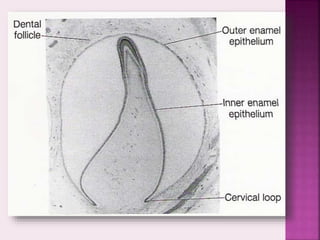
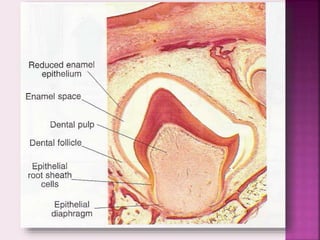
 The root starts to develop after the crown is completed
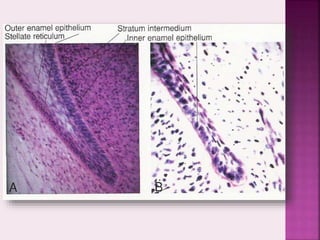
 Epithelial cells of the inner and outer enamel epithelium
proliferate from the cervical loop to form two layers of
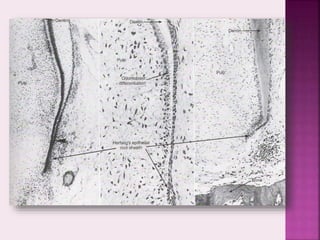
epithelium called Hertwig’s root sheath
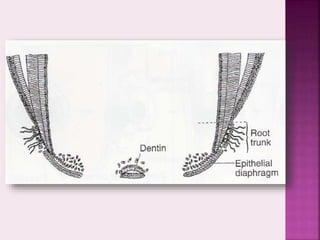
 The first formed part of the root sheath bends to form a disc
like structure
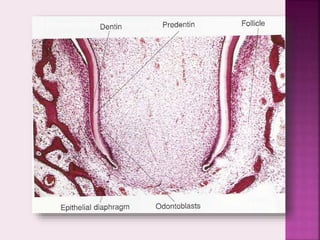
 The rim of this disc like structure is called the epithelial
diaphragm
 The epithelial diaphragm encloses the primary apical
foramen
2 Formation of Root
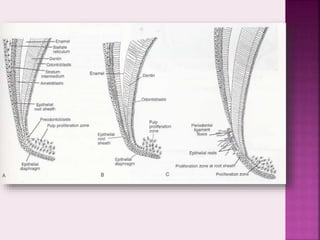
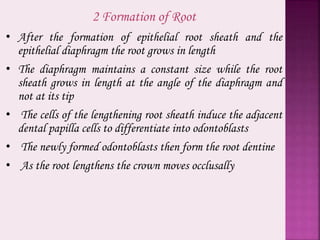
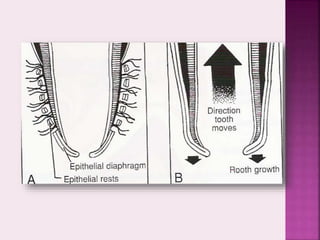
• After the formation of epithelial root sheath and the
epithelial diaphragm the root grows in length
• The diaphragm maintains a constant size while the root
sheath grows in length at the angle of the diaphragm and
not at its tip
• The cells of the lengthening root sheath induce the adjacent
dental papilla cells to differentiate into odontoblasts
• The newly formed odontoblasts then form the root dentine
• As the root lengthens the crown moves occlusally
Single roots and multiple roots
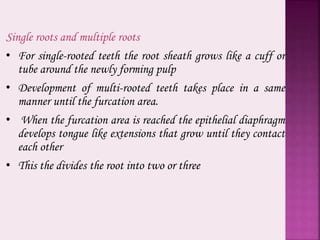
• For single-rooted teeth the root sheath grows like a cuff or
tube around the newly forming pulp
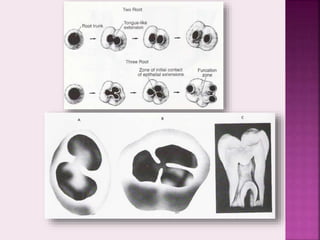
• Development of multi-rooted teeth takes place in a same
manner until the furcation area.
• When the furcation area is reached the epithelial diaphragm
develops tongue like extensions that grow until they contact
each other
• This the divides the root into two or three
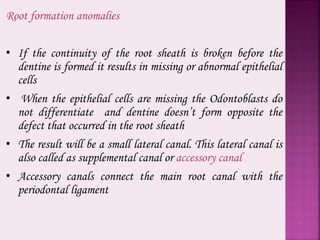
Root formation anomalies
• If the continuity of the root sheath is broken before the
dentine is formed it results in missing or abnormal epithelial
cells
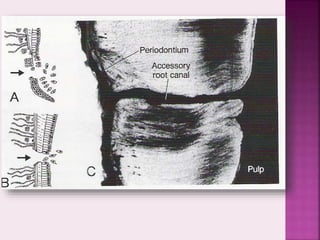
• When the epithelial cells are missing the Odontoblasts do
not differentiate and dentine doesn’t form opposite the
defect that occurred in the root sheath
• The result will be a small lateral canal. This lateral canal is
also called as supplemental canal or accessory canal
• Accessory canals connect the main root canal with the
periodontal ligament
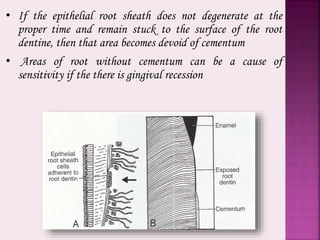
• If the epithelial root sheath does not degenerate at the
proper time and remain stuck to the surface of the root
dentine, then that area becomes devoid of cementum
• Areas of root without cementum can be a cause of
sensitivity if the there is gingival recession
3 Fate of epithelial root sheath
• After dentine formation in root takes place, the epithelial
root sheath breaks down and its remnants migrate away
from the dentinal surface
• They lie in the periodontal ligament and are called epithelial
rests of Malassez
• The epithelial rests of Malassez are found the in the
periodontal ligament through out the life
• Sometimes when there is chronic inflammation the epithelial
cell rest of Malassez proliferate into cysts and tumours
Root formation
Root formation

Root formation

  • 1.
    Upload By :Ahmed Ali Abbas Babylon University College of Dentistry download this file from Website on Google TheOptimalSmile.wix.com Then choose Lectures Then Second Stage Then choose the lecture you need
  • 2.
  • 3.
    Objectives At the endof this lecture the student should be able to understand the process of root formation.,. including the role and function of the root sheath . Sub topics • Topic 1. Root sheath development • Topic 2. Formation of root • Topic 3. Fate of epithelial root sheath
  • 4.
    1 Root sheathdevelopment  The root starts to develop after the crown is completed  Epithelial cells of the inner and outer enamel epithelium proliferate from the cervical loop to form two layers of epithelium called Hertwig’s root sheath  The first formed part of the root sheath bends to form a disc like structure  The rim of this disc like structure is called the epithelial diaphragm  The epithelial diaphragm encloses the primary apical foramen
  • 12.
    2 Formation ofRoot • After the formation of epithelial root sheath and the epithelial diaphragm the root grows in length • The diaphragm maintains a constant size while the root sheath grows in length at the angle of the diaphragm and not at its tip • The cells of the lengthening root sheath induce the adjacent dental papilla cells to differentiate into odontoblasts • The newly formed odontoblasts then form the root dentine • As the root lengthens the crown moves occlusally
  • 13.
    Single roots andmultiple roots • For single-rooted teeth the root sheath grows like a cuff or tube around the newly forming pulp • Development of multi-rooted teeth takes place in a same manner until the furcation area. • When the furcation area is reached the epithelial diaphragm develops tongue like extensions that grow until they contact each other • This the divides the root into two or three
  • 16.
    Root formation anomalies •If the continuity of the root sheath is broken before the dentine is formed it results in missing or abnormal epithelial cells • When the epithelial cells are missing the Odontoblasts do not differentiate and dentine doesn’t form opposite the defect that occurred in the root sheath • The result will be a small lateral canal. This lateral canal is also called as supplemental canal or accessory canal • Accessory canals connect the main root canal with the periodontal ligament
  • 18.
    • If theepithelial root sheath does not degenerate at the proper time and remain stuck to the surface of the root dentine, then that area becomes devoid of cementum • Areas of root without cementum can be a cause of sensitivity if the there is gingival recession
  • 19.
    3 Fate ofepithelial root sheath • After dentine formation in root takes place, the epithelial root sheath breaks down and its remnants migrate away from the dentinal surface • They lie in the periodontal ligament and are called epithelial rests of Malassez • The epithelial rests of Malassez are found the in the periodontal ligament through out the life • Sometimes when there is chronic inflammation the epithelial cell rest of Malassez proliferate into cysts and tumours