Conflict and Negotiation Chapter 13 Essentials of Organizational Behavior, 9/e Stephen P. Robbins/Timothy A. Judge
After studying this chapter, you should be able to: Define conflict Differentiate between the traditional, human relations, and interactionist views of conflict Contrast task, relationship and process conflict Outline the conflict process Describe the five conflict-handling intentions Contrast distributive and integrative bargaining Identify the five steps in the negotiation process Describe whether there are individual differences in negotiator effectiveness
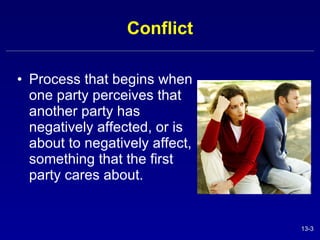
Conflict Process that begins when one party perceives that another party has negatively affected, or is about to negatively affect, something that the first party cares about.
Transitions in Conflict Thought Traditional View – conflict is harmful and must be avoided Human Relations View – conflict is a natural and inevitable outcome in any group and need not be negative Interactionist View – conflict is encouraged to prevent group from becoming stale
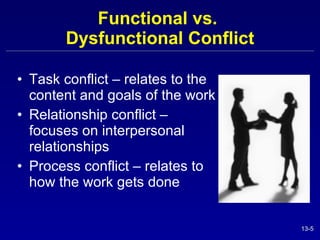
Functional vs.  Dysfunctional Conflict Task conflict – relates to the content and goals of the work Relationship conflict – focuses on interpersonal relationships Process conflict – relates to how the work gets done
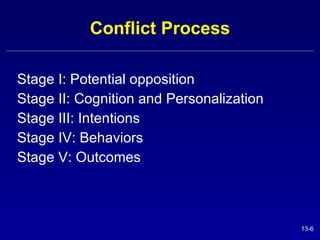
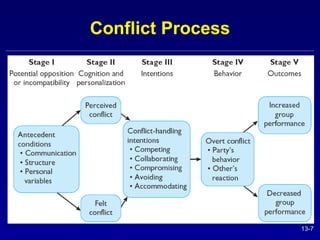
Conflict Process Stage I: Potential opposition Stage II: Cognition and Personalization  Stage III: Intentions Stage IV: Behaviors Stage V: Outcomes
Conflict Process
Stage I: Potential Opposition  Sources of conflict: Communication Structure Personal Variables
Stage II: Cognition and Personalization  Potential for opposition becomes realized When individuals become emotionally involved - parties experience anxiety, tension, frustration, or hostility
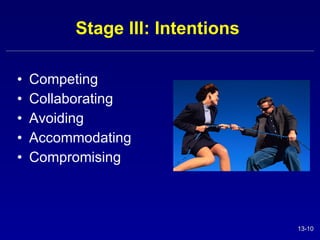
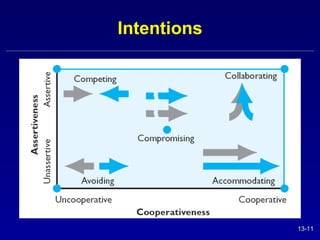
Stage III: Intentions  Competing Collaborating Avoiding Accommodating Compromising
Intentions
Stage IV: Behavior Where conflict becomes visible Are usually overt attempts to implement each party’s intentions A dynamic process that moves along a continuum of intensity
Stage V: Outcomes  Functional Outcomes – Conflict is constructive when it: Improves the quality of decisions Stimulates creativity and innovation Encourages interest and curiosity among group members Dysfunctional Outcomes – uncontrolled opposition breeds discontent, which acts to dissolve common ties, and eventually leads to the destruction of the group
Creating Functional Conflict Managers can reward dissent and punish conflict avoiders
Negotiation Process in which two or more parties exchange goods or services and attempt to agree on the exchange rate for them
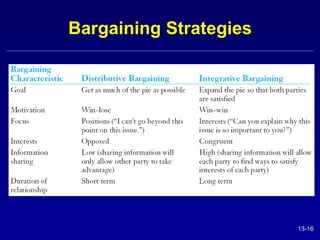
Bargaining Strategies
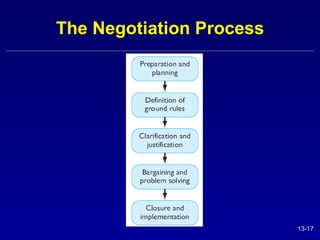
The Negotiation Process
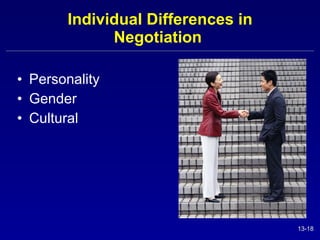
Individual Differences in Negotiation   Personality Gender Cultural
Personality The best distributive bargainer appears to be a disagreeable introvert Those who can check their egos at the door are able to negotiate better agreements
Gender Differences  in Negotiation Men have been found to negotiate better outcomes than women, although the difference is relatively small Women may unduly penalize themselves by failing to engage in negotiations when such action would be in their best interest
Cultural Differences in Negotiations Cultural context significantly influences... The amount and type of preparation for bargaining The relative emphasis on task versus interpersonal relationships The tactics used Where the negotiation should be conducted
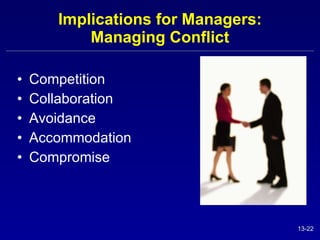
Implications for Managers: Managing Conflict Competition Collaboration Avoidance  Accommodation Compromise
Implications for Managers: Improving Negotiation Skills Set Ambitious Goals Pay Little Attention to Initial Offers Research Your Opponent Address the Problem, Not the Personalities Be Creative and Emphasize Win-Win Solutions
Summary Defined conflict Differentiated between the traditional, human relations, and interactionist views of conflict Contrasted task, relationship and process conflict Outlined the conflict process Described the five conflict-handling intentions Contrasted distributive and integrative bargaining Identified the five steps in the negotiation process Described whether there are individual differences in negotiator effectiveness

Robbins eob9 inst_ppt_13

  • 1.
    Conflict and NegotiationChapter 13 Essentials of Organizational Behavior, 9/e Stephen P. Robbins/Timothy A. Judge
  • 2.
    After studying thischapter, you should be able to: Define conflict Differentiate between the traditional, human relations, and interactionist views of conflict Contrast task, relationship and process conflict Outline the conflict process Describe the five conflict-handling intentions Contrast distributive and integrative bargaining Identify the five steps in the negotiation process Describe whether there are individual differences in negotiator effectiveness
  • 3.
    Conflict Process thatbegins when one party perceives that another party has negatively affected, or is about to negatively affect, something that the first party cares about.
  • 4.
    Transitions in ConflictThought Traditional View – conflict is harmful and must be avoided Human Relations View – conflict is a natural and inevitable outcome in any group and need not be negative Interactionist View – conflict is encouraged to prevent group from becoming stale
  • 5.
    Functional vs. Dysfunctional Conflict Task conflict – relates to the content and goals of the work Relationship conflict – focuses on interpersonal relationships Process conflict – relates to how the work gets done
  • 6.
    Conflict Process StageI: Potential opposition Stage II: Cognition and Personalization Stage III: Intentions Stage IV: Behaviors Stage V: Outcomes
  • 7.
  • 8.
    Stage I: PotentialOpposition Sources of conflict: Communication Structure Personal Variables
  • 9.
    Stage II: Cognitionand Personalization Potential for opposition becomes realized When individuals become emotionally involved - parties experience anxiety, tension, frustration, or hostility
  • 10.
    Stage III: Intentions Competing Collaborating Avoiding Accommodating Compromising
  • 11.
  • 12.
    Stage IV: BehaviorWhere conflict becomes visible Are usually overt attempts to implement each party’s intentions A dynamic process that moves along a continuum of intensity
  • 13.
    Stage V: Outcomes Functional Outcomes – Conflict is constructive when it: Improves the quality of decisions Stimulates creativity and innovation Encourages interest and curiosity among group members Dysfunctional Outcomes – uncontrolled opposition breeds discontent, which acts to dissolve common ties, and eventually leads to the destruction of the group
  • 14.
    Creating Functional ConflictManagers can reward dissent and punish conflict avoiders
  • 15.
    Negotiation Process inwhich two or more parties exchange goods or services and attempt to agree on the exchange rate for them
  • 16.
  • 17.
  • 18.
    Individual Differences inNegotiation Personality Gender Cultural
  • 19.
    Personality The bestdistributive bargainer appears to be a disagreeable introvert Those who can check their egos at the door are able to negotiate better agreements
  • 20.
    Gender Differences in Negotiation Men have been found to negotiate better outcomes than women, although the difference is relatively small Women may unduly penalize themselves by failing to engage in negotiations when such action would be in their best interest
  • 21.
    Cultural Differences inNegotiations Cultural context significantly influences... The amount and type of preparation for bargaining The relative emphasis on task versus interpersonal relationships The tactics used Where the negotiation should be conducted
  • 22.
    Implications for Managers:Managing Conflict Competition Collaboration Avoidance Accommodation Compromise
  • 23.
    Implications for Managers:Improving Negotiation Skills Set Ambitious Goals Pay Little Attention to Initial Offers Research Your Opponent Address the Problem, Not the Personalities Be Creative and Emphasize Win-Win Solutions
  • 24.
    Summary Defined conflictDifferentiated between the traditional, human relations, and interactionist views of conflict Contrasted task, relationship and process conflict Outlined the conflict process Described the five conflict-handling intentions Contrasted distributive and integrative bargaining Identified the five steps in the negotiation process Described whether there are individual differences in negotiator effectiveness