REPRODUCTION IN
FOREST TREES
Anand Charvin.G
INTRODUCTION
Reproduction is the process by
which plants and animals give rise
to offspring and which
fundamentally consists of the
segregation of a portion of the
parental body by a sexual or an
asexual process and its subsequent
growth and differentiation into a
new individual.
TYPES OF REPRODUCTION
 There are two types of reproduction in plants:
 Sexual & Asexual reproduction.
 Sexual reproduction occurs in plants though reproductive
parts of the plant.
 While asexual reproduction is through vegetative
propagation.
POLLINATION
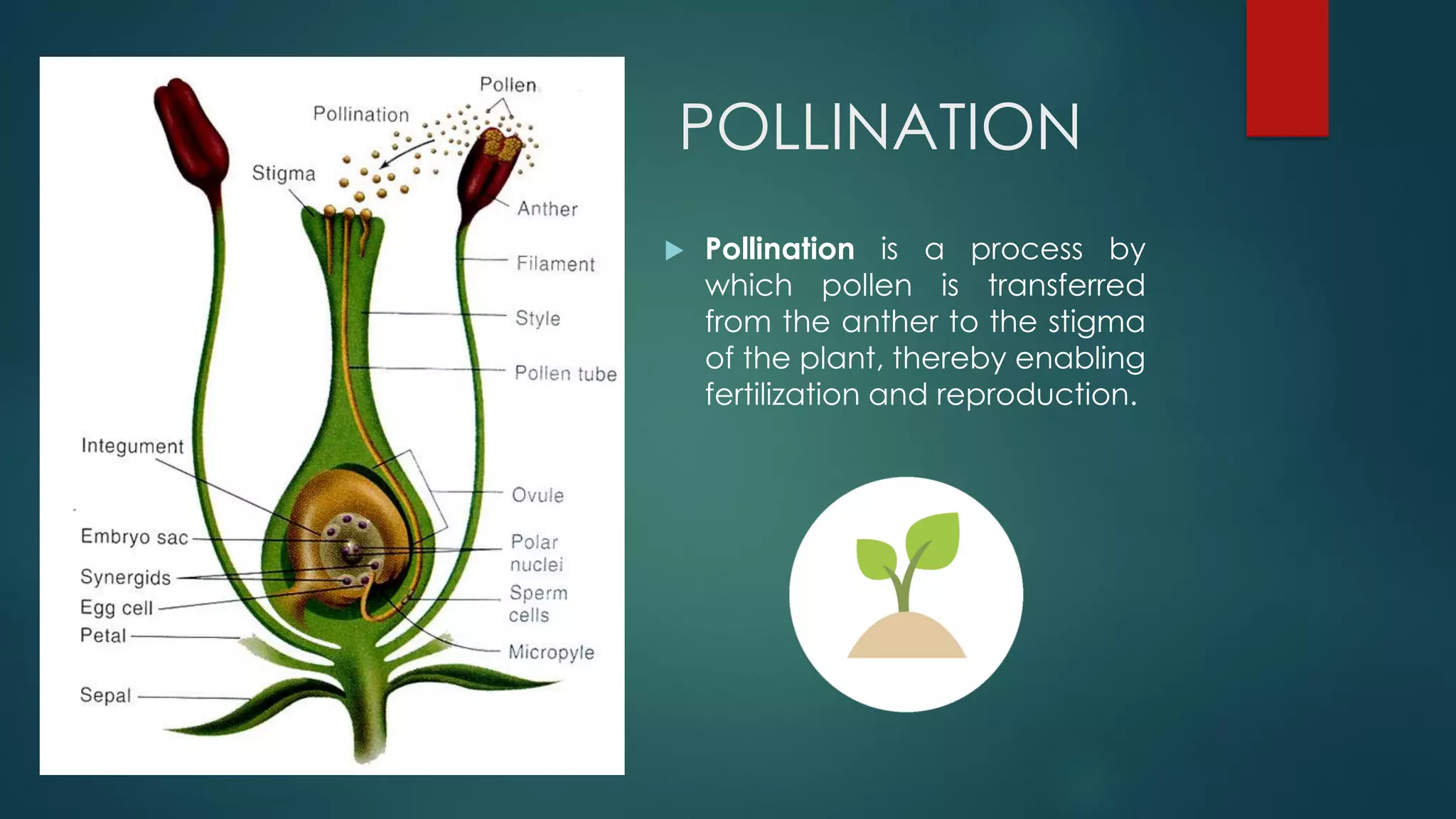
 Pollination is a process by
which pollen is transferred
from the anther to the stigma
of the plant, thereby enabling
fertilization and reproduction.
TYPES OF POLLINATION
SELF POLLINATION
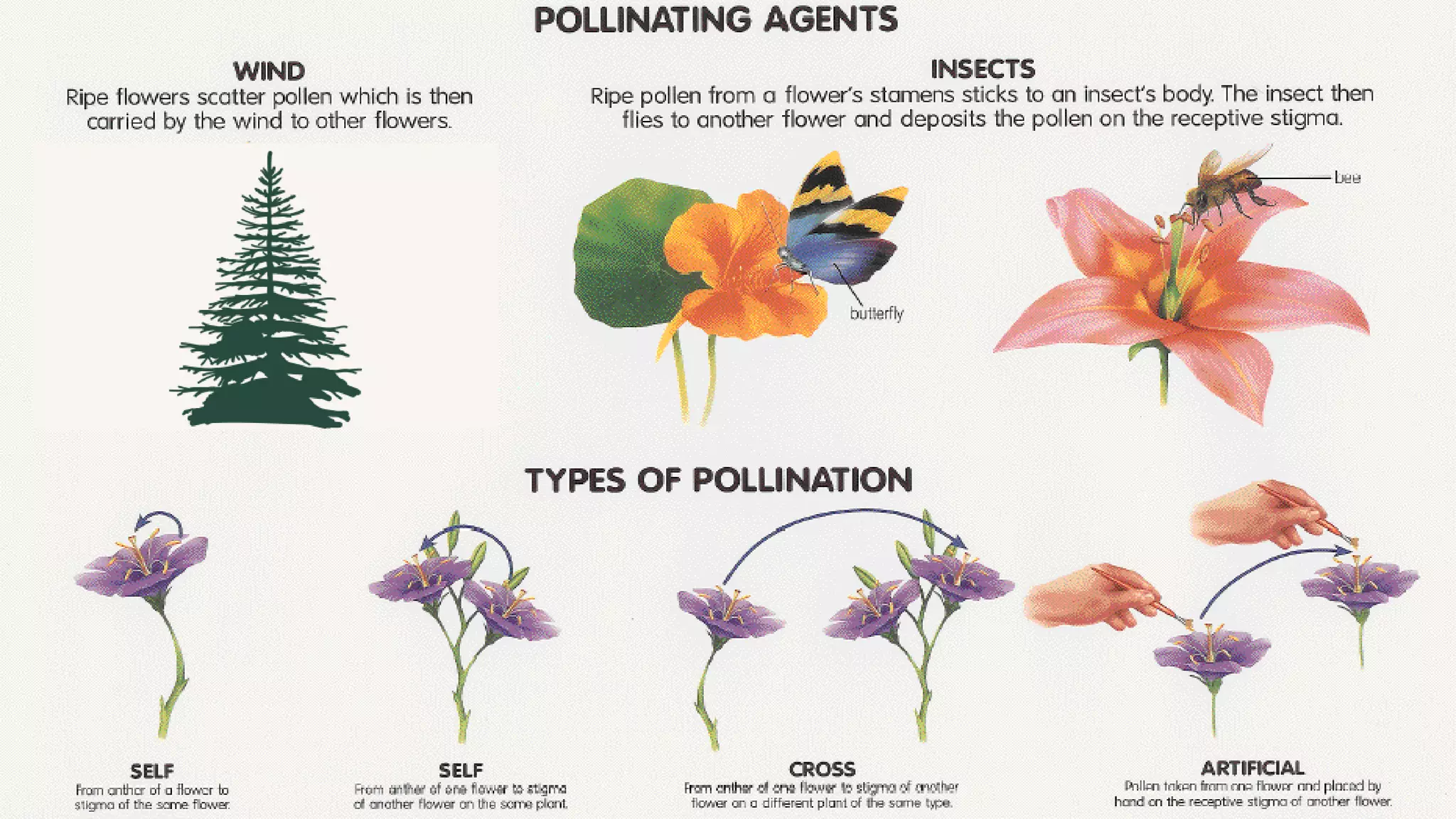
Self-pollination is when pollen
from the same plant arrives at
the stigma of a flower or at the
ovule.
There are two types of self-
pollination: In autogamy, pollen
is transferred to the stigma of
the same flower. In
geitonogamy, pollen is
transferred from the anther of
one flower to the stigma of
another flower on the same
flowering plant.
CROSS POLLINATION
The transfer of pollen from
an anther of a flower of
one plant to a stigma of a
flower of another plant of
the same species. Also
called allogamy,
xenogamy.
ASEXUAL REPRODUCTION
 Asexual reproduction refers to the process of reproduction in plants
without the involvement of reproductive parts, rather the vegetative
parts of the plant such as stem, leaves and roots, in general
produce young plants.
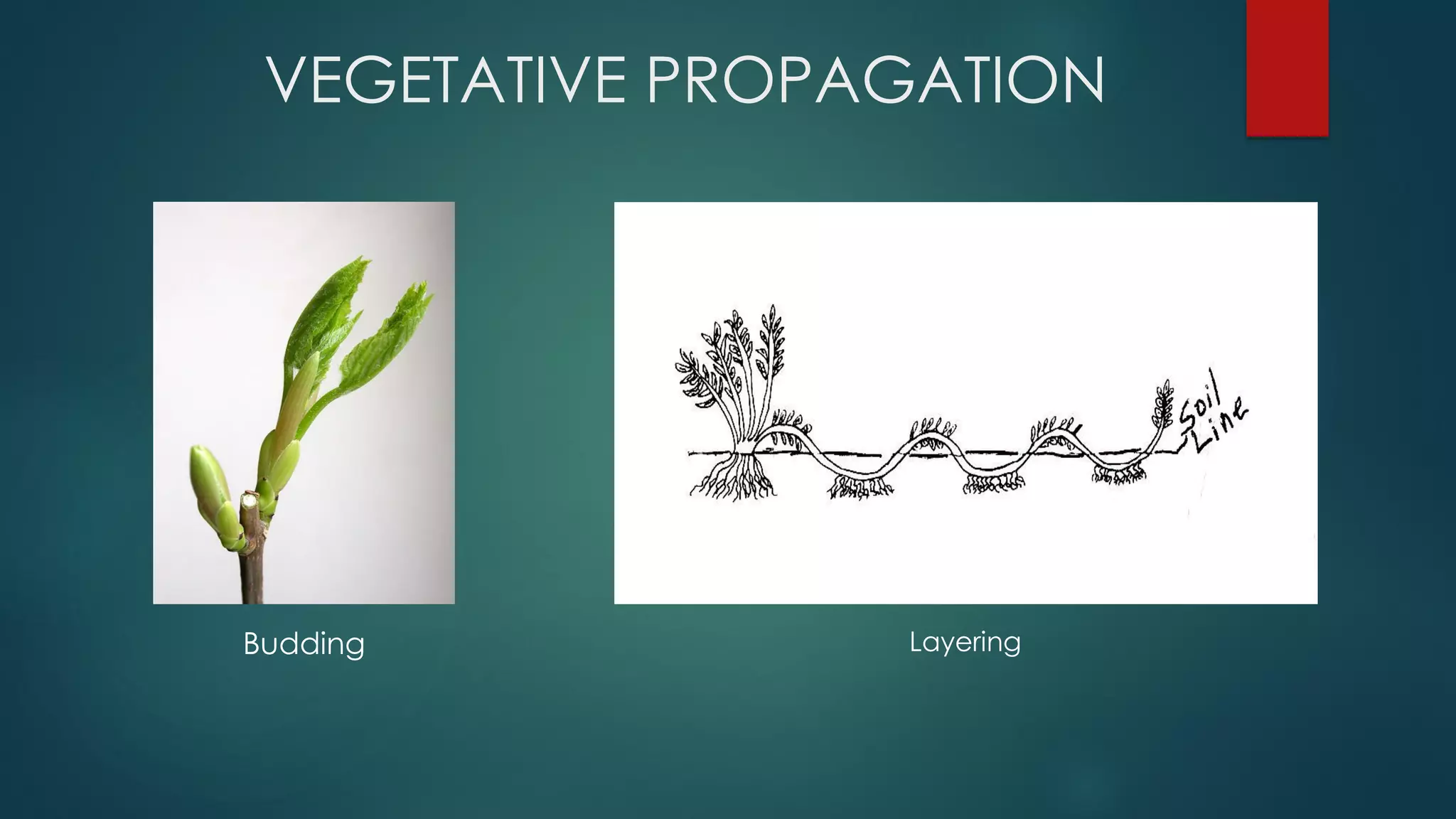
VEGETATIVE PROPAGATION
Budding Layering
VEGETATIVE PROPAGATION
Grafting Tissue Culture
CONCLUSION
 Reproduction is a vital process for any species to survive on earth.
Reproducton in forest trees.

Reproducton in forest trees.

  • 1.
  • 2.
    INTRODUCTION Reproduction is theprocess by which plants and animals give rise to offspring and which fundamentally consists of the segregation of a portion of the parental body by a sexual or an asexual process and its subsequent growth and differentiation into a new individual.
  • 3.
    TYPES OF REPRODUCTION There are two types of reproduction in plants:  Sexual & Asexual reproduction.  Sexual reproduction occurs in plants though reproductive parts of the plant.  While asexual reproduction is through vegetative propagation.
  • 4.
    POLLINATION  Pollination isa process by which pollen is transferred from the anther to the stigma of the plant, thereby enabling fertilization and reproduction.
  • 6.
    TYPES OF POLLINATION SELFPOLLINATION Self-pollination is when pollen from the same plant arrives at the stigma of a flower or at the ovule. There are two types of self- pollination: In autogamy, pollen is transferred to the stigma of the same flower. In geitonogamy, pollen is transferred from the anther of one flower to the stigma of another flower on the same flowering plant. CROSS POLLINATION The transfer of pollen from an anther of a flower of one plant to a stigma of a flower of another plant of the same species. Also called allogamy, xenogamy.
  • 7.
    ASEXUAL REPRODUCTION  Asexualreproduction refers to the process of reproduction in plants without the involvement of reproductive parts, rather the vegetative parts of the plant such as stem, leaves and roots, in general produce young plants.
  • 8.
  • 9.
  • 10.
    CONCLUSION  Reproduction isa vital process for any species to survive on earth.