Reproduction
Sexual and Asexual
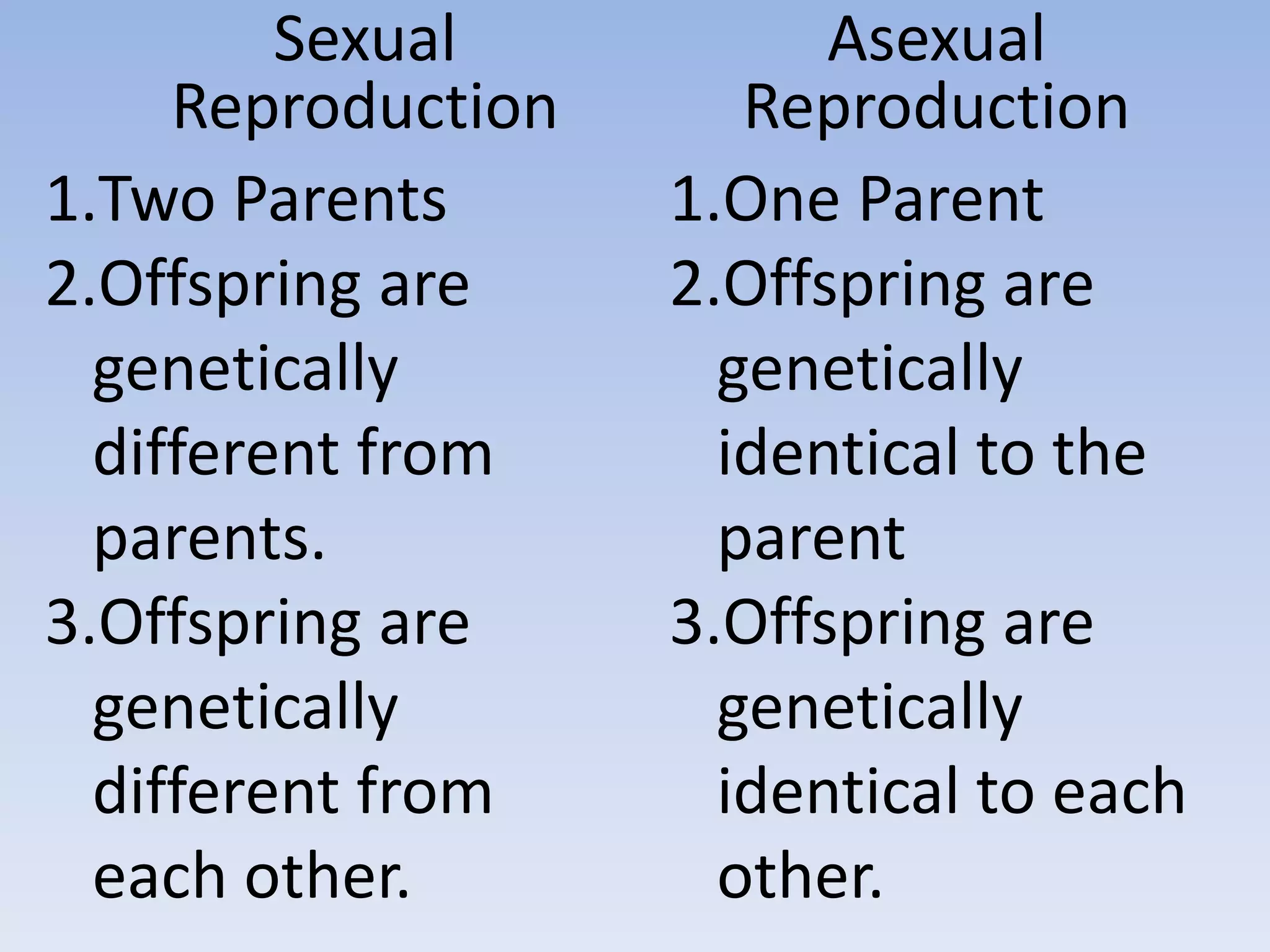
Asexual
Reproduction
Sexual
Reproduction
1.One Parent
2.Offspring are
genetically
identical to the
parent
3.Offspring are
genetically
identical to each
other.
1.Two Parents
2.Offspring are
genetically
different from
parents.
3.Offspring are
genetically
different from
each other.
Sexual Reproduction
It “ain’t” only what you think!
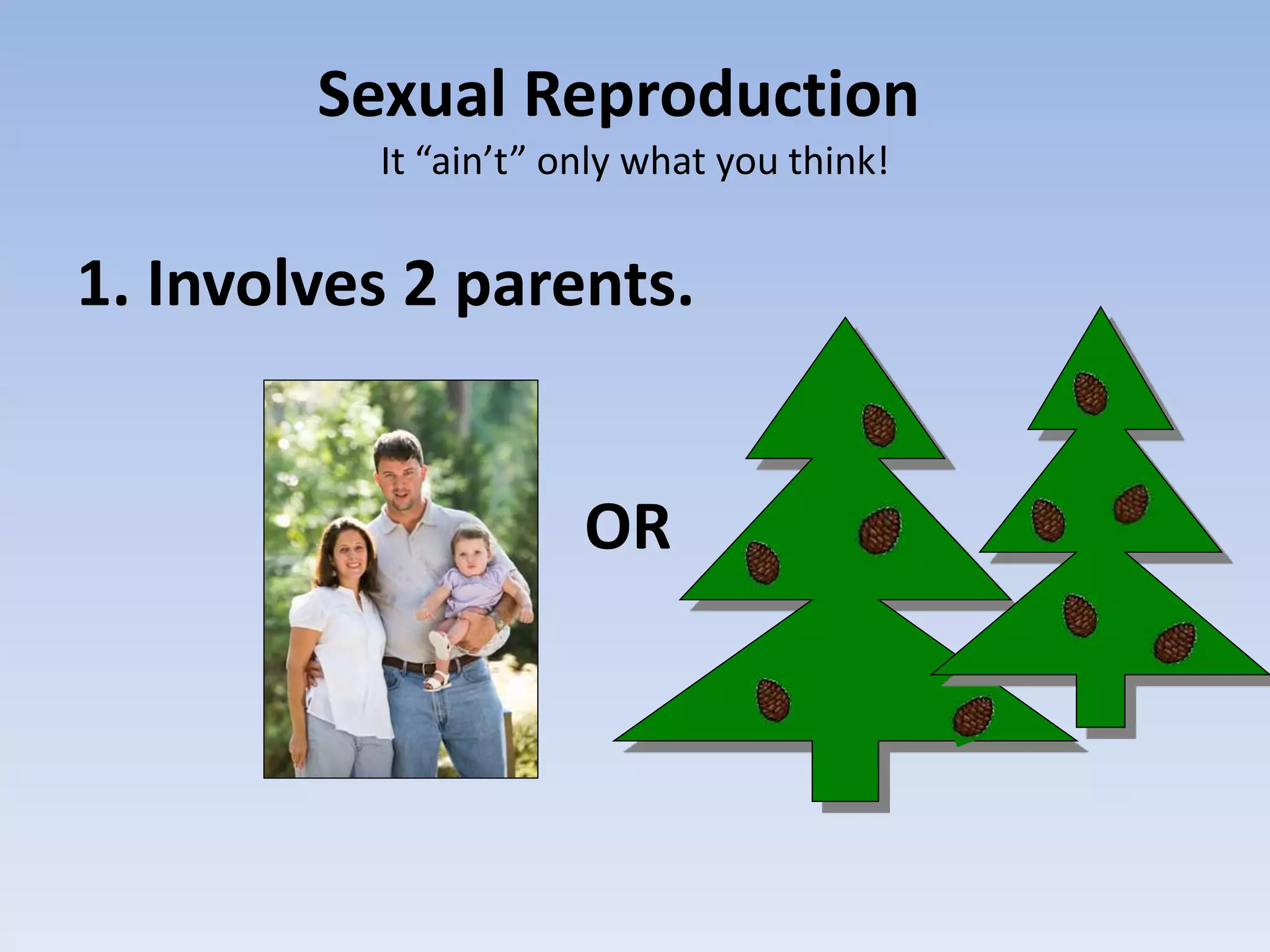
1. Involves 2 parents.
OR
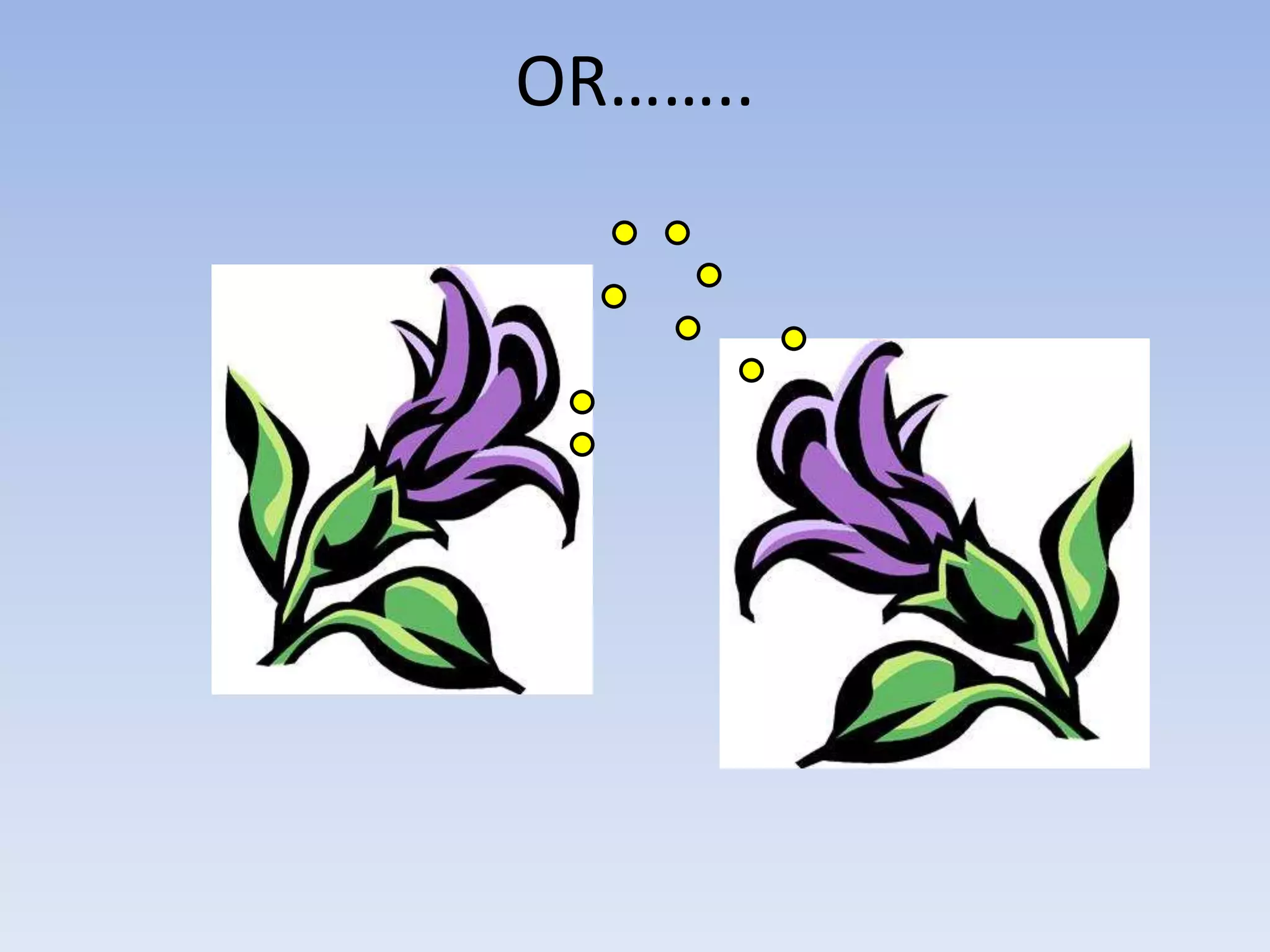
OR……..
Sexual Reproduction
2. Offspring are genetically different from
either parent.
– The genes of the offspring are different from the
parents.
– Half of your chromosomes came from the egg and
half from the sperm.
– You are not exactly like either parent though you
received half of your genes from each parent.
– The offspring are different from each other with
the exception of identical twins.
Sexual Reproduction
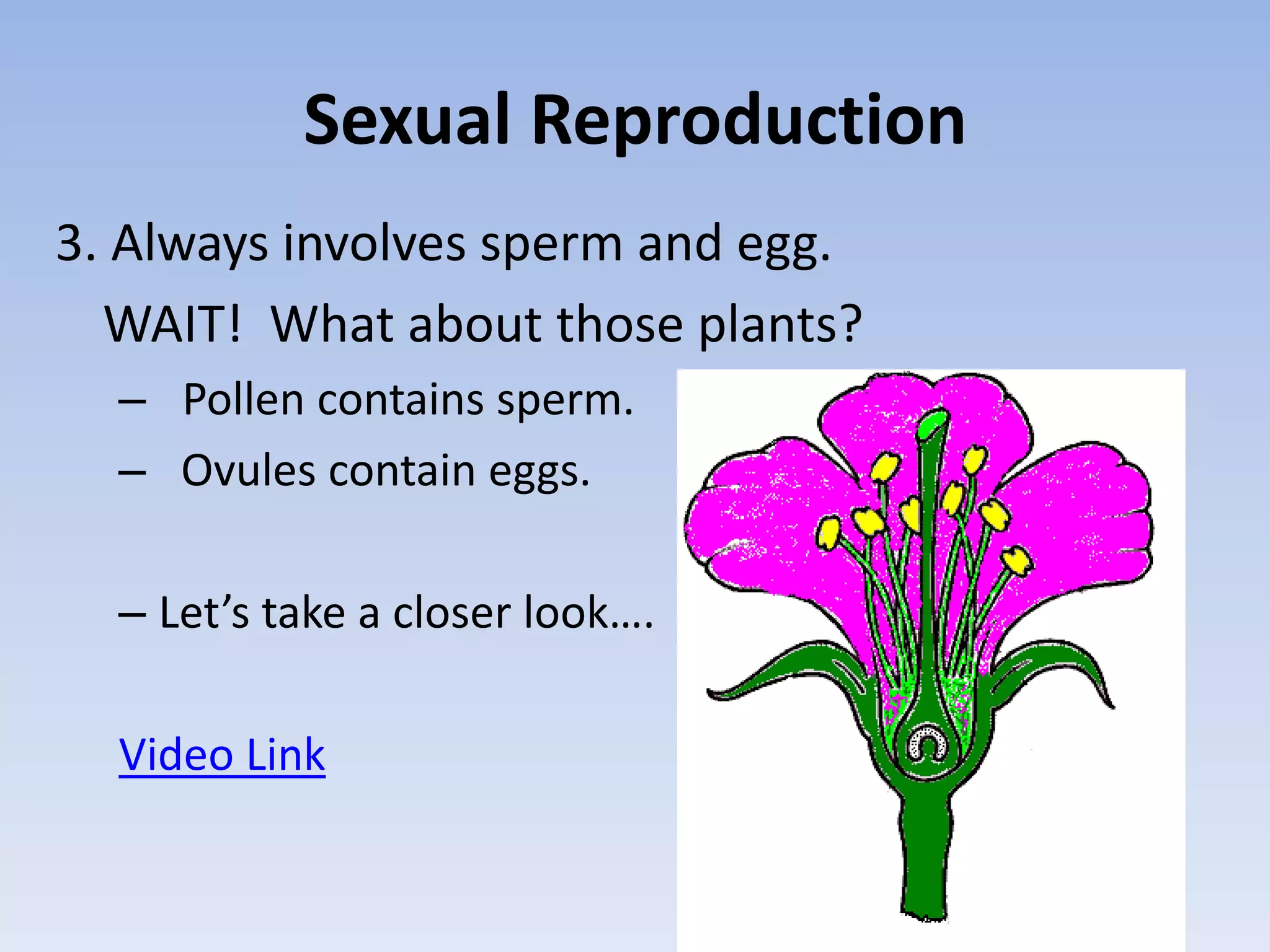
3. Always involves sperm and egg.
WAIT! What about those plants?
– Pollen contains sperm.
– Ovules contain eggs.
– Let’s take a closer look….
Video Link
Reproductive Organs in Plants: Flowers
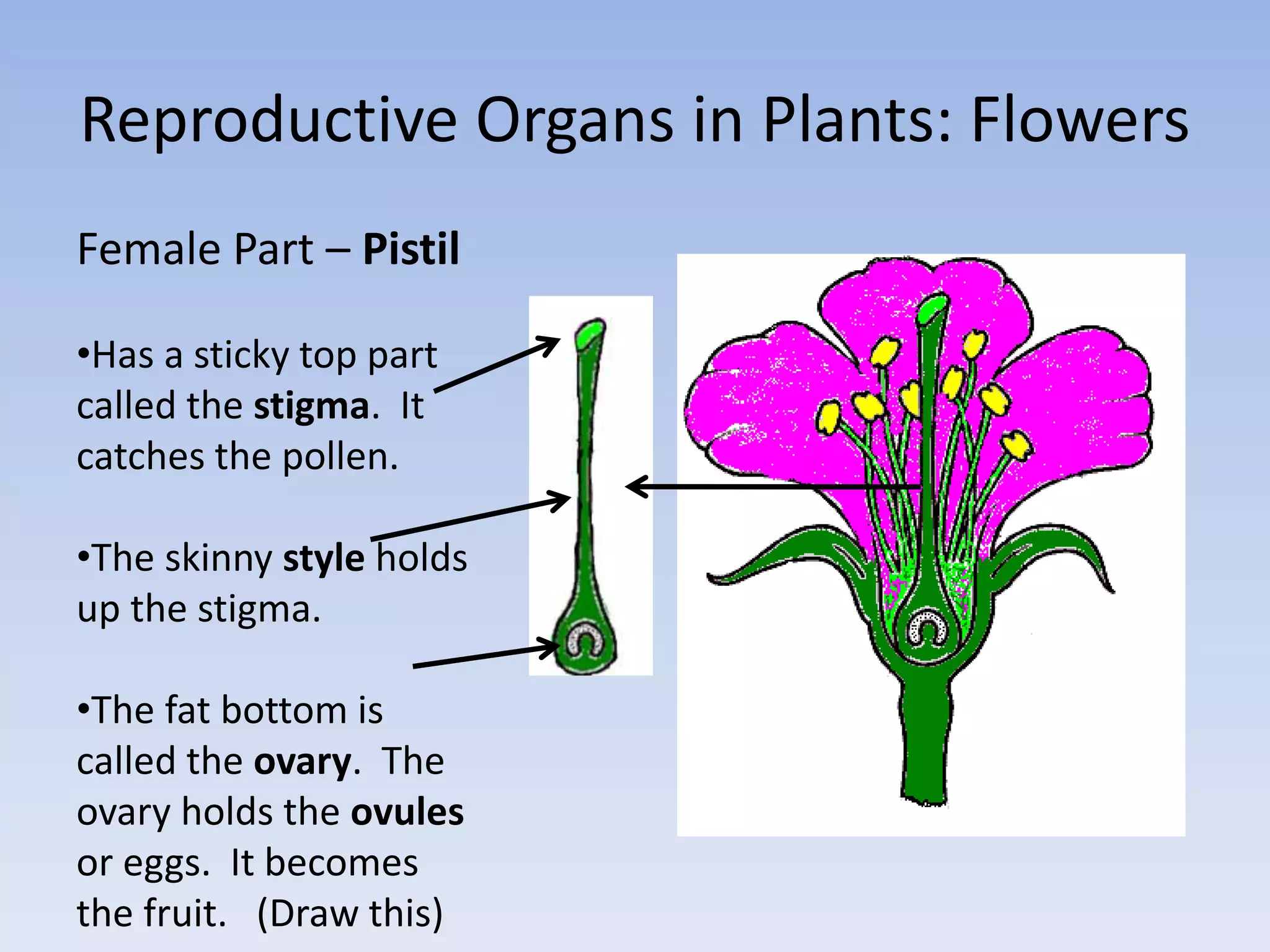
Female Part – Pistil
•Has a sticky top part
called the stigma. It
catches the pollen.
•The skinny style holds
up the stigma.
•The fat bottom is
called the ovary. The
ovary holds the ovules
or eggs. It becomes
the fruit. (Draw this)
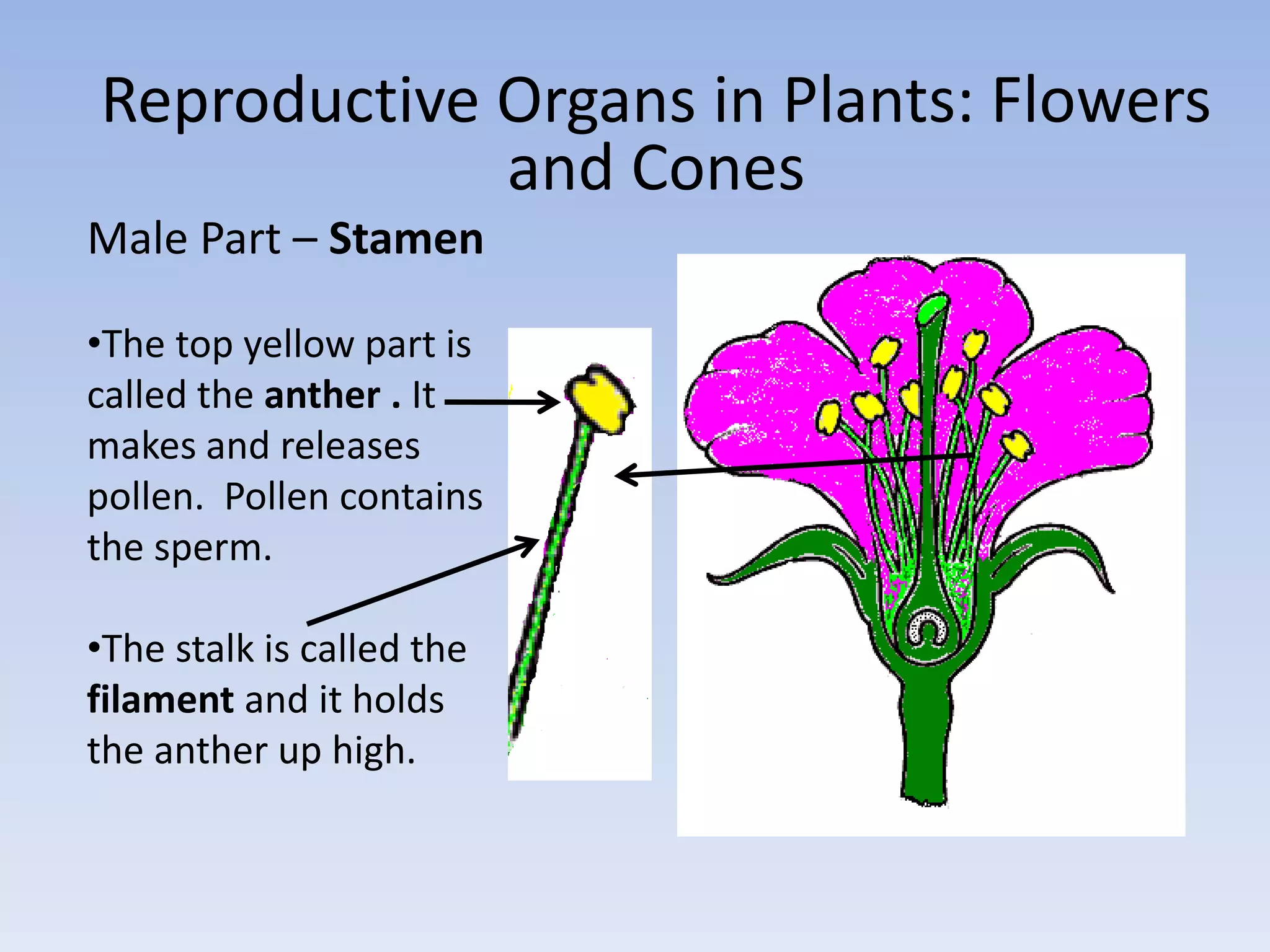
Male Part – Stamen
•The top yellow part is
called the anther . It
makes and releases
pollen. Pollen contains
the sperm.
•The stalk is called the
filament and it holds
the anther up high.
Reproductive Organs in Plants: Flowers
and Cones
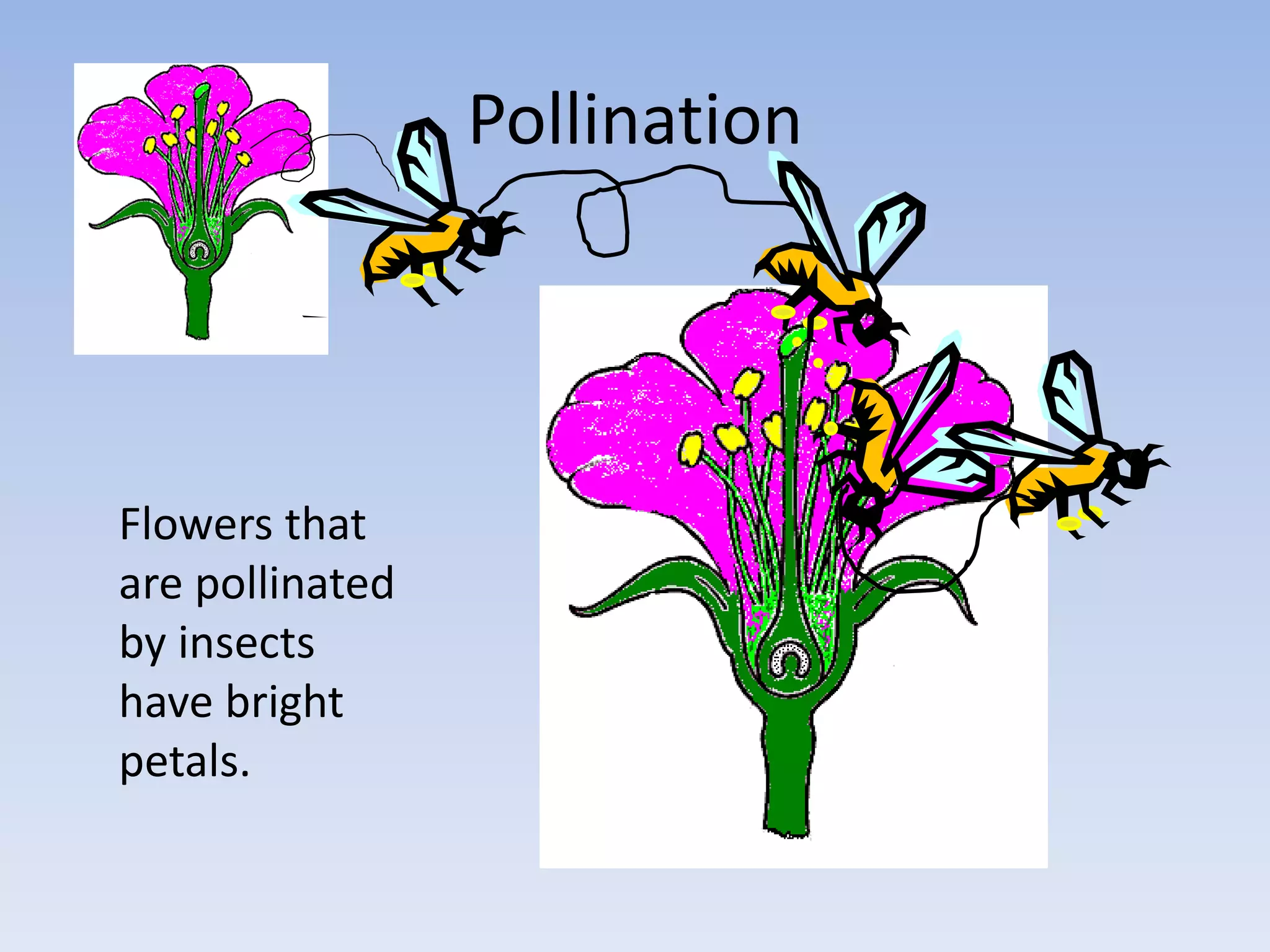
Pollination
Flowers that
are pollinated
by insects
have bright
petals.
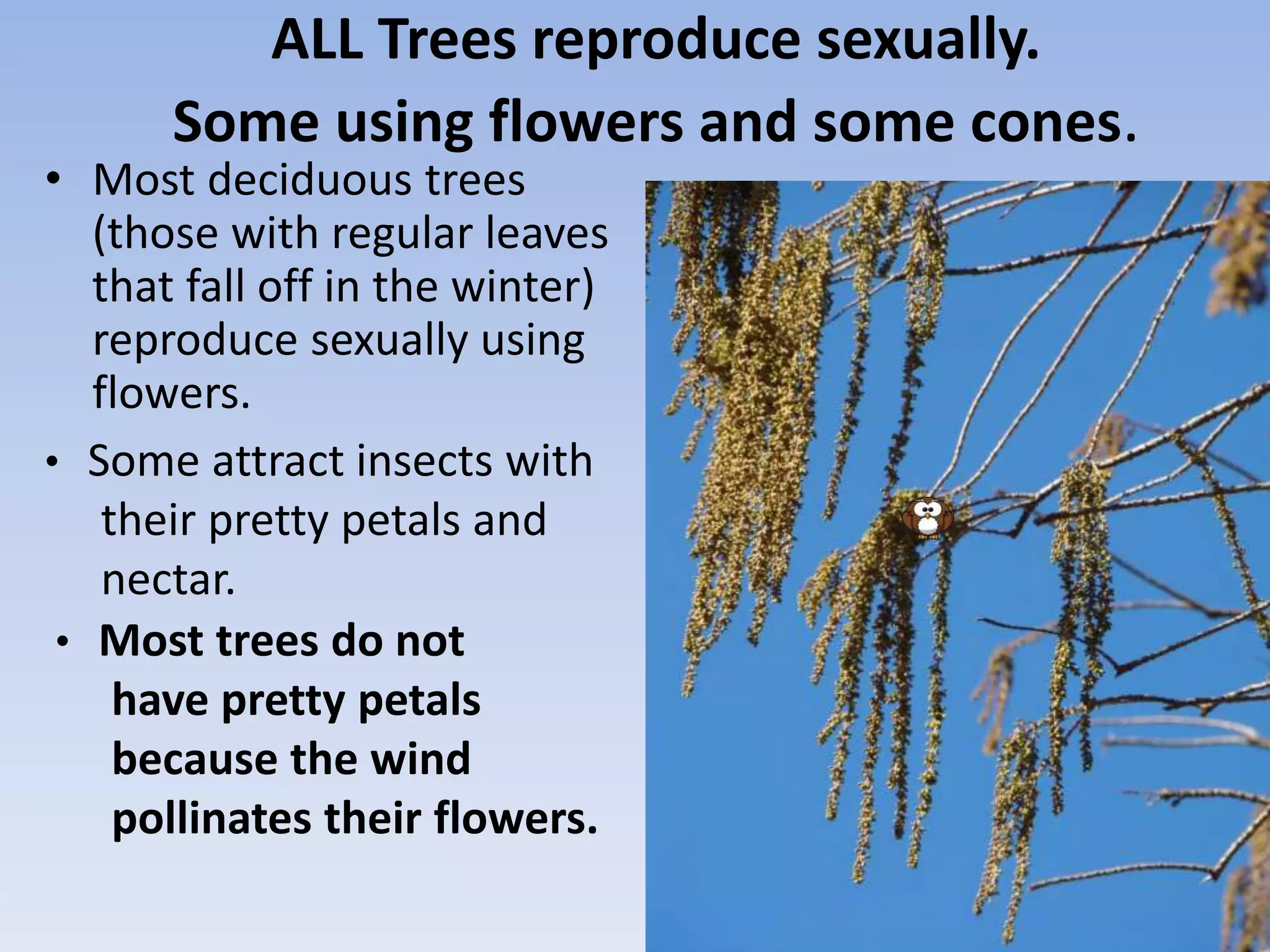
ALL Trees reproduce sexually.
Some using flowers and some cones.
• Most deciduous trees
(those with regular leaves
that fall off in the winter)
reproduce sexually using
flowers.
• Some attract insects with
their pretty petals and
nectar.
• Most trees do not
have pretty petals
because the wind
pollinates their flowers.
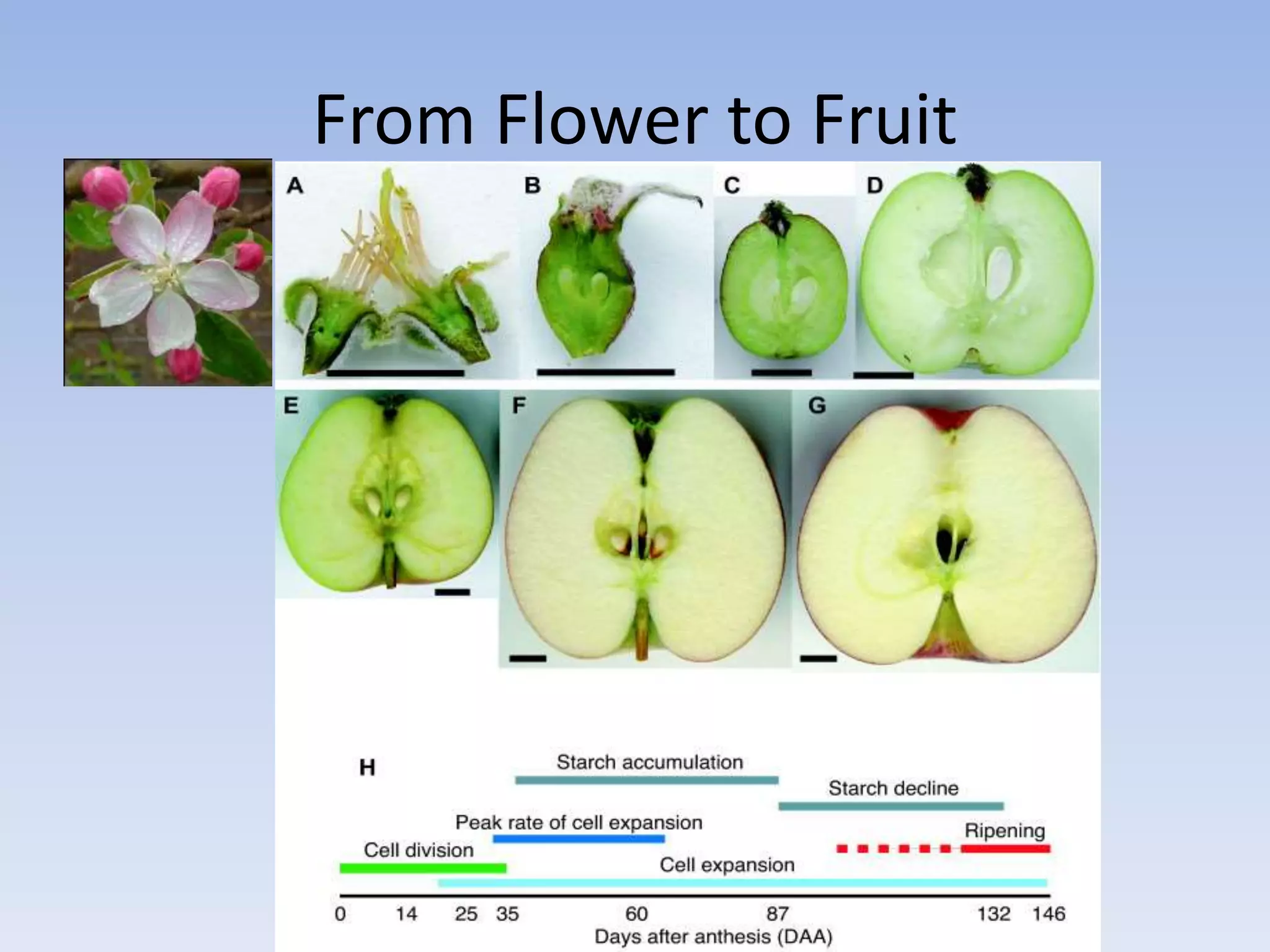
From Flower to Fruit
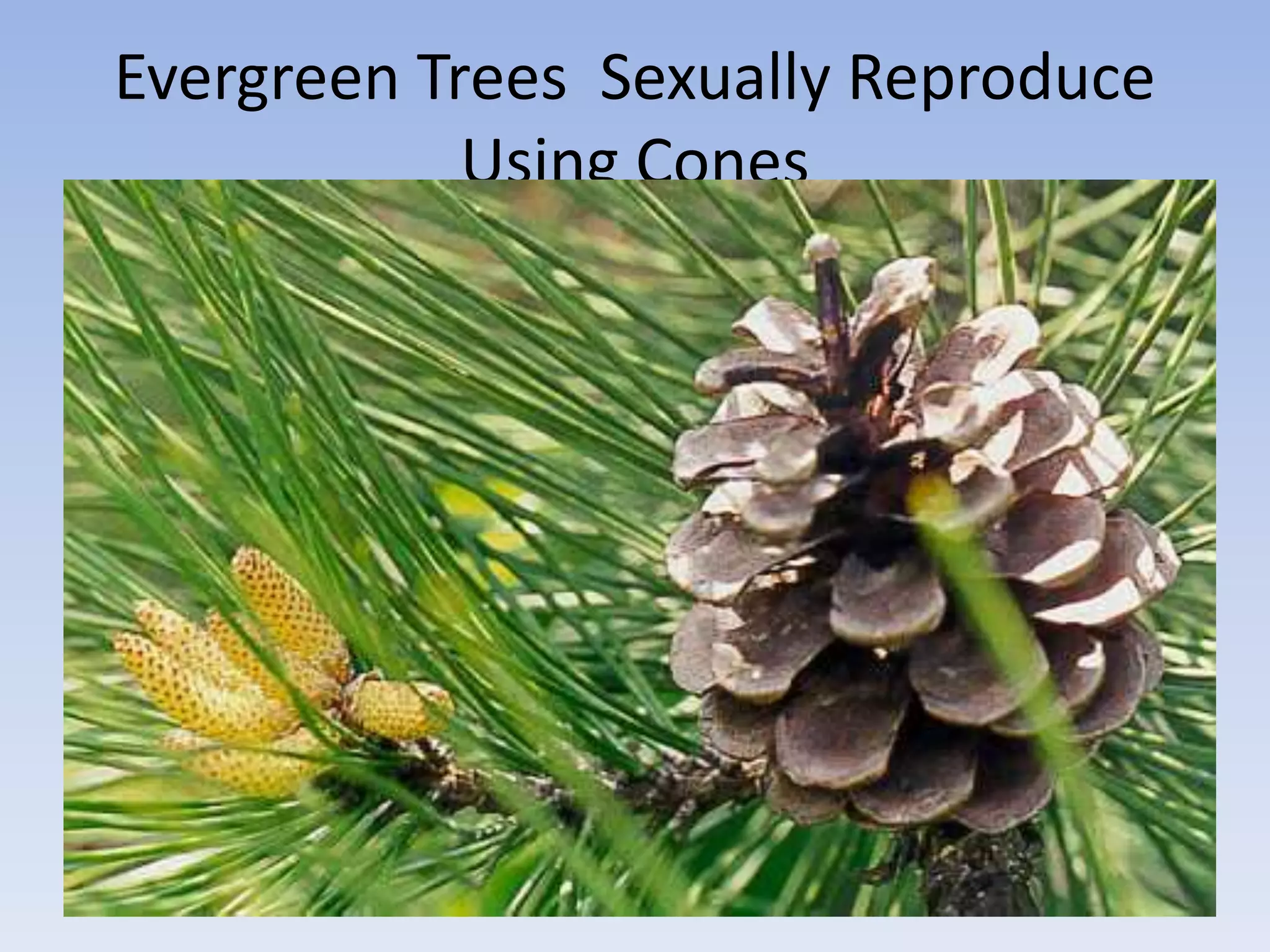
Evergreen Trees Sexually Reproduce
Using Cones
Male Cones
- fall off
after
releasing
their pollen
in the
spring.
Female
Cones - are
green when
they receive
the pollen.
It takes 2
years for the
seeds to
mature.
The cone
then opens
and releases
them.
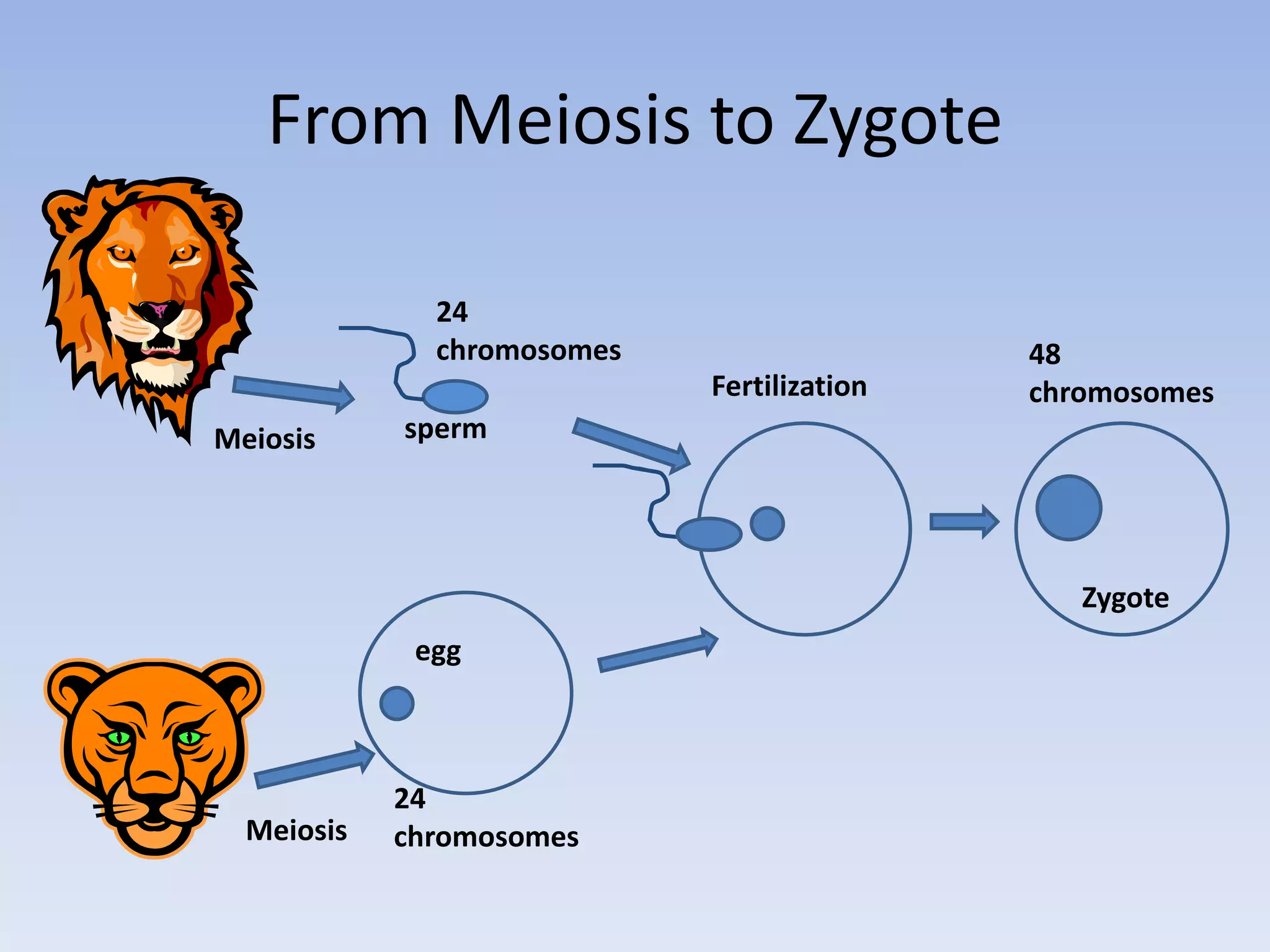
From Meiosis to Zygote
Meiosis
Meiosis
Fertilization
24
chromosomes
24
chromosomes
48
chromosomes
Zygote
sperm
egg
Sexual Reproduction in Animals
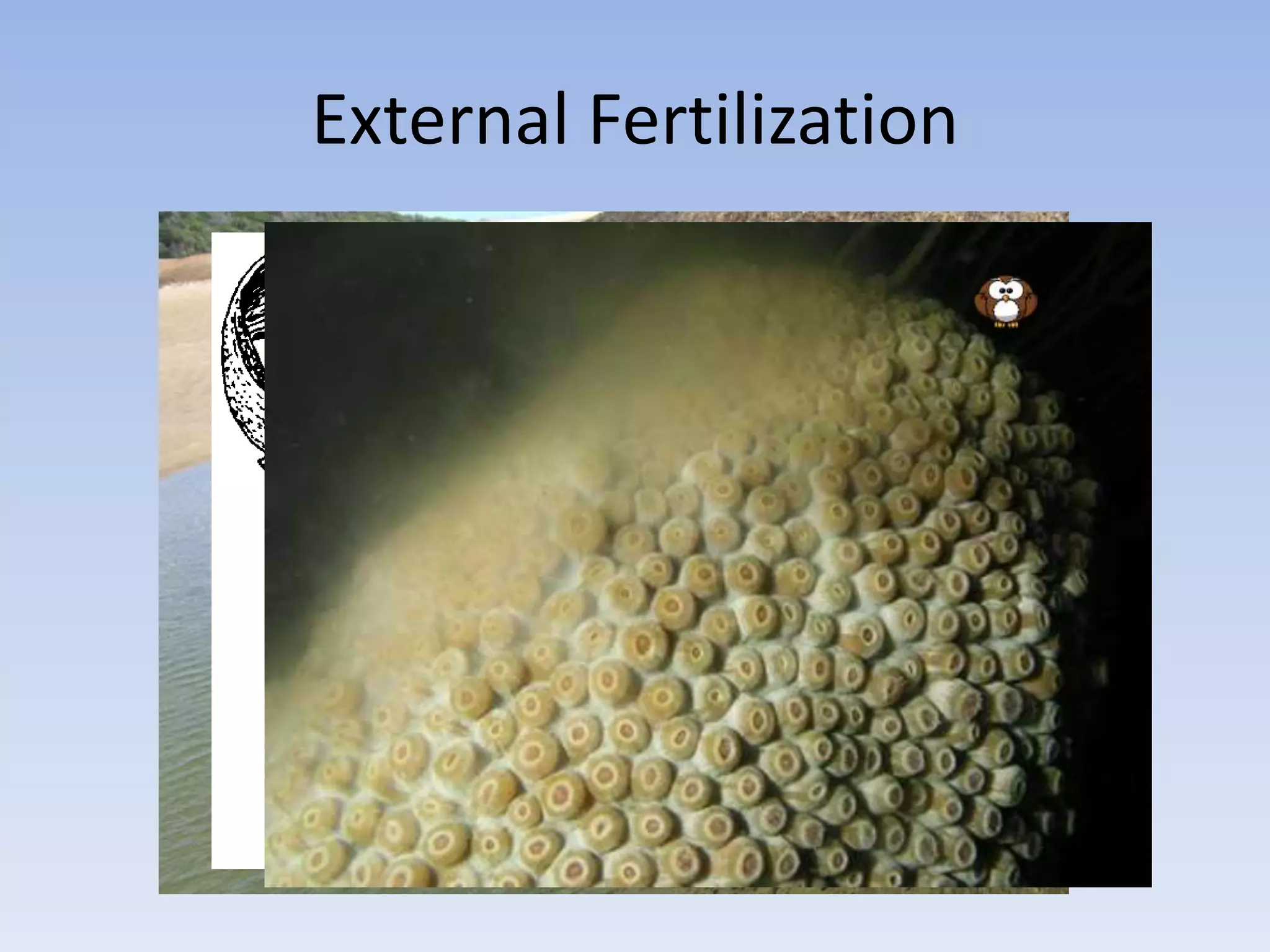
1. External fertilization – most common in aquatic
animals- because there is water, the sperm can swim.
• Oysters and coral and sponges
• Fish (spawning)
• Amphibians (frogs)
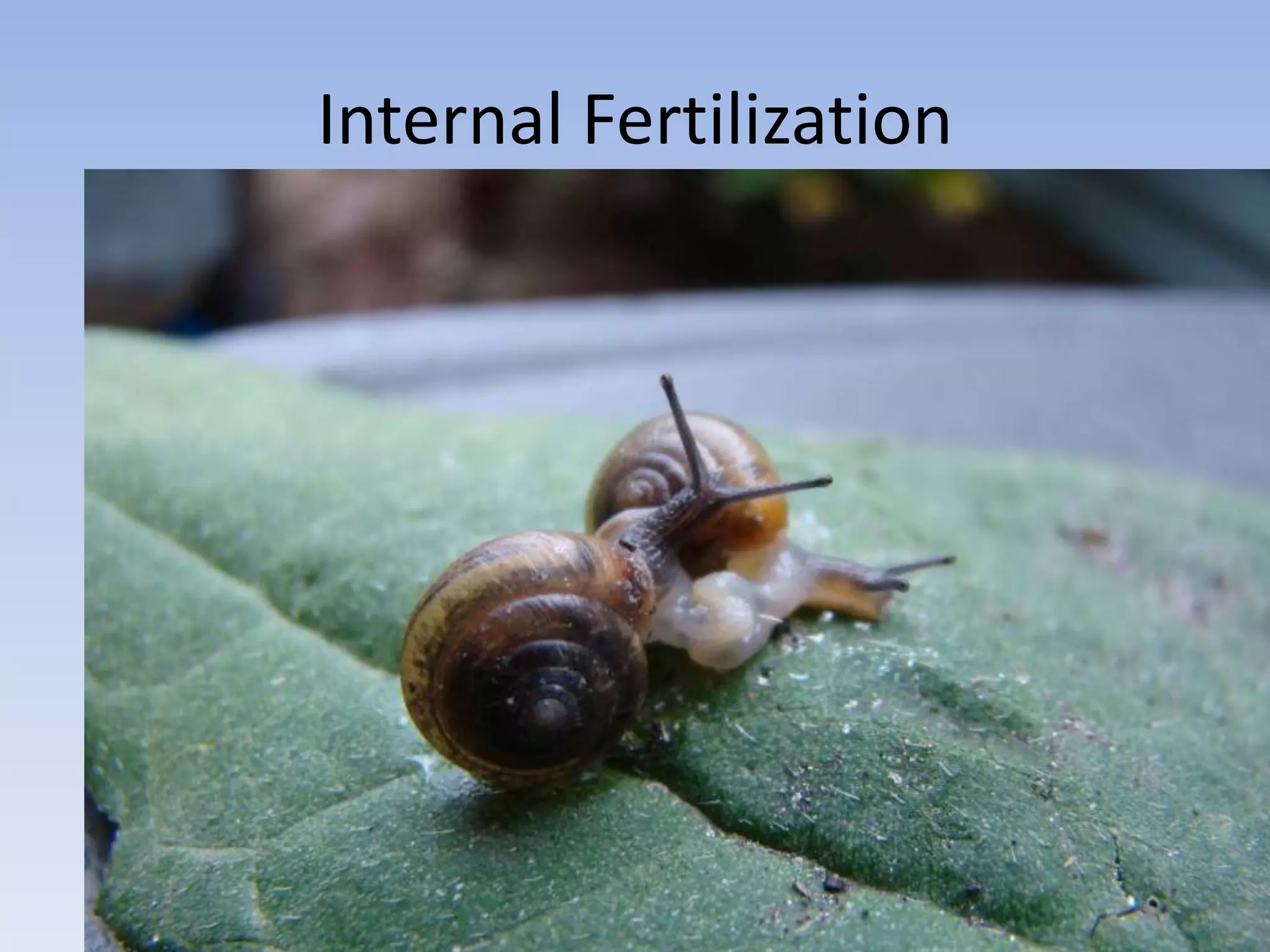
2. Internal fertilization – copulation – male deposits
sperm inside the female.
• Insects
• Snails (Hermaphrodites)
• Worms (Hermaphrodites)
• Reptiles
• Mammals
• Birds
External Fertilization
Internal Fertilization
Asexual Reproduction
•One parent.
•Parent and offspring
genetically identical.
•Offspring identical to
each other.
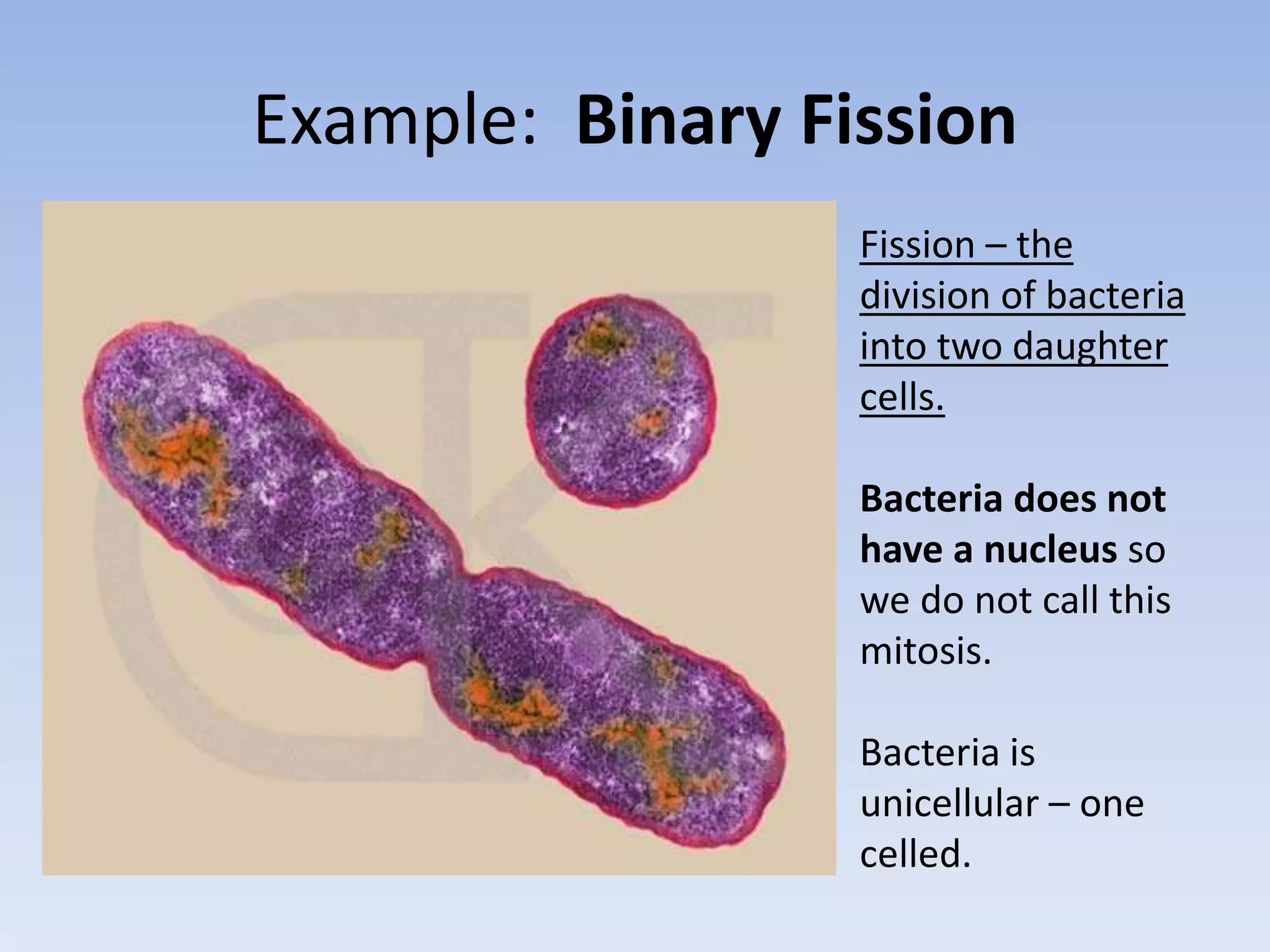
Example: Binary Fission
Fission – the
division of bacteria
into two daughter
cells.
Bacteria does not
have a nucleus so
we do not call this
mitosis.
Bacteria is
unicellular – one
celled.
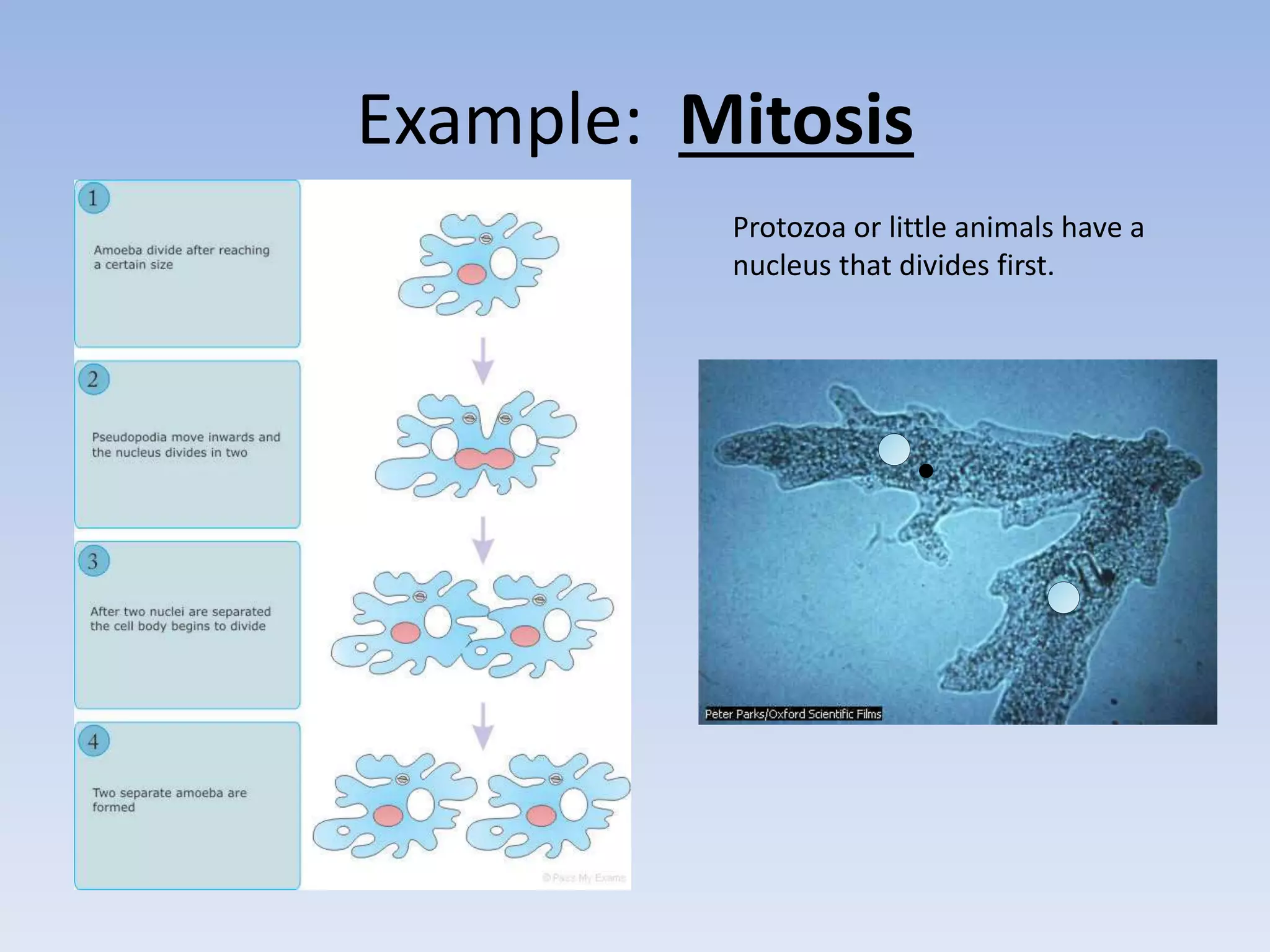
Example: Mitosis
Protozoa or little animals have a
nucleus that divides first.
Examples of asexual reproduction:
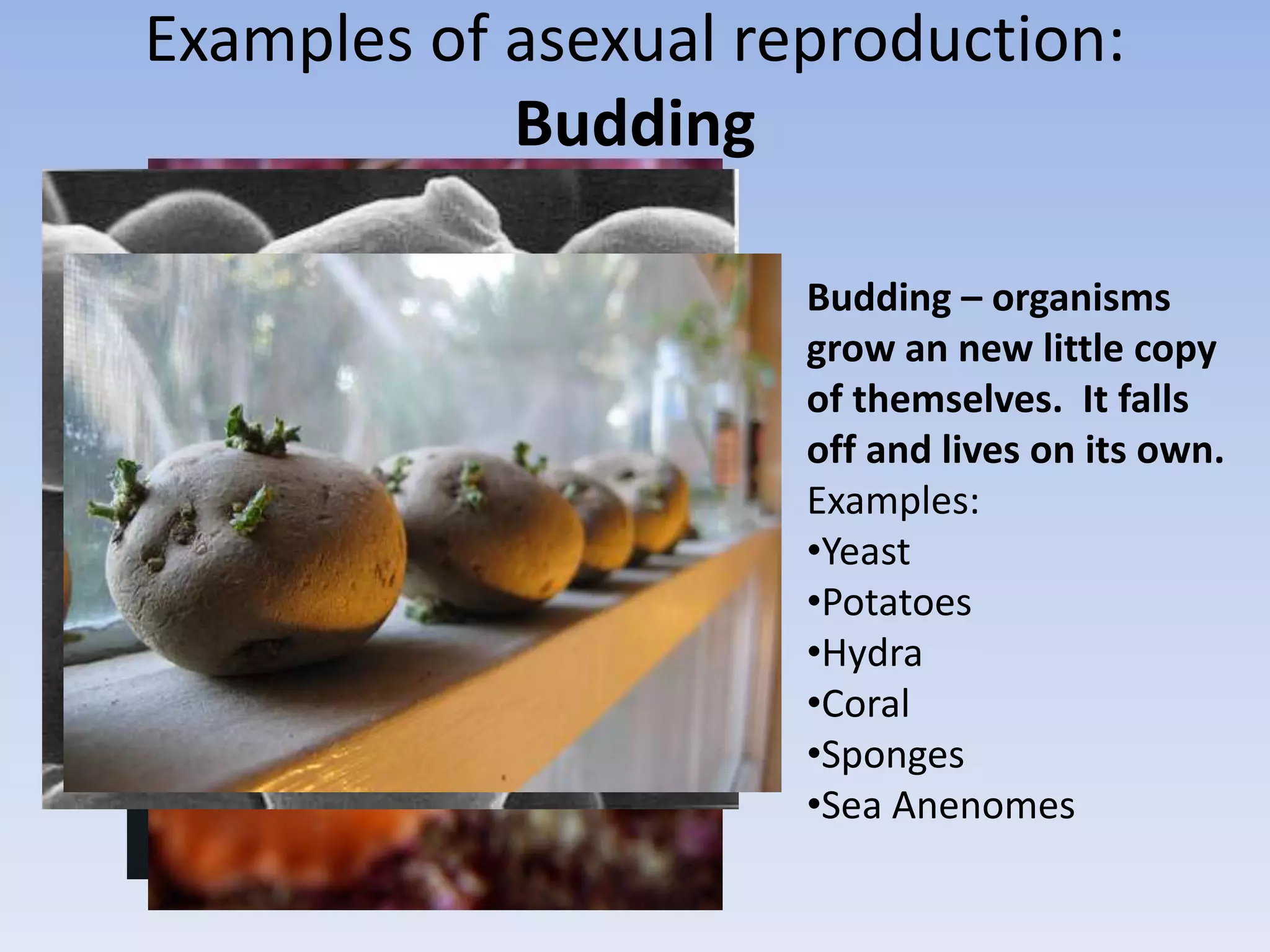
Budding
Budding – organisms
grow an new little copy
of themselves. It falls
off and lives on its own.
Examples:
•Yeast
•Potatoes
•Hydra
•Coral
•Sponges
•Sea Anenomes
Potato eyes sprouting
Examples of asexual reproduction:
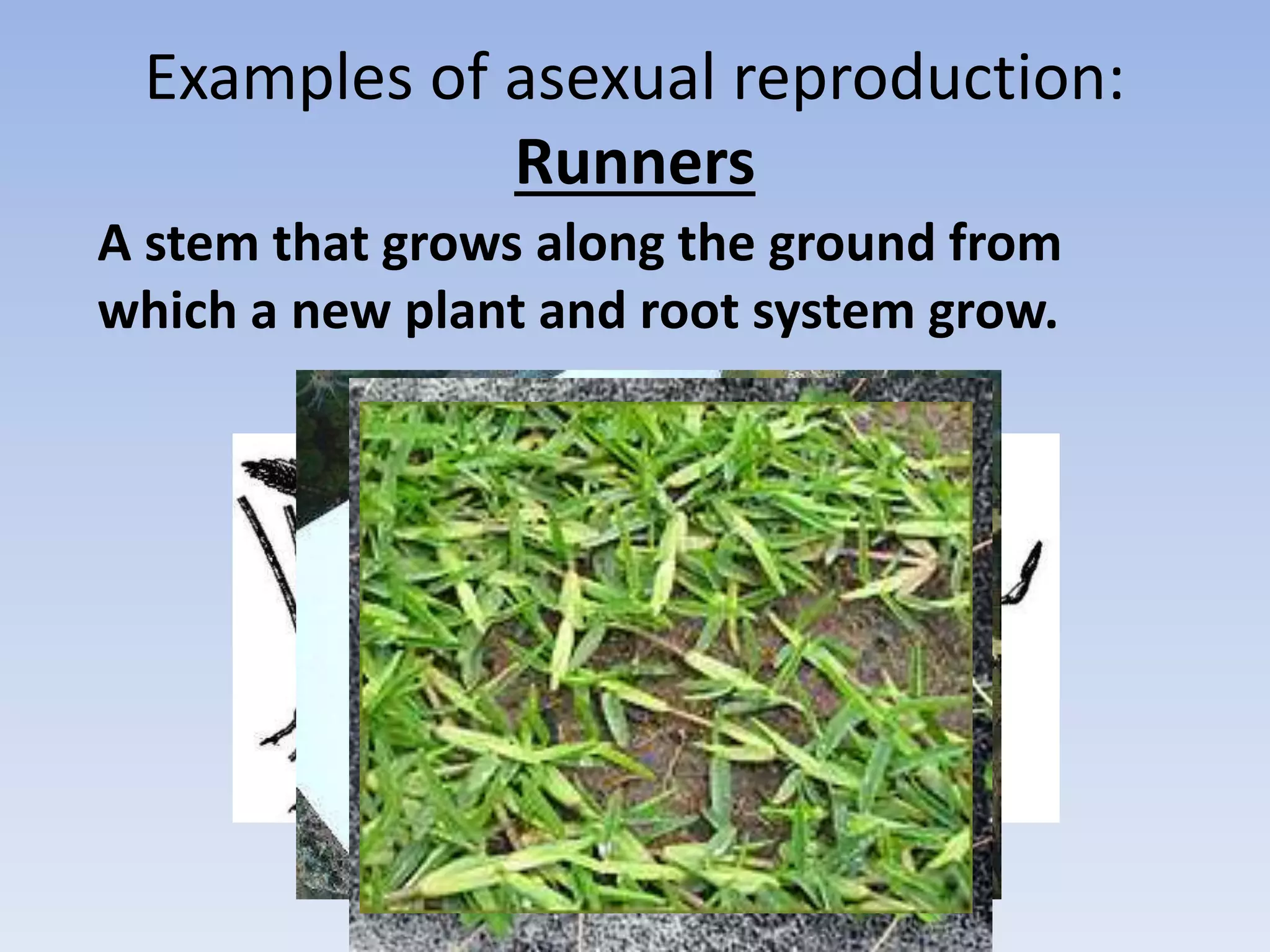
Runners
A stem that grows along the ground from
which a new plant and root system grow.
Examples of asexual reproduction:
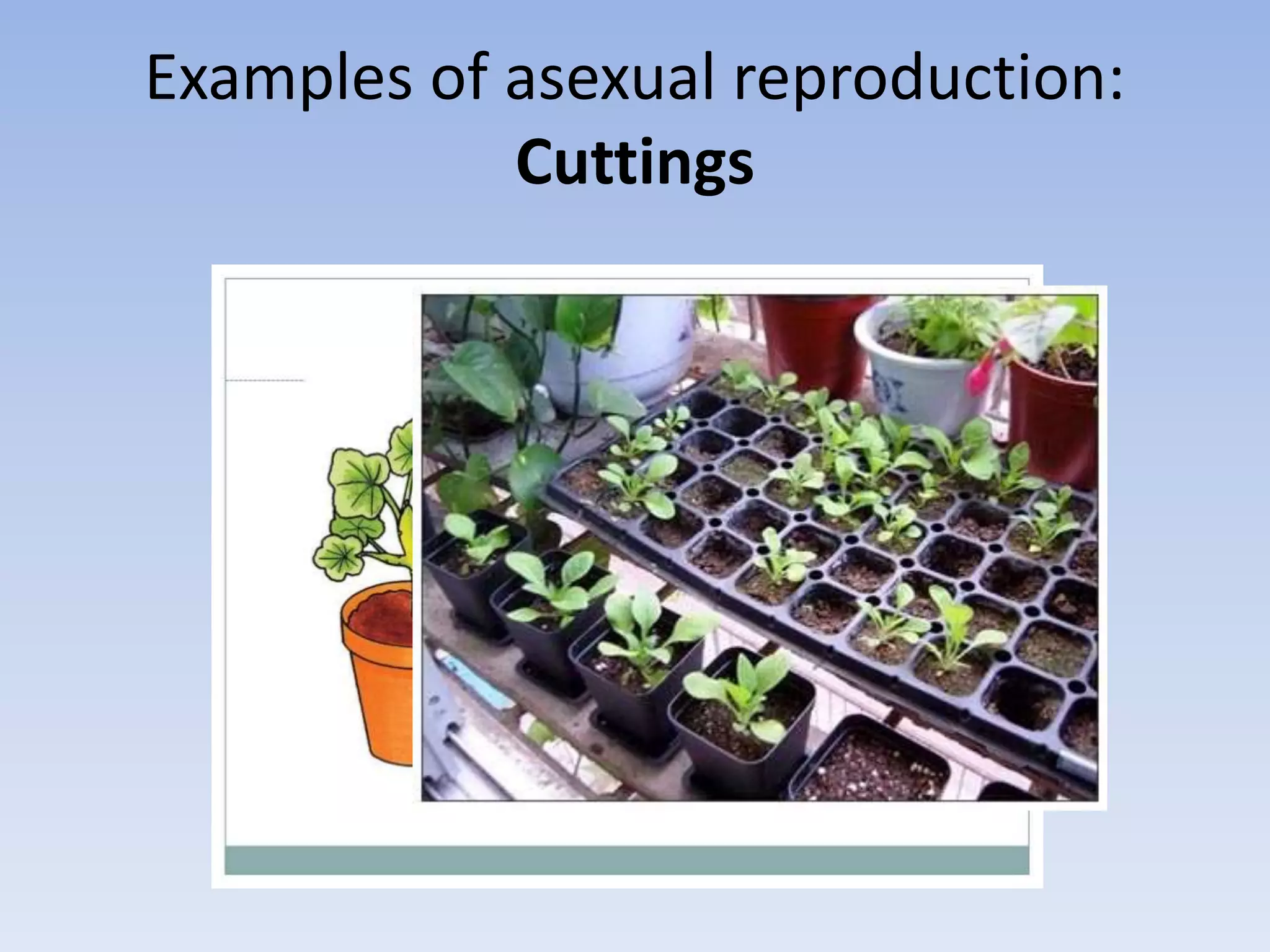
Cuttings
Examples of asexual reproduction:
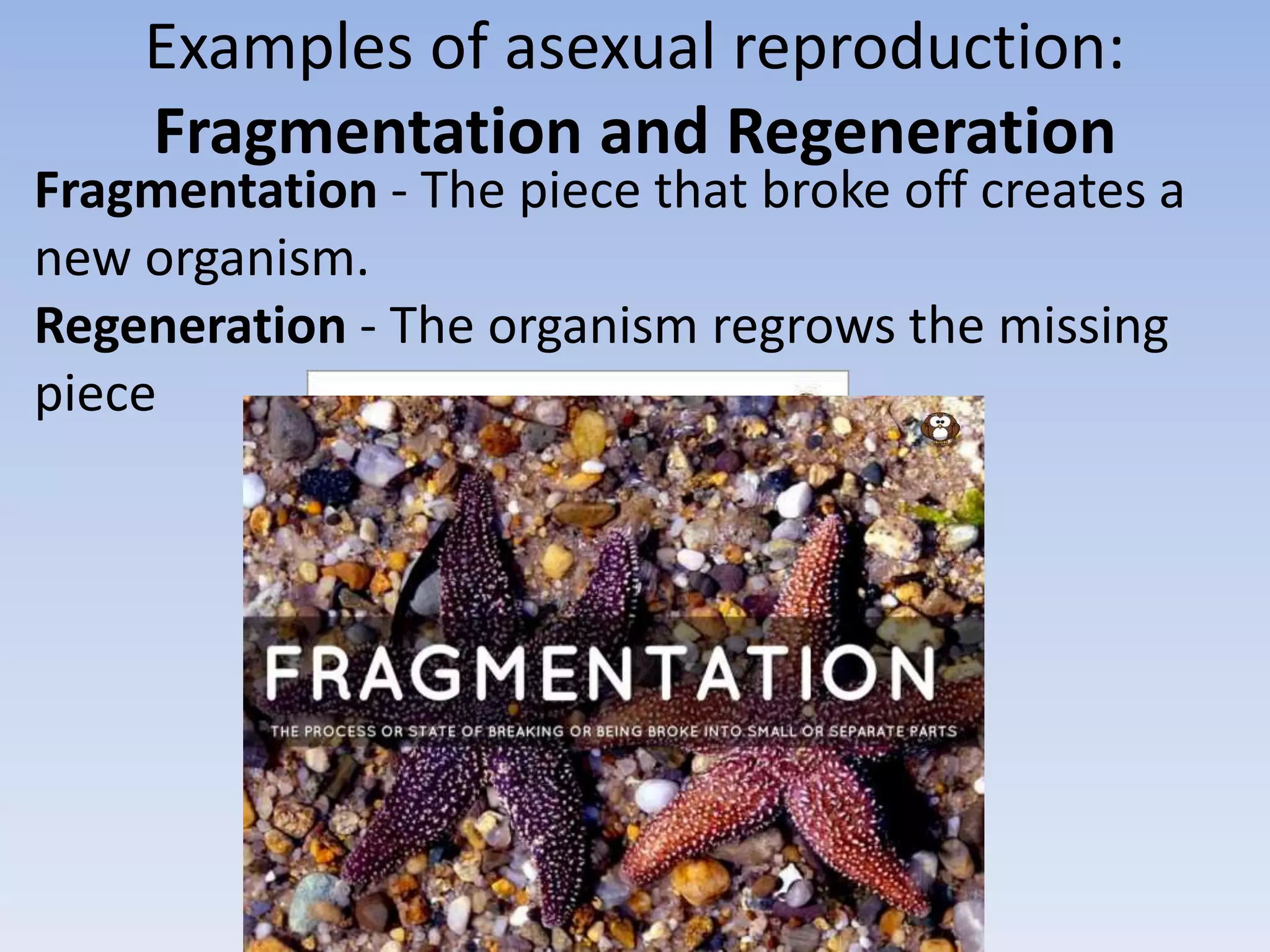
Fragmentation and Regeneration
Fragmentation - The piece that broke off creates a
new organism.
Regeneration - The organism regrows the missing
piece
Video Link 1
Video Link 2
Examples of asexual reproduction:
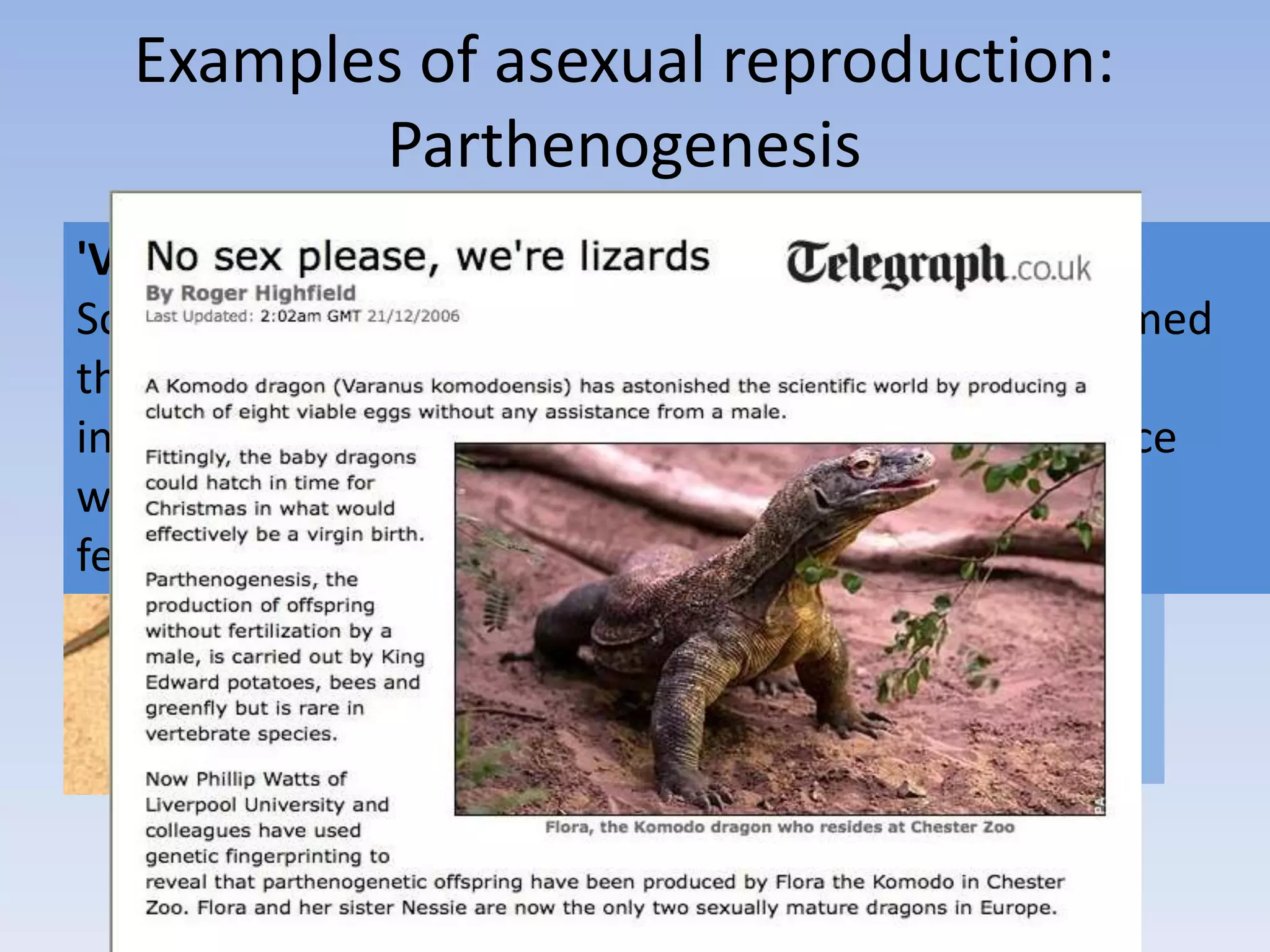
Parthenogenesis
Oleandar Aphid –
females give birth
to live young that
are genetically
identical to
themselves. No
males exist.
New Mexico
Whiptail Lizard
lays eggs that
were created by
parthenogenesis.
They are clones
of the mother.
'Virgin Birth' By Shark Confirmed: Second Case Ever
ScienceDaily (Oct. 11, 2008) — Scientists have confirmed
the second-ever case of a “virgin birth” in a shark,
indicating once again that female sharks can reproduce
without mating and raising the possibility that many
female sharks have this incredible capacity.
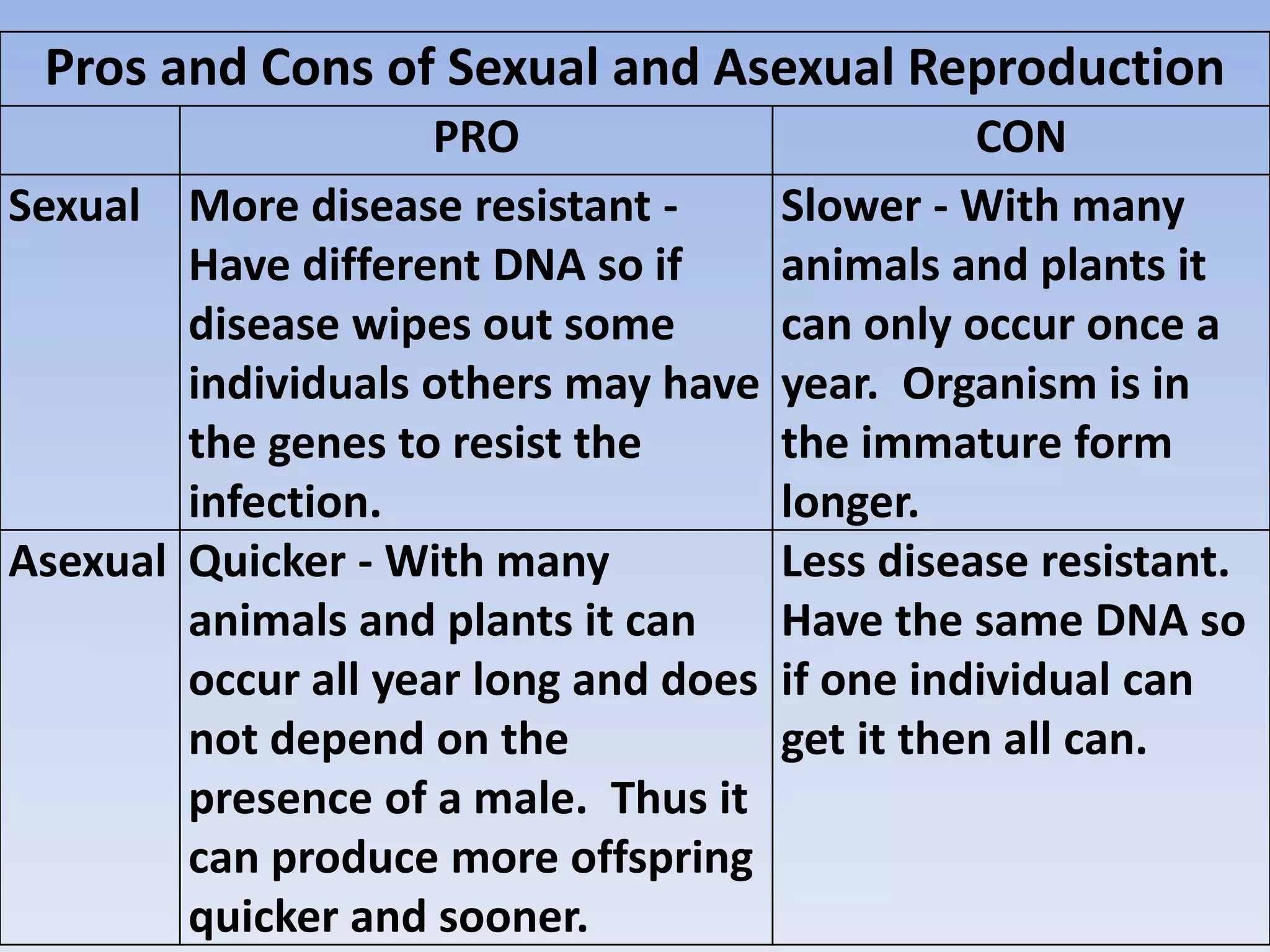
Pros and Cons of Sexual and Asexual Reproduction
PRO CON
Sexual More disease resistant -
Have different DNA so if
disease wipes out some
individuals others may have
the genes to resist the
infection.
Slower - With many
animals and plants it
can only occur once a
year. Organism is in
the immature form
longer.
Asexual Quicker - With many
animals and plants it can
occur all year long and does
not depend on the
presence of a male. Thus it
can produce more offspring
quicker and sooner.
Less disease resistant.
Have the same DNA so
if one individual can
get it then all can.

Reproduction 2

  • 1.
  • 2.
    Asexual Reproduction Sexual Reproduction 1.One Parent 2.Offspring are genetically identicalto the parent 3.Offspring are genetically identical to each other. 1.Two Parents 2.Offspring are genetically different from parents. 3.Offspring are genetically different from each other.
  • 3.
    Sexual Reproduction It “ain’t”only what you think! 1. Involves 2 parents. OR
  • 4.
  • 5.
    Sexual Reproduction 2. Offspringare genetically different from either parent. – The genes of the offspring are different from the parents. – Half of your chromosomes came from the egg and half from the sperm. – You are not exactly like either parent though you received half of your genes from each parent. – The offspring are different from each other with the exception of identical twins.
  • 6.
    Sexual Reproduction 3. Alwaysinvolves sperm and egg. WAIT! What about those plants? – Pollen contains sperm. – Ovules contain eggs. – Let’s take a closer look…. Video Link
  • 7.
    Reproductive Organs inPlants: Flowers Female Part – Pistil •Has a sticky top part called the stigma. It catches the pollen. •The skinny style holds up the stigma. •The fat bottom is called the ovary. The ovary holds the ovules or eggs. It becomes the fruit. (Draw this)
  • 8.
    Male Part –Stamen •The top yellow part is called the anther . It makes and releases pollen. Pollen contains the sperm. •The stalk is called the filament and it holds the anther up high. Reproductive Organs in Plants: Flowers and Cones
  • 9.
    Pollination Flowers that are pollinated byinsects have bright petals.
  • 10.
    ALL Trees reproducesexually. Some using flowers and some cones. • Most deciduous trees (those with regular leaves that fall off in the winter) reproduce sexually using flowers. • Some attract insects with their pretty petals and nectar. • Most trees do not have pretty petals because the wind pollinates their flowers.
  • 11.
  • 12.
    Evergreen Trees SexuallyReproduce Using Cones Male Cones - fall off after releasing their pollen in the spring. Female Cones - are green when they receive the pollen. It takes 2 years for the seeds to mature. The cone then opens and releases them.
  • 13.
    From Meiosis toZygote Meiosis Meiosis Fertilization 24 chromosomes 24 chromosomes 48 chromosomes Zygote sperm egg
  • 14.
    Sexual Reproduction inAnimals 1. External fertilization – most common in aquatic animals- because there is water, the sperm can swim. • Oysters and coral and sponges • Fish (spawning) • Amphibians (frogs) 2. Internal fertilization – copulation – male deposits sperm inside the female. • Insects • Snails (Hermaphrodites) • Worms (Hermaphrodites) • Reptiles • Mammals • Birds
  • 15.
  • 16.
  • 17.
    Asexual Reproduction •One parent. •Parentand offspring genetically identical. •Offspring identical to each other.
  • 18.
    Example: Binary Fission Fission– the division of bacteria into two daughter cells. Bacteria does not have a nucleus so we do not call this mitosis. Bacteria is unicellular – one celled.
  • 19.
    Example: Mitosis Protozoa orlittle animals have a nucleus that divides first.
  • 20.
    Examples of asexualreproduction: Budding Budding – organisms grow an new little copy of themselves. It falls off and lives on its own. Examples: •Yeast •Potatoes •Hydra •Coral •Sponges •Sea Anenomes
  • 21.
  • 22.
    Examples of asexualreproduction: Runners A stem that grows along the ground from which a new plant and root system grow.
  • 23.
    Examples of asexualreproduction: Cuttings
  • 24.
    Examples of asexualreproduction: Fragmentation and Regeneration Fragmentation - The piece that broke off creates a new organism. Regeneration - The organism regrows the missing piece
  • 25.
  • 26.
    Examples of asexualreproduction: Parthenogenesis Oleandar Aphid – females give birth to live young that are genetically identical to themselves. No males exist. New Mexico Whiptail Lizard lays eggs that were created by parthenogenesis. They are clones of the mother. 'Virgin Birth' By Shark Confirmed: Second Case Ever ScienceDaily (Oct. 11, 2008) — Scientists have confirmed the second-ever case of a “virgin birth” in a shark, indicating once again that female sharks can reproduce without mating and raising the possibility that many female sharks have this incredible capacity.
  • 27.
    Pros and Consof Sexual and Asexual Reproduction PRO CON Sexual More disease resistant - Have different DNA so if disease wipes out some individuals others may have the genes to resist the infection. Slower - With many animals and plants it can only occur once a year. Organism is in the immature form longer. Asexual Quicker - With many animals and plants it can occur all year long and does not depend on the presence of a male. Thus it can produce more offspring quicker and sooner. Less disease resistant. Have the same DNA so if one individual can get it then all can.