Assignment
on
Clonal selection and it’s utilization in
fruit breeding
Clone
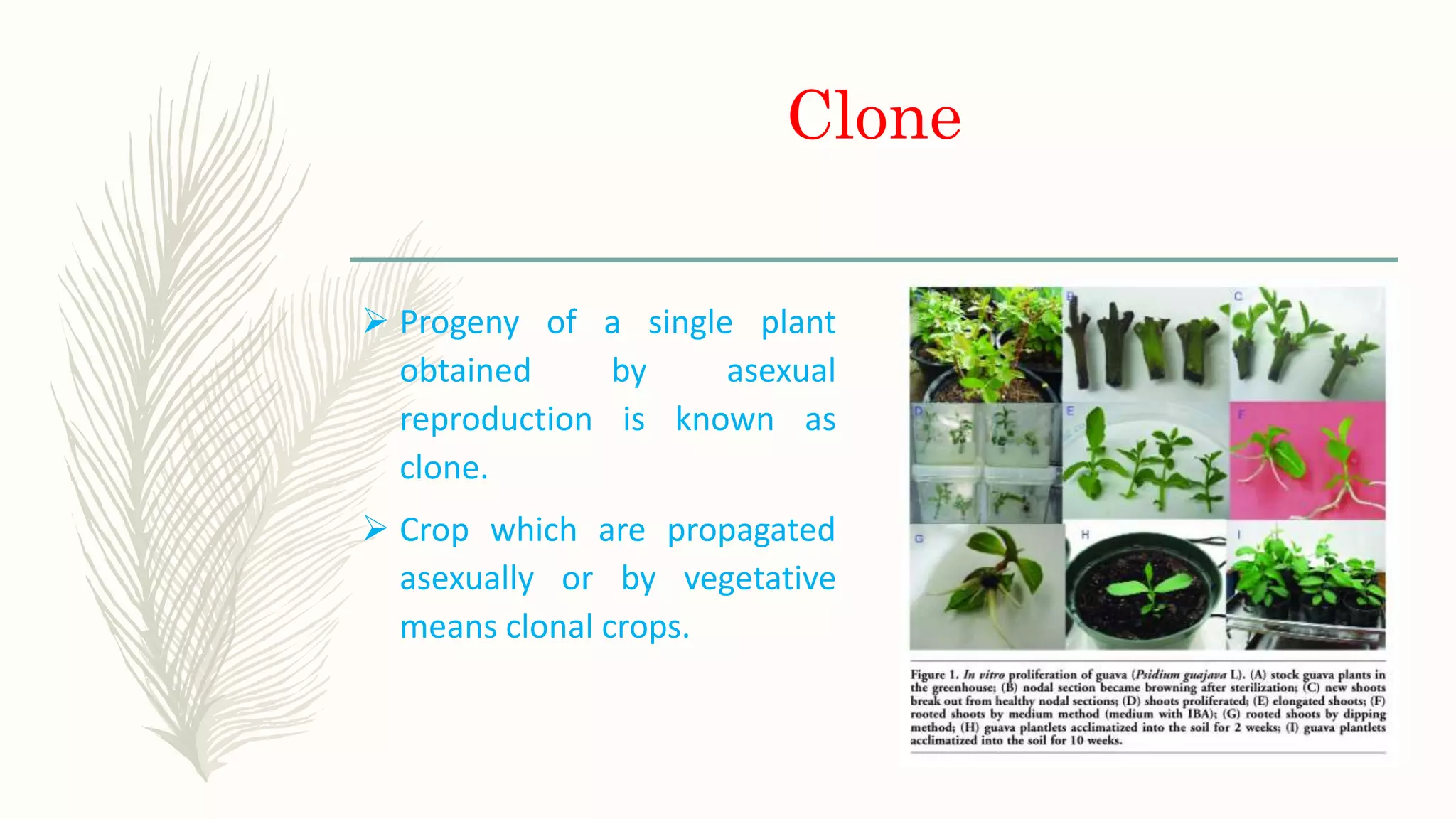
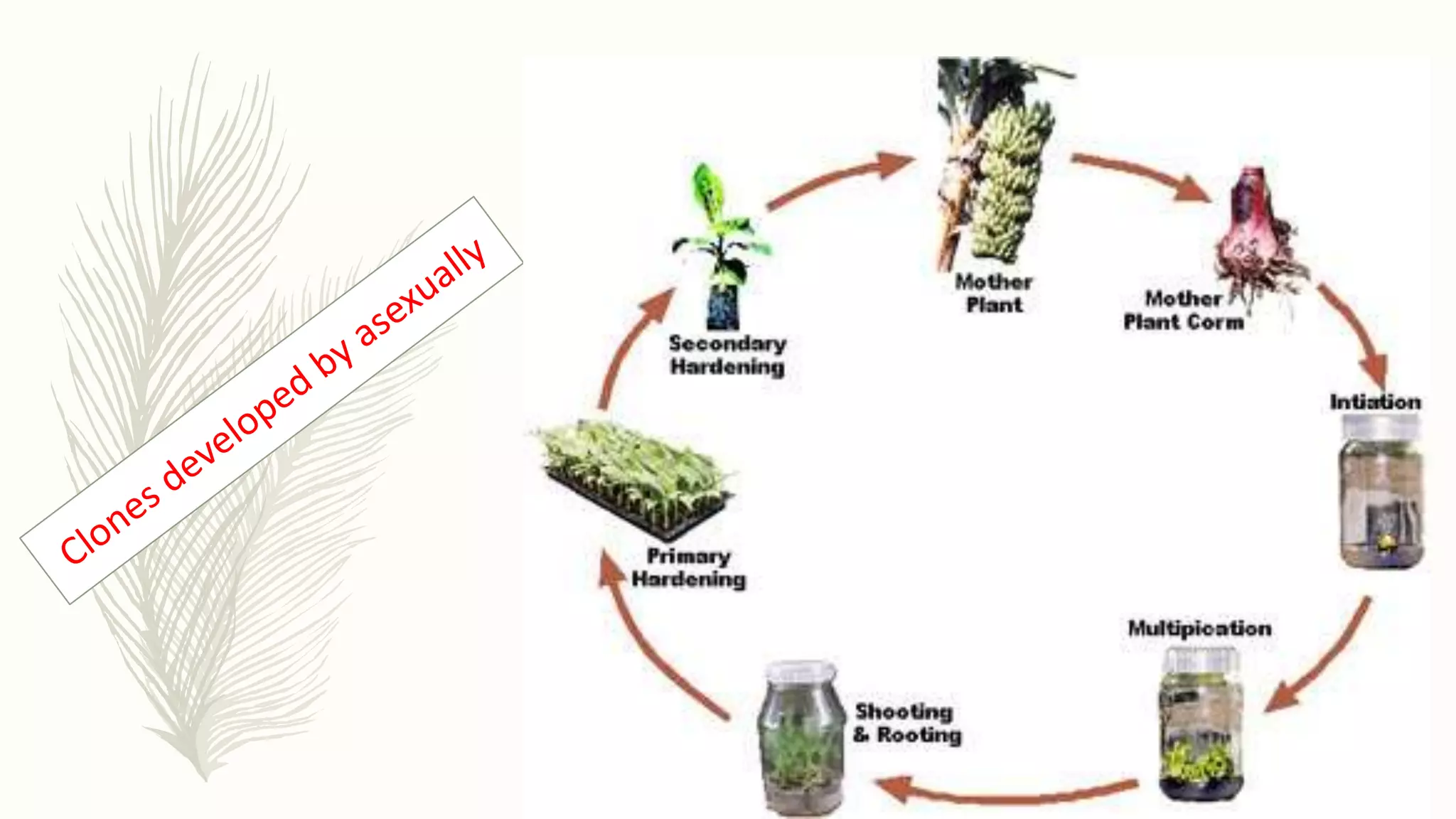
 Progeny of a single plant
obtained by asexual
reproduction is known as
clone.
 Crop which are propagated
asexually or by vegetative
means clonal crops.
Features of Clones
 Homogeneous constitution :- Plants of a clone have similar genetic constitution.
 Heterozygosity :- Phenotypically similar but heterozygous.
 Lack of genetic variation :- Phenotypically variation present within a clone is due to
environmental effect not genetically.
P=G+E+GE+mu
 Immortality :- Maintained by asexual reproduction
 Vigorous growth :- Clonal selection is useful in conserving the heterosis far a long
period of time.
 Wider Adaptation :- Due to high level of heterozygosity than pure lines.
Origin of Genetic variation
within Clones.
1. Somatic mutation
2. Mechanical mixture
3. Sexual reproduction
4. Segregation in F1
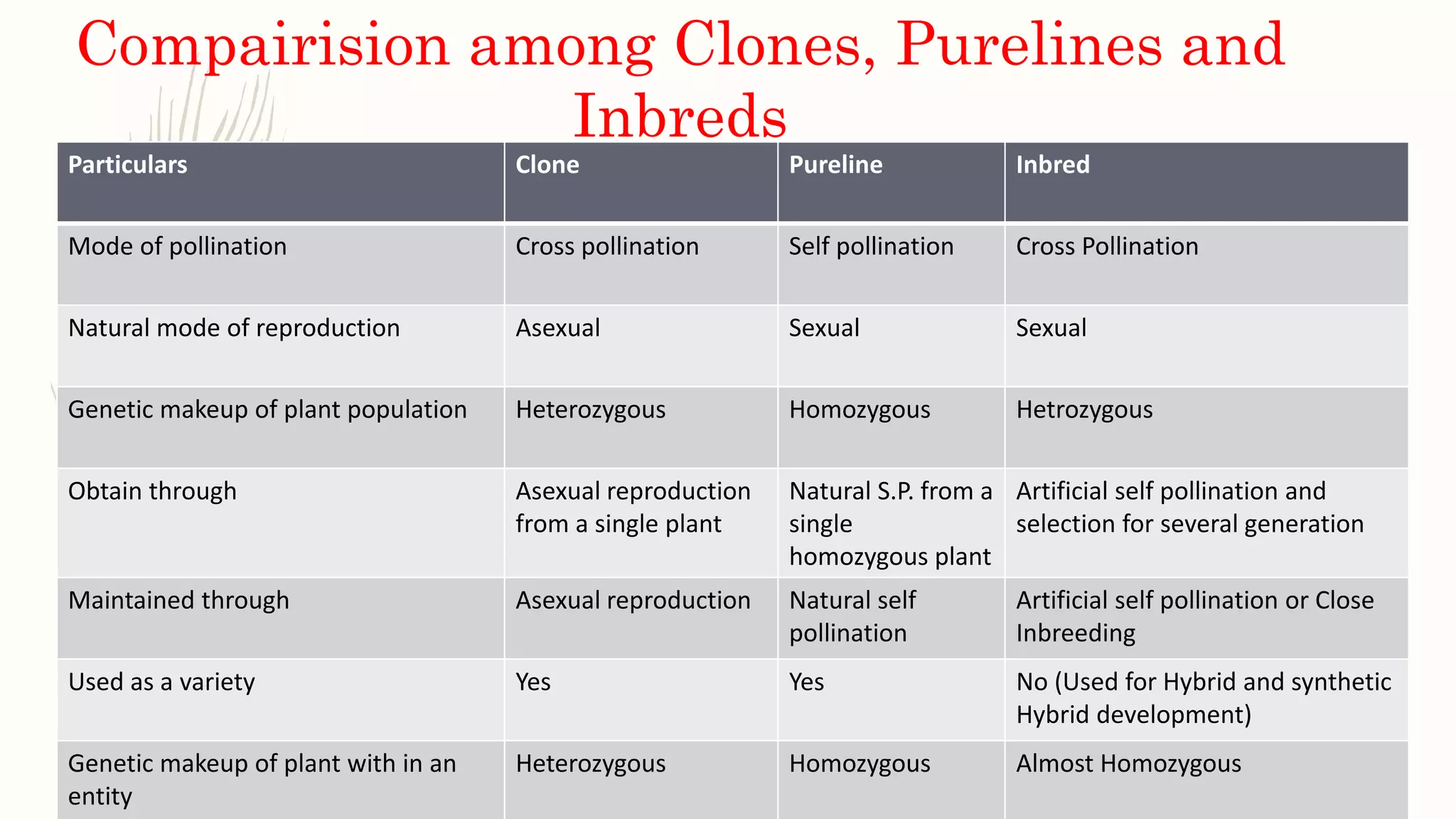
Compairision among Clones, Purelines and
Inbreds
Particulars Clone Pureline Inbred
Mode of pollination Cross pollination Self pollination Cross Pollination
Natural mode of reproduction Asexual Sexual Sexual
Genetic makeup of plant population Heterozygous Homozygous Hetrozygous
Obtain through Asexual reproduction
from a single plant
Natural S.P. from a
single
homozygous plant
Artificial self pollination and
selection for several generation
Maintained through Asexual reproduction Natural self
pollination
Artificial self pollination or Close
Inbreeding
Used as a variety Yes Yes No (Used for Hybrid and synthetic
Hybrid development)
Genetic makeup of plant with in an
entity
Heterozygous Homozygous Almost Homozygous
Clonal Degeneration
The loss in vigour and productivity of clone with time is known as
clonal degeneration.
 Clonal degeneration= Degeneration is inherent in the clone.
 Degeneration may result from
1) Mutation
2) Viral diseases
3) Bacterial diseases
Method of improvement
 A single outstanding plant select from a population forms the
basis of a new variety.
 The breeding behaviour of genotype of this plant is not important
since there would be no further sexual reproduction.
 An improved variety that has becomes variable, or from a
population produces by crossing two or more clones.
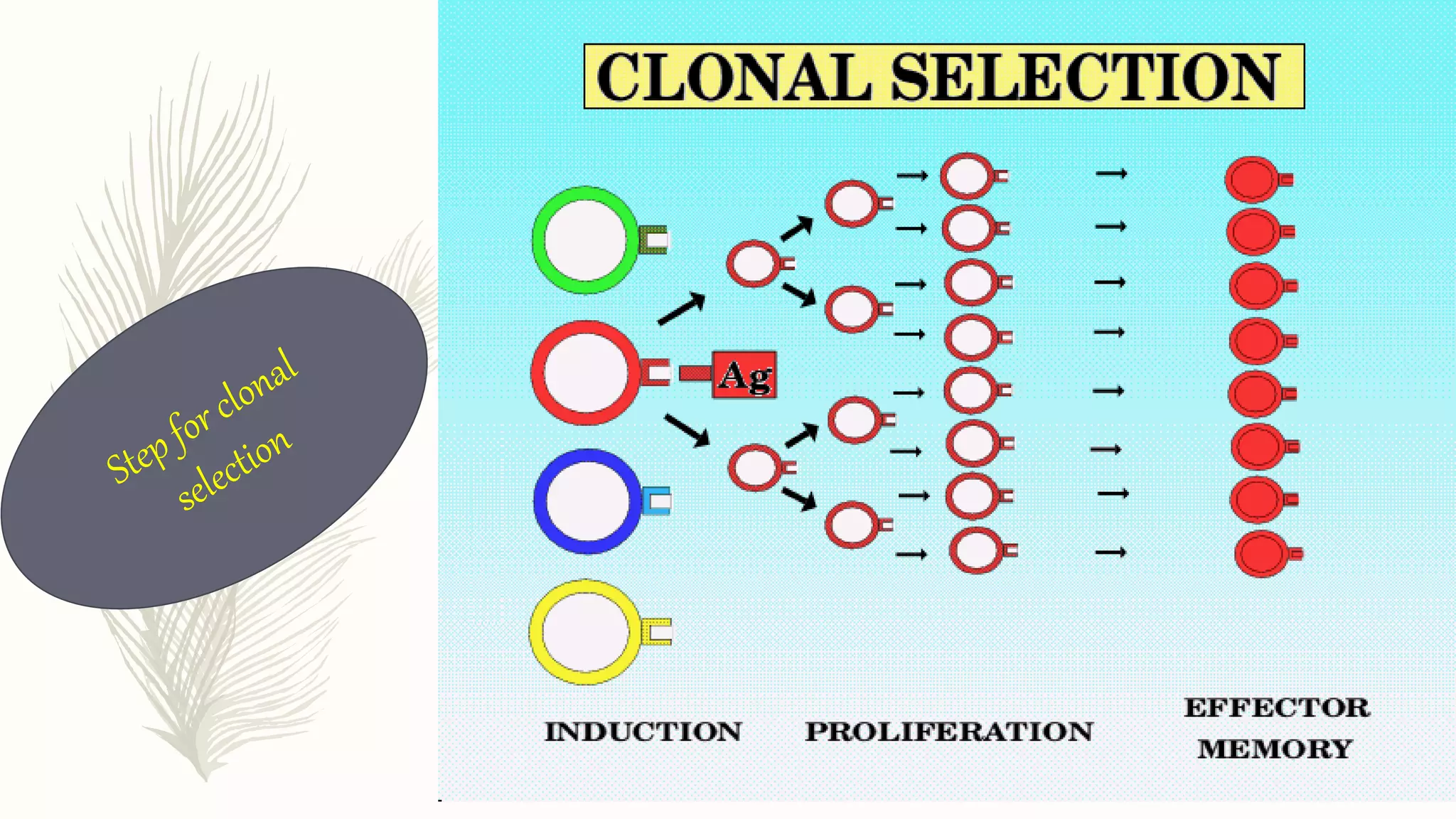
Clonal selections
Improvement of asexually propagated crops by
selecting superior clones is known as clonal selection.
Superior clones can be isolated from three types of materials
1) Local variety
2) Introduced variety
3) Inter crossed population
Breeding procedure of clonal
selection
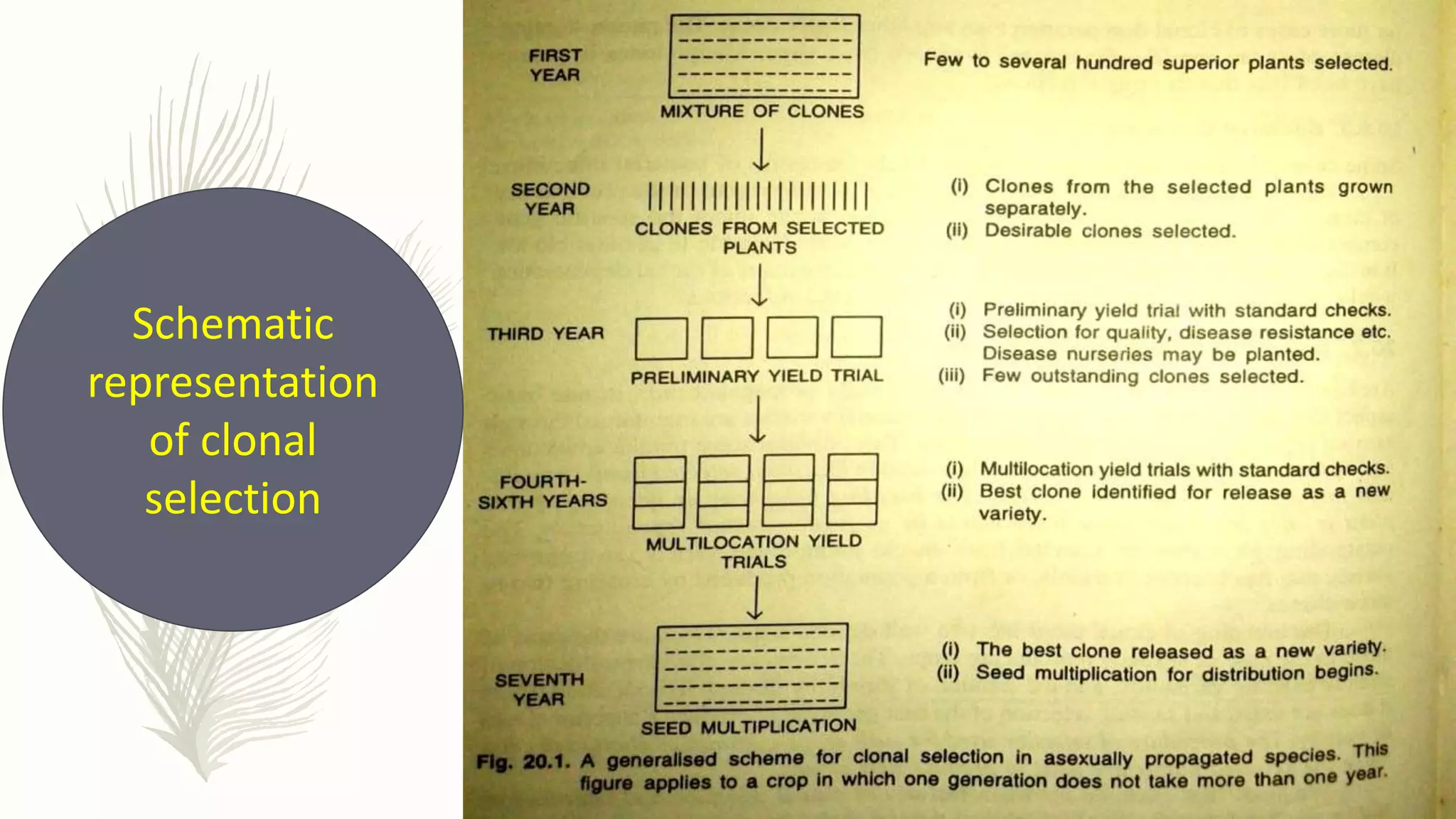
FIRST YEAR :-
a) From a mixed variable population, few hundred to few
thousand desirable plant are selected.
b) A rigid selection can be done for simply inherited
characters with high heritability.
c) Plant with obvious weakness are eliminated.
SECOND YEAR:-
Clones from the selected plants grown separately.
a) Desirable clones selected
THIRD YEAR :-
Preliminary yield trials with standard checks.
a) Selection for quality, disease resistance etc. Disease
nurseries may be planted.
b) Few outstanding clone selected.
FOURTH-SIXTH YEAR :-
Multilocation yield trials with standard checks.
a) Best clone identified for release as a new
variety.
SEVENTH YEAR :-
The best clone release as a new variety.
a) Seed multiplication for distribution begins.
Schematic
representation
of clonal
selection
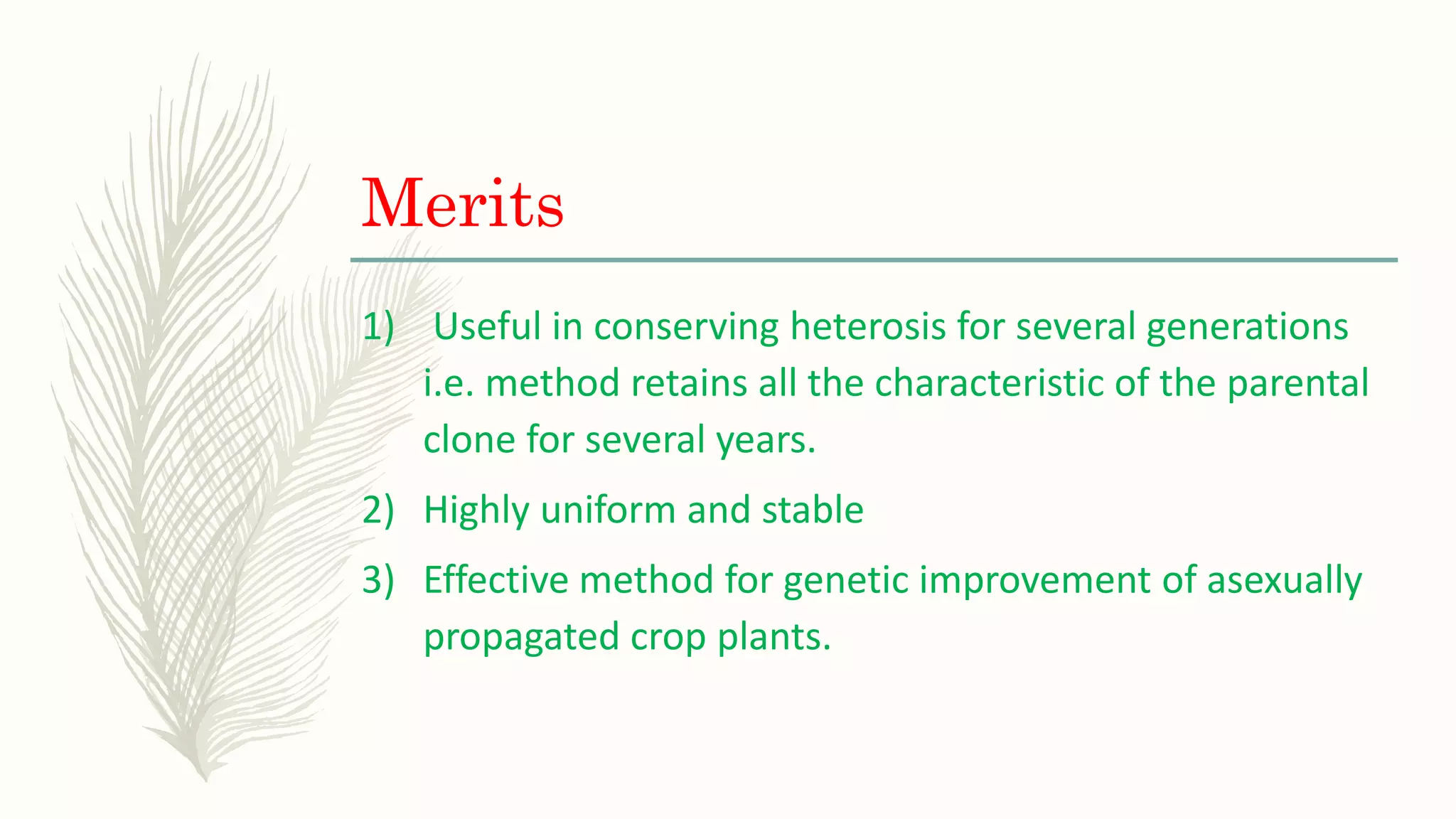
Merits
1) Useful in conserving heterosis for several generations
i.e. method retains all the characteristic of the parental
clone for several years.
2) Highly uniform and stable
3) Effective method for genetic improvement of asexually
propagated crop plants.
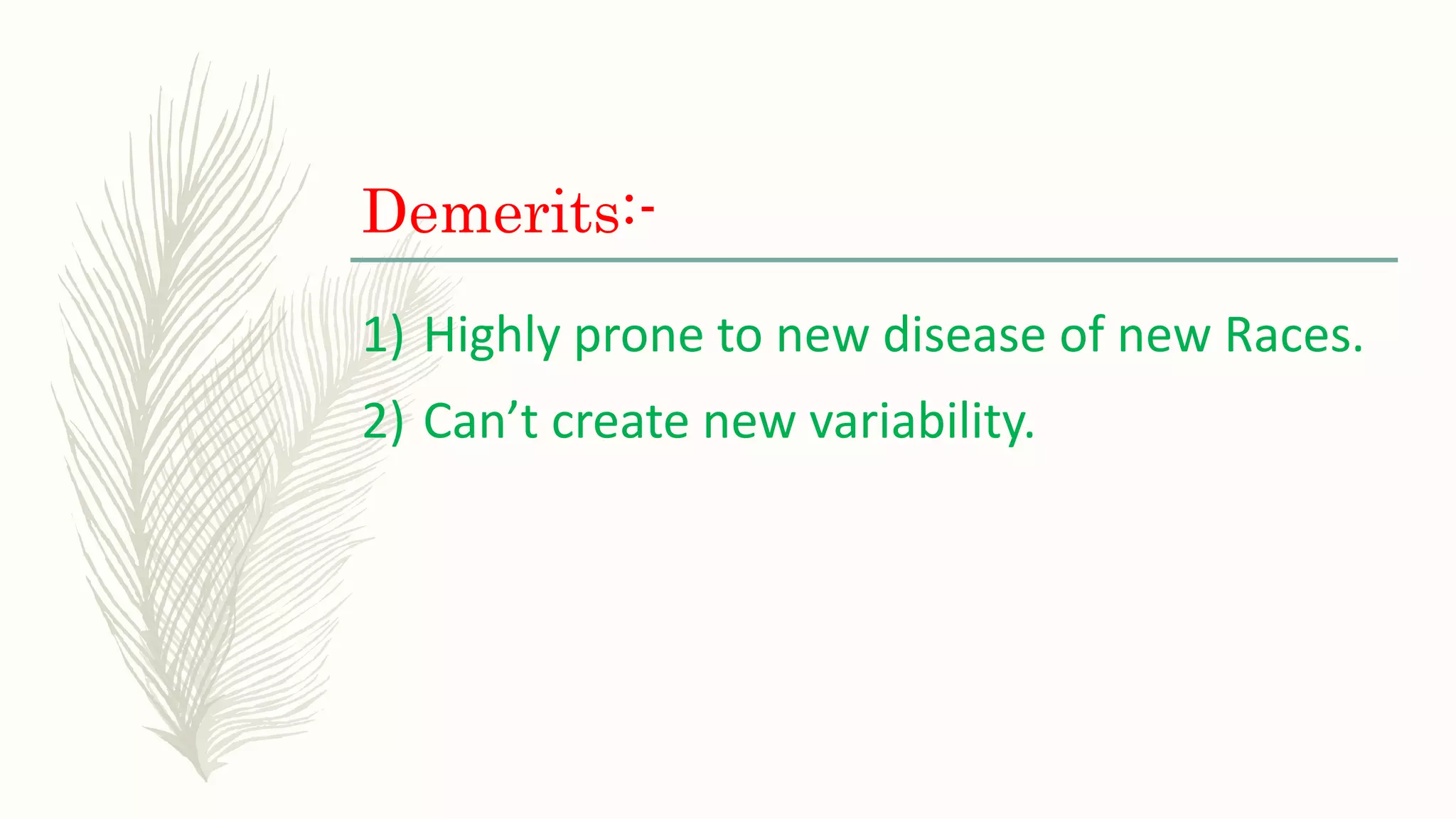
Demerits:-
1) Highly prone to new disease of new Races.
2) Can’t create new variability.
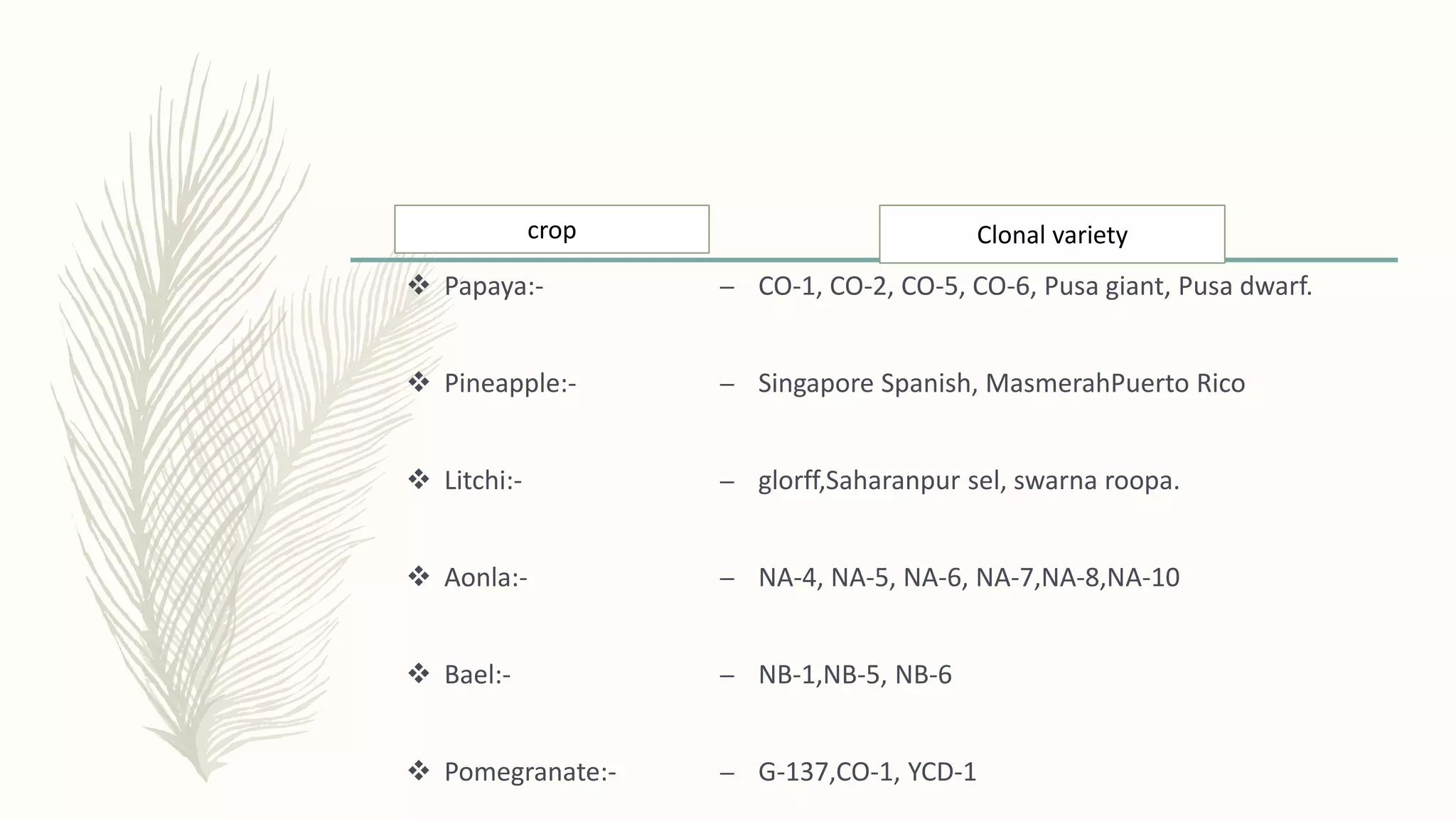
 Papaya:-
 Pineapple:-
 Litchi:-
 Aonla:-
 Bael:-
 Pomegranate:-
– CO-1, CO-2, CO-5, CO-6, Pusa giant, Pusa dwarf.
– Singapore Spanish, MasmerahPuerto Rico
– glorff,Saharanpur sel, swarna roopa.
– NA-4, NA-5, NA-6, NA-7,NA-8,NA-10
– NB-1,NB-5, NB-6
– G-137,CO-1, YCD-1
crop Clonal variety
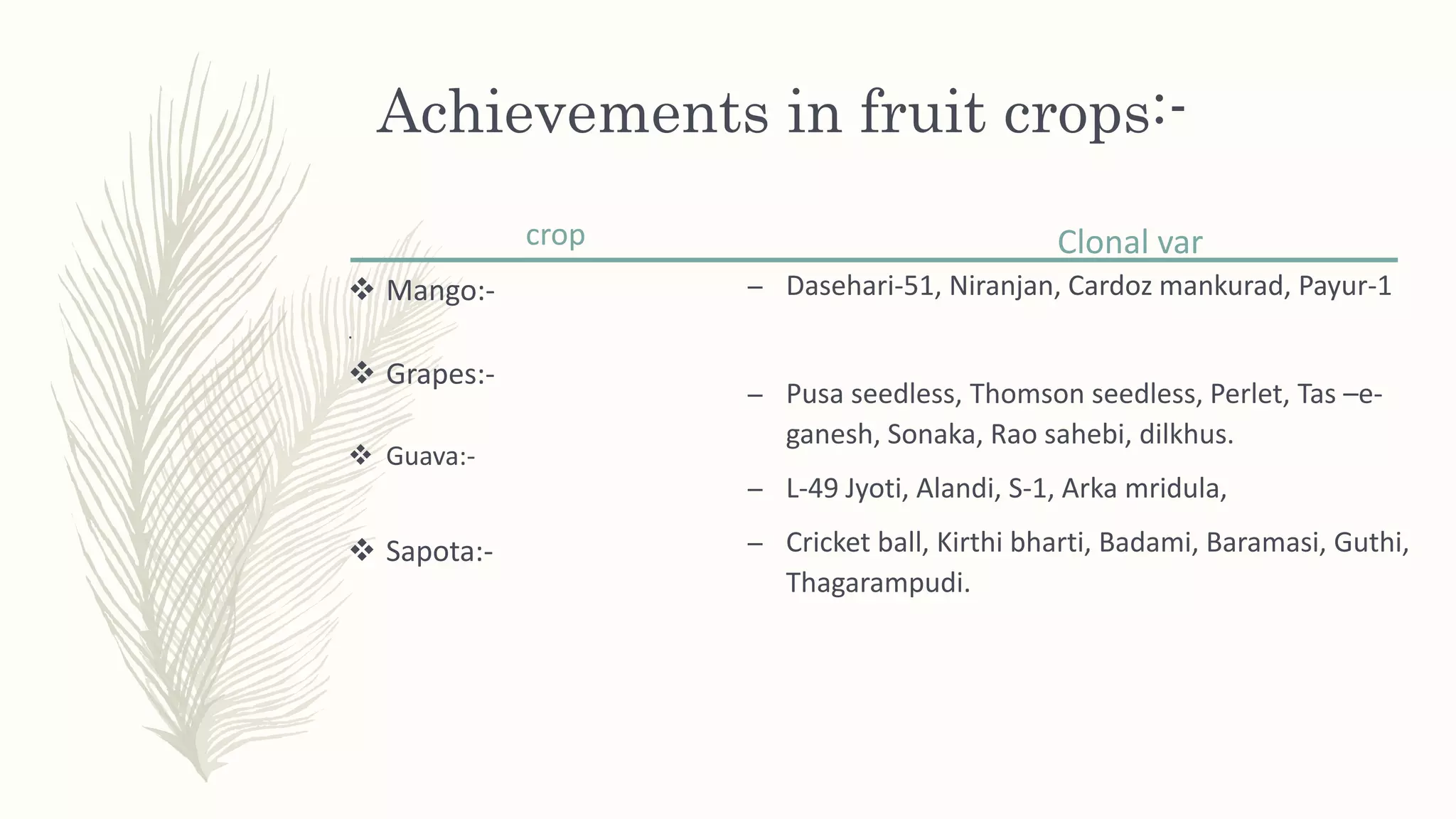
Achievements in fruit crops:-
crop
 Mango:-
.
 Grapes:-
 Guava:-
 Sapota:-
Clonal var
– Dasehari-51, Niranjan, Cardoz mankurad, Payur-1
– Pusa seedless, Thomson seedless, Perlet, Tas –e-
ganesh, Sonaka, Rao sahebi, dilkhus.
– L-49 Jyoti, Alandi, S-1, Arka mridula,
– Cricket ball, Kirthi bharti, Badami, Baramasi, Guthi,
Thagarampudi.
Breeding assignment on clonal selection

Breeding assignment on clonal selection

  • 2.
    Assignment on Clonal selection andit’s utilization in fruit breeding
  • 3.
    Clone  Progeny ofa single plant obtained by asexual reproduction is known as clone.  Crop which are propagated asexually or by vegetative means clonal crops.
  • 5.
    Features of Clones Homogeneous constitution :- Plants of a clone have similar genetic constitution.  Heterozygosity :- Phenotypically similar but heterozygous.  Lack of genetic variation :- Phenotypically variation present within a clone is due to environmental effect not genetically. P=G+E+GE+mu  Immortality :- Maintained by asexual reproduction  Vigorous growth :- Clonal selection is useful in conserving the heterosis far a long period of time.  Wider Adaptation :- Due to high level of heterozygosity than pure lines.
  • 6.
    Origin of Geneticvariation within Clones. 1. Somatic mutation 2. Mechanical mixture 3. Sexual reproduction 4. Segregation in F1
  • 7.
    Compairision among Clones,Purelines and Inbreds Particulars Clone Pureline Inbred Mode of pollination Cross pollination Self pollination Cross Pollination Natural mode of reproduction Asexual Sexual Sexual Genetic makeup of plant population Heterozygous Homozygous Hetrozygous Obtain through Asexual reproduction from a single plant Natural S.P. from a single homozygous plant Artificial self pollination and selection for several generation Maintained through Asexual reproduction Natural self pollination Artificial self pollination or Close Inbreeding Used as a variety Yes Yes No (Used for Hybrid and synthetic Hybrid development) Genetic makeup of plant with in an entity Heterozygous Homozygous Almost Homozygous
  • 8.
    Clonal Degeneration The lossin vigour and productivity of clone with time is known as clonal degeneration.  Clonal degeneration= Degeneration is inherent in the clone.  Degeneration may result from 1) Mutation 2) Viral diseases 3) Bacterial diseases
  • 9.
    Method of improvement A single outstanding plant select from a population forms the basis of a new variety.  The breeding behaviour of genotype of this plant is not important since there would be no further sexual reproduction.  An improved variety that has becomes variable, or from a population produces by crossing two or more clones.
  • 10.
    Clonal selections Improvement ofasexually propagated crops by selecting superior clones is known as clonal selection. Superior clones can be isolated from three types of materials 1) Local variety 2) Introduced variety 3) Inter crossed population
  • 12.
    Breeding procedure ofclonal selection FIRST YEAR :- a) From a mixed variable population, few hundred to few thousand desirable plant are selected. b) A rigid selection can be done for simply inherited characters with high heritability. c) Plant with obvious weakness are eliminated.
  • 13.
    SECOND YEAR:- Clones fromthe selected plants grown separately. a) Desirable clones selected
  • 14.
    THIRD YEAR :- Preliminaryyield trials with standard checks. a) Selection for quality, disease resistance etc. Disease nurseries may be planted. b) Few outstanding clone selected.
  • 15.
    FOURTH-SIXTH YEAR :- Multilocationyield trials with standard checks. a) Best clone identified for release as a new variety.
  • 16.
    SEVENTH YEAR :- Thebest clone release as a new variety. a) Seed multiplication for distribution begins.
  • 17.
  • 18.
    Merits 1) Useful inconserving heterosis for several generations i.e. method retains all the characteristic of the parental clone for several years. 2) Highly uniform and stable 3) Effective method for genetic improvement of asexually propagated crop plants.
  • 19.
    Demerits:- 1) Highly proneto new disease of new Races. 2) Can’t create new variability.
  • 20.
     Papaya:-  Pineapple:- Litchi:-  Aonla:-  Bael:-  Pomegranate:- – CO-1, CO-2, CO-5, CO-6, Pusa giant, Pusa dwarf. – Singapore Spanish, MasmerahPuerto Rico – glorff,Saharanpur sel, swarna roopa. – NA-4, NA-5, NA-6, NA-7,NA-8,NA-10 – NB-1,NB-5, NB-6 – G-137,CO-1, YCD-1 crop Clonal variety
  • 21.
    Achievements in fruitcrops:- crop  Mango:- .  Grapes:-  Guava:-  Sapota:- Clonal var – Dasehari-51, Niranjan, Cardoz mankurad, Payur-1 – Pusa seedless, Thomson seedless, Perlet, Tas –e- ganesh, Sonaka, Rao sahebi, dilkhus. – L-49 Jyoti, Alandi, S-1, Arka mridula, – Cricket ball, Kirthi bharti, Badami, Baramasi, Guthi, Thagarampudi.