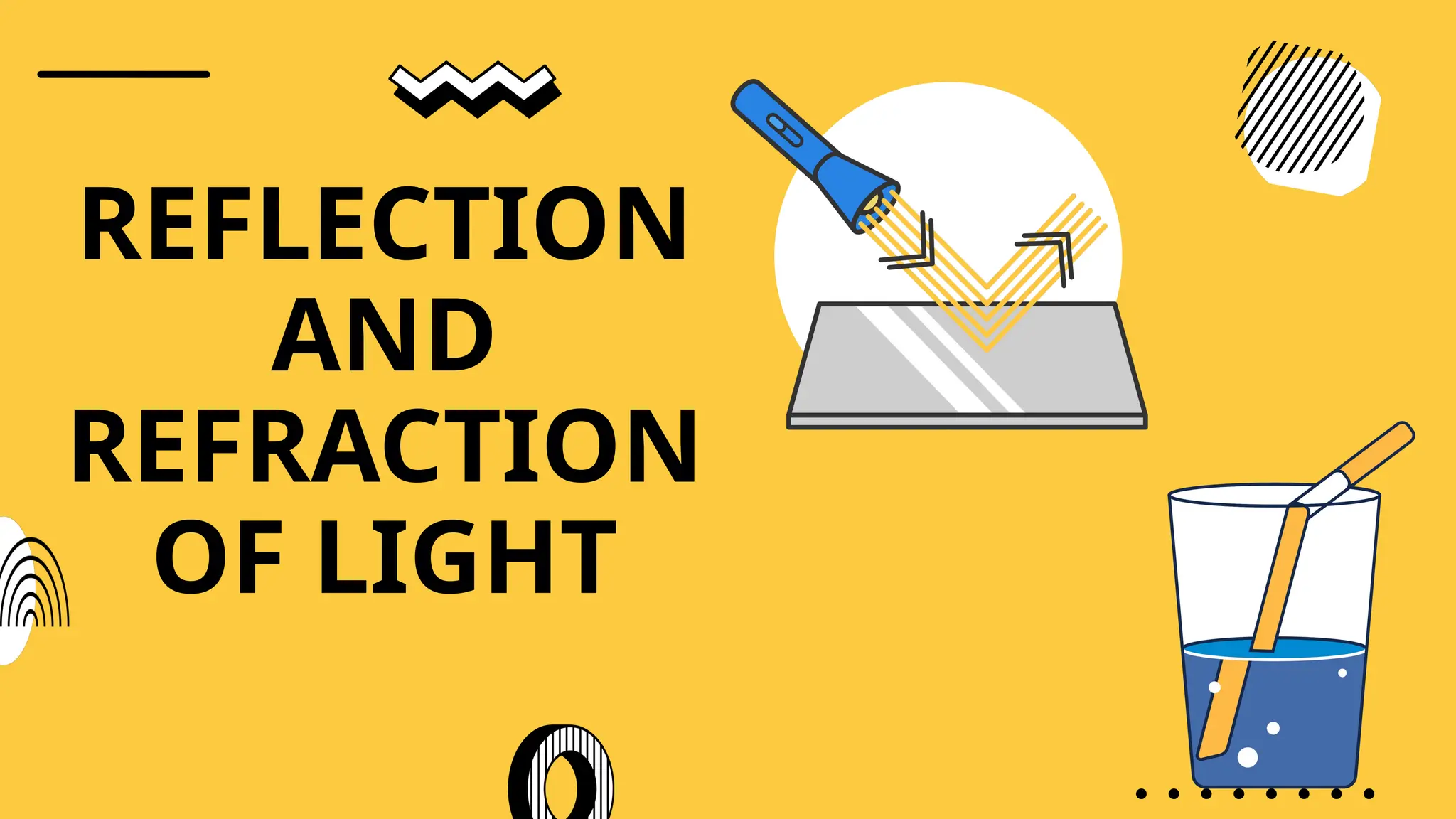
REFLECTION
AND
REFRACTION
OF LIGHT
LIGHT
is an
electromagnetic
radiation that has
properties of waves
and particles.
Middle 1800s, the accepted theory of light was the particle
picture.
Newton, light was considered to be a stream of tiny
particles.
Late 1800s, the particle picture was replaced by the wave
theory of light..
Certain phenomena of light could only be explained using
the wave picture.
Image formation by mirrors, the twinkling of stars, the colors
of the rainbow, bending of light by a medium, and so on.
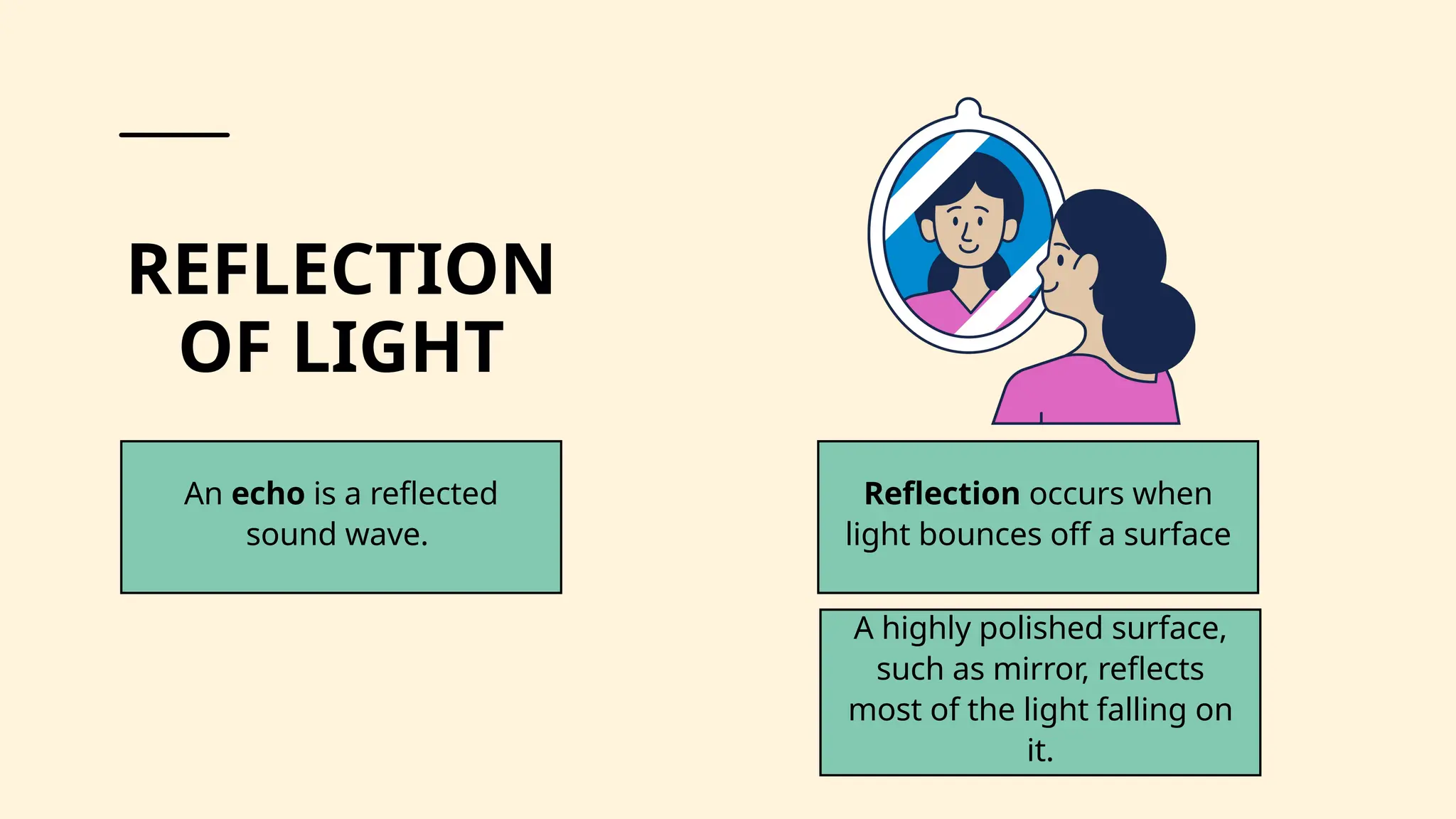
Reflection occurs when
light bounces off a surface
An echo is a reflected
sound wave.
A highly polished surface,
such as mirror, reflects
most of the light falling on
it.
REFLECTION
OF LIGHT
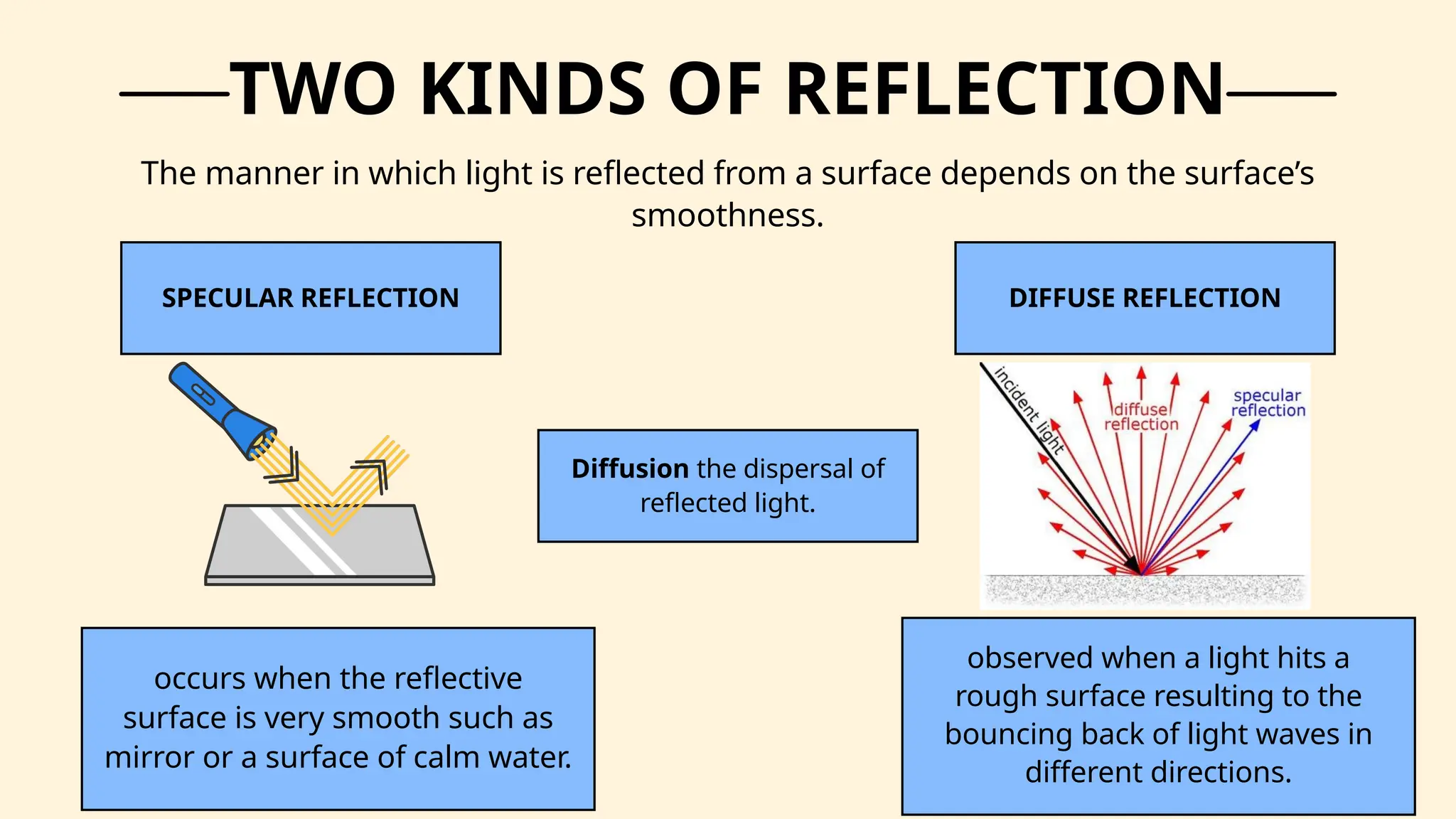
occurs when the reflective
surface is very smooth such as
mirror or a surface of calm water.
SPECULAR REFLECTION DIFFUSE REFLECTION
TWO KINDS OF REFLECTION
The manner in which light is reflected from a surface depends on the surface’s
smoothness.
observed when a light hits a
rough surface resulting to the
bouncing back of light waves in
different directions.
Diffusion the dispersal of
reflected light.
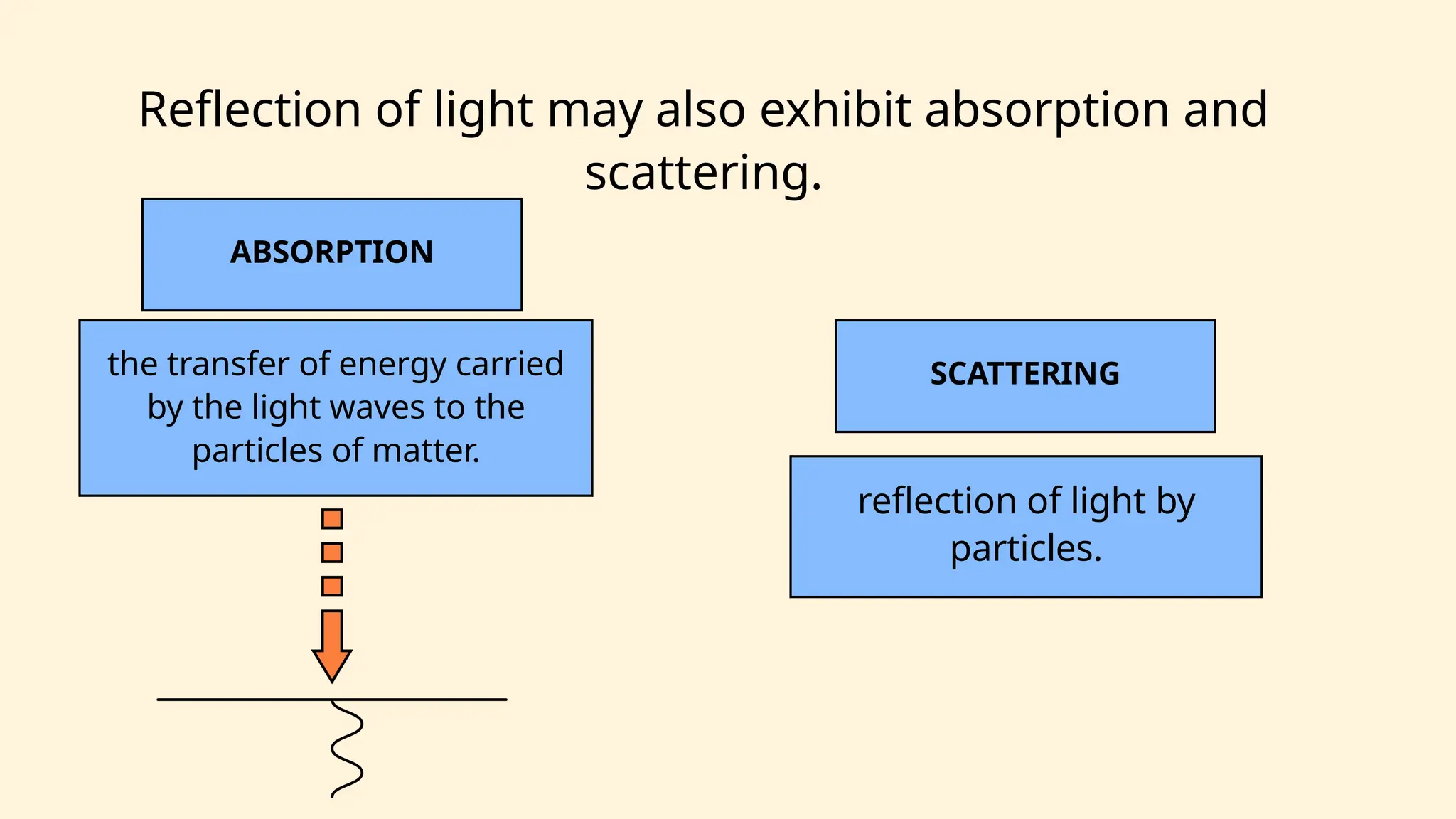
the transfer of energy carried
by the light waves to the
particles of matter.
ABSORPTION
SCATTERING
Reflection of light may also exhibit absorption and
scattering.
reflection of light by
particles.
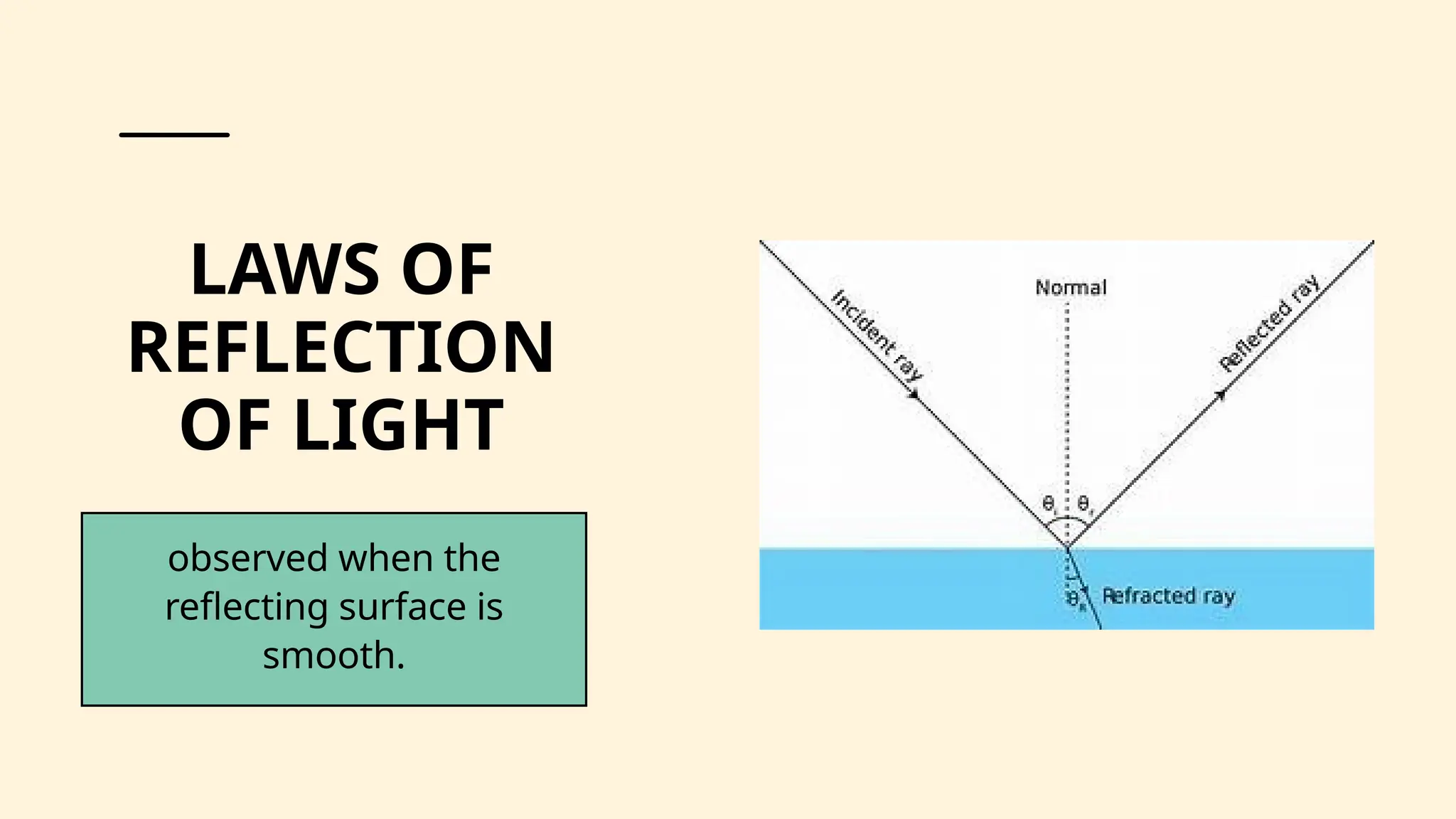
observed when the
reflecting surface is
smooth.
LAWS OF
REFLECTION
OF LIGHT
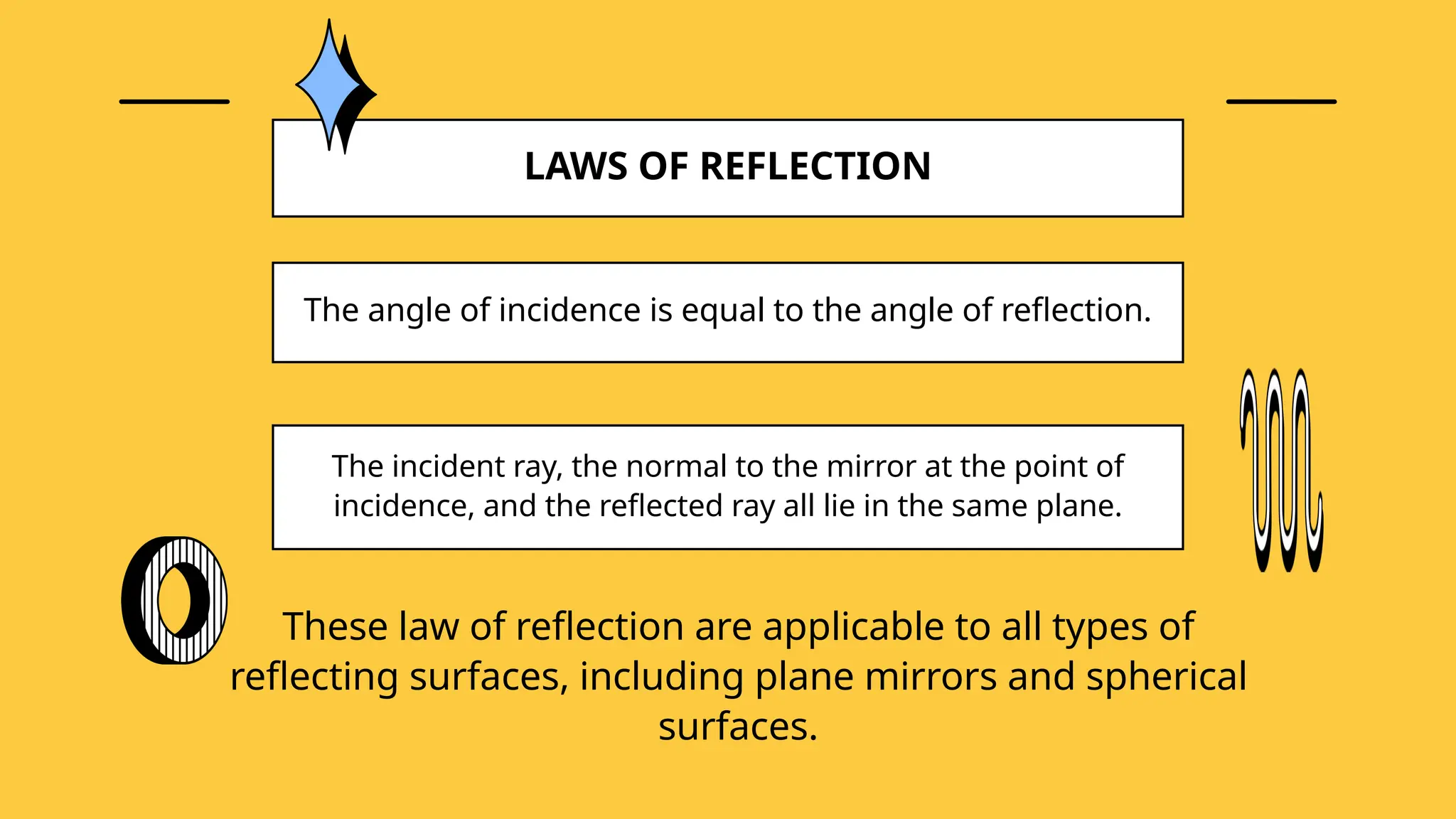
LAWS OF REFLECTION
The angle of incidence is equal to the angle of reflection.
The incident ray, the normal to the mirror at the point of
incidence, and the reflected ray all lie in the same plane.
These law of reflection are applicable to all types of
reflecting surfaces, including plane mirrors and spherical
surfaces.
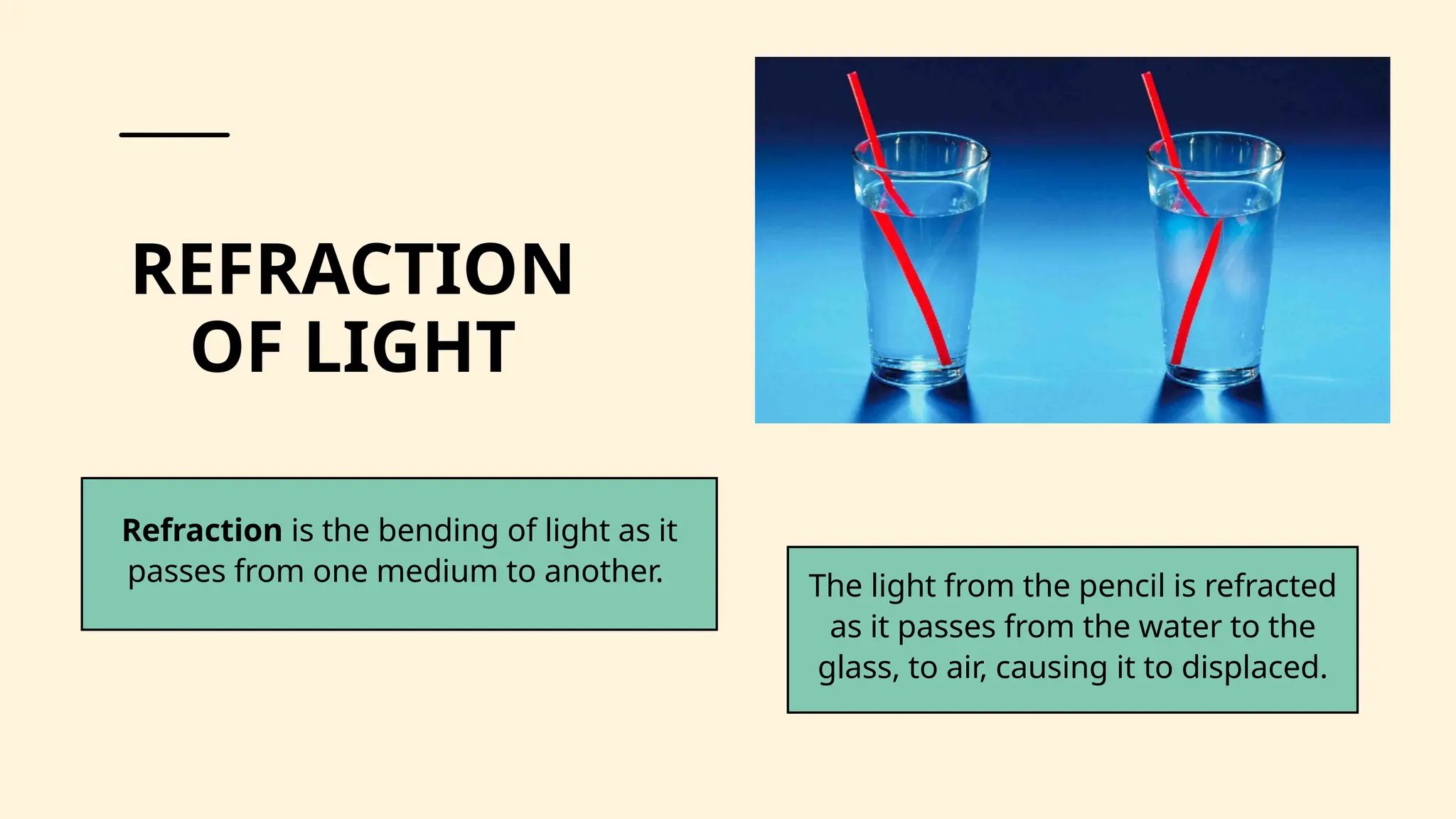
Refraction is the bending of light as it
passes from one medium to another. The light from the pencil is refracted
as it passes from the water to the
glass, to air, causing it to displaced.
REFRACTION
OF LIGHT
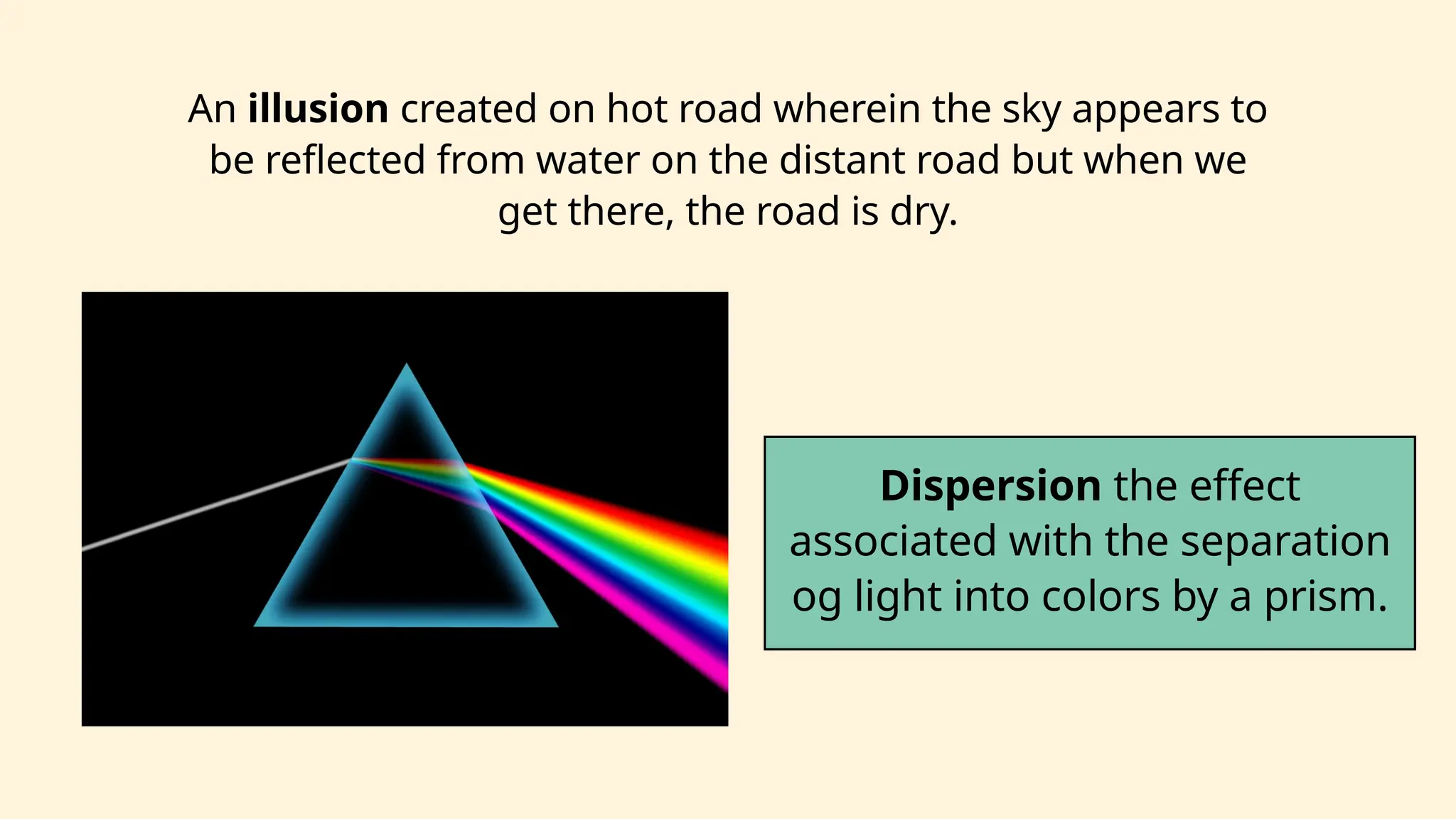
Dispersion the effect
associated with the separation
og light into colors by a prism.
An illusion created on hot road wherein the sky appears to
be reflected from water on the distant road but when we
get there, the road is dry.
INDEX OF REFRACTION
• As light refracts, the velocity of the wave is altered,
its wavelength increases or decreases, but its
frequency remains constant.
• The speed of light in vacuum is usually denoted
by c, for “constant” or the latin celeritas
(“swiftness”)
LAWS OF REFRACTION
The incident ray, the refracted ray, and the normal to
the interface of two transparent media at the point
of incidence all lie in the same plane.
The ratio of sine of angle of incidence to the sine of
angle of refraction is a constant for the light of a
given color and for the given pair of media.
KEY CONCEPT
• Light is an electromagnetic radiation that has properties
of waves and particles.
• Reflection is the bouncing of light from a reflecting
surface. The manner in which light is reflected from a
surface depends on the surface’s smoothness.
• There are two types of reflection, namely specular and
diffuse reflection.
• The laws of reflection states that: The angle of incidence
is equal to the angle of reflection; The incident ray, the
normal to the mirror at the point of incidence, and the
reflected ray all lie in the same plane.
• Refraction is the bending of light as it passes from one
medium to another. Dispersion is the effect associated
with the separation of light into colors by a prism.
• The laws of refraction states that: The incident ray, the
refracted ray, and the normal to the interface of two
transparent media at the point of incidence all lie in the
same plane; The ratio of sine of angle of incidence to the
sine of angle of refraction is a constant for the light of a
given color and for the given pair of media.

Reflection and Refraction of Light..pptx

  • 1.
  • 2.
    LIGHT is an electromagnetic radiation thathas properties of waves and particles.
  • 3.
    Middle 1800s, theaccepted theory of light was the particle picture. Newton, light was considered to be a stream of tiny particles. Late 1800s, the particle picture was replaced by the wave theory of light.. Certain phenomena of light could only be explained using the wave picture. Image formation by mirrors, the twinkling of stars, the colors of the rainbow, bending of light by a medium, and so on.
  • 4.
    Reflection occurs when lightbounces off a surface An echo is a reflected sound wave. A highly polished surface, such as mirror, reflects most of the light falling on it. REFLECTION OF LIGHT
  • 5.
    occurs when thereflective surface is very smooth such as mirror or a surface of calm water. SPECULAR REFLECTION DIFFUSE REFLECTION TWO KINDS OF REFLECTION The manner in which light is reflected from a surface depends on the surface’s smoothness. observed when a light hits a rough surface resulting to the bouncing back of light waves in different directions. Diffusion the dispersal of reflected light.
  • 6.
    the transfer ofenergy carried by the light waves to the particles of matter. ABSORPTION SCATTERING Reflection of light may also exhibit absorption and scattering. reflection of light by particles.
  • 7.
    observed when the reflectingsurface is smooth. LAWS OF REFLECTION OF LIGHT
  • 8.
    LAWS OF REFLECTION Theangle of incidence is equal to the angle of reflection. The incident ray, the normal to the mirror at the point of incidence, and the reflected ray all lie in the same plane. These law of reflection are applicable to all types of reflecting surfaces, including plane mirrors and spherical surfaces.
  • 9.
    Refraction is thebending of light as it passes from one medium to another. The light from the pencil is refracted as it passes from the water to the glass, to air, causing it to displaced. REFRACTION OF LIGHT
  • 10.
    Dispersion the effect associatedwith the separation og light into colors by a prism. An illusion created on hot road wherein the sky appears to be reflected from water on the distant road but when we get there, the road is dry.
  • 11.
    INDEX OF REFRACTION •As light refracts, the velocity of the wave is altered, its wavelength increases or decreases, but its frequency remains constant. • The speed of light in vacuum is usually denoted by c, for “constant” or the latin celeritas (“swiftness”)
  • 12.
    LAWS OF REFRACTION Theincident ray, the refracted ray, and the normal to the interface of two transparent media at the point of incidence all lie in the same plane. The ratio of sine of angle of incidence to the sine of angle of refraction is a constant for the light of a given color and for the given pair of media.
  • 13.
    KEY CONCEPT • Lightis an electromagnetic radiation that has properties of waves and particles. • Reflection is the bouncing of light from a reflecting surface. The manner in which light is reflected from a surface depends on the surface’s smoothness. • There are two types of reflection, namely specular and diffuse reflection. • The laws of reflection states that: The angle of incidence is equal to the angle of reflection; The incident ray, the normal to the mirror at the point of incidence, and the reflected ray all lie in the same plane.
  • 14.
    • Refraction isthe bending of light as it passes from one medium to another. Dispersion is the effect associated with the separation of light into colors by a prism. • The laws of refraction states that: The incident ray, the refracted ray, and the normal to the interface of two transparent media at the point of incidence all lie in the same plane; The ratio of sine of angle of incidence to the sine of angle of refraction is a constant for the light of a given color and for the given pair of media.