
Suresh Babu G
Recent Trends and Practices in
Assessment and Evaluation
Suresh Babu G
Assistant Professor
CTE CPAS Paippad, Kottayam
Suresh Babu G
Content
 Characteristics of Old System of Evaluation
 New System of Evaluation
 Scholastic evaluation
 Co-scholastic evaluation and Non-scholastic evaluation
 Personal and Social Qualities
 Projects
 Seminars
 Assignments
 Group Discussion
 Portfolios
 Student profile
 Poster assessment
 Open book exam
 Participatory assessment
 Peer assessment
 Rubrics
Suresh Babu G
Recent Trends and Practices in
Assessment and Evaluation
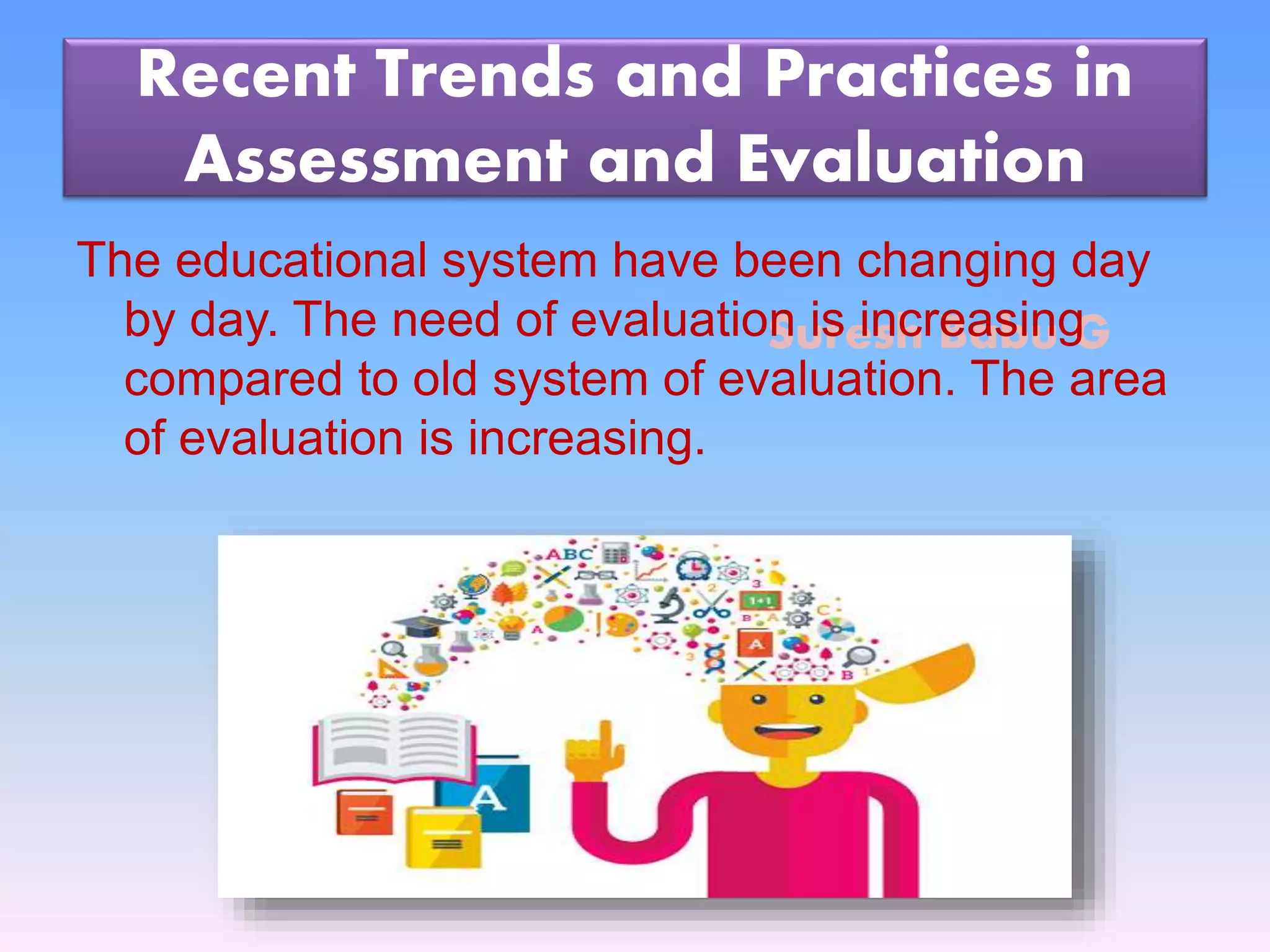
The educational system have been changing day
by day. The need of evaluation is increasing
compared to old system of evaluation. The area
of evaluation is increasing.
Suresh Babu G
Characteristics of Old System of
Evaluation
 Evaluating achievement of learners by a
terminal written examinations.
 Evaluating only cognitive development.
 Affective and Psychomotor domain almost
completely neglected.
 Evaluating memory of the learners.
 Give more importance to summative evaluation.
 Marking system used for evaluation.
 Not continuous.
 Not comprehensive.
Suresh Babu G
New system of Evaluation
• National Education policy (1986) stressed
the need for making evaluation continuous
and comprehensive.
• Give stress to formative and summative
evaluation at the same time.
• Evaluate all aspect of development through
different methods.
• Evaluation should fulfill the function of
formative evaluation leading to immediate
feedback, knowledge of result, diagnosis
and remediation.
•
Suresh Babu G
• Summative evaluation should
fulfil the function like gradation
and placement.
• Evaluation should be continuous
and comprehensive
• Grading system and semester
system introduced in evaluation.
• General Education department
in Kerala has implemented a
revised scheme of evaluation for
SSLC examination with effect
from 2005 onwards.
New system of Evaluation
Suresh Babu G
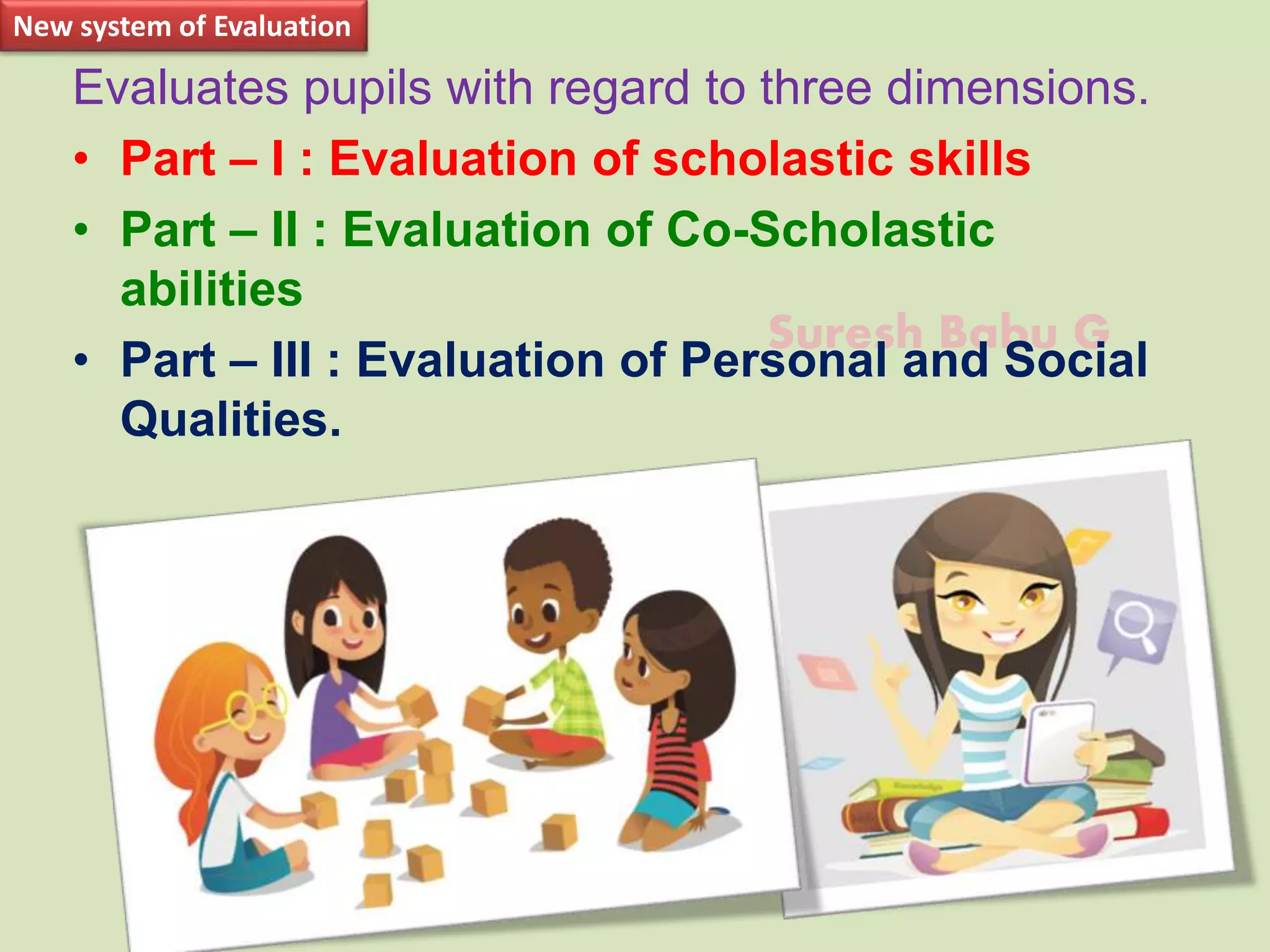
Evaluates pupils with regard to three dimensions.
• Part – I : Evaluation of scholastic skills
• Part – II : Evaluation of Co-Scholastic
abilities
• Part – III : Evaluation of Personal and Social
Qualities.
New system of Evaluation
Suresh Babu G
Scholastic areas
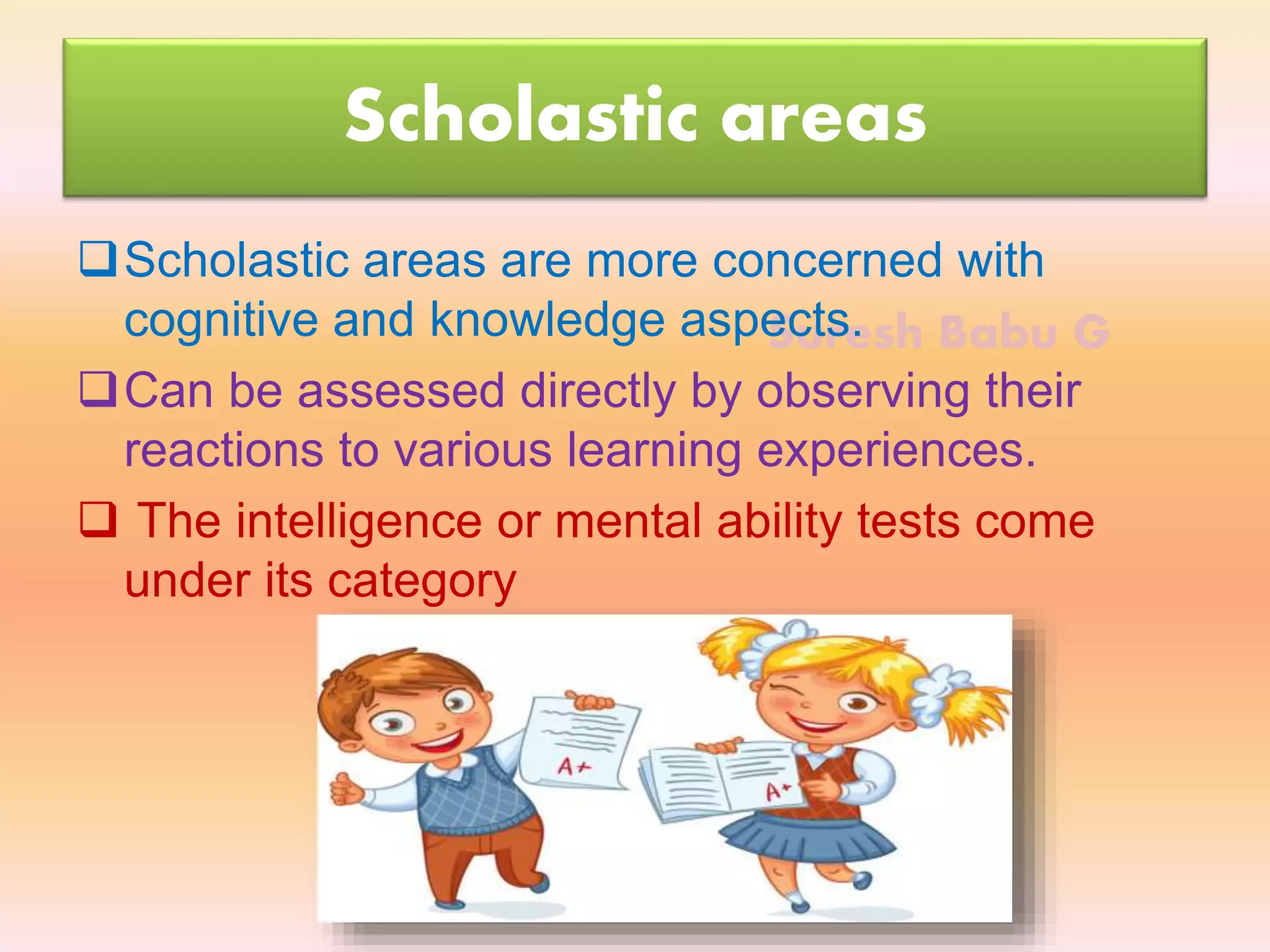
Scholastic areas are more concerned with
cognitive and knowledge aspects.
Can be assessed directly by observing their
reactions to various learning experiences.
 The intelligence or mental ability tests come
under its category
Suresh Babu G
Evaluation of Scholastic Skills
• Term End Evaluation(TE)
• Continuous Evaluation(CE)
o Projects
o Assignments
o Practical / Seminar
o Records/Collections
o Class Test
Suresh Babu G
Co- scholastic or Non-scholastic
Abilities
The non-scholastic abilities are
concerned with the learner’s attitudes,
interests, values, feelings, habits,
social interaction which cannot be
assessed directly. It is assessed
indirectly by merely observing the
behaviour of the learner and his
experiences and also through
biographies, self reports, checklists
etc. The selection of an appropriate
tool is essential. In case there occurs
a need to develop a new tool then it’s
practicability, objectivity, reliability and
validity should be ensured.
Suresh Babu G
Evaluation of Co-Scholastic
Abilities
Work Experience
 Making of teaching aids
 Making of school stationery
 Making of saleable items
 Making of artistic and eco-related items
Art Education
• Drawing and clay modelling
• Music
• Acting
• Dancing
Suresh Babu G
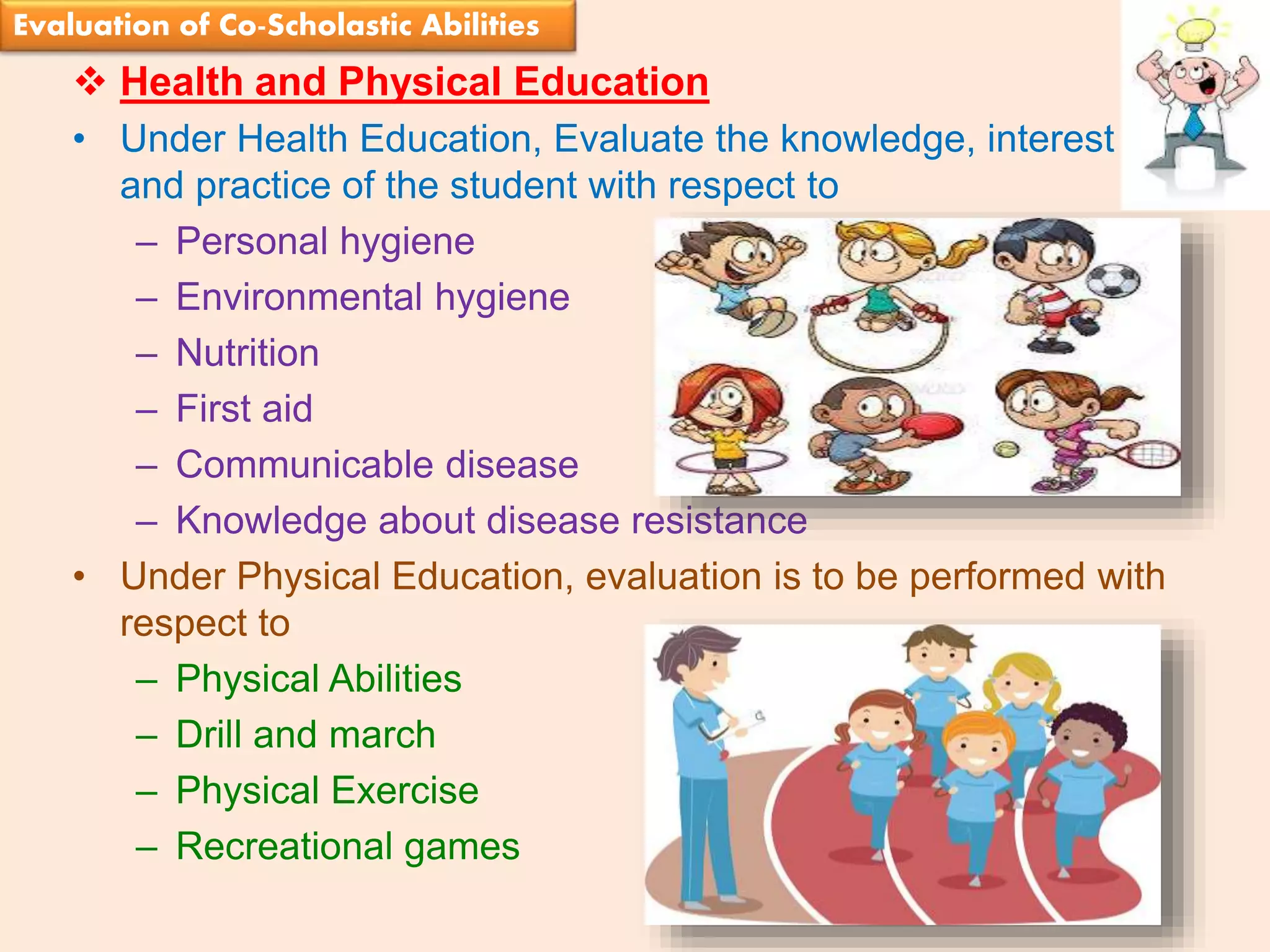
 Health and Physical Education
• Under Health Education, Evaluate the knowledge, interest
and practice of the student with respect to
– Personal hygiene
– Environmental hygiene
– Nutrition
– First aid
– Communicable disease
– Knowledge about disease resistance
• Under Physical Education, evaluation is to be performed with
respect to
– Physical Abilities
– Drill and march
– Physical Exercise
– Recreational games
Evaluation of Co-Scholastic Abilities
Suresh Babu G
Tools and Techniques to Assess Non-
Scholastic aspects of Learner’s behaviour
• The Subjective Methods - i. Anecdotal Record ii.
Observation iii. Direct question iv. Autobiography v.
Interviews vi. Inventory questionnaire vii. Projects
and field work assignments viii. Group Discussions
• The Objective Methods - i. Check List ii. Rating
Scale iii. Study of psychological changes iv.
Situational test v. ‘Q’ Technique vi. Sociogram
• The Projective Techniques - i. Inkblot ii. Picture
projection iii. Presentation of verbal stimuli iv.
Sentence completion v. Role playing vi. Drawing
tests.
Suresh Babu G
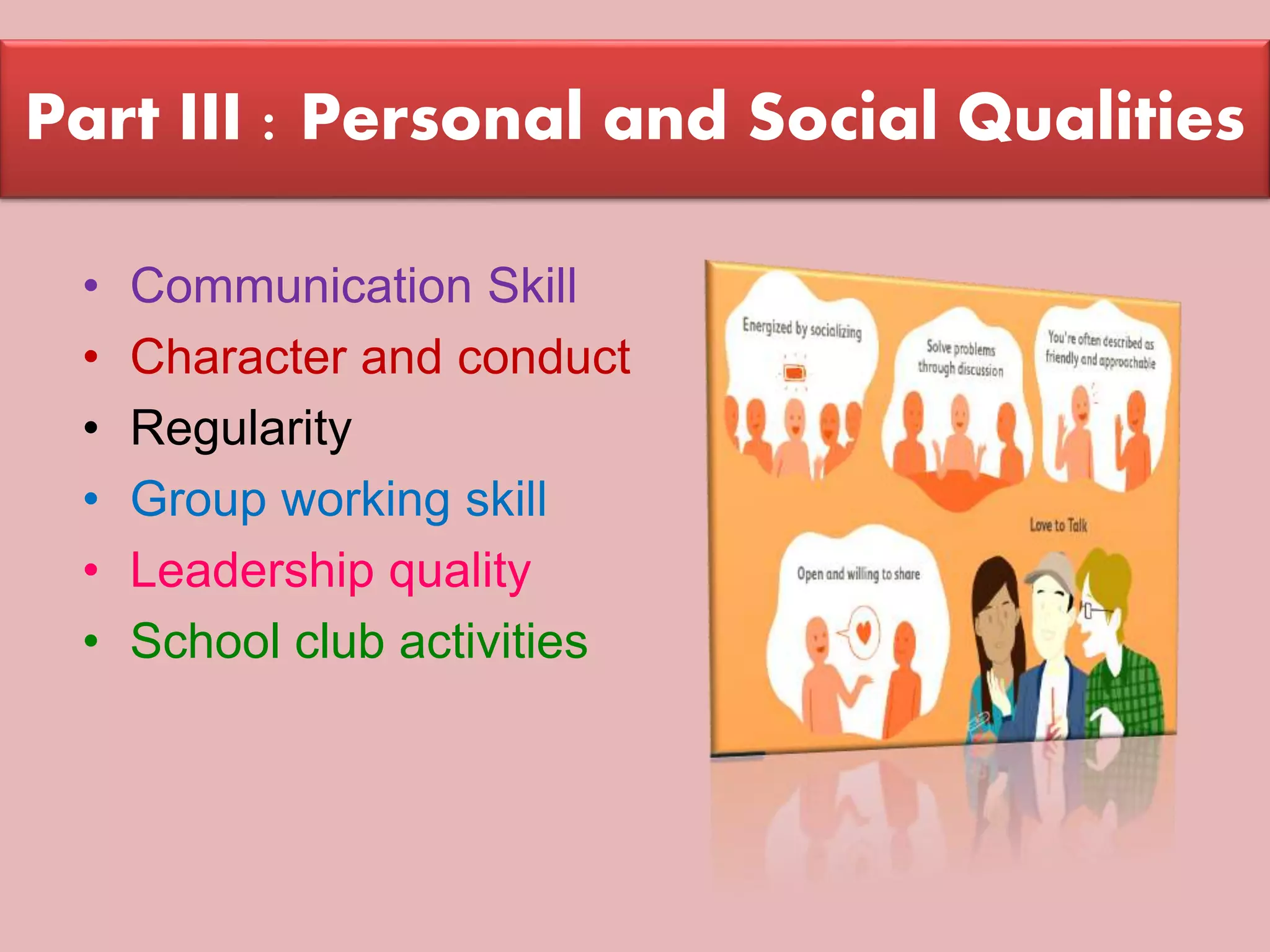
Part III : Personal and Social Qualities
• Communication Skill
• Character and conduct
• Regularity
• Group working skill
• Leadership quality
• School club activities
Suresh Babu G
Projects
• It means planned set of interrelated tasks to be
executed over a fixed period and within certain
cost and other limitations.
Or
estimate or forecast (something) on the basis of
present trends
• A project assessment is a legislated planning
and evaluation process. If the project goes ahead,
information gathered through the
environmental assessment process is used to
guide changes to the project's design that may
help minimize impacts on the environment and
people.
Suresh Babu G
Types of Assessment in Project
Formative
Summative
Suresh Babu G
Evaluation of Projects
 Planning – Relevance of the study , identification of
problem, selection of appropriate tools for data
collection and analysis
 Data collection – Adequacy , relevance and reliability
of data
 Analysis and interpretation – Systematic arrangement
of data analysis of the collected data and interpret ,
conclusions
 Presentation of report – Presentation in logical and
sequential order , authenticity of report , correlation
with project diary
 Timeliness – Time bound completion
Suresh Babu G
Seminars
• A seminar is a form of academic instruction,
either at an academic institution or offered by a
commercial or professional organization. It has
the function of bringing together small groups for
recurring meetings, focusing each time on some
particular subject, in which everyone present is
requested to participate.
• It is a conference or other meeting for discussion
or training.
Suresh Babu G
Evaluation of seminars
• Planning and organization - Topic , how to
collect data , aids ,for presentation
• Data Collection - Literature review , relevance ,
Source
• Content - Structure , content depth
• Preparation of paper - Arrangement of ideas ,
clarity , analysis , interpretation and evaluation
• Presentation of Paper - Communication ,
Participation and discussion , reporting ,
seminar project
Suresh Babu G
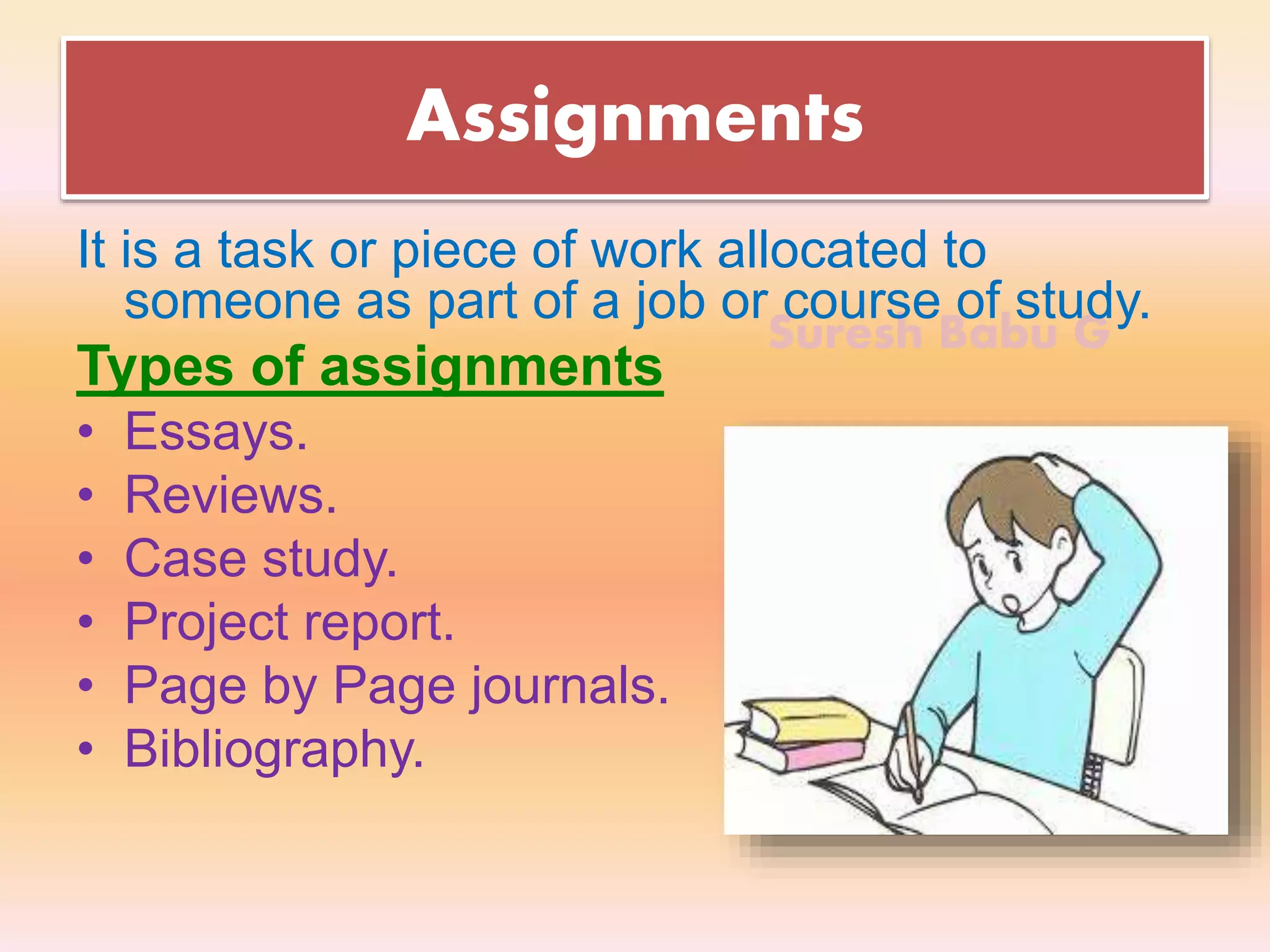
Assignments
It is a task or piece of work allocated to
someone as part of a job or course of study.
Types of assignments
• Essays.
• Reviews.
• Case study.
• Project report.
• Page by Page journals.
• Bibliography.
Suresh Babu G
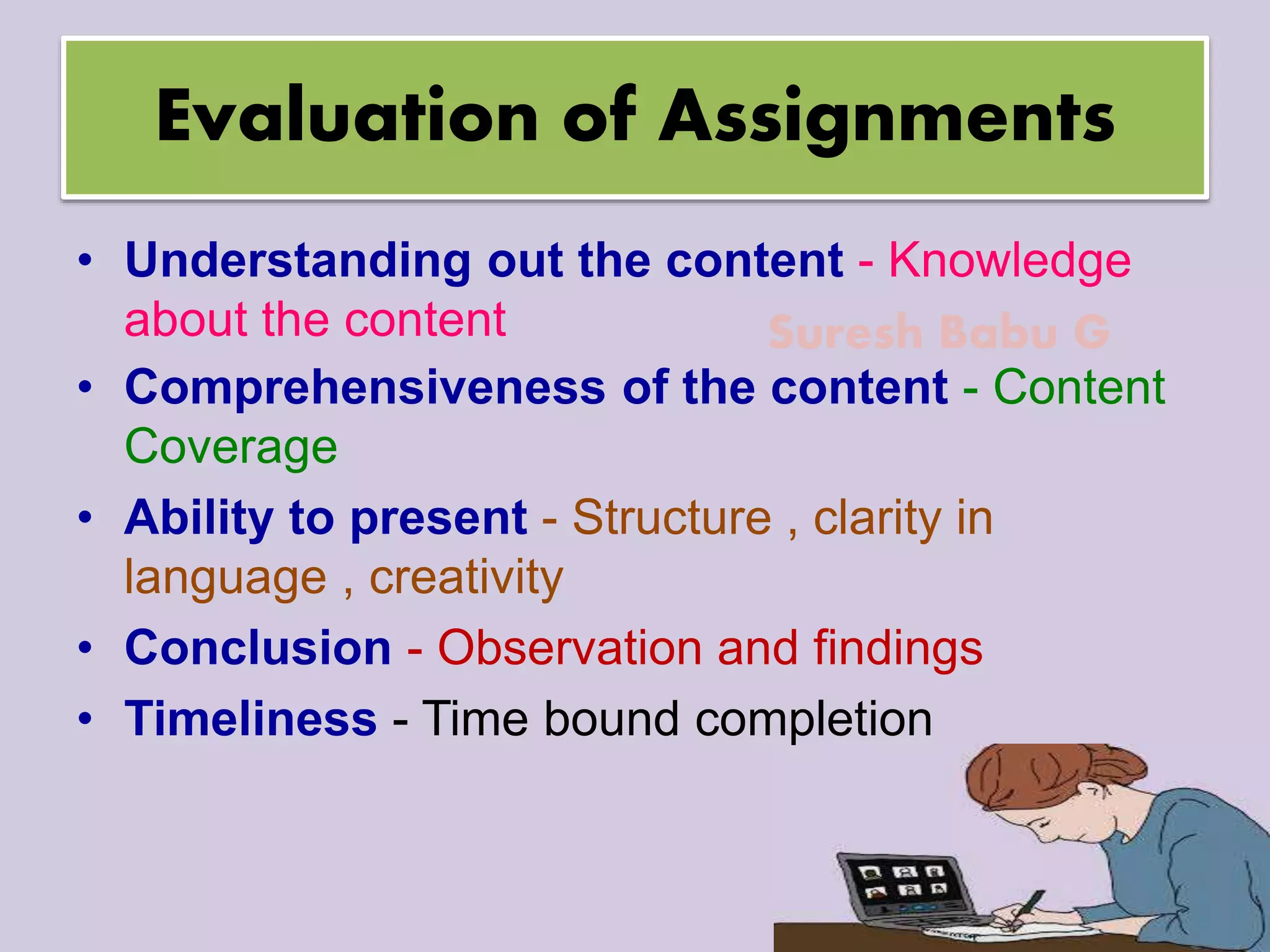
Evaluation of Assignments
• Understanding out the content - Knowledge
about the content
• Comprehensiveness of the content - Content
Coverage
• Ability to present - Structure , clarity in
language , creativity
• Conclusion - Observation and findings
• Timeliness - Time bound completion
Suresh Babu G
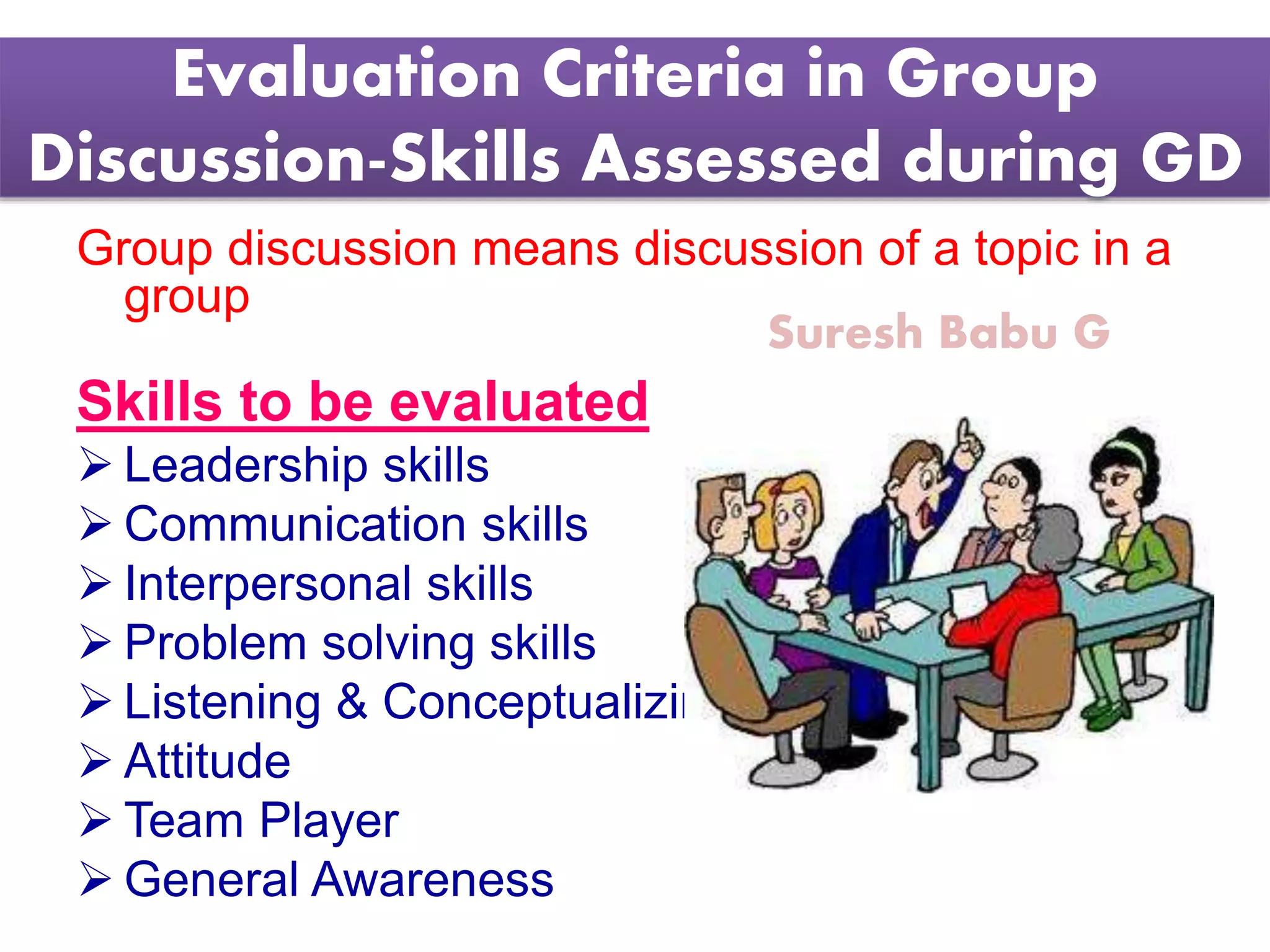
Evaluation Criteria in Group
Discussion-Skills Assessed during GD
Group discussion means discussion of a topic in a
group
Skills to be evaluated
 Leadership skills
 Communication skills
 Interpersonal skills
 Problem solving skills
 Listening & Conceptualizing Ability
 Attitude
 Team Player
 General Awareness
Suresh Babu G
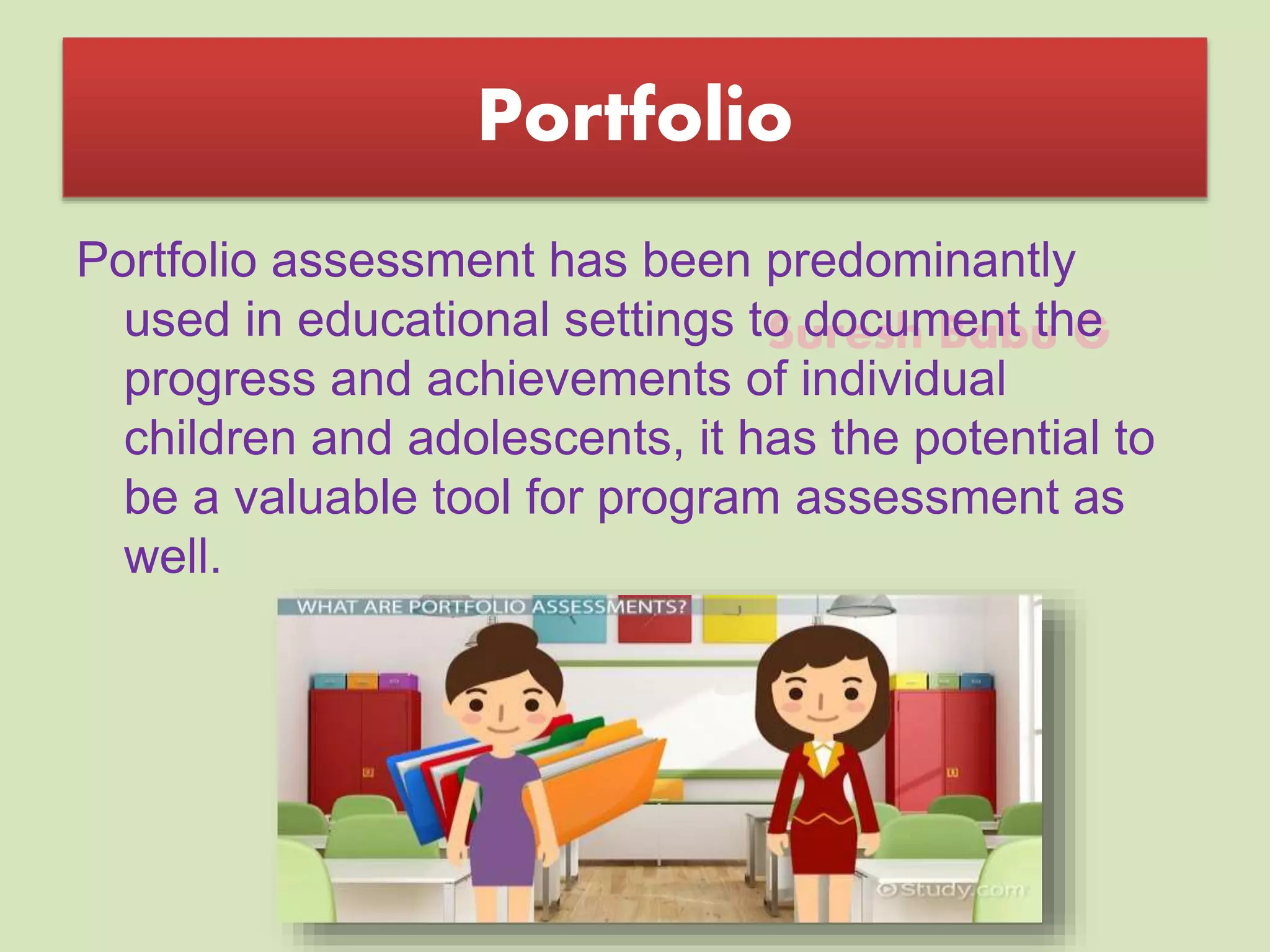
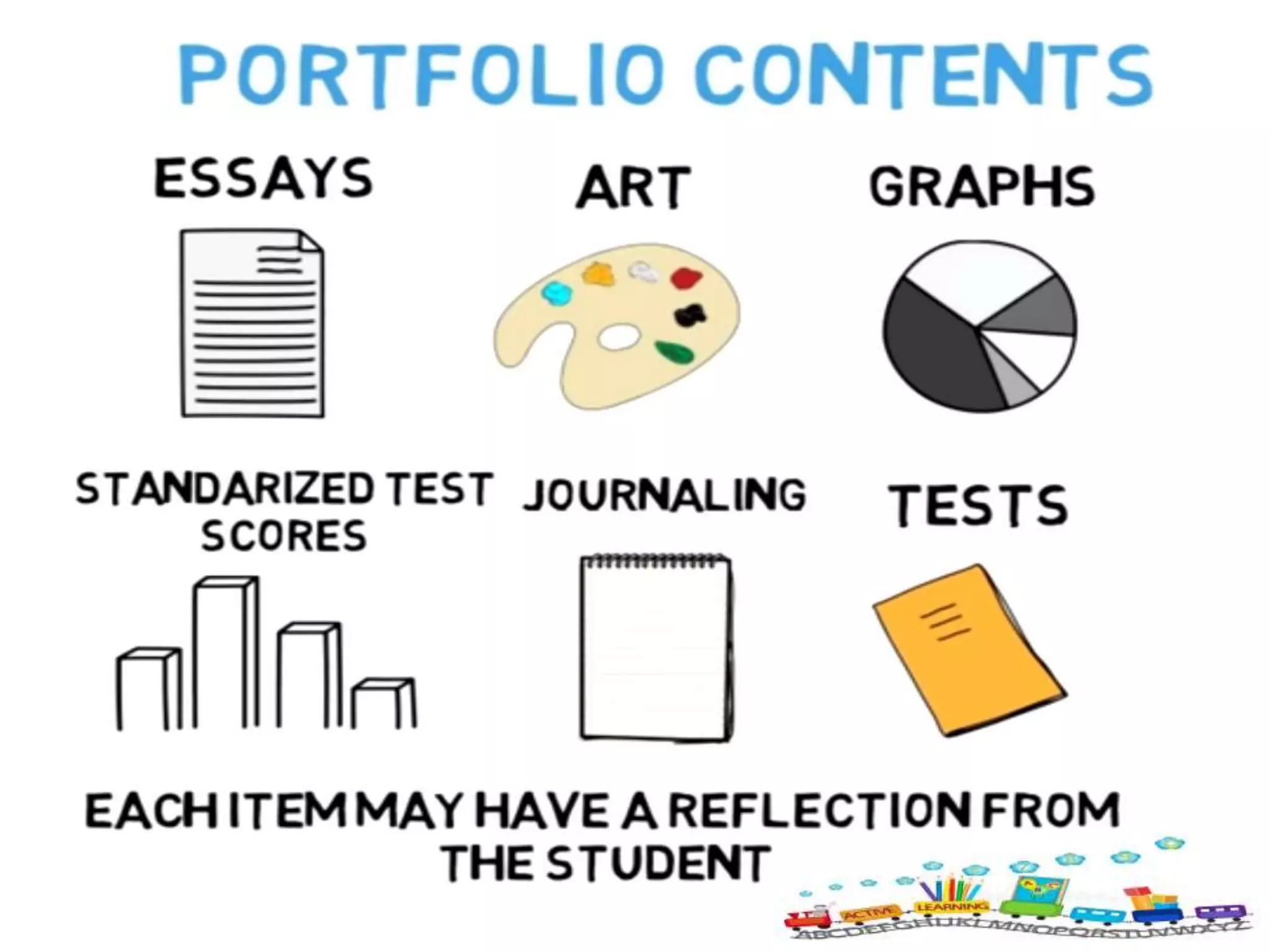
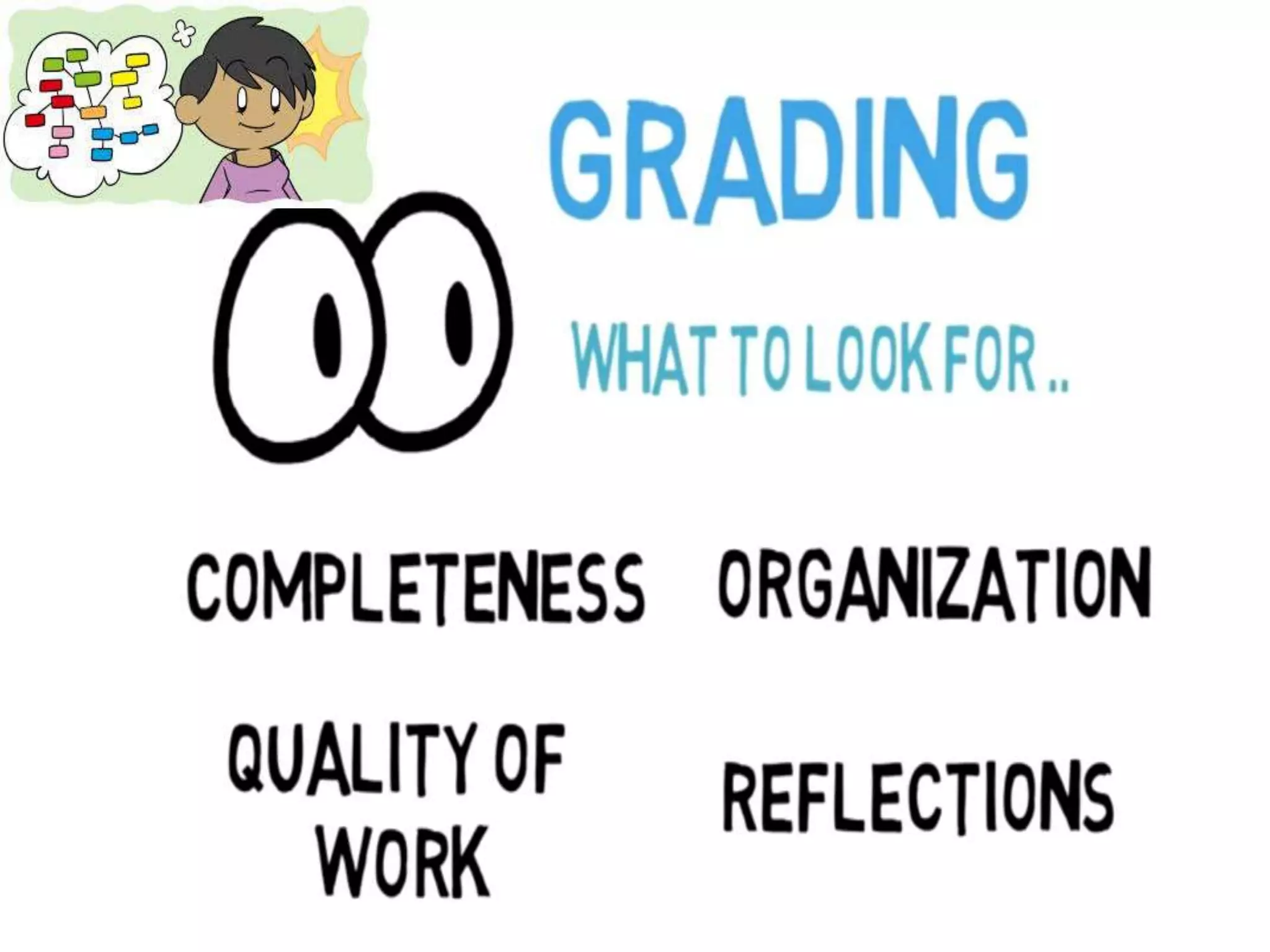
Portfolio
Portfolio assessment has been predominantly
used in educational settings to document the
progress and achievements of individual
children and adolescents, it has the potential to
be a valuable tool for program assessment as
well.
Suresh Babu G
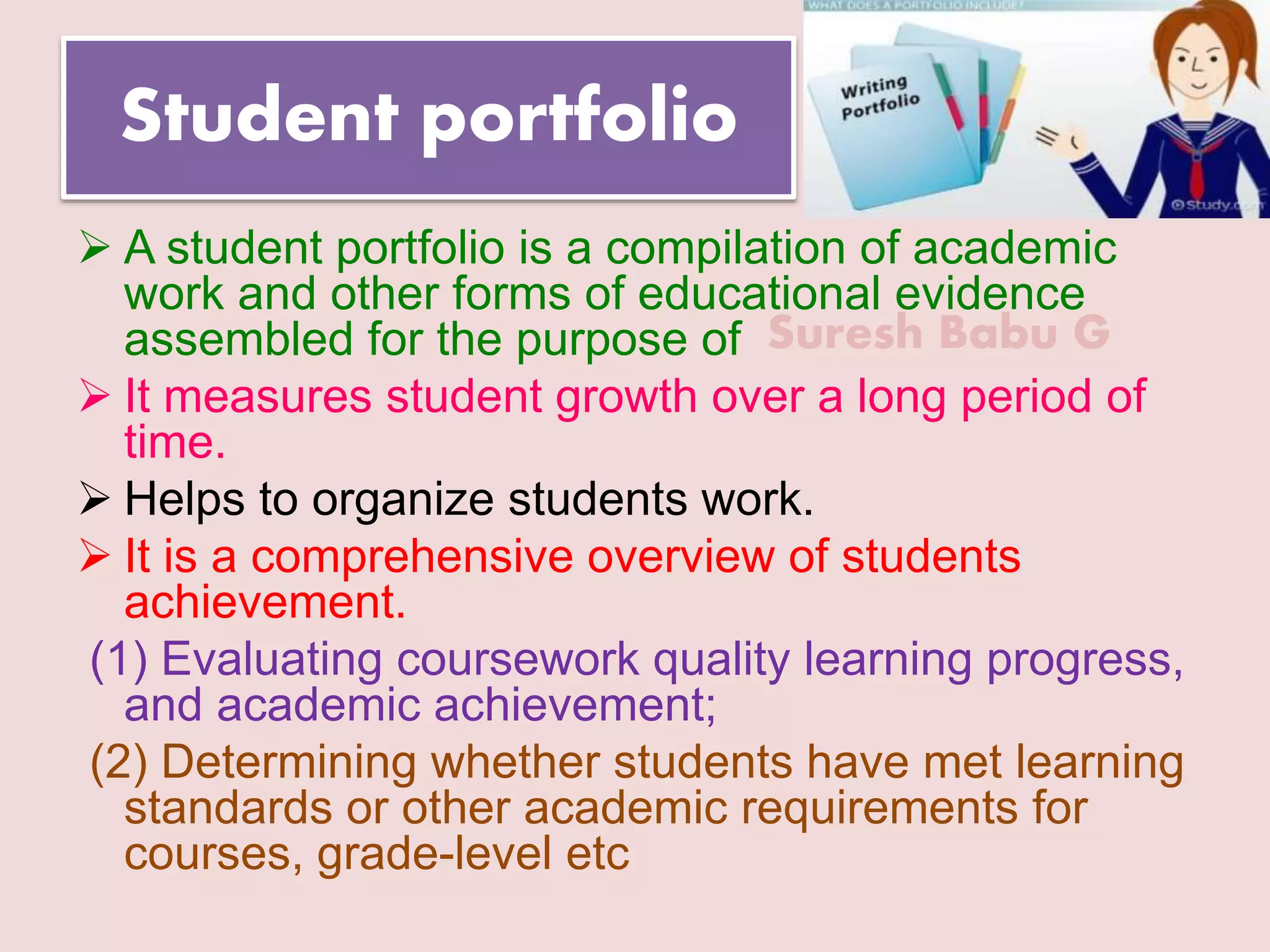
Student portfolio
 A student portfolio is a compilation of academic
work and other forms of educational evidence
assembled for the purpose of
 It measures student growth over a long period of
time.
 Helps to organize students work.
 It is a comprehensive overview of students
achievement.
(1) Evaluating coursework quality learning progress,
and academic achievement;
(2) Determining whether students have met learning
standards or other academic requirements for
courses, grade-level etc
Suresh Babu G
Suresh Babu G
Suresh Babu G
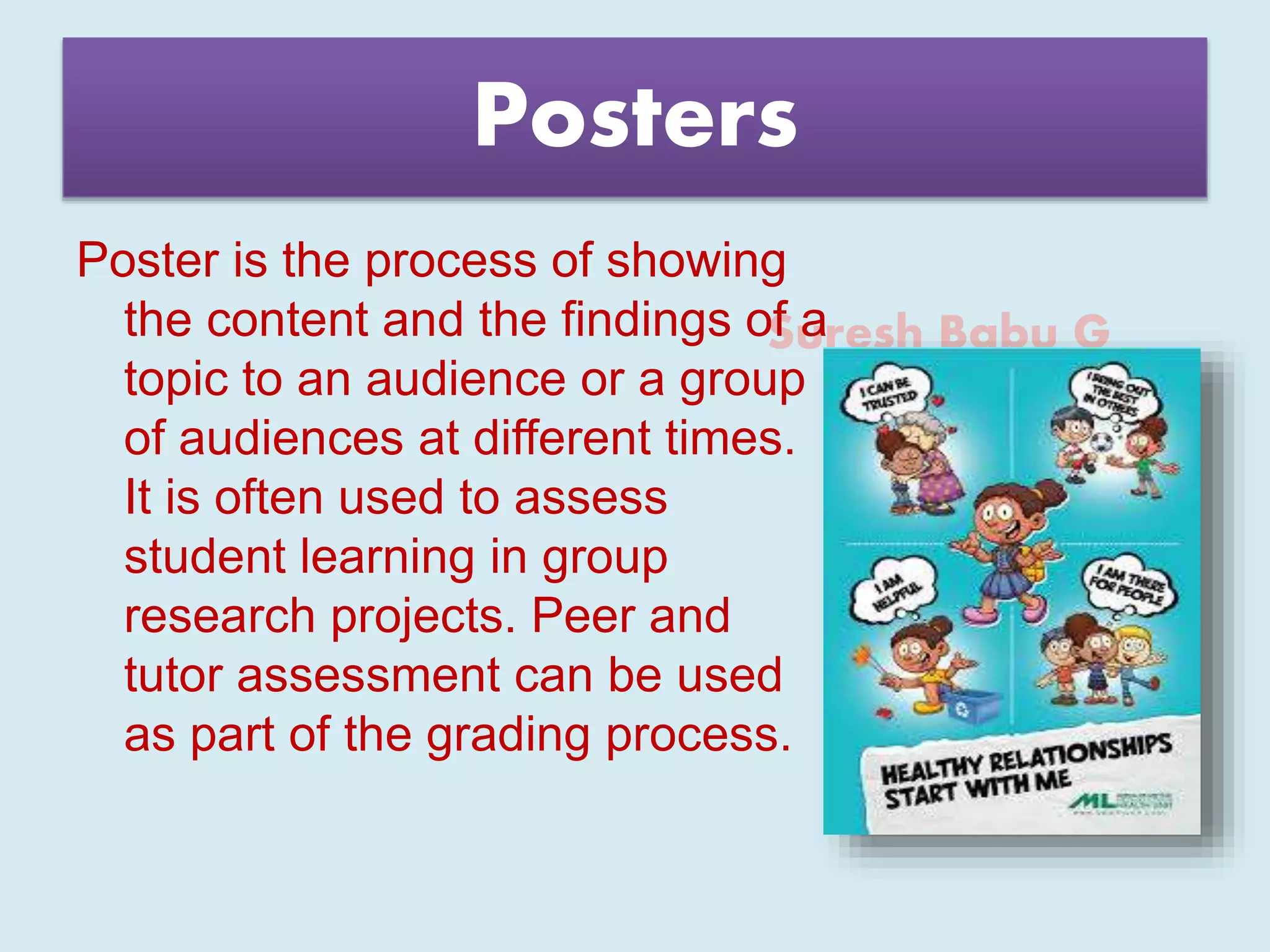
Posters
Poster is the process of showing
the content and the findings of a
topic to an audience or a group
of audiences at different times.
It is often used to assess
student learning in group
research projects. Peer and
tutor assessment can be used
as part of the grading process.
Suresh Babu G
The criteria used for
assessment of posters
• Thesis (significance of topic and its relationship to the
placement);
• Abstract (clear and concise, inclusion of essential information
and central thesis);
• Choice of content (currency, significance, relevance to central
thesis);
• Critical analysis of issues;
• Research (use of relevant and scholarly sources);
• Referencing;
• Visual appearance (appealing, professionally prepared, use of
colour, graphics and font, arrangement of text and graphics,
readability);
• Organisation of poster.
Suresh Babu G
Peer Assessment
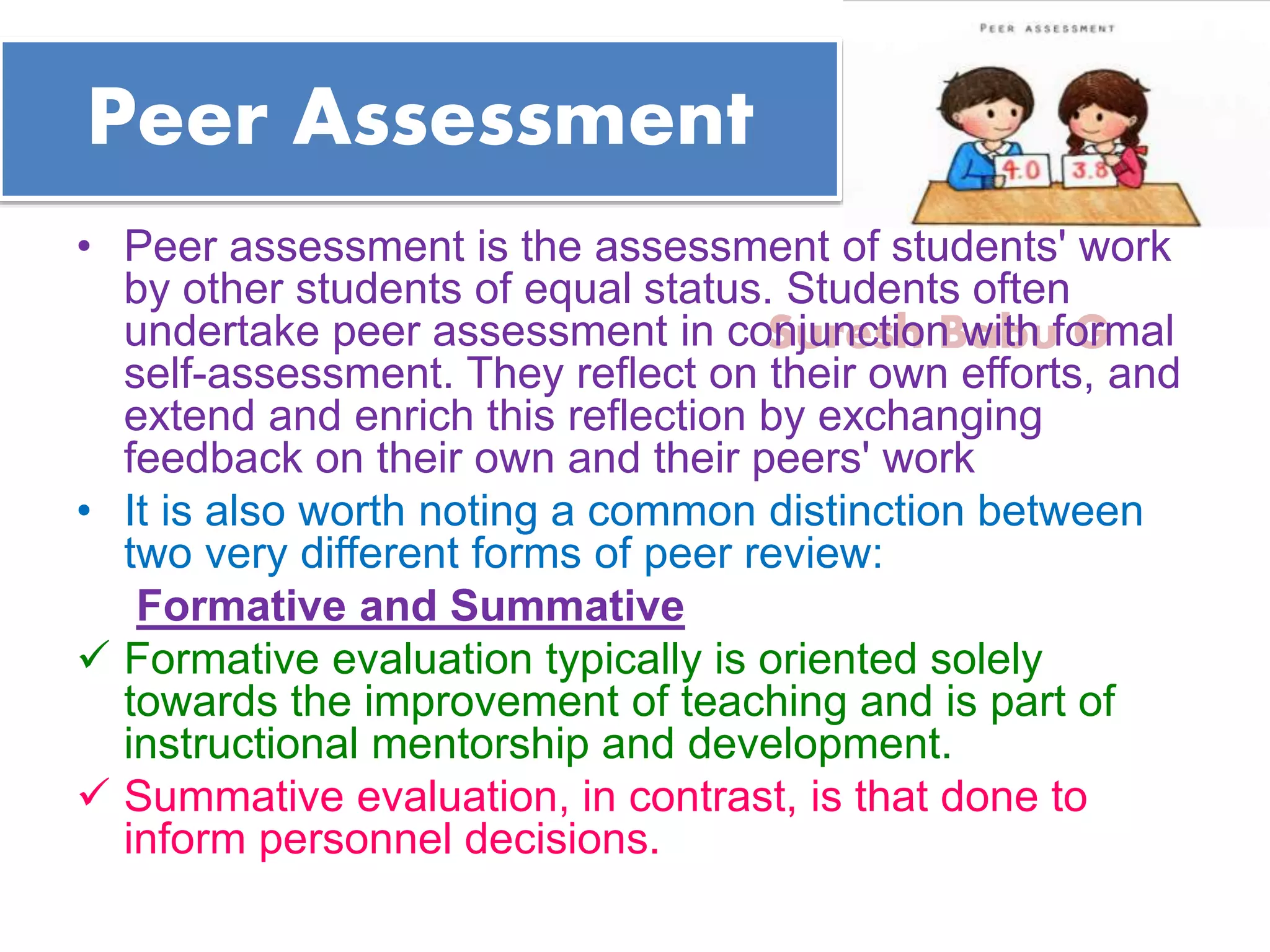
• Peer assessment is the assessment of students' work
by other students of equal status. Students often
undertake peer assessment in conjunction with formal
self-assessment. They reflect on their own efforts, and
extend and enrich this reflection by exchanging
feedback on their own and their peers' work
• It is also worth noting a common distinction between
two very different forms of peer review:
Formative and Summative
 Formative evaluation typically is oriented solely
towards the improvement of teaching and is part of
instructional mentorship and development.
 Summative evaluation, in contrast, is that done to
inform personnel decisions.
Suresh Babu G
Participatory Assessment
• A Participatory Assessment is a process of
building partnerships with refugee women and
men of all ages and backgrounds by promoting
meaningful participation through structured
dialogue.
• Participatory Assessments involve holding
separate discussions with women, girls, boys, and
men of concern, including adolescents, in order to
gather accurate information on the specific
protection risks they face and the underlying
causes, to understand their capacities, and to hear
their proposed solutions.
Suresh Babu G
• A Participatory Assessment is an effective, field-
tested methodology for gaining an understanding
of the needs and capacities that reside within
individuals and groups - considerations that should
inform all planning, implementation, monitoring
and evaluation.
• It is grounded in the notion situativity theory brings
that assessment is central to learning; students
are constantly assessing themselves and being
assessed, and it is through these constant self and
external (however informal) assessments that
learning occurs.
Suresh Babu G
Open Book Examination
 An "open book examination" is one in which
examinees are allowed to consult their class
notes, textbooks, and other approved material
while answering questions.
 This practice is not uncommon in law
examinations, but in other subjects, it is mostly
unheard of.
 Radical and puzzling though the idea may sound
to those who are used to conventional
examinations, it is ideally suited to teaching
programmes that especially aim at developing the
skills of critical and creative thinking.
Suresh Babu G
Advantages
• Remove tension of examination
• Students are not required to engage in parroting
of concepts, if they understand the concept they
would answer correctly
• More and more students would continue their
education as the passing percentage would go
up.
Suresh Babu G
Disadvantage
 The students would stop studying and simply
copy from the open book provided at the
examination hall.
 Board examinations would lose their importance
and no one would like to assess the ability and
competence of an individual on the basis of
marks or grade
Suresh Babu G
Suresh Babu G
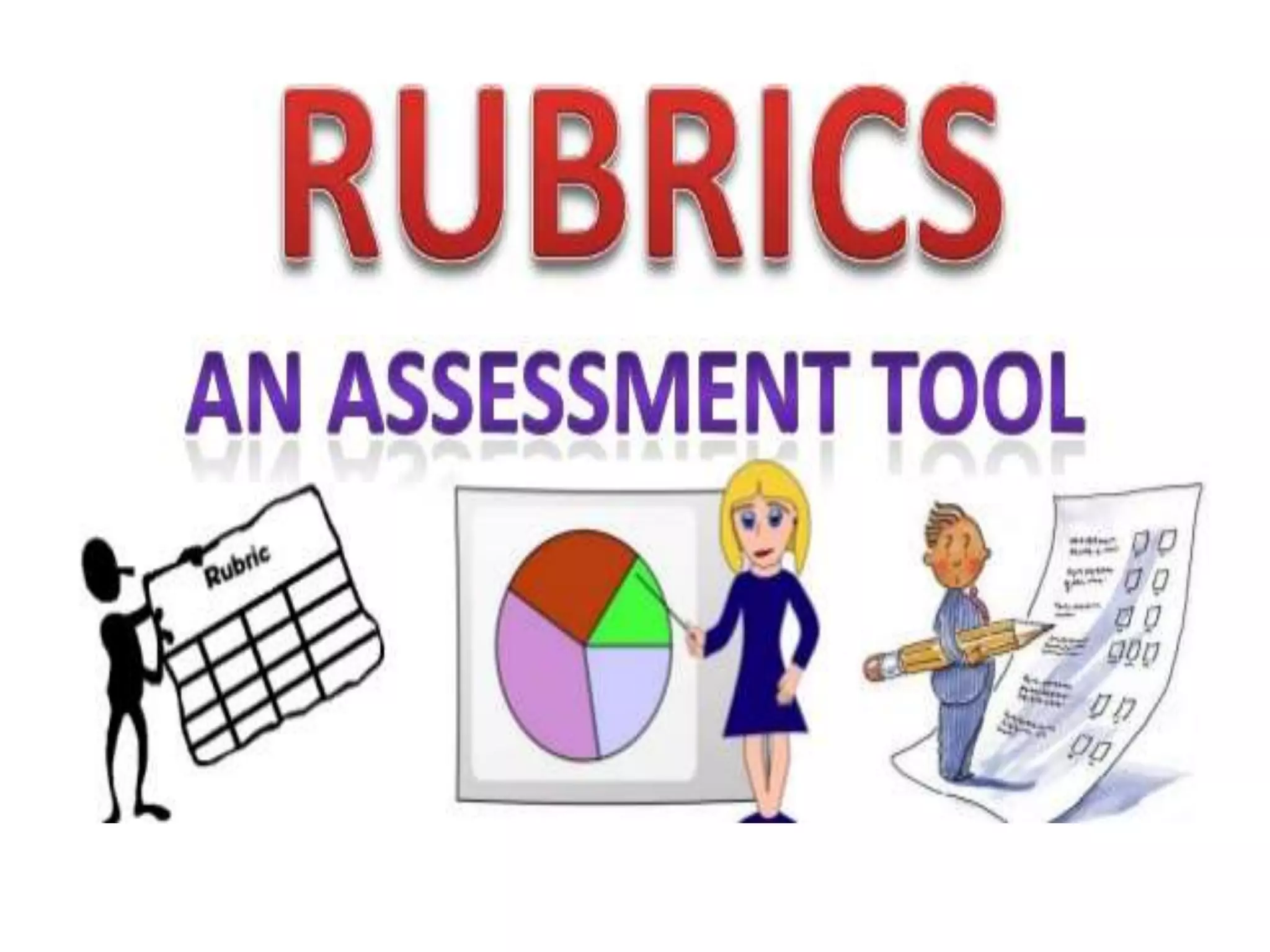
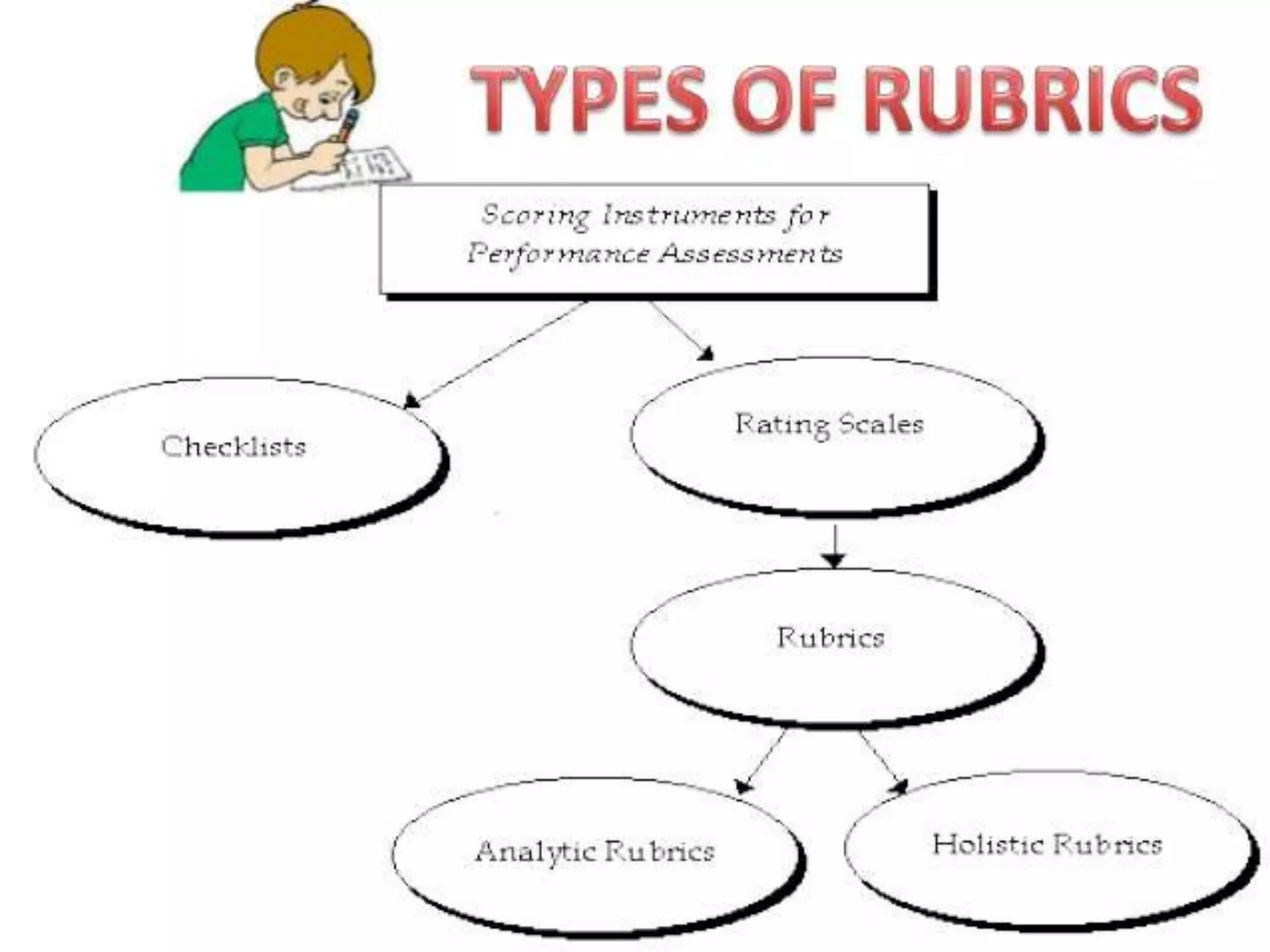
RUBRICS
A rubric for assessment, usually in the form of a
matrix or grid, is a tool used to interpret and
grade students' work against criteria and
standards.
Rubrics are sometimes called "criteria sheets",
"grading schemes", or "scoring
guides". Rubrics can be designed for any
content domain.
Suresh Babu G
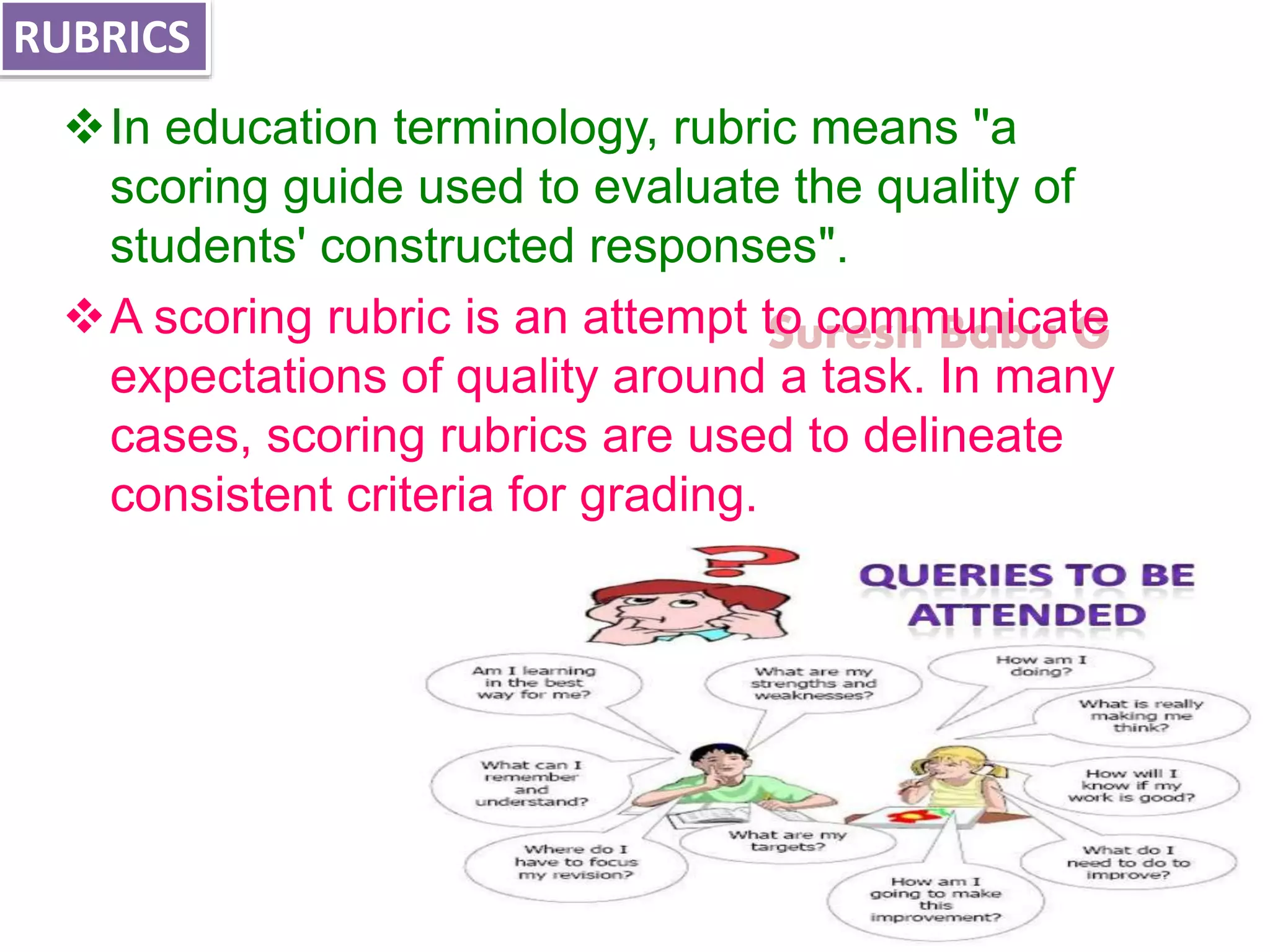
In education terminology, rubric means "a
scoring guide used to evaluate the quality of
students' constructed responses".
A scoring rubric is an attempt to communicate
expectations of quality around a task. In many
cases, scoring rubrics are used to delineate
consistent criteria for grading.
RUBRICS
Suresh Babu G
Purpose
• Rubrics are simply a scoring tool that evaluate
the list of criteria for projects, assignments, or
other pieces of work.
• Rubrics list what needs to be included in order
to receive a certain score or grade.
• It allows the student to evaluate his/her own
work before submitting.
• Instructors can justify their grades based on
the rubric.
Suresh Babu G
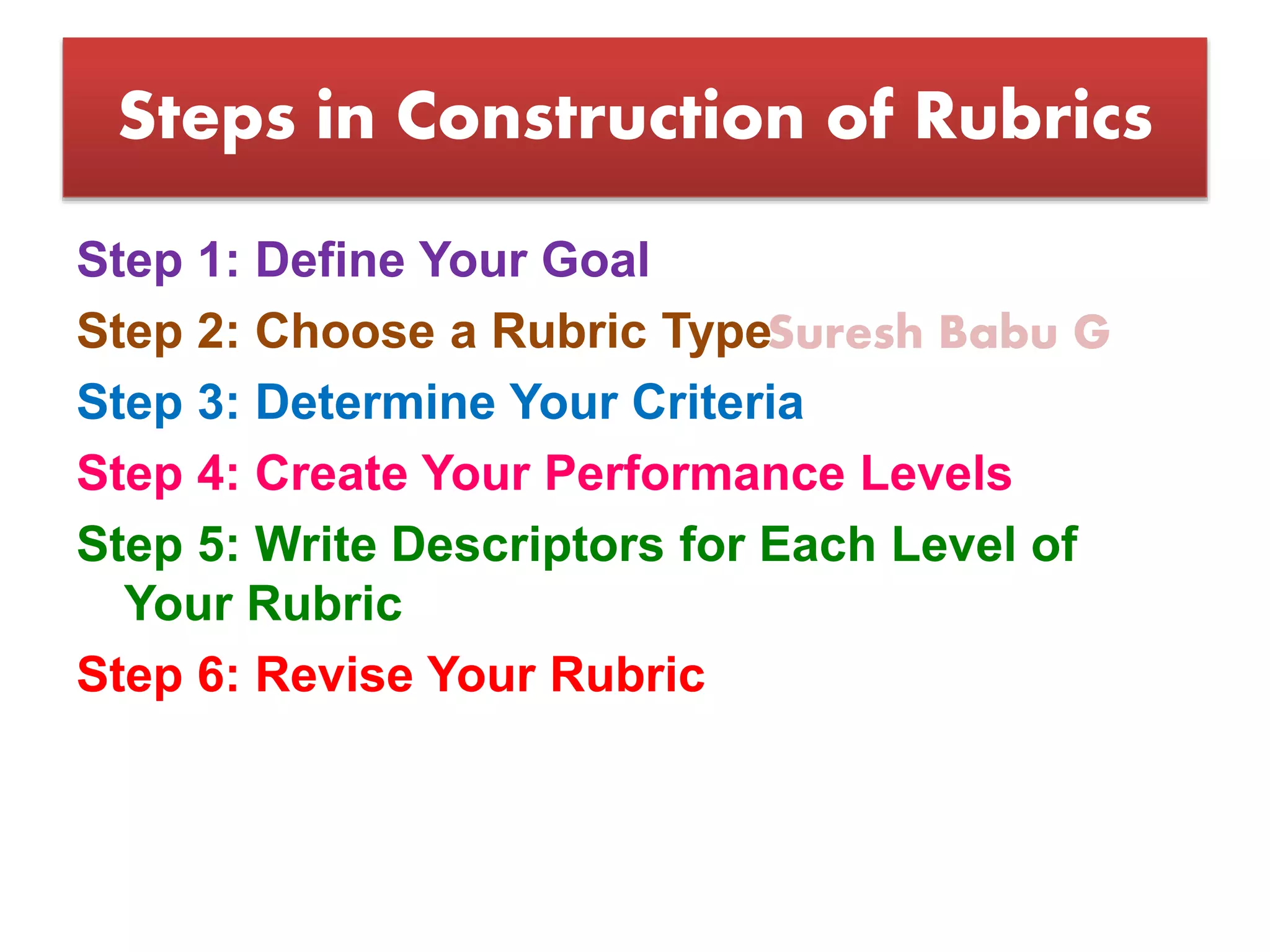
Steps in Construction of Rubrics
Step 1: Define Your Goal
Step 2: Choose a Rubric Type
Step 3: Determine Your Criteria
Step 4: Create Your Performance Levels
Step 5: Write Descriptors for Each Level of
Your Rubric
Step 6: Revise Your Rubric
Suresh Babu G
Suresh Babu G
Suresh Babu G
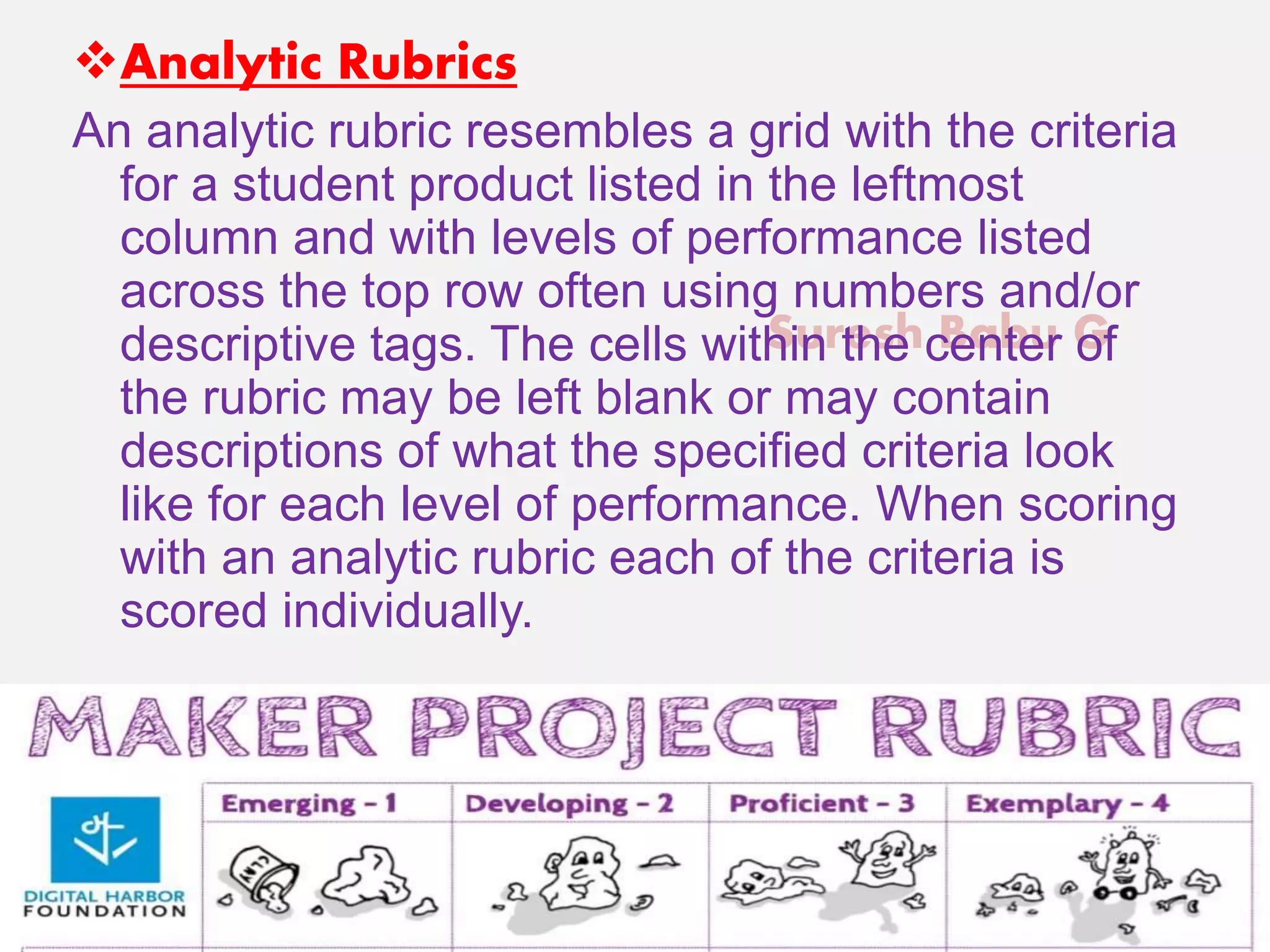
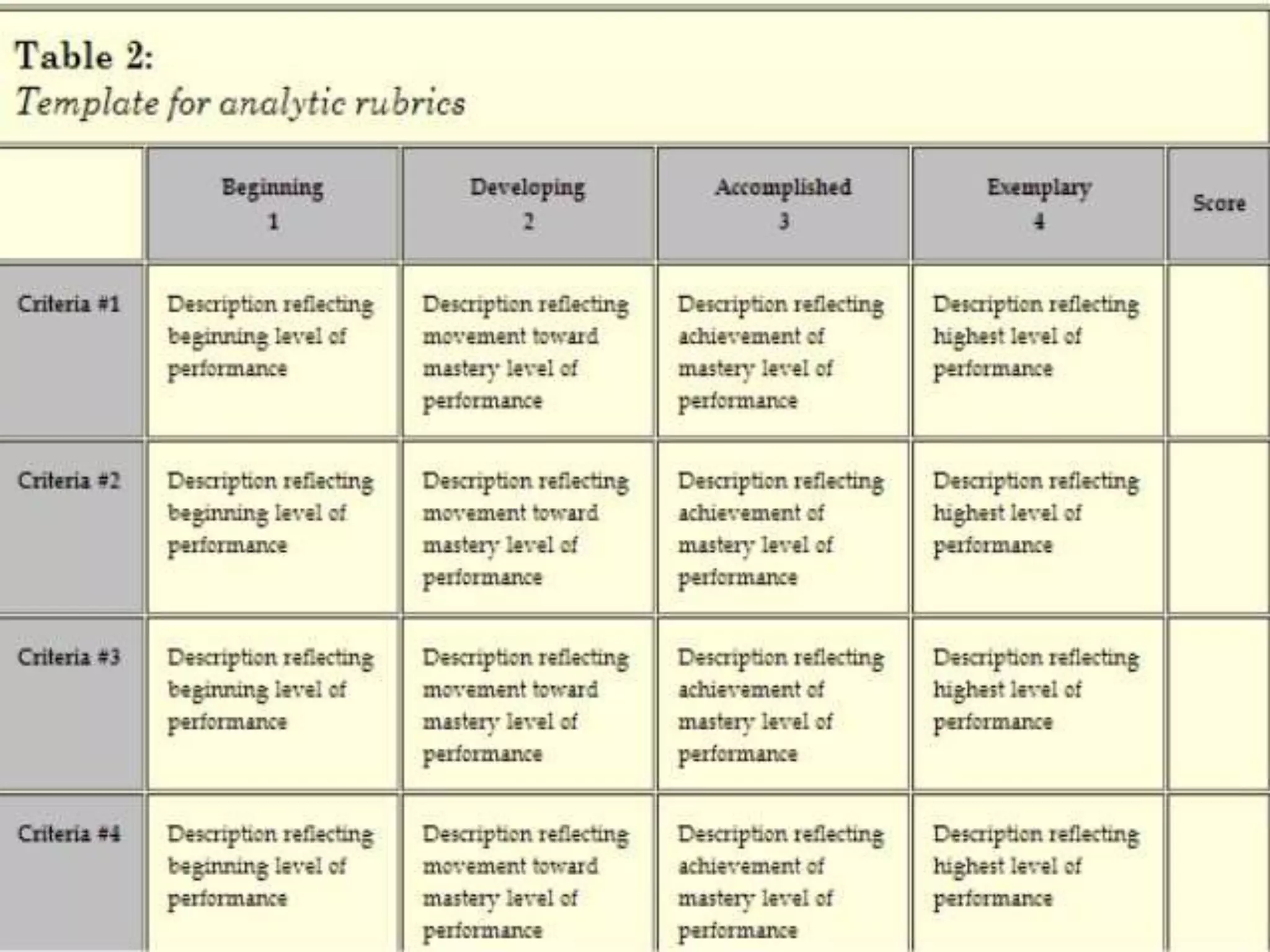
Analytic Rubrics
An analytic rubric resembles a grid with the criteria
for a student product listed in the leftmost
column and with levels of performance listed
across the top row often using numbers and/or
descriptive tags. The cells within the center of
the rubric may be left blank or may contain
descriptions of what the specified criteria look
like for each level of performance. When scoring
with an analytic rubric each of the criteria is
scored individually.
Suresh Babu G
Suresh Babu G
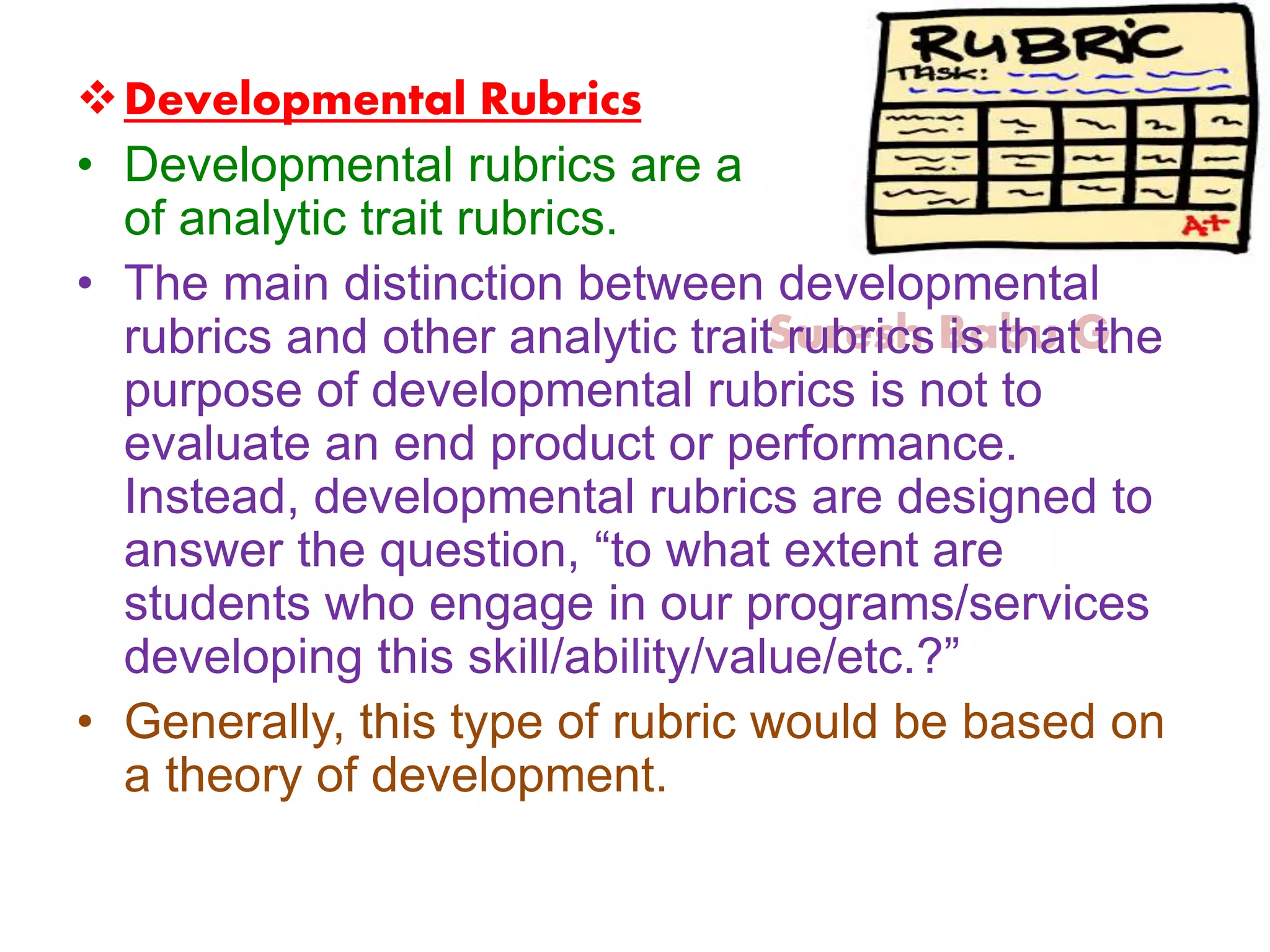
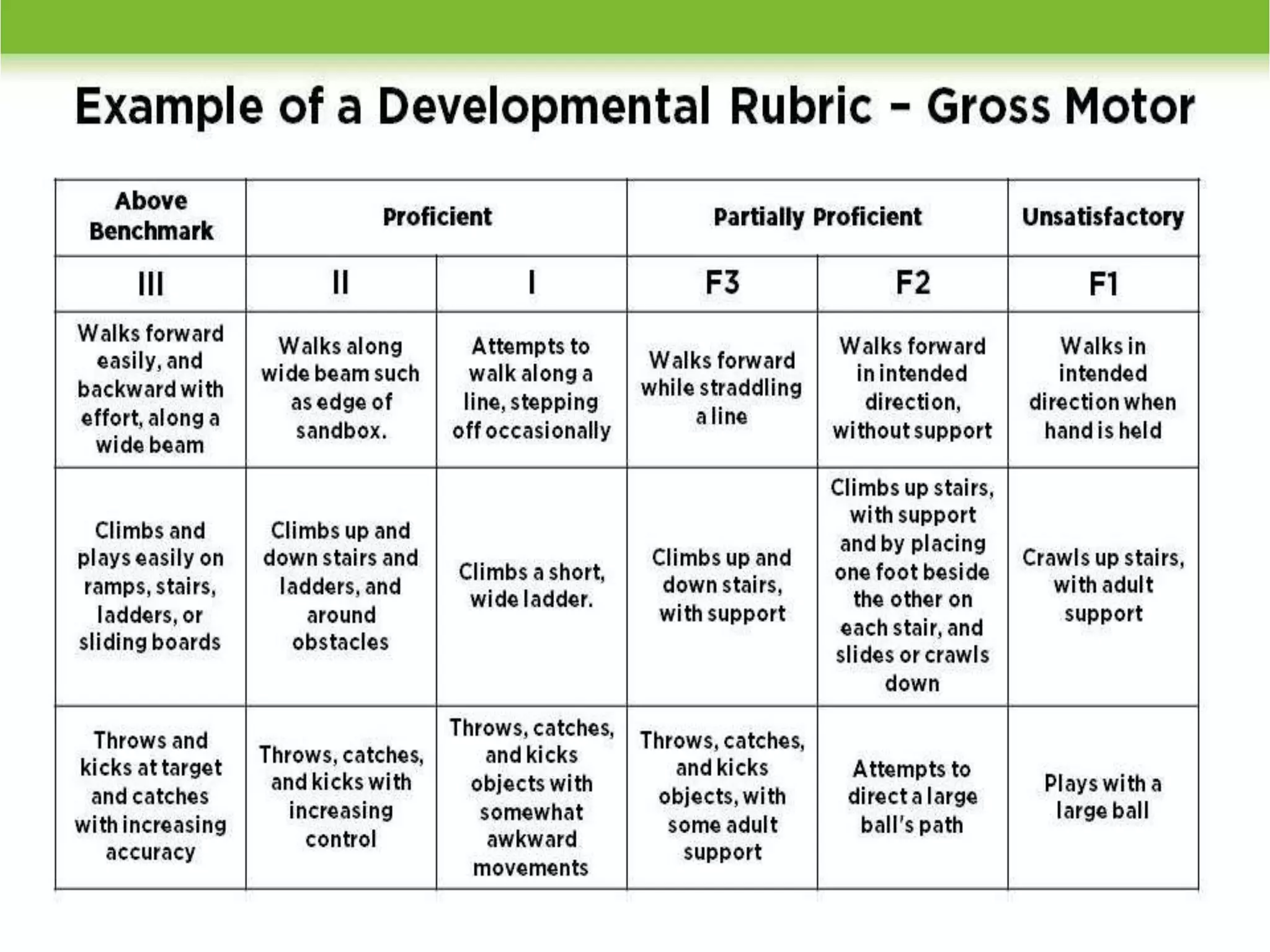
Developmental Rubrics
• Developmental rubrics are a subset
of analytic trait rubrics.
• The main distinction between developmental
rubrics and other analytic trait rubrics is that the
purpose of developmental rubrics is not to
evaluate an end product or performance.
Instead, developmental rubrics are designed to
answer the question, “to what extent are
students who engage in our programs/services
developing this skill/ability/value/etc.?”
• Generally, this type of rubric would be based on
a theory of development.
Suresh Babu G
Suresh Babu G
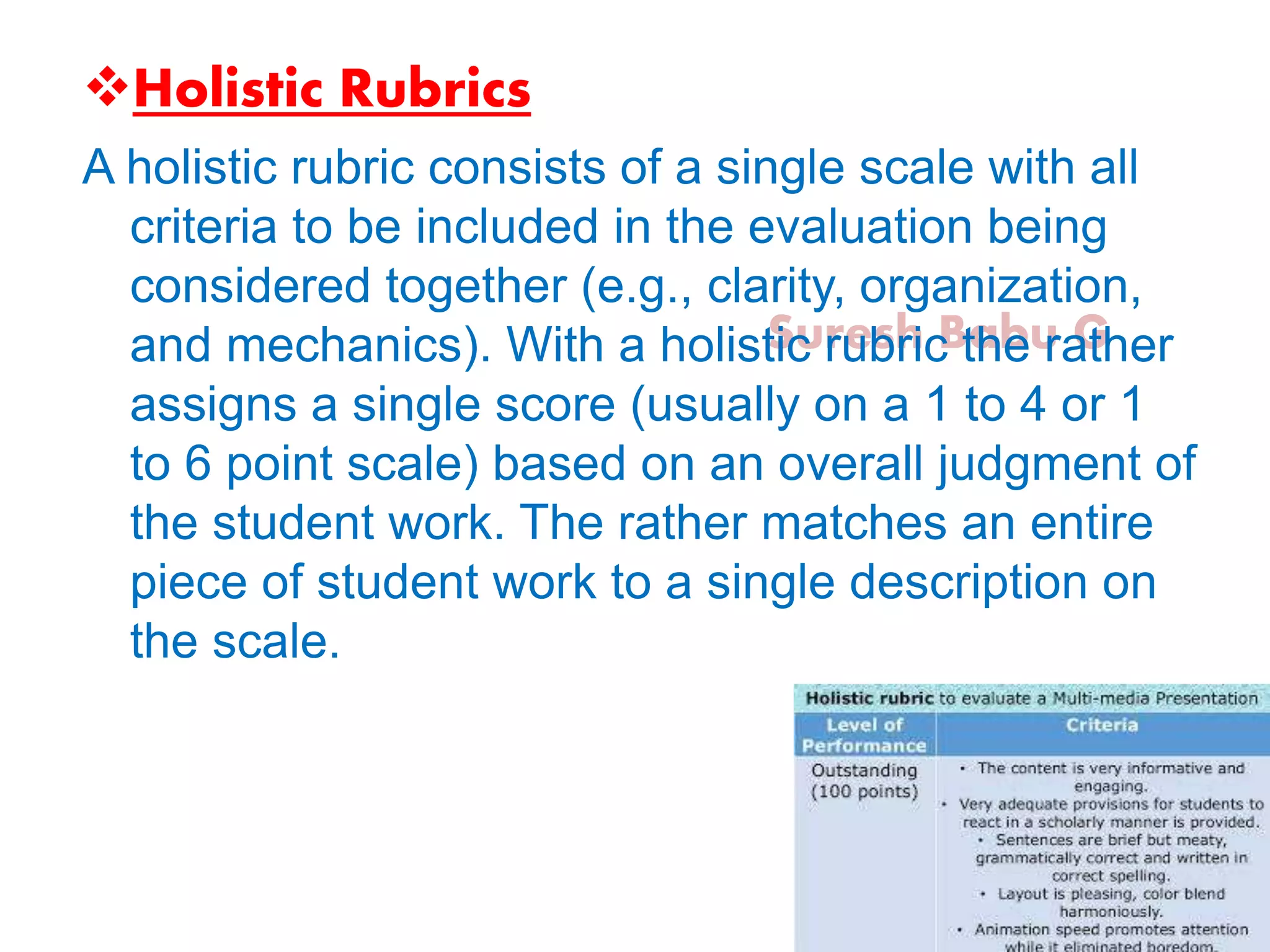
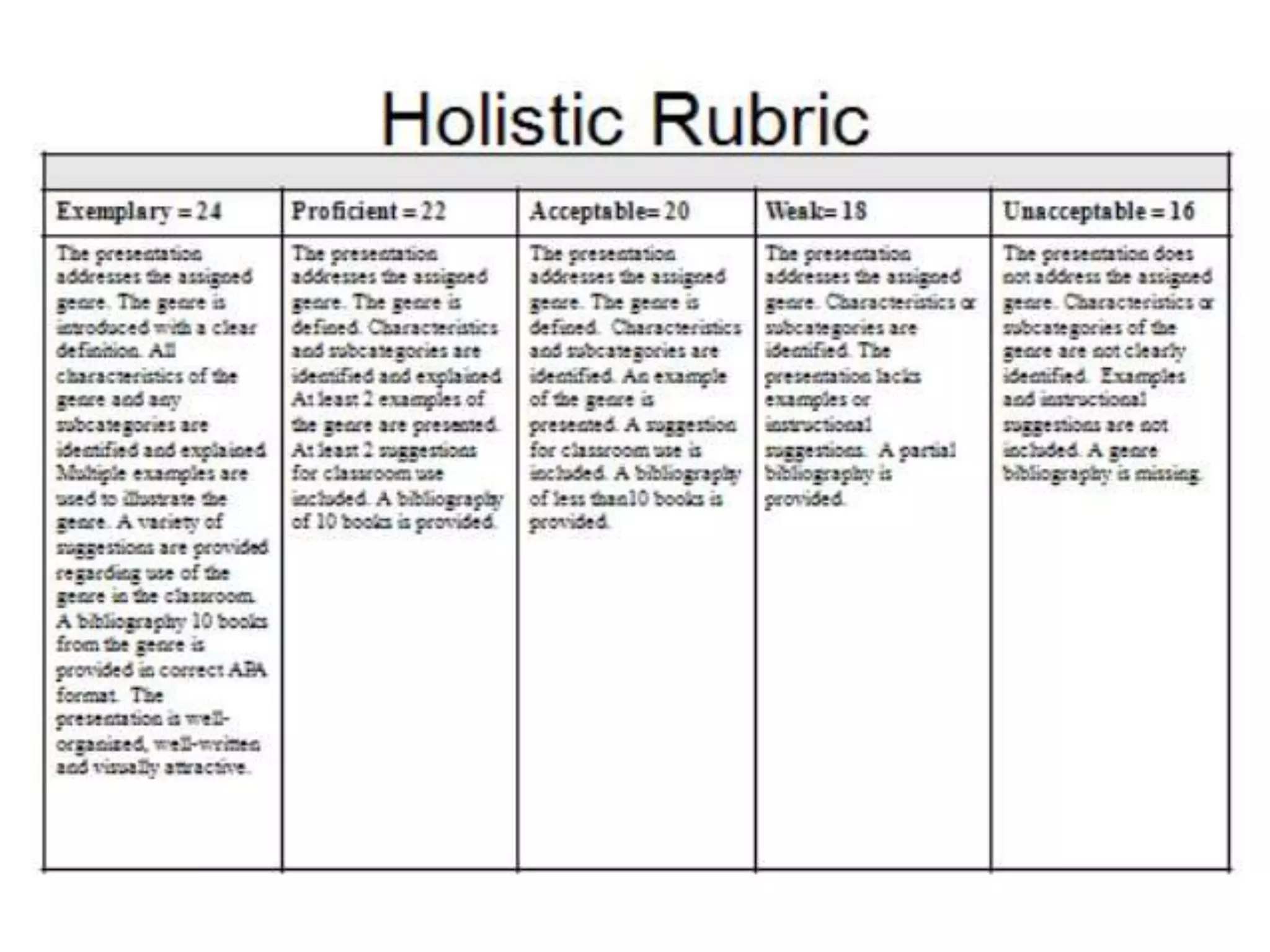
Holistic Rubrics
A holistic rubric consists of a single scale with all
criteria to be included in the evaluation being
considered together (e.g., clarity, organization,
and mechanics). With a holistic rubric the rather
assigns a single score (usually on a 1 to 4 or 1
to 6 point scale) based on an overall judgment of
the student work. The rather matches an entire
piece of student work to a single description on
the scale.
Suresh Babu G
Suresh Babu G
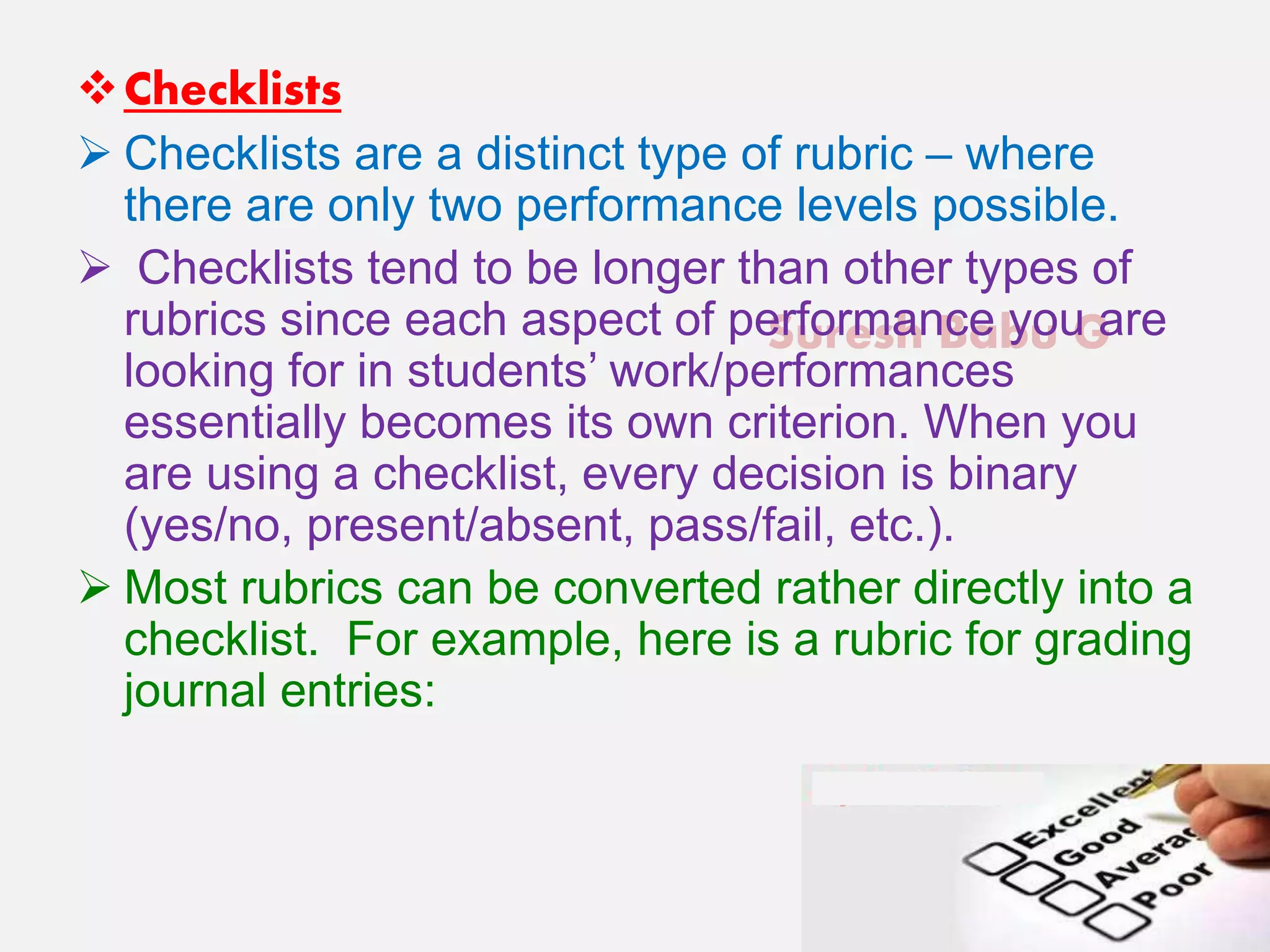
Checklists
 Checklists are a distinct type of rubric – where
there are only two performance levels possible.
 Checklists tend to be longer than other types of
rubrics since each aspect of performance you are
looking for in students’ work/performances
essentially becomes its own criterion. When you
are using a checklist, every decision is binary
(yes/no, present/absent, pass/fail, etc.).
 Most rubrics can be converted rather directly into a
checklist. For example, here is a rubric for grading
journal entries:
Suresh Babu G

Recent Trends and Practices in Assessment and Evaluation

  • 1.
    Suresh Babu G RecentTrends and Practices in Assessment and Evaluation Suresh Babu G Assistant Professor CTE CPAS Paippad, Kottayam
  • 2.
    Suresh Babu G Content Characteristics of Old System of Evaluation  New System of Evaluation  Scholastic evaluation  Co-scholastic evaluation and Non-scholastic evaluation  Personal and Social Qualities  Projects  Seminars  Assignments  Group Discussion  Portfolios  Student profile  Poster assessment  Open book exam  Participatory assessment  Peer assessment  Rubrics
  • 3.
    Suresh Babu G RecentTrends and Practices in Assessment and Evaluation The educational system have been changing day by day. The need of evaluation is increasing compared to old system of evaluation. The area of evaluation is increasing.
  • 4.
    Suresh Babu G Characteristicsof Old System of Evaluation  Evaluating achievement of learners by a terminal written examinations.  Evaluating only cognitive development.  Affective and Psychomotor domain almost completely neglected.  Evaluating memory of the learners.  Give more importance to summative evaluation.  Marking system used for evaluation.  Not continuous.  Not comprehensive.
  • 5.
    Suresh Babu G Newsystem of Evaluation • National Education policy (1986) stressed the need for making evaluation continuous and comprehensive. • Give stress to formative and summative evaluation at the same time. • Evaluate all aspect of development through different methods. • Evaluation should fulfill the function of formative evaluation leading to immediate feedback, knowledge of result, diagnosis and remediation. •
  • 6.
    Suresh Babu G •Summative evaluation should fulfil the function like gradation and placement. • Evaluation should be continuous and comprehensive • Grading system and semester system introduced in evaluation. • General Education department in Kerala has implemented a revised scheme of evaluation for SSLC examination with effect from 2005 onwards. New system of Evaluation
  • 7.
    Suresh Babu G Evaluatespupils with regard to three dimensions. • Part – I : Evaluation of scholastic skills • Part – II : Evaluation of Co-Scholastic abilities • Part – III : Evaluation of Personal and Social Qualities. New system of Evaluation
  • 8.
    Suresh Babu G Scholasticareas Scholastic areas are more concerned with cognitive and knowledge aspects. Can be assessed directly by observing their reactions to various learning experiences.  The intelligence or mental ability tests come under its category
  • 9.
    Suresh Babu G Evaluationof Scholastic Skills • Term End Evaluation(TE) • Continuous Evaluation(CE) o Projects o Assignments o Practical / Seminar o Records/Collections o Class Test
  • 10.
    Suresh Babu G Co-scholastic or Non-scholastic Abilities The non-scholastic abilities are concerned with the learner’s attitudes, interests, values, feelings, habits, social interaction which cannot be assessed directly. It is assessed indirectly by merely observing the behaviour of the learner and his experiences and also through biographies, self reports, checklists etc. The selection of an appropriate tool is essential. In case there occurs a need to develop a new tool then it’s practicability, objectivity, reliability and validity should be ensured.
  • 11.
    Suresh Babu G Evaluationof Co-Scholastic Abilities Work Experience  Making of teaching aids  Making of school stationery  Making of saleable items  Making of artistic and eco-related items Art Education • Drawing and clay modelling • Music • Acting • Dancing
  • 12.
    Suresh Babu G Health and Physical Education • Under Health Education, Evaluate the knowledge, interest and practice of the student with respect to – Personal hygiene – Environmental hygiene – Nutrition – First aid – Communicable disease – Knowledge about disease resistance • Under Physical Education, evaluation is to be performed with respect to – Physical Abilities – Drill and march – Physical Exercise – Recreational games Evaluation of Co-Scholastic Abilities
  • 13.
    Suresh Babu G Toolsand Techniques to Assess Non- Scholastic aspects of Learner’s behaviour • The Subjective Methods - i. Anecdotal Record ii. Observation iii. Direct question iv. Autobiography v. Interviews vi. Inventory questionnaire vii. Projects and field work assignments viii. Group Discussions • The Objective Methods - i. Check List ii. Rating Scale iii. Study of psychological changes iv. Situational test v. ‘Q’ Technique vi. Sociogram • The Projective Techniques - i. Inkblot ii. Picture projection iii. Presentation of verbal stimuli iv. Sentence completion v. Role playing vi. Drawing tests.
  • 14.
    Suresh Babu G PartIII : Personal and Social Qualities • Communication Skill • Character and conduct • Regularity • Group working skill • Leadership quality • School club activities
  • 15.
    Suresh Babu G Projects •It means planned set of interrelated tasks to be executed over a fixed period and within certain cost and other limitations. Or estimate or forecast (something) on the basis of present trends • A project assessment is a legislated planning and evaluation process. If the project goes ahead, information gathered through the environmental assessment process is used to guide changes to the project's design that may help minimize impacts on the environment and people.
  • 16.
    Suresh Babu G Typesof Assessment in Project Formative Summative
  • 17.
    Suresh Babu G Evaluationof Projects  Planning – Relevance of the study , identification of problem, selection of appropriate tools for data collection and analysis  Data collection – Adequacy , relevance and reliability of data  Analysis and interpretation – Systematic arrangement of data analysis of the collected data and interpret , conclusions  Presentation of report – Presentation in logical and sequential order , authenticity of report , correlation with project diary  Timeliness – Time bound completion
  • 18.
    Suresh Babu G Seminars •A seminar is a form of academic instruction, either at an academic institution or offered by a commercial or professional organization. It has the function of bringing together small groups for recurring meetings, focusing each time on some particular subject, in which everyone present is requested to participate. • It is a conference or other meeting for discussion or training.
  • 19.
    Suresh Babu G Evaluationof seminars • Planning and organization - Topic , how to collect data , aids ,for presentation • Data Collection - Literature review , relevance , Source • Content - Structure , content depth • Preparation of paper - Arrangement of ideas , clarity , analysis , interpretation and evaluation • Presentation of Paper - Communication , Participation and discussion , reporting , seminar project
  • 20.
    Suresh Babu G Assignments Itis a task or piece of work allocated to someone as part of a job or course of study. Types of assignments • Essays. • Reviews. • Case study. • Project report. • Page by Page journals. • Bibliography.
  • 21.
    Suresh Babu G Evaluationof Assignments • Understanding out the content - Knowledge about the content • Comprehensiveness of the content - Content Coverage • Ability to present - Structure , clarity in language , creativity • Conclusion - Observation and findings • Timeliness - Time bound completion
  • 22.
    Suresh Babu G EvaluationCriteria in Group Discussion-Skills Assessed during GD Group discussion means discussion of a topic in a group Skills to be evaluated  Leadership skills  Communication skills  Interpersonal skills  Problem solving skills  Listening & Conceptualizing Ability  Attitude  Team Player  General Awareness
  • 23.
    Suresh Babu G Portfolio Portfolioassessment has been predominantly used in educational settings to document the progress and achievements of individual children and adolescents, it has the potential to be a valuable tool for program assessment as well.
  • 24.
    Suresh Babu G Studentportfolio  A student portfolio is a compilation of academic work and other forms of educational evidence assembled for the purpose of  It measures student growth over a long period of time.  Helps to organize students work.  It is a comprehensive overview of students achievement. (1) Evaluating coursework quality learning progress, and academic achievement; (2) Determining whether students have met learning standards or other academic requirements for courses, grade-level etc
  • 25.
  • 26.
  • 27.
    Suresh Babu G Posters Posteris the process of showing the content and the findings of a topic to an audience or a group of audiences at different times. It is often used to assess student learning in group research projects. Peer and tutor assessment can be used as part of the grading process.
  • 28.
    Suresh Babu G Thecriteria used for assessment of posters • Thesis (significance of topic and its relationship to the placement); • Abstract (clear and concise, inclusion of essential information and central thesis); • Choice of content (currency, significance, relevance to central thesis); • Critical analysis of issues; • Research (use of relevant and scholarly sources); • Referencing; • Visual appearance (appealing, professionally prepared, use of colour, graphics and font, arrangement of text and graphics, readability); • Organisation of poster.
  • 29.
    Suresh Babu G PeerAssessment • Peer assessment is the assessment of students' work by other students of equal status. Students often undertake peer assessment in conjunction with formal self-assessment. They reflect on their own efforts, and extend and enrich this reflection by exchanging feedback on their own and their peers' work • It is also worth noting a common distinction between two very different forms of peer review: Formative and Summative  Formative evaluation typically is oriented solely towards the improvement of teaching and is part of instructional mentorship and development.  Summative evaluation, in contrast, is that done to inform personnel decisions.
  • 30.
    Suresh Babu G ParticipatoryAssessment • A Participatory Assessment is a process of building partnerships with refugee women and men of all ages and backgrounds by promoting meaningful participation through structured dialogue. • Participatory Assessments involve holding separate discussions with women, girls, boys, and men of concern, including adolescents, in order to gather accurate information on the specific protection risks they face and the underlying causes, to understand their capacities, and to hear their proposed solutions.
  • 31.
    Suresh Babu G •A Participatory Assessment is an effective, field- tested methodology for gaining an understanding of the needs and capacities that reside within individuals and groups - considerations that should inform all planning, implementation, monitoring and evaluation. • It is grounded in the notion situativity theory brings that assessment is central to learning; students are constantly assessing themselves and being assessed, and it is through these constant self and external (however informal) assessments that learning occurs.
  • 32.
    Suresh Babu G OpenBook Examination  An "open book examination" is one in which examinees are allowed to consult their class notes, textbooks, and other approved material while answering questions.  This practice is not uncommon in law examinations, but in other subjects, it is mostly unheard of.  Radical and puzzling though the idea may sound to those who are used to conventional examinations, it is ideally suited to teaching programmes that especially aim at developing the skills of critical and creative thinking.
  • 33.
    Suresh Babu G Advantages •Remove tension of examination • Students are not required to engage in parroting of concepts, if they understand the concept they would answer correctly • More and more students would continue their education as the passing percentage would go up.
  • 34.
    Suresh Babu G Disadvantage The students would stop studying and simply copy from the open book provided at the examination hall.  Board examinations would lose their importance and no one would like to assess the ability and competence of an individual on the basis of marks or grade
  • 35.
  • 36.
    Suresh Babu G RUBRICS Arubric for assessment, usually in the form of a matrix or grid, is a tool used to interpret and grade students' work against criteria and standards. Rubrics are sometimes called "criteria sheets", "grading schemes", or "scoring guides". Rubrics can be designed for any content domain.
  • 37.
    Suresh Babu G Ineducation terminology, rubric means "a scoring guide used to evaluate the quality of students' constructed responses". A scoring rubric is an attempt to communicate expectations of quality around a task. In many cases, scoring rubrics are used to delineate consistent criteria for grading. RUBRICS
  • 38.
    Suresh Babu G Purpose •Rubrics are simply a scoring tool that evaluate the list of criteria for projects, assignments, or other pieces of work. • Rubrics list what needs to be included in order to receive a certain score or grade. • It allows the student to evaluate his/her own work before submitting. • Instructors can justify their grades based on the rubric.
  • 39.
    Suresh Babu G Stepsin Construction of Rubrics Step 1: Define Your Goal Step 2: Choose a Rubric Type Step 3: Determine Your Criteria Step 4: Create Your Performance Levels Step 5: Write Descriptors for Each Level of Your Rubric Step 6: Revise Your Rubric
  • 40.
  • 41.
  • 42.
    Suresh Babu G AnalyticRubrics An analytic rubric resembles a grid with the criteria for a student product listed in the leftmost column and with levels of performance listed across the top row often using numbers and/or descriptive tags. The cells within the center of the rubric may be left blank or may contain descriptions of what the specified criteria look like for each level of performance. When scoring with an analytic rubric each of the criteria is scored individually.
  • 43.
  • 44.
    Suresh Babu G DevelopmentalRubrics • Developmental rubrics are a subset of analytic trait rubrics. • The main distinction between developmental rubrics and other analytic trait rubrics is that the purpose of developmental rubrics is not to evaluate an end product or performance. Instead, developmental rubrics are designed to answer the question, “to what extent are students who engage in our programs/services developing this skill/ability/value/etc.?” • Generally, this type of rubric would be based on a theory of development.
  • 45.
  • 46.
    Suresh Babu G HolisticRubrics A holistic rubric consists of a single scale with all criteria to be included in the evaluation being considered together (e.g., clarity, organization, and mechanics). With a holistic rubric the rather assigns a single score (usually on a 1 to 4 or 1 to 6 point scale) based on an overall judgment of the student work. The rather matches an entire piece of student work to a single description on the scale.
  • 47.
  • 48.
    Suresh Babu G Checklists Checklists are a distinct type of rubric – where there are only two performance levels possible.  Checklists tend to be longer than other types of rubrics since each aspect of performance you are looking for in students’ work/performances essentially becomes its own criterion. When you are using a checklist, every decision is binary (yes/no, present/absent, pass/fail, etc.).  Most rubrics can be converted rather directly into a checklist. For example, here is a rubric for grading journal entries:
  • 49.