


Suresh Babu G
A
Personality
Disorder
Suresh Babu G
Assistant Professor in Prospective Education
Suresh Babu G
Personality
Disorder
Personality disorder are
chronic psychological disorder
that begin in childhood, or by
early adulthood at the latest.
They are pervasive , negatively
affecting peoples's work,
family, and social life and
causing a great deal of
distress, discomfort, either
for the affected people
themselfes, or for those who
are around them.
Suresh Babu G
Characteristics of Personality Disorder
It is not a mental illness
It is maladaptive/rigid /pervasive/chronic behaviour
It is the possession of abnormal personality traits
It is a long lasting, most of the time life-long problem
Suresh Babu G
Characteristics
of
Personality
Disorder
It causes significant impairment in
social or occupational functioning
It produces distress to the individual
and others
His/her behaviour deviates from
cultural standards
The behaviour is consistent over time
Suresh Babu G
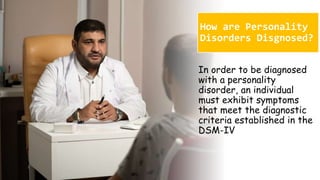
How are Personality
Disorders Disgnosed?
In order to be diagnosed
with a personality
disorder, an individual
must exhibit symptoms
that meet the diagnostic
criteria established in the
DSM-IV
Suresh Babu G
How are
Personality Disorders
Disgnosed?
• There patterns of behaviours must be chronic and
pervasive, affecting many different aspects of the
individual's life, including social functioning, work,
school and close relationships.
• The individual must exhibit symptoms that affect two
or more of the following areas: thoughts,
emotions, interpersonal functioning and
impulse control.
• The pattern of behaviour's must be stable
across time and have an onset that
can be traced back adolescence or early adulthood.
• These behaviour's cannot be
explained by any other mental disorders,
substance abuse or medical conditions.
Suresh Babu G
Differential Diagnosis
Substance Abuse
Anxiety Disorders
Depression
Dissociative Disorders
School Phobia
Post Traumatic Stress
Disorder
Schizophrenia
Suresh Babu G
Causes
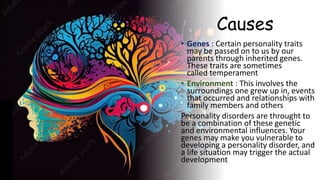
• Genes : Certain personality traits
may be passed on to us by our
parents through inherited genes.
These traits are sometimes
called temperament
• Environment : This involves the
surroundings one grew up in, events
that occurred and relationships with
family members and others
Personality disorders are throught to
be a combination of these genetic
and environmental influences. Your
genes may make you vulnerable to
developing a personality disorder, and
a life situation may trigger the actual
development
Suresh Babu G
Risk Factors
Although the precise causes of personality disorders
is not known, certain factors seem to increase the
risk of developing or triggering personality disorders,
including :
Family history of personality disorders or other
mental illness.
Low level of education and lower social and
economic status.
Verbal, physical or sexual abuse during childhood.
Neglect or an unstable or chaotic family life during
childhood
Being diagnosed with childhood conduct disorder
Variations in brain chemistry and structure
Suresh Babu G
Symptoms of
Personality
Disorder
Symptoms of personality
disorders are grouped
according to the types of the
disorder. Types of personality
disorders are grouped into
three cluster, based on similar
characteristics and symptoms
However, many people with
one personality disorder also
have signs and symptoms of
at least one additional
personality disorder
Suresh Babu G
Types of Personality Disorders
CLUSTER A (odd, eccentric thinking or behaviour)
1. Paranoid Personality Disorder
2. Schizoid Personality Disorder
3. Schizotypal Personality Disorder
It's not necessary to exhibit all the signs and symptoms listed for
a disorder to be diagnosed
Suresh Babu G
CLUSTER B (Dramatic, Flamboyant, Erratic,
Overly emotional or Unpredictable thinking)
1. Antisocial/Psychopath/Sociopath
/Dissocial personality disorder
2. Borderline Personality Disorder
3. Histrionic Personality Disorder
4. Narcissistic Personality Disorder
Suresh Babu G
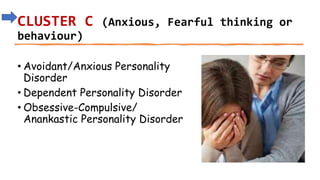
CLUSTER C (Anxious, Fearful thinking or
behaviour)
• Avoidant/Anxious Personality
Disorder
• Dependent Personality Disorder
• Obsessive-Compulsive/
Anankastic Personality Disorder
Suresh Babu G
Paranoid Personality Disorder
• Paranoid personality disorder is a
mental health condition characterized
by persistent and unwarranted
distrust and suspiciousness of
others.
• People with this disorder may feel
that others are trying to harm them or
deceive them, even when there is no
evidence to support these beliefs.
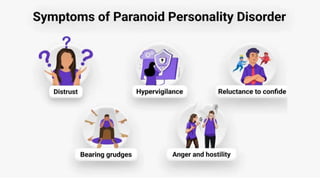
• Symptoms may include tediousness
and oversensitivity, pervasive distrust
and suspiciousness, and
suspiciousness without justification.
• It is a rare disorder, affecting only
about 1% of the population.
Suresh Babu G
Suresh Babu G
Treatment
Suresh Babu G
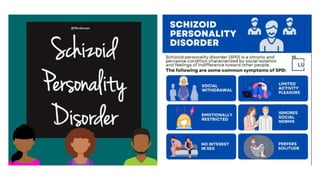
Schizoid Personality Disorder
• Schizoid personality disorder is a
rare psychiatric condition
characterized by social detachment
and a lack of interest in social
activities.
• People with schizoid personality
disorder tend to be introverted and
solitary, and may have difficulty
forming close relationships with
others.
• They may also lack motivation and
may underachieve in their personal
and professional lives.
Suresh Babu G
Suresh Babu G
Treatment
Treatment for
schizoid personality
disorder typically
involves therapy to
help individuals
develop better social
skills and find meaning
in their lives.
Suresh Babu G
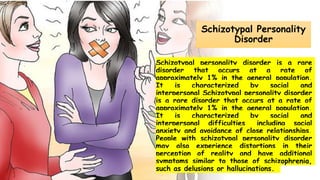
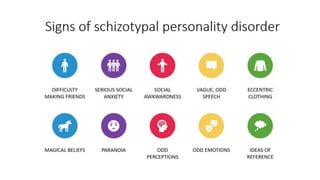
Schizotypal Personality
Disorder
Schizotypal personality disorder is a rare
disorder that occurs at a rate of
approximately 1% in the general population.
It is characterized by social and
interpersonal Schizotypal personality disorder
is a rare disorder that occurs at a rate of
approximately 1% in the general population.
It is characterized by social and
interpersonal difficulties, including social
anxiety and avoidance of close relationships.
People with schizotypal personality disorder
may also experience distortions in their
perception of reality and have additional
symptoms similar to those of schizophrenia,
such as delusions or hallucinations.
Suresh Babu G
Suresh Babu G
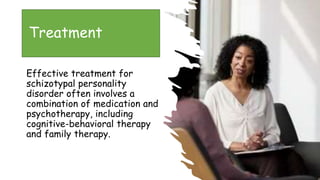
Treatment
Effective treatment for
schizotypal personality
disorder often involves a
combination of medication and
psychotherapy, including
cognitive-behavioral therapy
and family therapy.
Suresh Babu G
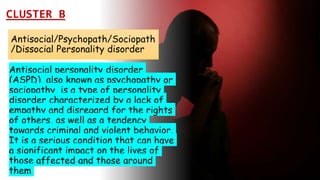
Antisocial/Psychopath/Sociopath
/Dissocial Personality disorder
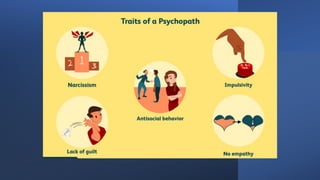
Antisocial personality disorder
(ASPD), also known as psychopathy or
sociopathy, is a type of personality
disorder characterized by a lack of
empathy and disregard for the rights
of others, as well as a tendency
towards criminal and violent behavior.
It is a serious condition that can have
a significant impact on the lives of
those affected and those around
them
CLUSTER B
Suresh Babu G
Suresh Babu G
Treatment
There is no cure for ASPD, but
treatment can include therapy,
medication, and support groups.
If you think you may be
experiencing symptoms of
ASPD, it is important to seek
help from a mental health
professional.
Suresh Babu G
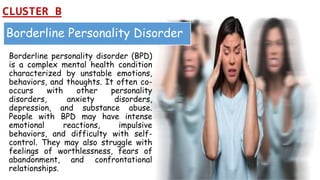
Borderline Personality Disorder
Borderline personality disorder (BPD)
is a complex mental health condition
characterized by unstable emotions,
behaviors, and thoughts. It often co-
occurs with other personality
disorders, anxiety disorders,
depression, and substance abuse.
People with BPD may have intense
emotional reactions, impulsive
behaviors, and difficulty with self-
control. They may also struggle with
feelings of worthlessness, fears of
abandonment, and confrontational
relationships.
CLUSTER B
Suresh Babu G
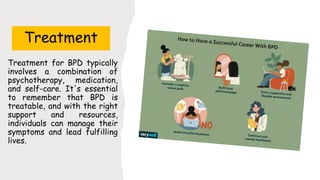
Treatment
Treatment for BPD typically
involves a combination of
psychotherapy, medication,
and self-care. It's essential
to remember that BPD is
treatable, and with the right
support and resources,
individuals can manage their
symptoms and lead fulfilling
lives.
Suresh Babu G
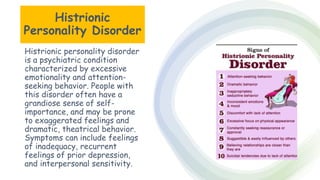
Histrionic
Personality Disorder
Histrionic personality disorder
is a psychiatric condition
characterized by excessive
emotionality and attention-
seeking behavior. People with
this disorder often have a
grandiose sense of self-
importance, and may be prone
to exaggerated feelings and
dramatic, theatrical behavior.
Symptoms can include feelings
of inadequacy, recurrent
feelings of prior depression,
and interpersonal sensitivity.
Suresh Babu G
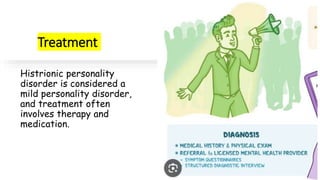
Treatment
Histrionic personality
disorder is considered a
mild personality disorder,
and treatment often
involves therapy and
medication.
Suresh Babu G
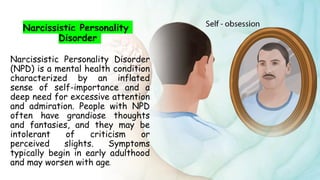
Narcissistic Personality
Disorder
Narcissistic Personality Disorder
(NPD) is a mental health condition
characterized by an inflated
sense of self-importance and a
deep need for excessive attention
and admiration. People with NPD
often have grandiose thoughts
and fantasies, and they may be
intolerant of criticism or
perceived slights. Symptoms
typically begin in early adulthood
and may worsen with age.
Suresh Babu G
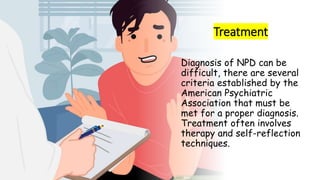
Treatment
Diagnosis of NPD can be
difficult, there are several
criteria established by the
American Psychiatric
Association that must be
met for a proper diagnosis.
Treatment often involves
therapy and self-reflection
techniques.
Suresh Babu G
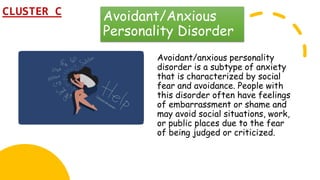
Avoidant/Anxious
Personality Disorder
Avoidant/anxious personality
disorder is a subtype of anxiety
that is characterized by social
fear and avoidance. People with
this disorder often have feelings
of embarrassment or shame and
may avoid social situations, work,
or public places due to the fear
of being judged or criticized.
CLUSTER C
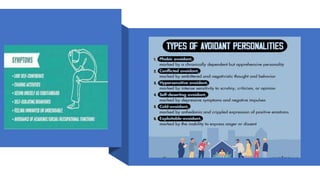
Suresh Babu G
Suresh Babu G
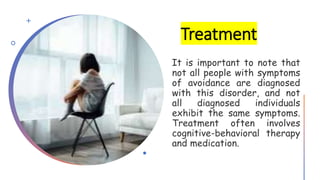
Treatment
Suresh Babu G
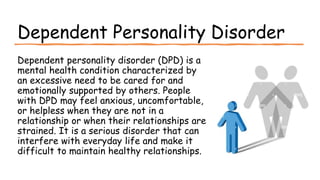
Dependent Personality Disorder
Dependent personality disorder (DPD) is a
mental health condition characterized by
an excessive need to be cared for and
emotionally supported by others. People
with DPD may feel anxious, uncomfortable,
or helpless when they are not in a
relationship or when their relationships are
strained. It is a serious disorder that can
interfere with everyday life and make it
difficult to maintain healthy relationships.
Suresh Babu G
Treatment
Treatment typically involves
a combination of
psychotherapy, medication,
and support from loved
ones. It's crucial for
individuals with DPD to seek
professional help to manage
their symptoms and improve
their mental health.
Suresh Babu G
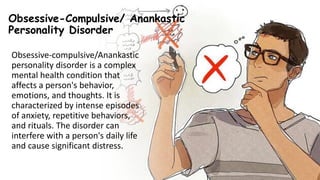
Obsessive-Compulsive/ Anankastic
Personality Disorder
Obsessive-compulsive/Anankastic
personality disorder is a complex
mental health condition that
affects a person's behavior,
emotions, and thoughts. It is
characterized by intense episodes
of anxiety, repetitive behaviors,
and rituals. The disorder can
interfere with a person's daily life
and cause significant distress.
Suresh Babu G
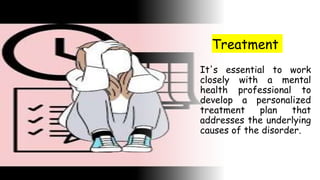
Treatment
It's essential to work
closely with a mental
health professional to
develop a personalized
treatment plan that
addresses the underlying
causes of the disorder.
Suresh Babu G

Personality Disorder and its types .pptx

  • 1.
    Suresh Babu G A Personality Disorder SureshBabu G Assistant Professor in Prospective Education
  • 2.
    Suresh Babu G Personality Disorder Personalitydisorder are chronic psychological disorder that begin in childhood, or by early adulthood at the latest. They are pervasive , negatively affecting peoples's work, family, and social life and causing a great deal of distress, discomfort, either for the affected people themselfes, or for those who are around them.
  • 3.
    Suresh Babu G Characteristicsof Personality Disorder It is not a mental illness It is maladaptive/rigid /pervasive/chronic behaviour It is the possession of abnormal personality traits It is a long lasting, most of the time life-long problem
  • 4.
    Suresh Babu G Characteristics of Personality Disorder Itcauses significant impairment in social or occupational functioning It produces distress to the individual and others His/her behaviour deviates from cultural standards The behaviour is consistent over time
  • 5.
    Suresh Babu G Howare Personality Disorders Disgnosed? In order to be diagnosed with a personality disorder, an individual must exhibit symptoms that meet the diagnostic criteria established in the DSM-IV
  • 6.
    Suresh Babu G Howare Personality Disorders Disgnosed? • There patterns of behaviours must be chronic and pervasive, affecting many different aspects of the individual's life, including social functioning, work, school and close relationships. • The individual must exhibit symptoms that affect two or more of the following areas: thoughts, emotions, interpersonal functioning and impulse control. • The pattern of behaviour's must be stable across time and have an onset that can be traced back adolescence or early adulthood. • These behaviour's cannot be explained by any other mental disorders, substance abuse or medical conditions.
  • 7.
    Suresh Babu G DifferentialDiagnosis Substance Abuse Anxiety Disorders Depression Dissociative Disorders School Phobia Post Traumatic Stress Disorder Schizophrenia
  • 8.
    Suresh Babu G Causes •Genes : Certain personality traits may be passed on to us by our parents through inherited genes. These traits are sometimes called temperament • Environment : This involves the surroundings one grew up in, events that occurred and relationships with family members and others Personality disorders are throught to be a combination of these genetic and environmental influences. Your genes may make you vulnerable to developing a personality disorder, and a life situation may trigger the actual development
  • 9.
    Suresh Babu G RiskFactors Although the precise causes of personality disorders is not known, certain factors seem to increase the risk of developing or triggering personality disorders, including : Family history of personality disorders or other mental illness. Low level of education and lower social and economic status. Verbal, physical or sexual abuse during childhood. Neglect or an unstable or chaotic family life during childhood Being diagnosed with childhood conduct disorder Variations in brain chemistry and structure
  • 10.
    Suresh Babu G Symptomsof Personality Disorder Symptoms of personality disorders are grouped according to the types of the disorder. Types of personality disorders are grouped into three cluster, based on similar characteristics and symptoms However, many people with one personality disorder also have signs and symptoms of at least one additional personality disorder
  • 11.
    Suresh Babu G Typesof Personality Disorders CLUSTER A (odd, eccentric thinking or behaviour) 1. Paranoid Personality Disorder 2. Schizoid Personality Disorder 3. Schizotypal Personality Disorder It's not necessary to exhibit all the signs and symptoms listed for a disorder to be diagnosed
  • 12.
    Suresh Babu G CLUSTERB (Dramatic, Flamboyant, Erratic, Overly emotional or Unpredictable thinking) 1. Antisocial/Psychopath/Sociopath /Dissocial personality disorder 2. Borderline Personality Disorder 3. Histrionic Personality Disorder 4. Narcissistic Personality Disorder
  • 13.
    Suresh Babu G CLUSTERC (Anxious, Fearful thinking or behaviour) • Avoidant/Anxious Personality Disorder • Dependent Personality Disorder • Obsessive-Compulsive/ Anankastic Personality Disorder
  • 14.
    Suresh Babu G ParanoidPersonality Disorder • Paranoid personality disorder is a mental health condition characterized by persistent and unwarranted distrust and suspiciousness of others. • People with this disorder may feel that others are trying to harm them or deceive them, even when there is no evidence to support these beliefs. • Symptoms may include tediousness and oversensitivity, pervasive distrust and suspiciousness, and suspiciousness without justification. • It is a rare disorder, affecting only about 1% of the population.
  • 15.
  • 16.
  • 17.
    Suresh Babu G SchizoidPersonality Disorder • Schizoid personality disorder is a rare psychiatric condition characterized by social detachment and a lack of interest in social activities. • People with schizoid personality disorder tend to be introverted and solitary, and may have difficulty forming close relationships with others. • They may also lack motivation and may underachieve in their personal and professional lives.
  • 18.
  • 19.
    Suresh Babu G Treatment Treatmentfor schizoid personality disorder typically involves therapy to help individuals develop better social skills and find meaning in their lives.
  • 20.
    Suresh Babu G SchizotypalPersonality Disorder Schizotypal personality disorder is a rare disorder that occurs at a rate of approximately 1% in the general population. It is characterized by social and interpersonal Schizotypal personality disorder is a rare disorder that occurs at a rate of approximately 1% in the general population. It is characterized by social and interpersonal difficulties, including social anxiety and avoidance of close relationships. People with schizotypal personality disorder may also experience distortions in their perception of reality and have additional symptoms similar to those of schizophrenia, such as delusions or hallucinations.
  • 21.
  • 22.
    Suresh Babu G Treatment Effectivetreatment for schizotypal personality disorder often involves a combination of medication and psychotherapy, including cognitive-behavioral therapy and family therapy.
  • 23.
    Suresh Babu G Antisocial/Psychopath/Sociopath /DissocialPersonality disorder Antisocial personality disorder (ASPD), also known as psychopathy or sociopathy, is a type of personality disorder characterized by a lack of empathy and disregard for the rights of others, as well as a tendency towards criminal and violent behavior. It is a serious condition that can have a significant impact on the lives of those affected and those around them CLUSTER B
  • 24.
  • 25.
    Suresh Babu G Treatment Thereis no cure for ASPD, but treatment can include therapy, medication, and support groups. If you think you may be experiencing symptoms of ASPD, it is important to seek help from a mental health professional.
  • 26.
    Suresh Babu G BorderlinePersonality Disorder Borderline personality disorder (BPD) is a complex mental health condition characterized by unstable emotions, behaviors, and thoughts. It often co- occurs with other personality disorders, anxiety disorders, depression, and substance abuse. People with BPD may have intense emotional reactions, impulsive behaviors, and difficulty with self- control. They may also struggle with feelings of worthlessness, fears of abandonment, and confrontational relationships. CLUSTER B
  • 27.
    Suresh Babu G Treatment Treatmentfor BPD typically involves a combination of psychotherapy, medication, and self-care. It's essential to remember that BPD is treatable, and with the right support and resources, individuals can manage their symptoms and lead fulfilling lives.
  • 28.
    Suresh Babu G Histrionic PersonalityDisorder Histrionic personality disorder is a psychiatric condition characterized by excessive emotionality and attention- seeking behavior. People with this disorder often have a grandiose sense of self- importance, and may be prone to exaggerated feelings and dramatic, theatrical behavior. Symptoms can include feelings of inadequacy, recurrent feelings of prior depression, and interpersonal sensitivity.
  • 29.
    Suresh Babu G Treatment Histrionicpersonality disorder is considered a mild personality disorder, and treatment often involves therapy and medication.
  • 30.
    Suresh Babu G NarcissisticPersonality Disorder Narcissistic Personality Disorder (NPD) is a mental health condition characterized by an inflated sense of self-importance and a deep need for excessive attention and admiration. People with NPD often have grandiose thoughts and fantasies, and they may be intolerant of criticism or perceived slights. Symptoms typically begin in early adulthood and may worsen with age.
  • 31.
    Suresh Babu G Treatment Diagnosisof NPD can be difficult, there are several criteria established by the American Psychiatric Association that must be met for a proper diagnosis. Treatment often involves therapy and self-reflection techniques.
  • 32.
    Suresh Babu G Avoidant/Anxious PersonalityDisorder Avoidant/anxious personality disorder is a subtype of anxiety that is characterized by social fear and avoidance. People with this disorder often have feelings of embarrassment or shame and may avoid social situations, work, or public places due to the fear of being judged or criticized. CLUSTER C
  • 33.
  • 34.
  • 35.
    Suresh Babu G DependentPersonality Disorder Dependent personality disorder (DPD) is a mental health condition characterized by an excessive need to be cared for and emotionally supported by others. People with DPD may feel anxious, uncomfortable, or helpless when they are not in a relationship or when their relationships are strained. It is a serious disorder that can interfere with everyday life and make it difficult to maintain healthy relationships.
  • 36.
    Suresh Babu G Treatment Treatmenttypically involves a combination of psychotherapy, medication, and support from loved ones. It's crucial for individuals with DPD to seek professional help to manage their symptoms and improve their mental health.
  • 37.
    Suresh Babu G Obsessive-Compulsive/Anankastic Personality Disorder Obsessive-compulsive/Anankastic personality disorder is a complex mental health condition that affects a person's behavior, emotions, and thoughts. It is characterized by intense episodes of anxiety, repetitive behaviors, and rituals. The disorder can interfere with a person's daily life and cause significant distress.
  • 38.
    Suresh Babu G Treatment It'sessential to work closely with a mental health professional to develop a personalized treatment plan that addresses the underlying causes of the disorder.
  • 39.