Interpretation Construction
(ICON) Design Model
K.THIYAGU,
Assistant Professor,
Department of Education, Central University of Kerala
ICON model which emphasizes on
learners’ encounter with authentic issues
in pair or groups,
on constructing interpretation by the learners
in groups,
searching for information about the problems
in groups and
facing different interpretations about the problems
in groups
ICON Model
One major and popular instructional model based the constructivist
approach is Interpretation
ICON Model, as Tsai, Chin-Chung. 2011
• Understanding Zone: Observation in authentic
activities, Contextualizing Prior Knowledge and
interpretation construction, Cognitive conflict and
apprenticeship
• Application Zone: Collaboration
• High Order Thinking Skill Zone: Multiple
interpretations and Multiple Manifestations
Principles
of the
ICON
Model
Observations in authentic activities
Learners are made to observe the
elements and situation related to the
problem before proceeding
to evolve a solution.
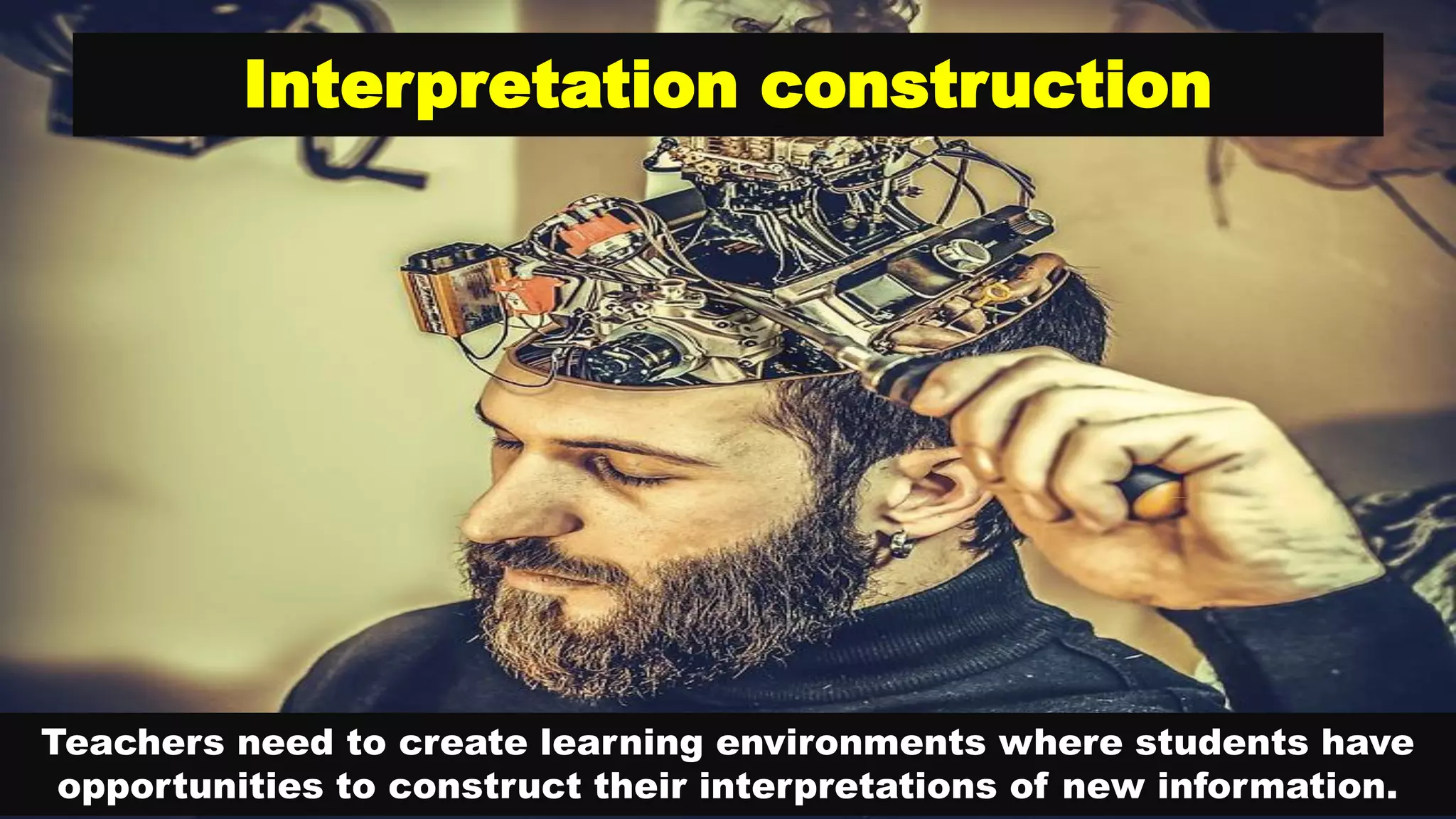
Interpretation construction
Teachers need to create learning environments where students have
opportunities to construct their interpretations of new information.
Contextualizing Prior knowledge
Learners relate the observed situation and elements of the
problem to be solved to their previous ideas/
experiences/knowledge.
Cognitive Conflict
Many educators have stated that cognitive conflict,
which may be caused by discrepant or anomalous data,
is a necessary, although not sufficient, condition for
students to change their alternative conceptions.
Cognitive Apprenticeship
Learners are encouraged to exercise their minds though
different brainstorming activities by the teacher.
Collaboration
Learners discuss freely about their alternative
conceptions/misconceptions and are able to
communicate with their peers.
Multiple Interpretations
As learners have a lot of flexibility during the learning process,
they are able to interpret the knowledge in different ways and
different manner and form several possible interpretations of the
problem situation as well as problem solution.
Multiple Manifestations
The learners try to apply various interpretations one by
one for the problem solution and thus acquire multiple
solutions to the problem.
• Students must be dissatisfied with
existing conceptions
Condition 1
• New conception must be
intelligible
Condition 2
• New conception must be initially
plausible.
Condition 3
Condition 4
• New conception must be fruitful or
open to new areas of inquiry
Conceptual Change & ICON model
Licensed under
Thank You Jai Bharat!

Interpretation construction (icon) design model

  • 1.
    Interpretation Construction (ICON) DesignModel K.THIYAGU, Assistant Professor, Department of Education, Central University of Kerala
  • 2.
    ICON model whichemphasizes on learners’ encounter with authentic issues in pair or groups, on constructing interpretation by the learners in groups, searching for information about the problems in groups and facing different interpretations about the problems in groups ICON Model One major and popular instructional model based the constructivist approach is Interpretation
  • 3.
    ICON Model, asTsai, Chin-Chung. 2011 • Understanding Zone: Observation in authentic activities, Contextualizing Prior Knowledge and interpretation construction, Cognitive conflict and apprenticeship • Application Zone: Collaboration • High Order Thinking Skill Zone: Multiple interpretations and Multiple Manifestations
  • 4.
  • 5.
    Observations in authenticactivities Learners are made to observe the elements and situation related to the problem before proceeding to evolve a solution.
  • 6.
    Interpretation construction Teachers needto create learning environments where students have opportunities to construct their interpretations of new information.
  • 7.
    Contextualizing Prior knowledge Learnersrelate the observed situation and elements of the problem to be solved to their previous ideas/ experiences/knowledge.
  • 8.
    Cognitive Conflict Many educatorshave stated that cognitive conflict, which may be caused by discrepant or anomalous data, is a necessary, although not sufficient, condition for students to change their alternative conceptions.
  • 9.
    Cognitive Apprenticeship Learners areencouraged to exercise their minds though different brainstorming activities by the teacher.
  • 10.
    Collaboration Learners discuss freelyabout their alternative conceptions/misconceptions and are able to communicate with their peers.
  • 11.
    Multiple Interpretations As learnershave a lot of flexibility during the learning process, they are able to interpret the knowledge in different ways and different manner and form several possible interpretations of the problem situation as well as problem solution.
  • 12.
    Multiple Manifestations The learnerstry to apply various interpretations one by one for the problem solution and thus acquire multiple solutions to the problem.
  • 13.
    • Students mustbe dissatisfied with existing conceptions Condition 1 • New conception must be intelligible Condition 2 • New conception must be initially plausible. Condition 3 Condition 4 • New conception must be fruitful or open to new areas of inquiry Conceptual Change & ICON model
  • 15.