From Conventional Assessment Practices to Continuous and Comprehensive Evaluation (CCE): A Review of Best PracticesRachna Swarup
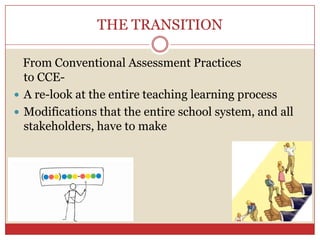
THE TRANSITIONFrom Conventional Assessment Practices to CCE-A re-look at the entire teaching learning processModifications that the entire school system, and all  stakeholders, have to make
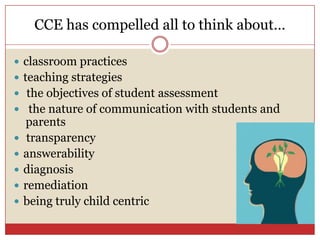
CCE has compelled all to think about…classroom practices teaching strategiesthe objectives of student assessmentthe nature of communication with students and parents transparency answerabilitydiagnosis remediation being truly child centric
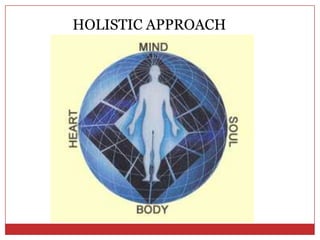
HOLISTIC APPROACH
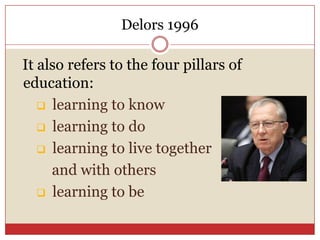
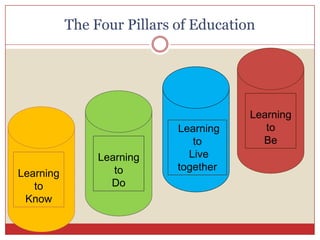
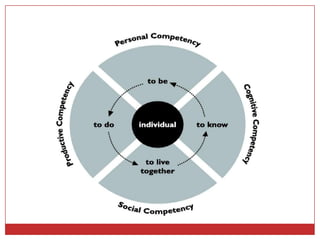
Delors 1996It also refers to the four pillars of education: learning to know
learning to do
learning to live together and with otherslearning to beThe Four Pillars of Education Learning toBe Learning toDo Learning to       Know Learning to  Live together
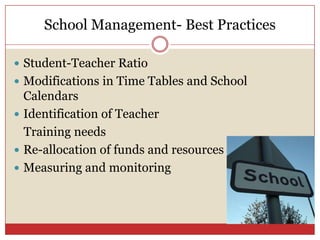
School Management- Best Practices Student-Teacher RatioModifications in Time Tables and School Calendars Identification of Teacher Training needsRe-allocation of funds and resourcesMeasuring and monitoring
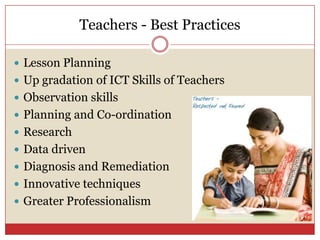
Teachers - Best PracticesLesson PlanningUp gradation of ICT Skills of TeachersObservation skillsPlanning and Co-ordinationResearchData drivenDiagnosis and RemediationInnovative techniquesGreater Professionalism
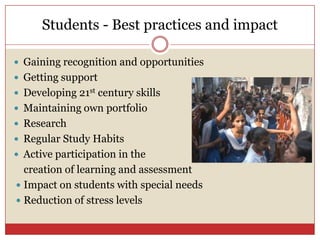
Students - Best practices and impactGaining recognition and opportunitiesGetting supportDeveloping 21st century skillsMaintaining own portfolioResearchRegular Study HabitsActive participation in thecreation of learning and assessmentImpact on students with special needsReduction of stress levels
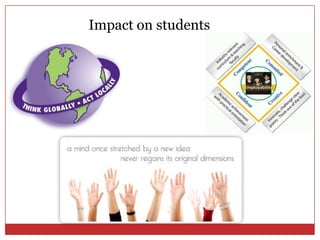
Impact on students
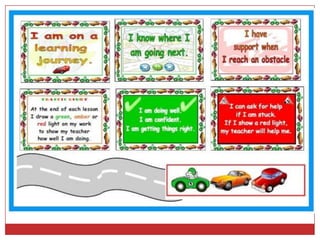
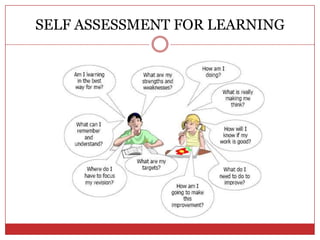
SELF ASSESSMENT FOR LEARNING
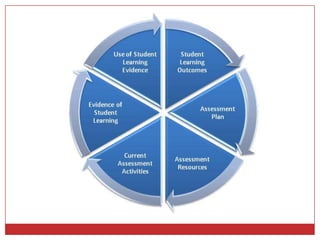
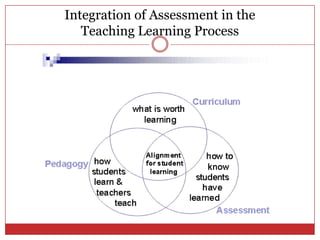
Integration of Assessment in the Teaching Learning Process
THE ROAD AHEAD…………

Rachna Swarup

  • 1.
    From Conventional AssessmentPractices to Continuous and Comprehensive Evaluation (CCE): A Review of Best PracticesRachna Swarup
  • 3.
    THE TRANSITIONFrom ConventionalAssessment Practices to CCE-A re-look at the entire teaching learning processModifications that the entire school system, and all stakeholders, have to make
  • 4.
    CCE has compelledall to think about…classroom practices teaching strategiesthe objectives of student assessmentthe nature of communication with students and parents transparency answerabilitydiagnosis remediation being truly child centric
  • 5.
  • 6.
    Delors 1996It alsorefers to the four pillars of education: learning to know
  • 7.
  • 8.
    learning to livetogether and with otherslearning to beThe Four Pillars of Education Learning toBe Learning toDo Learning to Know Learning to Live together
  • 11.
    School Management- BestPractices Student-Teacher RatioModifications in Time Tables and School Calendars Identification of Teacher Training needsRe-allocation of funds and resourcesMeasuring and monitoring
  • 13.
    Teachers - BestPracticesLesson PlanningUp gradation of ICT Skills of TeachersObservation skillsPlanning and Co-ordinationResearchData drivenDiagnosis and RemediationInnovative techniquesGreater Professionalism
  • 14.
    Students - Bestpractices and impactGaining recognition and opportunitiesGetting supportDeveloping 21st century skillsMaintaining own portfolioResearchRegular Study HabitsActive participation in thecreation of learning and assessmentImpact on students with special needsReduction of stress levels
  • 15.
  • 17.
  • 18.
    Integration of Assessmentin the Teaching Learning Process
  • 19.

Editor's Notes

  • #9 education based on the four pillars would target creation of Personal competency, social competency, cognitive competency and productive competency in students.