THE SIX-STEP SCHOOL
SELF-EVALUATION PROCESS
Step 1
GATHER EVIDENCE

EVALUATION
THEMES

SUB-THEMES

SAMPLE
SSE TOOLS

Step 2

Teaching & Learning (dimension)
Literacy/Numeracy/other aspect of T & L (focus from 2012 - 2016)
Learner
Outcomes

Learning
Experience

Teachers’
Practice

Attainment of subject
& programme objectives

Learning environment
Engagement in learning
Learning to learn

Preparation
Teaching approaches
Management of students
Assessment

Copies, class tests,
SEC results, attitudinal
surveys, standardised
tests....

Surveys
Focus groups
Self-reflection
Team-teaching....

Reflection, minutes
Focus groups
Surveys
Team-teaching....

ANALYSE EVIDENCE USING EVALUATION CRITERIA (TABLE BELOW: SUMMARY OF EVALUATION CRITERIA)

Attainment
Knowledge,
Skills,
Attitudes,
L & N,
Attainment
trends.

Learning
Environment

Engagement
in Learning

Learning to
learn

Prep for
teaching

Teaching
approaches

Management
of Students

Organisation
of learning
areas,
Child
protection,
Safety,
Resources,
Displays.

Active,
Collaborative,
Challenging,
Motivating.

AfL,
Skills (JC & LC),
Personal
organisation,
ICT skills in
learning.

Learning
outcomes,
Written
plans,
L & N,
Resources,
Assessment.

Learning
outcomes,
Focus of
learning,
Approaches,
Differentiation,
Resources,
Assessment.

Behaviour,
Interactions,
Expectations,
Organisation
of activities,
Student voice,
Equal
opportunities.

Step 3
DRAW
CONCLUSIONS
Benchmark against
Quality Statements

Step 4
SSE REPORT

Step 5
SCHOOL
IMPROVEMENT
PLAN (SIP)

Step 6
IMPLEMENT
ACTIONS &
MONITOR
TARGETS

Significant
Strengths

Strengths
outweigh
weaknesses

Weaknesses
outweigh
Strengths

Significant
weaknesses

Focus of evaluation
Context
Findings

Strengths
Areas for Improvement
Legislative requirements

Targets
Actions
Person Responsible

Measurable Outcomes
Timeframe
Review Date

Actions at class level
Actions at subject department level

Actions at school level
Progress on targets
Changes

Assessment
Whole-school &
subject-specific
assessment policy,
Assessment in
practice &
records,
Communication
of progress,
Analysis & use
of information.

Pdst poster

  • 1.
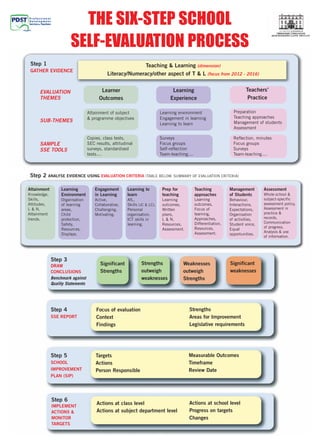
    THE SIX-STEP SCHOOL SELF-EVALUATIONPROCESS Step 1 GATHER EVIDENCE EVALUATION THEMES SUB-THEMES SAMPLE SSE TOOLS Step 2 Teaching & Learning (dimension) Literacy/Numeracy/other aspect of T & L (focus from 2012 - 2016) Learner Outcomes Learning Experience Teachers’ Practice Attainment of subject & programme objectives Learning environment Engagement in learning Learning to learn Preparation Teaching approaches Management of students Assessment Copies, class tests, SEC results, attitudinal surveys, standardised tests.... Surveys Focus groups Self-reflection Team-teaching.... Reflection, minutes Focus groups Surveys Team-teaching.... ANALYSE EVIDENCE USING EVALUATION CRITERIA (TABLE BELOW: SUMMARY OF EVALUATION CRITERIA) Attainment Knowledge, Skills, Attitudes, L & N, Attainment trends. Learning Environment Engagement in Learning Learning to learn Prep for teaching Teaching approaches Management of Students Organisation of learning areas, Child protection, Safety, Resources, Displays. Active, Collaborative, Challenging, Motivating. AfL, Skills (JC & LC), Personal organisation, ICT skills in learning. Learning outcomes, Written plans, L & N, Resources, Assessment. Learning outcomes, Focus of learning, Approaches, Differentiation, Resources, Assessment. Behaviour, Interactions, Expectations, Organisation of activities, Student voice, Equal opportunities. Step 3 DRAW CONCLUSIONS Benchmark against Quality Statements Step 4 SSE REPORT Step 5 SCHOOL IMPROVEMENT PLAN (SIP) Step 6 IMPLEMENT ACTIONS & MONITOR TARGETS Significant Strengths Strengths outweigh weaknesses Weaknesses outweigh Strengths Significant weaknesses Focus of evaluation Context Findings Strengths Areas for Improvement Legislative requirements Targets Actions Person Responsible Measurable Outcomes Timeframe Review Date Actions at class level Actions at subject department level Actions at school level Progress on targets Changes Assessment Whole-school & subject-specific assessment policy, Assessment in practice & records, Communication of progress, Analysis & use of information.