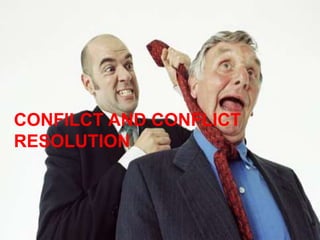


CONFILCT AND CONFLICT
RESOLUTION
Group #14
Ahsan Ali ()
Liaba
Mueez Malik
Shehroz
Agenda
 Introduction to Conflict
 Definition of Conflict
 Nature of Conflict
 Conflict resolution
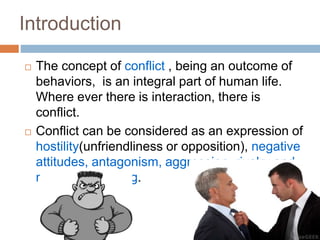
Introduction
 The concept of conflict , being an outcome of
behaviors, is an integral part of human life.
Where ever there is interaction, there is
conflict.
 Conflict can be considered as an expression of
hostility(unfriendliness or opposition), negative
attitudes, antagonism, aggression, rivalry and
misunderstanding.
Defination
 It is a process that begins when one party
perceives that another party has negatively
affected, or is about to negatively affect
something that the first party cares about.
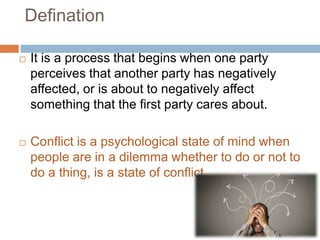
 Conflict is a psychological state of mind when
people are in a dilemma whether to do or not to
do a thing, is a state of conflict.
Nature of Conflict
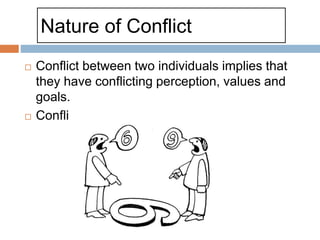
 Conflict between two individuals implies that
they have conflicting perception, values and
goals.
 Conflict is a dynamic process
Common causes of conflict
 Scarcity of resources (finance, equipment,
facilities, etc)
 Different attitudes, values or perceptions
 Disagreements about needs, goals, priorities
and interests
 Poor communication
 Poor or inadequate organizational structure
 Lack of teamwork
 Lack of clarity in roles and responsibilities
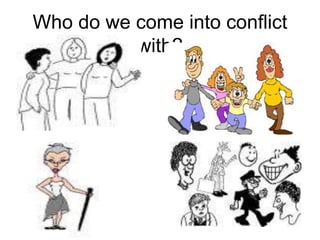
Who do we come into conflict
with?
SHEHROZ
Level of conflict Types of conflict
Organization
Group
Individual
Within & between
organization
Within & between group
Within & between individual
Group Conflict
Intragroup conflict:
• conflict among members of a group
• early stages of group development
• ways of doing tasks or reaching
group’s goals
Intergroup conflict:
• between two or more groups
Individual Conflict
Interpersonal conflict:
• between two or more people a differences in views
about what should be done
• differences in orientation to work and time in
different parts of an organization
Intrapersonal conflict:
• A conflict that occurs solely person's own mind.
Conflict Management
is defined as “the opportunity to
improve situations and strengthen
relationships”
MUEEZ
MALIK
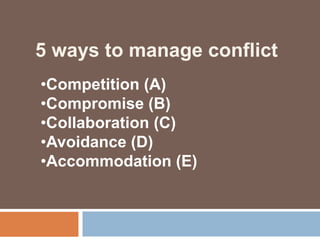
5 ways to manage conflict
•Competition (A)
•Compromise (B)
•Collaboration (C)
•Avoidance (D)
•Accommodation (E)
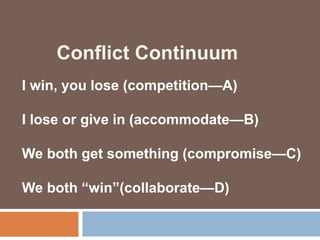
Conflict Continuum
I win, you lose (competition—A)
I lose or give in (accommodate—B)
We both get something (compromise—C)
We both “win”(collaborate—D)
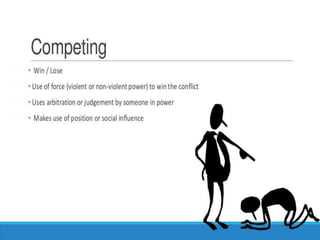
Competetion
 A competing style is one in which the concerns
and the position of the opposition are
completely ignored. Winning the argument is
the only metric, and any concession to the
other side is seen as a sign of weakness
 It is assertive
Collaborating style
 Motto: "Let's find a solution that works for
all of us.
 Sometimes called a 'win/win' strategy, the
collaborating style strives to make sure that
both sides are satisfied. It requires an open
discussion of all the issues and concerns,
exploration of alternative solutions, and
honesty and commitment from all the parties
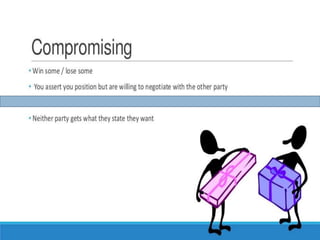
Compromising style
 You win some, you lose some
 You are willing to trade some of your needs in
order to win concessions from the other
side. This style can be effective when both
parties are equally powerful and willing to
cooperate, and they want to preserve the
relationship for the future.
LIABA
Avoiding style
 "I'll think about that tomorrow."
 The goal of the avoiding style is to avoid
making a decision at whatever cost. Neither
your concerns nor the concerns of the other
party need be satisfied. Obviously, this style is
only appropriate when the issues are of low
importance, or it is clear to both parties that
the consequences of delay in making a
decision will be minimal
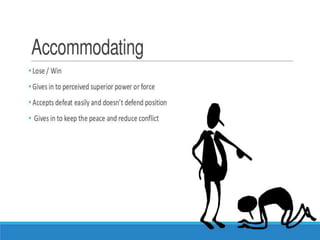
Accommodating style
 "Whatever."
 The accommodating style is one of sacrifice,
selflessness and low assertiveness. You are
willing to give up just about everything in order
to preserve the relationship with the other
party
Conflict Resolution in Groups
 Resolving Intra-Group Conflict : Conflict with in
a family can be resolved if the members
recognize and respect roles of family
members. All the members need to realise
that devided they stand, united they fall.
Probably a family friend may intervene to
resolve the dispute if the members fail to
resolve the conflict themselves
• Be a model of calm and control
• Don't assume people are being difficult
intentionally
• Find a quiet place in to resolve conflicts....privately
@Set some ground rules for the discussion:
• No raising of voices
• This is not a debate
• Confront the issues, not the people
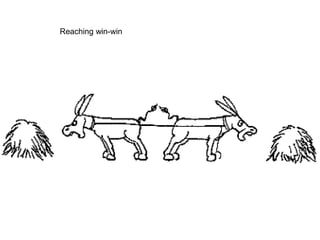
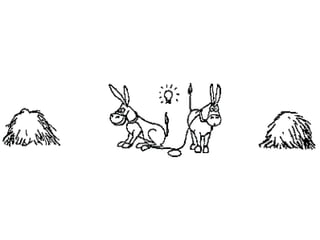
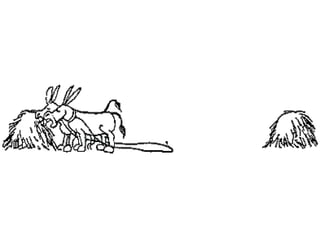
Reaching win-win
Reference
 Special thanks to
https://www.dougsguides.com/collaborating
 http://Slide share.net/N.N.V. Krishna Kanth
 http://smallbusiness.chron.com/5-conflict-
management-strategies-16131.htmlHimalaya.
what is conflict and how to  resolve

what is conflict and how to resolve

  • 1.
  • 2.
    Group #14 Ahsan Ali() Liaba Mueez Malik Shehroz
  • 3.
    Agenda  Introduction toConflict  Definition of Conflict  Nature of Conflict  Conflict resolution
  • 4.
    Introduction  The conceptof conflict , being an outcome of behaviors, is an integral part of human life. Where ever there is interaction, there is conflict.  Conflict can be considered as an expression of hostility(unfriendliness or opposition), negative attitudes, antagonism, aggression, rivalry and misunderstanding.
  • 5.
    Defination  It isa process that begins when one party perceives that another party has negatively affected, or is about to negatively affect something that the first party cares about.  Conflict is a psychological state of mind when people are in a dilemma whether to do or not to do a thing, is a state of conflict.
  • 7.
    Nature of Conflict Conflict between two individuals implies that they have conflicting perception, values and goals.  Conflict is a dynamic process
  • 8.
    Common causes ofconflict  Scarcity of resources (finance, equipment, facilities, etc)  Different attitudes, values or perceptions  Disagreements about needs, goals, priorities and interests  Poor communication  Poor or inadequate organizational structure  Lack of teamwork  Lack of clarity in roles and responsibilities
  • 9.
    Who do wecome into conflict with?
  • 10.
  • 11.
    Level of conflictTypes of conflict Organization Group Individual Within & between organization Within & between group Within & between individual
  • 12.
    Group Conflict Intragroup conflict: •conflict among members of a group • early stages of group development • ways of doing tasks or reaching group’s goals Intergroup conflict: • between two or more groups
  • 13.
    Individual Conflict Interpersonal conflict: •between two or more people a differences in views about what should be done • differences in orientation to work and time in different parts of an organization Intrapersonal conflict: • A conflict that occurs solely person's own mind.
  • 15.
    Conflict Management is definedas “the opportunity to improve situations and strengthen relationships”
  • 17.
  • 18.
    5 ways tomanage conflict •Competition (A) •Compromise (B) •Collaboration (C) •Avoidance (D) •Accommodation (E)
  • 19.
    Conflict Continuum I win,you lose (competition—A) I lose or give in (accommodate—B) We both get something (compromise—C) We both “win”(collaborate—D)
  • 20.
    Competetion  A competingstyle is one in which the concerns and the position of the opposition are completely ignored. Winning the argument is the only metric, and any concession to the other side is seen as a sign of weakness  It is assertive
  • 21.
    Collaborating style  Motto:"Let's find a solution that works for all of us.  Sometimes called a 'win/win' strategy, the collaborating style strives to make sure that both sides are satisfied. It requires an open discussion of all the issues and concerns, exploration of alternative solutions, and honesty and commitment from all the parties
  • 22.
    Compromising style  Youwin some, you lose some  You are willing to trade some of your needs in order to win concessions from the other side. This style can be effective when both parties are equally powerful and willing to cooperate, and they want to preserve the relationship for the future.
  • 24.
  • 25.
    Avoiding style  "I'llthink about that tomorrow."  The goal of the avoiding style is to avoid making a decision at whatever cost. Neither your concerns nor the concerns of the other party need be satisfied. Obviously, this style is only appropriate when the issues are of low importance, or it is clear to both parties that the consequences of delay in making a decision will be minimal
  • 27.
    Accommodating style  "Whatever." The accommodating style is one of sacrifice, selflessness and low assertiveness. You are willing to give up just about everything in order to preserve the relationship with the other party
  • 29.
    Conflict Resolution inGroups  Resolving Intra-Group Conflict : Conflict with in a family can be resolved if the members recognize and respect roles of family members. All the members need to realise that devided they stand, united they fall. Probably a family friend may intervene to resolve the dispute if the members fail to resolve the conflict themselves
  • 30.
    • Be amodel of calm and control • Don't assume people are being difficult intentionally • Find a quiet place in to resolve conflicts....privately @Set some ground rules for the discussion: • No raising of voices • This is not a debate • Confront the issues, not the people
  • 31.
  • 35.
    Reference  Special thanksto https://www.dougsguides.com/collaborating  http://Slide share.net/N.N.V. Krishna Kanth  http://smallbusiness.chron.com/5-conflict- management-strategies-16131.htmlHimalaya.

Editor's Notes

  • #24 Compromising - Win some / lose some - You assert you position but are willing to negotiate with the other party - You trade off non-essential elements of position - Neither party gets what they state they want
  • #27 Withdrawing - - - - Lose / lose Minimises or denies that the conflict exists Limits communication or avoids contact Allows the issues to fester unresolved
  • #29 Accommodating - Lose / Win - Gives in to perceived superior power or force - Accepts defeat easily and doesn’t defend position - Gives in to keep the peace and reduce conflict