


GROUP B
•Rajpar (GL)
•Ahsan Jaffry
•Aashiq Hussain
•Meeral Khan
•Parasad Kumar
TOPIC:
Distribution Channel And
Classification of industrial
consumer goods
1. CHANNELS OF DISTRIBUTION
Meaning of channel of distribution
The channel of distribution is the route or
the path taken by a product as it moves from
producer to consumer.
This channel or route, which connects the
producer with the consumer in the transfer
of ownership of a product may be direct or
indirect.
• Important element of marketing mix
• Influences sales volume and profits
• Determines where and when the product will
be available to users
• Helps in reducing the effects of fluctuations
in production
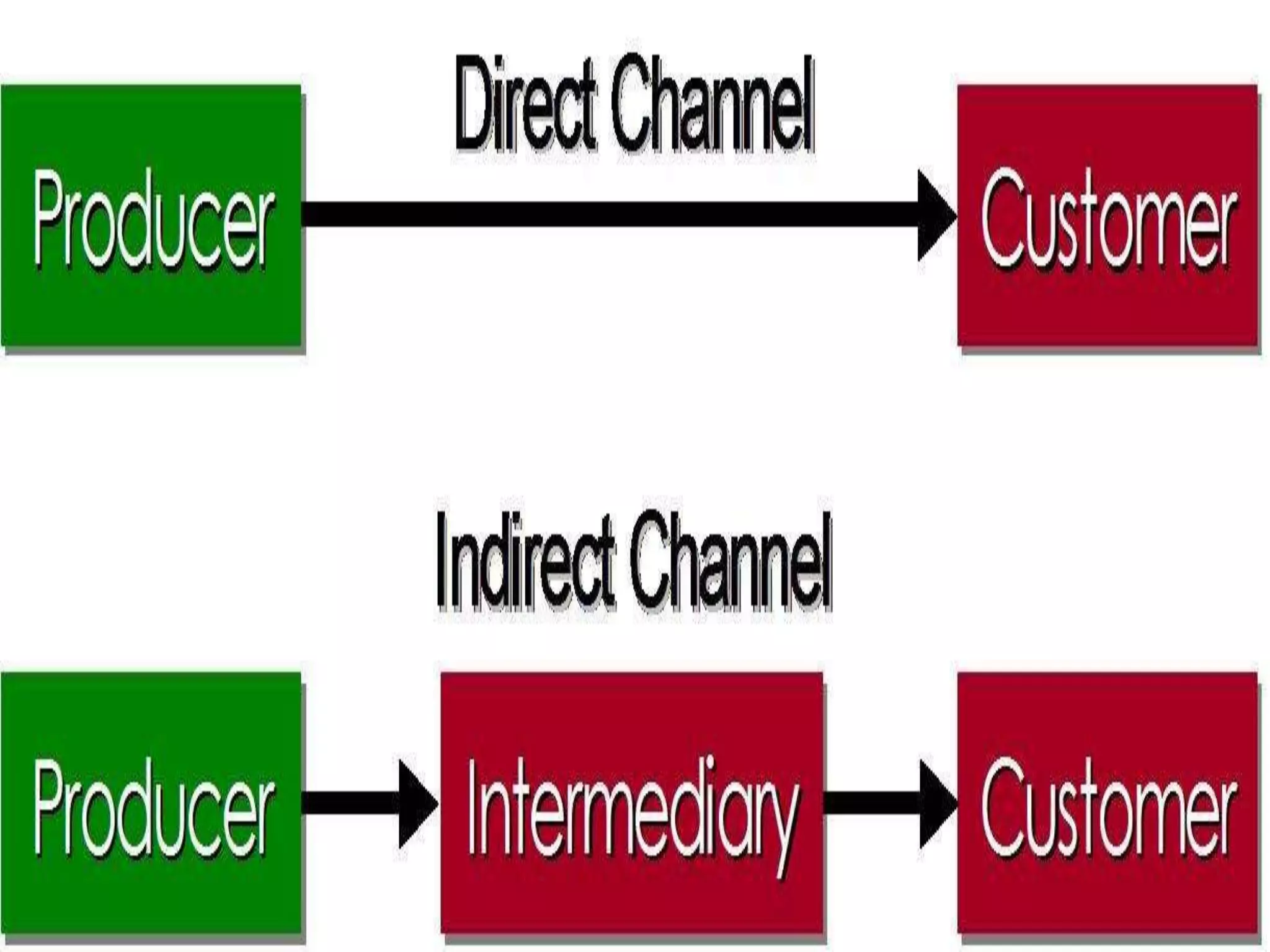
TYPES OF CHANNELS OF DISTRIBUTION
 Direct channel
 Indirect channel
TYPES OF CHANNELS OF DISTRIBUTION
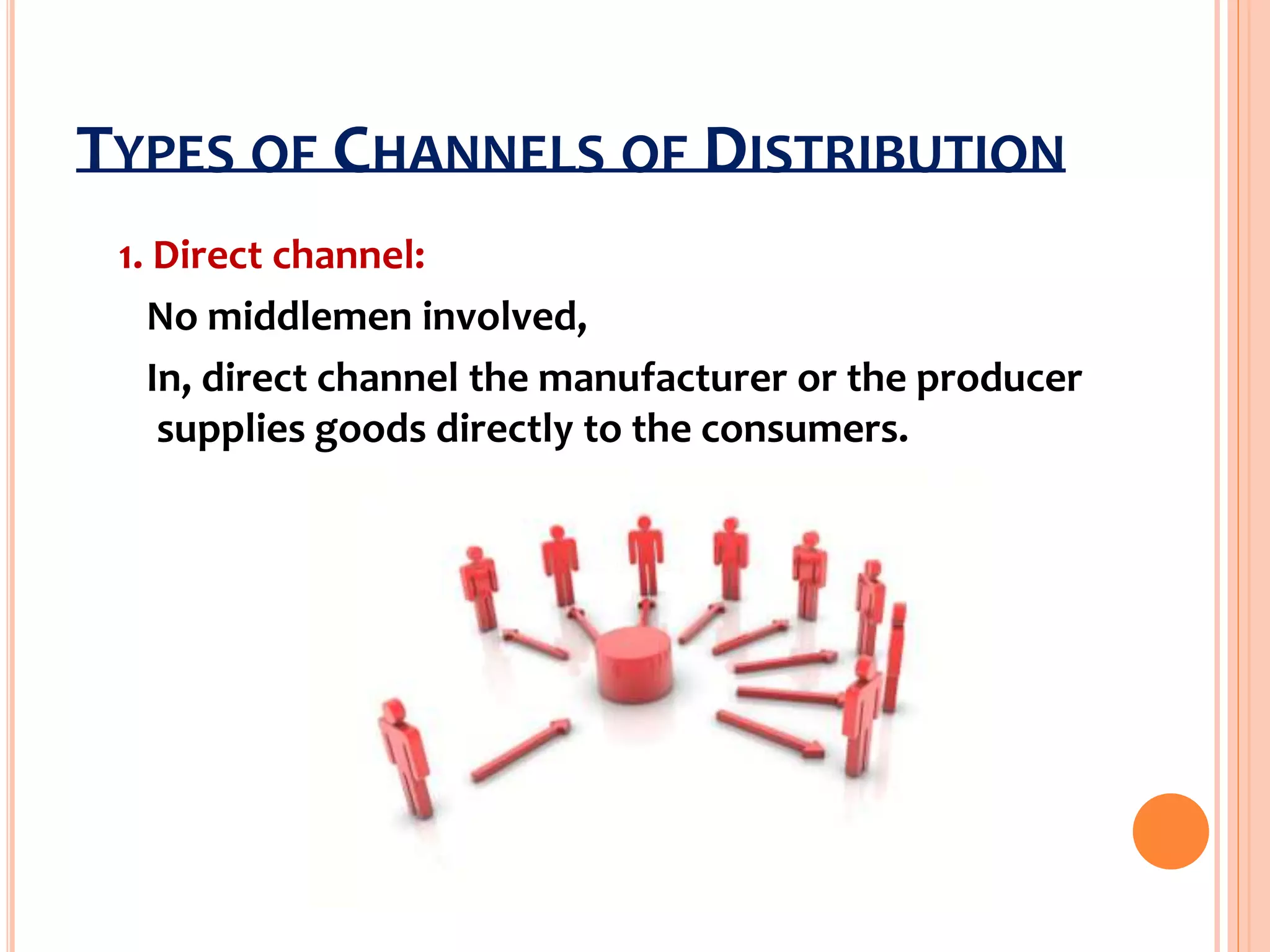
1. Direct channel:
No middlemen involved,
In, direct channel the manufacturer or the producer
supplies goods directly to the consumers.
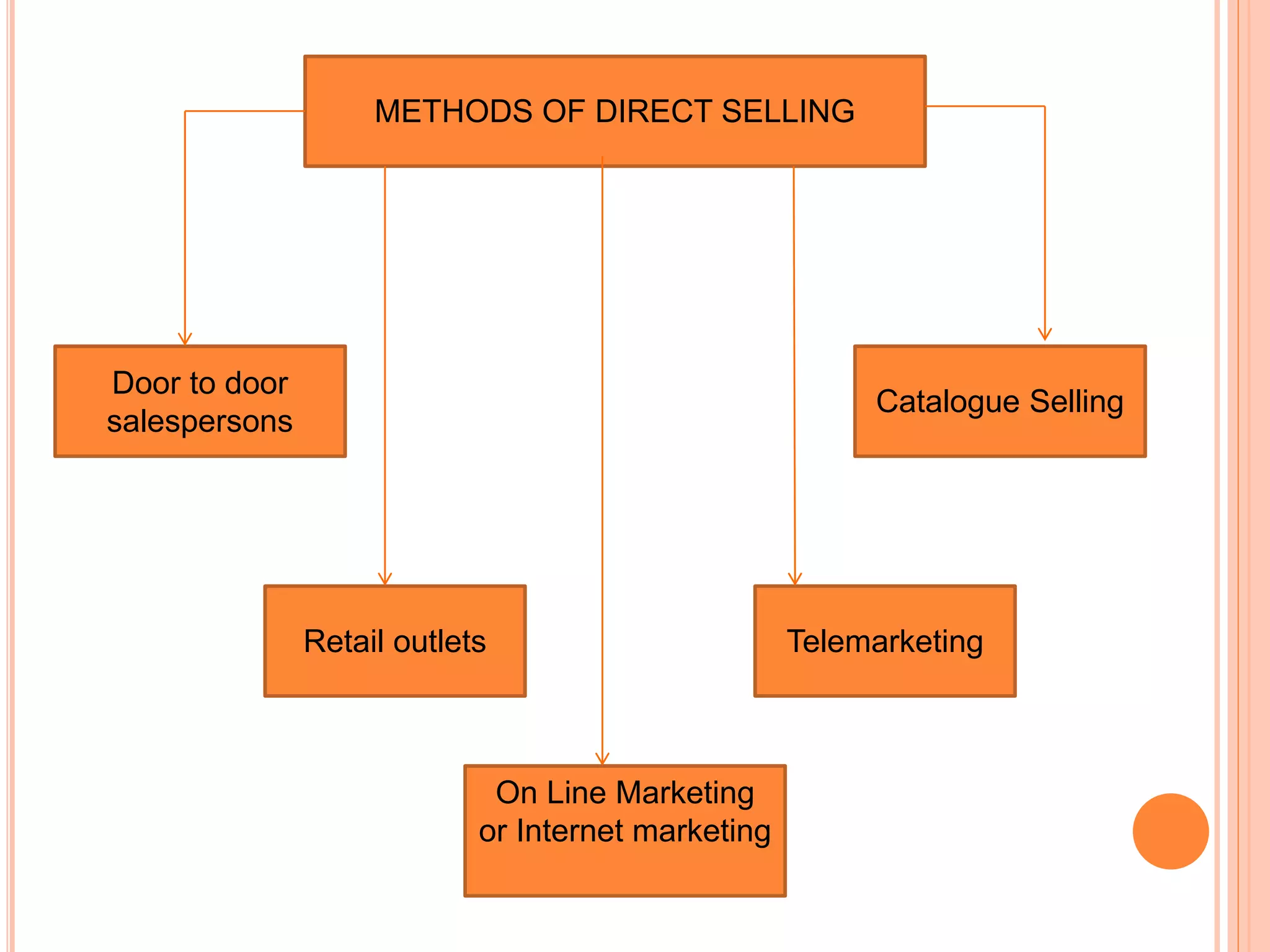
METHODS OF DIRECT SELLING
Door to door
salespersons
Retail outlets
Catalogue Selling
Telemarketing
On Line Marketing
or Internet marketing
TYPES OF CHANNELS OF DISTRIBUTION
2. Indirect channel:
- Exclusive distribution channel, only one retailer sells the
goods.
- Marketing of goods first to retailer who in turn sell it to
consumers is a favourite method with most of the
manufacturer of consumer goods such as clothes,
machines, automobiles etc.
1) Manufacturer-consumer (Direct selling):
• Shortest and simplest channel
• No middleman between the producer and consumer
• Producers sell directly to customers through door-to-door
salesmen , direct mail , own retail stores, e.g.. BATA India Ltd.
• Used generally for selling shoes , clothes , books, etc.
• Very fast and economical
• Expert services of middlemen are not available
• Large investment is required
2) Manufacturer-retailer-consumer:
• Manufacturer sells to one or more retailers who sell to
consumers
• This channel is popular when retailers are big and buy in large
quantities ,e.g. departmental stores , super markets.
• Generally used for distribution of consumer durables and
products of high value like automobiles, home appliances,etc.
• Relieves manufacturer of the burden of selling and provides
control over distribution.
3) Manufacturer-wholesaler-retailer-consumer:
• Traditional or normal channel
• Suitable where producers have limited finance and narrow
product line
• Channel used in case of consumer durables which are not subject
to frequent changes in fashion.
4) Manufacturer-agent-retailer-consumer:
• Used when retailers are few or geographically concentrated
• Commonly used to sell agricultural products, machinery and
equipment, etc.
5) Manufacturer-agent-wholesaler-retailer-consumer:
• Longest channel
• Producer hands over entire output to the agent who sales them to
wholesalers
• In case of cloth this channel is widely used
• Results in wider distribution of products
CLASSIFICATION OF GOODS
 Consumer goods
 Industrial goods
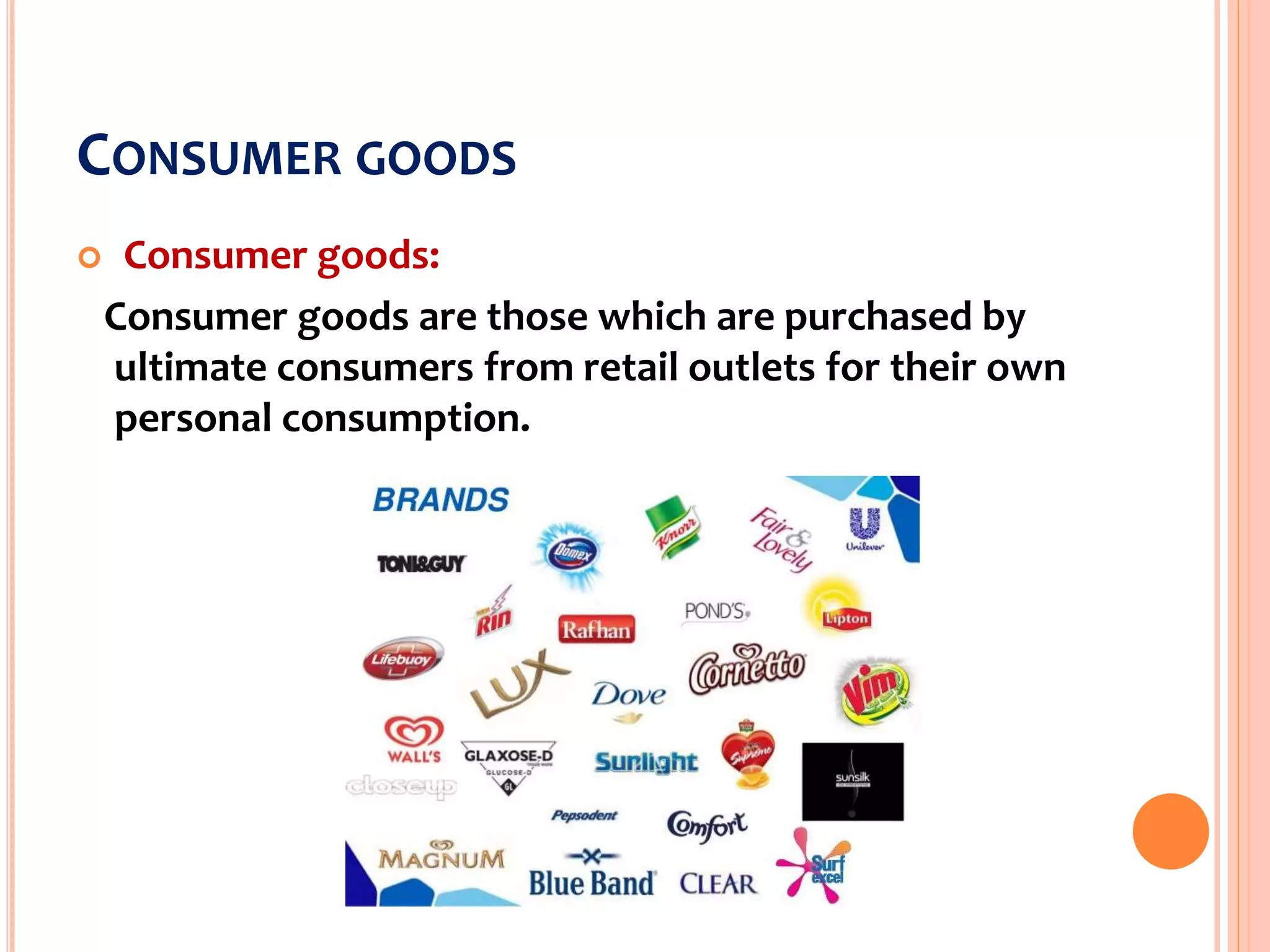
CONSUMER GOODS
 Consumer goods:
Consumer goods are those which are purchased by
ultimate consumers from retail outlets for their own
personal consumption.
2. CLASSIFICATION OF CONSUMER GOODS
 Convenience goods:
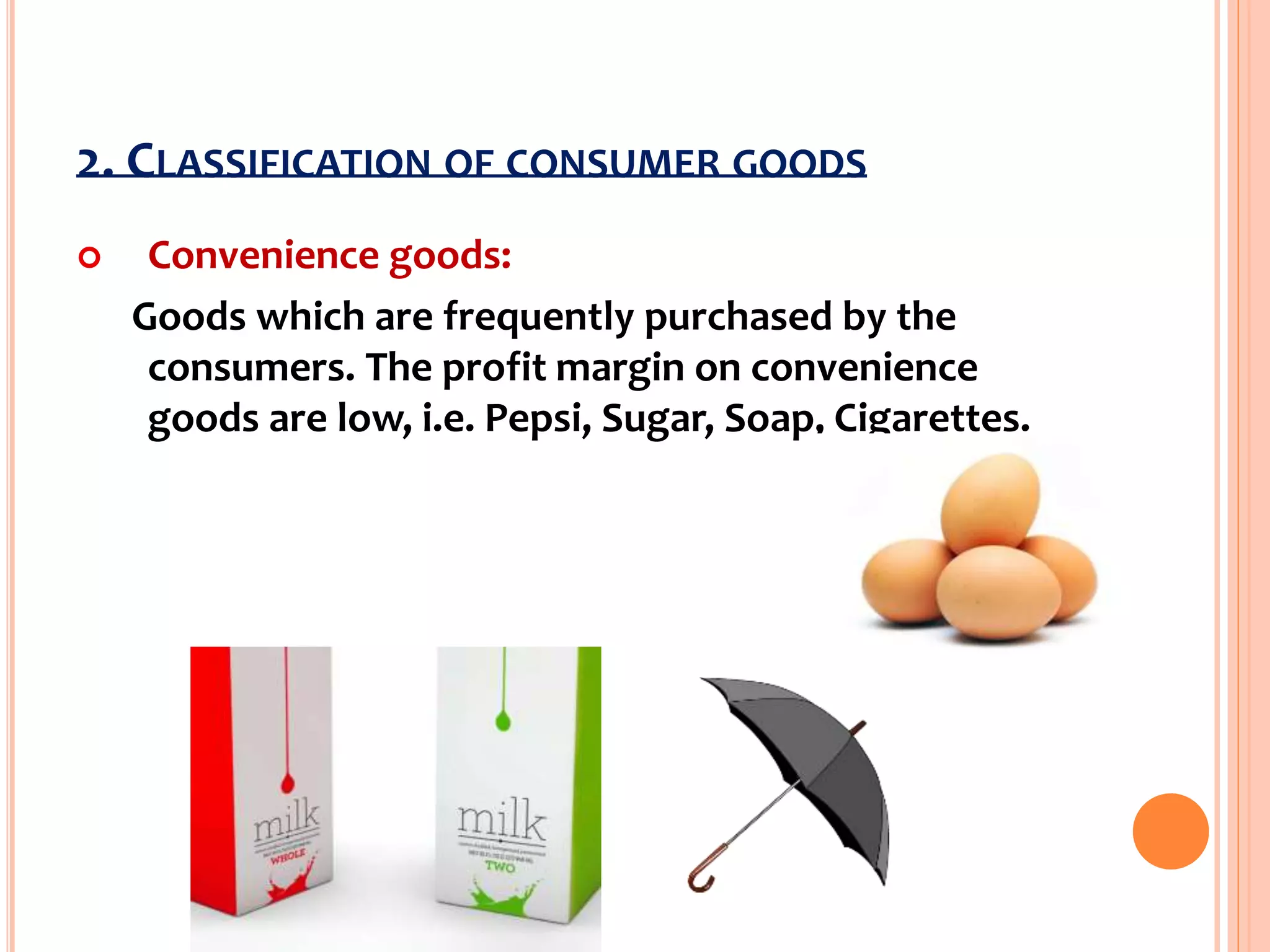
Goods which are frequently purchased by the
consumers. The profit margin on convenience
goods are low, i.e. Pepsi, Sugar, Soap, Cigarettes.
 Shopping goods:
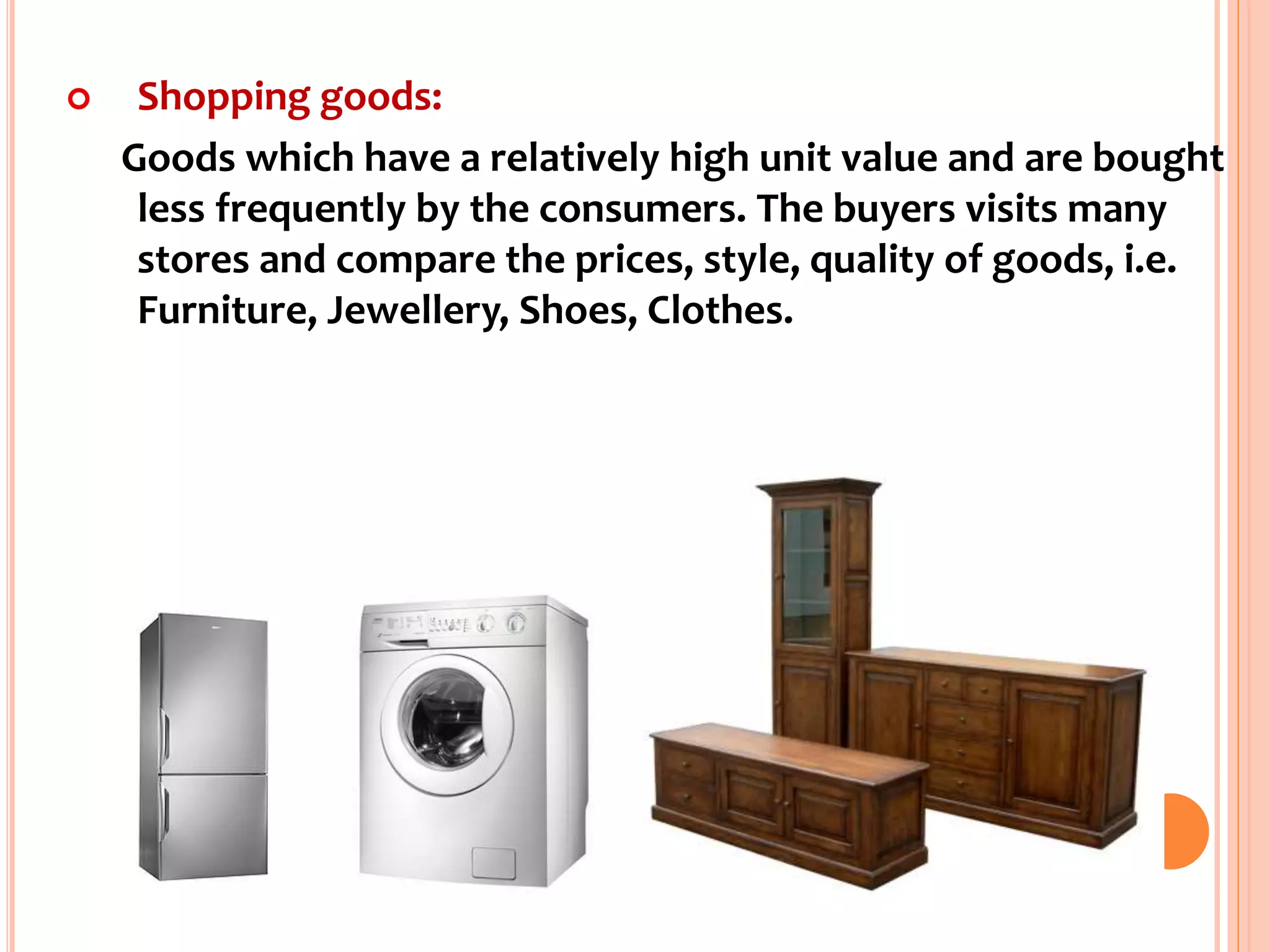
Goods which have a relatively high unit value and are bought
less frequently by the consumers. The buyers visits many
stores and compare the prices, style, quality of goods, i.e.
Furniture, Jewellery, Shoes, Clothes.
SPECIALTY GOODS:
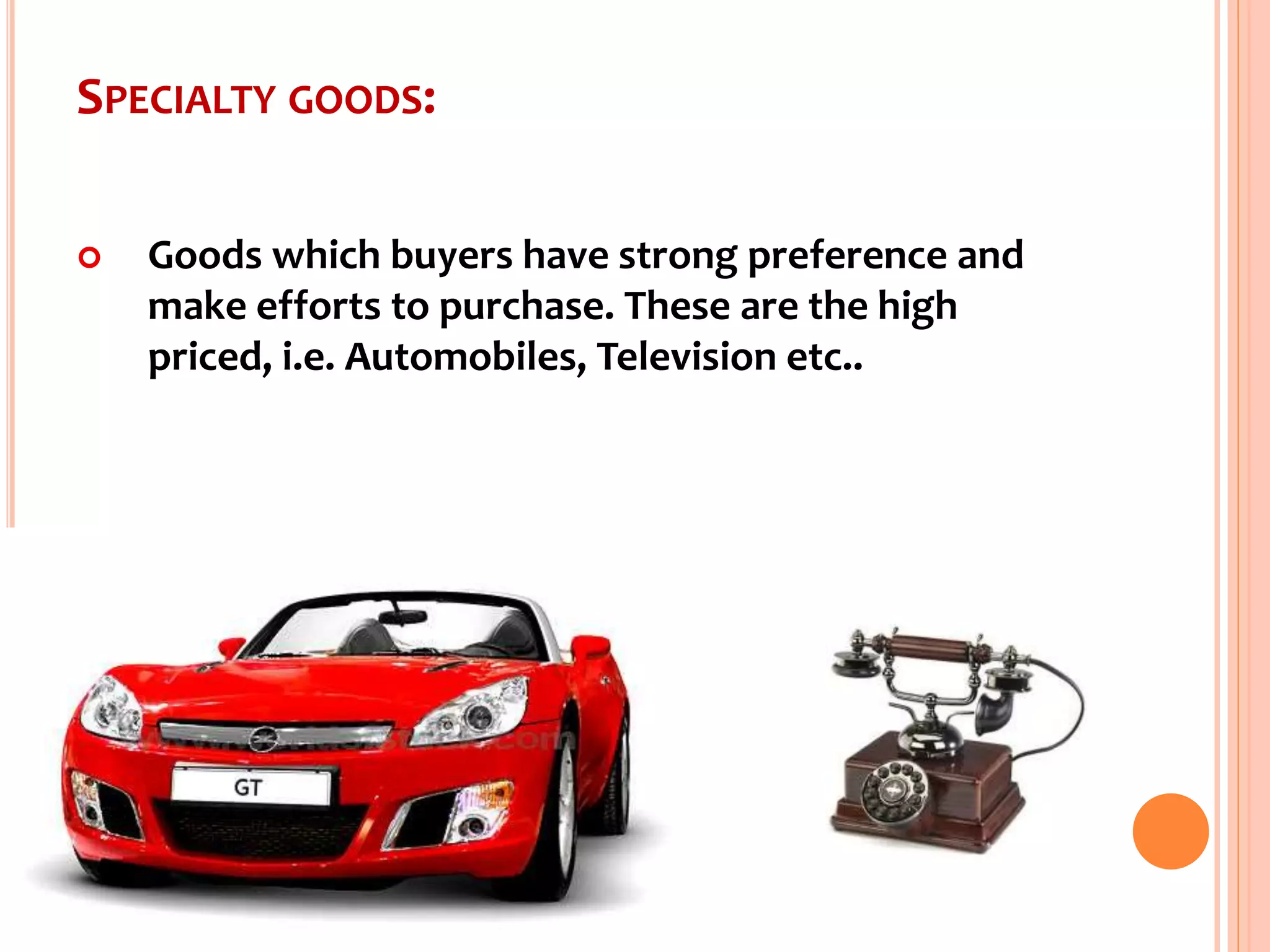
 Goods which buyers have strong preference and
make efforts to purchase. These are the high
priced, i.e. Automobiles, Television etc..
2) INDUSTRIAL GOODS:
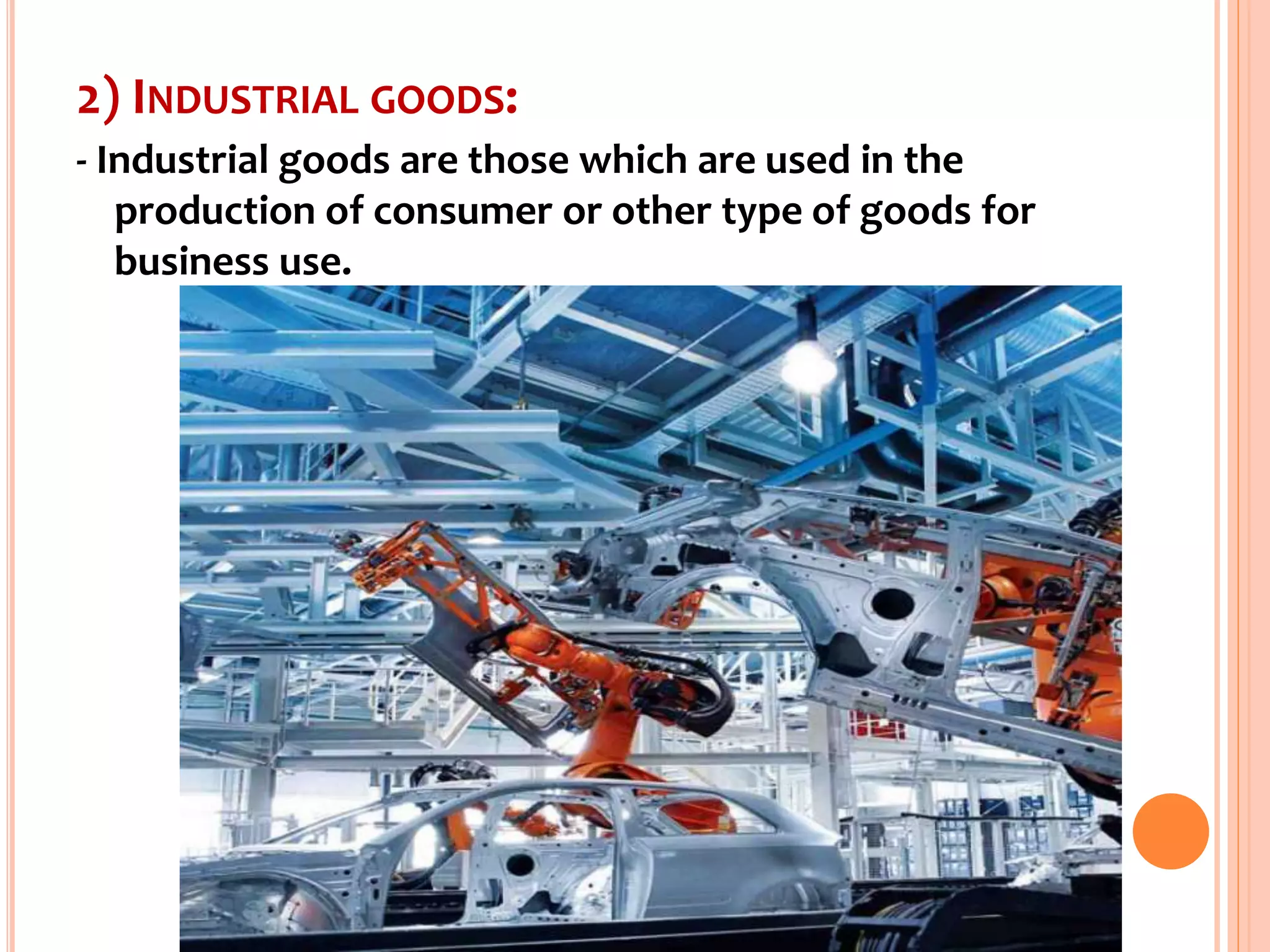
- Industrial goods are those which are used in the
production of consumer or other type of goods for
business use.
CLASSIFICATION OF INDUSTRIAL GOODS:
 Raw Material
 Semi finish good
 Parts
 Machinery and equipments
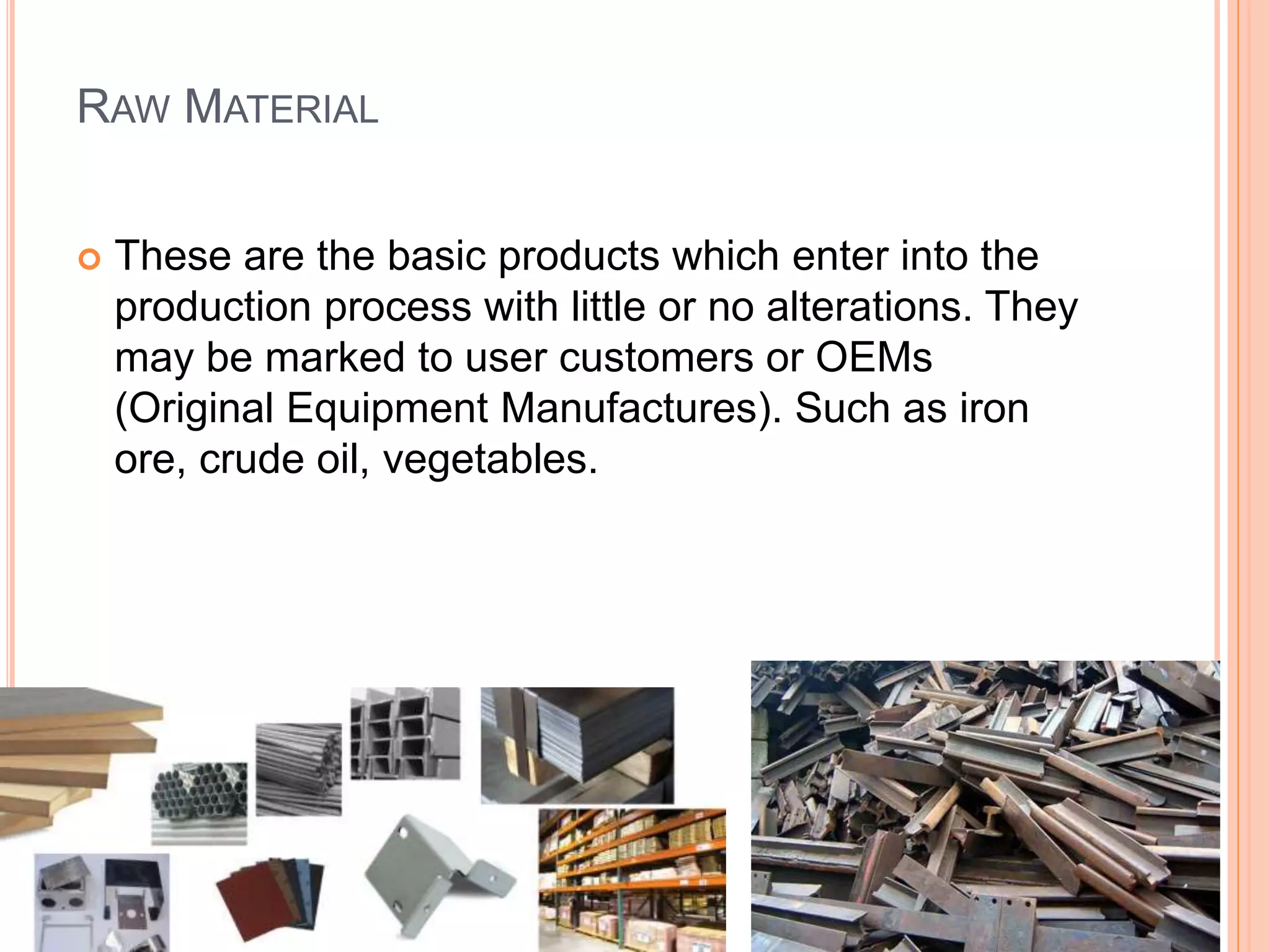
RAW MATERIAL
 These are the basic products which enter into the
production process with little or no alterations. They
may be marked to user customers or OEMs
(Original Equipment Manufactures). Such as iron
ore, crude oil, vegetables.
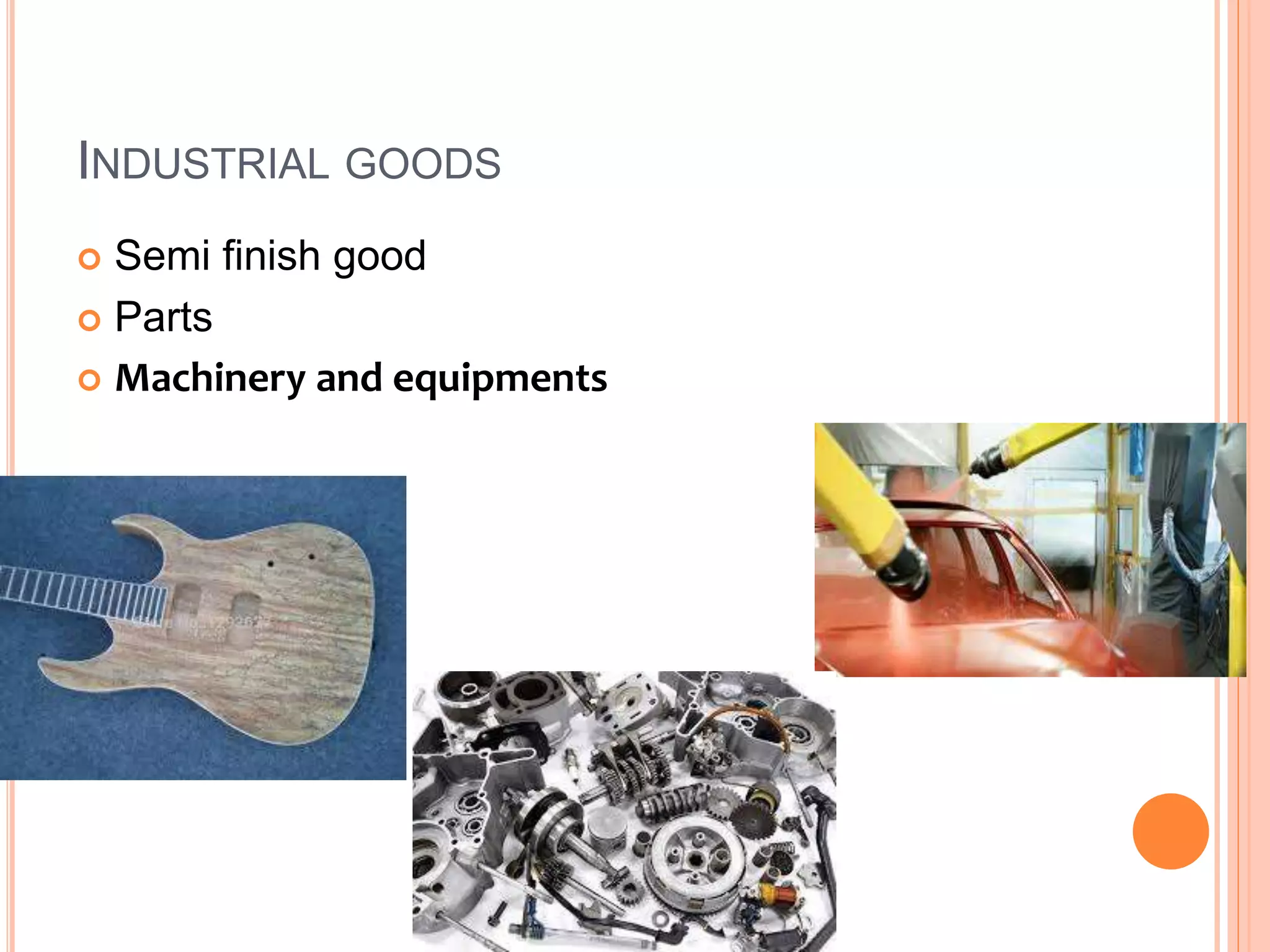
INDUSTRIAL GOODS
 Semi finish good
 Parts
 Machinery and equipments
classification of industrial and consumer good and channel of distribution

classification of industrial and consumer good and channel of distribution

  • 2.
    GROUP B •Rajpar (GL) •AhsanJaffry •Aashiq Hussain •Meeral Khan •Parasad Kumar
  • 3.
  • 4.
    1. CHANNELS OFDISTRIBUTION Meaning of channel of distribution The channel of distribution is the route or the path taken by a product as it moves from producer to consumer. This channel or route, which connects the producer with the consumer in the transfer of ownership of a product may be direct or indirect.
  • 5.
    • Important elementof marketing mix • Influences sales volume and profits • Determines where and when the product will be available to users • Helps in reducing the effects of fluctuations in production
  • 6.
    TYPES OF CHANNELSOF DISTRIBUTION  Direct channel  Indirect channel
  • 7.
    TYPES OF CHANNELSOF DISTRIBUTION 1. Direct channel: No middlemen involved, In, direct channel the manufacturer or the producer supplies goods directly to the consumers.
  • 8.
    METHODS OF DIRECTSELLING Door to door salespersons Retail outlets Catalogue Selling Telemarketing On Line Marketing or Internet marketing
  • 9.
    TYPES OF CHANNELSOF DISTRIBUTION 2. Indirect channel: - Exclusive distribution channel, only one retailer sells the goods. - Marketing of goods first to retailer who in turn sell it to consumers is a favourite method with most of the manufacturer of consumer goods such as clothes, machines, automobiles etc.
  • 11.
    1) Manufacturer-consumer (Directselling): • Shortest and simplest channel • No middleman between the producer and consumer • Producers sell directly to customers through door-to-door salesmen , direct mail , own retail stores, e.g.. BATA India Ltd. • Used generally for selling shoes , clothes , books, etc. • Very fast and economical • Expert services of middlemen are not available • Large investment is required 2) Manufacturer-retailer-consumer: • Manufacturer sells to one or more retailers who sell to consumers • This channel is popular when retailers are big and buy in large quantities ,e.g. departmental stores , super markets. • Generally used for distribution of consumer durables and products of high value like automobiles, home appliances,etc. • Relieves manufacturer of the burden of selling and provides control over distribution.
  • 12.
    3) Manufacturer-wholesaler-retailer-consumer: • Traditionalor normal channel • Suitable where producers have limited finance and narrow product line • Channel used in case of consumer durables which are not subject to frequent changes in fashion. 4) Manufacturer-agent-retailer-consumer: • Used when retailers are few or geographically concentrated • Commonly used to sell agricultural products, machinery and equipment, etc. 5) Manufacturer-agent-wholesaler-retailer-consumer: • Longest channel • Producer hands over entire output to the agent who sales them to wholesalers • In case of cloth this channel is widely used • Results in wider distribution of products
  • 13.
    CLASSIFICATION OF GOODS Consumer goods  Industrial goods
  • 14.
    CONSUMER GOODS  Consumergoods: Consumer goods are those which are purchased by ultimate consumers from retail outlets for their own personal consumption.
  • 15.
    2. CLASSIFICATION OFCONSUMER GOODS  Convenience goods: Goods which are frequently purchased by the consumers. The profit margin on convenience goods are low, i.e. Pepsi, Sugar, Soap, Cigarettes.
  • 16.
     Shopping goods: Goodswhich have a relatively high unit value and are bought less frequently by the consumers. The buyers visits many stores and compare the prices, style, quality of goods, i.e. Furniture, Jewellery, Shoes, Clothes.
  • 17.
    SPECIALTY GOODS:  Goodswhich buyers have strong preference and make efforts to purchase. These are the high priced, i.e. Automobiles, Television etc..
  • 18.
    2) INDUSTRIAL GOODS: -Industrial goods are those which are used in the production of consumer or other type of goods for business use.
  • 19.
    CLASSIFICATION OF INDUSTRIALGOODS:  Raw Material  Semi finish good  Parts  Machinery and equipments
  • 20.
    RAW MATERIAL  Theseare the basic products which enter into the production process with little or no alterations. They may be marked to user customers or OEMs (Original Equipment Manufactures). Such as iron ore, crude oil, vegetables.
  • 21.
    INDUSTRIAL GOODS  Semifinish good  Parts  Machinery and equipments