Atoms and their
Structure
Protons-positive
Electrons-negative
Neutrons-no charge
(neutral)
Models of the Atom
Bohr modelcompared electrons
to planets
• Because science is always
changing, we realized that
Bohr’s model could not
explain all of our
observations!!
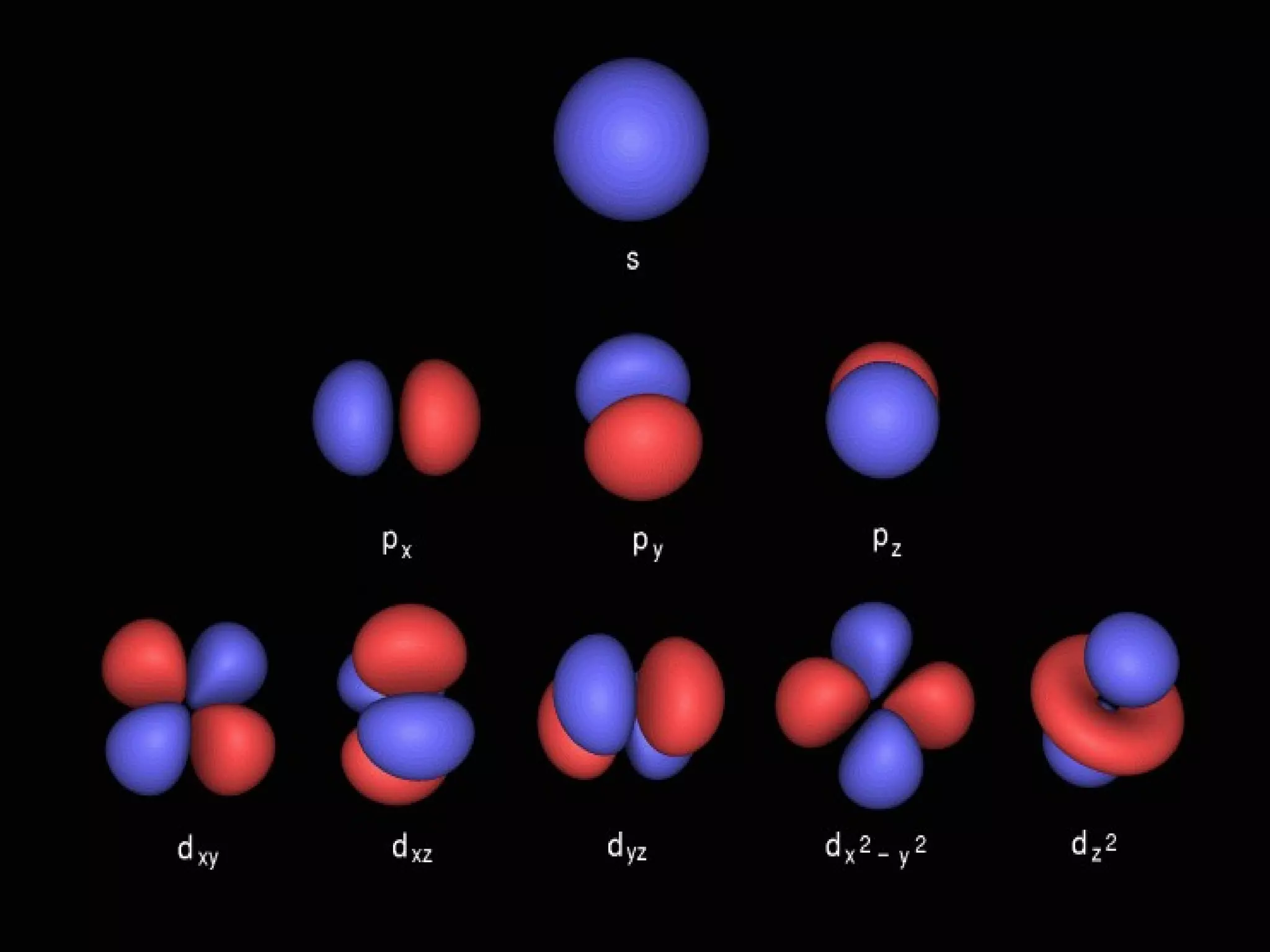
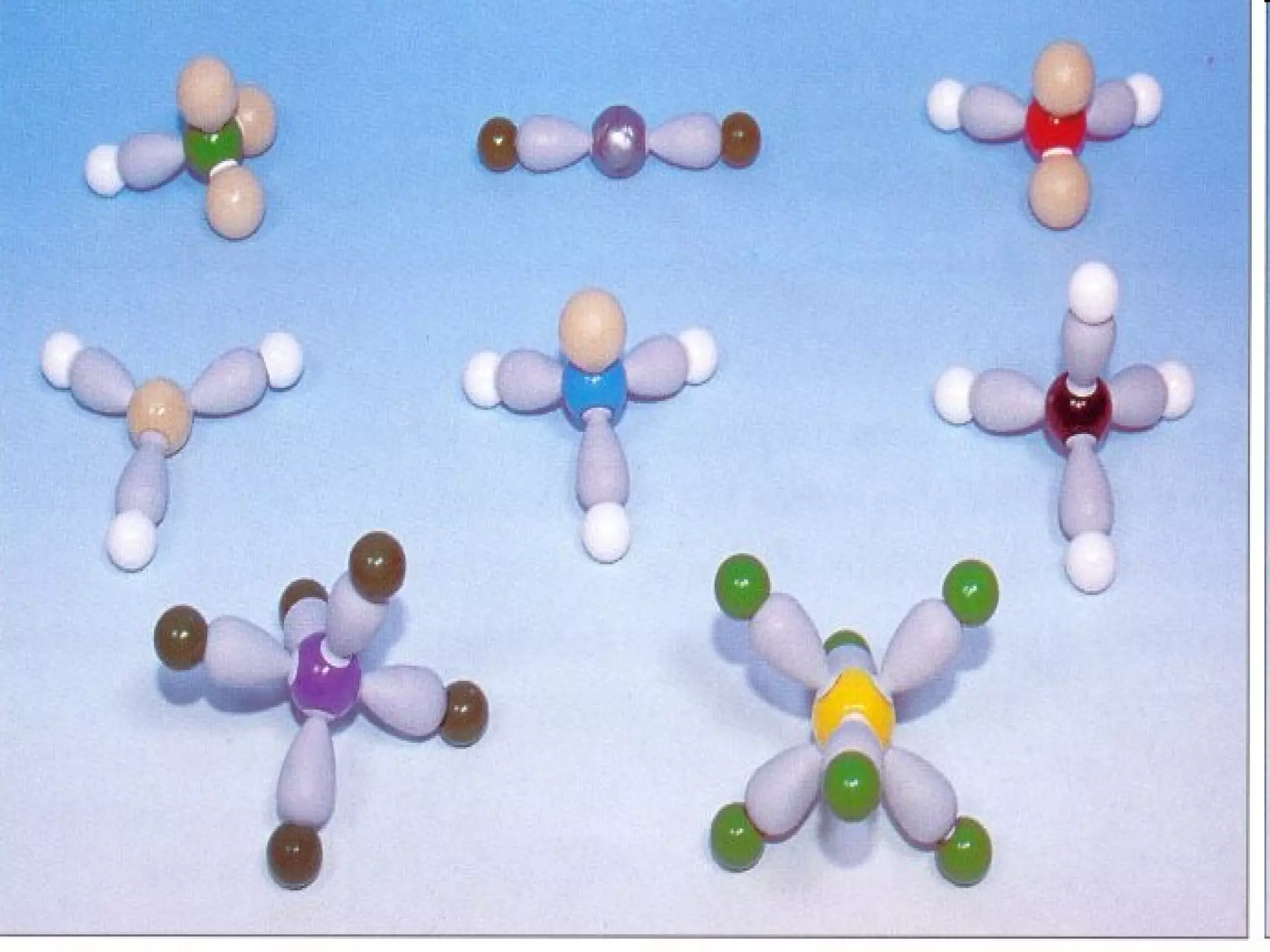
Electrons are found in
orbitals-behave like wavesquantum theory!
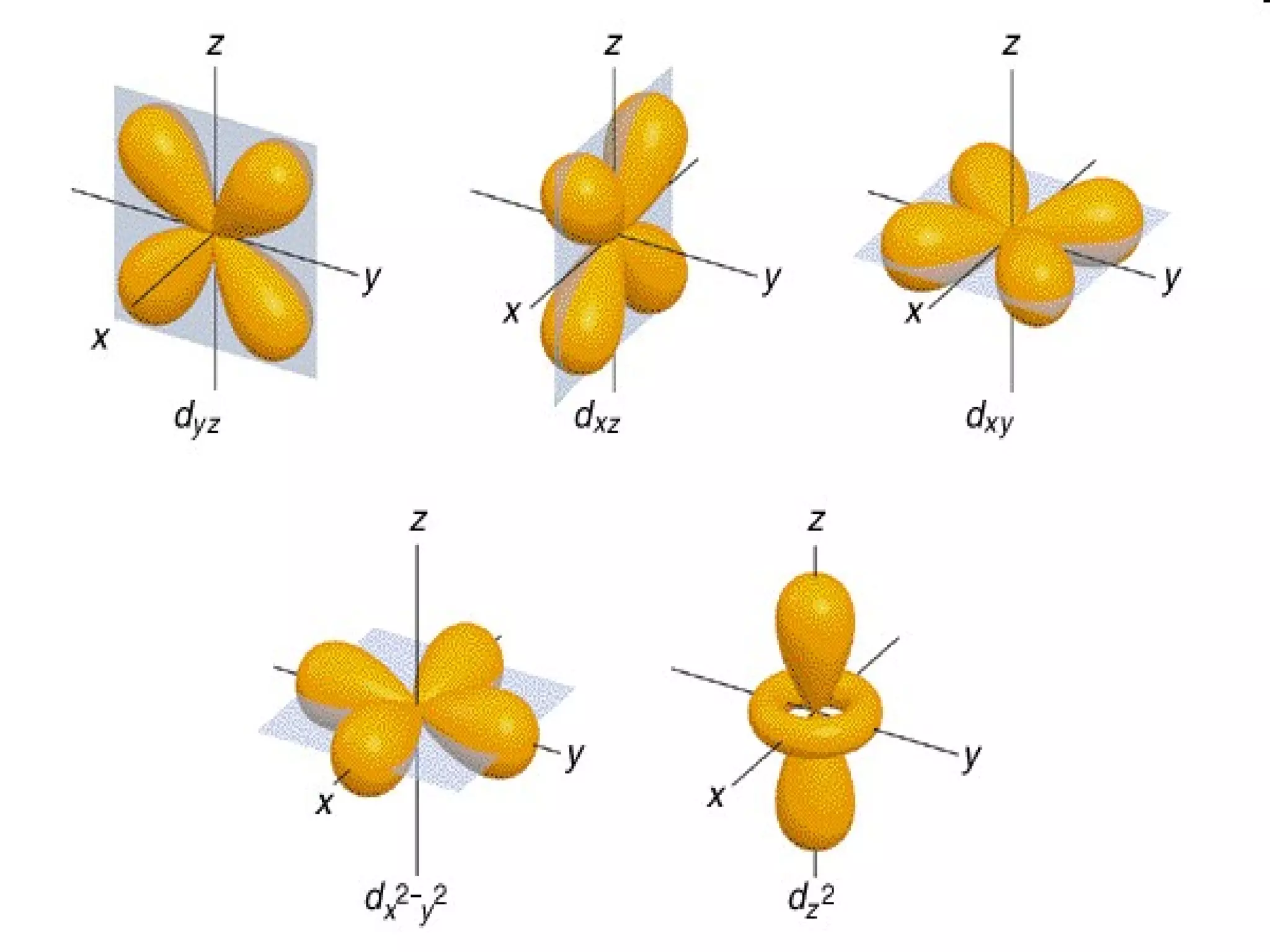
There are four kinds of
orbitals:
s orbitals
p orbitals
d orbitals
f orbitals
Each orbital has a
different amount of
energy
Orbitals closer to the nucleus
have less energy than orbitals
further from the nucleus
Valence Electrons
Electrons that are found in
the outermost energy level
of an atom
How do we know how many
valence electrons a
particular atom has???
The first orbital can hold
electrons

2

The second and third orbitals
can each hold 8 electrons
Higher orbitals are more
complicated and will be
learned in Chemistry class!
How many valence electrons
would an electrically neutral
Carbon atom have???
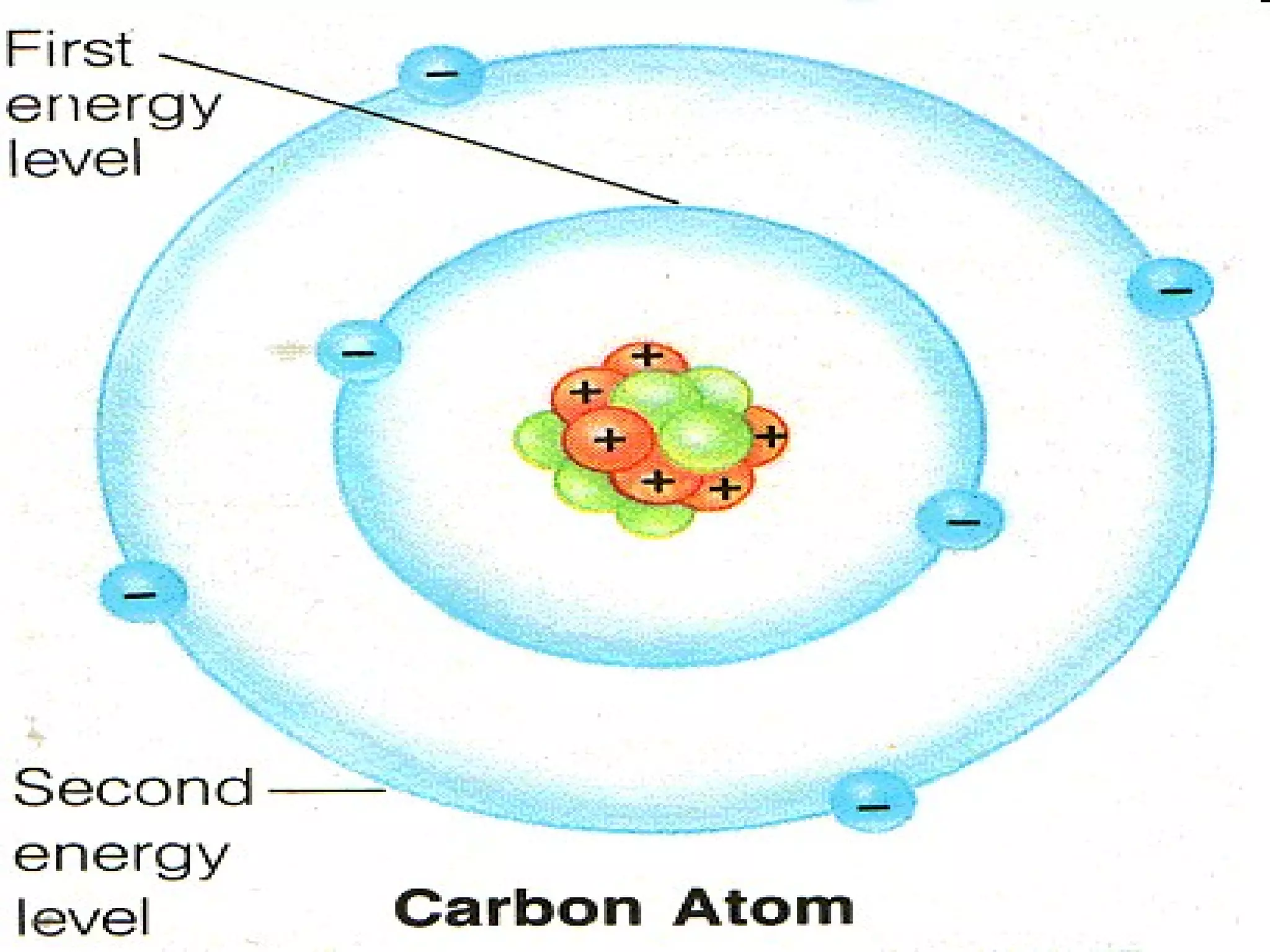
Carbon has 6 protons,
therefore an electrically
neutral atom would need 6
electrons to balance the
charge
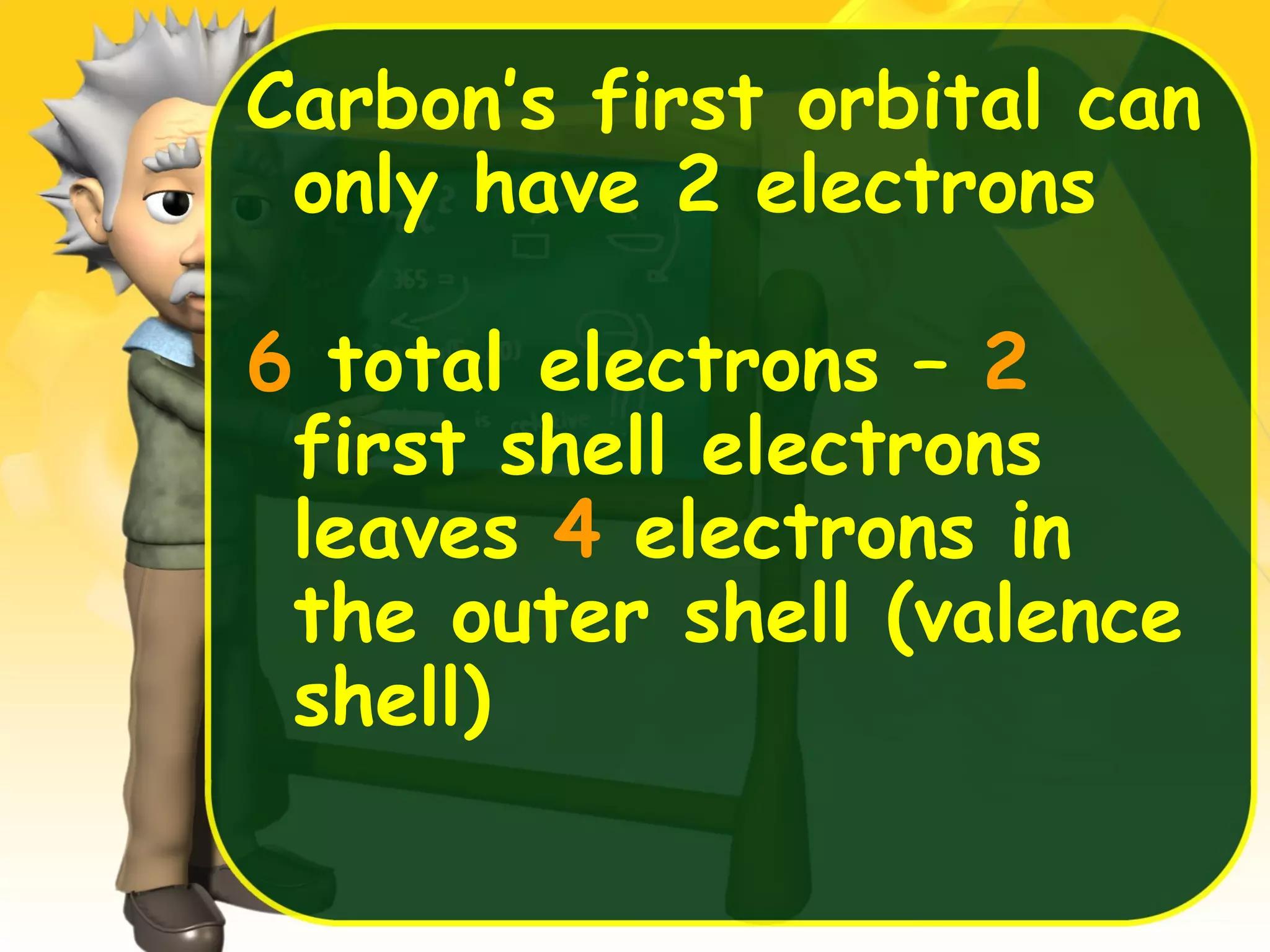
Carbon’s first orbital can
only have 2 electrons
6 total electrons – 2
first shell electrons
leaves 4 electrons in
the outer shell (valence
shell)
A Tour of the Periodic
Table
Periodic Law says:
1) Properties of elements
tend to change according
to a regular pattern when
those elements are
arranged by increasing
atomic number!!
What does this mean???
It means that elements with
certain characteristics in
common (like # of valence
electrons) are more likely to
have similar chemical
properties (like what kinds
of atoms they react with!)
Periods and Groups

Horizontal Rows (leftright) are called
PERIODS

Handy for determining
valence shell electrons!!
Periods and Groups

Vertical columns (up-down) are
called GROUPS
All elements in a particular
group will have the same
number of valence electrons,
which gives them all similar
chemical properties
Atoms that have lost or
gained electrons are
called…IONS
Atoms that have lost or
gained neutrons are
called…ISOTOPES
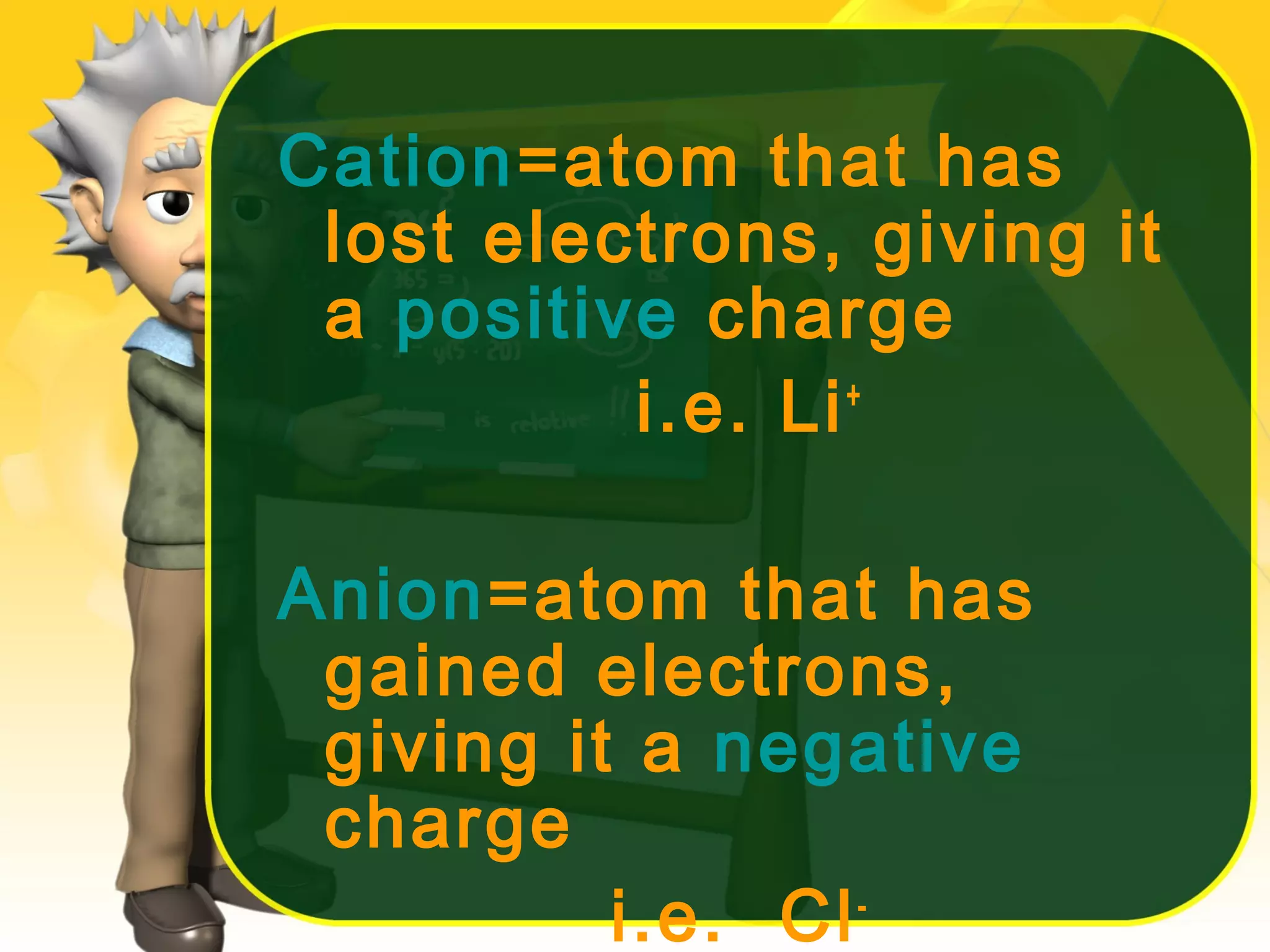
Cation=atom that has
lost electrons, giving it
a positive charge
i.e. Li +
Anion=atom that has
gained electrons,
giving it a negative
charge
i.e. Cl -
Metals
-most elements are
metals
-good conductors of heat
and electricity
-most are fairly reactive
Metals continued

Alkali Metals-found in
Group 1
-Highly reactive
-one valence electron
-readily form cations
(+)
-not found naturally in
nature-why?
Alkaline Earth Metals

-Found in Group 2

-Very reactive, but not as
reactive as Alkali Metals
-2 valence electrons
-readily form cations (+2)
-too reactive to be found alone
in nature
TRANSITION METALS
Groups 3-12
Can form more than one
cation, depending on what
they are bonding with
Very useful in technology
and economy
Nonmetals
Found on the right side of the periodic
table
Very plentiful on earth-especially carbon,
silicon, oxygen, nitrogen, and sulfur
Readily form anions by gaining electrons
to form full outer shells
Halogens
-elements in Group 17
-very reactive, especially with alkali metals!
-7 valence electrons-only need ?? To have a full
shell…
-form anions (-1) by GAINING that one missing
electron
Noble Gases-Group 18
-Found in Group 18
-all inert gases
-full valence shells-do not need to get
any more electrons, therefore they
do not react with other atoms or
elements
-will not form ions
Semiconductors

Found on the “stairsteps”

Intermediate conductors of heat
and electricity-not as good as
metals, but better than
nonmetals
Classified as nonmetals, but have
some properties of metalssometimes called “metalloids”
Using Moles to Count Atoms
The mole is a counting unit, much like
“dozen” or “pair”
A dozen = 12 objects
A pair = 2 objects
A mole = 6.022 x 10 23 objects
6.022 x 10 23 is known as Avogadro's
constant
Molar Mass
Average atomic mass is the mass of 1
atom
Molar mass is the mass of 1 mole of
atoms
The number is the same for both of these
and can be found on the periodic table,
usually under the Chemical symbol for
that particular element
The only difference for these two values
is the unit you use -Atomic Mass Unit
vs grams/mole
Conversion Factors
Just as we used a conversion factor to
do our metric conversions, we will use
a conversion factor to go from

moles → mass
and
mass → moles
More Conversion Factors
For our purposes, the conversion factor is
the molar mass of an element-found on
the periodic table
So...
1 mole Carbon = 12.011 grams
12.011 grams Carbon = 1 mole

Ps ch 3_presentation

  • 1.
  • 2.
  • 3.
  • 4.
    Bohr modelcompared electrons toplanets • Because science is always changing, we realized that Bohr’s model could not explain all of our observations!!
  • 5.
    Electrons are foundin orbitals-behave like wavesquantum theory! There are four kinds of orbitals: s orbitals p orbitals d orbitals f orbitals
  • 6.
    Each orbital hasa different amount of energy Orbitals closer to the nucleus have less energy than orbitals further from the nucleus
  • 10.
    Valence Electrons Electrons thatare found in the outermost energy level of an atom How do we know how many valence electrons a particular atom has???
  • 11.
    The first orbitalcan hold electrons 2 The second and third orbitals can each hold 8 electrons Higher orbitals are more complicated and will be learned in Chemistry class!
  • 12.
    How many valenceelectrons would an electrically neutral Carbon atom have??? Carbon has 6 protons, therefore an electrically neutral atom would need 6 electrons to balance the charge
  • 13.
    Carbon’s first orbitalcan only have 2 electrons 6 total electrons – 2 first shell electrons leaves 4 electrons in the outer shell (valence shell)
  • 15.
    A Tour ofthe Periodic Table
  • 16.
    Periodic Law says: 1)Properties of elements tend to change according to a regular pattern when those elements are arranged by increasing atomic number!!
  • 17.
    What does thismean??? It means that elements with certain characteristics in common (like # of valence electrons) are more likely to have similar chemical properties (like what kinds of atoms they react with!)
  • 18.
    Periods and Groups HorizontalRows (leftright) are called PERIODS Handy for determining valence shell electrons!!
  • 19.
    Periods and Groups Verticalcolumns (up-down) are called GROUPS All elements in a particular group will have the same number of valence electrons, which gives them all similar chemical properties
  • 20.
    Atoms that havelost or gained electrons are called…IONS Atoms that have lost or gained neutrons are called…ISOTOPES
  • 21.
    Cation=atom that has lostelectrons, giving it a positive charge i.e. Li + Anion=atom that has gained electrons, giving it a negative charge i.e. Cl -
  • 22.
    Metals -most elements are metals -goodconductors of heat and electricity -most are fairly reactive
  • 23.
    Metals continued Alkali Metals-foundin Group 1 -Highly reactive -one valence electron -readily form cations (+) -not found naturally in nature-why?
  • 24.
    Alkaline Earth Metals -Foundin Group 2 -Very reactive, but not as reactive as Alkali Metals -2 valence electrons -readily form cations (+2) -too reactive to be found alone in nature
  • 25.
    TRANSITION METALS Groups 3-12 Canform more than one cation, depending on what they are bonding with Very useful in technology and economy
  • 26.
    Nonmetals Found on theright side of the periodic table Very plentiful on earth-especially carbon, silicon, oxygen, nitrogen, and sulfur Readily form anions by gaining electrons to form full outer shells
  • 27.
    Halogens -elements in Group17 -very reactive, especially with alkali metals! -7 valence electrons-only need ?? To have a full shell… -form anions (-1) by GAINING that one missing electron
  • 28.
    Noble Gases-Group 18 -Foundin Group 18 -all inert gases -full valence shells-do not need to get any more electrons, therefore they do not react with other atoms or elements -will not form ions
  • 29.
    Semiconductors Found on the“stairsteps” Intermediate conductors of heat and electricity-not as good as metals, but better than nonmetals Classified as nonmetals, but have some properties of metalssometimes called “metalloids”
  • 30.
    Using Moles toCount Atoms The mole is a counting unit, much like “dozen” or “pair” A dozen = 12 objects A pair = 2 objects A mole = 6.022 x 10 23 objects 6.022 x 10 23 is known as Avogadro's constant
  • 31.
    Molar Mass Average atomicmass is the mass of 1 atom Molar mass is the mass of 1 mole of atoms The number is the same for both of these and can be found on the periodic table, usually under the Chemical symbol for that particular element The only difference for these two values is the unit you use -Atomic Mass Unit vs grams/mole
  • 32.
    Conversion Factors Just aswe used a conversion factor to do our metric conversions, we will use a conversion factor to go from moles → mass and mass → moles
  • 33.
    More Conversion Factors Forour purposes, the conversion factor is the molar mass of an element-found on the periodic table So... 1 mole Carbon = 12.011 grams 12.011 grams Carbon = 1 mole

Editor's Notes