Atom Structure
Atomic Number, Mass Number and
Ion Charge
Lesson Outcomes
• By the end of this lesson you should be able
to:
– Illustrate the structure of an atom.
– Accurately explain the terms “atomic number” and “mass
number” and identify each value on the periodic table.
– Calculate the number of neutrons in an atom/ the mass of an
atom when given specific variables.
– Calculate the charge on an atom.
Atomic Structure
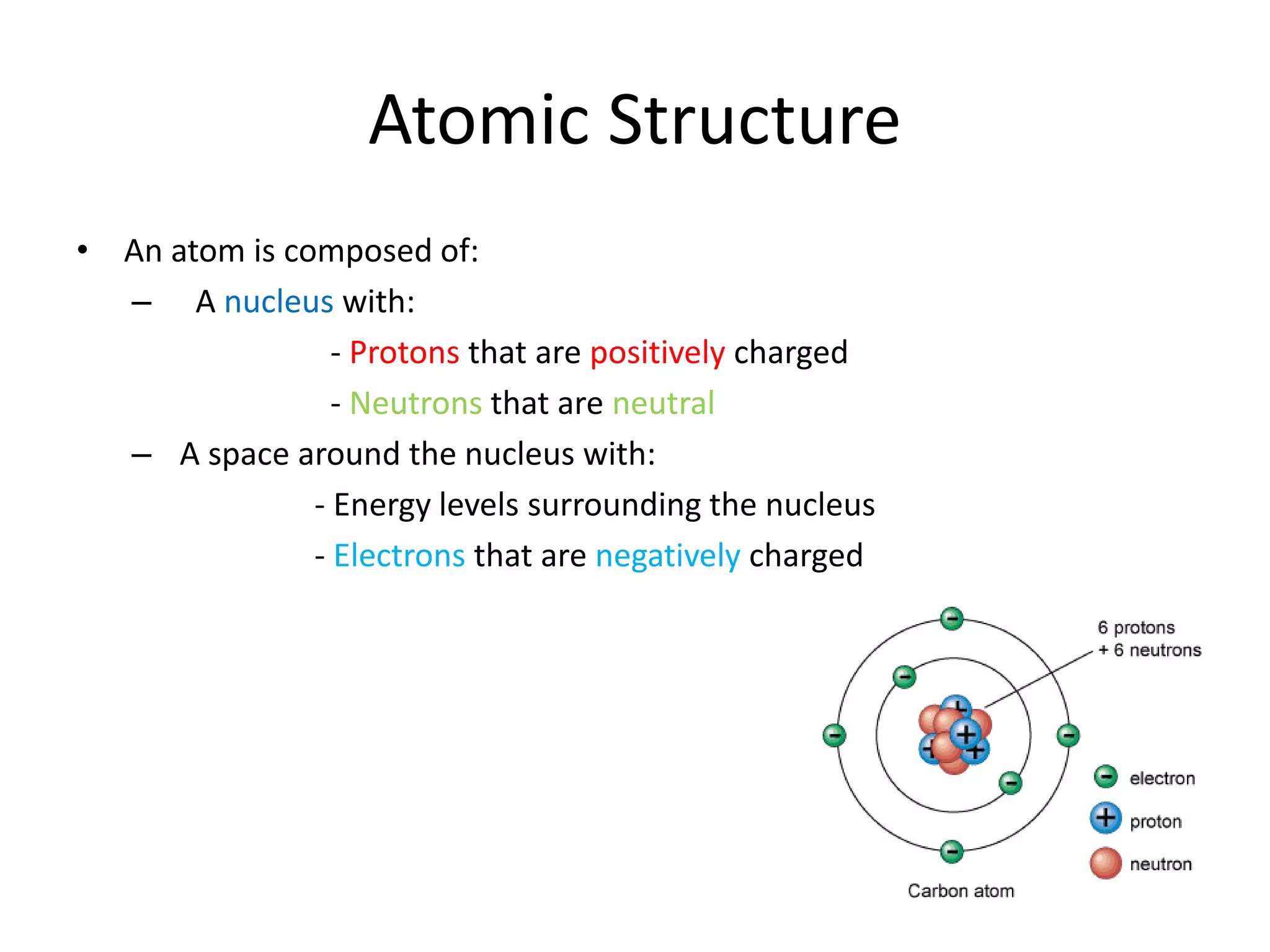
• An atom is composed of:
– A nucleus with:
- Protons that are positively charged
- Neutrons that are neutral
– A space around the nucleus with:
- Energy levels surrounding the nucleus
- Electrons that are negatively charged
Atomic Number
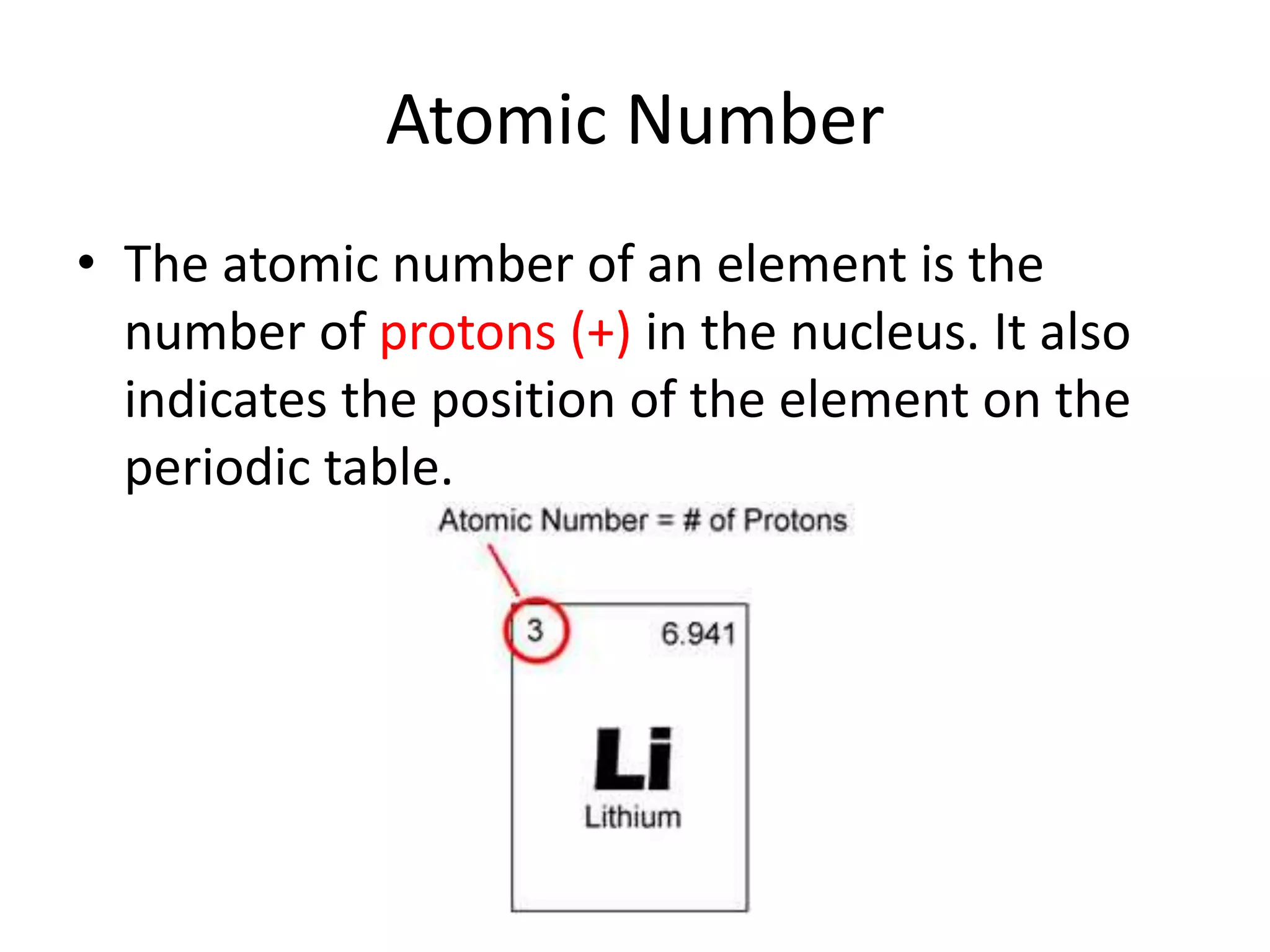
• The atomic number of an element is the
number of protons (+) in the nucleus. It also
indicates the position of the element on the
periodic table.
Neutral Atoms
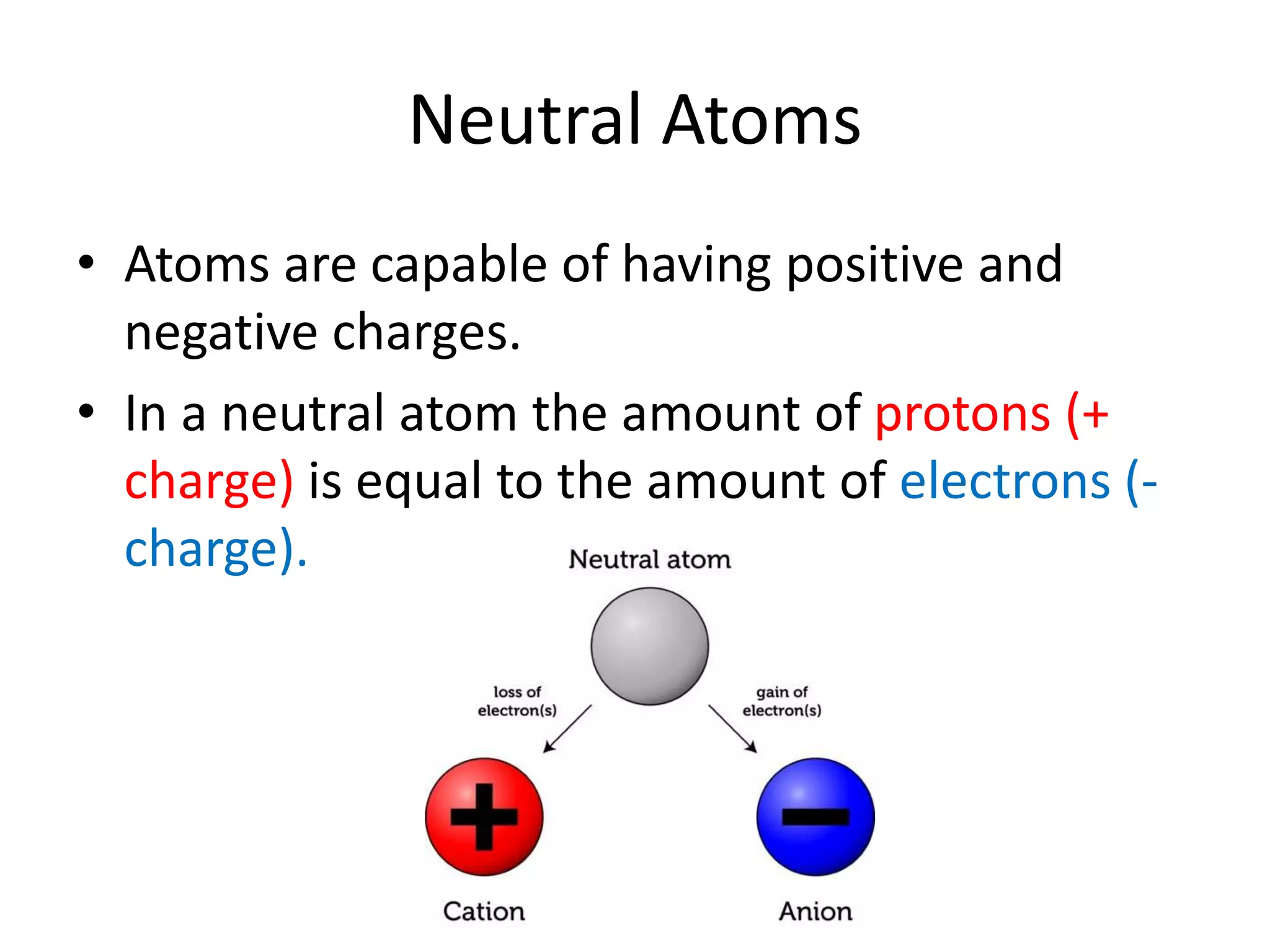
• Atoms are capable of having positive and
negative charges.
• In a neutral atom the amount of protons (+
charge) is equal to the amount of electrons (-
charge).
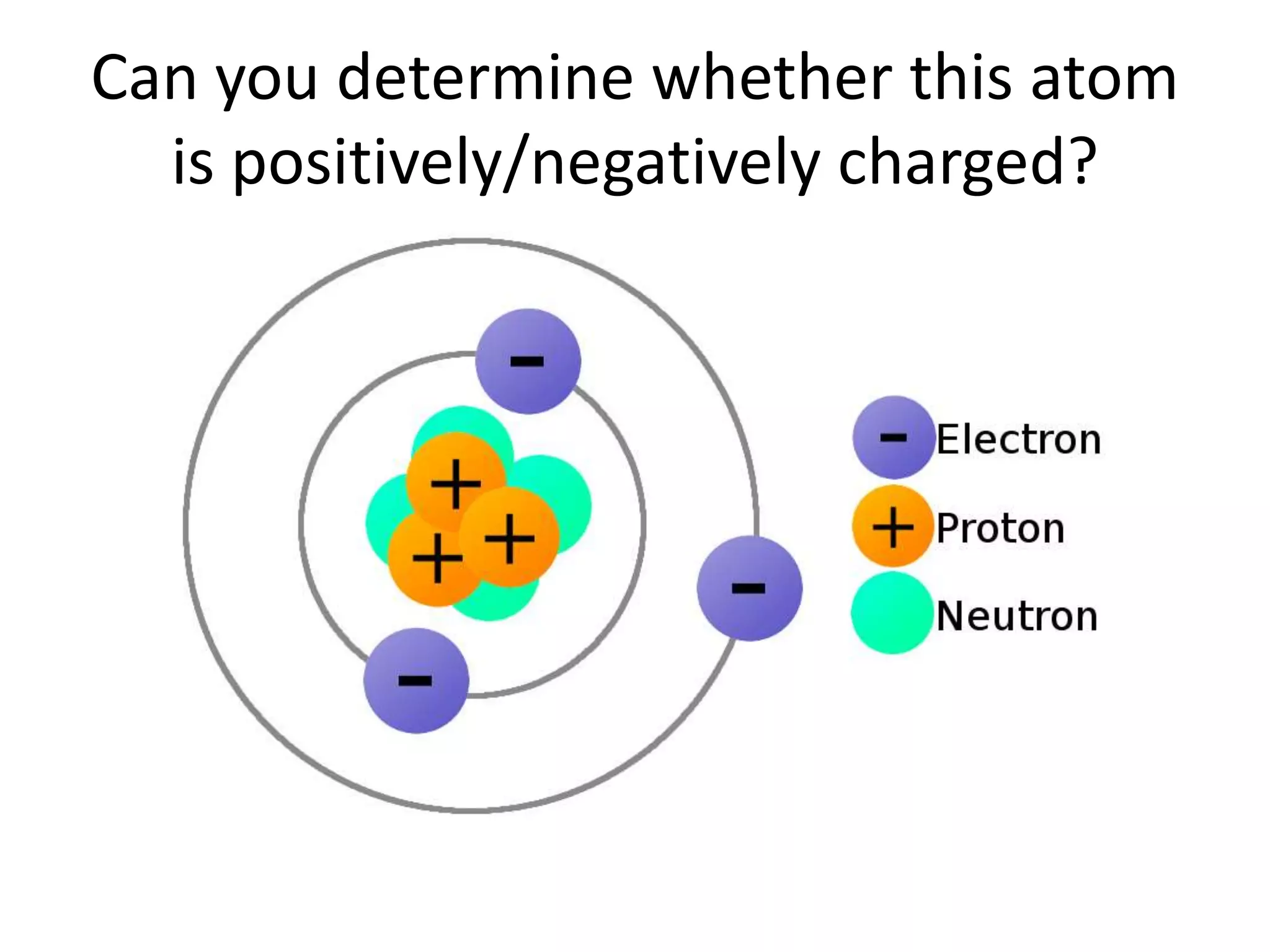
Can you determine whether this atom
is positively/negatively charged?
Neutrons
• Neutrons are particles in atoms that
contribute to approximately half of an atom’s
mass. This is because protons and neutrons
are roughly the same size.
• Neutrons do not possess any charge, unlike
positive protons and negative electrons.
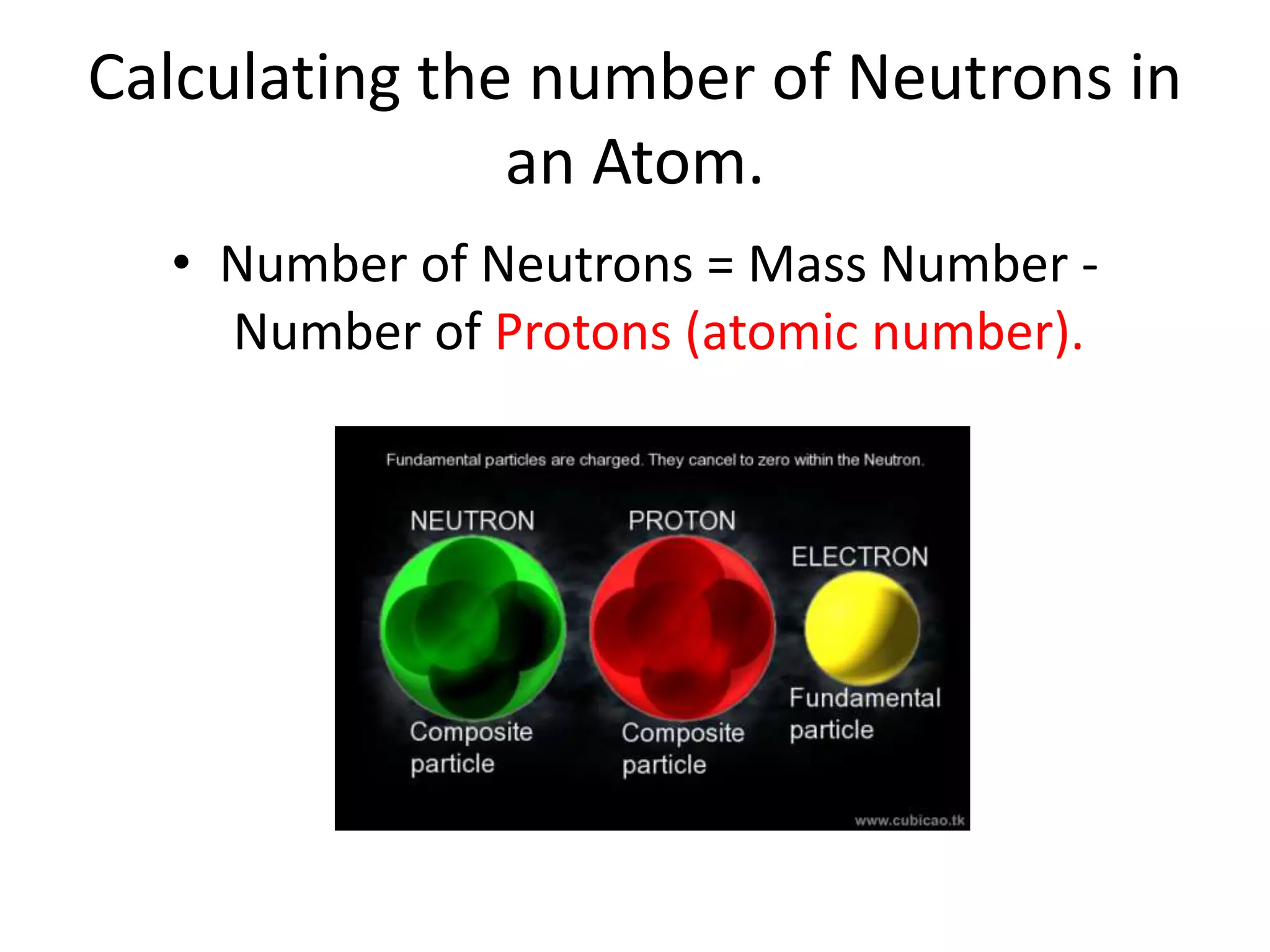
Calculating the number of Neutrons in
an Atom.
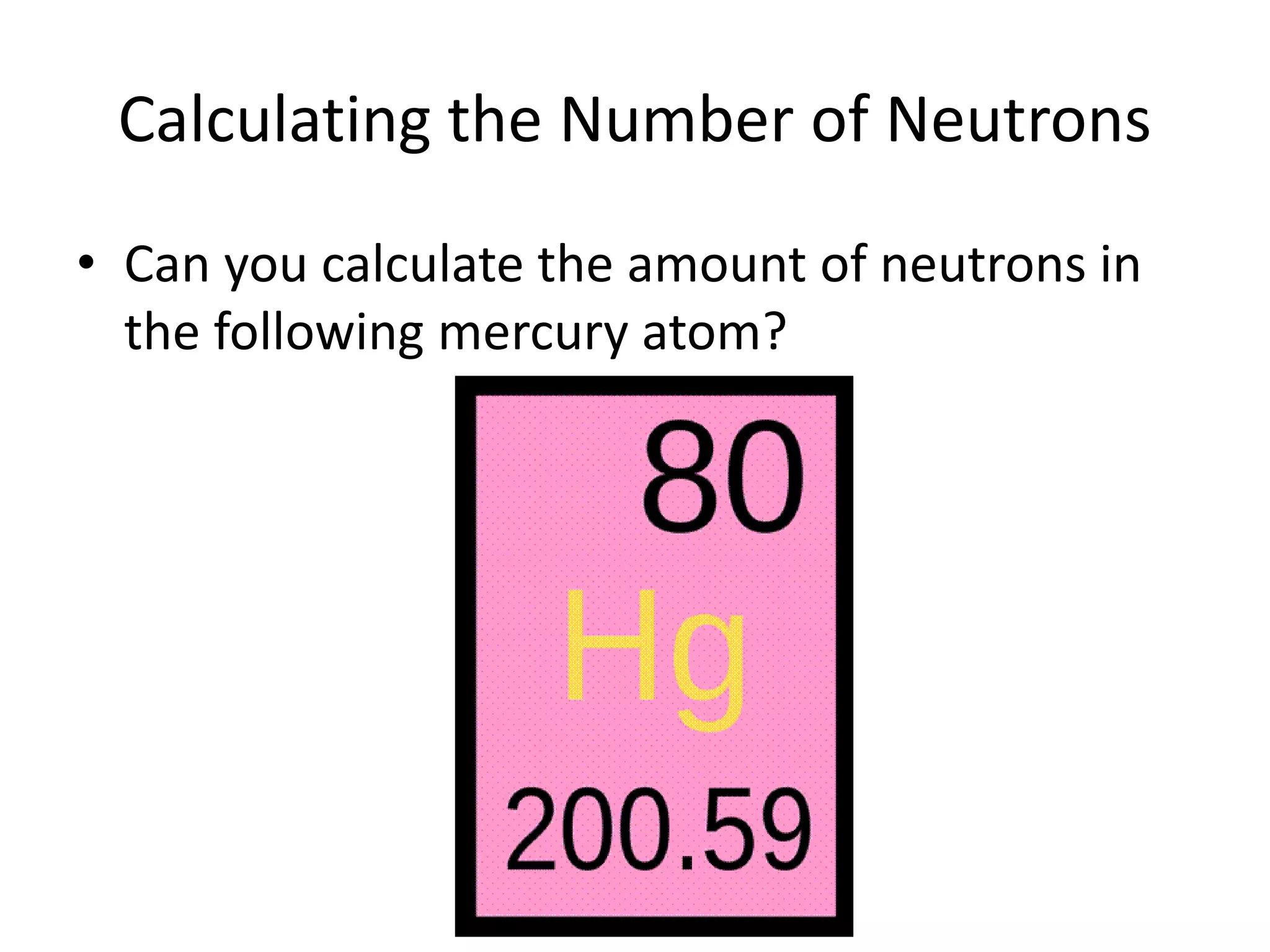
• Number of Neutrons = Mass Number -
Number of Protons (atomic number).
Calculating the Number of Neutrons
• Can you calculate the amount of neutrons in
the following mercury atom?
Relative Atomic Mass
• Carbon has an atomic mass of exactly 12 amu.
The masses of other elements are calculated by
comparison to this.
• Thus, the hydrogen atom’s mass is one twelfth of
this and so its relative atomic mass is one.
• The relative atomic mass can be read straight off
the periodic table.
• Most elements occur in nature as a mixture of
isotopes, so the atomic mass of the element will
be a weighted average of all of these masses.
Mass Number
• The mass number is the total number of
nucleons, that is the number of protons and
neutrons in the nucleus, in an element.
• The mass number gives only an indication of the
mass of an atom.
• The mass of an atom is determined by its
nucleons (protons and neutrons).
• Electrons have a relatively small mass and simply
impart volume to the atom instead of mass.
Notation on the Periodic Table
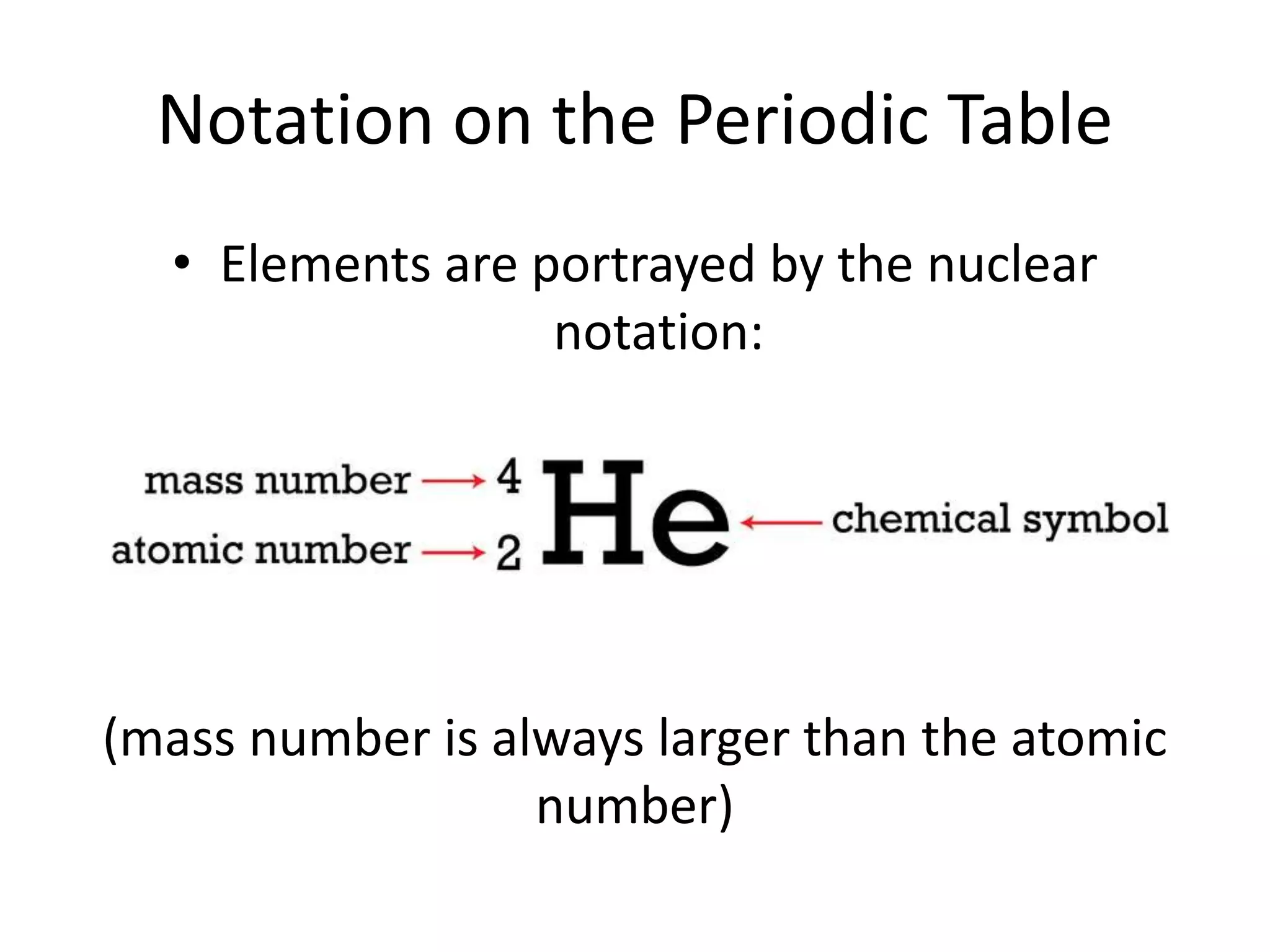
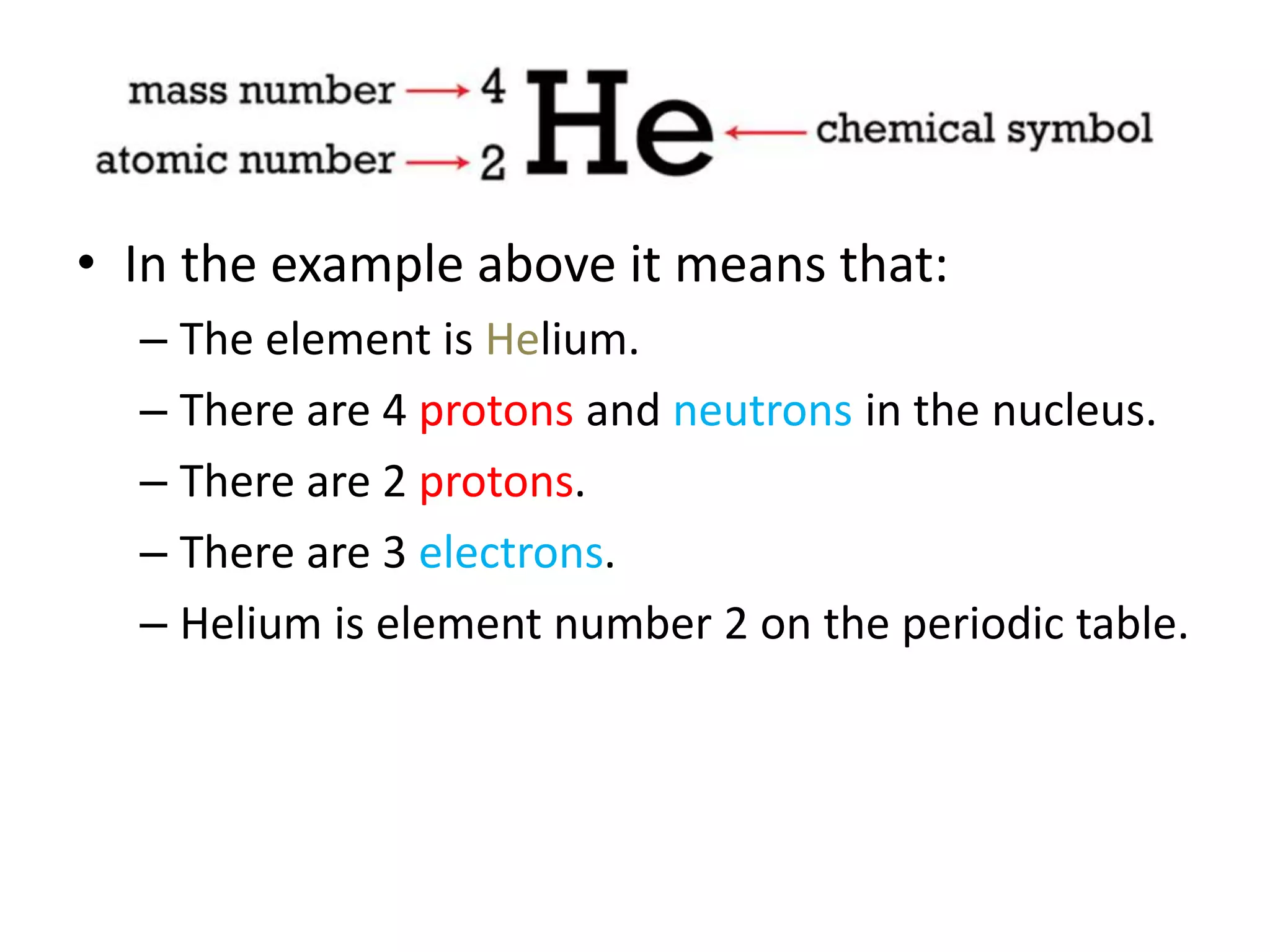
• Elements are portrayed by the nuclear
notation:
(mass number is always larger than the atomic
number)
• In the example above it means that:
– The element is Helium.
– There are 4 protons and neutrons in the nucleus.
– There are 2 protons.
– There are 3 electrons.
– Helium is element number 2 on the periodic table.
Ions
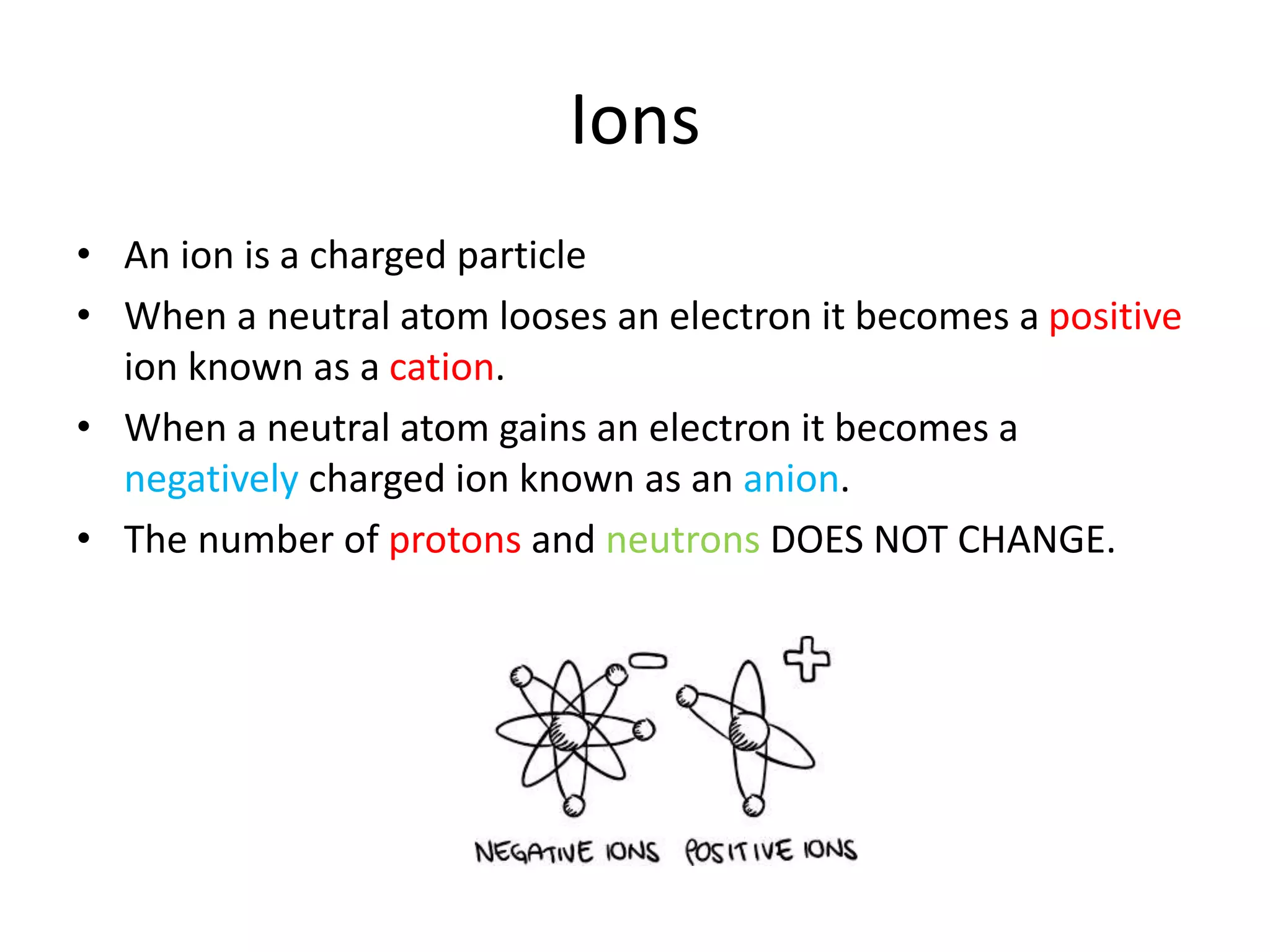
• An ion is a charged particle
• When a neutral atom looses an electron it becomes a positive
ion known as a cation.
• When a neutral atom gains an electron it becomes a
negatively charged ion known as an anion.
• The number of protons and neutrons DOES NOT CHANGE.
Determining Ion Charge
• What is the charge on a Li atom if it loses an
electron?
- is it +/-?
- what is the charge value?
• What is the charge on an F atom if it gains 2
electrons?
- is it +/-?
- what is the charge value?
Activity
• Complete the activity sheets in pairs or groups
of three.

Atom structure

  • 1.
    Atom Structure Atomic Number,Mass Number and Ion Charge
  • 2.
    Lesson Outcomes • Bythe end of this lesson you should be able to: – Illustrate the structure of an atom. – Accurately explain the terms “atomic number” and “mass number” and identify each value on the periodic table. – Calculate the number of neutrons in an atom/ the mass of an atom when given specific variables. – Calculate the charge on an atom.
  • 3.
    Atomic Structure • Anatom is composed of: – A nucleus with: - Protons that are positively charged - Neutrons that are neutral – A space around the nucleus with: - Energy levels surrounding the nucleus - Electrons that are negatively charged
  • 4.
    Atomic Number • Theatomic number of an element is the number of protons (+) in the nucleus. It also indicates the position of the element on the periodic table.
  • 5.
    Neutral Atoms • Atomsare capable of having positive and negative charges. • In a neutral atom the amount of protons (+ charge) is equal to the amount of electrons (- charge).
  • 6.
    Can you determinewhether this atom is positively/negatively charged?
  • 7.
    Neutrons • Neutrons areparticles in atoms that contribute to approximately half of an atom’s mass. This is because protons and neutrons are roughly the same size. • Neutrons do not possess any charge, unlike positive protons and negative electrons.
  • 8.
    Calculating the numberof Neutrons in an Atom. • Number of Neutrons = Mass Number - Number of Protons (atomic number).
  • 9.
    Calculating the Numberof Neutrons • Can you calculate the amount of neutrons in the following mercury atom?
  • 10.
    Relative Atomic Mass •Carbon has an atomic mass of exactly 12 amu. The masses of other elements are calculated by comparison to this. • Thus, the hydrogen atom’s mass is one twelfth of this and so its relative atomic mass is one. • The relative atomic mass can be read straight off the periodic table. • Most elements occur in nature as a mixture of isotopes, so the atomic mass of the element will be a weighted average of all of these masses.
  • 11.
    Mass Number • Themass number is the total number of nucleons, that is the number of protons and neutrons in the nucleus, in an element. • The mass number gives only an indication of the mass of an atom. • The mass of an atom is determined by its nucleons (protons and neutrons). • Electrons have a relatively small mass and simply impart volume to the atom instead of mass.
  • 12.
    Notation on thePeriodic Table • Elements are portrayed by the nuclear notation: (mass number is always larger than the atomic number)
  • 13.
    • In theexample above it means that: – The element is Helium. – There are 4 protons and neutrons in the nucleus. – There are 2 protons. – There are 3 electrons. – Helium is element number 2 on the periodic table.
  • 14.
    Ions • An ionis a charged particle • When a neutral atom looses an electron it becomes a positive ion known as a cation. • When a neutral atom gains an electron it becomes a negatively charged ion known as an anion. • The number of protons and neutrons DOES NOT CHANGE.
  • 15.
    Determining Ion Charge •What is the charge on a Li atom if it loses an electron? - is it +/-? - what is the charge value? • What is the charge on an F atom if it gains 2 electrons? - is it +/-? - what is the charge value?
  • 16.
    Activity • Complete theactivity sheets in pairs or groups of three.

Editor's Notes

  • #10 do extra calculations to show how to calculate mass, proton number (atomic number), mass due to protons.