 All living organisms can be sorted into one of two groups.
 Prokaryotes and the Eukaryotes.
 Prokaryotes (pro = before; karyon– = nucleus).
 All prokaryotic organisms are unicellular
 e.g. Bacteria
 Eukaryotes (eu = true; karyon– = nucleus).
 Eukaryotic organisms unlike prokaryotic can be
unicellular or multicellular.
 Animal cells, plant cells, fungi
 Simplest type of cell.
 Oldest type of cell appeared about four billion years ago.
 Largest group of organisms
 Unicellular organisms that are found in all environments.
 Lack a cell nucleus or any membrane-encased organelles
 prokaryotes into two groups- Bacteria, and Archaea
 Archaea - unique life form
 Capable of living indefinitely in extreme environments such
as hydrothermal vents or arctic ice.
 Single cell (unicellular) organism
 Do not have a nuclear membrane.
 Circular shaped genetic material dispersed throughout
cytoplasm (nucleoid)
 DNA is a single loop
 Do not have membrane-bound organelles
 Simple internal structure.
 Smaller in size when compared to Eukaryotes.
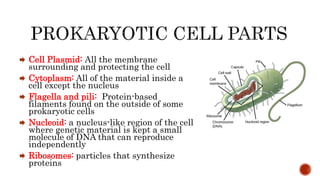
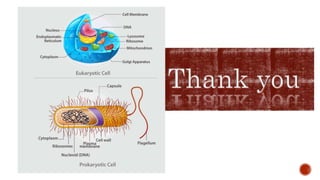
 Cell Plasmid: All the membrane
surrounding and protecting the cell
 Cytoplasm: All of the material inside a
cell except the nucleus
 Flagella and pili: Protein-based
filaments found on the outside of some
prokaryotic cells
 Nucleoid: a nucleus-like region of the cell
where genetic material is kept a small
molecule of DNA that can reproduce
independently
 Ribosomes: particles that synthesize
proteins
 Cell wall: made of peptidoglycan, comprised of sugars
and amino acids, and many have a polysaccharide
capsule
 An extra layer of protection, helps the cell maintain its
shape, and prevents dehydration.
 Capsule: enables the cell to attach to surfaces in its
environment.
 Some prokaryotes have flagella, pili, or fimbriae.
 Flagella are used for locomotion,
 Pili are used to exchange genetic material during a type
of reproduction called conjugation.
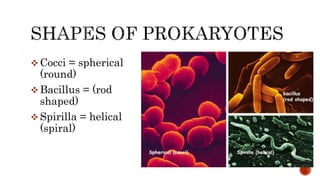
 Cocci = spherical
(round)
 Bacillus = (rod
shaped)
 Spirilla = helical
(spiral)
Appeared approximately one billion years ago
Generally more advanced than prokaryotes
More complex internal structure
Nuclear membrane surrounds linear genetic material
(DNA)
several different parts
Coverings known as cell membranes.
Larger than prokaryotes in size .
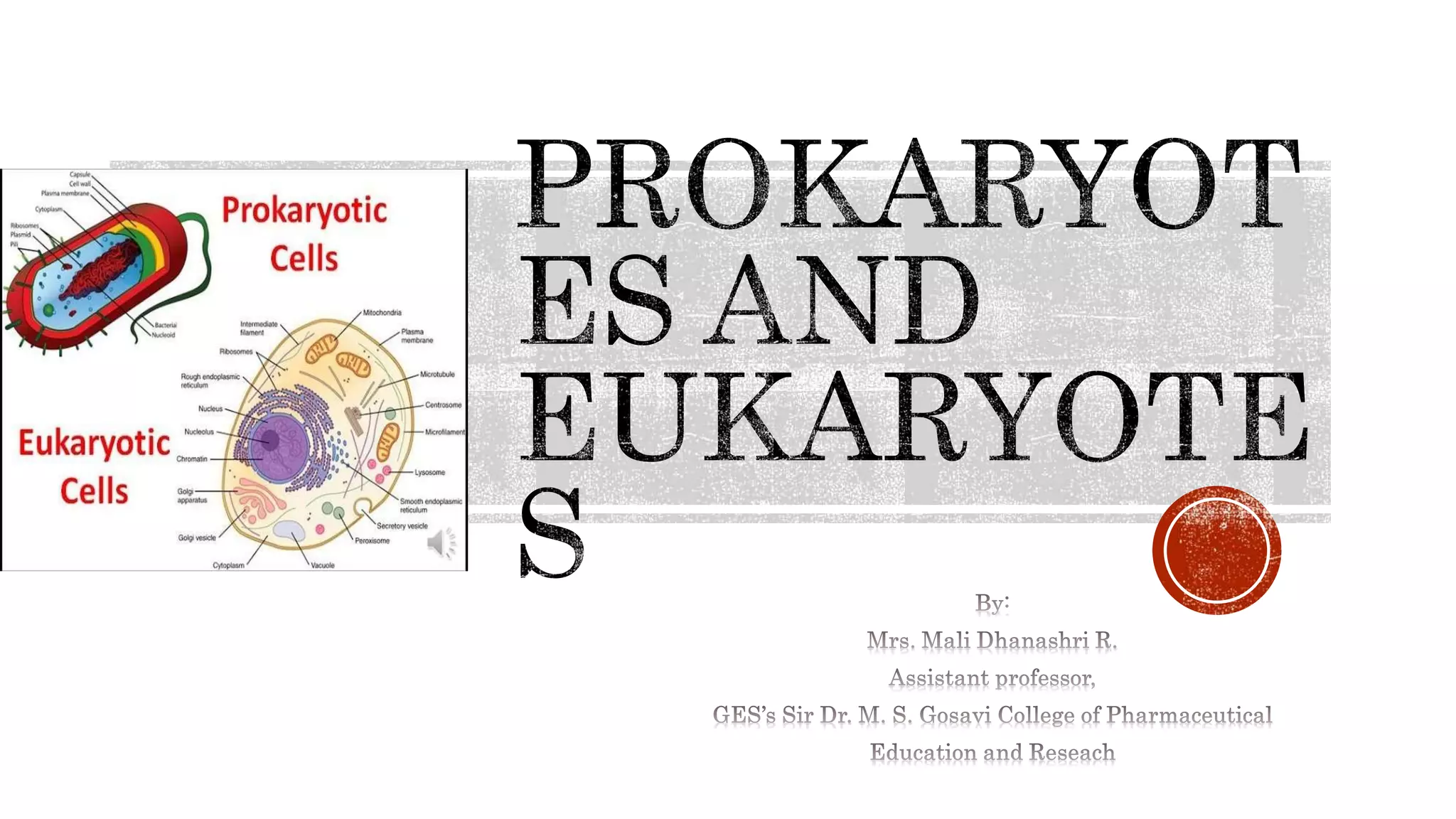
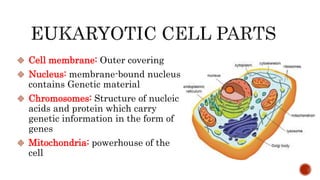
 Cell membrane: Outer covering
 Nucleus: membrane-bound nucleus
contains Genetic material
 Chromosomes: Structure of nucleic
acids and protein which carry
genetic information in the form of
genes
 Mitochondria: powerhouse of the
cell
 Endoplasmic reticulum:
 may be smooth: builds lipids and carbohydrates
 may be rough: stores proteins made by attached
ribosomes
 Golgi Complex:
takes in sacs of raw material from ER
sends out sacs containing finished cell products
 Lysosomes:
 sacs filled with digestive enzymes
 digest worn out cell parts
 digest food absorbed by cell
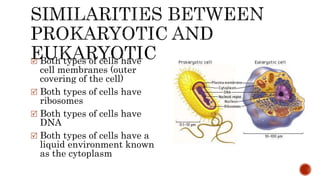
 Both types of cells have
cell membranes (outer
covering of the cell)
 Both types of cells have
ribosomes
 Both types of cells have
DNA
 Both types of cells have a
liquid environment known
as the cytoplasm
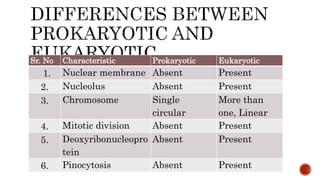
Sr. No Characteristic Prokaryotic Eukaryotic
1. Nuclear membrane Absent Present
2. Nucleolus Absent Present
3. Chromosome Single
circular
More than
one, Linear
4. Mitotic division Absent Present
5. Deoxyribonucleopro
tein
Absent Present
6. Pinocytosis Absent Present
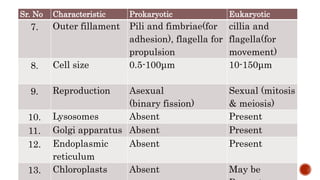
Sr. No Characteristic Prokaryotic Eukaryotic
7. Outer fillament Pili and fimbriae(for
adhesion), flagella for
propulsion
cillia and
flagella(for
movement)
8. Cell size 0.5-100μm 10-150μm
9. Reproduction Asexual
(binary fission)
Sexual (mitosis
& meiosis)
10. Lysosomes Absent Present
11. Golgi apparatus Absent Present
12. Endoplasmic
reticulum
Absent Present
13. Chloroplasts Absent May be
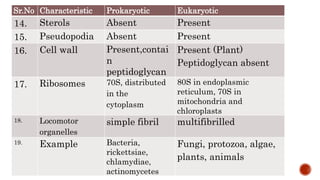
Sr.No Characteristic Prokaryotic Eukaryotic
14. Sterols Absent Present
15. Pseudopodia Absent Present
16. Cell wall Present,contai
n
peptidoglycan
Present (Plant)
Peptidoglycan absent
17. Ribosomes 70S, distributed
in the
cytoplasm
80S in endoplasmic
reticulum, 70S in
mitochondria and
chloroplasts
18. Locomotor
organelles
simple fibril multifibrilled
19. Example Bacteria,
rickettsiae,
chlamydiae,
actinomycetes
Fungi, protozoa, algae,
plants, animals
Prokaryotes and eukaryotes

Prokaryotes and eukaryotes

  • 2.
     All livingorganisms can be sorted into one of two groups.  Prokaryotes and the Eukaryotes.  Prokaryotes (pro = before; karyon– = nucleus).  All prokaryotic organisms are unicellular  e.g. Bacteria  Eukaryotes (eu = true; karyon– = nucleus).  Eukaryotic organisms unlike prokaryotic can be unicellular or multicellular.  Animal cells, plant cells, fungi
  • 3.
     Simplest typeof cell.  Oldest type of cell appeared about four billion years ago.  Largest group of organisms  Unicellular organisms that are found in all environments.  Lack a cell nucleus or any membrane-encased organelles  prokaryotes into two groups- Bacteria, and Archaea  Archaea - unique life form  Capable of living indefinitely in extreme environments such as hydrothermal vents or arctic ice.
  • 4.
     Single cell(unicellular) organism  Do not have a nuclear membrane.  Circular shaped genetic material dispersed throughout cytoplasm (nucleoid)  DNA is a single loop  Do not have membrane-bound organelles  Simple internal structure.  Smaller in size when compared to Eukaryotes.
  • 5.
     Cell Plasmid:All the membrane surrounding and protecting the cell  Cytoplasm: All of the material inside a cell except the nucleus  Flagella and pili: Protein-based filaments found on the outside of some prokaryotic cells  Nucleoid: a nucleus-like region of the cell where genetic material is kept a small molecule of DNA that can reproduce independently  Ribosomes: particles that synthesize proteins
  • 6.
     Cell wall:made of peptidoglycan, comprised of sugars and amino acids, and many have a polysaccharide capsule  An extra layer of protection, helps the cell maintain its shape, and prevents dehydration.  Capsule: enables the cell to attach to surfaces in its environment.  Some prokaryotes have flagella, pili, or fimbriae.  Flagella are used for locomotion,  Pili are used to exchange genetic material during a type of reproduction called conjugation.
  • 7.
     Cocci =spherical (round)  Bacillus = (rod shaped)  Spirilla = helical (spiral)
  • 8.
    Appeared approximately onebillion years ago Generally more advanced than prokaryotes More complex internal structure Nuclear membrane surrounds linear genetic material (DNA) several different parts Coverings known as cell membranes. Larger than prokaryotes in size .
  • 9.
     Cell membrane:Outer covering  Nucleus: membrane-bound nucleus contains Genetic material  Chromosomes: Structure of nucleic acids and protein which carry genetic information in the form of genes  Mitochondria: powerhouse of the cell
  • 10.
     Endoplasmic reticulum: may be smooth: builds lipids and carbohydrates  may be rough: stores proteins made by attached ribosomes  Golgi Complex: takes in sacs of raw material from ER sends out sacs containing finished cell products  Lysosomes:  sacs filled with digestive enzymes  digest worn out cell parts  digest food absorbed by cell
  • 11.
     Both typesof cells have cell membranes (outer covering of the cell)  Both types of cells have ribosomes  Both types of cells have DNA  Both types of cells have a liquid environment known as the cytoplasm
  • 12.
    Sr. No CharacteristicProkaryotic Eukaryotic 1. Nuclear membrane Absent Present 2. Nucleolus Absent Present 3. Chromosome Single circular More than one, Linear 4. Mitotic division Absent Present 5. Deoxyribonucleopro tein Absent Present 6. Pinocytosis Absent Present
  • 13.
    Sr. No CharacteristicProkaryotic Eukaryotic 7. Outer fillament Pili and fimbriae(for adhesion), flagella for propulsion cillia and flagella(for movement) 8. Cell size 0.5-100μm 10-150μm 9. Reproduction Asexual (binary fission) Sexual (mitosis & meiosis) 10. Lysosomes Absent Present 11. Golgi apparatus Absent Present 12. Endoplasmic reticulum Absent Present 13. Chloroplasts Absent May be
  • 14.
    Sr.No Characteristic ProkaryoticEukaryotic 14. Sterols Absent Present 15. Pseudopodia Absent Present 16. Cell wall Present,contai n peptidoglycan Present (Plant) Peptidoglycan absent 17. Ribosomes 70S, distributed in the cytoplasm 80S in endoplasmic reticulum, 70S in mitochondria and chloroplasts 18. Locomotor organelles simple fibril multifibrilled 19. Example Bacteria, rickettsiae, chlamydiae, actinomycetes Fungi, protozoa, algae, plants, animals