STRUCTURE, FUNCTION & GROWTH OF PROKARYOTIC & EUKARYOTIC CELLS
Prokaryotic and Eukaryotic Cells All living creatures are made up of  CELLS , small membrane bound units filled with aqueous solutions of chemicals, which have the ability to create copies of themselves by growing and dividing. [The sizes of cells and organelles]
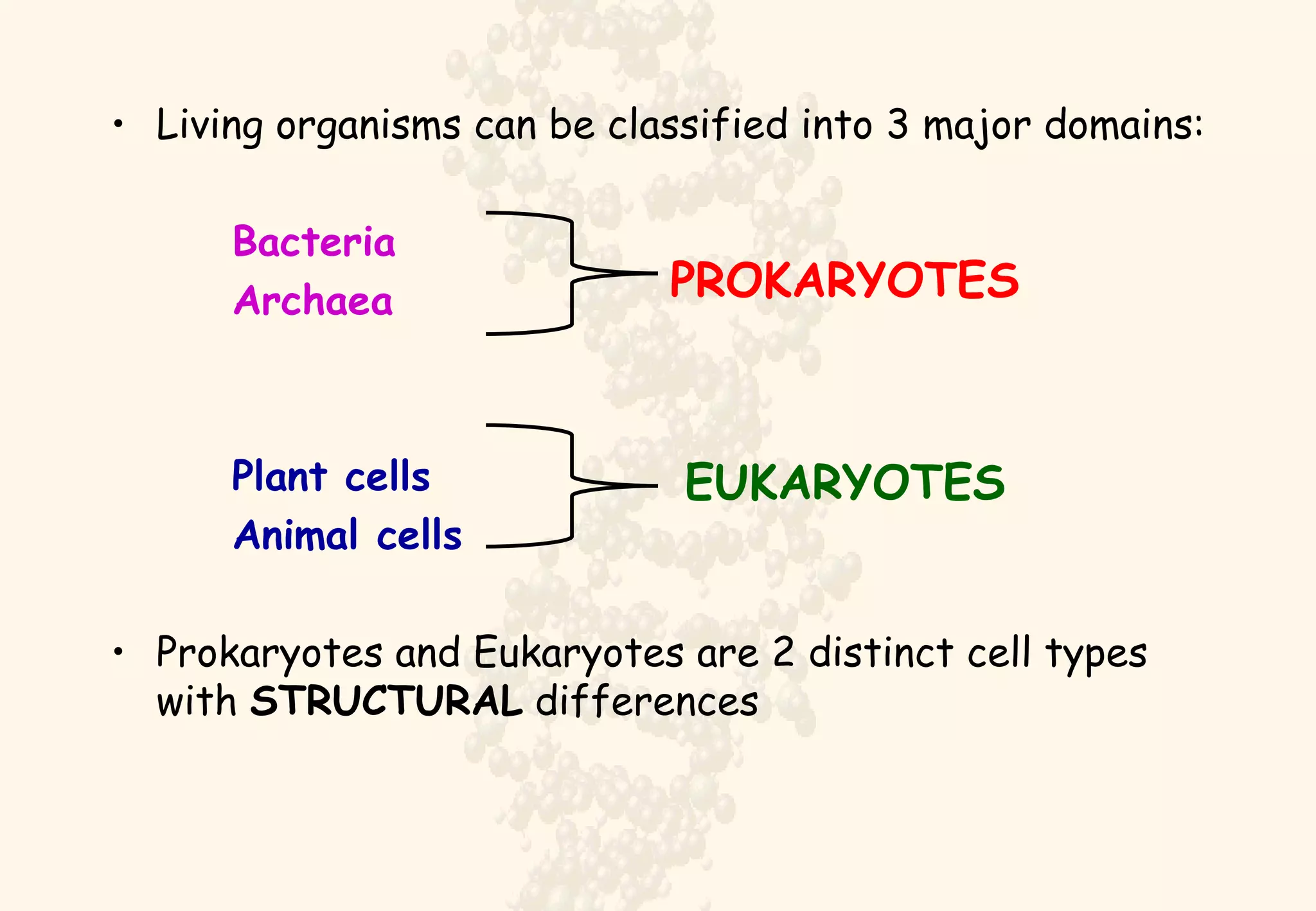
Living organisms can be classified into 3 major domains: Bacteria Archaea Plant cells Animal cells Prokaryotes and Eukaryotes are 2 distinct cell types with  STRUCTURAL  differences PROKARYOTES EUKARYOTES
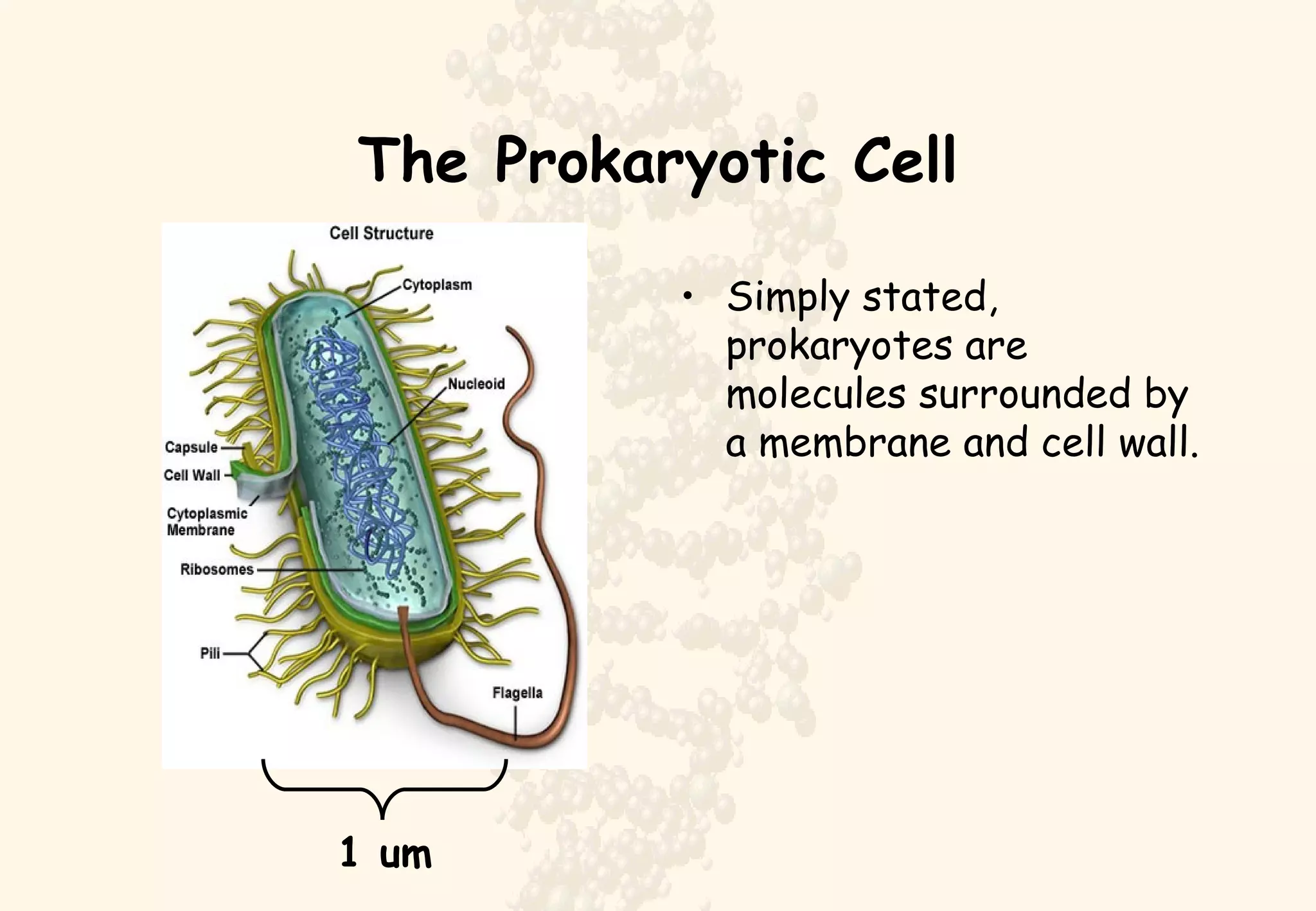
The Prokaryotic Cell Simply stated, prokaryotes are molecules surrounded by a membrane and cell wall. 1 um
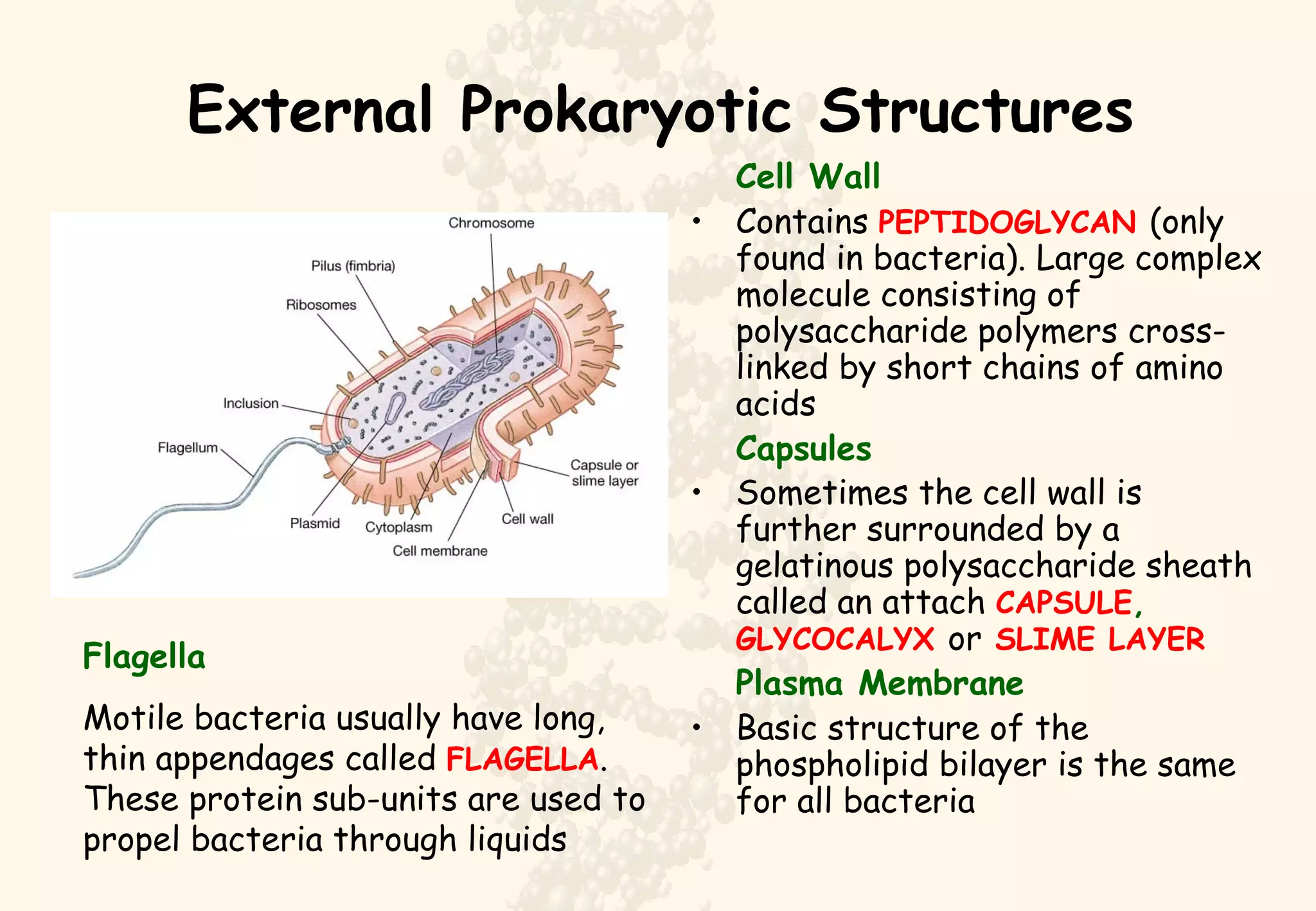
Prokaryotes Lack a membrane bound nucleus enclosing the  DNA DNA is present as a single circular molecule called a  BACTERIAL CHROMOSOME  DNA is naked having no associated histone proteins No membrane bound organelles  Apart from the DNA nucleoid, there is little internal structure apart from dissolved substances and a large number of  RIBOSOMES  essential for  PROTEIN SYNTHESIS The cytosol is an effective site for bacterial cell metabolism. This allows bacteria to adapt quickly to changing nutritional conditions, but means the regulation of genetic and metabolic activity has to be tightly regulated.  Divide by  BINARY FISSION   Some prokaryotic cells have external whip-like  FLAGELLA   for locomotion or hair like  PILI  for adhesion.  Prokaryotic cells come in multiple shapes:  cocci  (round),  baccilli  (rods), and  spirilla  or  spirochetes  (helical cells).
External Prokaryotic Structures Cell Wall Contains  PEPTIDOGLYCAN  (only found in bacteria). Large complex molecule consisting of polysaccharide polymers cross-linked by short chains of amino acids Capsules Sometimes the cell wall is further surrounded by a gelatinous polysaccharide sheath called an attach  CAPSULE ,  GLYCOCALYX   or   SLIME LAYER Plasma Membrane Basic structure of the phospholipid bilayer is the same for all bacteria Flagella Motile bacteria usually have long, thin appendages called  FLAGELLA . These protein sub-units are used to propel bacteria through liquids
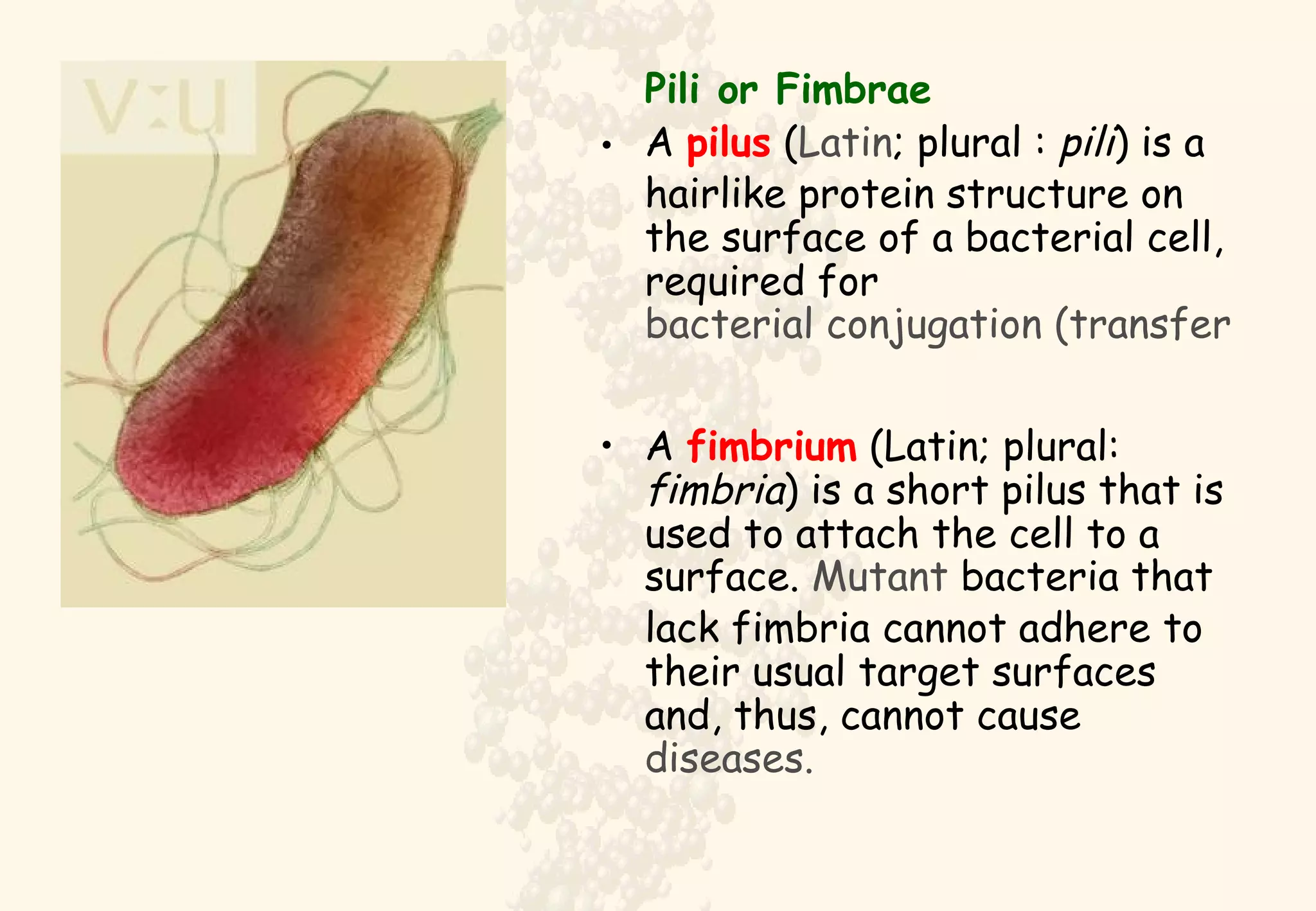
Pili or Fimbrae A  pilus  ( Latin ; plural :  pili ) is a hairlike protein structure on the surface of a bacterial cell, required for  bacterial conjugation (transfer of genetic material)   A  fimbrium  (Latin; plural:  fimbria ) is a short pilus that is used to attach the cell to a surface.  Mutant  bacteria that lack fimbria cannot adhere to their usual target surfaces and, thus, cannot cause  diseases.
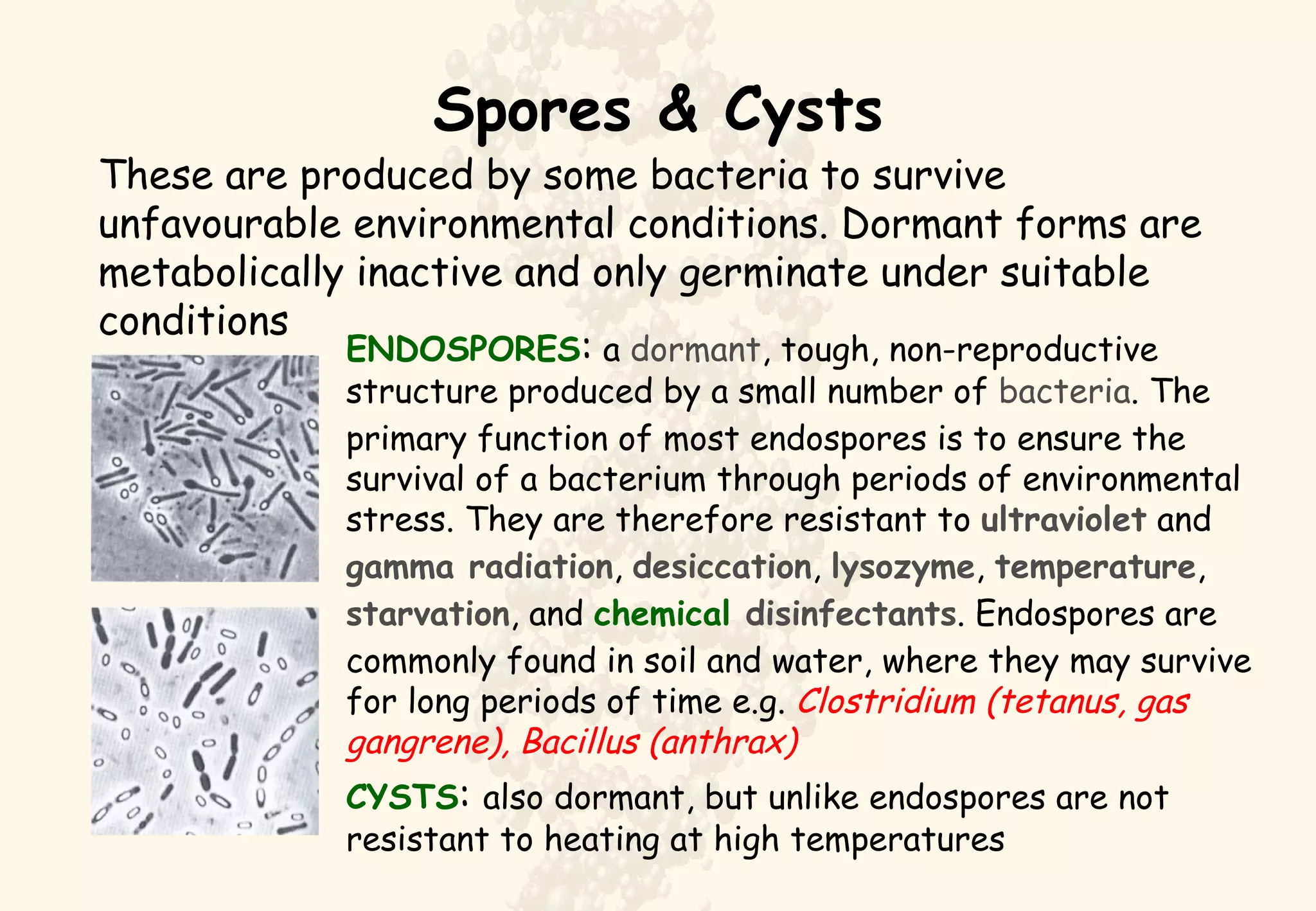
Spores & Cysts These are produced by some bacteria to survive unfavourable environmental conditions. Dormant forms are metabolically inactive and only germinate under suitable conditions ENDOSPORES :  a  dormant , tough, non-reproductive structure produced by a small number of  bacteria . The primary function of most endospores is to ensure the survival of a bacterium through periods of environmental stress. They are therefore resistant to  ultraviolet  and  gamma radiation ,  desiccation ,  lysozyme ,  temperature ,  starvation , and  chemical  disinfectants . Endospores are commonly found in soil and water, where they may survive for long periods of time e.g.  Clostridium (tetanus, gas gangrene), Bacillus (anthrax) CYSTS :  also dormant, but unlike endospores are not resistant to heating at high temperatures
Classifying Prokarotes Main method is using the  GRAM’S STAIN This separates bacteria into  GRAM-POSITIVE  (purple) and  GRAM-NEGATIVE  (red) depending on the percentage of  PEPTIDOGLYCAN  in the cell walls  - GRAM-POSITIVE  bacteria have a cell wall only 1 layer thick - GRAM-NEGATIVE   bacteria have a cell wall several layers thick
Eukaryotes More complex multicellular organisms  e.g.  plants, animals, fungi and also many single-celled organisms  e.g.  amoeba, yeast Possess an  NUCLEUS  and other organelles all of which are surrounded by a  MEMBRANE , which divided the cell up into  compartments COMPARTMENTALISATION:  very important ! ADVANTAGES:  Molecules are ‘concentrated’ together, increases rate of reactions Keeps reactive molecules away from other parts of the cell that may be affected by them Large work surface area … many enzymes are bound in membranes
Eukaryotes The basic eukaryotic cell contains the following:   - membrane-bound nucleus - plasma membrane   - glycocalyx  (components external to the plasma   membrane)  - cytoplasm  (semifluid)  - cytoskeleton  –  microfilaments, intermediate filaments  and microtubules  that suspend organelles, give shape, and allow motion  - presence of characteristic  membrane   enclosed subcellular organelles  e.g.   mitochondria, golgi, rER, sER   etc
Plant & Animal Cells For ANIMAL CELLS only: Peroxisomes & Lysosomes  often present Some have  microvilli  on their surface Centrioles  organise spindle fibres during cell division For PLANT CELLS only: Cell walls  made from cellulose Communication with neighbouring cells occurs through  plasmodesmata Usually a large central  vacuole Photosynthesis occurs in cells containing  chloroplasts [Stick in & label plant & animal cell diags]
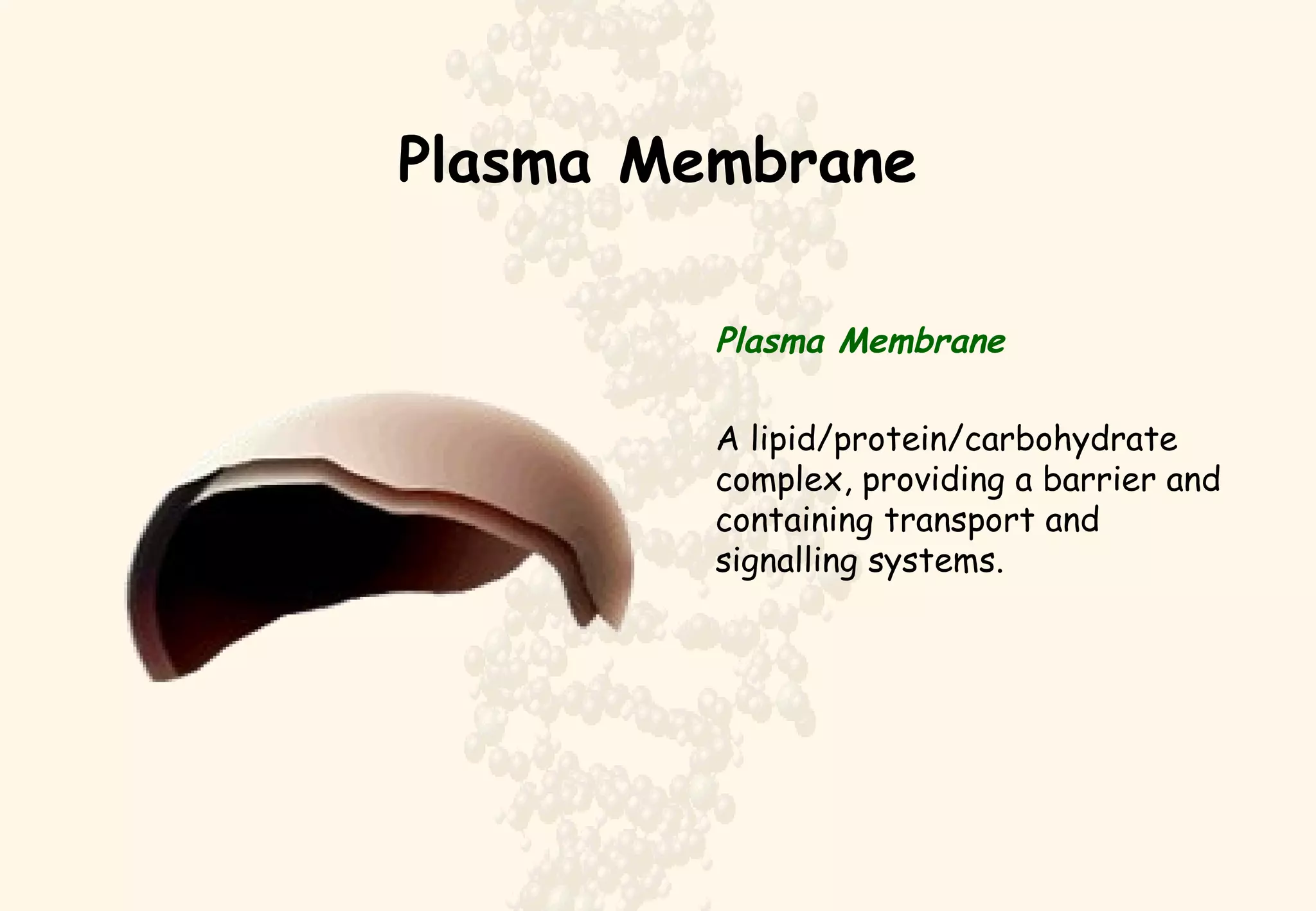
Plasma Membrane Plasma Membrane A lipid/protein/carbohydrate complex, providing a barrier and containing transport and signalling systems.
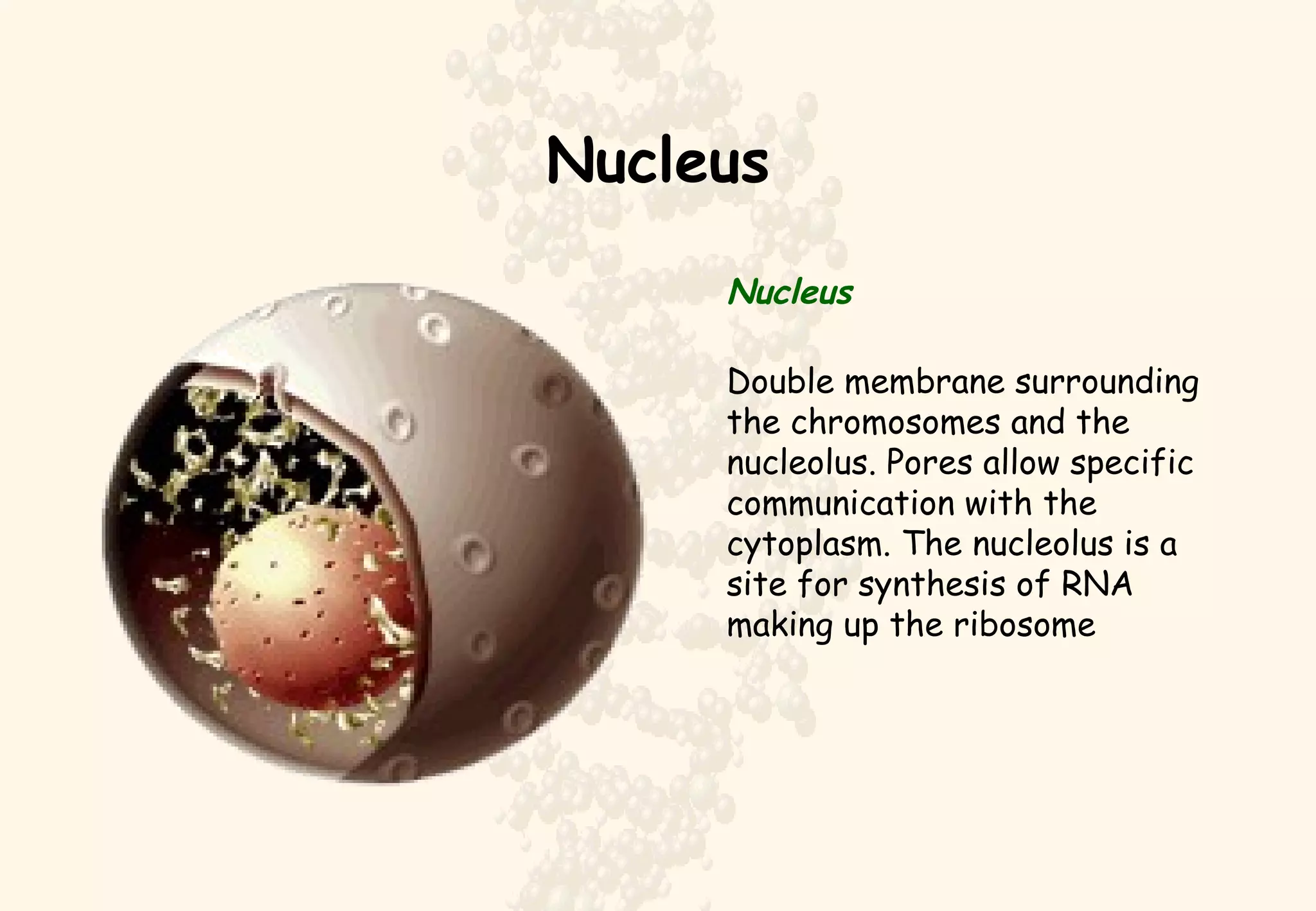
Nucleus Nucleus Double membrane surrounding the chromosomes and the nucleolus. Pores allow specific communication with the cytoplasm. The nucleolus is a site for synthesis of RNA making up the ribosome
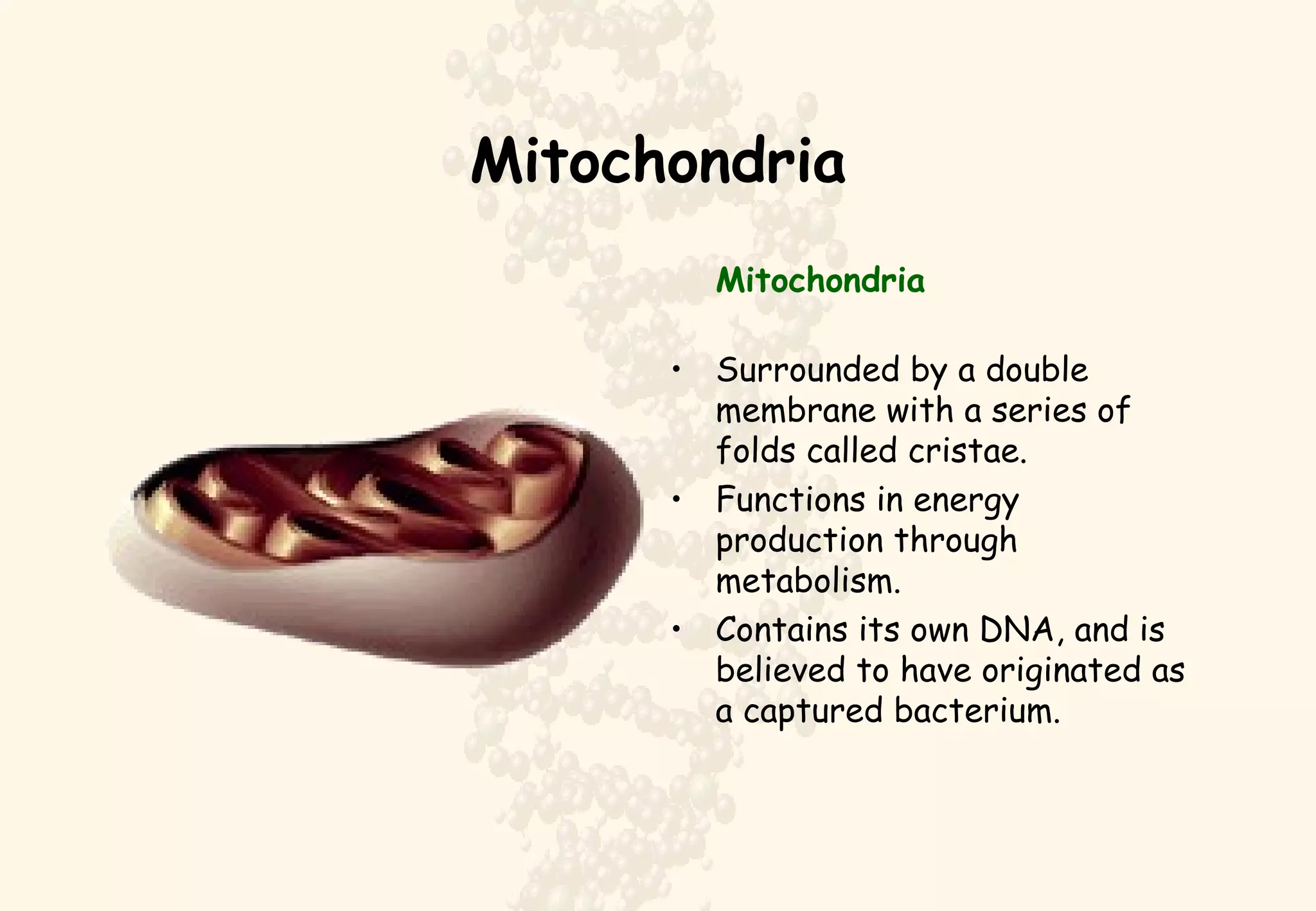
Mitochondria Mitochondria Surrounded by a double membrane with a series of folds called cristae.  Functions in energy production through metabolism.  Contains its own DNA, and is believed to have originated as a captured bacterium.
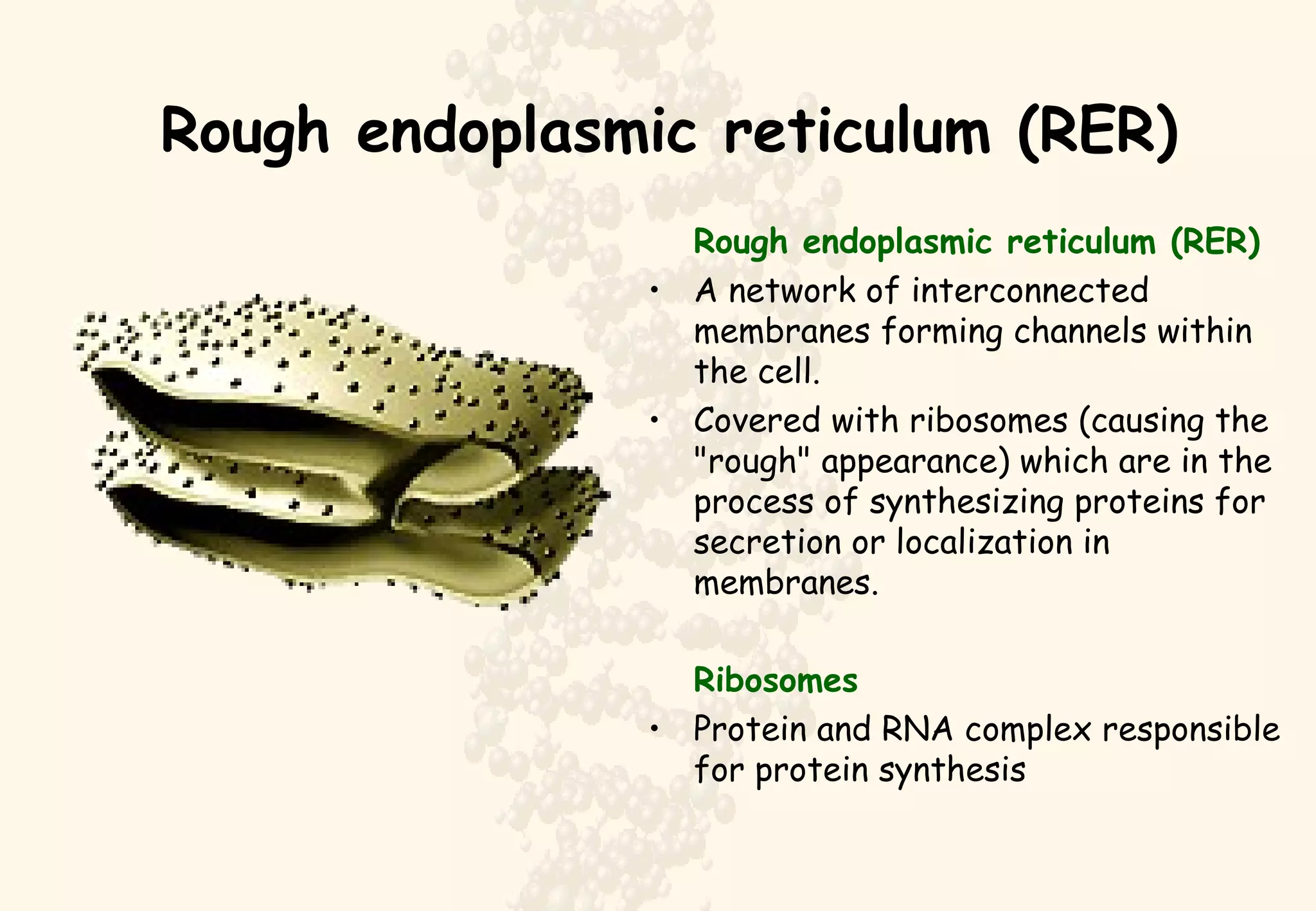
Rough endoplasmic reticulum (RER) Rough endoplasmic reticulum (RER) A network of interconnected membranes forming channels within  the cell. Covered with ribosomes (causing the "rough" appearance) which are in the process of synthesizing proteins for secretion or localization in membranes. Ribosomes Protein and RNA complex responsible for protein synthesis
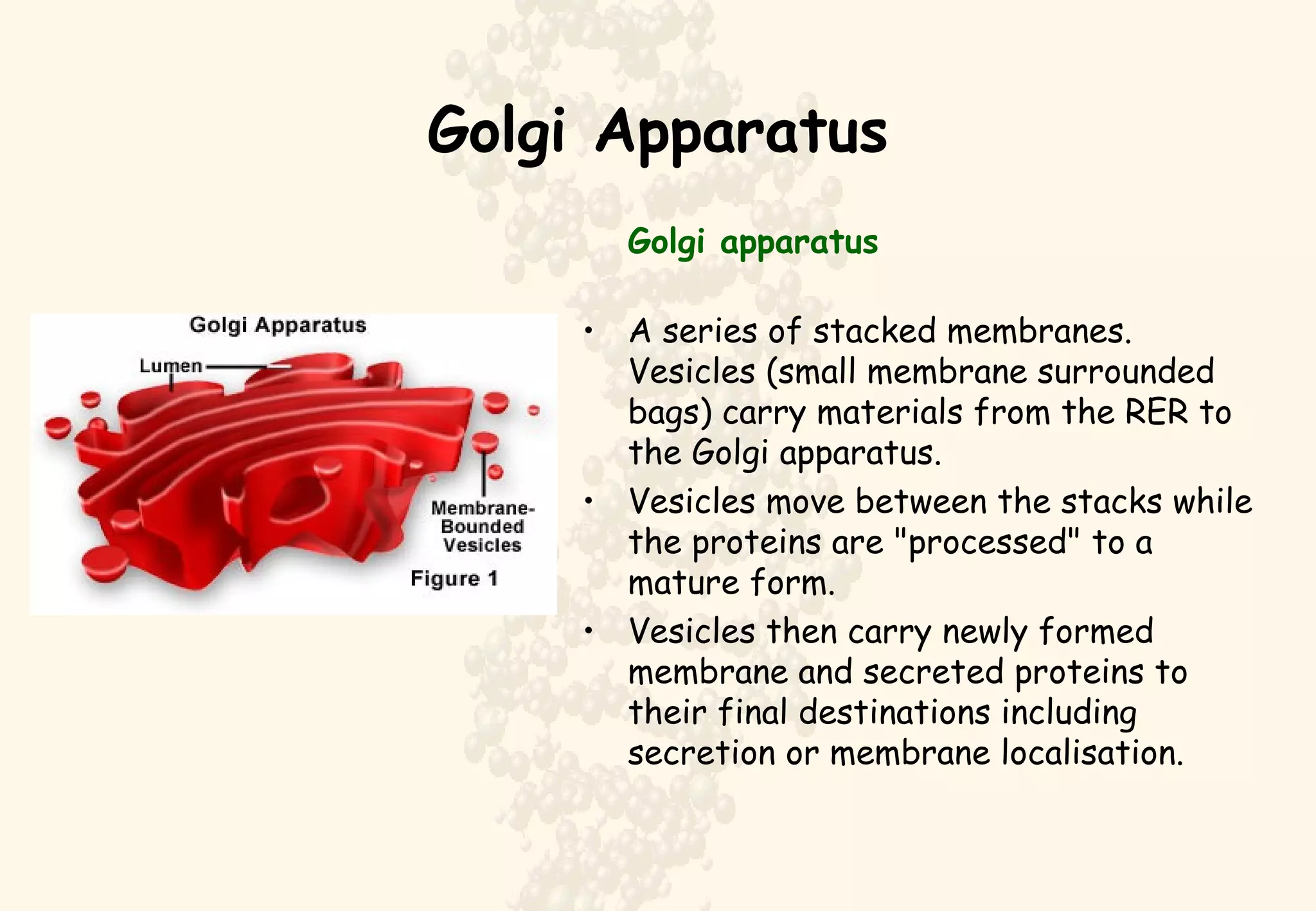
Golgi Apparatus Golgi apparatus A series of stacked membranes. Vesicles (small membrane surrounded bags) carry materials from the RER to the Golgi apparatus.  Vesicles move between the stacks while the proteins are "processed" to a mature form.  Vesicles then carry newly formed membrane and secreted proteins to their final destinations including secretion or membrane localisation.
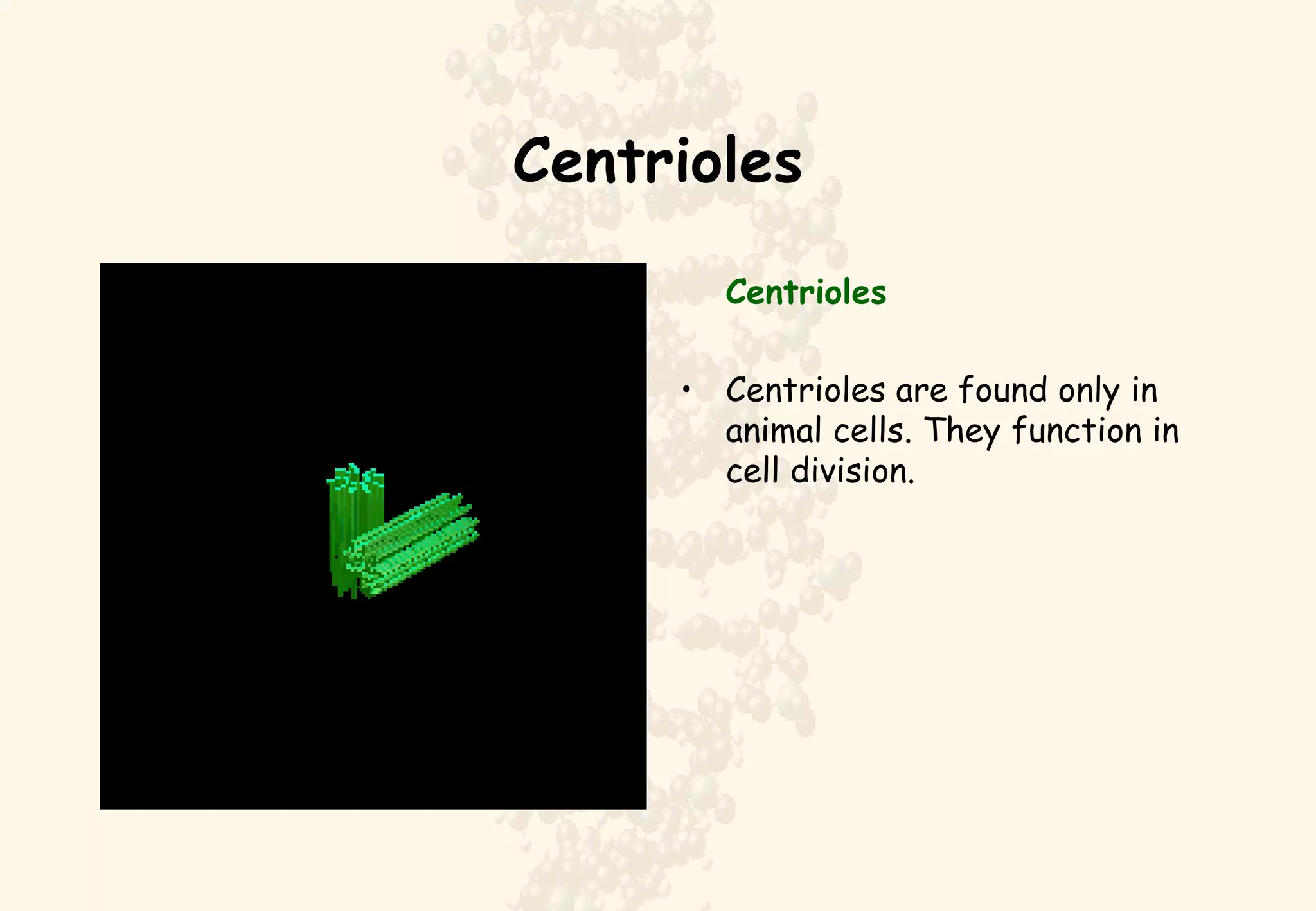
Centrioles Centrioles Centrioles are found only in animal cells. They function in cell division.
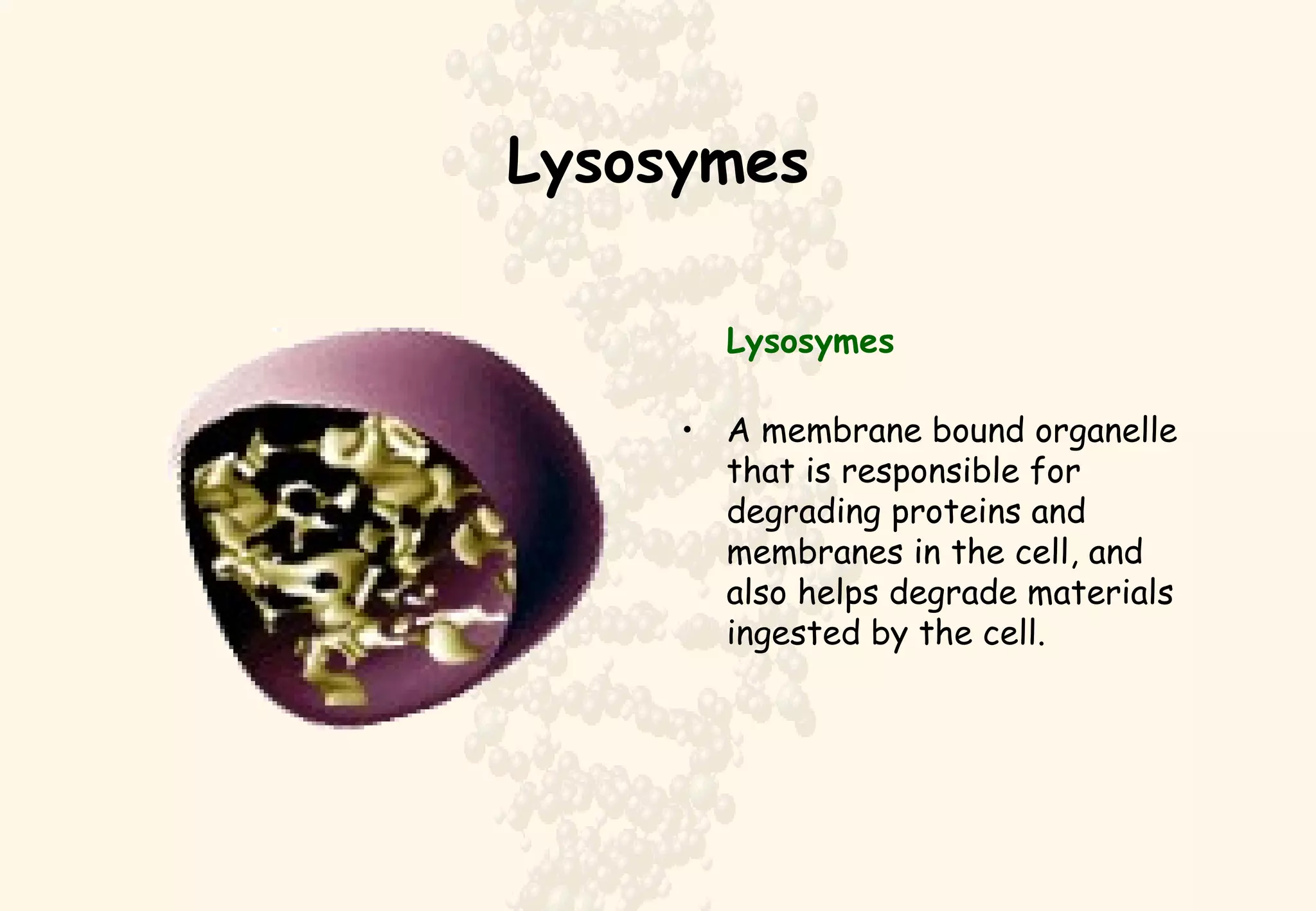
Lysosymes Lysosymes A membrane bound organelle that is responsible for degrading proteins and membranes in the cell, and also helps degrade materials ingested by the cell.
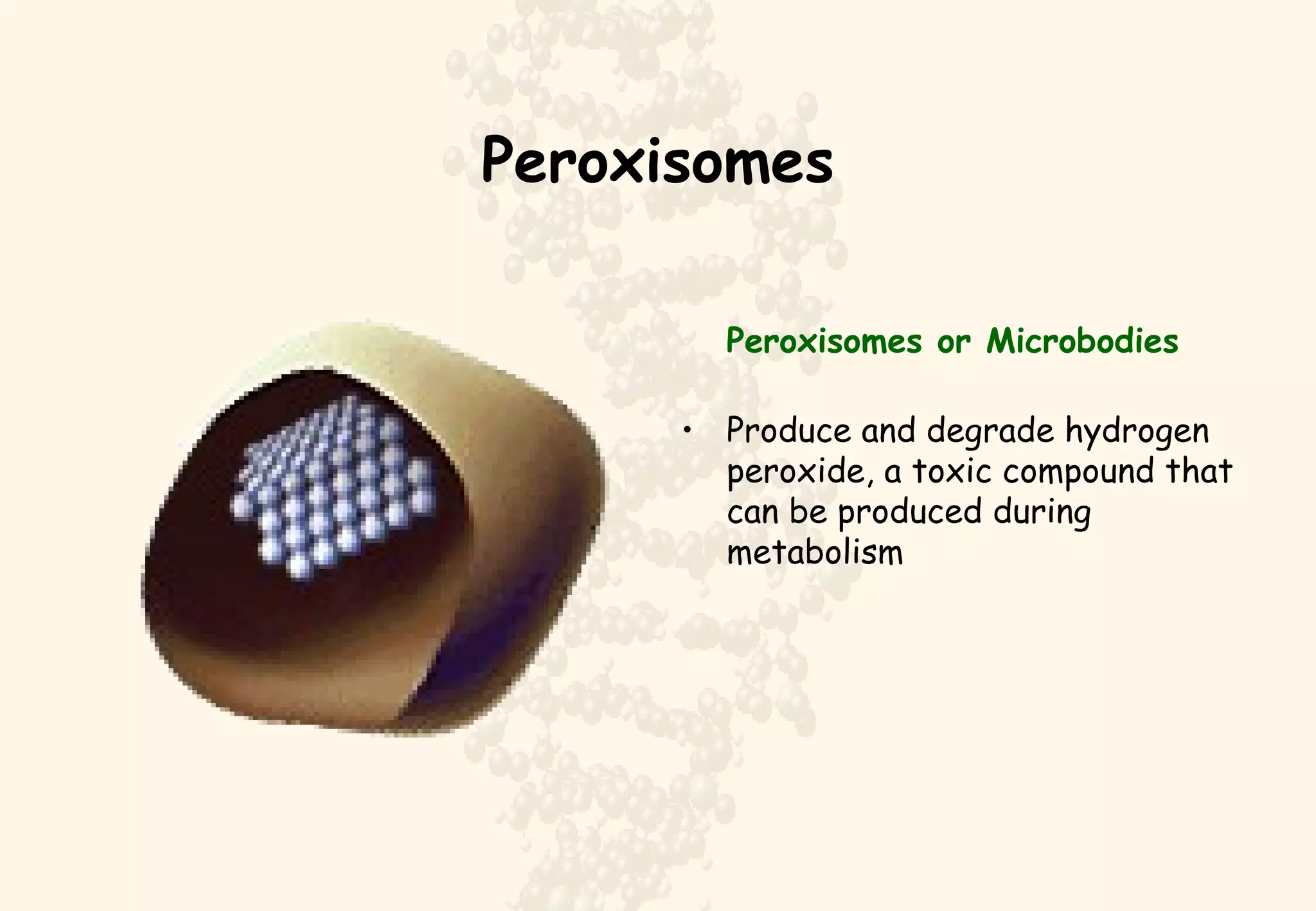
Peroxisomes Peroxisomes or Microbodies Produce and degrade hydrogen peroxide, a toxic compound that can be produced during metabolism
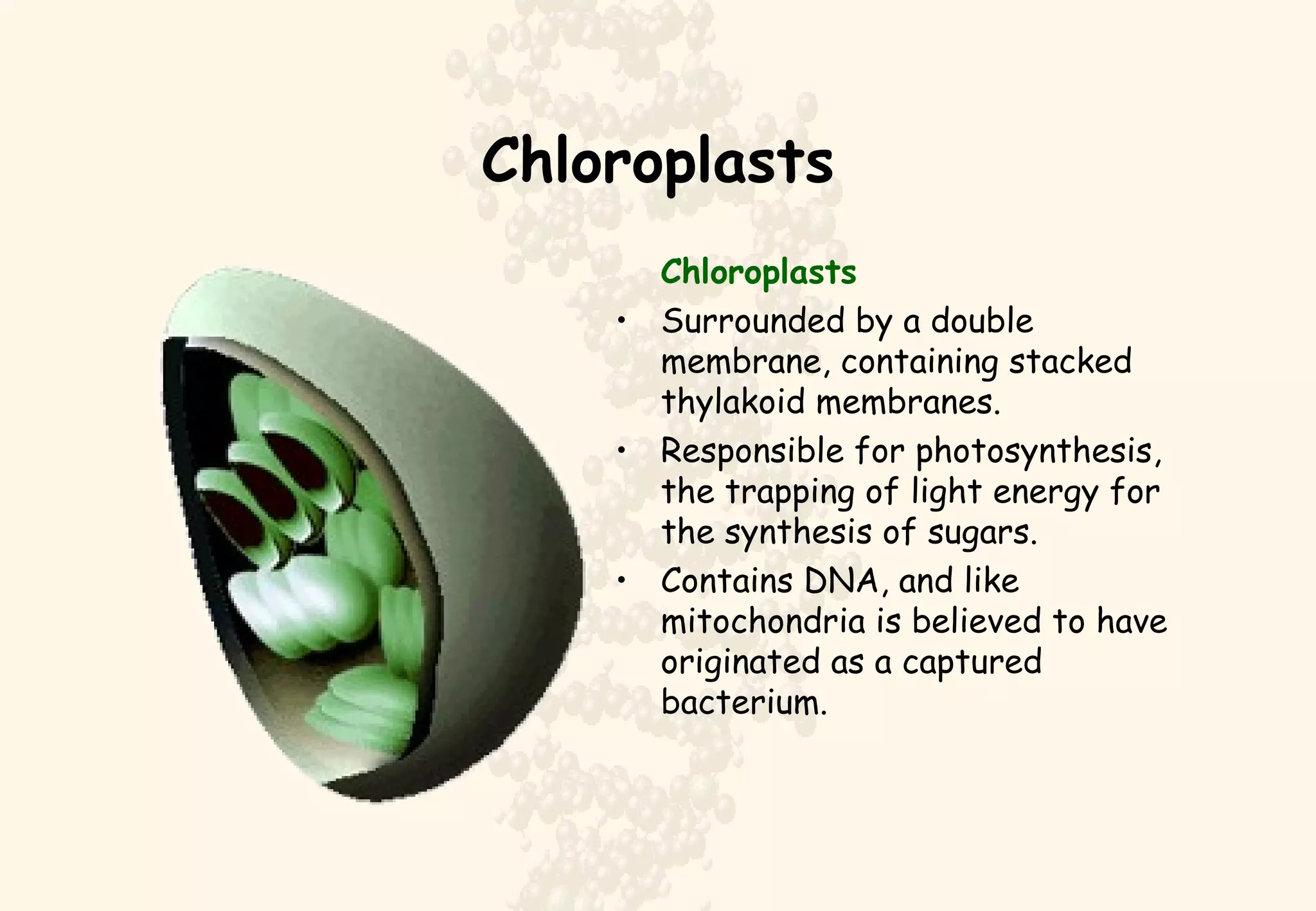
Chloroplasts Chloroplasts Surrounded by a double membrane, containing stacked thylakoid membranes.  Responsible for photosynthesis, the trapping of light energy for the synthesis of sugars.  Contains DNA, and like mitochondria is believed to have originated as a captured bacterium.
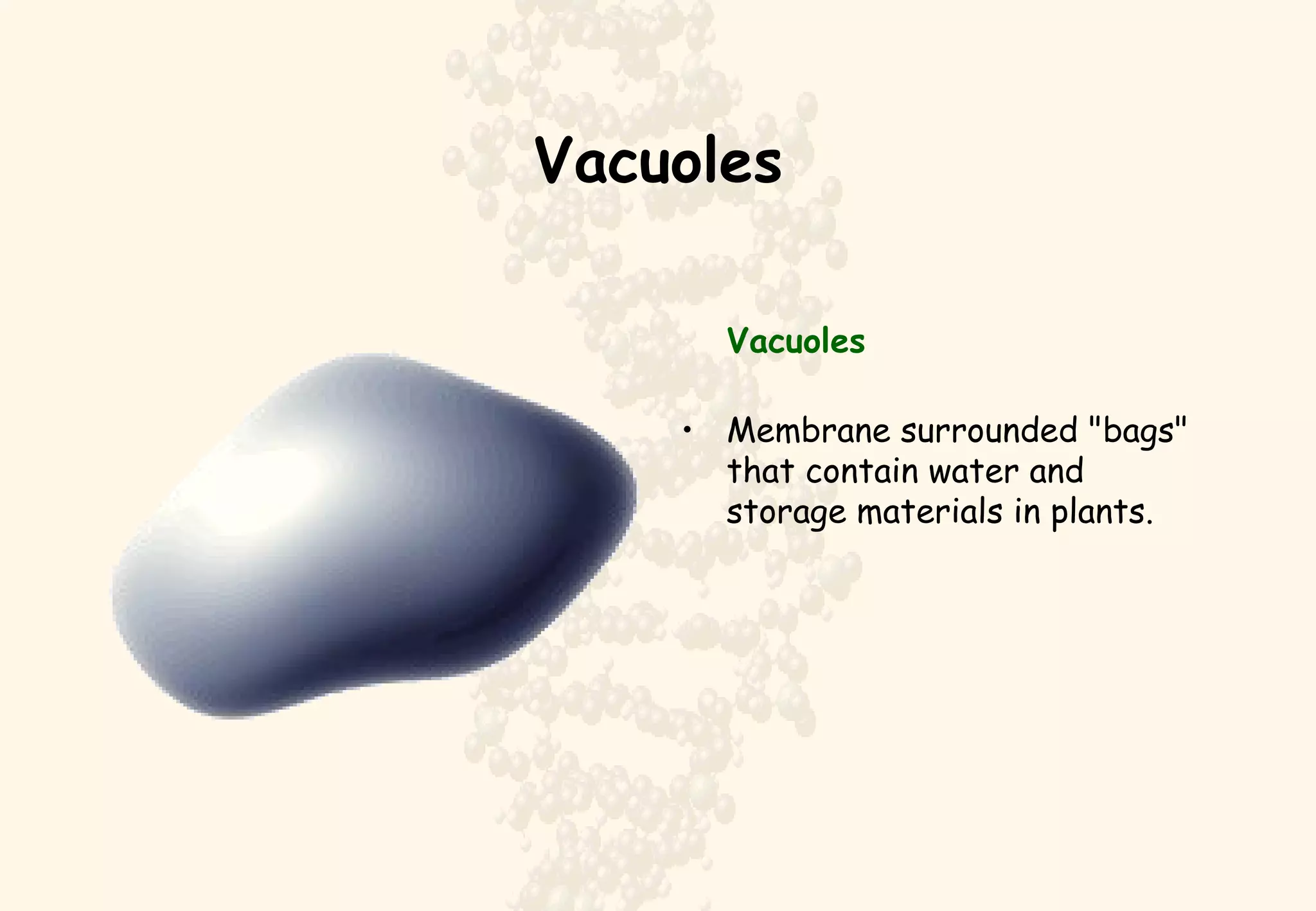
Vacuoles Vacuoles Membrane surrounded "bags" that contain water and storage materials in plants.
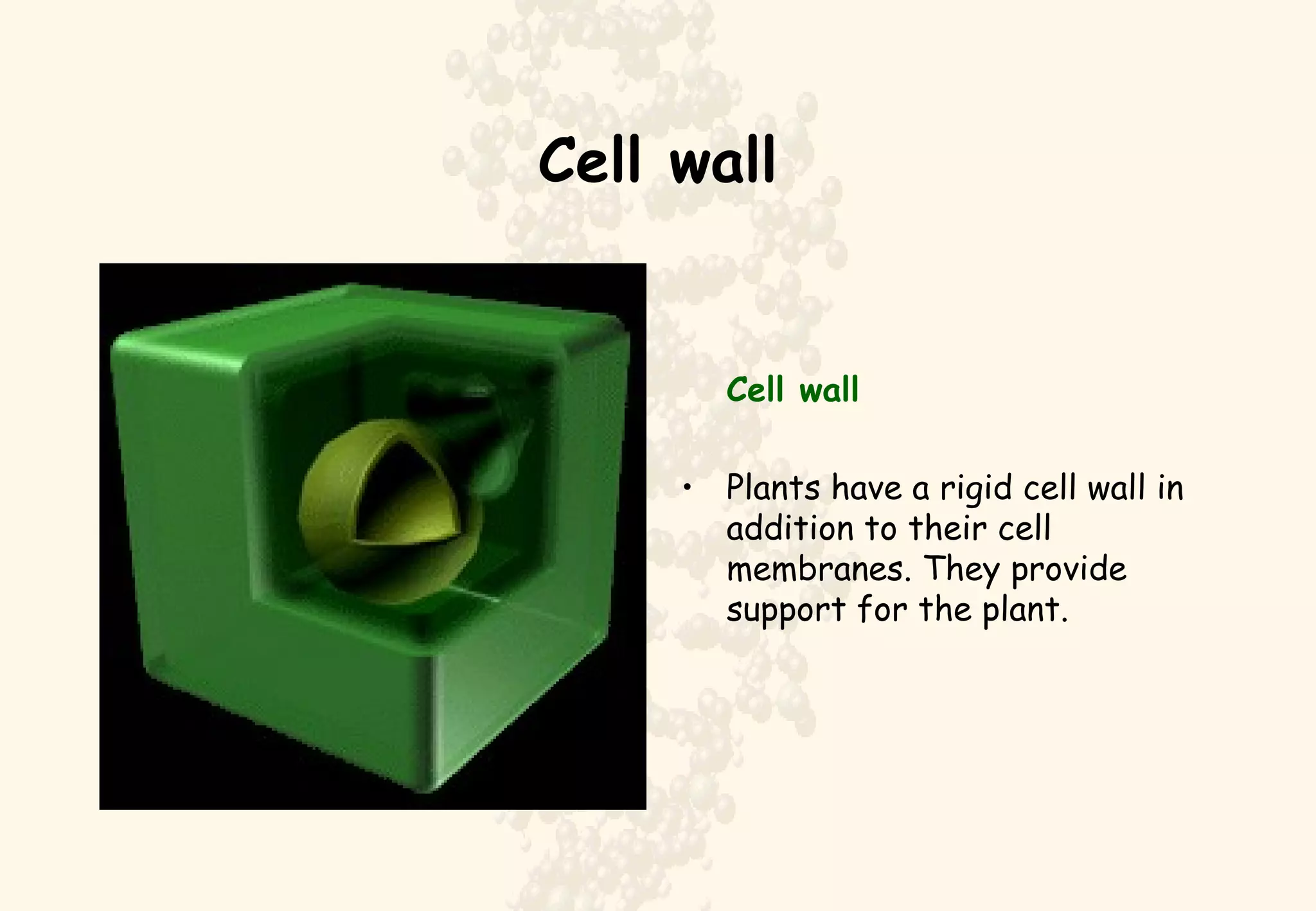
Cell wall Cell wall Plants have a rigid cell wall in addition to their cell membranes. They provide support for the plant.
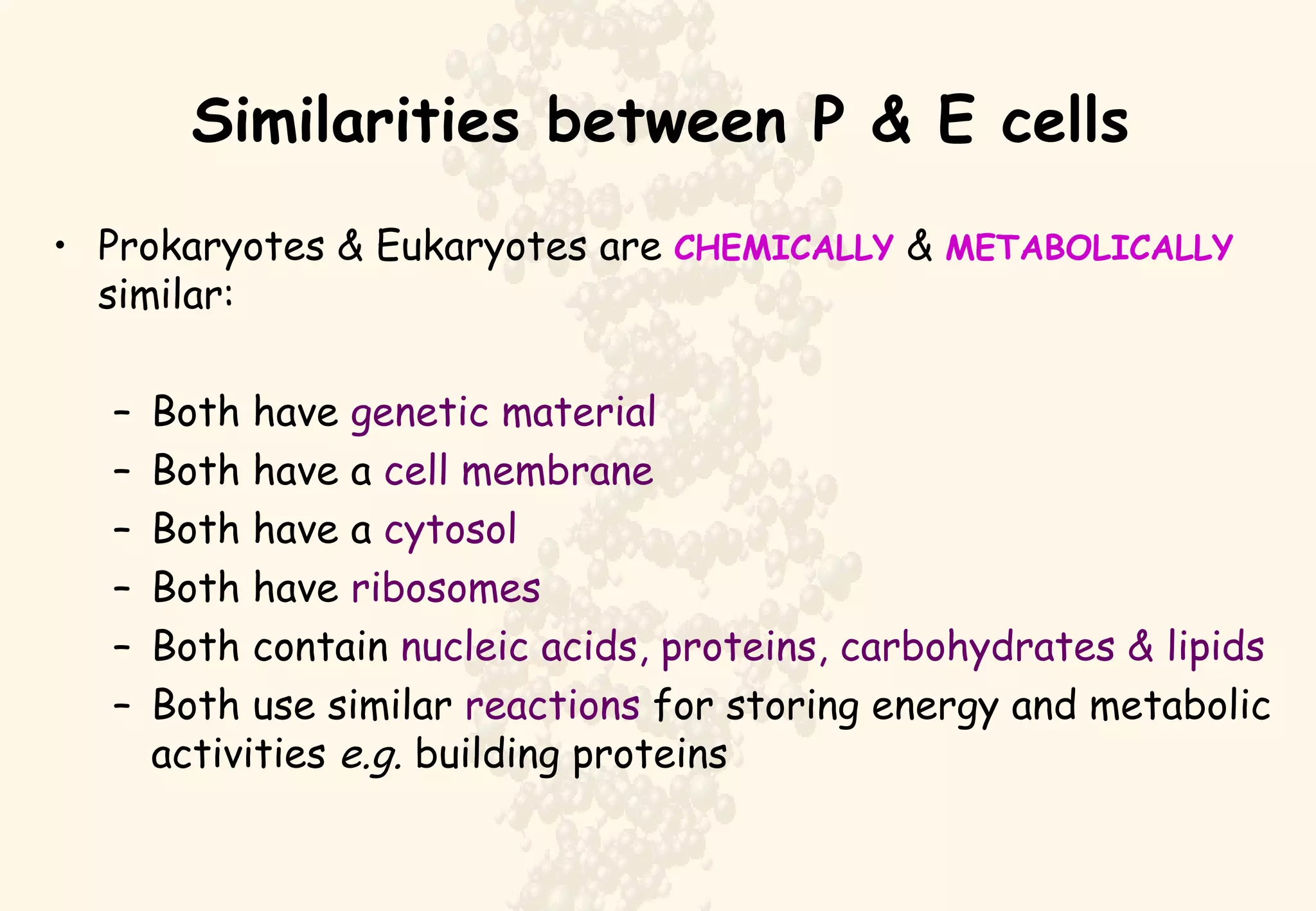
Similarities between P & E cells Prokaryotes & Eukaryotes are  CHEMICALLY  &  METABOLICALLY  similar: Both have  genetic material Both have a  cell membrane Both have a  cytosol Both have  ribosomes Both contain  nucleic acids, proteins, carbohydrates & lipids Both use similar  reactions  for storing energy and metabolic activities  e.g.  building proteins
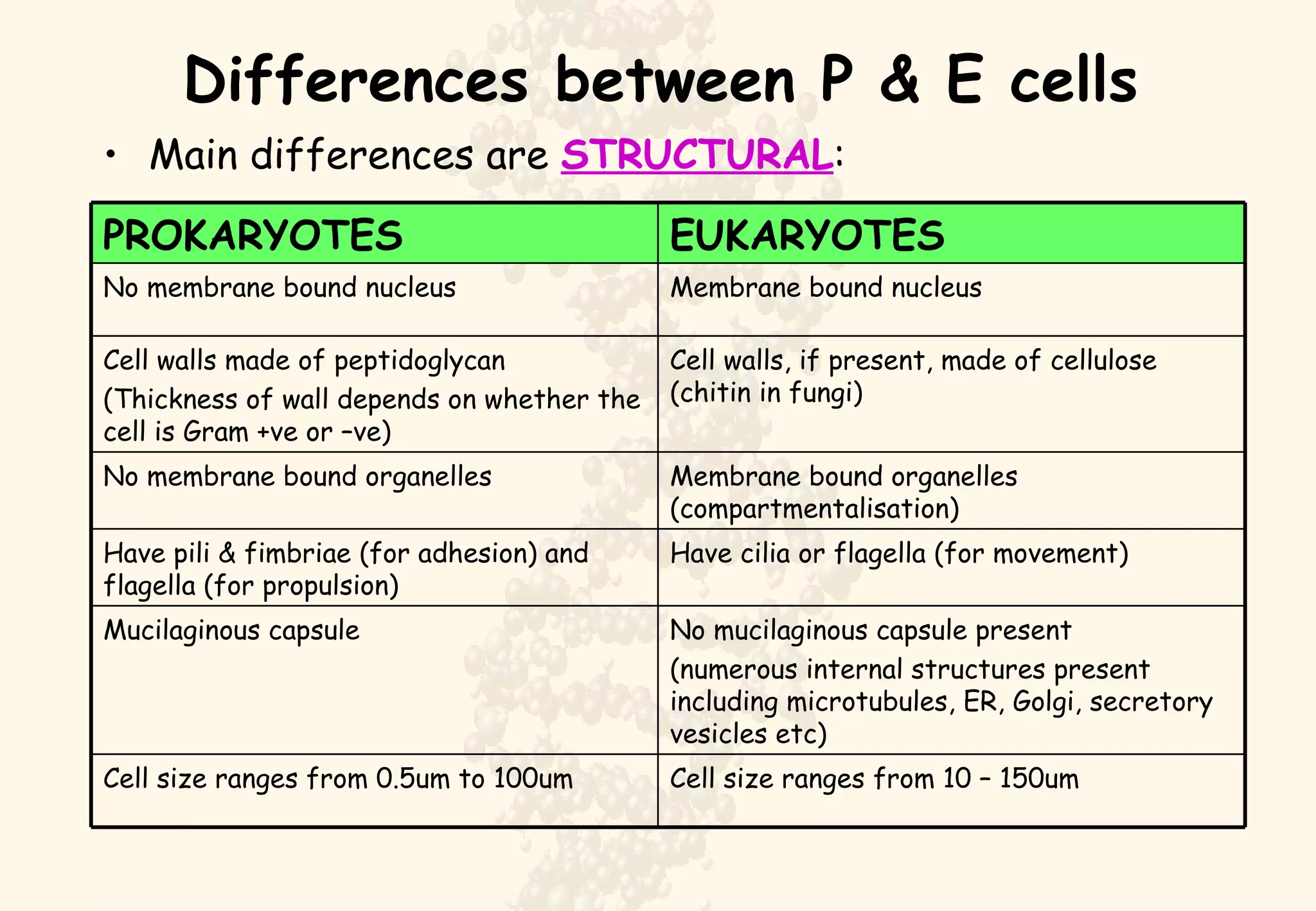
Differences between P & E cells Main differences are  STRUCTURAL : Cell size ranges from 10 – 150um Cell size ranges from 0.5um to 100um No mucilaginous capsule present (numerous internal structures present including microtubules, ER, Golgi, secretory vesicles etc) Mucilaginous capsule Have cilia or flagella (for movement) Have pili & fimbriae (for adhesion) and flagella (for propulsion) Membrane bound organelles (compartmentalisation) No membrane bound organelles Cell walls, if present, made of cellulose (chitin in fungi) Cell walls made of peptidoglycan (Thickness of wall depends on whether the cell is Gram +ve or –ve) Membrane bound nucleus No membrane bound nucleus EUKARYOTES PROKARYOTES
Comparison of Prokaryotic and Eukaryotic Cells

Prokaryotes vs Eukaryotes

  • 1.
    STRUCTURE, FUNCTION &GROWTH OF PROKARYOTIC & EUKARYOTIC CELLS
  • 2.
    Prokaryotic and EukaryoticCells All living creatures are made up of CELLS , small membrane bound units filled with aqueous solutions of chemicals, which have the ability to create copies of themselves by growing and dividing. [The sizes of cells and organelles]
  • 3.
    Living organisms canbe classified into 3 major domains: Bacteria Archaea Plant cells Animal cells Prokaryotes and Eukaryotes are 2 distinct cell types with STRUCTURAL differences PROKARYOTES EUKARYOTES
  • 4.
    The Prokaryotic CellSimply stated, prokaryotes are molecules surrounded by a membrane and cell wall. 1 um
  • 5.
    Prokaryotes Lack amembrane bound nucleus enclosing the DNA DNA is present as a single circular molecule called a BACTERIAL CHROMOSOME DNA is naked having no associated histone proteins No membrane bound organelles Apart from the DNA nucleoid, there is little internal structure apart from dissolved substances and a large number of RIBOSOMES essential for PROTEIN SYNTHESIS The cytosol is an effective site for bacterial cell metabolism. This allows bacteria to adapt quickly to changing nutritional conditions, but means the regulation of genetic and metabolic activity has to be tightly regulated. Divide by BINARY FISSION Some prokaryotic cells have external whip-like FLAGELLA for locomotion or hair like PILI for adhesion. Prokaryotic cells come in multiple shapes: cocci (round), baccilli (rods), and spirilla or spirochetes (helical cells).
  • 6.
    External Prokaryotic StructuresCell Wall Contains PEPTIDOGLYCAN (only found in bacteria). Large complex molecule consisting of polysaccharide polymers cross-linked by short chains of amino acids Capsules Sometimes the cell wall is further surrounded by a gelatinous polysaccharide sheath called an attach CAPSULE , GLYCOCALYX or SLIME LAYER Plasma Membrane Basic structure of the phospholipid bilayer is the same for all bacteria Flagella Motile bacteria usually have long, thin appendages called FLAGELLA . These protein sub-units are used to propel bacteria through liquids
  • 7.
    Pili or FimbraeA pilus ( Latin ; plural : pili ) is a hairlike protein structure on the surface of a bacterial cell, required for bacterial conjugation (transfer of genetic material) A fimbrium (Latin; plural: fimbria ) is a short pilus that is used to attach the cell to a surface. Mutant bacteria that lack fimbria cannot adhere to their usual target surfaces and, thus, cannot cause diseases.
  • 8.
    Spores & CystsThese are produced by some bacteria to survive unfavourable environmental conditions. Dormant forms are metabolically inactive and only germinate under suitable conditions ENDOSPORES : a dormant , tough, non-reproductive structure produced by a small number of bacteria . The primary function of most endospores is to ensure the survival of a bacterium through periods of environmental stress. They are therefore resistant to ultraviolet and gamma radiation , desiccation , lysozyme , temperature , starvation , and chemical disinfectants . Endospores are commonly found in soil and water, where they may survive for long periods of time e.g. Clostridium (tetanus, gas gangrene), Bacillus (anthrax) CYSTS : also dormant, but unlike endospores are not resistant to heating at high temperatures
  • 9.
    Classifying Prokarotes Mainmethod is using the GRAM’S STAIN This separates bacteria into GRAM-POSITIVE (purple) and GRAM-NEGATIVE (red) depending on the percentage of PEPTIDOGLYCAN in the cell walls - GRAM-POSITIVE bacteria have a cell wall only 1 layer thick - GRAM-NEGATIVE bacteria have a cell wall several layers thick
  • 10.
    Eukaryotes More complexmulticellular organisms e.g. plants, animals, fungi and also many single-celled organisms e.g. amoeba, yeast Possess an NUCLEUS and other organelles all of which are surrounded by a MEMBRANE , which divided the cell up into compartments COMPARTMENTALISATION: very important ! ADVANTAGES: Molecules are ‘concentrated’ together, increases rate of reactions Keeps reactive molecules away from other parts of the cell that may be affected by them Large work surface area … many enzymes are bound in membranes
  • 11.
    Eukaryotes The basiceukaryotic cell contains the following: - membrane-bound nucleus - plasma membrane - glycocalyx (components external to the plasma membrane) - cytoplasm (semifluid) - cytoskeleton – microfilaments, intermediate filaments and microtubules that suspend organelles, give shape, and allow motion - presence of characteristic membrane enclosed subcellular organelles e.g. mitochondria, golgi, rER, sER etc
  • 12.
    Plant & AnimalCells For ANIMAL CELLS only: Peroxisomes & Lysosomes often present Some have microvilli on their surface Centrioles organise spindle fibres during cell division For PLANT CELLS only: Cell walls made from cellulose Communication with neighbouring cells occurs through plasmodesmata Usually a large central vacuole Photosynthesis occurs in cells containing chloroplasts [Stick in & label plant & animal cell diags]
  • 13.
    Plasma Membrane PlasmaMembrane A lipid/protein/carbohydrate complex, providing a barrier and containing transport and signalling systems.
  • 14.
    Nucleus Nucleus Doublemembrane surrounding the chromosomes and the nucleolus. Pores allow specific communication with the cytoplasm. The nucleolus is a site for synthesis of RNA making up the ribosome
  • 15.
    Mitochondria Mitochondria Surroundedby a double membrane with a series of folds called cristae. Functions in energy production through metabolism. Contains its own DNA, and is believed to have originated as a captured bacterium.
  • 16.
    Rough endoplasmic reticulum(RER) Rough endoplasmic reticulum (RER) A network of interconnected membranes forming channels within the cell. Covered with ribosomes (causing the "rough" appearance) which are in the process of synthesizing proteins for secretion or localization in membranes. Ribosomes Protein and RNA complex responsible for protein synthesis
  • 17.
    Golgi Apparatus Golgiapparatus A series of stacked membranes. Vesicles (small membrane surrounded bags) carry materials from the RER to the Golgi apparatus. Vesicles move between the stacks while the proteins are "processed" to a mature form. Vesicles then carry newly formed membrane and secreted proteins to their final destinations including secretion or membrane localisation.
  • 18.
    Centrioles Centrioles Centriolesare found only in animal cells. They function in cell division.
  • 19.
    Lysosymes Lysosymes Amembrane bound organelle that is responsible for degrading proteins and membranes in the cell, and also helps degrade materials ingested by the cell.
  • 20.
    Peroxisomes Peroxisomes orMicrobodies Produce and degrade hydrogen peroxide, a toxic compound that can be produced during metabolism
  • 21.
    Chloroplasts Chloroplasts Surroundedby a double membrane, containing stacked thylakoid membranes. Responsible for photosynthesis, the trapping of light energy for the synthesis of sugars. Contains DNA, and like mitochondria is believed to have originated as a captured bacterium.
  • 22.
    Vacuoles Vacuoles Membranesurrounded "bags" that contain water and storage materials in plants.
  • 23.
    Cell wall Cellwall Plants have a rigid cell wall in addition to their cell membranes. They provide support for the plant.
  • 24.
    Similarities between P& E cells Prokaryotes & Eukaryotes are CHEMICALLY & METABOLICALLY similar: Both have genetic material Both have a cell membrane Both have a cytosol Both have ribosomes Both contain nucleic acids, proteins, carbohydrates & lipids Both use similar reactions for storing energy and metabolic activities e.g. building proteins
  • 25.
    Differences between P& E cells Main differences are STRUCTURAL : Cell size ranges from 10 – 150um Cell size ranges from 0.5um to 100um No mucilaginous capsule present (numerous internal structures present including microtubules, ER, Golgi, secretory vesicles etc) Mucilaginous capsule Have cilia or flagella (for movement) Have pili & fimbriae (for adhesion) and flagella (for propulsion) Membrane bound organelles (compartmentalisation) No membrane bound organelles Cell walls, if present, made of cellulose (chitin in fungi) Cell walls made of peptidoglycan (Thickness of wall depends on whether the cell is Gram +ve or –ve) Membrane bound nucleus No membrane bound nucleus EUKARYOTES PROKARYOTES
  • 26.
    Comparison of Prokaryoticand Eukaryotic Cells