Marketing Mix
Price
Objectives







Define the marketing mix.
Explain pricing strategies in a given business.
Apply different pricing strategies to a range of
products.
Analyse the appropriateness of different
pricing strategies in a given business.
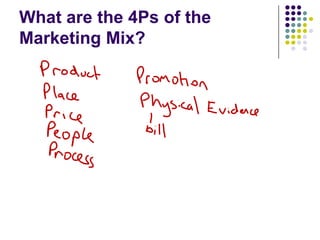
What are the 4Ps of the
Marketing Mix?
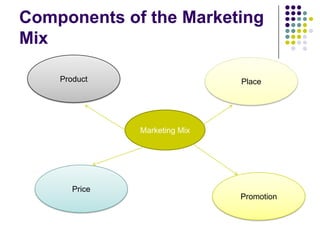
Components of the Marketing
Mix
Product

Place

Marketing Mix

Price
Promotion
How is the Marketing Mix
Used?








Understand the needs and wants of
customers (Kolter 2002).
Used by businesses to decide how and
where to market a product.
A small business may just hand out leaflets.
A large business will look at each of the 8Ps
in detail.
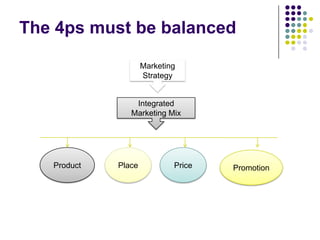
The 4ps must be balanced
Marketing
Strategy

Integrated
Marketing Mix

Product

Place

Price

Promotion
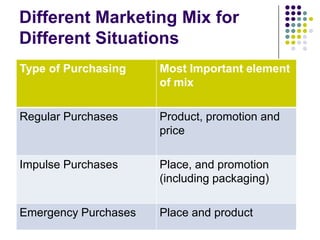
Different Marketing Mix for
Different Situations
Type of Purchasing
 Are goods:

Most Important element
of mix

regular purchases
 Impulse purchases
Regular Purchases
Product, promotion and
 Emergency purchases
price


chocolate brands focus on place and
Impulse Purchases
Place, and promotion
promotion.
(including packaging)



Emergency Purchases

Place and product
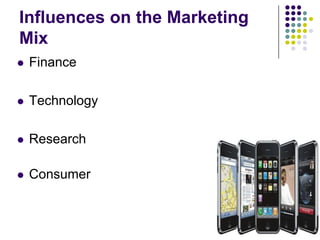
Influences on the Marketing
Mix


Finance



Technology



Research



Consumer
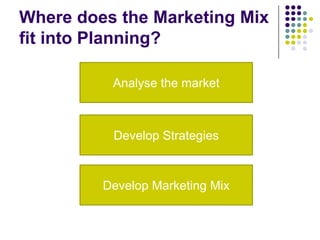
Where does the Marketing Mix
fit into Planning?
Analyse the market

Develop Strategies

Develop Marketing Mix
Write down the 4Ps on your
post-it note
Quiz
The biggest influence on the marketing mix is?
A.

B.
C.

Finance
Consumers
Technology

Which is a member of the 4 Ps ?
A.

B.
C.

People
Place
Public Relations

The marketing mix is the fundamental aspect of
marketing?
True
False
Quiz
If I was a small business, which promotion method would I
be likely to use?
A.
B.
C.

National advertising between mainstream TV programs
Online through Facebook
National newspaper

Marketing excites me.
True
False
Objectives







Define the marketing mix.
Explain pricing strategies in a given business.
Apply different pricing strategies to a range of
products.
Analyse the appropriateness of different
pricing strategies in a given business.
Importance of Price –
Business Revenue


Revenue = price x units sold



If the price isn't right businesses could:


Lose customers



Lose revenue
Reason for pricing strategies






To break into a new market.
To try and increase market share.
Increase profit.
To make sure all costs are covered.
Pricing Strategies


Types of Pricing Strategy:
 Cost plus Pricing.
 Penetration Pricing.
 Price Skimming.
 Competitive Pricing.
 Promotional Pricing.
 Loss Leader.
Cost Plus Pricing






A company will look at how much a product
will cost to produce.
Then add a percentage mark-up profit
(money added on top to make a profit).
Easy to apply.
Always covers costs.
If competitor is selling at a cheaper price
could lose sales.
Penetration Pricing





This would possibly be used when trying to
enter a new market.
Price is set lower than your competitors.
Customers will try your product and become
regular customers.
Price Skimming





Product is usually a new one and therefore
can be sold on the market at a higher price.
Establish the product being of high quality.
May put off some customers who can’t afford
it.
Competitive Pricing








Pricing in line with your competitor’s price or
just below.
Sales are likely to be high because your price
is not over or under priced.
Requires research which costs money.
Can end in a pricing war with competitors.
Promotional Pricing







Promotional pricing is pricing the product
low for a set amount of time.
Useful for getting rid of unwanted stock.
Renew interest in the business if sales are
falling.
However, can affect business revenues.
Loss Leader






Aim to capture a large share of the market by
charging a low price (below cost).
Short-term the firm will make a loss.
However, it will capture a large market share.
Longer term will raise the selling price of the
product and make profits.
Missing line task










Market Penetration - Charging a low price to
gain market share.
Price skimming - Pricing high to maximise profit
margins.
Cost plus - Adding a % of profit onto direct costs.
Loss Leader - Selling a product at below its cost.
Competitive - Charge above or below
competitors
Promotional - Low price for a small period of
time.
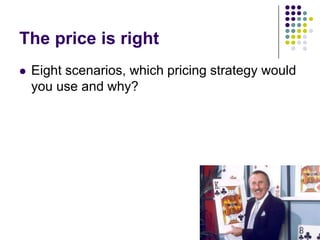
The price is right


Eight scenarios, which pricing strategy would
you use and why?
Objectives







Define the marketing mix.
Explain pricing strategies in a given business.
Apply different pricing strategies to a range of
products.
Analyse the appropriateness of different
pricing strategies in a given business.
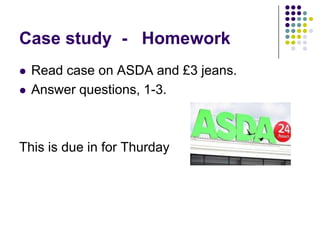
Case study - Homework



Read case on ASDA and £3 jeans.
Answer questions, 1-3.

This is due in for Thurday
Objectives







Define the marketing mix.
Explain pricing strategies in a given business.
Apply different pricing strategies to a range of
products.
Analyse the appropriateness of different
pricing strategies in a given business.

Pricing Strategies

  • 1.
  • 2.
    Objectives     Define the marketingmix. Explain pricing strategies in a given business. Apply different pricing strategies to a range of products. Analyse the appropriateness of different pricing strategies in a given business.
  • 3.
    What are the4Ps of the Marketing Mix?
  • 4.
    Components of theMarketing Mix Product Place Marketing Mix Price Promotion
  • 5.
    How is theMarketing Mix Used?     Understand the needs and wants of customers (Kolter 2002). Used by businesses to decide how and where to market a product. A small business may just hand out leaflets. A large business will look at each of the 8Ps in detail.
  • 6.
    The 4ps mustbe balanced Marketing Strategy Integrated Marketing Mix Product Place Price Promotion
  • 7.
    Different Marketing Mixfor Different Situations Type of Purchasing  Are goods: Most Important element of mix regular purchases  Impulse purchases Regular Purchases Product, promotion and  Emergency purchases price  chocolate brands focus on place and Impulse Purchases Place, and promotion promotion. (including packaging)  Emergency Purchases Place and product
  • 8.
    Influences on theMarketing Mix  Finance  Technology  Research  Consumer
  • 9.
    Where does theMarketing Mix fit into Planning? Analyse the market Develop Strategies Develop Marketing Mix
  • 10.
    Write down the4Ps on your post-it note
  • 11.
    Quiz The biggest influenceon the marketing mix is? A. B. C. Finance Consumers Technology Which is a member of the 4 Ps ? A. B. C. People Place Public Relations The marketing mix is the fundamental aspect of marketing? True False
  • 12.
    Quiz If I wasa small business, which promotion method would I be likely to use? A. B. C. National advertising between mainstream TV programs Online through Facebook National newspaper Marketing excites me. True False
  • 13.
    Objectives     Define the marketingmix. Explain pricing strategies in a given business. Apply different pricing strategies to a range of products. Analyse the appropriateness of different pricing strategies in a given business.
  • 14.
    Importance of Price– Business Revenue  Revenue = price x units sold  If the price isn't right businesses could:  Lose customers  Lose revenue
  • 15.
    Reason for pricingstrategies     To break into a new market. To try and increase market share. Increase profit. To make sure all costs are covered.
  • 16.
    Pricing Strategies  Types ofPricing Strategy:  Cost plus Pricing.  Penetration Pricing.  Price Skimming.  Competitive Pricing.  Promotional Pricing.  Loss Leader.
  • 17.
    Cost Plus Pricing      Acompany will look at how much a product will cost to produce. Then add a percentage mark-up profit (money added on top to make a profit). Easy to apply. Always covers costs. If competitor is selling at a cheaper price could lose sales.
  • 18.
    Penetration Pricing    This wouldpossibly be used when trying to enter a new market. Price is set lower than your competitors. Customers will try your product and become regular customers.
  • 19.
    Price Skimming    Product isusually a new one and therefore can be sold on the market at a higher price. Establish the product being of high quality. May put off some customers who can’t afford it.
  • 20.
    Competitive Pricing     Pricing inline with your competitor’s price or just below. Sales are likely to be high because your price is not over or under priced. Requires research which costs money. Can end in a pricing war with competitors.
  • 21.
    Promotional Pricing     Promotional pricingis pricing the product low for a set amount of time. Useful for getting rid of unwanted stock. Renew interest in the business if sales are falling. However, can affect business revenues.
  • 22.
    Loss Leader     Aim tocapture a large share of the market by charging a low price (below cost). Short-term the firm will make a loss. However, it will capture a large market share. Longer term will raise the selling price of the product and make profits.
  • 23.
    Missing line task       MarketPenetration - Charging a low price to gain market share. Price skimming - Pricing high to maximise profit margins. Cost plus - Adding a % of profit onto direct costs. Loss Leader - Selling a product at below its cost. Competitive - Charge above or below competitors Promotional - Low price for a small period of time.
  • 24.
    The price isright  Eight scenarios, which pricing strategy would you use and why?
  • 25.
    Objectives     Define the marketingmix. Explain pricing strategies in a given business. Apply different pricing strategies to a range of products. Analyse the appropriateness of different pricing strategies in a given business.
  • 26.
    Case study -Homework   Read case on ASDA and £3 jeans. Answer questions, 1-3. This is due in for Thurday
  • 27.
    Objectives     Define the marketingmix. Explain pricing strategies in a given business. Apply different pricing strategies to a range of products. Analyse the appropriateness of different pricing strategies in a given business.