By:-
Mithilesh Trivedi
•Price is the amount of money charged for a good or
service
•The only marketing mix element that produces
revenue
•The sum of all the values that consumers exchange
for the benefits of having or using the product or
service
General Pricing Approaches
1. Cost-Based Pricing
2. Value-Based Pricing
3. Competition-Based Pricing
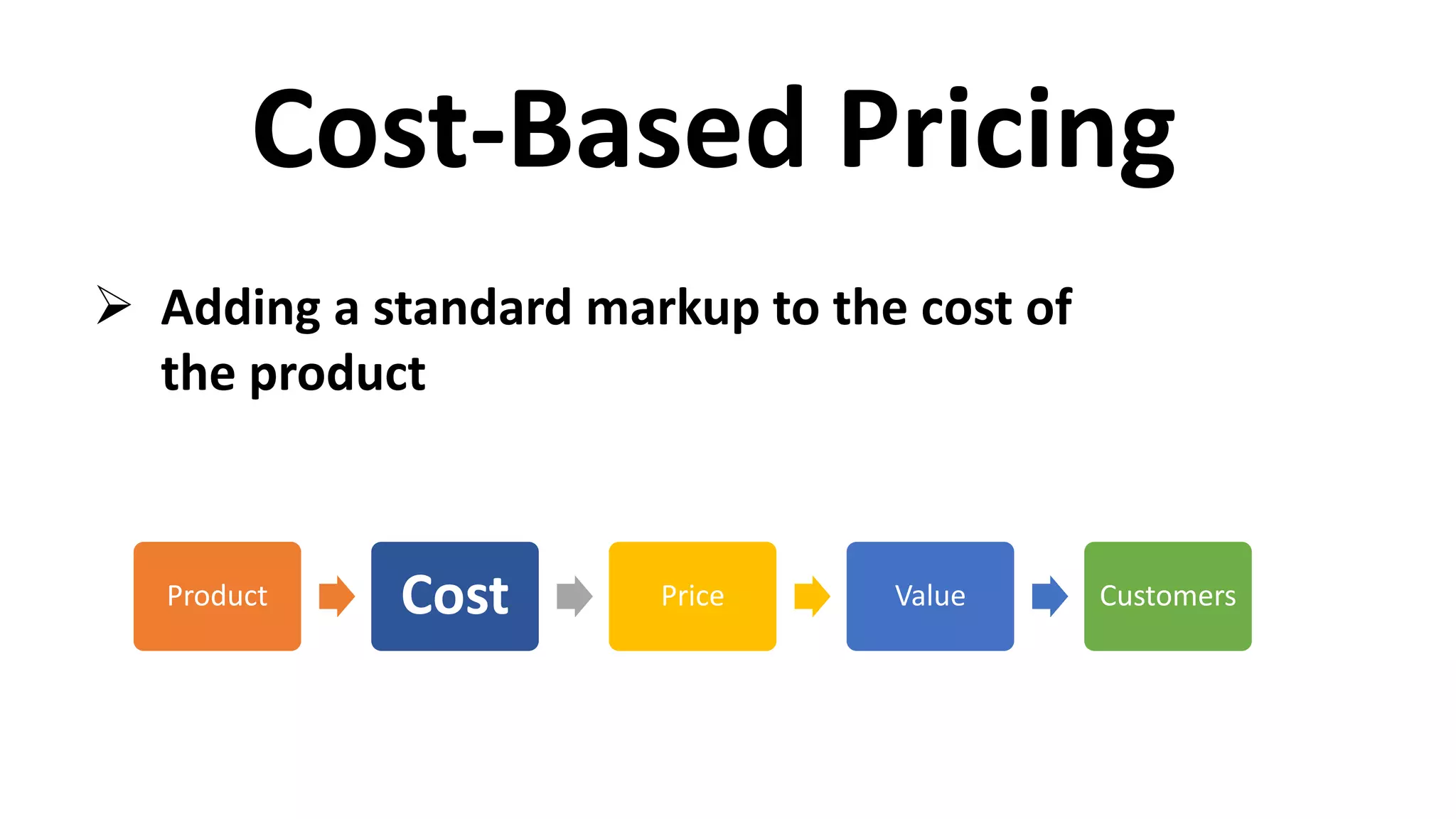
Cost-Based Pricing
 Adding a standard markup to the cost of
the product
Product Cost Price Value Customers
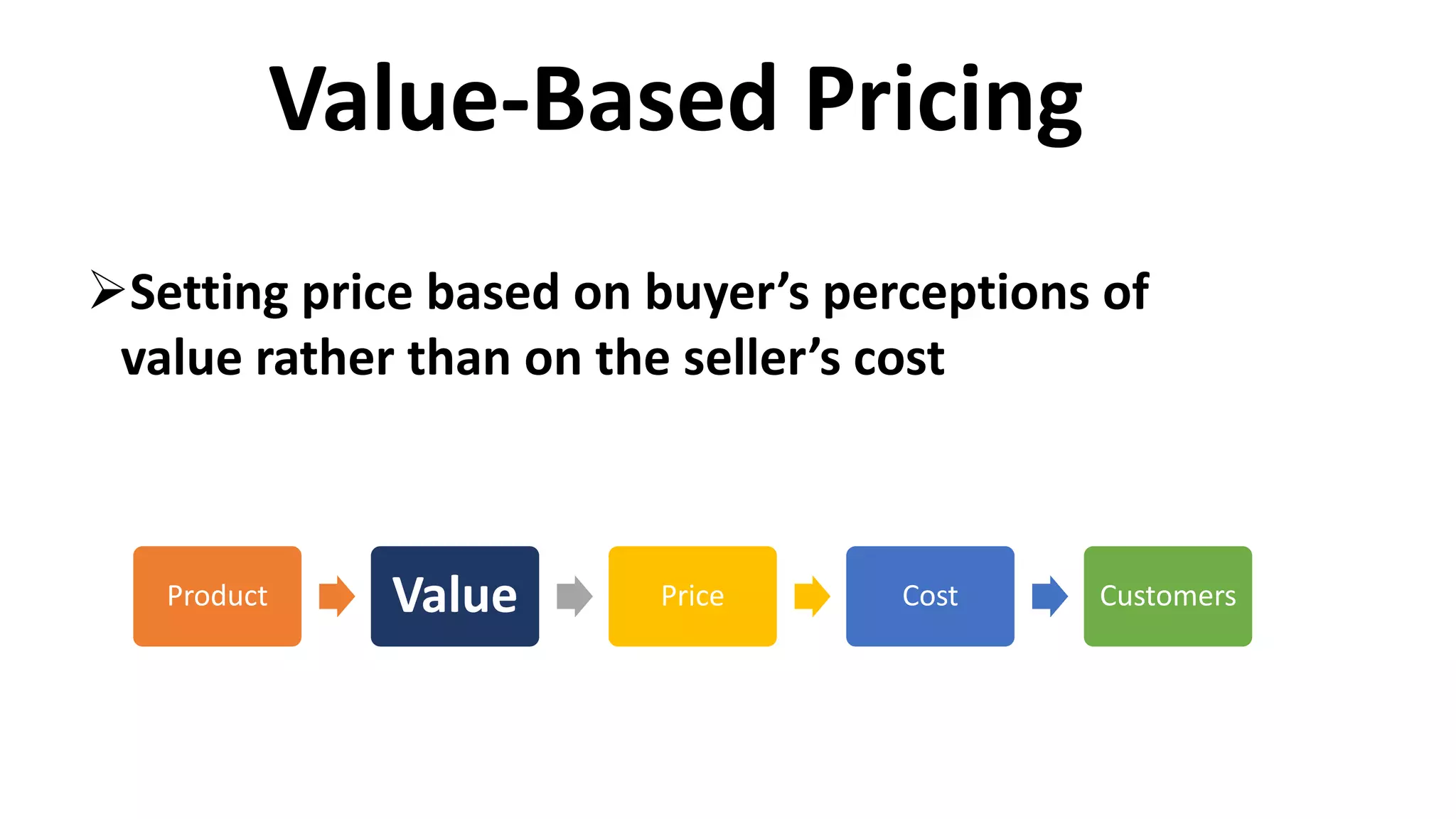
Value-Based Pricing
Setting price based on buyer’s perceptions of
value rather than on the seller’s cost
Product Value Price Cost Customers
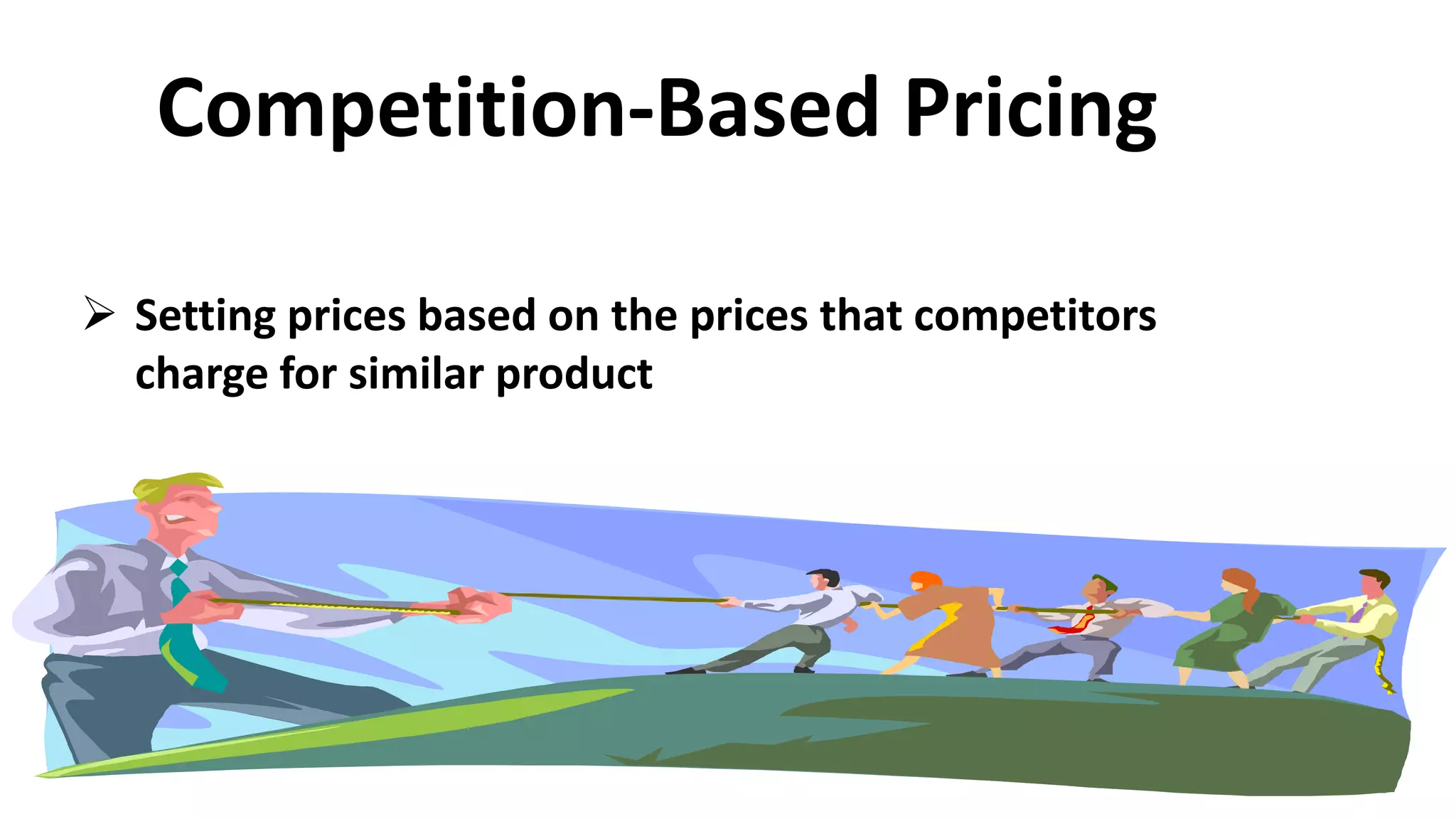
Competition-Based Pricing
 Setting prices based on the prices that competitors
charge for similar product
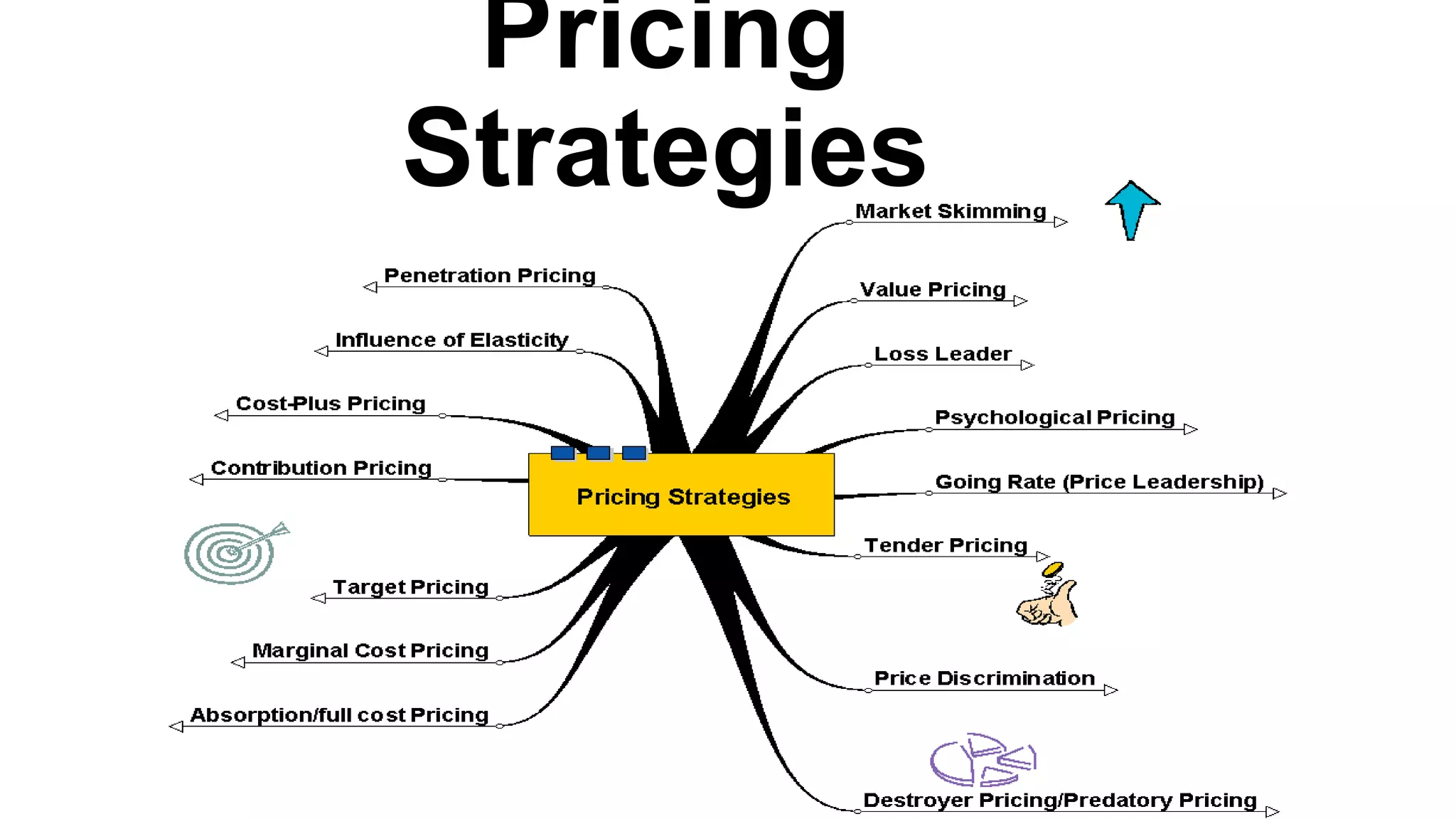
Pricing
Strategies
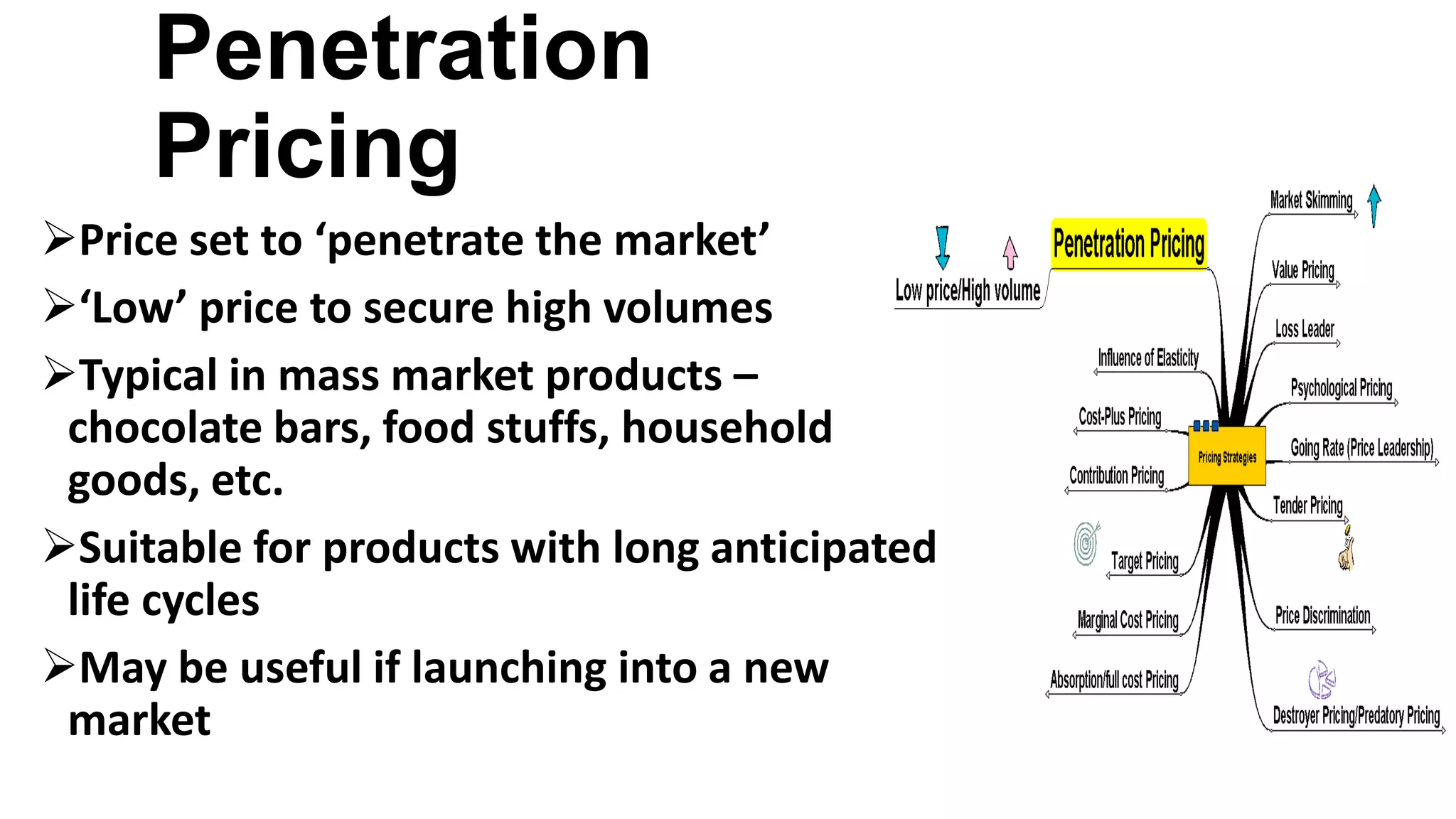
Penetration
Pricing
Price set to ‘penetrate the market’
‘Low’ price to secure high volumes
Typical in mass market products –
chocolate bars, food stuffs, household
goods, etc.
Suitable for products with long anticipated
life cycles
May be useful if launching into a new
market
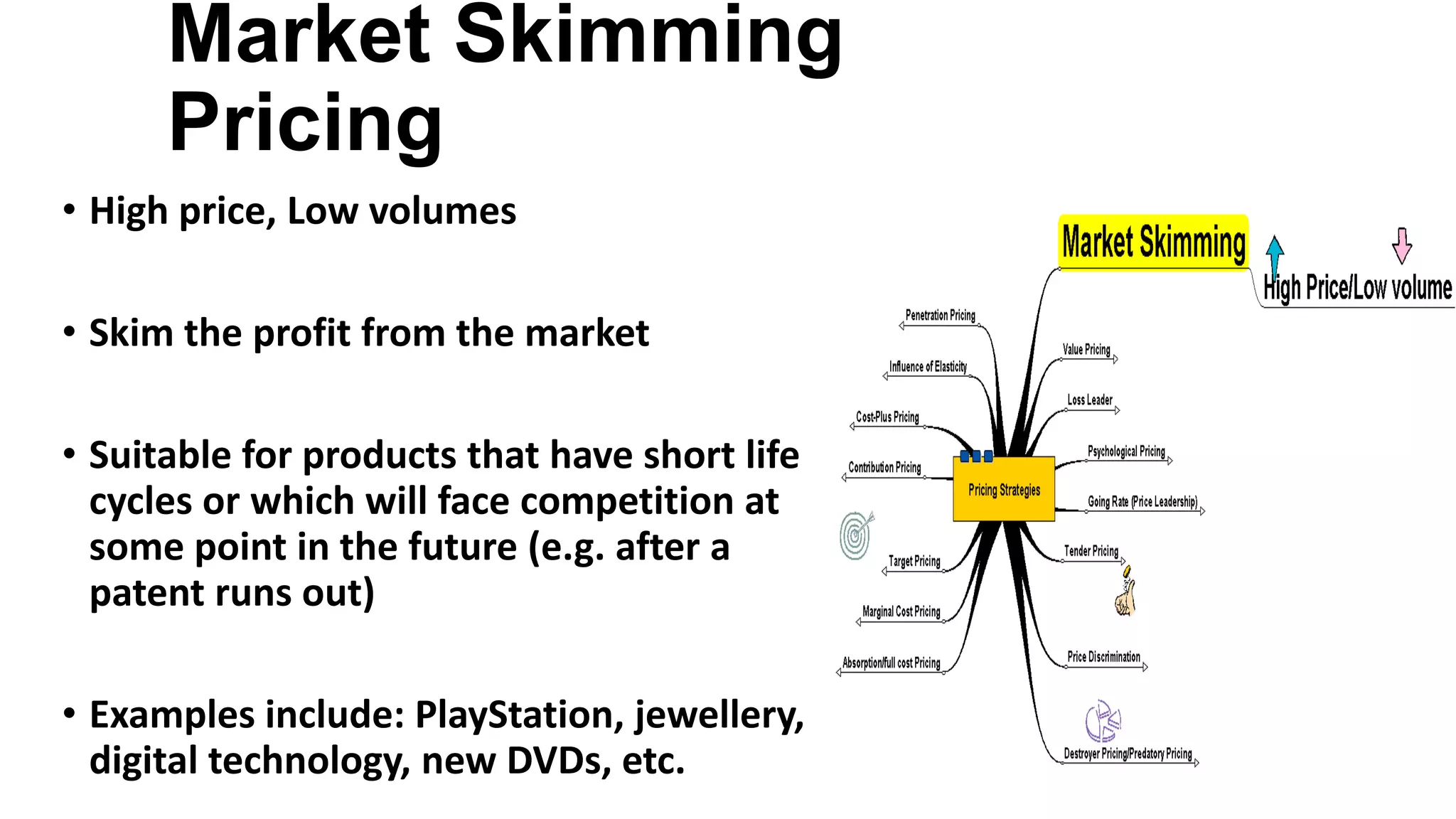
Market Skimming
Pricing
• High price, Low volumes
• Skim the profit from the market
• Suitable for products that have short life
cycles or which will face competition at
some point in the future (e.g. after a
patent runs out)
• Examples include: PlayStation, jewellery,
digital technology, new DVDs, etc.
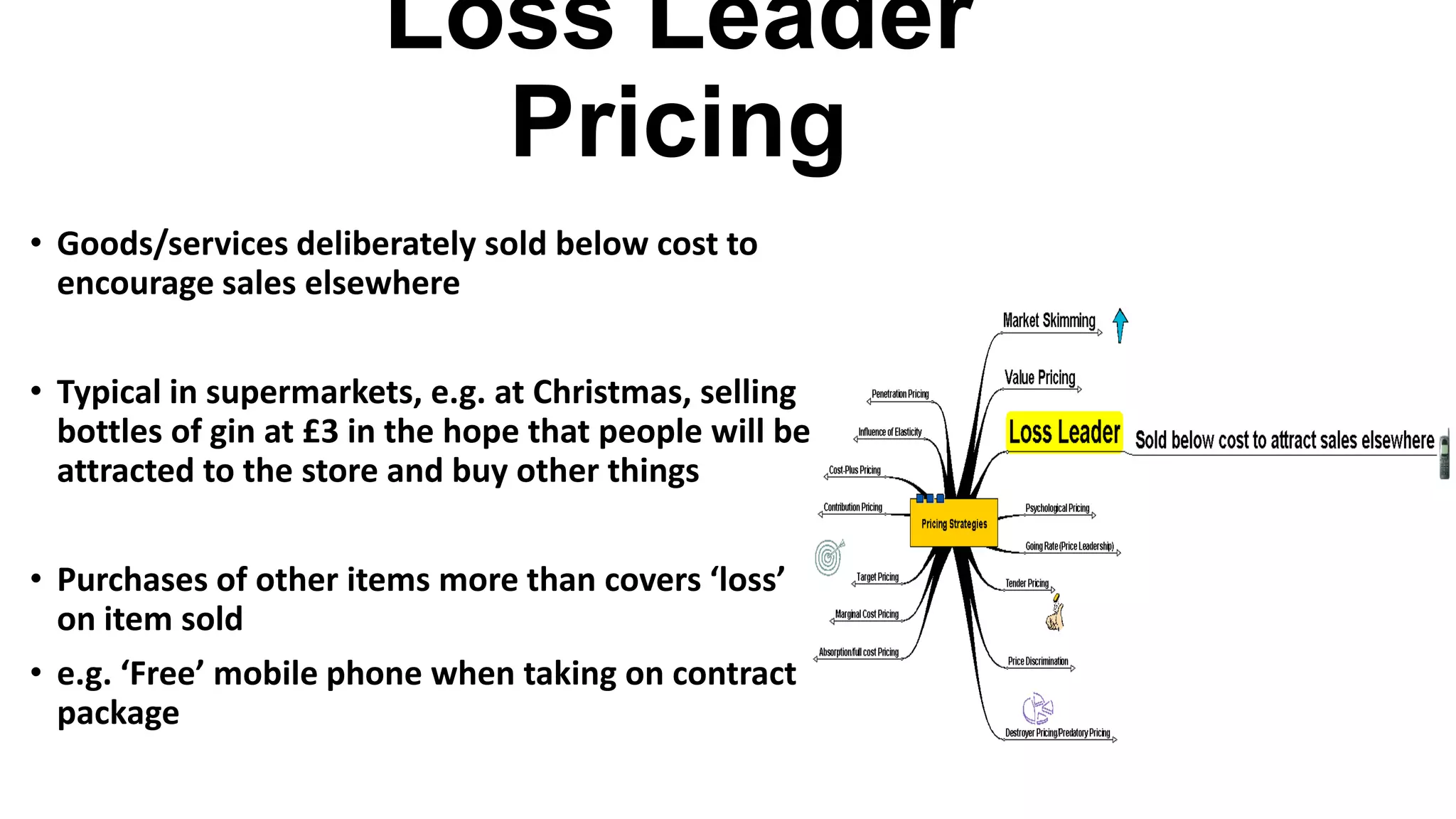
Loss Leader
Pricing
• Goods/services deliberately sold below cost to
encourage sales elsewhere
• Typical in supermarkets, e.g. at Christmas, selling
bottles of gin at £3 in the hope that people will be
attracted to the store and buy other things
• Purchases of other items more than covers ‘loss’
on item sold
• e.g. ‘Free’ mobile phone when taking on contract
package
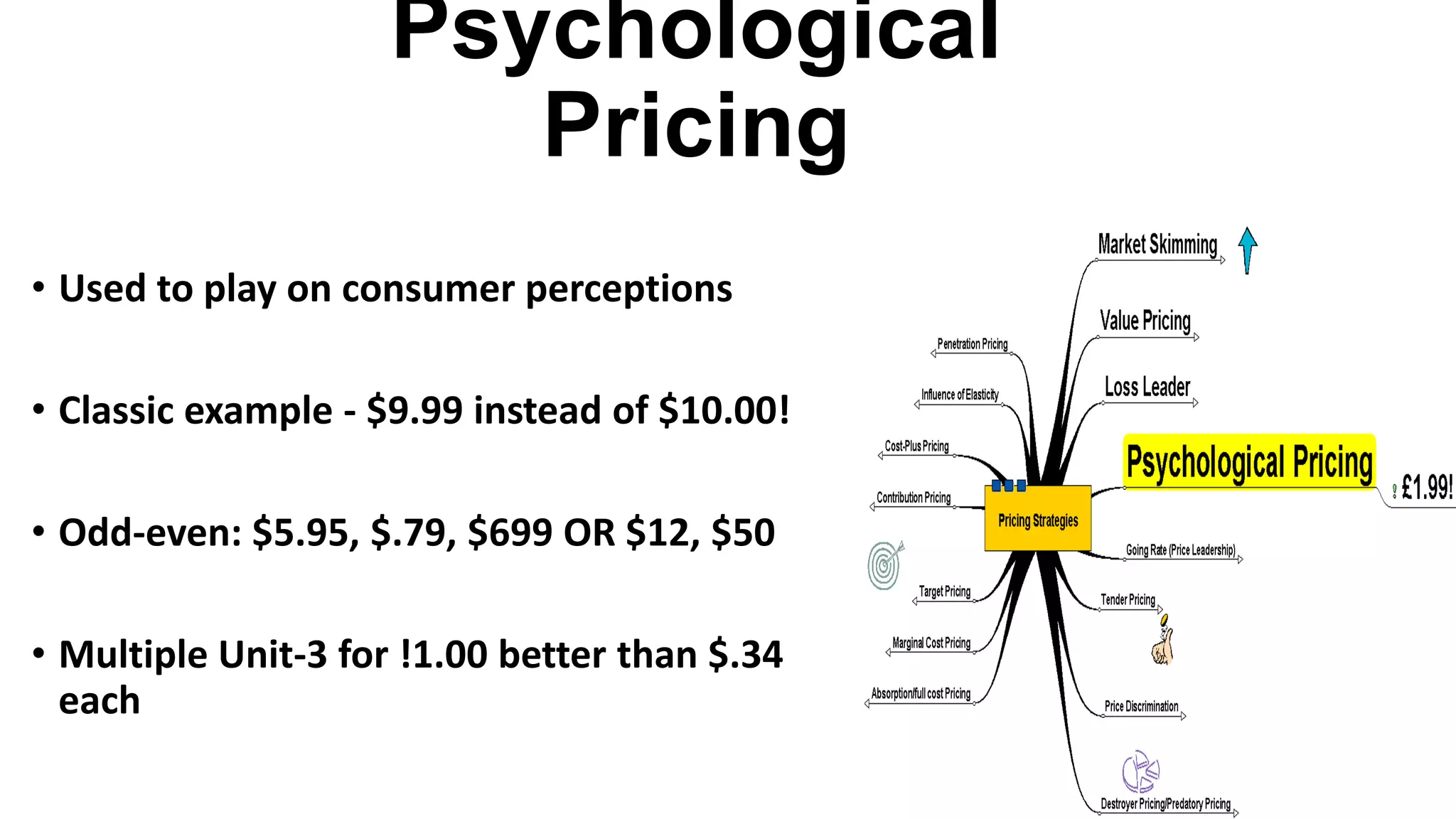
Psychological
Pricing
• Used to play on consumer perceptions
• Classic example - $9.99 instead of $10.00!
• Odd-even: $5.95, $.79, $699 OR $12, $50
• Multiple Unit-3 for !1.00 better than $.34
each
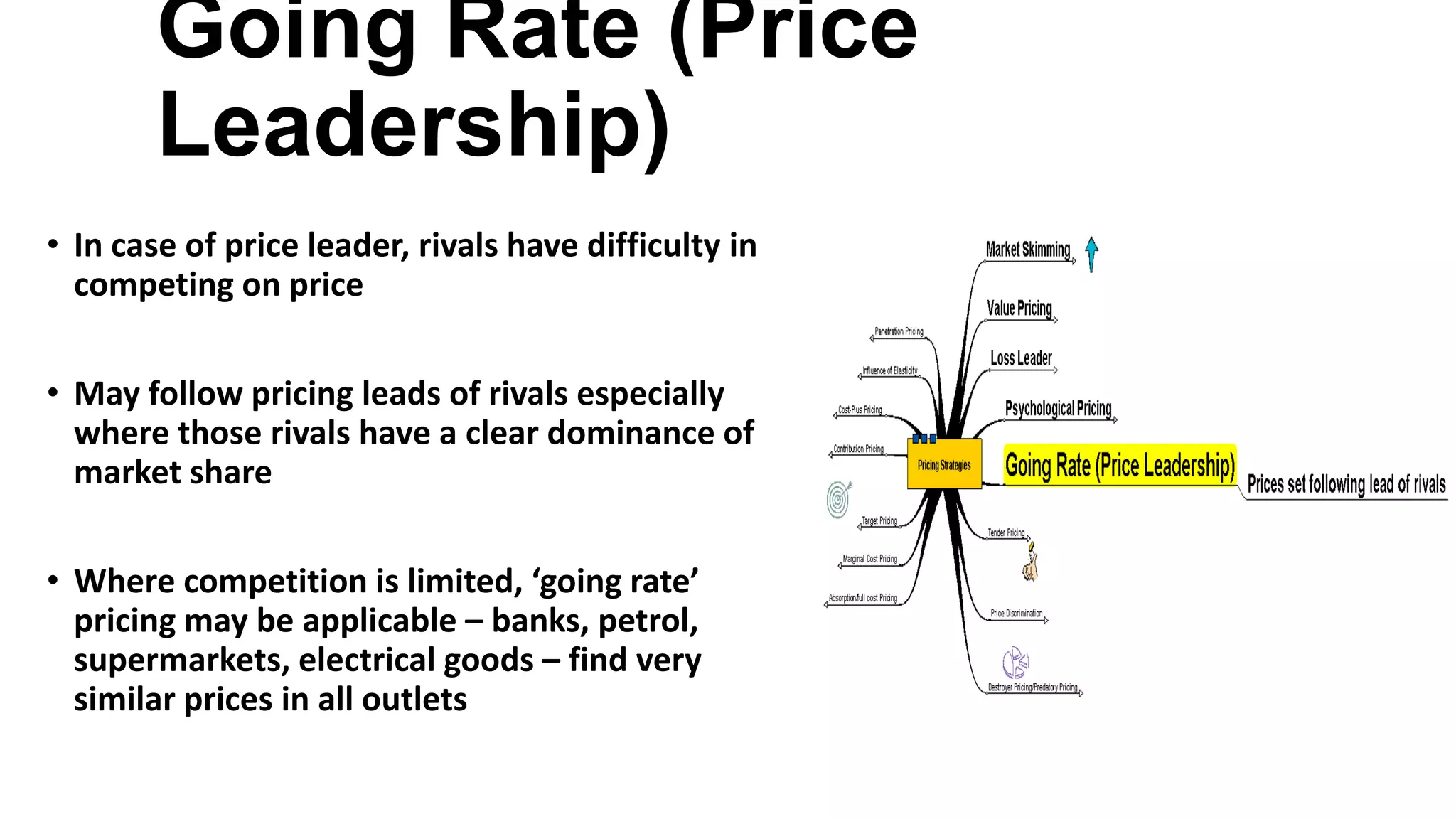
Going Rate (Price
Leadership)
• In case of price leader, rivals have difficulty in
competing on price
• May follow pricing leads of rivals especially
where those rivals have a clear dominance of
market share
• Where competition is limited, ‘going rate’
pricing may be applicable – banks, petrol,
supermarkets, electrical goods – find very
similar prices in all outlets
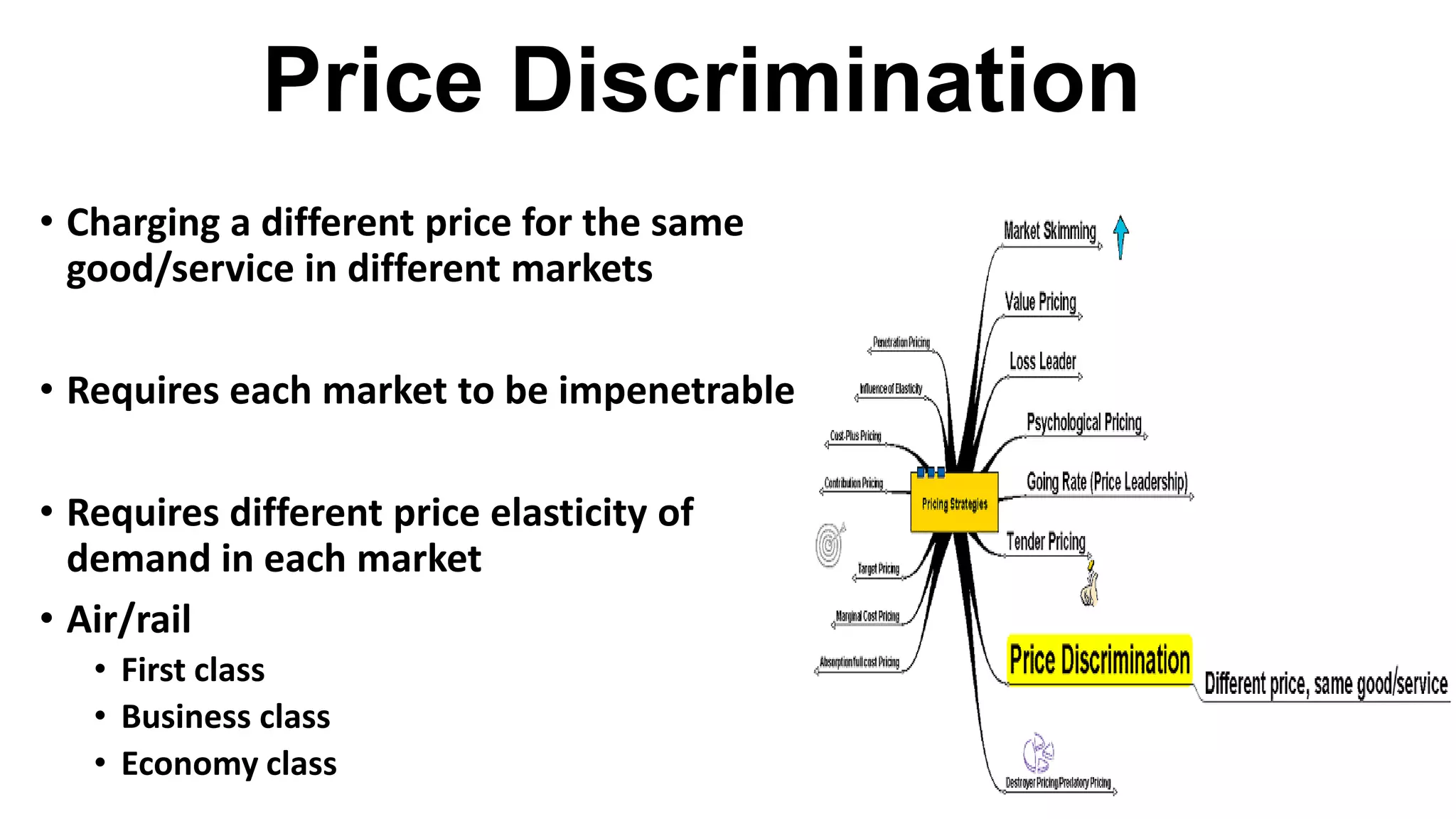
Price Discrimination
• Charging a different price for the same
good/service in different markets
• Requires each market to be impenetrable
• Requires different price elasticity of
demand in each market
• Air/rail
• First class
• Business class
• Economy class
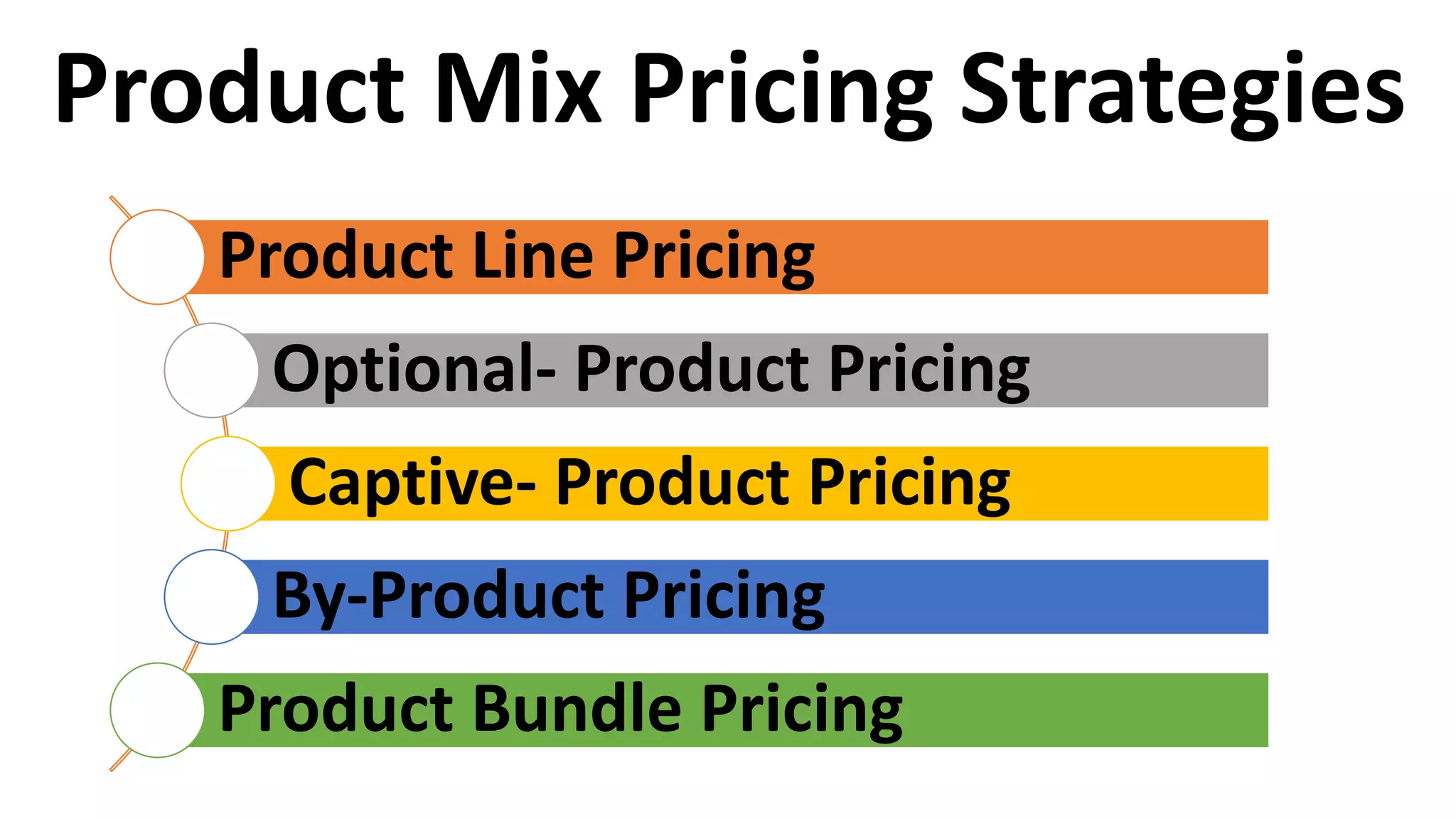
Product Line Pricing
Optional- Product Pricing
Captive- Product Pricing
By-Product Pricing
Product Bundle Pricing
Product Mix Pricing Strategies
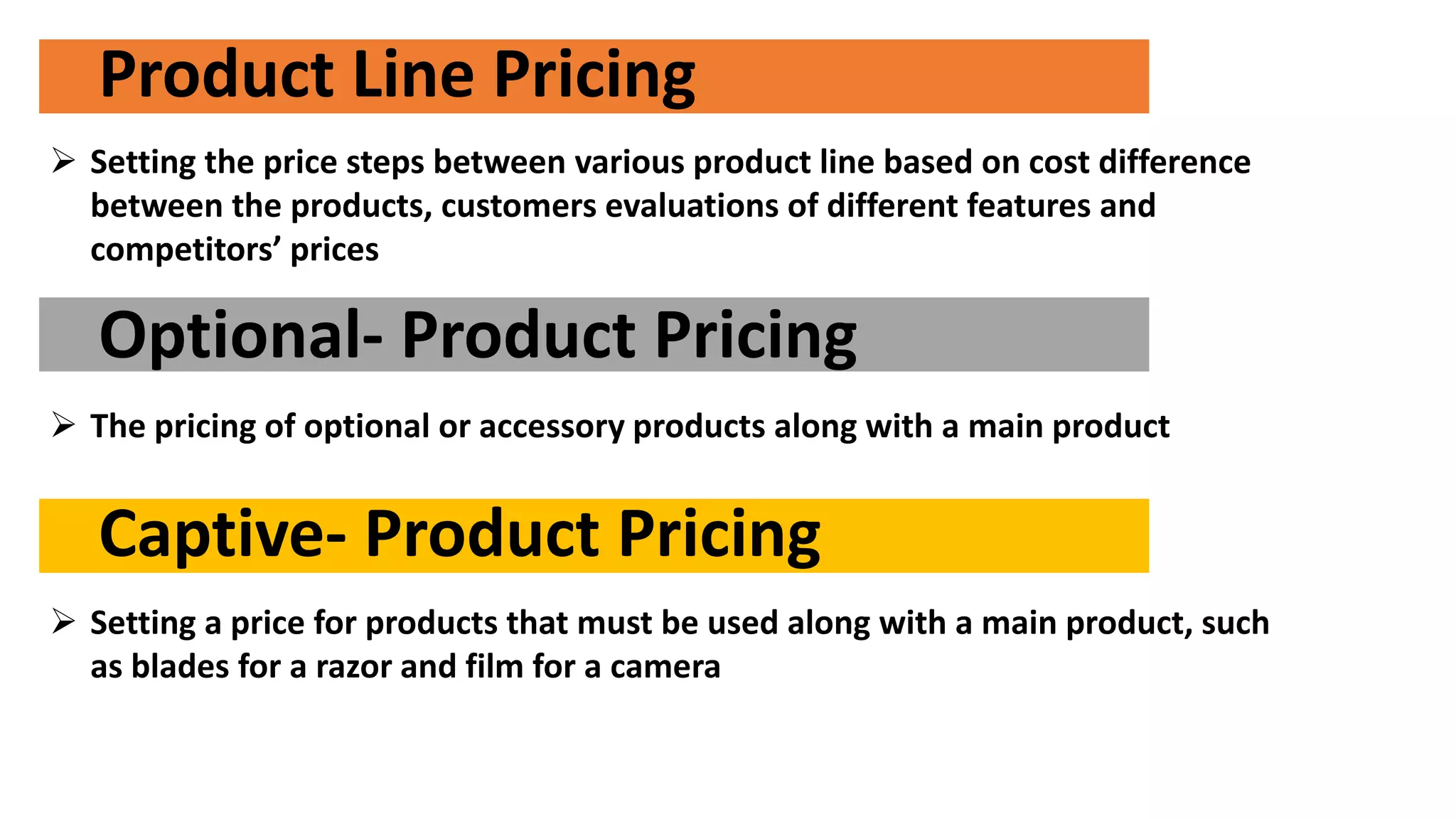
Product Line Pricing
 Setting the price steps between various product line based on cost difference
between the products, customers evaluations of different features and
competitors’ prices
Optional- Product Pricing
 The pricing of optional or accessory products along with a main product
Captive- Product Pricing
 Setting a price for products that must be used along with a main product, such
as blades for a razor and film for a camera
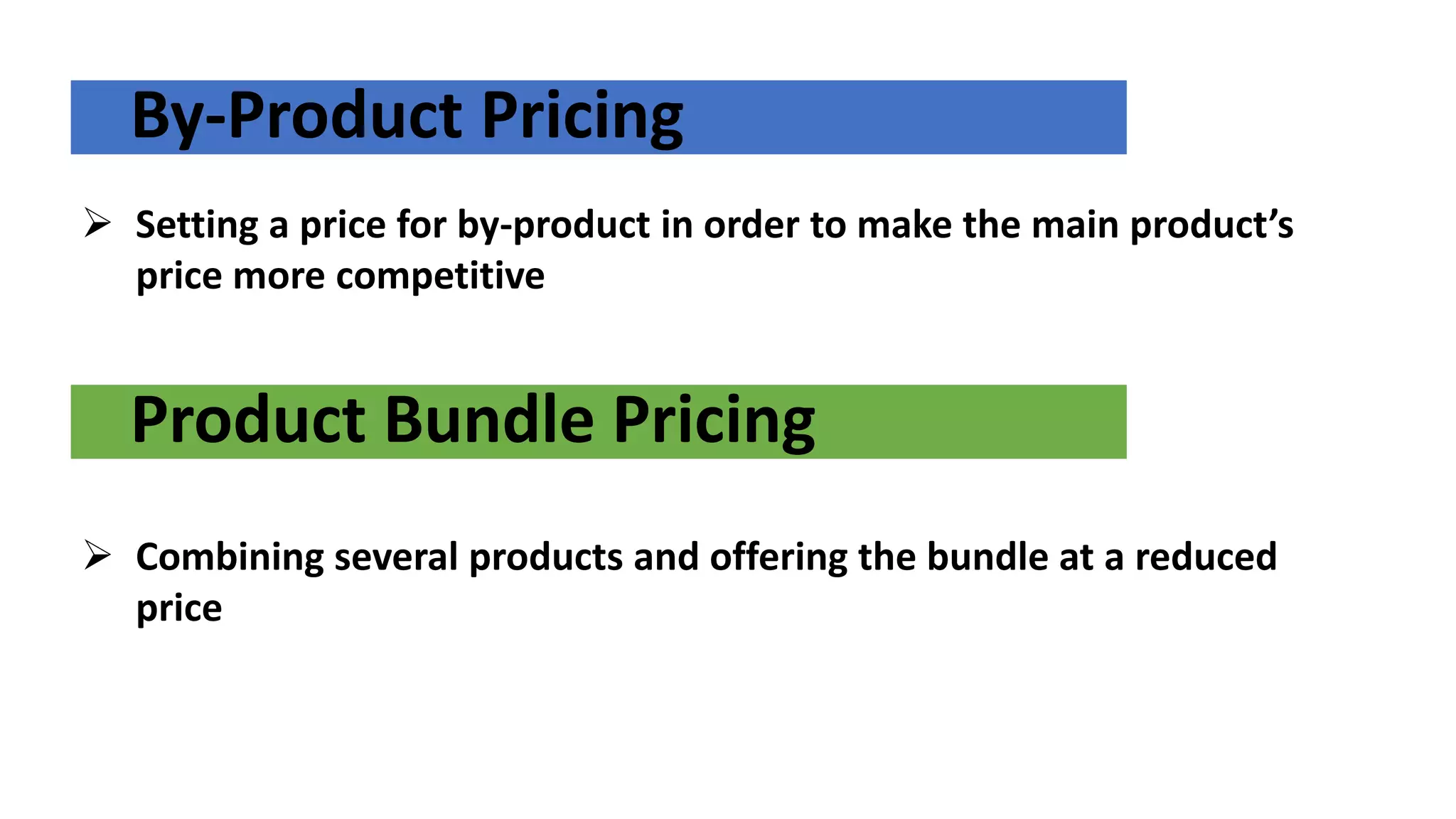
By-Product Pricing
 Setting a price for by-product in order to make the main product’s
price more competitive
Product Bundle Pricing
 Combining several products and offering the bundle at a reduced
price
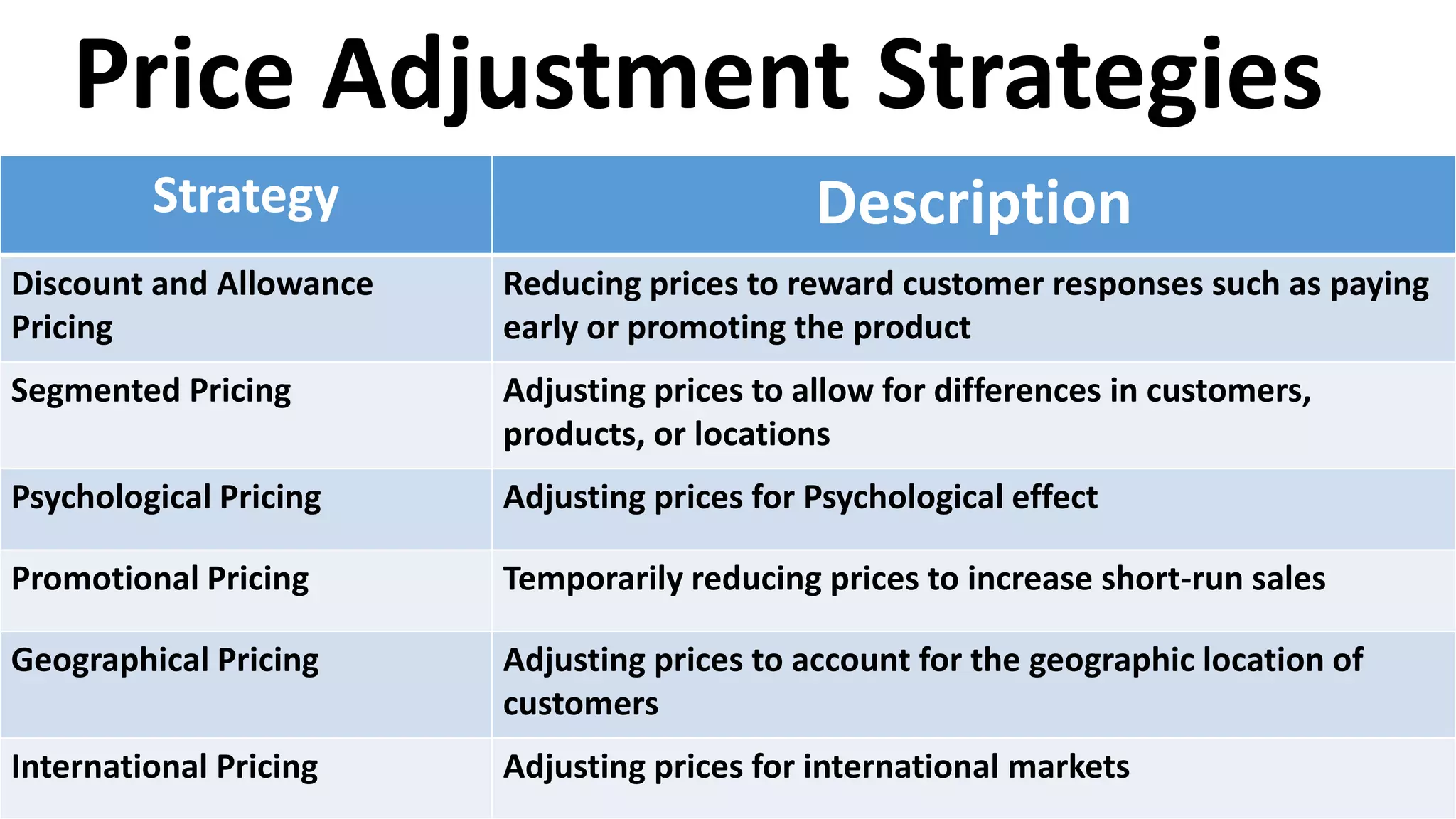
Strategy Description
Discount and Allowance
Pricing
Reducing prices to reward customer responses such as paying
early or promoting the product
Segmented Pricing Adjusting prices to allow for differences in customers,
products, or locations
Psychological Pricing Adjusting prices for Psychological effect
Promotional Pricing Temporarily reducing prices to increase short-run sales
Geographical Pricing Adjusting prices to account for the geographic location of
customers
International Pricing Adjusting prices for international markets
Price Adjustment Strategies
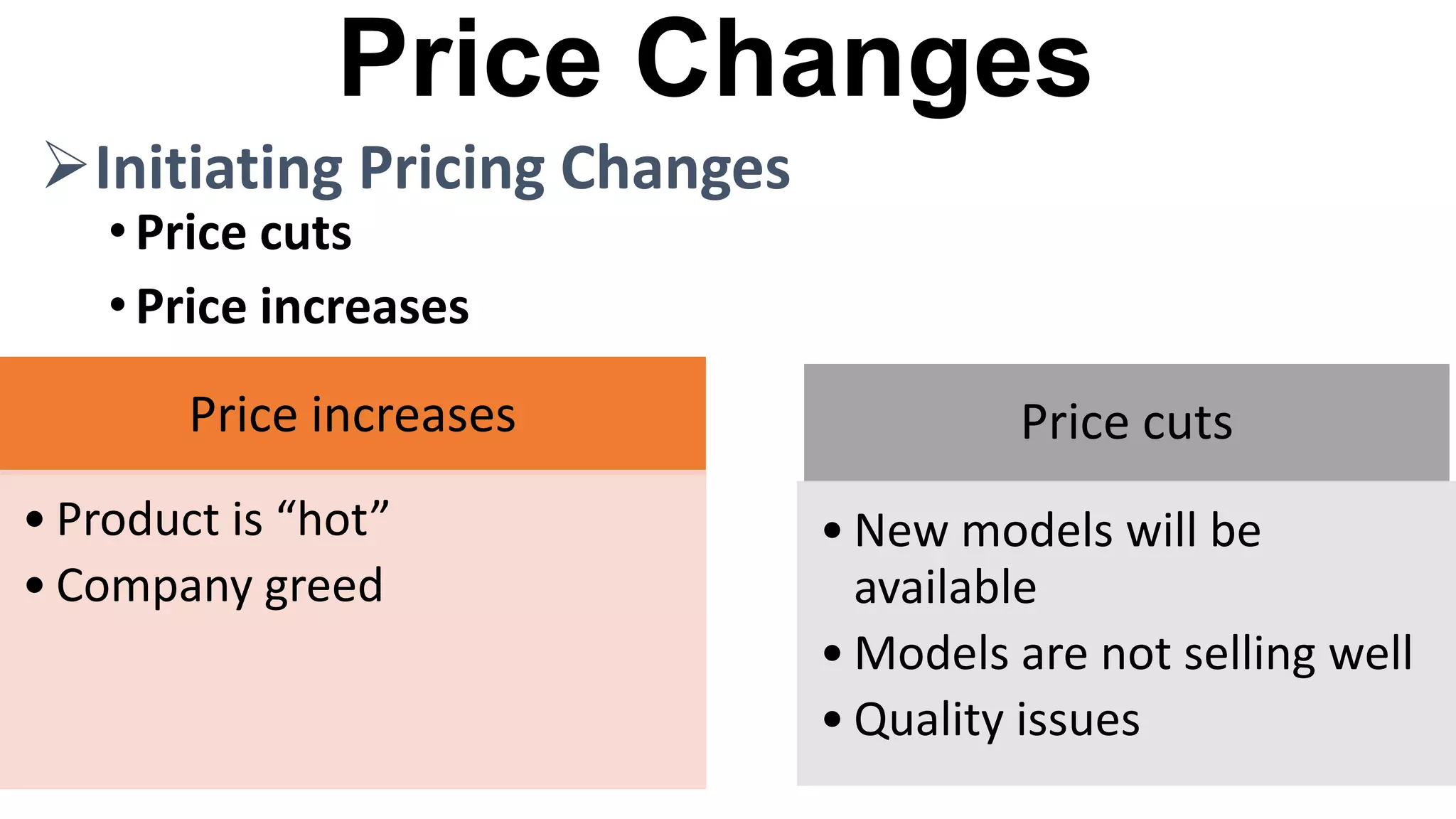
Price Changes
•Price cuts
•Price increases
Initiating Pricing Changes
Price increases
• Product is “hot”
• Company greed
Price cuts
• New models will be
available
• Models are not selling well
• Quality issues
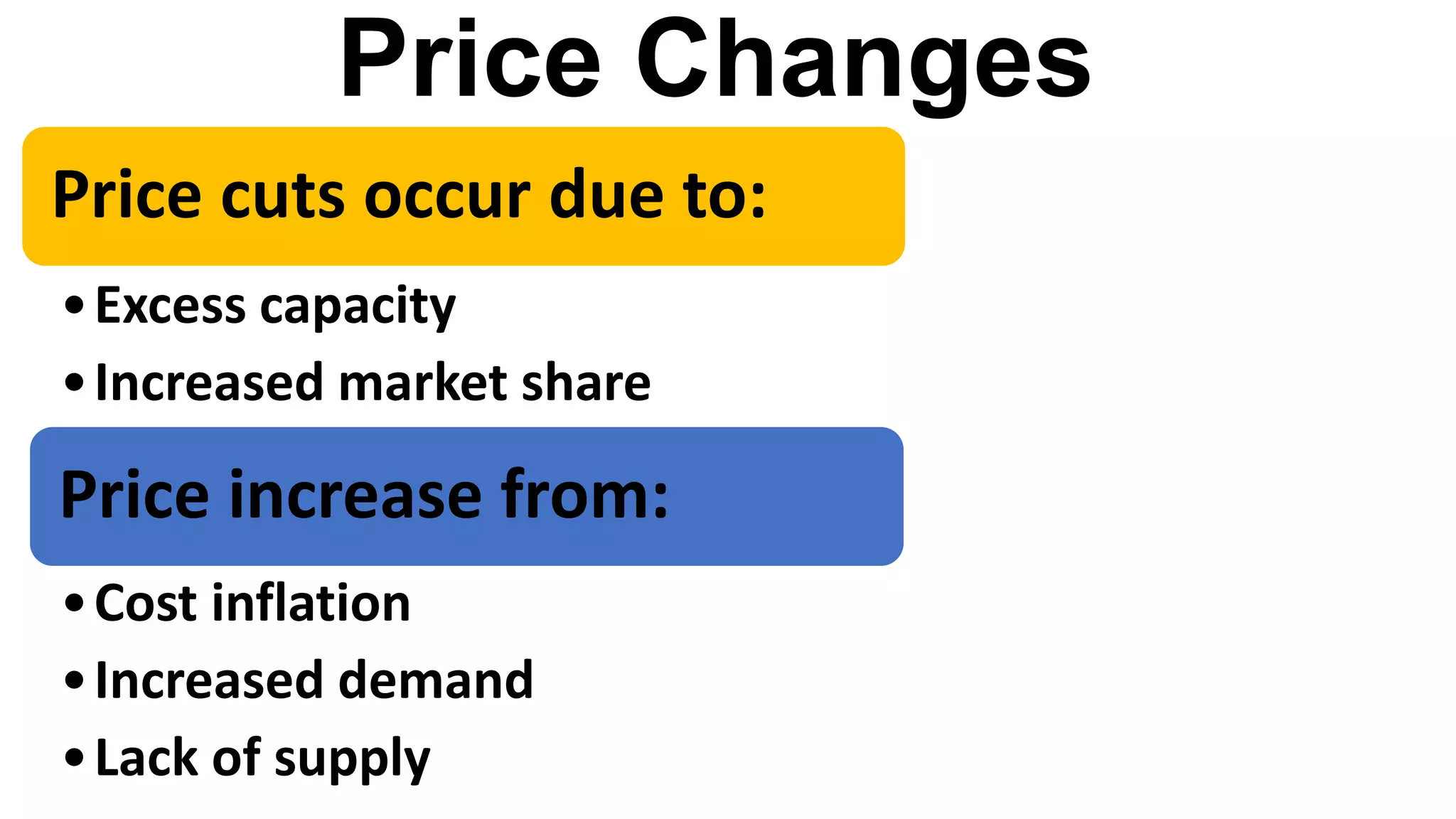
Price cuts occur due to:
•Excess capacity
•Increased market share
Price increase from:
•Cost inflation
•Increased demand
•Lack of supply
Price Changes
Public Policy andPricing
Price fixing: Sellers must set prices without
talking to competitors
Predatory pricing: Selling below cost with the
intention of punishing a competitor or gaining
higher long-term profits by putting competitors
out of business
Pricing Across Channel Levels
Retail (resale) price maintenance is when a manufacturer requires a
dealer to charge a specific retail price for its products
Deceptive pricing occurs when a seller states prices or price savings
that mislead consumers or are not actually available to consumers
• Scanner fraud failure of the seller to enter current or sale prices
into the computer system
• Price confusion results when firms employ pricing methods that
make it difficult for consumers to understand what price they are
really paying
Pricing(A tool of Marketing Mix)

Pricing(A tool of Marketing Mix)

  • 1.
  • 2.
    •Price is theamount of money charged for a good or service •The only marketing mix element that produces revenue •The sum of all the values that consumers exchange for the benefits of having or using the product or service
  • 4.
    General Pricing Approaches 1.Cost-Based Pricing 2. Value-Based Pricing 3. Competition-Based Pricing
  • 5.
    Cost-Based Pricing  Addinga standard markup to the cost of the product Product Cost Price Value Customers
  • 6.
    Value-Based Pricing Setting pricebased on buyer’s perceptions of value rather than on the seller’s cost Product Value Price Cost Customers
  • 7.
    Competition-Based Pricing  Settingprices based on the prices that competitors charge for similar product
  • 8.
  • 9.
    Penetration Pricing Price set to‘penetrate the market’ ‘Low’ price to secure high volumes Typical in mass market products – chocolate bars, food stuffs, household goods, etc. Suitable for products with long anticipated life cycles May be useful if launching into a new market
  • 10.
    Market Skimming Pricing • Highprice, Low volumes • Skim the profit from the market • Suitable for products that have short life cycles or which will face competition at some point in the future (e.g. after a patent runs out) • Examples include: PlayStation, jewellery, digital technology, new DVDs, etc.
  • 11.
    Loss Leader Pricing • Goods/servicesdeliberately sold below cost to encourage sales elsewhere • Typical in supermarkets, e.g. at Christmas, selling bottles of gin at £3 in the hope that people will be attracted to the store and buy other things • Purchases of other items more than covers ‘loss’ on item sold • e.g. ‘Free’ mobile phone when taking on contract package
  • 12.
    Psychological Pricing • Used toplay on consumer perceptions • Classic example - $9.99 instead of $10.00! • Odd-even: $5.95, $.79, $699 OR $12, $50 • Multiple Unit-3 for !1.00 better than $.34 each
  • 13.
    Going Rate (Price Leadership) •In case of price leader, rivals have difficulty in competing on price • May follow pricing leads of rivals especially where those rivals have a clear dominance of market share • Where competition is limited, ‘going rate’ pricing may be applicable – banks, petrol, supermarkets, electrical goods – find very similar prices in all outlets
  • 14.
    Price Discrimination • Charginga different price for the same good/service in different markets • Requires each market to be impenetrable • Requires different price elasticity of demand in each market • Air/rail • First class • Business class • Economy class
  • 15.
    Product Line Pricing Optional-Product Pricing Captive- Product Pricing By-Product Pricing Product Bundle Pricing Product Mix Pricing Strategies
  • 16.
    Product Line Pricing Setting the price steps between various product line based on cost difference between the products, customers evaluations of different features and competitors’ prices Optional- Product Pricing  The pricing of optional or accessory products along with a main product Captive- Product Pricing  Setting a price for products that must be used along with a main product, such as blades for a razor and film for a camera
  • 17.
    By-Product Pricing  Settinga price for by-product in order to make the main product’s price more competitive Product Bundle Pricing  Combining several products and offering the bundle at a reduced price
  • 18.
    Strategy Description Discount andAllowance Pricing Reducing prices to reward customer responses such as paying early or promoting the product Segmented Pricing Adjusting prices to allow for differences in customers, products, or locations Psychological Pricing Adjusting prices for Psychological effect Promotional Pricing Temporarily reducing prices to increase short-run sales Geographical Pricing Adjusting prices to account for the geographic location of customers International Pricing Adjusting prices for international markets Price Adjustment Strategies
  • 19.
    Price Changes •Price cuts •Priceincreases Initiating Pricing Changes Price increases • Product is “hot” • Company greed Price cuts • New models will be available • Models are not selling well • Quality issues
  • 20.
    Price cuts occurdue to: •Excess capacity •Increased market share Price increase from: •Cost inflation •Increased demand •Lack of supply Price Changes
  • 21.
    Public Policy andPricing Pricefixing: Sellers must set prices without talking to competitors Predatory pricing: Selling below cost with the intention of punishing a competitor or gaining higher long-term profits by putting competitors out of business
  • 22.
    Pricing Across ChannelLevels Retail (resale) price maintenance is when a manufacturer requires a dealer to charge a specific retail price for its products Deceptive pricing occurs when a seller states prices or price savings that mislead consumers or are not actually available to consumers • Scanner fraud failure of the seller to enter current or sale prices into the computer system • Price confusion results when firms employ pricing methods that make it difficult for consumers to understand what price they are really paying