CHAPTER
Marketing Mix-Pricing
Topics to be covered
• Role of pricing
• Factors determine pricing
• Pricing strategies
Role of Price in Marketing
• This is the main element of marketing because
it create link between the customer (demand)
& the producer (supply).
• It gives messages to consumers about product
quality.
• It is fundamental to a firm’s revenues & profit
margins.
• Customers think whether the product is good
value for money.
• It play a significant role in the purchasing
decision where customer is price sensitive
rather than brand.
• For example, if two petrol stations opposite
each other are charging different prices for
petrol, we are likely to choose the cheaper
one. We are unlikely to be loyal to a particular
brand of petrol.
Factors Determining the Price
• Brand of the product
• The cost of product
• Ability of customers to pay
• The demand for a product
• Competitors price
• Seasonal changes
Pricing Strategies
Skimming Price
• In this technique a higher price is set when the
product is being launched in the market.
• The main reason is that the product is unique
so there will be no competition.
• This normally targets the higher income group
belonging to the egoistic side.
• The business recovers the research &
development cost of that unique product.
• This strategy is appropriate if the firm can
protect its new invention so that competitors
cannot imitate it.
• Initially, if sales become stagnant the price can
be lowered to attract customers.
• The best example is pharmaceutical firms who
are often given a legal control for new drugs.
Penetration Price
• Is when the price is set lower than its
competitors in order to be able to enter a new
market.
• As sale volume increases the price can be
increased gradually.
• It is hoped that high sale levels will lead the
benefit of economies of scale.
• This strategy is suitable if the market is price
sensitive.
Discrimination Price
• It takes place in markets where it is possible to
charge different prices :
i. To different age groups, like, lower fares on
the train for children.
ii. At different times of day, like, phone call
charges may be lower after midnight.
iii. The main aim such pricing strategy is to
maximise business revenue.
Competitive Price
• This includes charging a price of the product in
line with its competitors.
• Sales to be high as your product is not over-
priced or under-priced.
• This strategy is common when consumers can
easily make a direct comparison between
different brands.
• The rise in internet usage has made it easier
for customers to compare prices between
firms.
• This puts more pressure on firms to be competitive.
Psychological Pricing
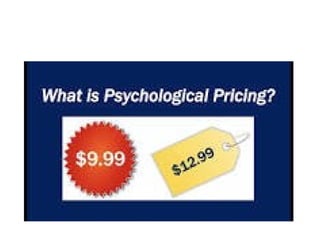
• This method is the business practices of setting
prices lower than a whole number such as
$99.99 instead of $100.
• This method based on the theory that certain
prices have psychological impact on consumer
behavior.
• The idea behind this method is that customers
will read the slightly lowered price and treat it
lower than the price actually is.
Dynamic Pricing
• It is a pricing strategy that applies flexible or
variable prices instead of fixed prices.
• Businesses adjust prices according demand
pattern in the open market such as very higher
prices have been charged for hand sanitizers,
face masks, hand gloves during the covid-19
situation.
Cost Base Pricing
• It entails deciding a price of a product by
calculating its unit cost by dividing total costs by
the total output.
• To this unit cost the value of mark-up is added
for profit.
• For example: cost of a bar of chocolate= $20
mark-up 50%= 20x50/100=$10
so price= $20+$10=$30

Pricing.pptx pricing inventory managemen

  • 1.
  • 2.
    Topics to becovered • Role of pricing • Factors determine pricing • Pricing strategies
  • 3.
    Role of Pricein Marketing • This is the main element of marketing because it create link between the customer (demand) & the producer (supply). • It gives messages to consumers about product quality. • It is fundamental to a firm’s revenues & profit margins. • Customers think whether the product is good value for money.
  • 4.
    • It playa significant role in the purchasing decision where customer is price sensitive rather than brand. • For example, if two petrol stations opposite each other are charging different prices for petrol, we are likely to choose the cheaper one. We are unlikely to be loyal to a particular brand of petrol.
  • 5.
    Factors Determining thePrice • Brand of the product • The cost of product • Ability of customers to pay • The demand for a product • Competitors price • Seasonal changes
  • 6.
    Pricing Strategies Skimming Price •In this technique a higher price is set when the product is being launched in the market. • The main reason is that the product is unique so there will be no competition. • This normally targets the higher income group belonging to the egoistic side. • The business recovers the research & development cost of that unique product.
  • 7.
    • This strategyis appropriate if the firm can protect its new invention so that competitors cannot imitate it. • Initially, if sales become stagnant the price can be lowered to attract customers. • The best example is pharmaceutical firms who are often given a legal control for new drugs.
  • 8.
    Penetration Price • Iswhen the price is set lower than its competitors in order to be able to enter a new market. • As sale volume increases the price can be increased gradually. • It is hoped that high sale levels will lead the benefit of economies of scale. • This strategy is suitable if the market is price sensitive.
  • 9.
    Discrimination Price • Ittakes place in markets where it is possible to charge different prices : i. To different age groups, like, lower fares on the train for children. ii. At different times of day, like, phone call charges may be lower after midnight. iii. The main aim such pricing strategy is to maximise business revenue.
  • 10.
    Competitive Price • Thisincludes charging a price of the product in line with its competitors. • Sales to be high as your product is not over- priced or under-priced. • This strategy is common when consumers can easily make a direct comparison between different brands. • The rise in internet usage has made it easier for customers to compare prices between firms. • This puts more pressure on firms to be competitive.
  • 11.
    Psychological Pricing • Thismethod is the business practices of setting prices lower than a whole number such as $99.99 instead of $100. • This method based on the theory that certain prices have psychological impact on consumer behavior. • The idea behind this method is that customers will read the slightly lowered price and treat it lower than the price actually is.
  • 13.
    Dynamic Pricing • Itis a pricing strategy that applies flexible or variable prices instead of fixed prices. • Businesses adjust prices according demand pattern in the open market such as very higher prices have been charged for hand sanitizers, face masks, hand gloves during the covid-19 situation.
  • 14.
    Cost Base Pricing •It entails deciding a price of a product by calculating its unit cost by dividing total costs by the total output. • To this unit cost the value of mark-up is added for profit. • For example: cost of a bar of chocolate= $20 mark-up 50%= 20x50/100=$10 so price= $20+$10=$30