Christian Laroche
              Mrs. Davis
6th Period – Entrepreneurial Ventures
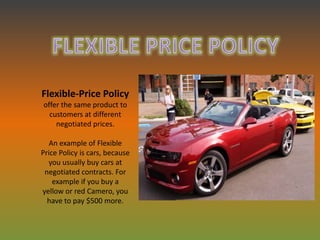
Flexible-Price Policy
offer the same product to
  customers at different
    negotiated prices.

   An example of Flexible
Price Policy is cars, because
  you usually buy cars at
 negotiated contracts. For
    example if you buy a
yellow or red Camero, you
  have to pay $500 more.
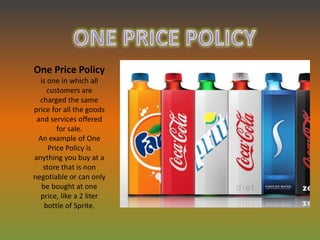
One Price Policy
  is one in which all
     customers are
  charged the same
price for all the goods
 and services offered
        for sale.
 An example of One
     Price Policy is
anything you buy at a
   store that is non
negotiable or can only
   be bought at one
  price, like a 2 liter
    bottle of Sprite.
Prestige Pricing
 Is used to foster a higher
image. Cheap products are
not taken seriously by some
   buyers unless they are
priced at a particular level.

  For example, if you saw a
 shirt at Nordstrom and you
saw the same shirt at Men's
   Warehouse, you would
    most likely buy it from
   Nordstrom because you
  believe its better quality
because of the higher price;
when in reality they are the
          same shirt.
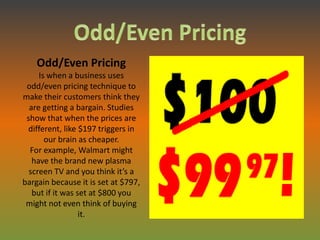
Odd/Even Pricing
     Is when a business uses
 odd/even pricing technique to
make their customers think they
  are getting a bargain. Studies
 show that when the prices are
 different, like $197 triggers in
       our brain as cheaper.
  For example, Walmart might
   have the brand new plasma
  screen TV and you think it’s a
bargain because it is set at $797,
   but if it was set at $800 you
 might not even think of buying
                  it.
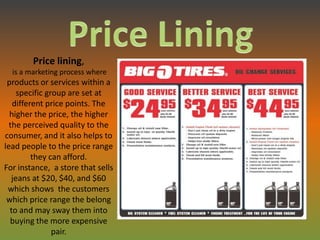
Price lining,
  is a marketing process where
 products or services within a
     specific group are set at
   different price points. The
  higher the price, the higher
  the perceived quality to the
consumer, and it also helps to
lead people to the price range
         they can afford.
For instance, a store that sells
   jeans at $20, $40, and $60
 which shows the customers
 which price range the belong
  to and may sway them into
  buying the more expensive
                pair.
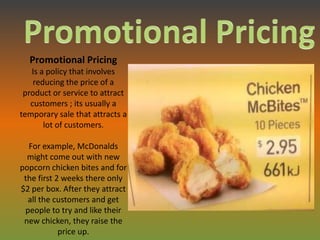
Promotional Pricing
   Is a policy that involves
    reducing the price of a
 product or service to attract
   customers ; its usually a
temporary sale that attracts a
       lot of customers.

  For example, McDonalds
  might come out with new
popcorn chicken bites and for
 the first 2 weeks there only
$2 per box. After they attract
  all the customers and get
 people to try and like their
 new chicken, they raise the
            price up.
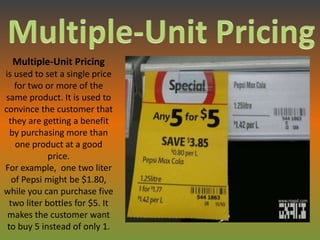
Multiple-Unit Pricing
is used to set a single price
    for two or more of the
same product. It is used to
convince the customer that
 they are getting a benefit
  by purchasing more than
    one product at a good
             price.
For example, one two liter
   of Pepsi might be $1.80,
while you can purchase five
  two liter bottles for $5. It
 makes the customer want
 to buy 5 instead of only 1.
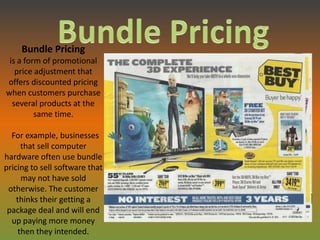
Bundle Pricing
 is a form of promotional
   price adjustment that
offers discounted pricing
when customers purchase
  several products at the
         same time.

  For example, businesses
      that sell computer
hardware often use bundle
pricing to sell software that
      may not have sold
 otherwise. The customer
    thinks their getting a
 package deal and will end
  up paying more money
     then they intended.

Pricing policies and strategies examples

  • 1.
    Christian Laroche Mrs. Davis 6th Period – Entrepreneurial Ventures
  • 2.
    Flexible-Price Policy offer thesame product to customers at different negotiated prices. An example of Flexible Price Policy is cars, because you usually buy cars at negotiated contracts. For example if you buy a yellow or red Camero, you have to pay $500 more.
  • 3.
    One Price Policy is one in which all customers are charged the same price for all the goods and services offered for sale. An example of One Price Policy is anything you buy at a store that is non negotiable or can only be bought at one price, like a 2 liter bottle of Sprite.
  • 4.
    Prestige Pricing Isused to foster a higher image. Cheap products are not taken seriously by some buyers unless they are priced at a particular level. For example, if you saw a shirt at Nordstrom and you saw the same shirt at Men's Warehouse, you would most likely buy it from Nordstrom because you believe its better quality because of the higher price; when in reality they are the same shirt.
  • 5.
    Odd/Even Pricing Is when a business uses odd/even pricing technique to make their customers think they are getting a bargain. Studies show that when the prices are different, like $197 triggers in our brain as cheaper. For example, Walmart might have the brand new plasma screen TV and you think it’s a bargain because it is set at $797, but if it was set at $800 you might not even think of buying it.
  • 6.
    Price lining, is a marketing process where products or services within a specific group are set at different price points. The higher the price, the higher the perceived quality to the consumer, and it also helps to lead people to the price range they can afford. For instance, a store that sells jeans at $20, $40, and $60 which shows the customers which price range the belong to and may sway them into buying the more expensive pair.
  • 7.
    Promotional Pricing Is a policy that involves reducing the price of a product or service to attract customers ; its usually a temporary sale that attracts a lot of customers. For example, McDonalds might come out with new popcorn chicken bites and for the first 2 weeks there only $2 per box. After they attract all the customers and get people to try and like their new chicken, they raise the price up.
  • 8.
    Multiple-Unit Pricing is usedto set a single price for two or more of the same product. It is used to convince the customer that they are getting a benefit by purchasing more than one product at a good price. For example, one two liter of Pepsi might be $1.80, while you can purchase five two liter bottles for $5. It makes the customer want to buy 5 instead of only 1.
  • 9.
    Bundle Pricing isa form of promotional price adjustment that offers discounted pricing when customers purchase several products at the same time. For example, businesses that sell computer hardware often use bundle pricing to sell software that may not have sold otherwise. The customer thinks their getting a package deal and will end up paying more money then they intended.