WHAT WILL WE LEARN TODAY?
 Identify various economic systems
 We will gain understanding of the
advantages and disadvantages of
various systems
 To be able to analyse reasons to trade
internationally
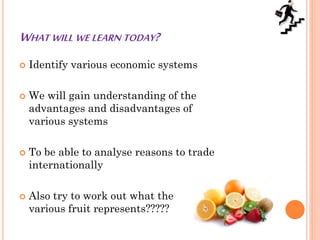
 Also try to work out what the
various fruit represents?????
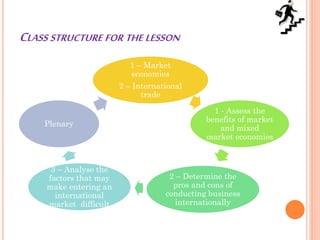
CLASS STRUCTURE FOR THE LESSON
1 – Market
economies
2 – International
trade
1 - Assess the
benefits of market
and mixed
market economies
2 – Determine the
pros and cons of
conducting business
internationally
3 – Analyse the
factors that may
make entering an
international
market difficult
Plenary
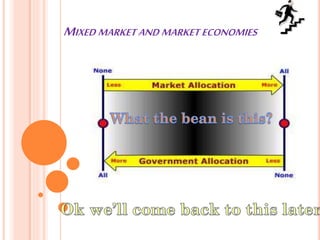
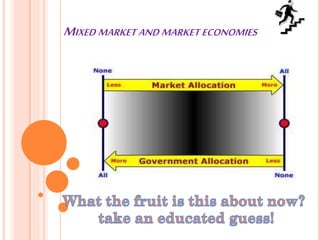
MIXED MARKET AND MARKET ECONOMIES
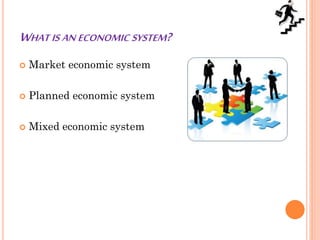
WHAT IS AN ECONOMIC SYSTEM?
 Market economic system
 Planned economic system
 Mixed economic system
MARKET ECONOMY
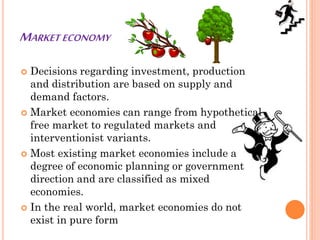
 Decisions regarding investment, production
and distribution are based on supply and
demand factors.
 Market economies can range from hypothetical
free market to regulated markets and
interventionist variants.
 Most existing market economies include a
degree of economic planning or government
direction and are classified as mixed
economies.
 In the real world, market economies do not
exist in pure form
ADVANTAGES OF A FREE MARKET ECONOMY
 A variety of goods and services available
 Businesses respond quickly
 Businesses will innovate
 There is no taxation
DISADVANTAGES OF A FREE MARKET ECONOMY
 Businesses will only produce goods and services
that earn a high profit
 Businesses will only sell products to consumers
who can afford to pay most for them
 Resources will only be employed if it is profitable
to do so (no NHS etc...)
 Harmful goods may be produced if it is profitable
to do so
 Some producers and consumers may ignore the
harmful effects of their decisions on others and
the environment
 Some firms may dominate the market supply of a
particular product (monopolies)
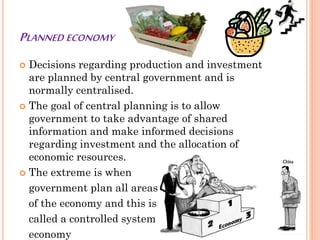
PLANNED ECONOMY
 Decisions regarding production and investment
are planned by central government and is
normally centralised.
 The goal of central planning is to allow
government to take advantage of shared
information and make informed decisions
regarding investment and the allocation of
economic resources.
 The extreme is when
government plan all areas
of the economy and this is
called a controlled system
economy
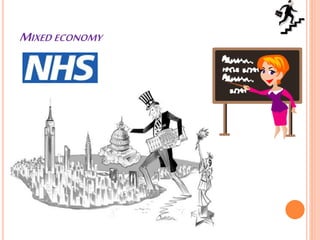
MIXED ECONOMY
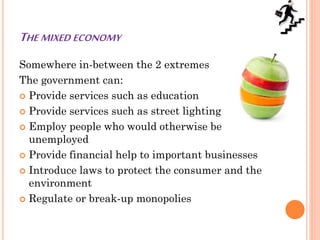
THE MIXED ECONOMY
Somewhere in-between the 2 extremes
The government can:
 Provide services such as education
 Provide services such as street lighting
 Employ people who would otherwise be
unemployed
 Provide financial help to important businesses
 Introduce laws to protect the consumer and the
environment
 Regulate or break-up monopolies
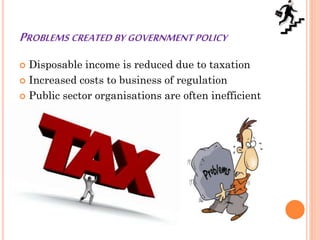
PROBLEMS CREATED BY GOVERNMENT POLICY
 Disposable income is reduced due to taxation
 Increased costs to business of regulation
 Public sector organisations are often inefficient
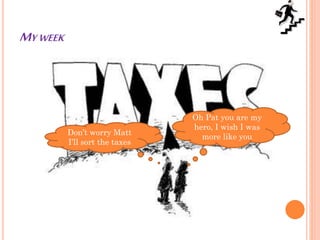
MY WEEK
Don’t worry Matt
I’ll sort the taxes
Oh Pat you are my
hero, I wish I was
more like you
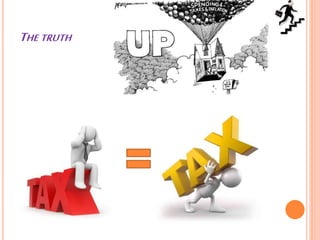
THE TRUTH
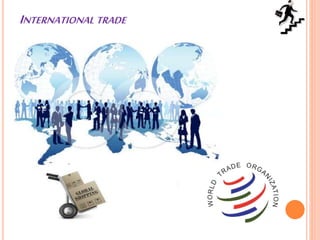
INTERNATIONAL TRADE
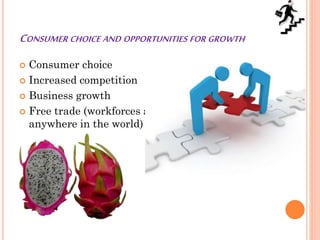
CONSUMER CHOICE AND OPPORTUNITIES FOR GROWTH
 Consumer choice
 Increased competition
 Business growth
 Free trade (workforces and technologies
anywhere in the world)
ADVANTAGES OF INTERNATIONAL TRADE
 Specialisation
 Consumers benefit from imported goods
otherwise not available to them
 Competition
 Economies of scale
 Best workforces
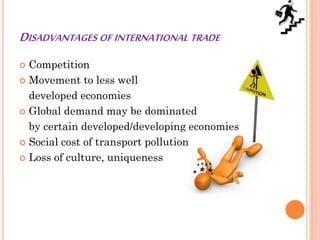
DISADVANTAGES OF INTERNATIONAL TRADE
 Competition
 Movement to less well
developed economies
 Global demand may be dominated
by certain developed/developing economies
 Social cost of transport pollution
 Loss of culture, uniqueness
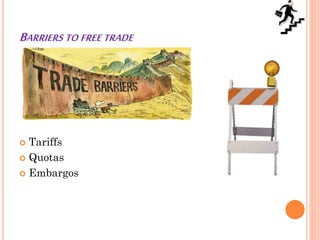
BARRIERS TO FREE TRADE
 Tariffs
 Quotas
 Embargos
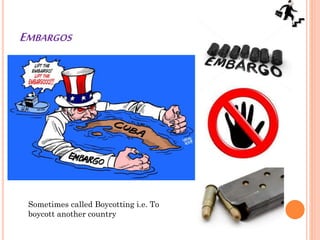
EMBARGOS
Sometimes called Boycotting i.e. To
boycott another country
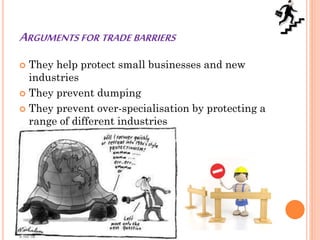
ARGUMENTS FOR TRADE BARRIERS
 They help protect small businesses and new
industries
 They prevent dumping
 They prevent over-specialisation by protecting a
range of different industries
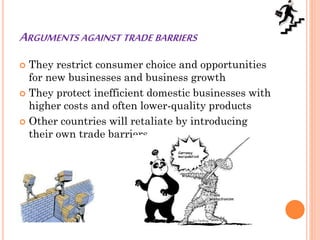
ARGUMENTS AGAINST TRADE BARRIERS
 They restrict consumer choice and opportunities
for new businesses and business growth
 They protect inefficient domestic businesses with
higher costs and often lower-quality products
 Other countries will retaliate by introducing
their own trade barriers
PROBLEMS ENTERING NEW MARKETS ABROAD
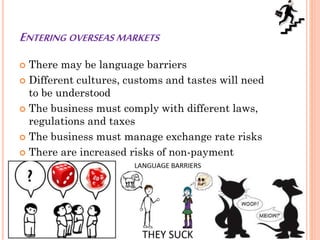
ENTERING OVERSEAS MARKETS
 There may be language barriers
 Different cultures, customs and tastes will need
to be understood
 The business must comply with different laws,
regulations and taxes
 The business must manage exchange rate risks
 There are increased risks of non-payment
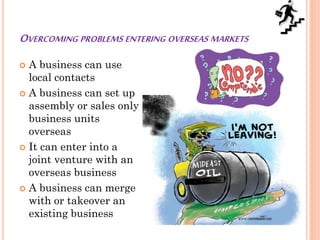
OVERCOMING PROBLEMS ENTERING OVERSEAS MARKETS
 A business can use
local contacts
 A business can set up
assembly or sales only
business units
overseas
 It can enter into a
joint venture with an
overseas business
 A business can merge
with or takeover an
existing business
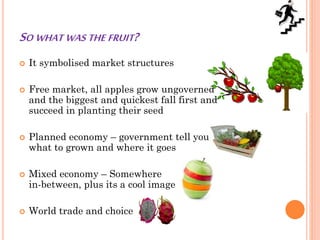
SO WHAT WAS THE FRUIT?
 It symbolised market structures
 Free market, all apples grow ungoverned
and the biggest and quickest fall first and
succeed in planting their seed
 Planned economy – government tell you
what to grown and where it goes
 Mixed economy – Somewhere
in-between, plus its a cool image
 World trade and choice
MIXED MARKET AND MARKET ECONOMIES
WHAT DID WILL WE LEARN TODAY?
 Identify various economic systems
 Understanding of the advantages and
disadvantages of various systems
 Reasons to trade internationally
 Some gibberish about fruit
BUSINESS ACTIVITY
1 – Market economies
2 – International trade
1 - Assess the benefits of
market and mixed
economies
2 – Determine the pros and
cons of conducting business
internationally
3 – Analyse the factors
that will make entering
international market s
difficult
Plenary

Economic systems and fruit

  • 1.
    WHAT WILL WELEARN TODAY?  Identify various economic systems  We will gain understanding of the advantages and disadvantages of various systems  To be able to analyse reasons to trade internationally  Also try to work out what the various fruit represents?????
  • 2.
    CLASS STRUCTURE FORTHE LESSON 1 – Market economies 2 – International trade 1 - Assess the benefits of market and mixed market economies 2 – Determine the pros and cons of conducting business internationally 3 – Analyse the factors that may make entering an international market difficult Plenary
  • 3.
    MIXED MARKET ANDMARKET ECONOMIES
  • 4.
    WHAT IS ANECONOMIC SYSTEM?  Market economic system  Planned economic system  Mixed economic system
  • 5.
    MARKET ECONOMY  Decisionsregarding investment, production and distribution are based on supply and demand factors.  Market economies can range from hypothetical free market to regulated markets and interventionist variants.  Most existing market economies include a degree of economic planning or government direction and are classified as mixed economies.  In the real world, market economies do not exist in pure form
  • 6.
    ADVANTAGES OF AFREE MARKET ECONOMY  A variety of goods and services available  Businesses respond quickly  Businesses will innovate  There is no taxation
  • 7.
    DISADVANTAGES OF AFREE MARKET ECONOMY  Businesses will only produce goods and services that earn a high profit  Businesses will only sell products to consumers who can afford to pay most for them  Resources will only be employed if it is profitable to do so (no NHS etc...)  Harmful goods may be produced if it is profitable to do so  Some producers and consumers may ignore the harmful effects of their decisions on others and the environment  Some firms may dominate the market supply of a particular product (monopolies)
  • 8.
    PLANNED ECONOMY  Decisionsregarding production and investment are planned by central government and is normally centralised.  The goal of central planning is to allow government to take advantage of shared information and make informed decisions regarding investment and the allocation of economic resources.  The extreme is when government plan all areas of the economy and this is called a controlled system economy
  • 9.
  • 10.
    THE MIXED ECONOMY Somewherein-between the 2 extremes The government can:  Provide services such as education  Provide services such as street lighting  Employ people who would otherwise be unemployed  Provide financial help to important businesses  Introduce laws to protect the consumer and the environment  Regulate or break-up monopolies
  • 11.
    PROBLEMS CREATED BYGOVERNMENT POLICY  Disposable income is reduced due to taxation  Increased costs to business of regulation  Public sector organisations are often inefficient
  • 12.
    MY WEEK Don’t worryMatt I’ll sort the taxes Oh Pat you are my hero, I wish I was more like you
  • 13.
  • 14.
  • 15.
    CONSUMER CHOICE ANDOPPORTUNITIES FOR GROWTH  Consumer choice  Increased competition  Business growth  Free trade (workforces and technologies anywhere in the world)
  • 16.
    ADVANTAGES OF INTERNATIONALTRADE  Specialisation  Consumers benefit from imported goods otherwise not available to them  Competition  Economies of scale  Best workforces
  • 17.
    DISADVANTAGES OF INTERNATIONALTRADE  Competition  Movement to less well developed economies  Global demand may be dominated by certain developed/developing economies  Social cost of transport pollution  Loss of culture, uniqueness
  • 18.
    BARRIERS TO FREETRADE  Tariffs  Quotas  Embargos
  • 19.
    EMBARGOS Sometimes called Boycottingi.e. To boycott another country
  • 20.
    ARGUMENTS FOR TRADEBARRIERS  They help protect small businesses and new industries  They prevent dumping  They prevent over-specialisation by protecting a range of different industries
  • 21.
    ARGUMENTS AGAINST TRADEBARRIERS  They restrict consumer choice and opportunities for new businesses and business growth  They protect inefficient domestic businesses with higher costs and often lower-quality products  Other countries will retaliate by introducing their own trade barriers
  • 22.
    PROBLEMS ENTERING NEWMARKETS ABROAD
  • 23.
    ENTERING OVERSEAS MARKETS There may be language barriers  Different cultures, customs and tastes will need to be understood  The business must comply with different laws, regulations and taxes  The business must manage exchange rate risks  There are increased risks of non-payment
  • 24.
    OVERCOMING PROBLEMS ENTERINGOVERSEAS MARKETS  A business can use local contacts  A business can set up assembly or sales only business units overseas  It can enter into a joint venture with an overseas business  A business can merge with or takeover an existing business
  • 25.
    SO WHAT WASTHE FRUIT?  It symbolised market structures  Free market, all apples grow ungoverned and the biggest and quickest fall first and succeed in planting their seed  Planned economy – government tell you what to grown and where it goes  Mixed economy – Somewhere in-between, plus its a cool image  World trade and choice
  • 26.
    MIXED MARKET ANDMARKET ECONOMIES
  • 27.
    WHAT DID WILLWE LEARN TODAY?  Identify various economic systems  Understanding of the advantages and disadvantages of various systems  Reasons to trade internationally  Some gibberish about fruit
  • 28.
    BUSINESS ACTIVITY 1 –Market economies 2 – International trade 1 - Assess the benefits of market and mixed economies 2 – Determine the pros and cons of conducting business internationally 3 – Analyse the factors that will make entering international market s difficult Plenary