 A population is a summation of all the organisms of the

same group or species, who live in the same geographical
area, and have the capability of interbreeding.[1][2] In
ecology the population of a certain species in a certain
area is estimated using the Lincoln Index. The area that
is used to define a sexual population is defined as the
area where inter-breeding is potentially possible between
any pair within the area. The probability of interbreeding
is greater than the probability of cross-breeding with
individuals from other areas. Under normal conditions,
breeding is substantially more common within the area
than across the border.[3]
 The demographics of India are inclusive of the second

most populous country in the world, with over 1.21 billion
people (2011 census), more than a sixth of the world's
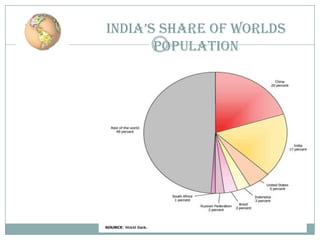
population. Already containing 17.5% of the world's
population, India is projected to be the world's most populous
country by 2025, surpassing China, its population reaching
1.6 billion by 2050.[4][5] Its population growth rate is 1.41%,
ranking 102nd in the world in 2010.[6] Indian population
reached the billion mark in 2000.
 India has more than 50% of its population below the age of 25
and more than 65% below the age of 35. It is expected that, in
2020, the average age of an Indian will be 29 years, compared
to 37 for China and 48 for Japan; and, by 2030,
India's dependency ratio should be just over 0.4.[7]
FACTORS AFFECTING POPULATION







THERE ARE THREE MAIN FACTORS FOR CHANGE OF
POPULATION.THEY ARE:BIRTH RATE
DEATH RATE
MIGRATION
THE NATURAL INCREASE OF POPULATION IS THE
DIFFERENCE BETWEEN BIRTH RATES AND BEATH RATES
PLUS POSITIVE AND/OR NEGATIVE MIGERATION(i.e.
PEOPLE MIGRATING INSIDE THE COUNTRY AND PEOPLE
MIGARATING OUTSIDE THE COUNTRY.
BIRTH AND DEATH RATES

BIRTH RATE IS THE NUMBER OF LIVE
BIRTHS PER THOUSAND IN A YEAR.IT IS A
MAJOR COMPONENT OF GROWTH BECAUSE
IN INDIA,BIRTH RATES HAVE ALWAYS
BEEN HIGHER THAN THE DEATH RATES.
 DEATH RATE IS THE NUMBER OF DEATHS
PER THOUSAND IN A YEAR.THE MAIN
CAUSE OF THE RATE OF GROWTH OF
INDIAN POPULATION HAS BEEN THE
RAPIUD DECLINE IN DEATH RATES.

MIGRATION OF PEOPLE
MIGRATION REFERS TO THE MOVEMENT
OF PEOPLE FROM ONE PLACE TO another
in search for jobs and land
 INTERNAL MIGRATION DOES NOT
CHANGES THE SIZE OF THE
POPULATION BUT INFLUENCES THE
DISTRIBUTION OF POPULATION
WITHIN THE NATION. IN INDIA, MOST
MIGRATION HAS BEEN FROM RURAL TO
URBAN AREAS BECAUSE OF THE “PUSH”
FACTOR IN RURAL AREAS.

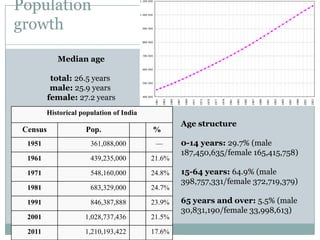
Population
growth
Median age
total: 26.5 years
male: 25.9 years
female: 27.2 years
Historical population of India

Census

Pop.

%

1951

361,088,000

—

1961

439,235,000

21.6%

1971

548,160,000

24.8%

1981

683,329,000

24.7%

1991

846,387,888

23.9%

2001

1,028,737,436

21.5%

2011

1,210,193,422

17.6%

Age structure
0-14 years: 29.7% (male
187,450,635/female 165,415,758)
15-64 years: 64.9% (male
398,757,331/female 372,719,379)
65 years and over: 5.5% (male
30,831,190/female 33,998,613)
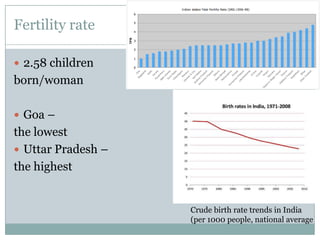
Fertility rate
 2.58 children

born/woman
 Goa –

the lowest
 Uttar Pradesh –
the highest

Crude birth rate trends in India
(per 1000 people, national average
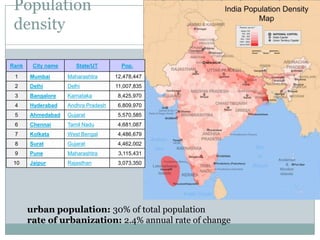
Population
density
Rank

City name

State/UT

Pop.

1

Mumbai

Maharashtra

12,478,447

2

Delhi

Delhi

11,007,835

3

Bangalore

Karnataka

8,425,970

4

Hyderabad

Andhra Pradesh

6,809,970

5

Ahmedabad

Gujarat

5,570,585

6

Chennai

Tamil Nadu

4,681,087

7

Kolkata

West Bengal

4,486,679

8

Surat

Gujarat

4,462,002

9

Pune

Maharashtra

3,115,431

10

Jaipur

Rajasthan

3,073,350

urban population: 30% of total population
rate of urbanization: 2.4% annual rate of change
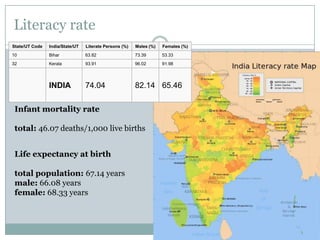
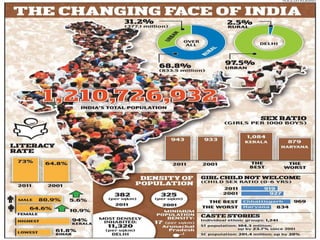
Literacy rate
State/UT Code

India/State/UT

Literate Persons (%)

Males (%)

Females (%)

10

Bihar

63.82

73.39

53.33

32

Kerala

93.91

96.02

91.98

INDIA

74.04

82.14 65.46

Infant mortality rate
total: 46.07 deaths/1,000 live births
Life expectancy at birth
total population: 67.14 years
male: 66.08 years
female: 68.33 years
IndIa’s share of worlds
population
Presentation1 140126022017-phpapp02

Presentation1 140126022017-phpapp02

  • 4.
     A populationis a summation of all the organisms of the same group or species, who live in the same geographical area, and have the capability of interbreeding.[1][2] In ecology the population of a certain species in a certain area is estimated using the Lincoln Index. The area that is used to define a sexual population is defined as the area where inter-breeding is potentially possible between any pair within the area. The probability of interbreeding is greater than the probability of cross-breeding with individuals from other areas. Under normal conditions, breeding is substantially more common within the area than across the border.[3]
  • 5.
     The demographicsof India are inclusive of the second most populous country in the world, with over 1.21 billion people (2011 census), more than a sixth of the world's population. Already containing 17.5% of the world's population, India is projected to be the world's most populous country by 2025, surpassing China, its population reaching 1.6 billion by 2050.[4][5] Its population growth rate is 1.41%, ranking 102nd in the world in 2010.[6] Indian population reached the billion mark in 2000.  India has more than 50% of its population below the age of 25 and more than 65% below the age of 35. It is expected that, in 2020, the average age of an Indian will be 29 years, compared to 37 for China and 48 for Japan; and, by 2030, India's dependency ratio should be just over 0.4.[7]
  • 6.
    FACTORS AFFECTING POPULATION      THEREARE THREE MAIN FACTORS FOR CHANGE OF POPULATION.THEY ARE:BIRTH RATE DEATH RATE MIGRATION THE NATURAL INCREASE OF POPULATION IS THE DIFFERENCE BETWEEN BIRTH RATES AND BEATH RATES PLUS POSITIVE AND/OR NEGATIVE MIGERATION(i.e. PEOPLE MIGRATING INSIDE THE COUNTRY AND PEOPLE MIGARATING OUTSIDE THE COUNTRY.
  • 7.
    BIRTH AND DEATHRATES BIRTH RATE IS THE NUMBER OF LIVE BIRTHS PER THOUSAND IN A YEAR.IT IS A MAJOR COMPONENT OF GROWTH BECAUSE IN INDIA,BIRTH RATES HAVE ALWAYS BEEN HIGHER THAN THE DEATH RATES.  DEATH RATE IS THE NUMBER OF DEATHS PER THOUSAND IN A YEAR.THE MAIN CAUSE OF THE RATE OF GROWTH OF INDIAN POPULATION HAS BEEN THE RAPIUD DECLINE IN DEATH RATES. 
  • 8.
    MIGRATION OF PEOPLE MIGRATIONREFERS TO THE MOVEMENT OF PEOPLE FROM ONE PLACE TO another in search for jobs and land  INTERNAL MIGRATION DOES NOT CHANGES THE SIZE OF THE POPULATION BUT INFLUENCES THE DISTRIBUTION OF POPULATION WITHIN THE NATION. IN INDIA, MOST MIGRATION HAS BEEN FROM RURAL TO URBAN AREAS BECAUSE OF THE “PUSH” FACTOR IN RURAL AREAS. 
  • 9.
    Population growth Median age total: 26.5years male: 25.9 years female: 27.2 years Historical population of India Census Pop. % 1951 361,088,000 — 1961 439,235,000 21.6% 1971 548,160,000 24.8% 1981 683,329,000 24.7% 1991 846,387,888 23.9% 2001 1,028,737,436 21.5% 2011 1,210,193,422 17.6% Age structure 0-14 years: 29.7% (male 187,450,635/female 165,415,758) 15-64 years: 64.9% (male 398,757,331/female 372,719,379) 65 years and over: 5.5% (male 30,831,190/female 33,998,613)
  • 10.
    Fertility rate  2.58children born/woman  Goa – the lowest  Uttar Pradesh – the highest Crude birth rate trends in India (per 1000 people, national average
  • 11.
    Population density Rank City name State/UT Pop. 1 Mumbai Maharashtra 12,478,447 2 Delhi Delhi 11,007,835 3 Bangalore Karnataka 8,425,970 4 Hyderabad Andhra Pradesh 6,809,970 5 Ahmedabad Gujarat 5,570,585 6 Chennai TamilNadu 4,681,087 7 Kolkata West Bengal 4,486,679 8 Surat Gujarat 4,462,002 9 Pune Maharashtra 3,115,431 10 Jaipur Rajasthan 3,073,350 urban population: 30% of total population rate of urbanization: 2.4% annual rate of change
  • 12.
    Literacy rate State/UT Code India/State/UT LiteratePersons (%) Males (%) Females (%) 10 Bihar 63.82 73.39 53.33 32 Kerala 93.91 96.02 91.98 INDIA 74.04 82.14 65.46 Infant mortality rate total: 46.07 deaths/1,000 live births Life expectancy at birth total population: 67.14 years male: 66.08 years female: 68.33 years
  • 13.
    IndIa’s share ofworlds population