Demography
Society
of India
Ass. Professor
Irina Petrosyan
MSU
FFLAS
Demographics: introduction
http://ngm.nationalgeographic.com/7-billion
http://www.economist.com/blogs/multimedia/2010/
11/world_population
• lakh = 100,000
• crore = 10m
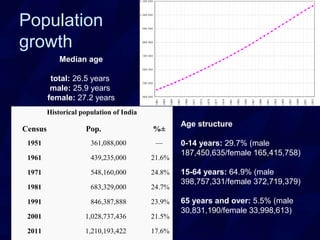
Population
growth
Historical population of India
Census Pop. %±
1951 361,088,000 —
1961 439,235,000 21.6%
1971 548,160,000 24.8%
1981 683,329,000 24.7%
1991 846,387,888 23.9%
2001 1,028,737,436 21.5%
2011 1,210,193,422 17.6%
Age structure
0-14 years: 29.7% (male
187,450,635/female 165,415,758)
15-64 years: 64.9% (male
398,757,331/female 372,719,379)
65 years and over: 5.5% (male
30,831,190/female 33,998,613)
Median age
total: 26.5 years
male: 25.9 years
female: 27.2 years
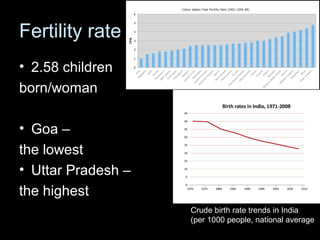
Fertility rate
• 2.58 children
born/woman
• Goa –
the lowest
• Uttar Pradesh –
the highest
Crude birth rate trends in India
(per 1000 people, national average
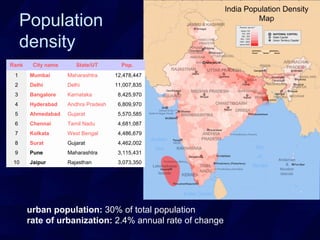
Population
density
Rank City name State/UT Pop.
1 Mumbai Maharashtra 12,478,447
2 Delhi Delhi 11,007,835
3 Bangalore Karnataka 8,425,970
4 Hyderabad Andhra Pradesh 6,809,970
5 Ahmedabad Gujarat 5,570,585
6 Chennai Tamil Nadu 4,681,087
7 Kolkata West Bengal 4,486,679
8 Surat Gujarat 4,462,002
9 Pune Maharashtra 3,115,431
10 Jaipur Rajasthan 3,073,350
urban population: 30% of total population
rate of urbanization: 2.4% annual rate of change
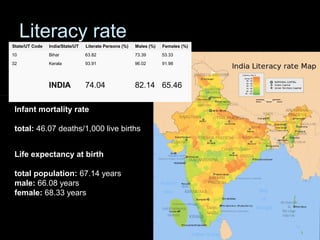
Literacy rate
State/UT Code India/State/UT Literate Persons (%) Males (%) Females (%)
10 Bihar 63.82 73.39 53.33
32 Kerala 93.91 96.02 91.98
INDIA 74.04 82.14 65.46
Infant mortality rate
total: 46.07 deaths/1,000 live births
Life expectancy at birth
total population: 67.14 years
male: 66.08 years
female: 68.33 years
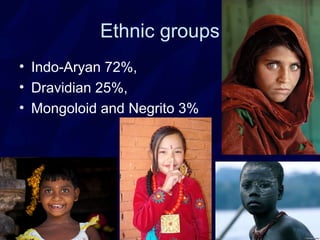
Ethnic groups
• Indo-Aryan 72%,
• Dravidian 25%,
• Mongoloid and Negrito 3%
Genetics
• fewer females since prehistoric times
• tribes and castes – highly differentiated
• Austroasiatic tribals – the earliest settlers in
India (?)
• most population migrated from the northeast
• the Tibeto-Burman tribals – the Austroasiatic
tribals – south China (?)
• the Dravidian tribals – used to be more
widespread but moved to the south
• the upper castes – closer to Central Asian
populations, but not that much in southern India
• “melting pot”
7 billion
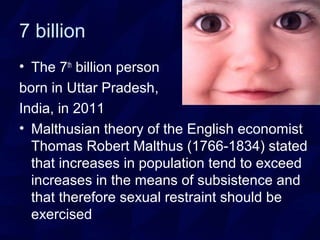
• The 7th
billion person
born in Uttar Pradesh,
India, in 2011
• Malthusian theory of the English economist
Thomas Robert Malthus (1766-1834) stated
that increases in population tend to exceed
increases in the means of subsistence and
that therefore sexual restraint should be
exercised
Population growth implications
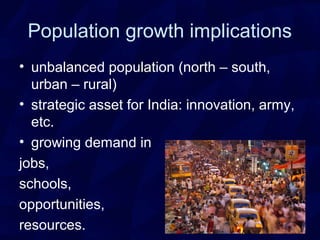
• unbalanced population (north – south,
urban – rural)
• strategic asset for India: innovation, army,
etc.
• growing demand in
jobs,
schools,
opportunities,
resources.
Population growth implications
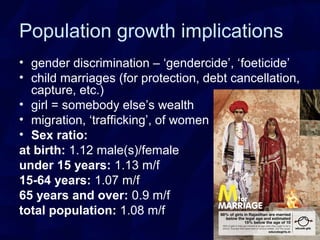
• gender discrimination – ‘gendercide’, ‘foeticide’
• child marriages (for protection, debt cancellation,
capture, etc.)
• girl = somebody else’s wealth
• migration, ‘trafficking’, of women
• Sex ratio:
at birth: 1.12 male(s)/female
under 15 years: 1.13 m/f
15-64 years: 1.07 m/f
65 years and over: 0.9 m/f
total population: 1.08 m/f
Next class
Lecture: Economy
Presentation:
The economic prospects of India
Discussion:
What’s the recipe for economic success?

India: Demography and Society

  • 1.
  • 2.
  • 3.
    Population growth Historical population ofIndia Census Pop. %± 1951 361,088,000 — 1961 439,235,000 21.6% 1971 548,160,000 24.8% 1981 683,329,000 24.7% 1991 846,387,888 23.9% 2001 1,028,737,436 21.5% 2011 1,210,193,422 17.6% Age structure 0-14 years: 29.7% (male 187,450,635/female 165,415,758) 15-64 years: 64.9% (male 398,757,331/female 372,719,379) 65 years and over: 5.5% (male 30,831,190/female 33,998,613) Median age total: 26.5 years male: 25.9 years female: 27.2 years
  • 4.
    Fertility rate • 2.58children born/woman • Goa – the lowest • Uttar Pradesh – the highest Crude birth rate trends in India (per 1000 people, national average
  • 5.
    Population density Rank City nameState/UT Pop. 1 Mumbai Maharashtra 12,478,447 2 Delhi Delhi 11,007,835 3 Bangalore Karnataka 8,425,970 4 Hyderabad Andhra Pradesh 6,809,970 5 Ahmedabad Gujarat 5,570,585 6 Chennai Tamil Nadu 4,681,087 7 Kolkata West Bengal 4,486,679 8 Surat Gujarat 4,462,002 9 Pune Maharashtra 3,115,431 10 Jaipur Rajasthan 3,073,350 urban population: 30% of total population rate of urbanization: 2.4% annual rate of change
  • 6.
    Literacy rate State/UT CodeIndia/State/UT Literate Persons (%) Males (%) Females (%) 10 Bihar 63.82 73.39 53.33 32 Kerala 93.91 96.02 91.98 INDIA 74.04 82.14 65.46 Infant mortality rate total: 46.07 deaths/1,000 live births Life expectancy at birth total population: 67.14 years male: 66.08 years female: 68.33 years
  • 7.
    Ethnic groups • Indo-Aryan72%, • Dravidian 25%, • Mongoloid and Negrito 3%
  • 8.
    Genetics • fewer femalessince prehistoric times • tribes and castes – highly differentiated • Austroasiatic tribals – the earliest settlers in India (?) • most population migrated from the northeast • the Tibeto-Burman tribals – the Austroasiatic tribals – south China (?) • the Dravidian tribals – used to be more widespread but moved to the south • the upper castes – closer to Central Asian populations, but not that much in southern India • “melting pot”
  • 9.
    7 billion • The7th billion person born in Uttar Pradesh, India, in 2011 • Malthusian theory of the English economist Thomas Robert Malthus (1766-1834) stated that increases in population tend to exceed increases in the means of subsistence and that therefore sexual restraint should be exercised
  • 10.
    Population growth implications •unbalanced population (north – south, urban – rural) • strategic asset for India: innovation, army, etc. • growing demand in jobs, schools, opportunities, resources.
  • 11.
    Population growth implications •gender discrimination – ‘gendercide’, ‘foeticide’ • child marriages (for protection, debt cancellation, capture, etc.) • girl = somebody else’s wealth • migration, ‘trafficking’, of women • Sex ratio: at birth: 1.12 male(s)/female under 15 years: 1.13 m/f 15-64 years: 1.07 m/f 65 years and over: 0.9 m/f total population: 1.08 m/f
  • 12.
    Next class Lecture: Economy Presentation: Theeconomic prospects of India Discussion: What’s the recipe for economic success?