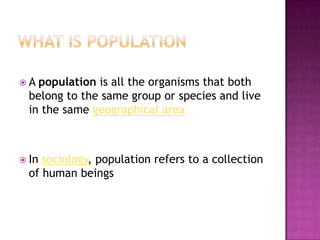
 A population is all the organisms that both
belong to the same group or species and live
in the same geographical area
 In sociology, population refers to a collection
of human beings
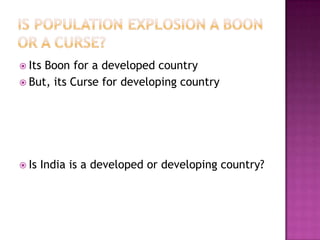
 Its Boon for a developed country
 But, its Curse for developing country
 Is India is a developed or developing country?
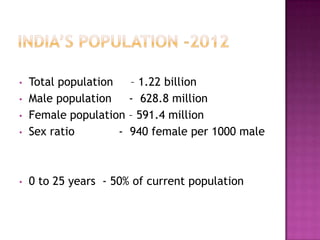
• Total population – 1.22 billion
• Male population - 628.8 million
• Female population – 591.4 million
• Sex ratio - 940 female per 1000 male
• 0 to 25 years - 50% of current population
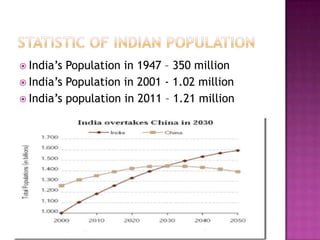
 India‟s Population in 1947 – 350 million
 India‟s Population in 2001 - 1.02 million
 India‟s population in 2011 – 1.21 million
 Population change = (Births + Immigration)
– (Deaths + Emigration)
 The increase in birth rates due to medical
improvements
 The decrease in death rates due to better
medical facilities .
 Immigration to better developed countries
due to better job opportunities and natural
causes like hurricanes, earthquakes, and so
forth.
 BIRTH RATE
 DEATH RATE
 MIGRATION
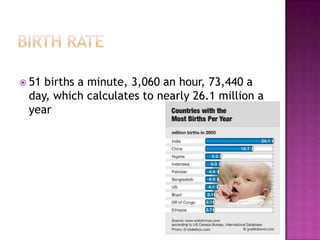
 51 births a minute, 3,060 an hour, 73,440 a
day, which calculates to nearly 26.1 million a
year
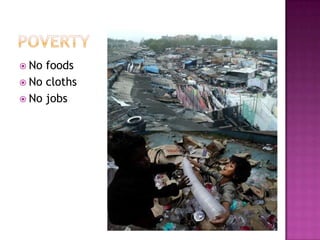
 No foods
 No cloths
 No jobs
 According to ABC News, the famous Indian
author, Shobha De said, “God said „Go forth
and produce‟ and we just went ahead and
did exactly that.”
 Another one of India‟s cultural norms is for a
girl to get married at an early age. In most of
the rural areas and in some urban areas as
well,
 The crude death rate in India in 1981 was
approximately 12.5, and that decreased to
approximately 8.7 in 1999.
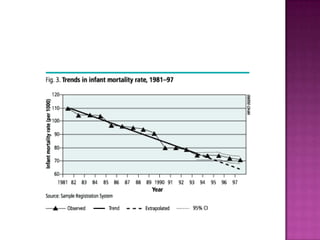
 The infant mortality rate in India decreased
from 129 in 1981 to approximately 72 in 1999
 This development is good for the economy
and society of India, but strictly in terms of
population, this advancement has further
enhanced the increase in population.
 Better Education
 Job Opportunity
 currently the migration in India is –0.08
migrants per 1000 population
 Air Pollution
 Water Pollution
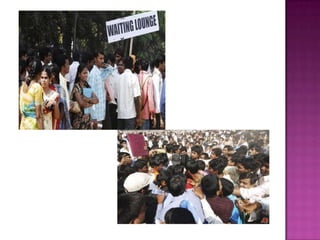
 Unemployment and Illiteracy
 Food Resources
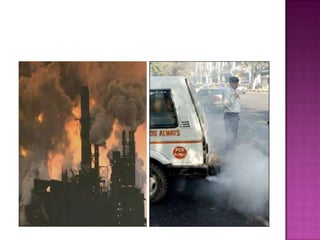
 Increase in 2O C in air temperatures will be
enough to decrease the rice yield by 0.75
ton/hectare.
 It is also estimated that a drastic
increase in greenhouse gases like
carbon dioxide may cause wheat
production to fall as much as 68%.
 Additionally, the changing climatic
conditions have the potential to
significantly increase tropical
disturbances like cyclones and storms in
coastal regions
 There is no life without water.
 One might think that 70% of the earth is
covered with water, so, why worry about the
water problem?
 In fact, 3 sides of the Indian subcontinent is
surrounded by water. And there are several
rivers, lakes, and other sources of water
within the country as well
 However the fact is that less than 3 percent
of that water we see can be used for human
consumption and industrial uses.
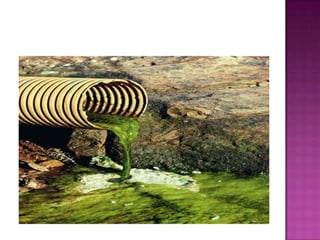
 Petroleum products required for automobiles,
cooking, and other such human activities.
 Pesticides and herbicides used for agriculture
by the Indian farmers.
 Heavy metals from industries, automobiles‟
exhausts and mines.
 Hazardous wastes.
 Excessive organic matter like fertilizers and
other organic matter used by farmers.
 Sediments caused by soil erosion produced by
strip mines, agriculture and roads.
 Thermal pollution caused by deforestation.
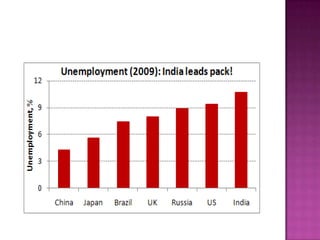
 in 1972-73, unemployment rates in rural
areas were 1.2 for males and 0.5 for
females, and in urban areas, it was 4.8 for
males and 6.0 for females.
 This unemployment rate rose to 2.3 for
males and 1.5 for females in rural areas and
4.9 for males and 8.2 for females in urban
areas in 1998-99.
 Resources are always limited. And in a
developing and highly populous country like
India, resources are even scarcer
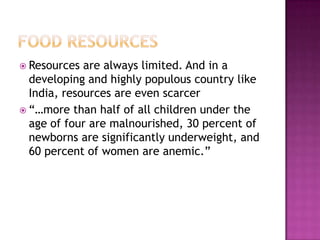
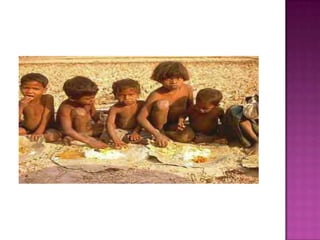
 “…more than half of all children under the
age of four are malnourished, 30 percent of
newborns are significantly underweight, and
60 percent of women are anemic.”
 The government of India has been organizing
several programs for limiting the population
increase and has been spending millions of
dollars on controlling the birth rate.
 Family Planning
 Two-child family
 This is the right time to plan seriously about
this issues
 If we fail, even God cannot help
 If population increase leads us back in time
to the Stone Age, then what is the advantage
of years of technological advancements and
our hard work?
 Can we really enjoy a newborn in our lives when
we know that we would not be able to give our
child the basic necessities of life?
 Being a Student, is that not our responsibility to
wish for the best for our future generations?
 I want my future generations to live in India and
cherish the beauty of the land, its monuments
and rich culture that we Indians are so proud of,
while living a happy sustainable life with all the
basic amenities readily available without fighting
for it or bargaining for it.
 I want my future generations to have a happy
successful career and life, and at the same
time, enjoy the beauty of nature in its
fullest.
 I want my future generations to see and have
the world as it was meant to be, and not
what we have made it into.
dinovesper@facebook.com

Population and its impact in india

  • 2.
     A populationis all the organisms that both belong to the same group or species and live in the same geographical area  In sociology, population refers to a collection of human beings
  • 3.
     Its Boonfor a developed country  But, its Curse for developing country  Is India is a developed or developing country?
  • 4.
    • Total population– 1.22 billion • Male population - 628.8 million • Female population – 591.4 million • Sex ratio - 940 female per 1000 male • 0 to 25 years - 50% of current population
  • 5.
     India‟s Populationin 1947 – 350 million  India‟s Population in 2001 - 1.02 million  India‟s population in 2011 – 1.21 million
  • 6.
     Population change= (Births + Immigration) – (Deaths + Emigration)  The increase in birth rates due to medical improvements  The decrease in death rates due to better medical facilities .  Immigration to better developed countries due to better job opportunities and natural causes like hurricanes, earthquakes, and so forth.
  • 7.
     BIRTH RATE DEATH RATE  MIGRATION
  • 8.
     51 birthsa minute, 3,060 an hour, 73,440 a day, which calculates to nearly 26.1 million a year
  • 9.
     No foods No cloths  No jobs
  • 10.
     According toABC News, the famous Indian author, Shobha De said, “God said „Go forth and produce‟ and we just went ahead and did exactly that.”  Another one of India‟s cultural norms is for a girl to get married at an early age. In most of the rural areas and in some urban areas as well,
  • 11.
     The crudedeath rate in India in 1981 was approximately 12.5, and that decreased to approximately 8.7 in 1999.  The infant mortality rate in India decreased from 129 in 1981 to approximately 72 in 1999  This development is good for the economy and society of India, but strictly in terms of population, this advancement has further enhanced the increase in population.
  • 13.
     Better Education Job Opportunity  currently the migration in India is –0.08 migrants per 1000 population
  • 14.
     Air Pollution Water Pollution  Unemployment and Illiteracy  Food Resources
  • 15.
     Increase in2O C in air temperatures will be enough to decrease the rice yield by 0.75 ton/hectare.  It is also estimated that a drastic increase in greenhouse gases like carbon dioxide may cause wheat production to fall as much as 68%.  Additionally, the changing climatic conditions have the potential to significantly increase tropical disturbances like cyclones and storms in coastal regions
  • 17.
     There isno life without water.  One might think that 70% of the earth is covered with water, so, why worry about the water problem?  In fact, 3 sides of the Indian subcontinent is surrounded by water. And there are several rivers, lakes, and other sources of water within the country as well  However the fact is that less than 3 percent of that water we see can be used for human consumption and industrial uses.
  • 18.
     Petroleum productsrequired for automobiles, cooking, and other such human activities.  Pesticides and herbicides used for agriculture by the Indian farmers.  Heavy metals from industries, automobiles‟ exhausts and mines.  Hazardous wastes.  Excessive organic matter like fertilizers and other organic matter used by farmers.  Sediments caused by soil erosion produced by strip mines, agriculture and roads.  Thermal pollution caused by deforestation.
  • 20.
     in 1972-73,unemployment rates in rural areas were 1.2 for males and 0.5 for females, and in urban areas, it was 4.8 for males and 6.0 for females.  This unemployment rate rose to 2.3 for males and 1.5 for females in rural areas and 4.9 for males and 8.2 for females in urban areas in 1998-99.
  • 23.
     Resources arealways limited. And in a developing and highly populous country like India, resources are even scarcer  “…more than half of all children under the age of four are malnourished, 30 percent of newborns are significantly underweight, and 60 percent of women are anemic.”
  • 25.
     The governmentof India has been organizing several programs for limiting the population increase and has been spending millions of dollars on controlling the birth rate.  Family Planning  Two-child family
  • 26.
     This isthe right time to plan seriously about this issues  If we fail, even God cannot help  If population increase leads us back in time to the Stone Age, then what is the advantage of years of technological advancements and our hard work?
  • 27.
     Can wereally enjoy a newborn in our lives when we know that we would not be able to give our child the basic necessities of life?  Being a Student, is that not our responsibility to wish for the best for our future generations?  I want my future generations to live in India and cherish the beauty of the land, its monuments and rich culture that we Indians are so proud of, while living a happy sustainable life with all the basic amenities readily available without fighting for it or bargaining for it.
  • 28.
     I wantmy future generations to have a happy successful career and life, and at the same time, enjoy the beauty of nature in its fullest.  I want my future generations to see and have the world as it was meant to be, and not what we have made it into.
  • 29.