PRESENTATION
TECHNIQUES
It is the process of present the content of a
topic to an audience consisting of one or
more persons.
It utilizes some visual aids.
It is generally a PowerPoint file containing all
the slides for a given speech.
Techniques of Presentation
 Maintain good eye contact.
 Vary your speaking volume.
 Use pauses.
 Do not read your presentation.
 Don’t stand between the audience and
slides.
 Use stories, questions, clips, examples etc.
 Do not put both hands in your pockets for
long time.
 Speak to audience. Not to the visuals.
 Speak clearly and loudly enough.
 Circulate around the room as you speak.
 Discuss your main theme with yourself at
the beginning of the presentation.
Are the Visual Aids easy to read and
easy to understand?
Can they be easily seen from all areas
of the room?
TIPS ON VISUAL AIDS
Sign to detect that audience
is not Listening
O Start to look down.
O Touch or rub the face, hand or hair.
O Yawn.
O Fidget.
O Sigh heavily.
O Whisper.
O Tape their feet.
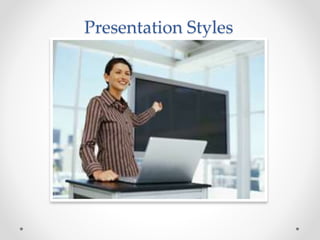
Presentation Styles
PRESENTATION STYLES.
 Presentation Styles and Personal confidence
are as important as the actual content of the
presentation itself.
 Effective presenters recognize that
communication is both intellectual and
emotional.
 The other most and important task is to gain
and maintain the attention of the audience.
*
*Convey “controlled enthusiasm” for your
subject – the audience will forgive a lot of if
the speaker is enthusiastic.
*Pay attention to postures and tone.
*Your audience will mirror your attitude –
radiate confidence without preaching.
*Candidly discuss pros and cons; explain
advantages first and then the risks and
challenges.
GainingAudienceInterest
 Presentations are the movie not
snapshots; prepare the space for
movement.
 Alternate moving and standing still,
speaking and listening, doing and
thinking, use physical space and
body movement to enhance your
message.
 Eye contact is your primary tool for
establishing audience involvement,
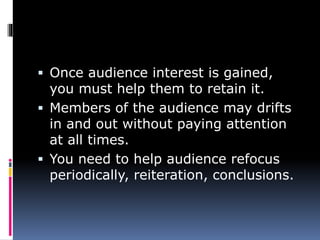
 Once audience interest is gained,
you must help them to retain it.
 Members of the audience may drifts
in and out without paying attention
at all times.
 You need to help audience refocus
periodically, reiteration, conclusions.
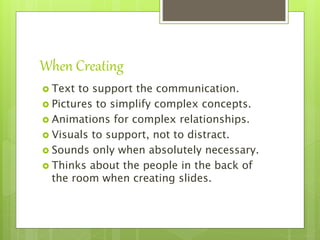
When Creating
 Text to support the communication.
 Pictures to simplify complex concepts.
 Animations for complex relationships.
 Visuals to support, not to distract.
 Sounds only when absolutely necessary.
 Thinks about the people in the back of
the room when creating slides.
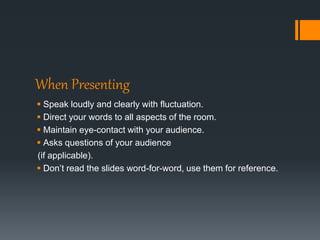
When Presenting
 Speak loudly and clearly with fluctuation.
 Direct your words to all aspects of the room.
 Maintain eye-contact with your audience.
 Asks questions of your audience
(if applicable).
 Don’t read the slides word-for-word, use them for reference.
Closing Remarks
O Practice your presentation before a neutral
audience – asks for feedback.
Be particular about the time allotted for
presentation.
O Leave time for questions.
CU-294-2015
BSCS F2015A
*

Presentation techniques and presentation style

  • 2.
  • 3.
    It is theprocess of present the content of a topic to an audience consisting of one or more persons. It utilizes some visual aids. It is generally a PowerPoint file containing all the slides for a given speech.
  • 4.
  • 5.
     Maintain goodeye contact.  Vary your speaking volume.  Use pauses.  Do not read your presentation.  Don’t stand between the audience and slides.  Use stories, questions, clips, examples etc.
  • 6.
     Do notput both hands in your pockets for long time.  Speak to audience. Not to the visuals.  Speak clearly and loudly enough.  Circulate around the room as you speak.  Discuss your main theme with yourself at the beginning of the presentation.
  • 7.
    Are the VisualAids easy to read and easy to understand? Can they be easily seen from all areas of the room? TIPS ON VISUAL AIDS
  • 9.
    Sign to detectthat audience is not Listening O Start to look down. O Touch or rub the face, hand or hair. O Yawn. O Fidget. O Sigh heavily. O Whisper. O Tape their feet.
  • 10.
  • 11.
    PRESENTATION STYLES.  PresentationStyles and Personal confidence are as important as the actual content of the presentation itself.  Effective presenters recognize that communication is both intellectual and emotional.  The other most and important task is to gain and maintain the attention of the audience.
  • 12.
    * *Convey “controlled enthusiasm”for your subject – the audience will forgive a lot of if the speaker is enthusiastic. *Pay attention to postures and tone. *Your audience will mirror your attitude – radiate confidence without preaching. *Candidly discuss pros and cons; explain advantages first and then the risks and challenges.
  • 13.
    GainingAudienceInterest  Presentations arethe movie not snapshots; prepare the space for movement.  Alternate moving and standing still, speaking and listening, doing and thinking, use physical space and body movement to enhance your message.  Eye contact is your primary tool for establishing audience involvement,
  • 14.
     Once audienceinterest is gained, you must help them to retain it.  Members of the audience may drifts in and out without paying attention at all times.  You need to help audience refocus periodically, reiteration, conclusions.
  • 16.
    When Creating  Textto support the communication.  Pictures to simplify complex concepts.  Animations for complex relationships.  Visuals to support, not to distract.  Sounds only when absolutely necessary.  Thinks about the people in the back of the room when creating slides.
  • 17.
    When Presenting  Speakloudly and clearly with fluctuation.  Direct your words to all aspects of the room.  Maintain eye-contact with your audience.  Asks questions of your audience (if applicable).  Don’t read the slides word-for-word, use them for reference.
  • 18.
    Closing Remarks O Practiceyour presentation before a neutral audience – asks for feedback. Be particular about the time allotted for presentation. O Leave time for questions.
  • 19.