




Predicates
By,
Mahnoor
Predicate
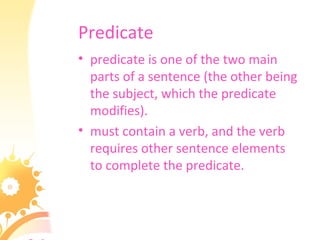
• predicate is one of the two main
parts of a sentence (the other being
the subject, which the predicate
modifies).
• must contain a verb, and the verb
requires other sentence elements
to complete the predicate.
Predicate
• These elements are: objects (direct, indirect,
prepositional), predicatives and adverbials.
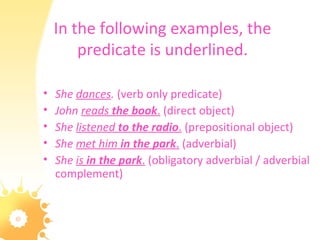
In the following examples, the
predicate is underlined.
• She dances. (verb only predicate)
• John reads the book. (direct object)
• She listened to the radio. (prepositional object)
• She met him in the park. (adverbial)
• She is in the park. (obligatory adverbial / adverbial
complement)
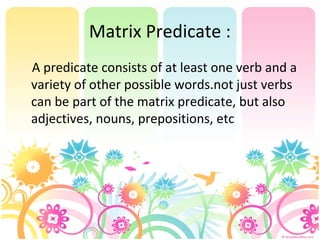
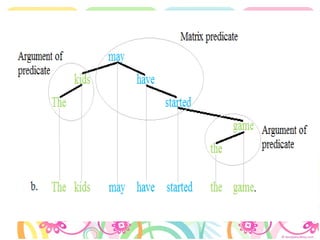
Matrix Predicate :
A predicate consists of at least one verb and a
variety of other possible words.not just verbs
can be part of the matrix predicate, but also
adjectives, nouns, prepositions, etc
Predicates
• Compound Predicate
• Complete Predicate
• Predicate Adjective
• Predicate Nominative
Compound Predicate
• is a predicate with two or more verbs
joined by the word and or another
conjunction. Compound predicates
share the same subject.
Example:
Jan jumped on her bike. Jan rode around the
block.
Jan jumped on her bike and rode around the
block.
The compound predicate is 'jumped on her
bike and rode around the block.' The subject
in both the sentences is Jan.
Complete Predicate
• The part that tells what is said about the
subject is the complete  predicate.
Ex.
Edith and Mike are watching the storm
from the window.
Predicate Adjective
• A predicate adjective (also called a subject
complement) modifies the subject like other
descriptive adjectives, but it must follow a linking
verb in a sentence.
• These verbs are linking verbs only if they are
followed by adjectives, nouns, or pronouns that
rename the subject.
Example:
This cake is GOOD. (good cake)
Her hair looks so SHINY. (shiny hair)
Predicate Adjective
Linking Verbs
• is, become, seen, grow, turn, prove, look, feel, sound,
smell, taste, appear, remain, keep and stay.
1. Sarah looks OLDER with makeup.
2. The children remained CALM.
3. You are UNREASONABLE.
4. You are PATIENT today.
5. Babette grew TIRED of waiting.
Predicate Nominative
• A predicate nominative is a noun or
pronoun which follows the verb and
describes or renames the subject.
• It is another way of naming the subject.
• It follows a linking verb.
Predicate Nominative
• Defines the subject.
Ex.
John is a plumber.
Mike is a vet.
Richard is a teacher.
Cas is a Canadian.
Predicator
• In clauses and sentences, the head of a verb
phrase. The predicator is sometimes called the
main verb.
• Some linguists use the term predicator to
refer to the whole verb group in a clause.
Predicator
• it specifies the voice of the clause: the
distinction between active voice and passive
voice will be expressed through the
Predicator."
Example
• (Henry James wrote 'The Bostonians')
• ('The Bostonians' was written by Henry
James)
Predicate

Predicate

  • 1.
  • 2.
    Predicate • predicate isone of the two main parts of a sentence (the other being the subject, which the predicate modifies). • must contain a verb, and the verb requires other sentence elements to complete the predicate.
  • 3.
    Predicate • These elementsare: objects (direct, indirect, prepositional), predicatives and adverbials.
  • 4.
    In the followingexamples, the predicate is underlined. • She dances. (verb only predicate) • John reads the book. (direct object) • She listened to the radio. (prepositional object) • She met him in the park. (adverbial) • She is in the park. (obligatory adverbial / adverbial complement)
  • 5.
    Matrix Predicate : Apredicate consists of at least one verb and a variety of other possible words.not just verbs can be part of the matrix predicate, but also adjectives, nouns, prepositions, etc
  • 7.
    Predicates • Compound Predicate •Complete Predicate • Predicate Adjective • Predicate Nominative
  • 8.
    Compound Predicate • isa predicate with two or more verbs joined by the word and or another conjunction. Compound predicates share the same subject.
  • 9.
    Example: Jan jumped onher bike. Jan rode around the block. Jan jumped on her bike and rode around the block. The compound predicate is 'jumped on her bike and rode around the block.' The subject in both the sentences is Jan.
  • 10.
    Complete Predicate • Thepart that tells what is said about the subject is the complete  predicate. Ex. Edith and Mike are watching the storm from the window.
  • 11.
    Predicate Adjective • Apredicate adjective (also called a subject complement) modifies the subject like other descriptive adjectives, but it must follow a linking verb in a sentence. • These verbs are linking verbs only if they are followed by adjectives, nouns, or pronouns that rename the subject. Example: This cake is GOOD. (good cake) Her hair looks so SHINY. (shiny hair)
  • 12.
    Predicate Adjective Linking Verbs •is, become, seen, grow, turn, prove, look, feel, sound, smell, taste, appear, remain, keep and stay. 1. Sarah looks OLDER with makeup. 2. The children remained CALM. 3. You are UNREASONABLE. 4. You are PATIENT today. 5. Babette grew TIRED of waiting.
  • 13.
    Predicate Nominative • Apredicate nominative is a noun or pronoun which follows the verb and describes or renames the subject. • It is another way of naming the subject. • It follows a linking verb.
  • 14.
    Predicate Nominative • Definesthe subject. Ex. John is a plumber. Mike is a vet. Richard is a teacher. Cas is a Canadian.
  • 15.
    Predicator • In clausesand sentences, the head of a verb phrase. The predicator is sometimes called the main verb. • Some linguists use the term predicator to refer to the whole verb group in a clause.
  • 16.
    Predicator • it specifiesthe voice of the clause: the distinction between active voice and passive voice will be expressed through the Predicator."
  • 17.
    Example • (Henry Jameswrote 'The Bostonians') • ('The Bostonians' was written by Henry James)