TYPES OF PHRASES
&
WHAT ARE PHRASES?
Presenter : Priscella Sofea
WHAT ARE PHRASES?
A phrase is a group of words without both a subject
and predicate.
Phrases combine words into a larger unit that can
function as a sentence element.
For example, a participial phrase can include
adjectives, nouns, prepositions and adverbs; as a
single unit, however, it functions as one big
adjective modifying a noun (or noun phrase).
TYPES OF PHRASES
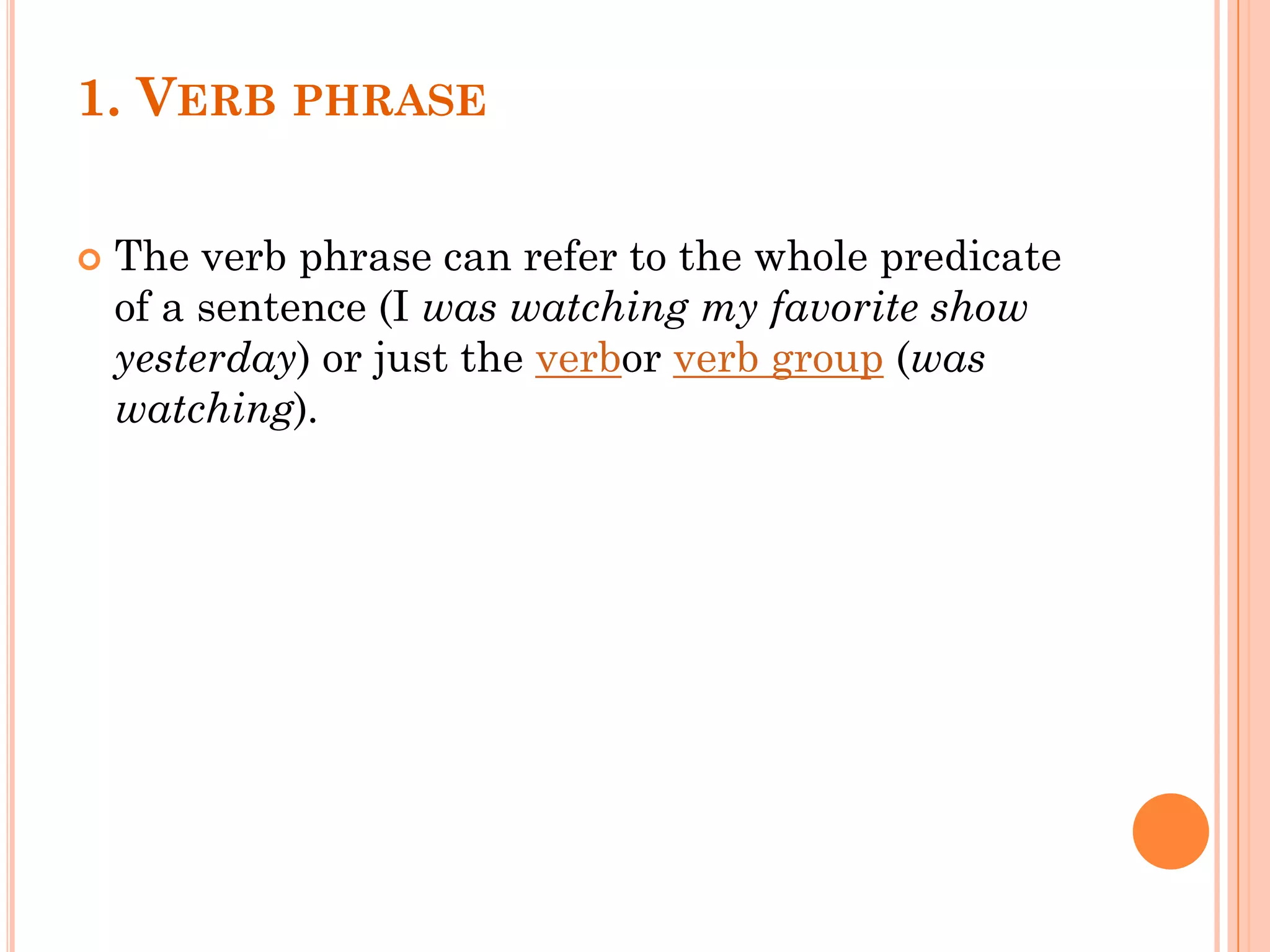
1. VERB PHRASE
 The verb phrase can refer to the whole predicate
of a sentence (I was watching my favorite show
yesterday) or just the verbor verb group (was
watching).
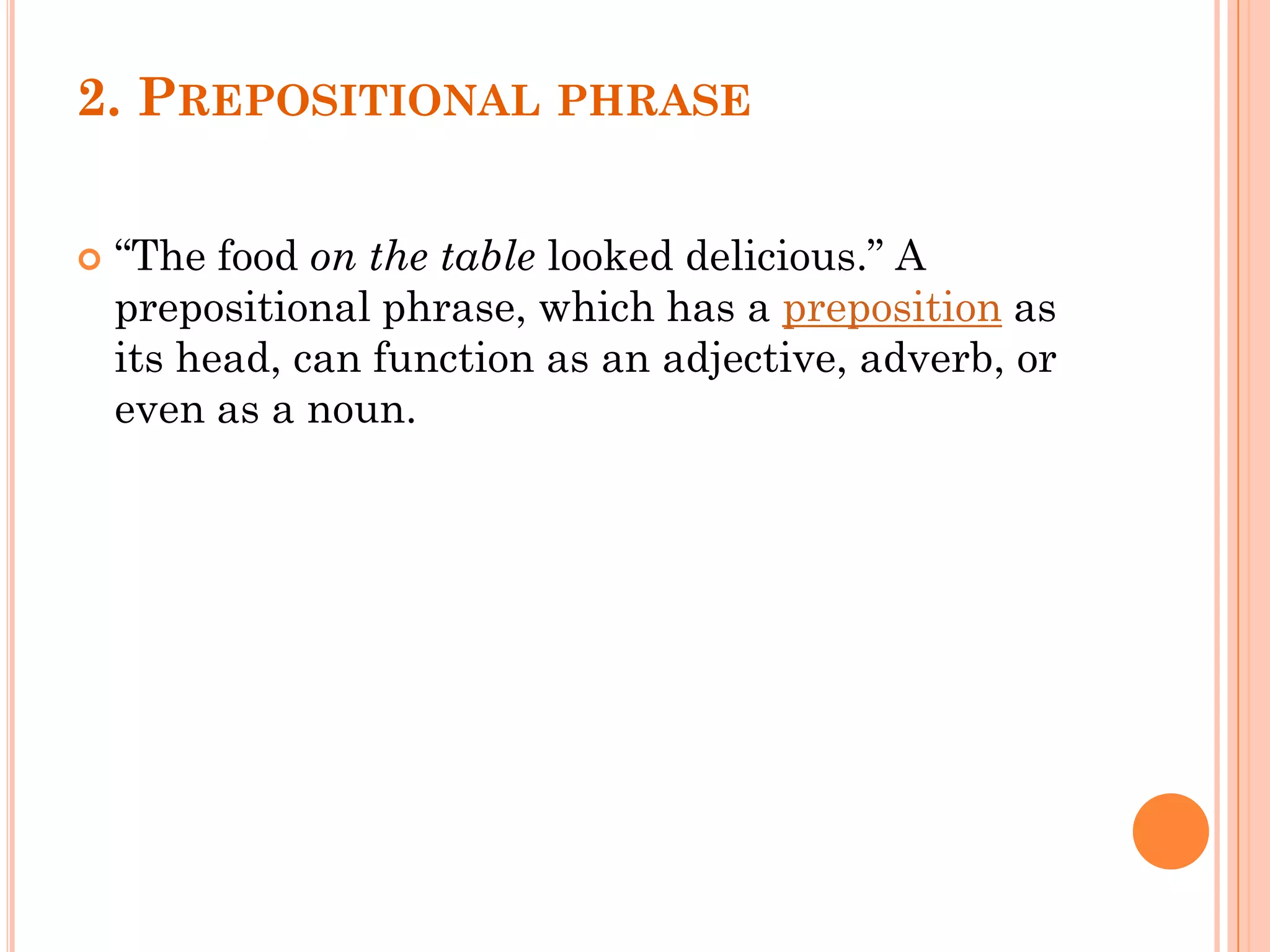
2. PREPOSITIONAL PHRASE
 “The food on the table looked delicious.” A
prepositional phrase, which has a preposition as
its head, can function as an adjective, adverb, or
even as a noun.
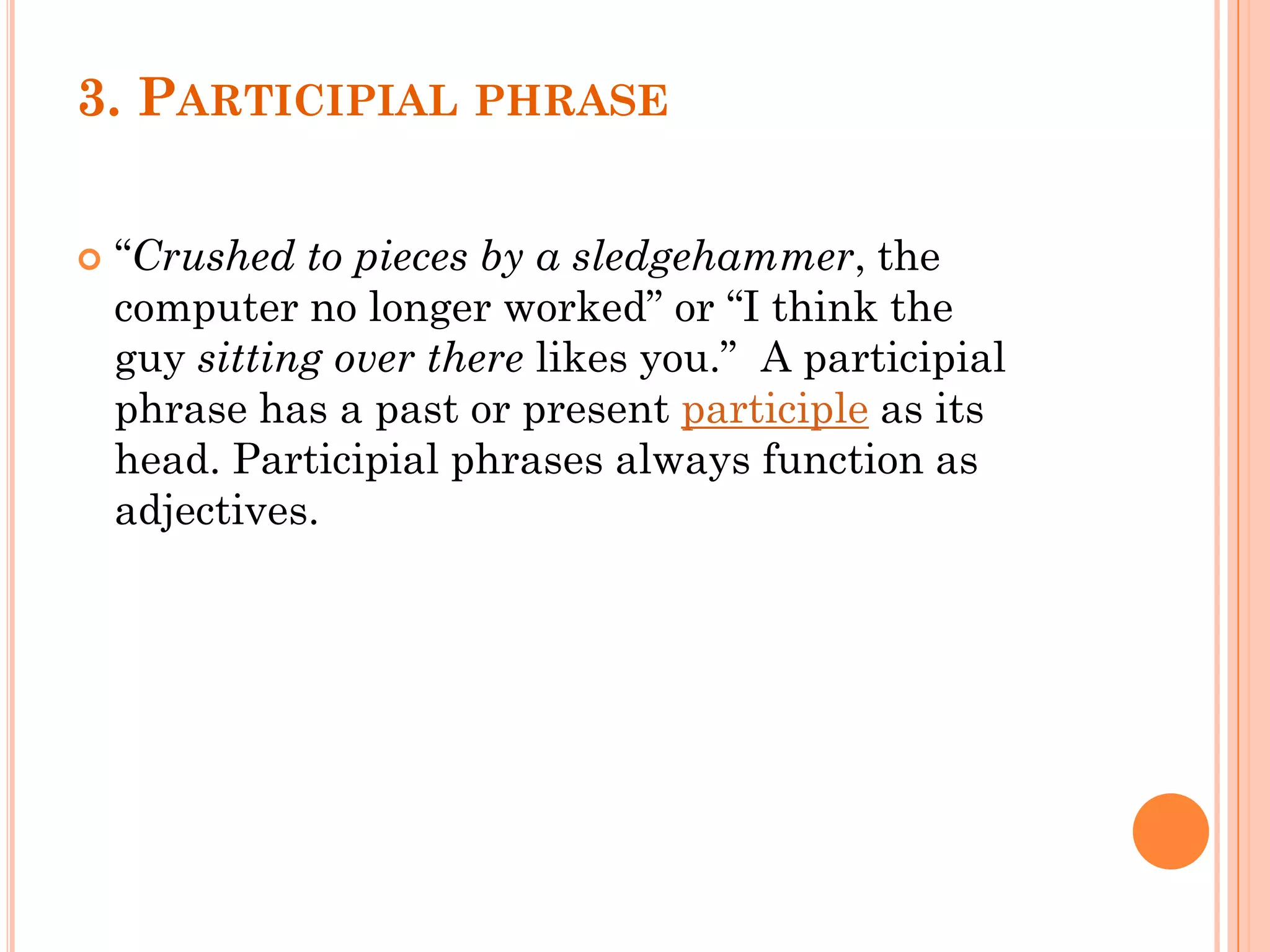
3. PARTICIPIAL PHRASE
 “Crushed to pieces by a sledgehammer, the
computer no longer worked” or “I think the
guy sitting over there likes you.” A participial
phrase has a past or present participle as its
head. Participial phrases always function as
adjectives.
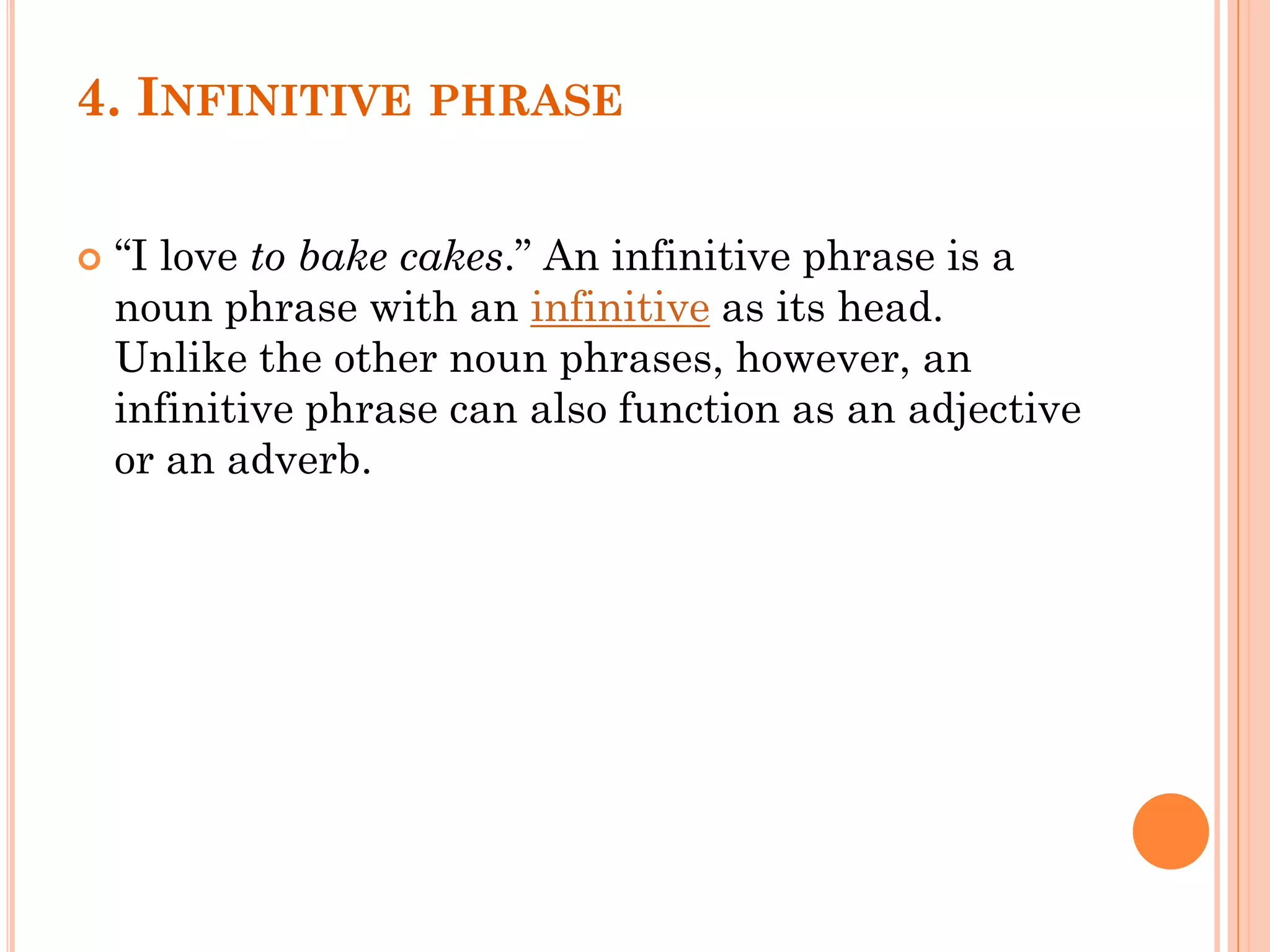
4. INFINITIVE PHRASE
 “I love to bake cakes.” An infinitive phrase is a
noun phrase with an infinitive as its head.
Unlike the other noun phrases, however, an
infinitive phrase can also function as an adjective
or an adverb.
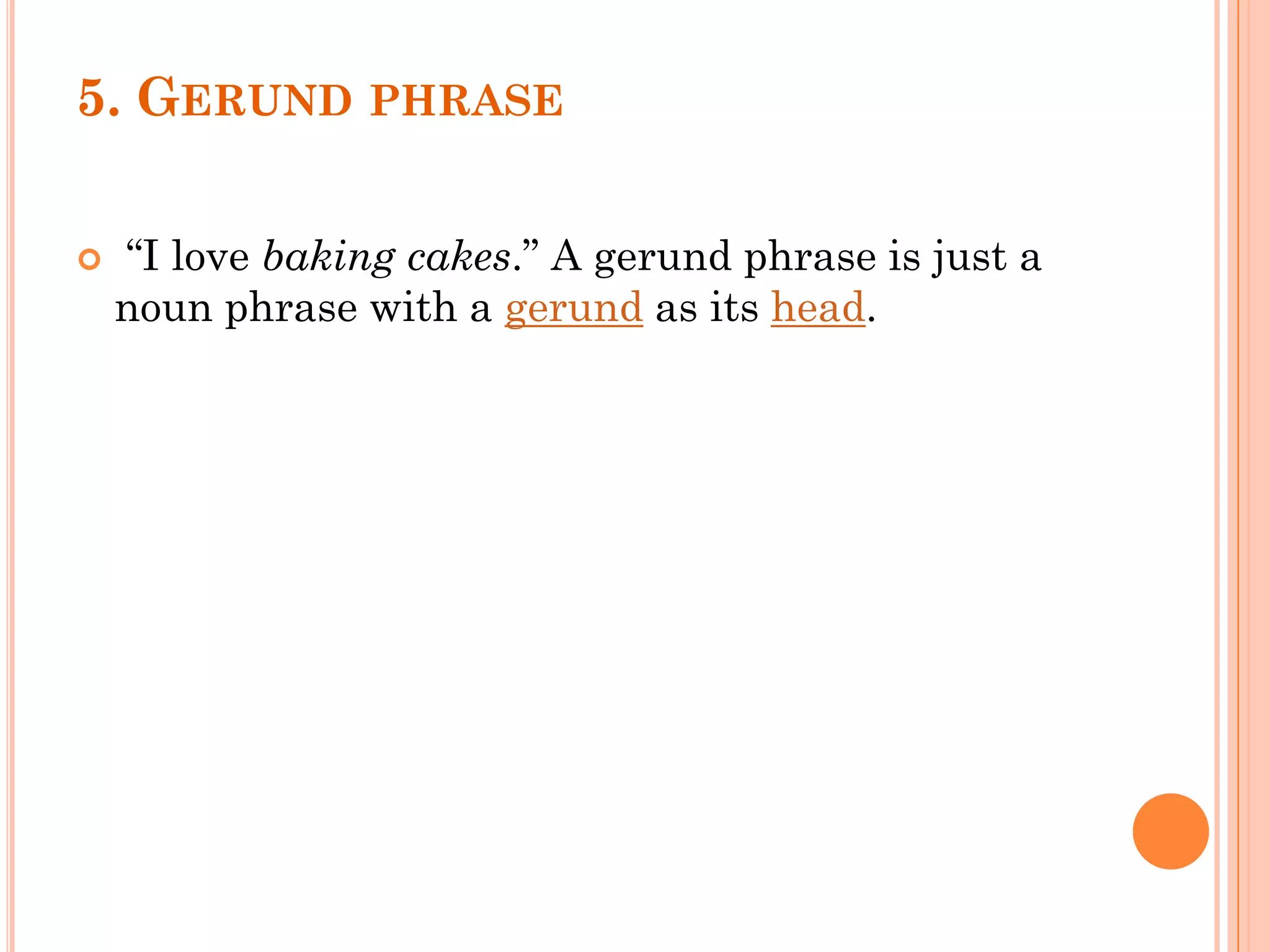
5. GERUND PHRASE
 “I love baking cakes.” A gerund phrase is just a
noun phrase with a gerund as its head.
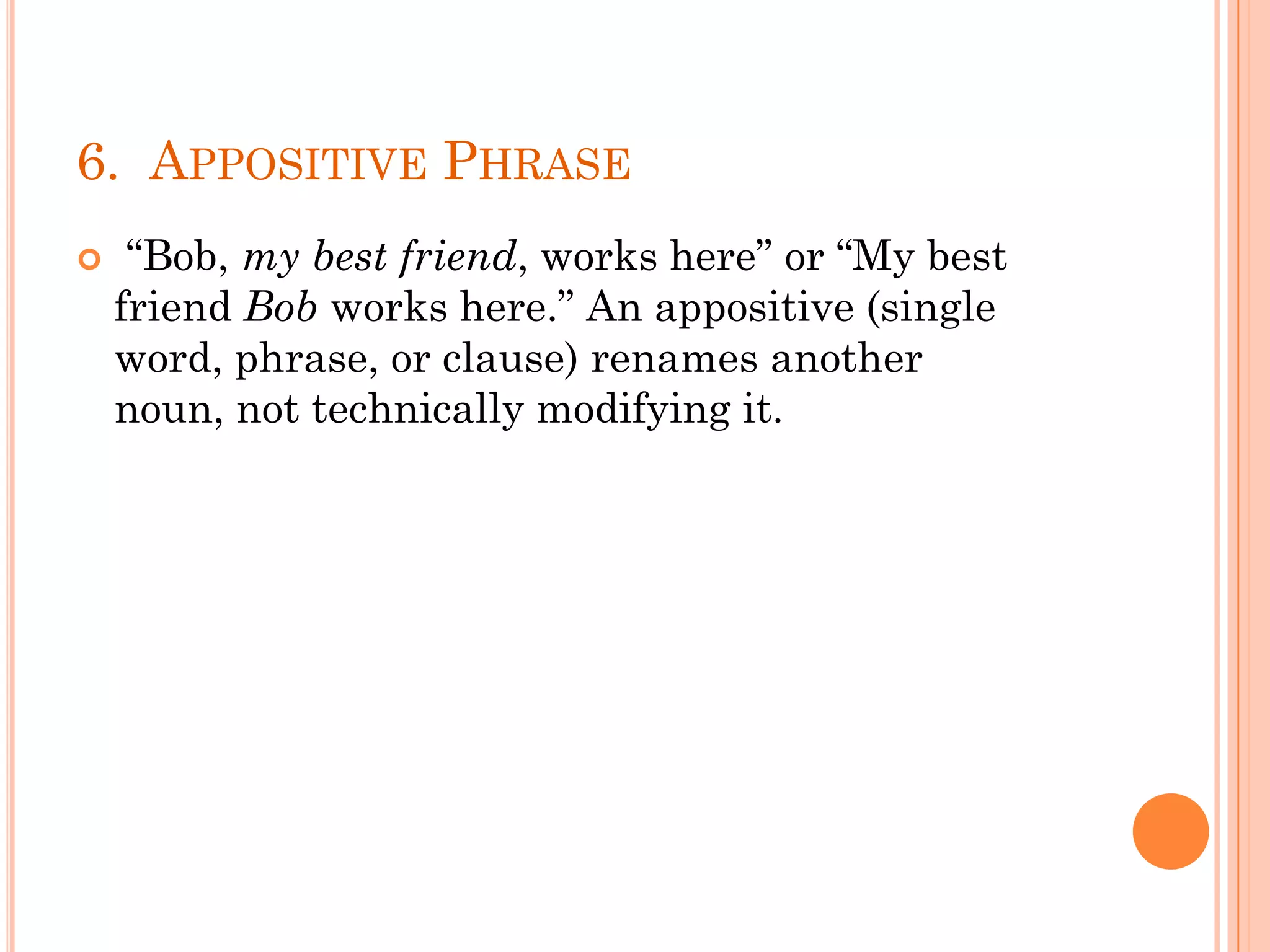
6. APPOSITIVE PHRASE
 “Bob, my best friend, works here” or “My best
friend Bob works here.” An appositive (single
word, phrase, or clause) renames another
noun, not technically modifying it.
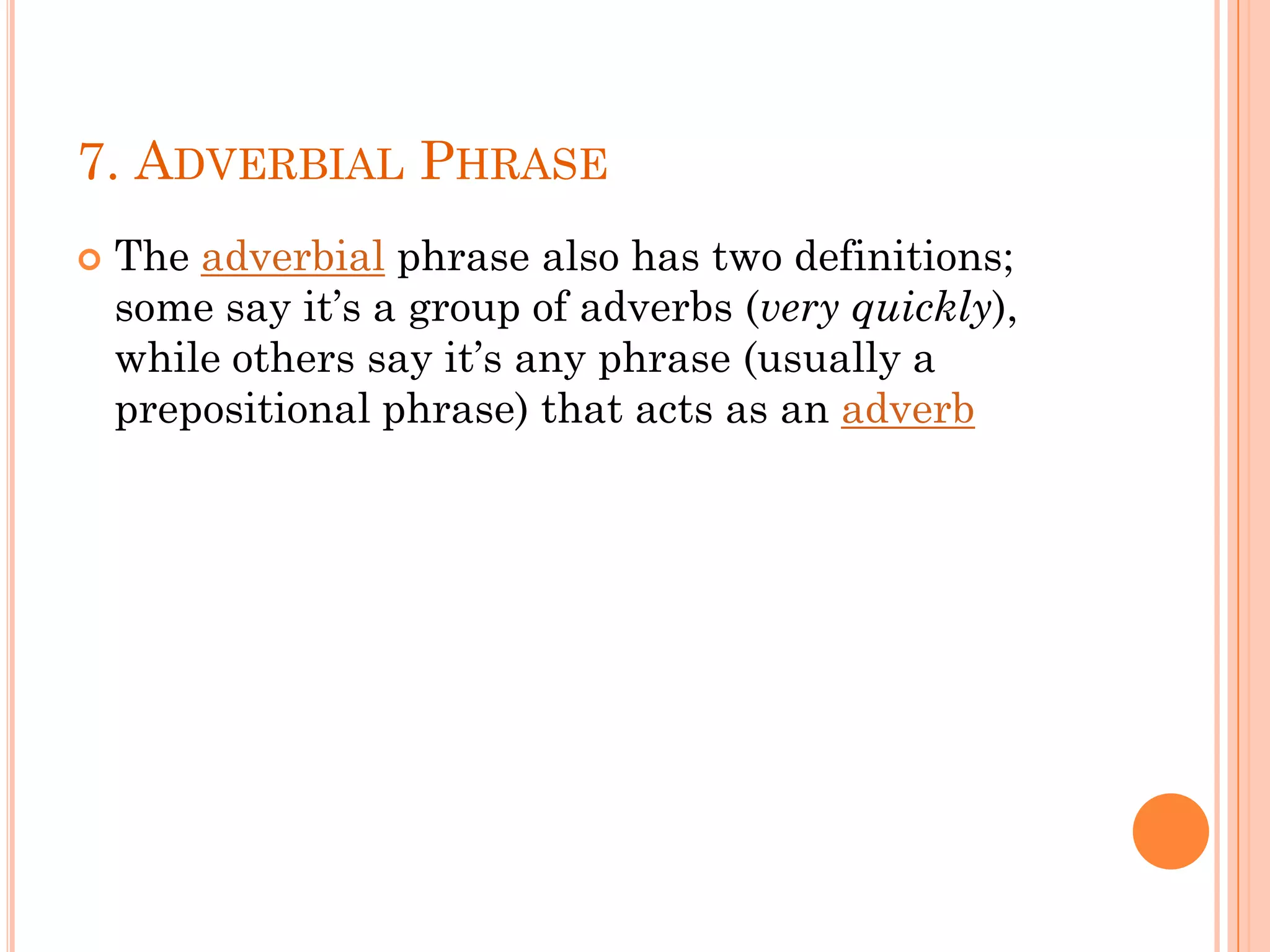
7. ADVERBIAL PHRASE
 The adverbial phrase also has two definitions;
some say it’s a group of adverbs (very quickly),
while others say it’s any phrase (usually a
prepositional phrase) that acts as an adverb
END OF SLIDE

Phrases - what are phrases and types of phrases

  • 1.
    TYPES OF PHRASES & WHATARE PHRASES? Presenter : Priscella Sofea
  • 2.
  • 3.
    A phrase isa group of words without both a subject and predicate. Phrases combine words into a larger unit that can function as a sentence element. For example, a participial phrase can include adjectives, nouns, prepositions and adverbs; as a single unit, however, it functions as one big adjective modifying a noun (or noun phrase).
  • 4.
  • 5.
    1. VERB PHRASE The verb phrase can refer to the whole predicate of a sentence (I was watching my favorite show yesterday) or just the verbor verb group (was watching).
  • 6.
    2. PREPOSITIONAL PHRASE “The food on the table looked delicious.” A prepositional phrase, which has a preposition as its head, can function as an adjective, adverb, or even as a noun.
  • 7.
    3. PARTICIPIAL PHRASE “Crushed to pieces by a sledgehammer, the computer no longer worked” or “I think the guy sitting over there likes you.” A participial phrase has a past or present participle as its head. Participial phrases always function as adjectives.
  • 8.
    4. INFINITIVE PHRASE “I love to bake cakes.” An infinitive phrase is a noun phrase with an infinitive as its head. Unlike the other noun phrases, however, an infinitive phrase can also function as an adjective or an adverb.
  • 9.
    5. GERUND PHRASE “I love baking cakes.” A gerund phrase is just a noun phrase with a gerund as its head.
  • 10.
    6. APPOSITIVE PHRASE “Bob, my best friend, works here” or “My best friend Bob works here.” An appositive (single word, phrase, or clause) renames another noun, not technically modifying it.
  • 11.
    7. ADVERBIAL PHRASE The adverbial phrase also has two definitions; some say it’s a group of adverbs (very quickly), while others say it’s any phrase (usually a prepositional phrase) that acts as an adverb
  • 12.