
Submitted to: Dr. Shafqat Hussain
Submitted by: Saira Kazim(Roll No. 1355)
M.Phil Education (2nd Semester)
Riphah Internationa Univesity, FSD
CONTENT
 Introduction
 Oral Questioning
 Purposes of Oral Questioning
 Characteristics of Oral Questioning
 Types of Oral Questioning
 Peer Appraisal
 Purpose of Peer Appraisal
 Criteria of Good Peer Evaluation
 Process of Peer Appraisal
 Advantages of Peer Appraisal
 Disadvantages of Peer Appraisal
 Sample Peer Evaluation Form
ORAL QUESTIONING
 It’s an effective way to stimulate student’s
motivation and participation
 it focuses student’s attention and develops
interest and curiosity.
 It provides students with opportunities to
practice self-expression.
 It stimulates logical and critical thinking
CHARACTERISTICS OF GOOD ORAL QUESTIONS
 Well planned questions
 Simple and carefully arranged words and
phrases
 Clarity of meaning
 Use of interrogative
 Consider the level of instruction
TYPES OF ORAL QUESTIONING
 Open Questions
What, Why, When, Who and the
statements can be: "tell me about", "give
me examples of".
• Closed Questions
require a yes or no answer
useful for checking facts
CONTINUE…
 Specific questions
Use to determine facts
"How much did you spend on that".
• Probing questions
check for more detail or clarification
allow the tutor to explore specific areas
CONTINUE…
 Hypothetical questions
Pose a theoretical situation in the future
"What would you do if…?'
PEER
According to the Mariam Webster Dictionary,
Peer is
“a person who belongs to the same age
group or social group as someone
else.”
PEER APPRAISAL
Peer assessment involves students taking
responsibility for assessing the work of their
peers against set assessment criteria.
PURPOSE OF PEER ASSESSMENT
 To enhance learning (for assessor and assessee)
 To encourage student autonomy
 To develop critical judgement
Brown and Glasner (1999)
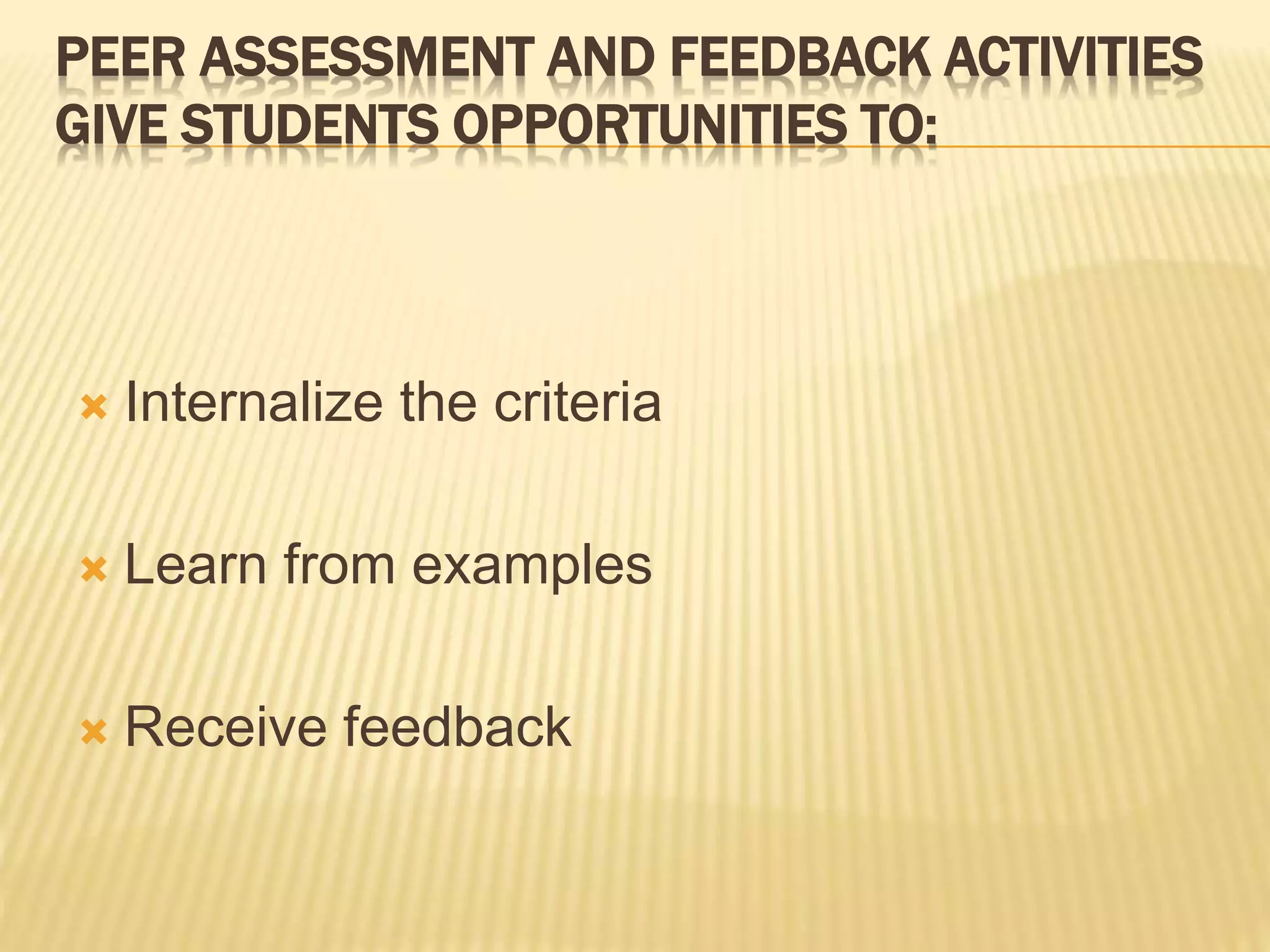
PEER ASSESSMENT AND FEEDBACK ACTIVITIES
GIVE STUDENTS OPPORTUNITIES TO:
 Internalize the criteria
 Learn from examples
 Receive feedback
PROCESS TO START PEER ASSESSMENT
 Assess against criteria
 where criteria have not been met. Teacher
may suggest ways to improve.
 Students identify success and a place for
improvement, and make the improvement
independently.
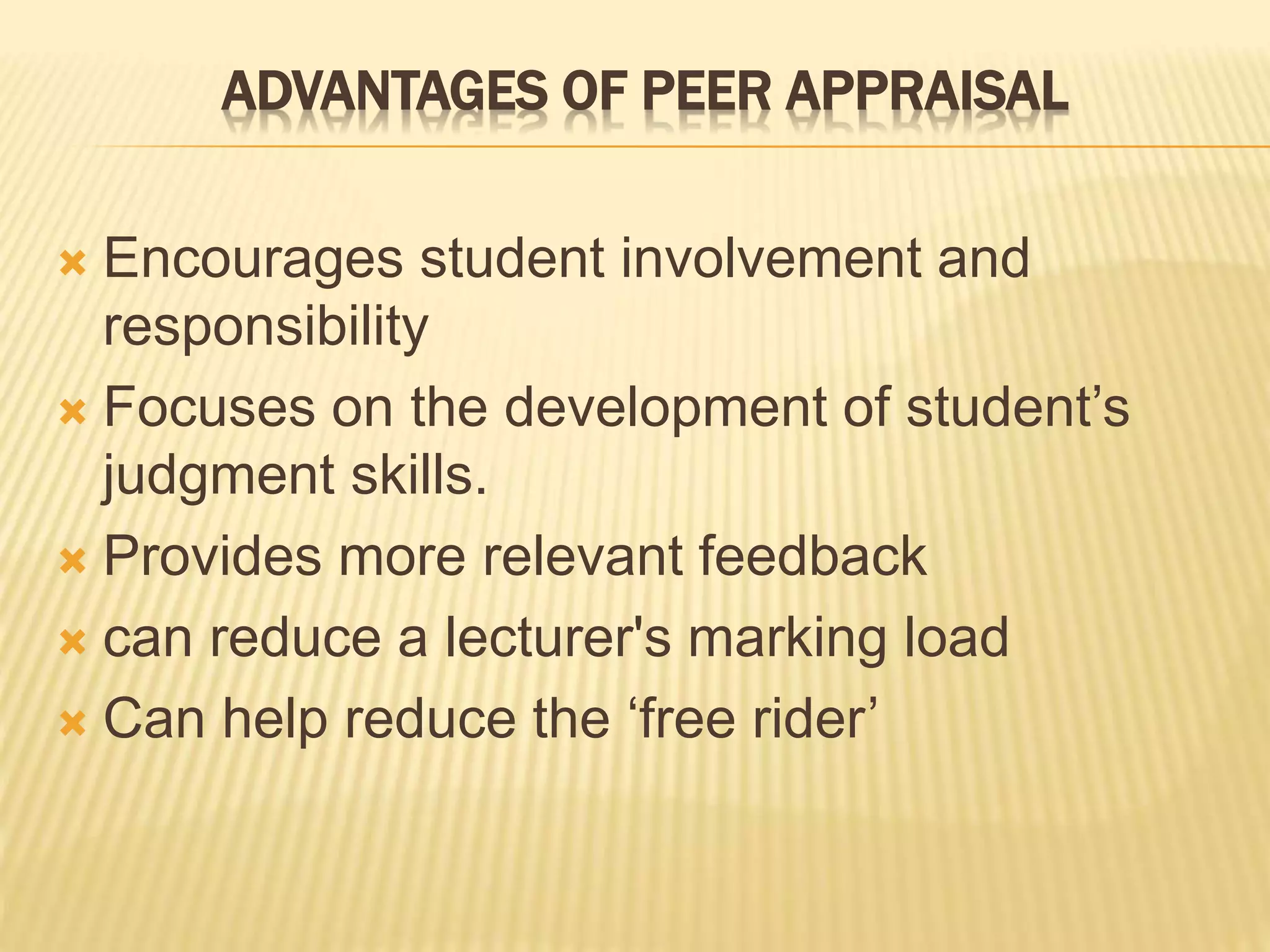
ADVANTAGES OF PEER APPRAISAL
 Encourages student involvement and
responsibility
 Focuses on the development of student’s
judgment skills.
 Provides more relevant feedback
 can reduce a lecturer's marking load
 Can help reduce the ‘free rider’
DISADVANTAGES OF PEER APPRAISAL
 reluctance of one or more to participate in
process
 general dislike of assessing/judging friends
 character conflicts
 time consuming
 lack of evaluative/assessment skills
 lack of accuracy of peer grading
 legal issues relating to degree classification
Peer Assessment Form
Student being assessed:_______________________
Student making the assessment:_________________
For each aspect, rate the student on a scale from A to D
using the following guide:
A: did this very well B: did this adequately
C: did this less than adequately D: did this poorly
(Issacs, G. (2002) Assessing Group Tasks. Teaching and Educational Development
Institute. Queensland, Australia)
General Aspect Specific Aspect Comment Rating
Group Process Attended a large majority of group
meetings
Maintained contact with other group
members
Communicated constructively to
discussion
Generally was cooperative in group
activities
Asked useful questions
Encouraged and assisted other group
members
The task Made a genuine attempt to complete
all jobs agreed by the group
Made an intellectual contribution to
the completion of the task
Did (at least) their fair share of the
work
Read and commented in a timely
manner on drafts of the report
Contributed a significant amount
(measured in ideas as well as words)
to the report
Overall Based on your ratings and comments
above, this student’s contribution
overall on this group task
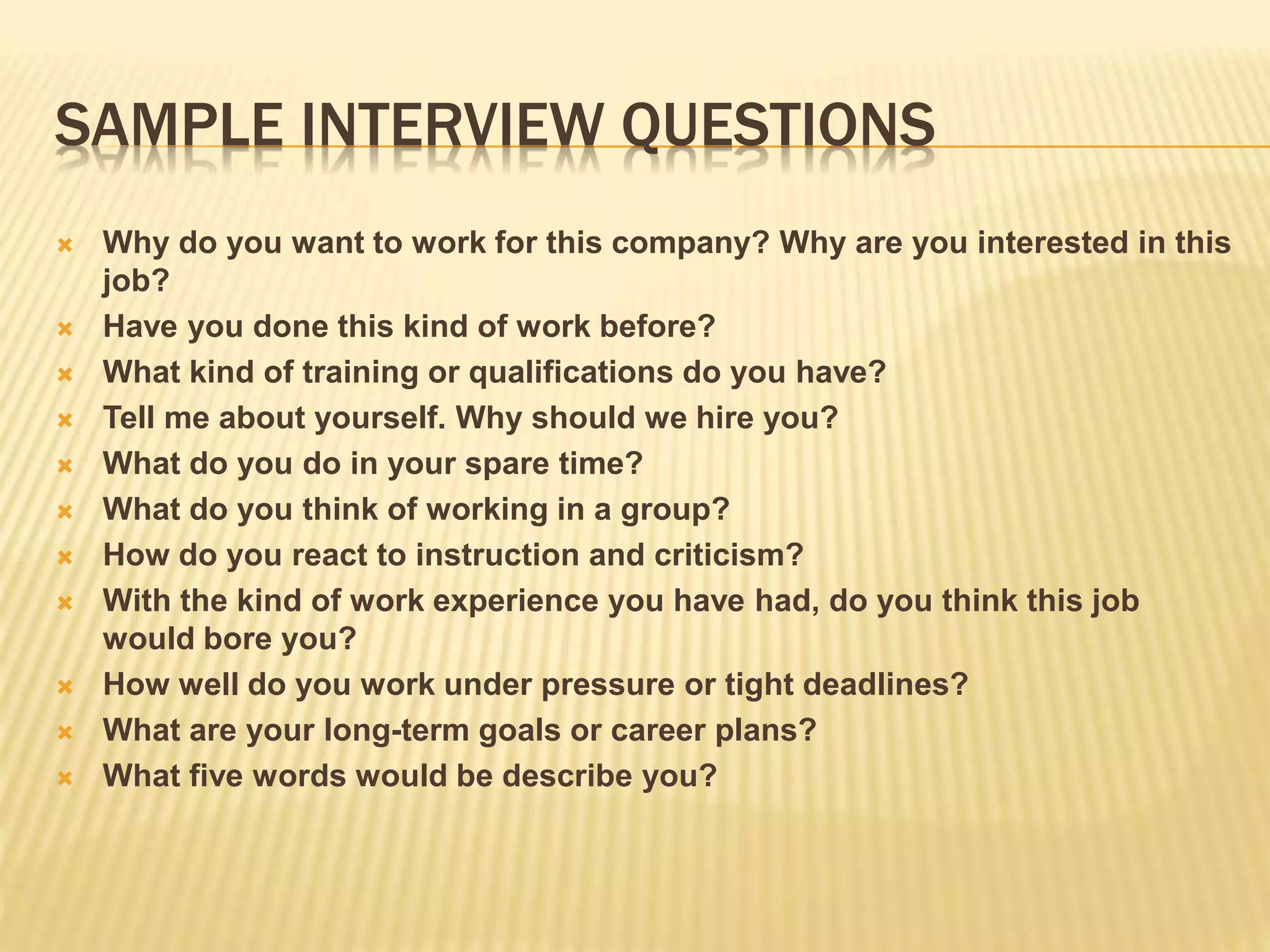
SAMPLE INTERVIEW QUESTIONS
 Why do you want to work for this company? Why are you interested in this
job?
 Have you done this kind of work before?
 What kind of training or qualifications do you have?
 Tell me about yourself. Why should we hire you?
 What do you do in your spare time?
 What do you think of working in a group?
 How do you react to instruction and criticism?
 With the kind of work experience you have had, do you think this job
would bore you?
 How well do you work under pressure or tight deadlines?
 What are your long-term goals or career plans?
 What five words would be describe you?
Ppt.oral questioning & peer appraisal

Ppt.oral questioning & peer appraisal

  • 1.
    Submitted to: Dr.Shafqat Hussain Submitted by: Saira Kazim(Roll No. 1355) M.Phil Education (2nd Semester) Riphah Internationa Univesity, FSD
  • 2.
    CONTENT  Introduction  OralQuestioning  Purposes of Oral Questioning  Characteristics of Oral Questioning  Types of Oral Questioning  Peer Appraisal  Purpose of Peer Appraisal  Criteria of Good Peer Evaluation  Process of Peer Appraisal  Advantages of Peer Appraisal  Disadvantages of Peer Appraisal  Sample Peer Evaluation Form
  • 3.
    ORAL QUESTIONING  It’san effective way to stimulate student’s motivation and participation  it focuses student’s attention and develops interest and curiosity.  It provides students with opportunities to practice self-expression.  It stimulates logical and critical thinking
  • 4.
    CHARACTERISTICS OF GOODORAL QUESTIONS  Well planned questions  Simple and carefully arranged words and phrases  Clarity of meaning  Use of interrogative  Consider the level of instruction
  • 5.
    TYPES OF ORALQUESTIONING  Open Questions What, Why, When, Who and the statements can be: "tell me about", "give me examples of". • Closed Questions require a yes or no answer useful for checking facts
  • 6.
    CONTINUE…  Specific questions Useto determine facts "How much did you spend on that". • Probing questions check for more detail or clarification allow the tutor to explore specific areas
  • 7.
    CONTINUE…  Hypothetical questions Posea theoretical situation in the future "What would you do if…?'
  • 8.
    PEER According to theMariam Webster Dictionary, Peer is “a person who belongs to the same age group or social group as someone else.”
  • 9.
    PEER APPRAISAL Peer assessmentinvolves students taking responsibility for assessing the work of their peers against set assessment criteria.
  • 10.
    PURPOSE OF PEERASSESSMENT  To enhance learning (for assessor and assessee)  To encourage student autonomy  To develop critical judgement Brown and Glasner (1999)
  • 11.
    PEER ASSESSMENT ANDFEEDBACK ACTIVITIES GIVE STUDENTS OPPORTUNITIES TO:  Internalize the criteria  Learn from examples  Receive feedback
  • 12.
    PROCESS TO STARTPEER ASSESSMENT  Assess against criteria  where criteria have not been met. Teacher may suggest ways to improve.  Students identify success and a place for improvement, and make the improvement independently.
  • 13.
    ADVANTAGES OF PEERAPPRAISAL  Encourages student involvement and responsibility  Focuses on the development of student’s judgment skills.  Provides more relevant feedback  can reduce a lecturer's marking load  Can help reduce the ‘free rider’
  • 14.
    DISADVANTAGES OF PEERAPPRAISAL  reluctance of one or more to participate in process  general dislike of assessing/judging friends  character conflicts  time consuming  lack of evaluative/assessment skills  lack of accuracy of peer grading  legal issues relating to degree classification
  • 15.
    Peer Assessment Form Studentbeing assessed:_______________________ Student making the assessment:_________________ For each aspect, rate the student on a scale from A to D using the following guide: A: did this very well B: did this adequately C: did this less than adequately D: did this poorly (Issacs, G. (2002) Assessing Group Tasks. Teaching and Educational Development Institute. Queensland, Australia)
  • 16.
    General Aspect SpecificAspect Comment Rating Group Process Attended a large majority of group meetings Maintained contact with other group members Communicated constructively to discussion Generally was cooperative in group activities Asked useful questions Encouraged and assisted other group members The task Made a genuine attempt to complete all jobs agreed by the group Made an intellectual contribution to the completion of the task Did (at least) their fair share of the work Read and commented in a timely manner on drafts of the report Contributed a significant amount (measured in ideas as well as words) to the report Overall Based on your ratings and comments above, this student’s contribution overall on this group task
  • 17.
    SAMPLE INTERVIEW QUESTIONS Why do you want to work for this company? Why are you interested in this job?  Have you done this kind of work before?  What kind of training or qualifications do you have?  Tell me about yourself. Why should we hire you?  What do you do in your spare time?  What do you think of working in a group?  How do you react to instruction and criticism?  With the kind of work experience you have had, do you think this job would bore you?  How well do you work under pressure or tight deadlines?  What are your long-term goals or career plans?  What five words would be describe you?