Chapter 13: Assessment Procedures: 
Observational Techniques, 
Peer Appraisal, and Self Report 
Vincent D. Deocampo 
III-A BSITE 
Assessment and Evaluation 
Prof. Lucila Fetalvero
 Direct observation is the means we have for 
assessing some aspects of learning and 
development. The use of anecdotal record 
can turn informal teacher observations into 
systematic source of information about 
student development. Judgements and 
reports made by students themselves are 
also a valuable source of information in many 
areas of learning and development. Peer 
judgements are especially useful in assessing 
personal-social development and self-report 
methods provide a fuller understanding of 
students’ needs, problems, adjustments, 
interest, and attitudes.
 Observing students as they perform and 
describing or judging that behaviour 
(assessing interactions with other 
students) 
 Asking their peers about them (assessing 
social relationships) 
 Questioning them directly (assessing 
expressed interest) 
Learning outcomes and aspects of 
development can generally be assessed by:
 Factual descriptions of the meaningful 
incidents and events that the teacher has 
observed. Each incident should be written 
down shortly after it happens. 
 Teachers’ daily observations give them a 
wealth of information concerning the learning 
and development of their students. 
 A good anecdotal record keeps the objective 
description of an incident separate from any 
interpretation of the behaviour’s meaning. 
ANECDOTAL RECORDS
 For obtaining data pertinent to a variety 
of learning outcomes and to many aspects 
of personal and social development. 
 The problem in using anecdotal records is 
not so much what can be assessed as 
what should be assessed. 
 We cannot observe and report on all 
aspects of student behaviour, no matter 
how useful such records might be. Thus, 
we must be selective in our 
observations. 
Uses of Anecdotal Records
◦ Confining our observations to those areas of 
behaviour that cannot be assessed by other 
means. 
◦ Limiting our observations of all students at any 
given time to just a few types of behaviour. 
◦ Restricting the use of extensive observations of 
behaviour to those few students who are most 
in need of special help. 
What Behaviours to Observe and 
Record
 They depict actual behaviour in natural 
situations. 
 Records of actual behaviour provide a check on 
other assessment methods and also enable us to 
determine the extent of change in the student’s 
typical patterns of behaviour. 
 Can be used with very young students and with 
students who have limited basic communication 
skills. 
 Another serious limitation of anecdotal records is 
the difficulty of being objective when observing 
and reporting student behaviour. 
Advantages and Limitations of 
Anecdotal Records
 Determine in advance what to observe, 
but be alert for unusual behaviour. 
 Analyze observational records for possible 
sources of bias. 
 Observed and record enough of the 
situation to make the behaviour 
meaningful. 
 Make a record of the incident as soon 
after the observation as possible 
Effective Use of Anecdotal Records
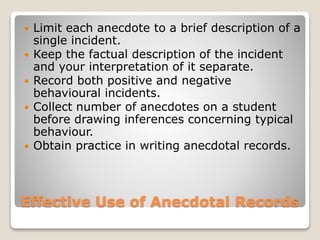
 Limit each anecdote to a brief description of a 
single incident. 
 Keep the factual description of the incident 
and your interpretation of it separate. 
 Record both positive and negative 
behavioural incidents. 
 Collect number of anecdotes on a student 
before drawing inferences concerning typical 
behaviour. 
 Obtain practice in writing anecdotal records. 
Effective Use of Anecdotal Records
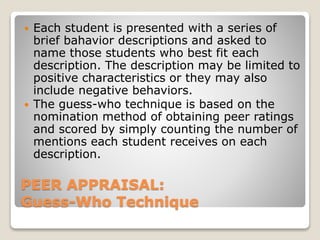
 Each student is presented with a series of 
brief bahavior descriptions and asked to 
name those students who best fit each 
description. The description may be limited to 
positive characteristics or they may also 
include negative behaviors. 
 The guess-who technique is based on the 
nomination method of obtaining peer ratings 
and scored by simply counting the number of 
mentions each student receives on each 
description. 
PEER APPRAISAL: 
Guess-Who Technique
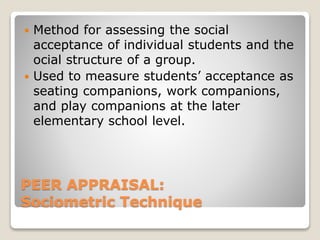
 Method for assessing the social 
acceptance of individual students and the 
ocial structure of a group. 
 Used to measure students’ acceptance as 
seating companions, work companions, 
and play companions at the later 
elementary school level. 
PEER APPRAISAL: 
Sociometric Technique
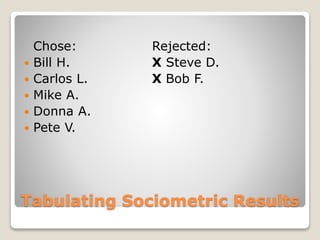
Chose: Rejected: 
 Bill H. X Steve D. 
 Carlos L. X Bob F. 
 Mike A. 
 Donna A. 
 Pete V. 
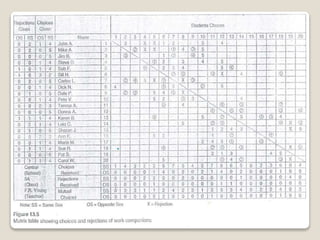
Tabulating Sociometric Results
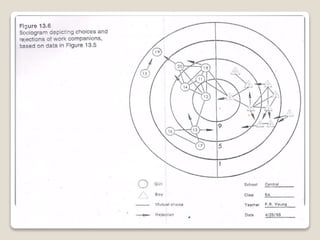
 The matrix table is useful for organizing 
sociometric data for future and 
determining the social acceptance of 
individual students. A graphic picture of 
the social relations in a group, which may 
be plotted directly from the data recorded 
in the matrix table. 
The Sociogram
 Organizing classrooms groups 
 Improving individual students’ social 
adjustment 
 Improving groups’ social structure 
 Assessing the influence of school practices 
on students’ social relations 
Uses of Sociometric Results

Assessment and Evaluation (Prof Ed.)

  • 1.
    Chapter 13: AssessmentProcedures: Observational Techniques, Peer Appraisal, and Self Report Vincent D. Deocampo III-A BSITE Assessment and Evaluation Prof. Lucila Fetalvero
  • 2.
     Direct observationis the means we have for assessing some aspects of learning and development. The use of anecdotal record can turn informal teacher observations into systematic source of information about student development. Judgements and reports made by students themselves are also a valuable source of information in many areas of learning and development. Peer judgements are especially useful in assessing personal-social development and self-report methods provide a fuller understanding of students’ needs, problems, adjustments, interest, and attitudes.
  • 3.
     Observing studentsas they perform and describing or judging that behaviour (assessing interactions with other students)  Asking their peers about them (assessing social relationships)  Questioning them directly (assessing expressed interest) Learning outcomes and aspects of development can generally be assessed by:
  • 4.
     Factual descriptionsof the meaningful incidents and events that the teacher has observed. Each incident should be written down shortly after it happens.  Teachers’ daily observations give them a wealth of information concerning the learning and development of their students.  A good anecdotal record keeps the objective description of an incident separate from any interpretation of the behaviour’s meaning. ANECDOTAL RECORDS
  • 5.
     For obtainingdata pertinent to a variety of learning outcomes and to many aspects of personal and social development.  The problem in using anecdotal records is not so much what can be assessed as what should be assessed.  We cannot observe and report on all aspects of student behaviour, no matter how useful such records might be. Thus, we must be selective in our observations. Uses of Anecdotal Records
  • 6.
    ◦ Confining ourobservations to those areas of behaviour that cannot be assessed by other means. ◦ Limiting our observations of all students at any given time to just a few types of behaviour. ◦ Restricting the use of extensive observations of behaviour to those few students who are most in need of special help. What Behaviours to Observe and Record
  • 7.
     They depictactual behaviour in natural situations.  Records of actual behaviour provide a check on other assessment methods and also enable us to determine the extent of change in the student’s typical patterns of behaviour.  Can be used with very young students and with students who have limited basic communication skills.  Another serious limitation of anecdotal records is the difficulty of being objective when observing and reporting student behaviour. Advantages and Limitations of Anecdotal Records
  • 8.
     Determine inadvance what to observe, but be alert for unusual behaviour.  Analyze observational records for possible sources of bias.  Observed and record enough of the situation to make the behaviour meaningful.  Make a record of the incident as soon after the observation as possible Effective Use of Anecdotal Records
  • 9.
     Limit eachanecdote to a brief description of a single incident.  Keep the factual description of the incident and your interpretation of it separate.  Record both positive and negative behavioural incidents.  Collect number of anecdotes on a student before drawing inferences concerning typical behaviour.  Obtain practice in writing anecdotal records. Effective Use of Anecdotal Records
  • 10.
     Each studentis presented with a series of brief bahavior descriptions and asked to name those students who best fit each description. The description may be limited to positive characteristics or they may also include negative behaviors.  The guess-who technique is based on the nomination method of obtaining peer ratings and scored by simply counting the number of mentions each student receives on each description. PEER APPRAISAL: Guess-Who Technique
  • 11.
     Method forassessing the social acceptance of individual students and the ocial structure of a group.  Used to measure students’ acceptance as seating companions, work companions, and play companions at the later elementary school level. PEER APPRAISAL: Sociometric Technique
  • 12.
    Chose: Rejected: Bill H. X Steve D.  Carlos L. X Bob F.  Mike A.  Donna A.  Pete V. Tabulating Sociometric Results
  • 14.
     The matrixtable is useful for organizing sociometric data for future and determining the social acceptance of individual students. A graphic picture of the social relations in a group, which may be plotted directly from the data recorded in the matrix table. The Sociogram
  • 16.
     Organizing classroomsgroups  Improving individual students’ social adjustment  Improving groups’ social structure  Assessing the influence of school practices on students’ social relations Uses of Sociometric Results