Downloaded 349 times



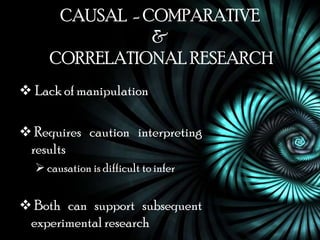

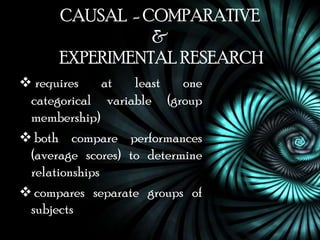
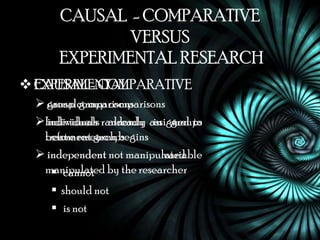



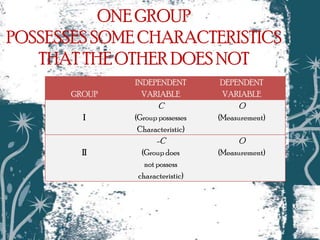
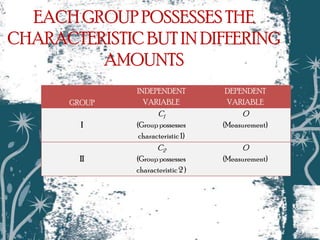







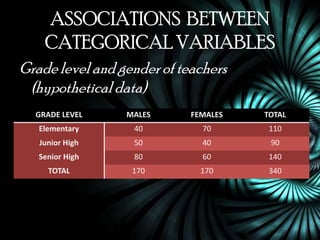

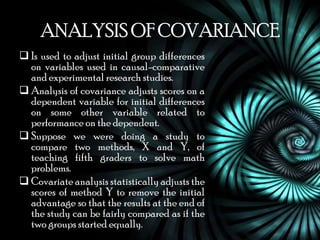
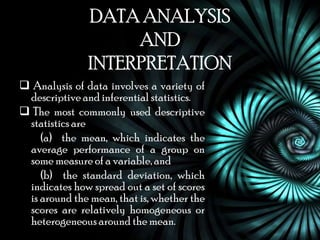




Causal-comparative research aims to identify potential causes of existing differences between groups by comparing them without manipulation. It is used when experimental manipulation is not possible. Threats to internal validity like lack of randomization make causation difficult to infer. Analysis of covariance can statistically control for initial group differences, while frequency tables and t-tests are commonly used to analyze data. Results always require cautious interpretation due to limitations of the design.


