The Liver

 C.Masina
The Liver
• The largest internal body organ
• Largest gland
• Largest organ apart from skin
• Weighs about 1.5kg
• Found in the upper abdominal cavity: extends
  from right upper quadrant to left upper quadrant
  of the abdomen
• Attached to diaphragm by
     falciform and coronary ligaments
    Left and right triangular ligaments
Functions
•   Bile production and secretion
•   Detoxification
•   Storage of glycogen
•   Protein synthesis
•   Production of heparin and bile pigments
•   Erythropoiesis (in fetus)
Liver surfaces
• Divided into 2 anatomical regions:
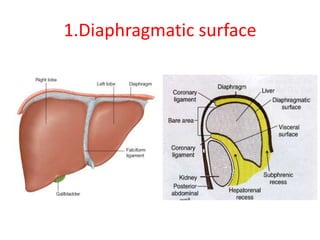
  1.Diaphragmatic surface:
  Smooth and dome-shaped surface
  Anterior liver part
  Inferior to diaphragm
  Separated from diaphragm by subphrenic recess
    and from posterior organs {kidney and suprarenal
    glands} by hepatorenal recess
  Covered by peritoneum except
1.Diaphragmatic surface
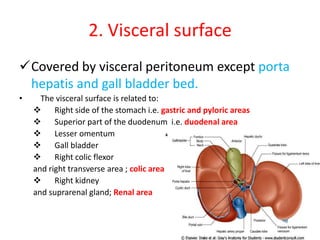
2. Visceral surface
Covered by visceral peritoneum except porta
 hepatis and gall bladder bed.
•     The visceral surface is related to:
         Right side of the stomach i.e. gastric and pyloric areas
         Superior part of the duodenum i.e. duodenal area
         Lesser omentum
         Gall bladder
         Right colic flexor
    and right transverse area ; colic area
         Right kidney
    and suprarenal gland; Renal area
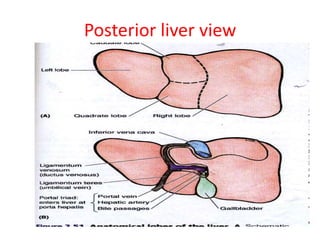
Posterior liver view
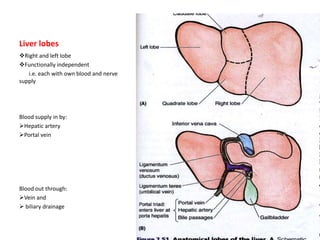
Liver lobes
Right and left lobe
Functionally independent
   i.e. each with own blood and nerve
supply


Blood supply in by:
Hepatic artery
Portal vein


Blood out through:
Vein and
 biliary drainage
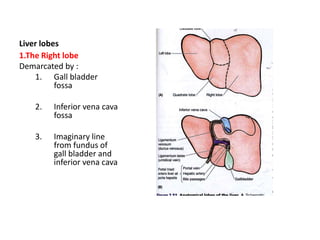
Liver lobes
1.The Right lobe
Demarcated by :
    1. Gall bladder
          fossa

   2.   Inferior vena cava
        fossa

   3.   Imaginary line
        from fundus of
        gall bladder and
        inferior vena cava
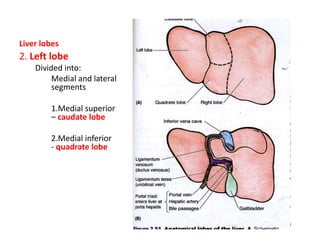
Liver lobes
2. Left lobe
    Divided into:
         Medial and lateral
         segments

        1.Medial superior
        – caudate lobe

        2.Medial inferior
        - quadrate lobe
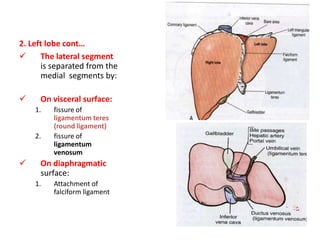
2. Left lobe cont…
     The lateral segment
      is separated from the
      medial segments by:

    On visceral surface:
    1.   fissure of
         ligamentum teres
         (round ligament)
    2.   fissure of
         ligamentum
         venosum
    On diaphragmatic
     surface:
    1.   Attachment of
         falciform ligament
Visceral surface
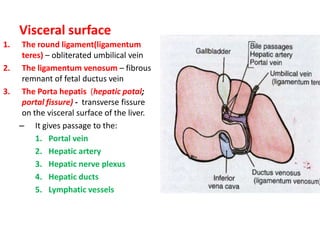
1.    The round ligament(ligamentum
      teres) – obliterated umbilical vein
2.    The ligamentum venosum – fibrous
      remnant of fetal ductus vein
3.    The Porta hepatis (hepatic potal;
      portal fissure) - transverse fissure
      on the visceral surface of the liver.
     – It gives passage to the:
          1. Portal vein
          2. Hepatic artery
          3. Hepatic nerve plexus
          4. Hepatic ducts
          5. Lymphatic vessels
Peritoneal relations of the Liver
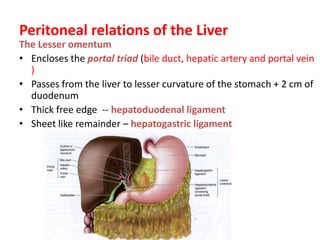
The Lesser omentum
• Encloses the portal triad (bile duct, hepatic artery and portal vein
  )
• Passes from the liver to lesser curvature of the stomach + 2 cm of
  duodenum
• Thick free edge -- hepatoduodenal ligament
• Sheet like remainder – hepatogastric ligament
To be continued ….
• To be continued………………..


• To be continued………………..

Liver anatomy

  • 1.
  • 2.
    The Liver • Thelargest internal body organ • Largest gland • Largest organ apart from skin • Weighs about 1.5kg • Found in the upper abdominal cavity: extends from right upper quadrant to left upper quadrant of the abdomen • Attached to diaphragm by  falciform and coronary ligaments Left and right triangular ligaments
  • 3.
    Functions • Bile production and secretion • Detoxification • Storage of glycogen • Protein synthesis • Production of heparin and bile pigments • Erythropoiesis (in fetus)
  • 4.
    Liver surfaces • Dividedinto 2 anatomical regions: 1.Diaphragmatic surface: Smooth and dome-shaped surface Anterior liver part Inferior to diaphragm Separated from diaphragm by subphrenic recess and from posterior organs {kidney and suprarenal glands} by hepatorenal recess Covered by peritoneum except
  • 5.
  • 6.
    2. Visceral surface Coveredby visceral peritoneum except porta hepatis and gall bladder bed. • The visceral surface is related to:  Right side of the stomach i.e. gastric and pyloric areas  Superior part of the duodenum i.e. duodenal area  Lesser omentum  Gall bladder  Right colic flexor and right transverse area ; colic area  Right kidney and suprarenal gland; Renal area
  • 7.
  • 8.
    Liver lobes Right andleft lobe Functionally independent i.e. each with own blood and nerve supply Blood supply in by: Hepatic artery Portal vein Blood out through: Vein and  biliary drainage
  • 9.
    Liver lobes 1.The Rightlobe Demarcated by : 1. Gall bladder fossa 2. Inferior vena cava fossa 3. Imaginary line from fundus of gall bladder and inferior vena cava
  • 10.
    Liver lobes 2. Leftlobe Divided into: Medial and lateral segments 1.Medial superior – caudate lobe 2.Medial inferior - quadrate lobe
  • 11.
    2. Left lobecont…  The lateral segment is separated from the medial segments by:  On visceral surface: 1. fissure of ligamentum teres (round ligament) 2. fissure of ligamentum venosum  On diaphragmatic surface: 1. Attachment of falciform ligament
  • 12.
    Visceral surface 1. The round ligament(ligamentum teres) – obliterated umbilical vein 2. The ligamentum venosum – fibrous remnant of fetal ductus vein 3. The Porta hepatis (hepatic potal; portal fissure) - transverse fissure on the visceral surface of the liver. – It gives passage to the: 1. Portal vein 2. Hepatic artery 3. Hepatic nerve plexus 4. Hepatic ducts 5. Lymphatic vessels
  • 13.
    Peritoneal relations ofthe Liver The Lesser omentum • Encloses the portal triad (bile duct, hepatic artery and portal vein ) • Passes from the liver to lesser curvature of the stomach + 2 cm of duodenum • Thick free edge -- hepatoduodenal ligament • Sheet like remainder – hepatogastric ligament
  • 14.
    To be continued…. • To be continued……………….. • To be continued………………..