Medical Surgical Nursing
Presented by –
Mr. Viresh Sunil Mahajani
M. Sc Nursing (Medical Surgical Nursing)
(Cardiovascular and Thoracic Nursing)
Institute of Nursing Education, Mumbai
 At the end of this seminar, students will be able to gain
in-depth knowledge regarding live cirrhosis disease, its
etiology, pathophysiology, clinical manifestations,
complications, medical and pharmacological management
and role of nurse in managing the patient with liver
cirrhosis
At the end of the seminar students will be able to-
 Review the anatomy and physiology of liver
 Review the portal circulation system
 Define liver cirrhosis
 Identify the risk factors and the etiological factors of the liver
cirrhosis
 Explain the pathophysiology of the liver cirrhosis
 Enlist the clinical manifestation of the liver cirrhosis
 List down the diagnostic investigation done in the patient of liver
cirrhosis
 Discuss the complication of the liver cirrhosis
 Describe the Medical / Surgical / Pharmacological management of
patients with liver cirrhosis.
 Discuss the role of nurse in management of patient with liver cirrhosis
 Develop the nursing diagnosis for planning the care for the patient
with liver cirrhosis
 Wedge shaped Large solid gland.
 Situated in the right hypochondrium,
epigastrium, and left hypochondrium
region.
 Reddish brown in color and soft in
consistency
 Weight – 1600 in males, 1300 in
females.
 Liver is divided into four lobes – The right lobe, left lobe, caudate lobe, and
quadrate lobe.
 Right and left lobes are located anteriorly.
 Caudate and quadrate lobe are located posteriorly.
 Right lobe is the largest lobe. It forms 5/6th of the total structure of the liver.
 Arterial supply- The liver receives 20 % of its blood supply through the hepatic
artery and 80 % through the portal vein.
 Veinous drainage – blood from liver is drained by hepatic veins into the
inferior vena cava.
 Nerve supply – The liver receives its nerve supply from hepatic nerve plexus.
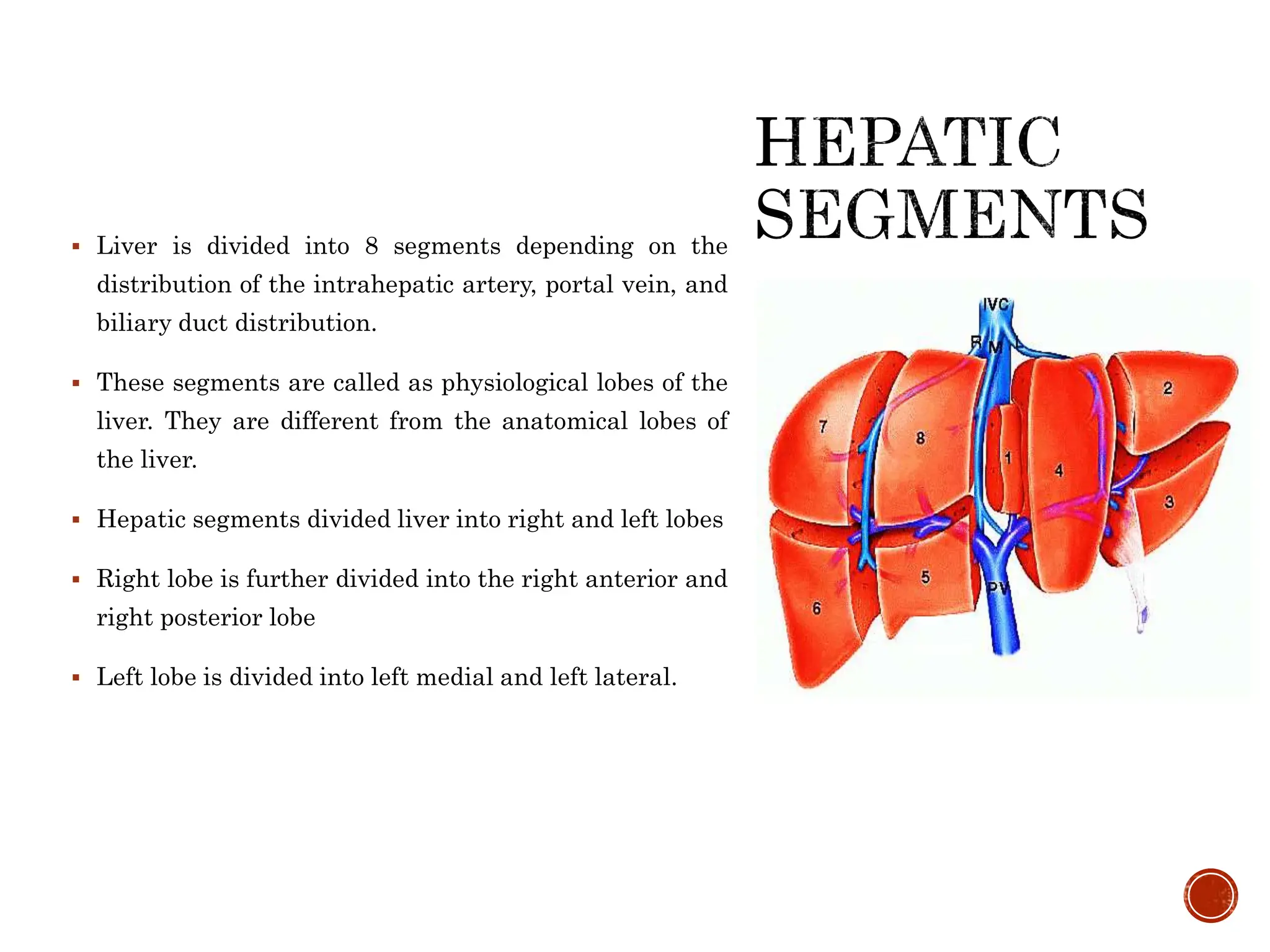
 Liver is divided into 8 segments depending on the
distribution of the intrahepatic artery, portal vein, and
biliary duct distribution.
 These segments are called as physiological lobes of the
liver. They are different from the anatomical lobes of
the liver.
 Hepatic segments divided liver into right and left lobes
 Right lobe is further divided into the right anterior and
right posterior lobe
 Left lobe is divided into left medial and left lateral.
 Structural and functional unit of liver
 There are around 50,000 to 1,00,000 lobules in the liver.
 They are honey comb like structures, made up of liver cells and hepatocytes.
 Hepatocytes are the cells of the liver.
 Hepatocytes are arranged in a column form. Two or more columns come together to
form hepatic plates.
 Many hepatic come together to form the hepatic lobe.
 Each hepatic lobe is surrounded by a portal triad
 Portal triad consists of
 Branch of hepatic artery
 Branch of portal vein
 Tributary of the bile duct.
 Metabolism of Carbohydrates, Proteins, Fats, and many hormones.
 Storage of glycogen, amino acids, iron, folic acids, and Vitamins like
Vit. A , B12, D, K
 Gluconeogenesis.
 Synthesis of plasma proteins (albumin, Alpha, and beta globulin) and
other proteins except for immunoglobulins.
 Synthesis of steroids, heparin, clotting factors (I,II, V, VII, IX and X),
complementary factors, hormone binding factors.
 Secretion of bile
 Excretion of cholesterol, bile pigments, heavy metals, toxins, bacteria,
and viruses.
 Production of heat
 Hematopoietic functions in the fetal stage.
 Hemolytic functions- production of bilirubin
 Inactivation of drugs and hormones
 Detoxification
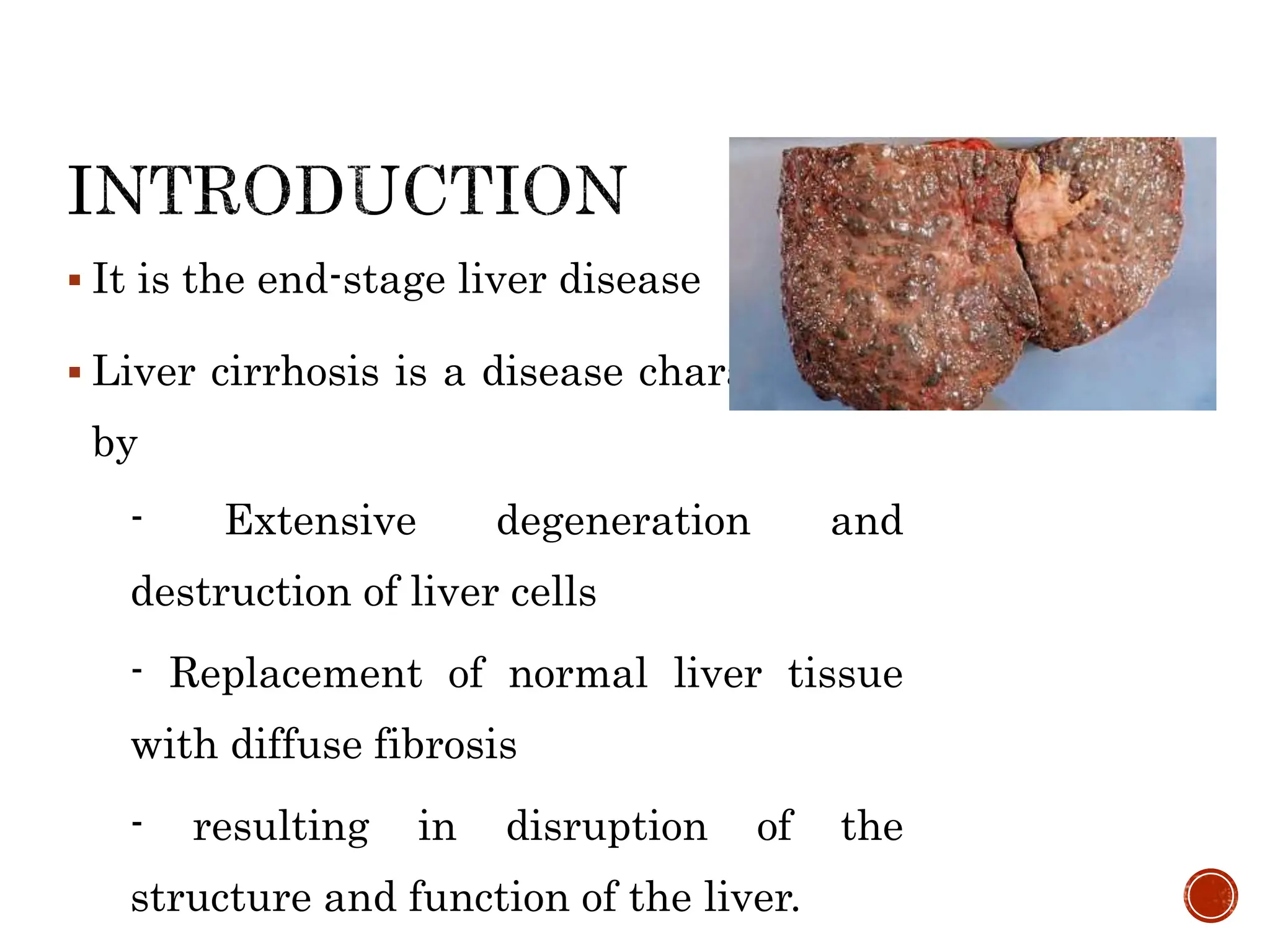
 It is the end-stage liver disease
 Liver cirrhosis is a disease characterized
by
- Extensive degeneration and
destruction of liver cells
- Replacement of normal liver tissue
with diffuse fibrosis
- resulting in disruption of the
structure and function of the liver.
 Around 10 lakh patients with liver cirrhosis are newly diagnosed
every year in India.
 Liver diseases are the 10th most common cause of death in India as
per the WHO
 Liver diseases may affect every one of the 5 Indian
 Liver cirrhosis is the 12th leading cause of death in the world in
2020
 Alcoholism
 Hepatic infection- Hepatitis C, Chronic Hepatitis B.
 Autoimmune hepatitis
 Drugs and toxins
 Blockage of bile duct
 Nonalcoholic steatohepatitis (NASH)
 Cardiac failure
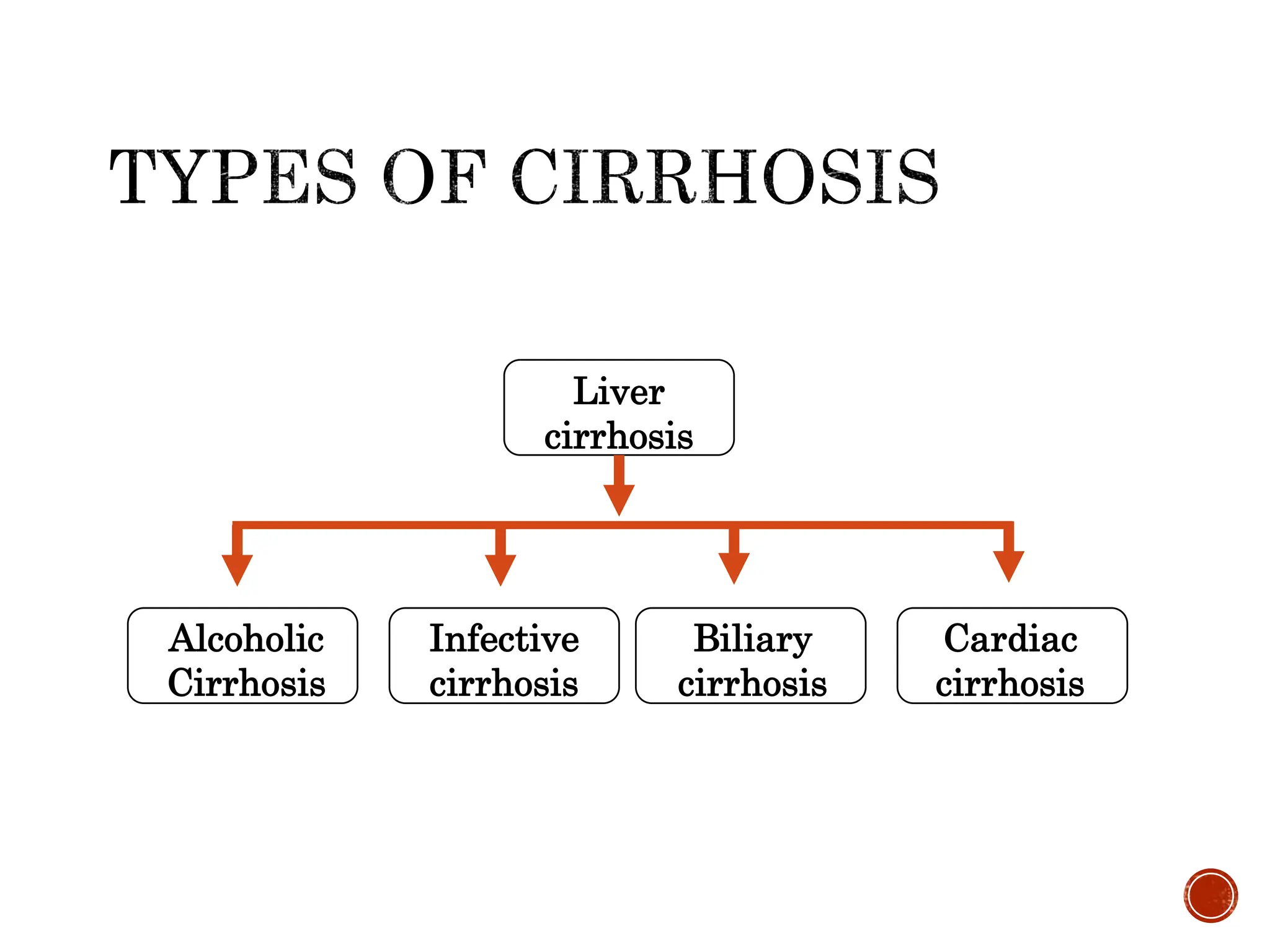
Liver
cirrhosis
Alcoholic
Cirrhosis
Infective
cirrhosis
Biliary
cirrhosis
Cardiac
cirrhosis
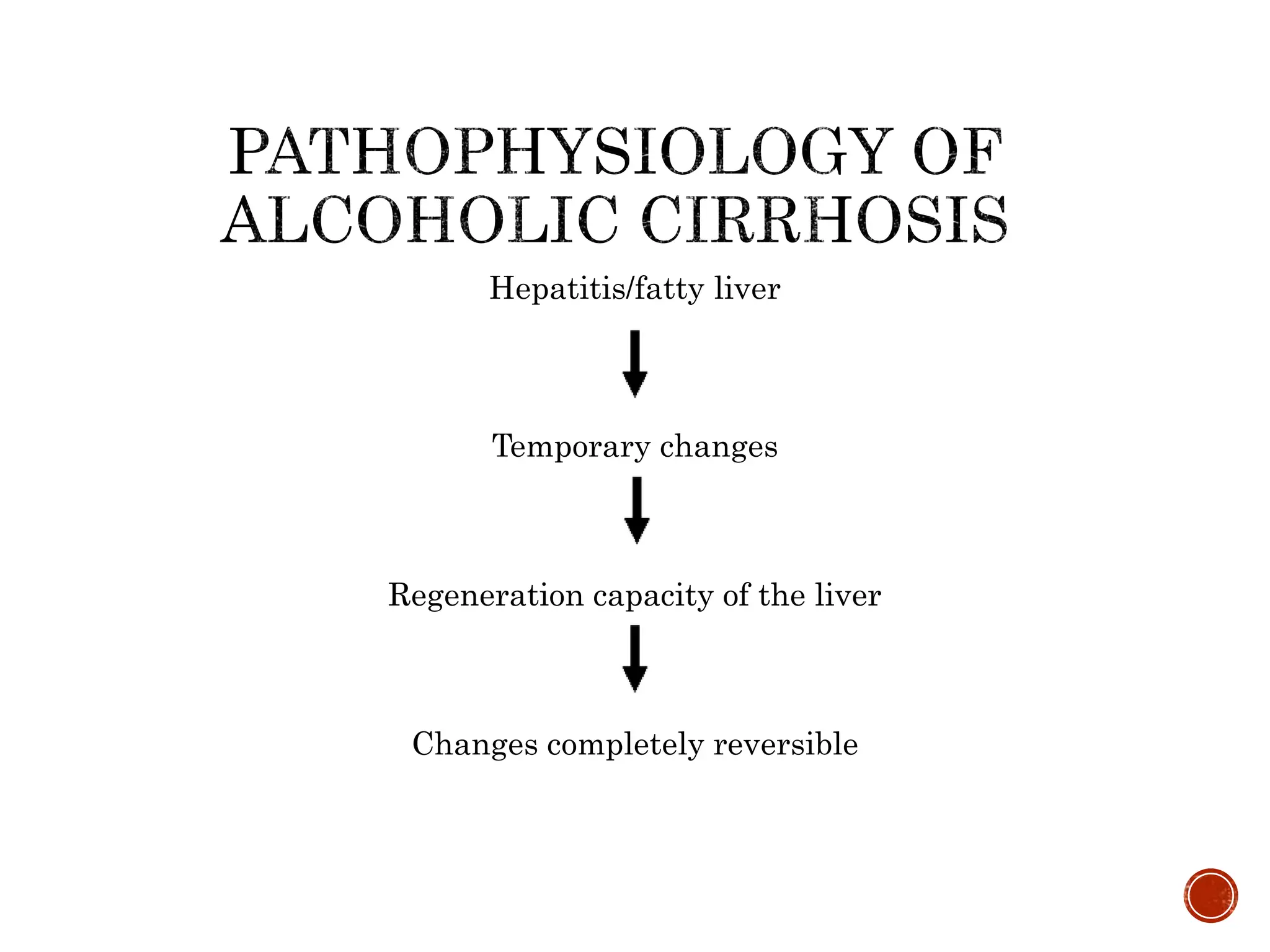
Hepatitis/fatty liver
Temporary changes
Regeneration capacity of the liver
Changes completely reversible
If hepatic disease prolongs
Chronic inflammatory changes
Repetitive regeneration of liver cells
Abnormal structure formation
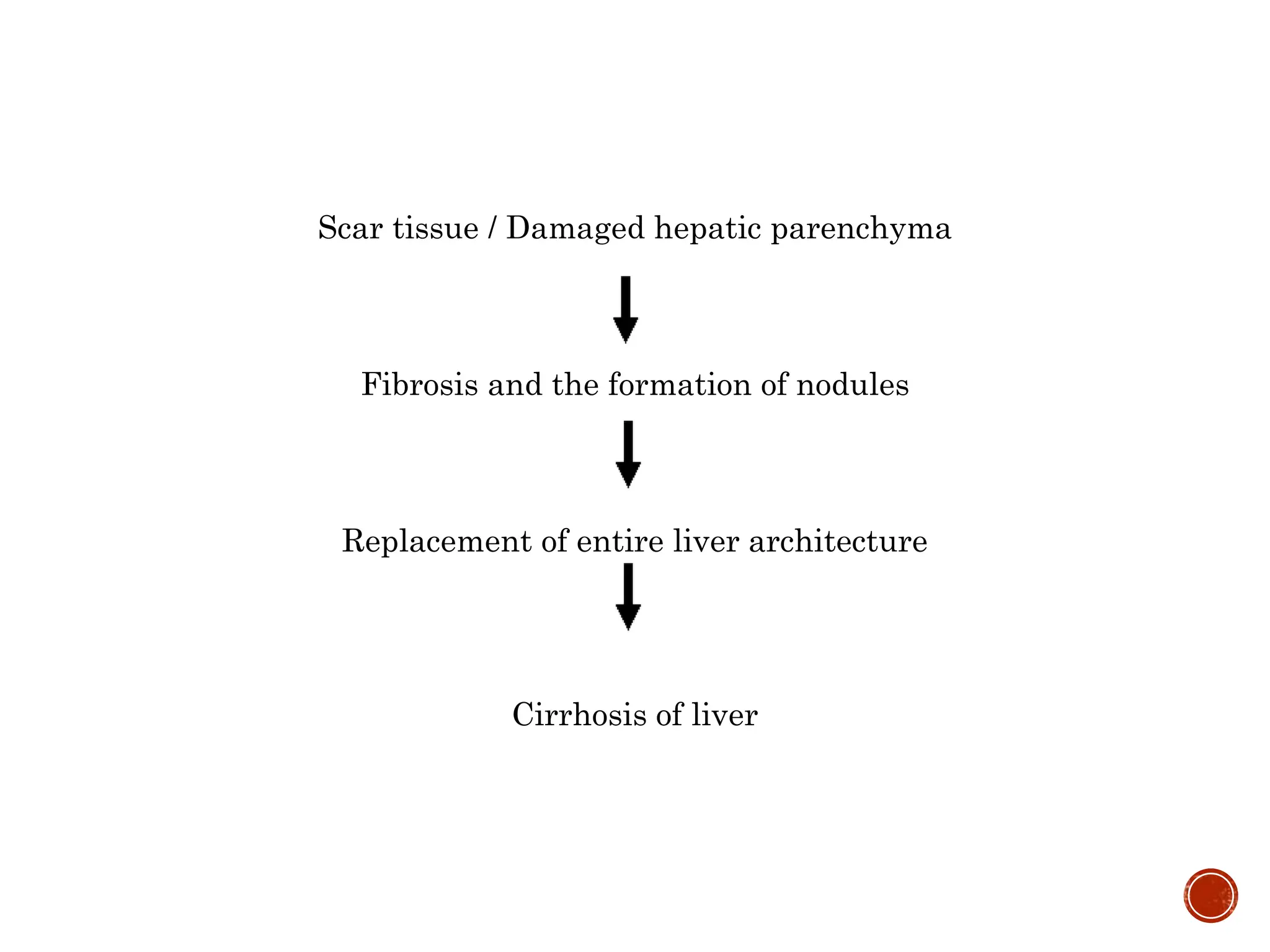
Scar tissue / Damaged hepatic parenchyma
Fibrosis and the formation of nodules
Replacement of entire liver architecture
Cirrhosis of liver
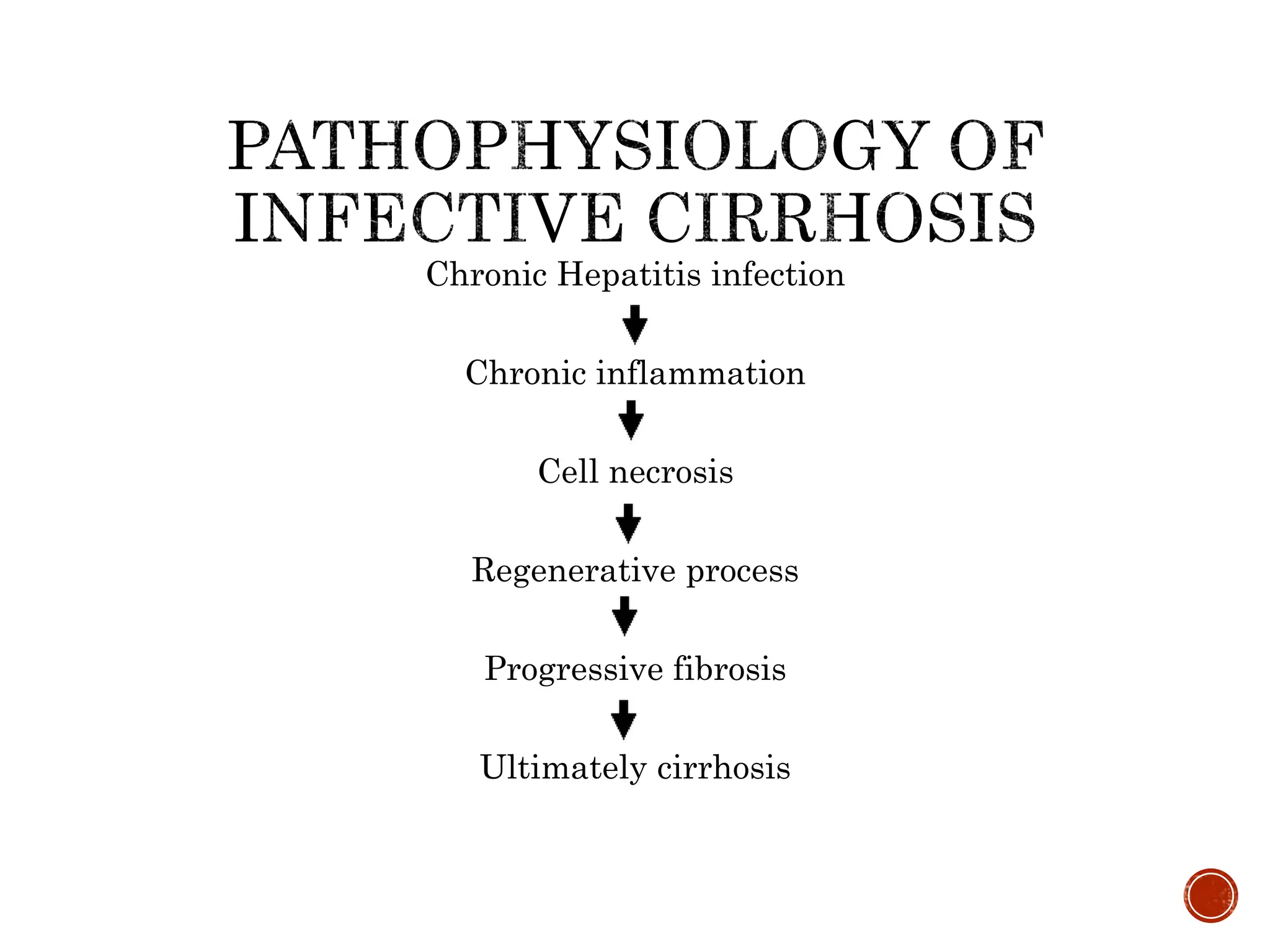
Chronic Hepatitis infection
Chronic inflammation
Cell necrosis
Regenerative process
Progressive fibrosis
Ultimately cirrhosis
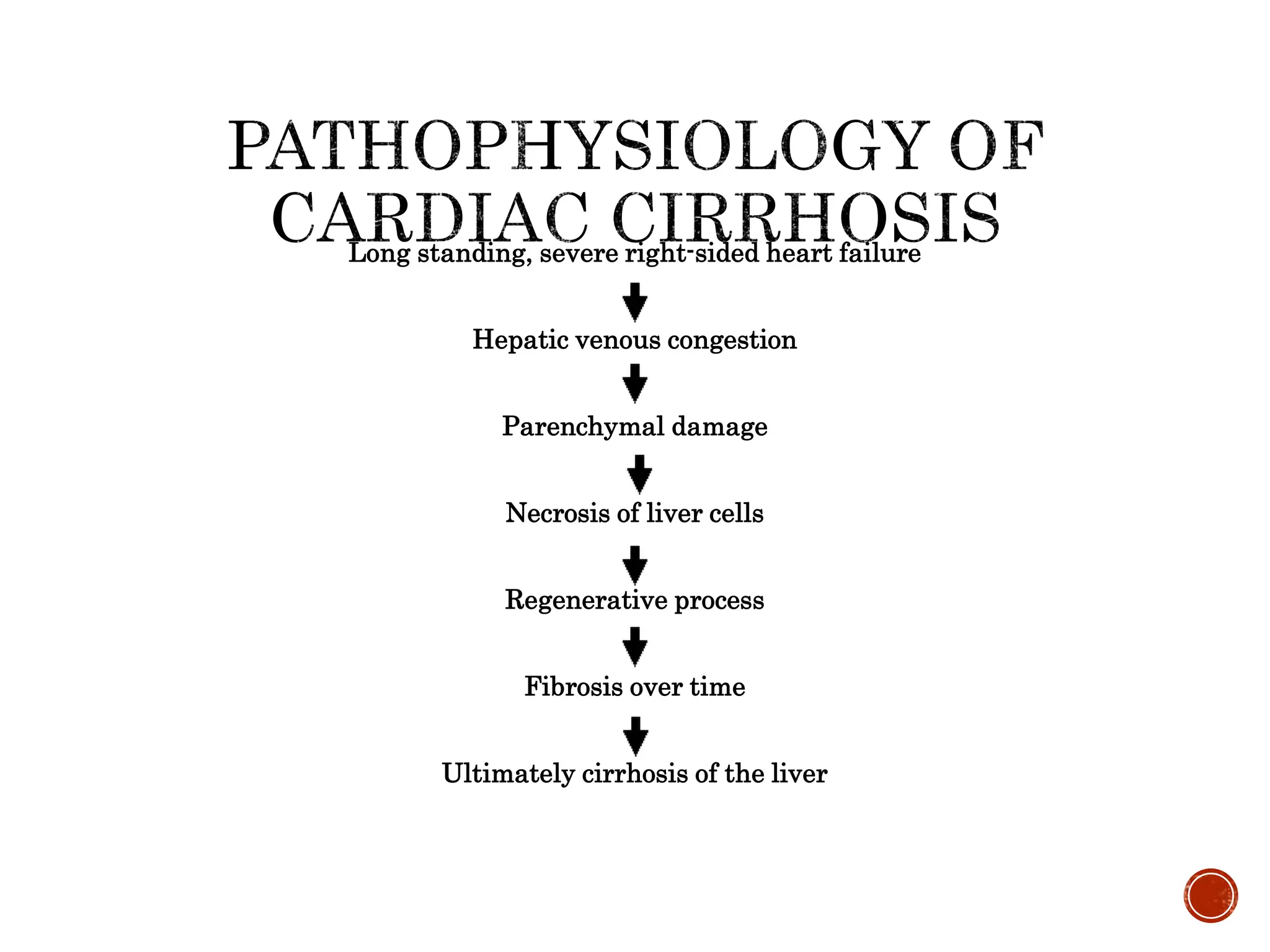
Long standing, severe right-sided heart failure
Hepatic venous congestion
Parenchymal damage
Necrosis of liver cells
Regenerative process
Fibrosis over time
Ultimately cirrhosis of the liver
 Initially liver becomes large in size, than as the disease
progresses liver decreases in size
 Surface becomes irregular and firm in consistency
 Color changes to yellow.
 No symptoms in the early stage
 As the condition progresses, initial symptoms such as
- Loss of appetite
- Tiredness
- Nausea
- Weightless
- Abdominal pain
- Spider-like blood vessels
- Severe itching Appears
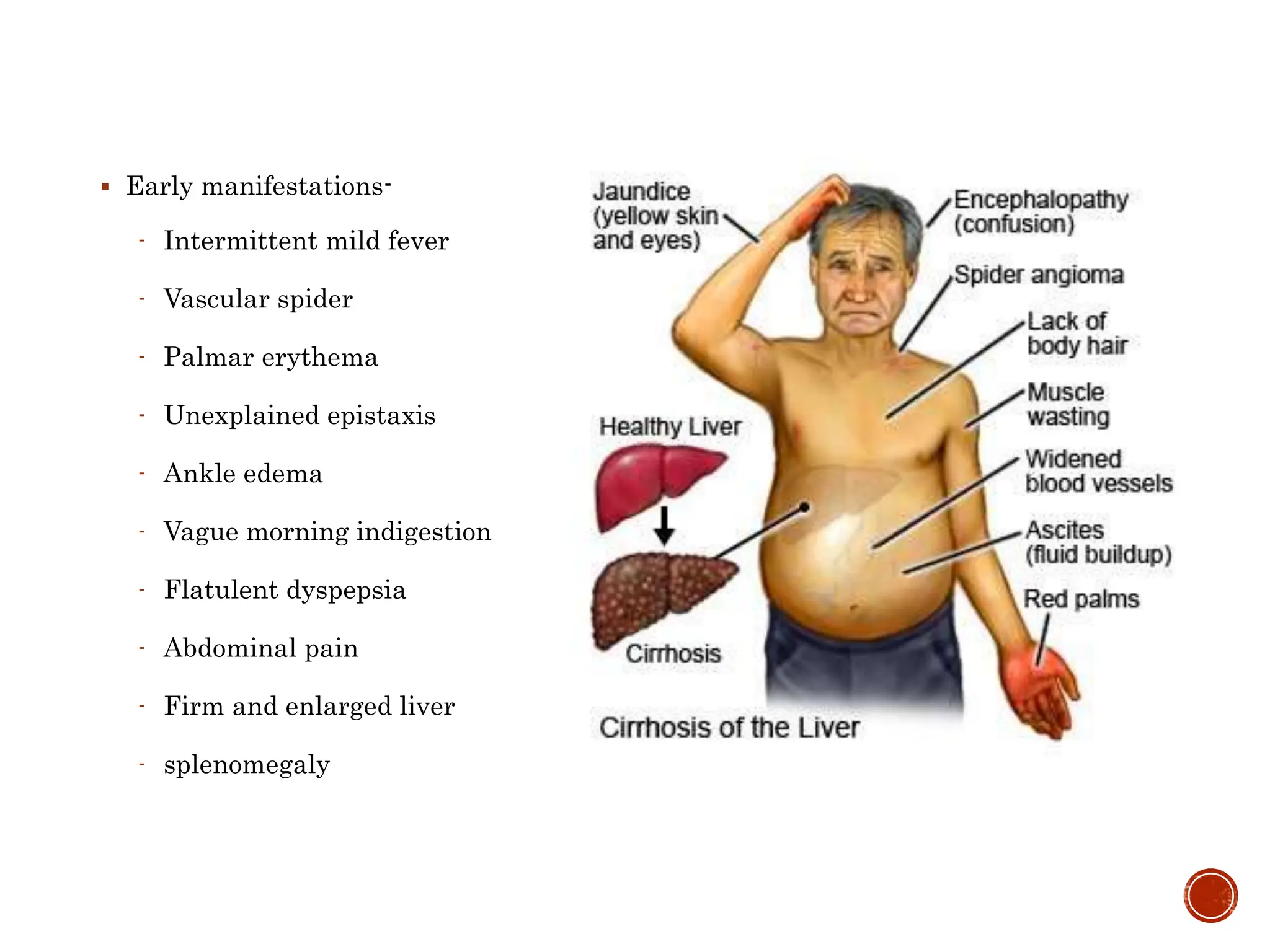
 Early manifestations-
- Intermittent mild fever
- Vascular spider
- Palmar erythema
- Unexplained epistaxis
- Ankle edema
- Vague morning indigestion
- Flatulent dyspepsia
- Abdominal pain
- Firm and enlarged liver
- splenomegaly
 Late manifestation
- Jaundice
- Ascites
- Weakness
- Muscle wasting
- Weight loss
- Continuous mild fever
- Clubbing of fingers
- Purpura
- Spontaneous bruising
- Epistaxis
- Hypotension
- Sparse body hairs
- White nails
- Gonadal atrophy
 Jaundice
Overgrowth of connective tissue in the liver
Compression of bile duct
Obstruction of bile flow
Increased bilirubin in the vascular system
Jaundice
Jaundice
 Ascites
Liver cirrhosis
Portal hypertension
The shift of proteins from intravascular space to
extravascular space
Shift to protein to the lymphatic system
A shift of proteins to peritoneal space
Protein in the peritoneal space develops osmatic pressure
The shift of fluid from intravascular space to peritoneal
space due to osmatic pressure.
Collection of fluid in peritoneal space (Ascites)
Ascites
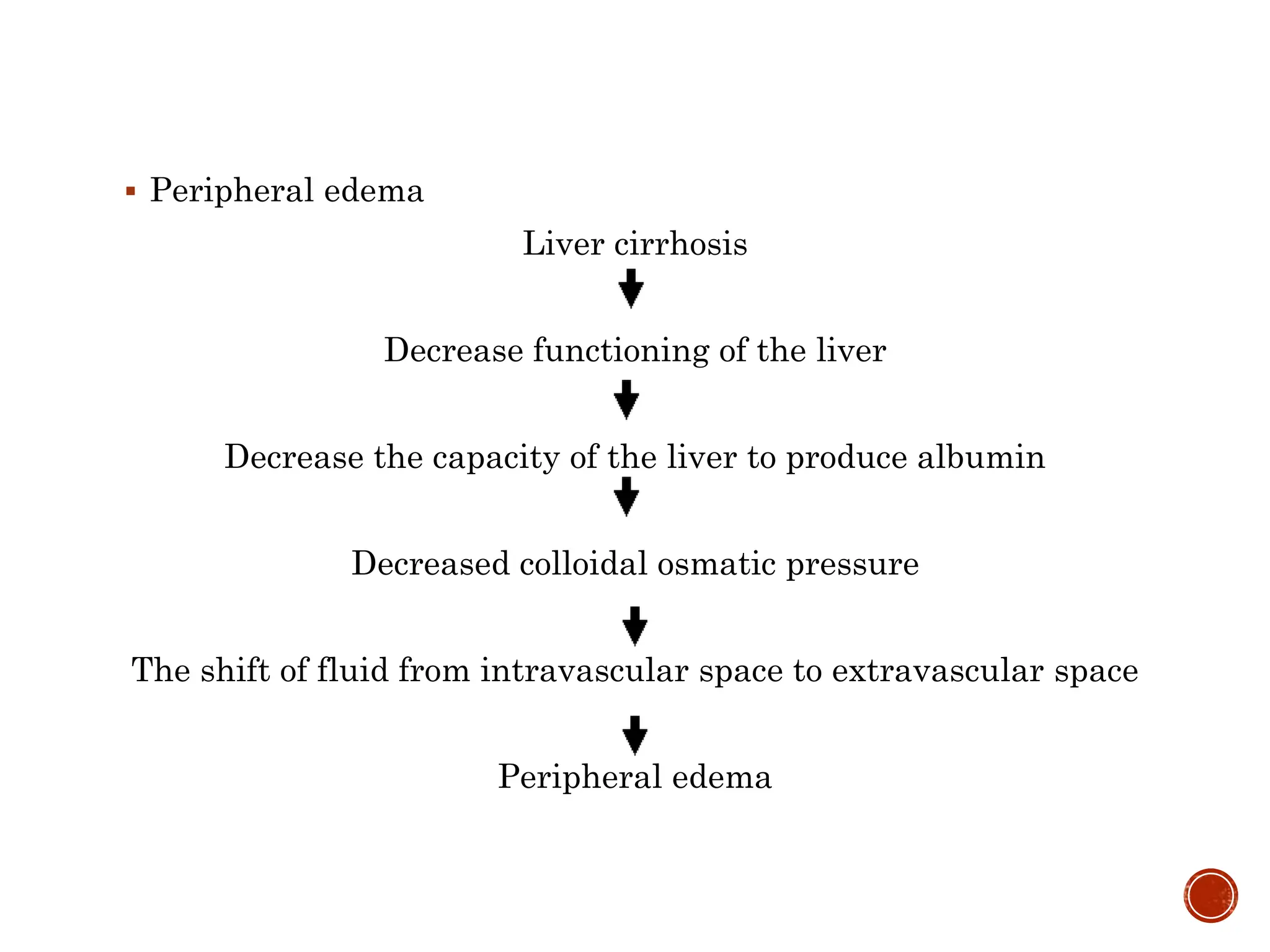
 Peripheral edema
Liver cirrhosis
Decrease functioning of the liver
Decrease the capacity of the liver to produce albumin
Decreased colloidal osmatic pressure
The shift of fluid from intravascular space to extravascular space
Peripheral edema
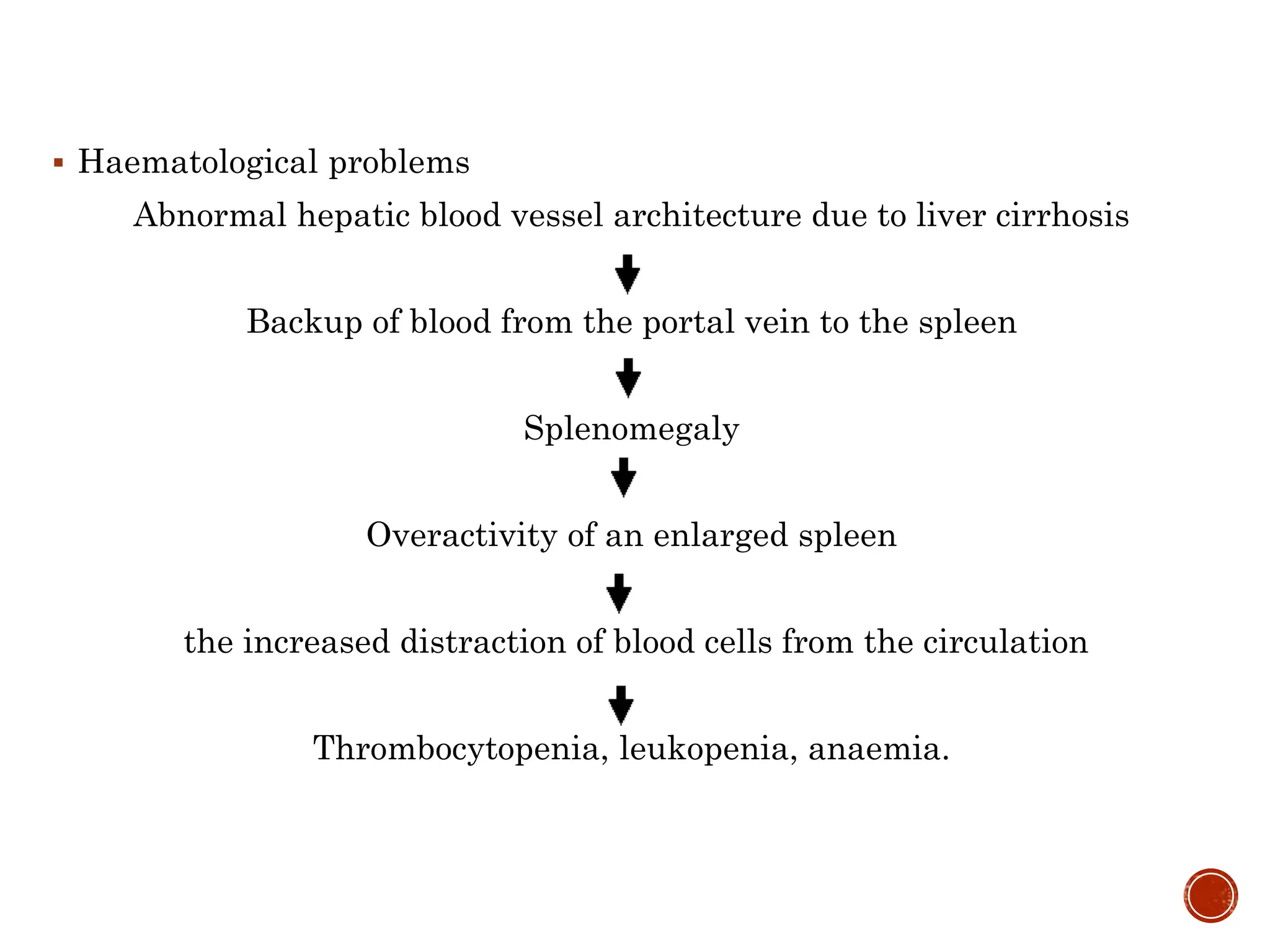
 Haematological problems
Abnormal hepatic blood vessel architecture due to liver cirrhosis
Backup of blood from the portal vein to the spleen
Splenomegaly
Overactivity of an enlarged spleen
the increased distraction of blood cells from the circulation
Thrombocytopenia, leukopenia, anaemia.
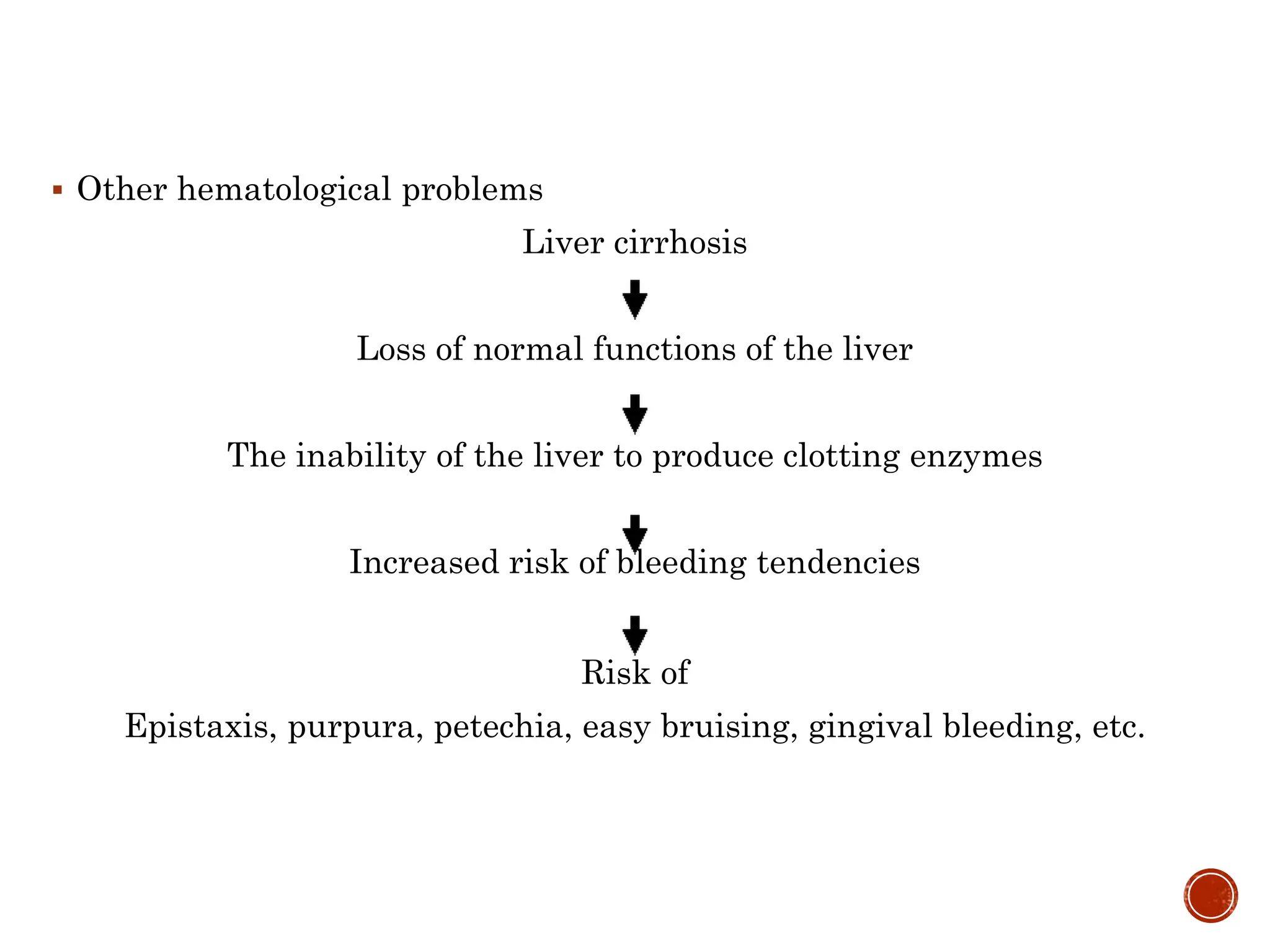
 Other hematological problems
Liver cirrhosis
Loss of normal functions of the liver
The inability of the liver to produce clotting enzymes
Increased risk of bleeding tendencies
Risk of
Epistaxis, purpura, petechia, easy bruising, gingival bleeding, etc.
Epistaxis
 Endocrine problem
Normally, the liver play important role in the metabolism of
hormones Such as estragon and testosterone
Liver cirrhosis
Loss of livers ability to metabolize these hormones
Increased levels of these hormones in circulation
In males ( Increased levels of estrogen in the blood)
Gynaecomastia, loss of axillary and pubic hair, testicular
atrophy, loss of libido
 Portal Hypertension
Liver cirrhosis
Abnormal structure of the liver
Abnormal vascular architecture of the blood vessels in the liver
Obstruction of the blood flow in and out of the liver
Increased pressure within the circulatory system of the liver
Increased venous pressure in the portal circulation
Portal hypertension
 Esophageal varices
Portal hypertension
Increased pressure within portal circulation
Development of collateral circulation
To reduce the pressure within portal circulation
From the lower part of esophagus and anterior abdomen region
Distension of blood vessels at the site of communication between
Systemic circulation and collateral circulation
Development of varices
 Hepatic encephalopathy
Normally, bacterial and enzymatic breakdown of proteins
By the normal bacterial flora of the large intestine
Production of ammonia as bi-product
Ammonia is carried to the liver via the portal circulation
Liver converts ammonia into urea and excreted by the
kidneys
In liver cirrhosis, damaged liver cannot convert ammonia
into urea.
Increased levels of ammonia into circulation.
Ammonia crosses blood brain barrier
Hepatic encephalopathy
 Clinical manifestations of hepatic encephalopathy
1. Changes in neurological and mental responsiveness
2. Impaired consciousness
3. Inappropriate behavior
4. Sleep disturbance
5. Troubled concentration
6. Asterixis (flapping Tremors)
7. Apraxia (inability to write and construct simple words)
8. Hyperventilation
9. Hypothermia
10. Tongue fasciculations
11. Fetor hepaticus (sweet odor of patients breath)
 Hepatorenal syndrome
Liver cirrhosis
Portal hypertension
Dilation of splanchnic and systemic blood vessels
Decreased arterial blood volume
Renal vasoconstriction
Decrease blood flow to kidneys
Decrease GFR
Renal failure.
 Liver Function Test
 Alkaline phosphate
 AST
 ALT
 Gama Glutamyl transpeptidase
 Total serum protein
 Serum albumin
 Bilirubin level
 Ultrasound sonography of Abdomen
 Ultrasound elastography (Fibroscan)
 Liver biopsy
 Ascites
1. Sodium restriction –initially less than 2gm/day. In
severe ascites 250-500 mg per day.
2. Albumin infusion – To maintain intravascular colloidal
oncotic pressure. This will increase intravascular
volume and there by urine output
3. Diuretic therapy – High potency loop diuretic live
furosemide along with potassium sparing diuretic like
spironolactone are used in combination to work on
multiple sites of nephrons and to get more diuretic
effect.
 Management of esophageal variceal
1. Main therapeutic goal is to prevent bleeding
2. Avoid alcohol, aspirin, NSAID
3. Esophagogastroduodenoscopy to screen varices
4. Nonselective beta blockers to reduce portal hypertension and
thereby reduce incidences of hemorrhage
5. IV administration of octreotide or vasopressin. It helps to reduce
portal hypertension.
5. Sclerotherapy of varicose to prevent bleeding.
6. Endoscopic variceal ligation (EVL).
7. BALLON tamponade to control active bleeding by
applying mechanical compression on the varices.
8. Supportive therapy includes the administration of fresh
frozen plasma, Packed RBCs, Vitamin K, proton pump
inhibitors, Lactose, and rifaximin.
 Management of hepatic encephalopathy
1. Main goal is the reduction of ammonia formation.
2. Lactose can trap the ammonia from the gut and can
facilitate in expelling of ammonia from the gut.
3. Antibiotics like rifaximin are also administered.
4. Lower protein intake, prevention of GI bleeding.
 Obtain a history of precipitating factors like alcohol, hepatitis,
and biliary diseases.
 Assess the mental status of the patient through interview and
interaction
 Perform abdominal examination, assess for ascites
 Observe for bleeding
 Assess weight daily in morning along with abdominal girth.
 Ineffective breathing pattern related to ascites.
 Activity intolerance related to fatigue, general
disability, and discomfort
 Imbalanced nutritional status: less than body
requirement related to anorexia and GI bleeding.
 Risk of bleeding related to altered clotting
mechanism
 Acute confusion related to the deterioration of
liver function and increased serum ammonia level.
NURSING INTERVENTIONS
Activity intolerance related to fatigue, lethargy, and
malaise.
Assess the level of activity tolerance of the patient.
 Assist with activities and hygiene when fatigued.
Encourage alternate periods of rest and ambulation.
Encourage and assist with gradual periods of exercise.
Administer supplemental vitamins.
NURSING INTERVENTIONS
Imbalanced nutrition less than body requirement related
to anorexia and GI disturbances
Encourage small frequent feeds.
Encourage the patient to take high-calorie moderate
protein meals.
Encourage oral hygiene before meals.
Administer medication for nausea and vomiting.
 Vitamins supplementary like vit c and vit k should be
given to the patient
 A new therapy that uses blood-vessel-lining cells to regenerate
damaged tissue has the potential to treat liver cirrhosis, Weill
Cornell Medicine scientists demonstrate in new research.
 The small-scale animal study, published in the October issue of
Radiology, was a test of the basic feasibility of the cell delivery
technique and not designed to prove safety or effectiveness
 . Still, the researchers found that the interventional therapy—a
single, image-guided infusion of blood vessel cells called
endothelial cells derived from liver tissue—was followed by an
apparent lessening of liver damage in pigs that had liver cirrhosis
before the treatment.
 . If the scientists can replicate the findings in humans, it could
offer an alternative treatment for liver cirrhosis, which affects
more than 600,000 people in the United States alone.
 Lewis’s Medical Surgical Nursing, Assessment and Management
of Clinical Problem, Elsevier Publication, Fourth South Asia
Edition, Volume 2, Harding, Kong, Robert, Chintamani,Page no-
1005 to 1014.
 Liipincotts Manual of Nursing Practice, Wolters Kulwer
Publication, South Asian Edition, Sandra M. Nettina and Suresh
K Sharma, page no- 563-567
 Brunner and Suddarths Textbook of Medical-Surgical Nursing,
Wolters Kulwer Publication, Second South Asian Edition, Volume
I, Jnaica L Hinkle, Suresh K Sharma, S. Madhavi, Page no- 893 –
936
 Bedside Clinical in Medicine, CBS publications, KSP Udyog,
Eighth edition, Volume I, Dr. Anup K. Khandu., page no- 143- 159.
 https://www.ncbi.nlm.nih.gov/pmc/articles/PMC1126509/
 https://news.weill.cornell.edu/news/2017/10/infusion-of-anti-
fibrotic-vascular-cells-to-cure-liver-cirrhosis

Liver Cirrhosis - etiology, types, pathophysiology, management - medical and nursing, complications.

  • 1.
    Medical Surgical Nursing Presentedby – Mr. Viresh Sunil Mahajani M. Sc Nursing (Medical Surgical Nursing) (Cardiovascular and Thoracic Nursing) Institute of Nursing Education, Mumbai
  • 2.
     At theend of this seminar, students will be able to gain in-depth knowledge regarding live cirrhosis disease, its etiology, pathophysiology, clinical manifestations, complications, medical and pharmacological management and role of nurse in managing the patient with liver cirrhosis
  • 3.
    At the endof the seminar students will be able to-  Review the anatomy and physiology of liver  Review the portal circulation system  Define liver cirrhosis  Identify the risk factors and the etiological factors of the liver cirrhosis  Explain the pathophysiology of the liver cirrhosis  Enlist the clinical manifestation of the liver cirrhosis
  • 4.
     List downthe diagnostic investigation done in the patient of liver cirrhosis  Discuss the complication of the liver cirrhosis  Describe the Medical / Surgical / Pharmacological management of patients with liver cirrhosis.  Discuss the role of nurse in management of patient with liver cirrhosis  Develop the nursing diagnosis for planning the care for the patient with liver cirrhosis
  • 5.
     Wedge shapedLarge solid gland.  Situated in the right hypochondrium, epigastrium, and left hypochondrium region.  Reddish brown in color and soft in consistency  Weight – 1600 in males, 1300 in females.
  • 7.
     Liver isdivided into four lobes – The right lobe, left lobe, caudate lobe, and quadrate lobe.  Right and left lobes are located anteriorly.  Caudate and quadrate lobe are located posteriorly.  Right lobe is the largest lobe. It forms 5/6th of the total structure of the liver.  Arterial supply- The liver receives 20 % of its blood supply through the hepatic artery and 80 % through the portal vein.  Veinous drainage – blood from liver is drained by hepatic veins into the inferior vena cava.  Nerve supply – The liver receives its nerve supply from hepatic nerve plexus.
  • 8.
     Liver isdivided into 8 segments depending on the distribution of the intrahepatic artery, portal vein, and biliary duct distribution.  These segments are called as physiological lobes of the liver. They are different from the anatomical lobes of the liver.  Hepatic segments divided liver into right and left lobes  Right lobe is further divided into the right anterior and right posterior lobe  Left lobe is divided into left medial and left lateral.
  • 9.
     Structural andfunctional unit of liver  There are around 50,000 to 1,00,000 lobules in the liver.  They are honey comb like structures, made up of liver cells and hepatocytes.  Hepatocytes are the cells of the liver.  Hepatocytes are arranged in a column form. Two or more columns come together to form hepatic plates.  Many hepatic come together to form the hepatic lobe.  Each hepatic lobe is surrounded by a portal triad
  • 11.
     Portal triadconsists of  Branch of hepatic artery  Branch of portal vein  Tributary of the bile duct.
  • 12.
     Metabolism ofCarbohydrates, Proteins, Fats, and many hormones.  Storage of glycogen, amino acids, iron, folic acids, and Vitamins like Vit. A , B12, D, K  Gluconeogenesis.  Synthesis of plasma proteins (albumin, Alpha, and beta globulin) and other proteins except for immunoglobulins.  Synthesis of steroids, heparin, clotting factors (I,II, V, VII, IX and X), complementary factors, hormone binding factors.  Secretion of bile
  • 13.
     Excretion ofcholesterol, bile pigments, heavy metals, toxins, bacteria, and viruses.  Production of heat  Hematopoietic functions in the fetal stage.  Hemolytic functions- production of bilirubin  Inactivation of drugs and hormones  Detoxification
  • 15.
     It isthe end-stage liver disease  Liver cirrhosis is a disease characterized by - Extensive degeneration and destruction of liver cells - Replacement of normal liver tissue with diffuse fibrosis - resulting in disruption of the structure and function of the liver.
  • 16.
     Around 10lakh patients with liver cirrhosis are newly diagnosed every year in India.  Liver diseases are the 10th most common cause of death in India as per the WHO  Liver diseases may affect every one of the 5 Indian  Liver cirrhosis is the 12th leading cause of death in the world in 2020
  • 18.
     Alcoholism  Hepaticinfection- Hepatitis C, Chronic Hepatitis B.  Autoimmune hepatitis  Drugs and toxins  Blockage of bile duct  Nonalcoholic steatohepatitis (NASH)  Cardiac failure
  • 19.
  • 20.
    Hepatitis/fatty liver Temporary changes Regenerationcapacity of the liver Changes completely reversible
  • 21.
    If hepatic diseaseprolongs Chronic inflammatory changes Repetitive regeneration of liver cells Abnormal structure formation
  • 22.
    Scar tissue /Damaged hepatic parenchyma Fibrosis and the formation of nodules Replacement of entire liver architecture Cirrhosis of liver
  • 23.
    Chronic Hepatitis infection Chronicinflammation Cell necrosis Regenerative process Progressive fibrosis Ultimately cirrhosis
  • 24.
    Long standing, severeright-sided heart failure Hepatic venous congestion Parenchymal damage Necrosis of liver cells Regenerative process Fibrosis over time Ultimately cirrhosis of the liver
  • 25.
     Initially liverbecomes large in size, than as the disease progresses liver decreases in size  Surface becomes irregular and firm in consistency  Color changes to yellow.
  • 26.
     No symptomsin the early stage  As the condition progresses, initial symptoms such as - Loss of appetite - Tiredness - Nausea - Weightless - Abdominal pain - Spider-like blood vessels - Severe itching Appears
  • 27.
     Early manifestations- -Intermittent mild fever - Vascular spider - Palmar erythema - Unexplained epistaxis - Ankle edema - Vague morning indigestion - Flatulent dyspepsia - Abdominal pain - Firm and enlarged liver - splenomegaly
  • 28.
     Late manifestation -Jaundice - Ascites - Weakness - Muscle wasting - Weight loss - Continuous mild fever - Clubbing of fingers - Purpura - Spontaneous bruising - Epistaxis - Hypotension - Sparse body hairs - White nails - Gonadal atrophy
  • 29.
     Jaundice Overgrowth ofconnective tissue in the liver Compression of bile duct Obstruction of bile flow Increased bilirubin in the vascular system Jaundice
  • 30.
  • 31.
     Ascites Liver cirrhosis Portalhypertension The shift of proteins from intravascular space to extravascular space Shift to protein to the lymphatic system A shift of proteins to peritoneal space
  • 32.
    Protein in theperitoneal space develops osmatic pressure The shift of fluid from intravascular space to peritoneal space due to osmatic pressure. Collection of fluid in peritoneal space (Ascites)
  • 33.
  • 34.
     Peripheral edema Livercirrhosis Decrease functioning of the liver Decrease the capacity of the liver to produce albumin Decreased colloidal osmatic pressure The shift of fluid from intravascular space to extravascular space Peripheral edema
  • 36.
     Haematological problems Abnormalhepatic blood vessel architecture due to liver cirrhosis Backup of blood from the portal vein to the spleen Splenomegaly Overactivity of an enlarged spleen the increased distraction of blood cells from the circulation Thrombocytopenia, leukopenia, anaemia.
  • 38.
     Other hematologicalproblems Liver cirrhosis Loss of normal functions of the liver The inability of the liver to produce clotting enzymes Increased risk of bleeding tendencies Risk of Epistaxis, purpura, petechia, easy bruising, gingival bleeding, etc.
  • 39.
  • 41.
     Endocrine problem Normally,the liver play important role in the metabolism of hormones Such as estragon and testosterone Liver cirrhosis Loss of livers ability to metabolize these hormones Increased levels of these hormones in circulation In males ( Increased levels of estrogen in the blood) Gynaecomastia, loss of axillary and pubic hair, testicular atrophy, loss of libido
  • 45.
     Portal Hypertension Livercirrhosis Abnormal structure of the liver Abnormal vascular architecture of the blood vessels in the liver Obstruction of the blood flow in and out of the liver Increased pressure within the circulatory system of the liver Increased venous pressure in the portal circulation Portal hypertension
  • 46.
     Esophageal varices Portalhypertension Increased pressure within portal circulation Development of collateral circulation To reduce the pressure within portal circulation From the lower part of esophagus and anterior abdomen region Distension of blood vessels at the site of communication between Systemic circulation and collateral circulation Development of varices
  • 50.
     Hepatic encephalopathy Normally,bacterial and enzymatic breakdown of proteins By the normal bacterial flora of the large intestine Production of ammonia as bi-product Ammonia is carried to the liver via the portal circulation Liver converts ammonia into urea and excreted by the kidneys
  • 51.
    In liver cirrhosis,damaged liver cannot convert ammonia into urea. Increased levels of ammonia into circulation. Ammonia crosses blood brain barrier Hepatic encephalopathy
  • 53.
     Clinical manifestationsof hepatic encephalopathy 1. Changes in neurological and mental responsiveness 2. Impaired consciousness 3. Inappropriate behavior 4. Sleep disturbance 5. Troubled concentration 6. Asterixis (flapping Tremors) 7. Apraxia (inability to write and construct simple words) 8. Hyperventilation 9. Hypothermia 10. Tongue fasciculations 11. Fetor hepaticus (sweet odor of patients breath)
  • 54.
     Hepatorenal syndrome Livercirrhosis Portal hypertension Dilation of splanchnic and systemic blood vessels Decreased arterial blood volume Renal vasoconstriction
  • 55.
    Decrease blood flowto kidneys Decrease GFR Renal failure.
  • 56.
     Liver FunctionTest  Alkaline phosphate  AST  ALT  Gama Glutamyl transpeptidase  Total serum protein  Serum albumin  Bilirubin level  Ultrasound sonography of Abdomen  Ultrasound elastography (Fibroscan)  Liver biopsy
  • 59.
     Ascites 1. Sodiumrestriction –initially less than 2gm/day. In severe ascites 250-500 mg per day. 2. Albumin infusion – To maintain intravascular colloidal oncotic pressure. This will increase intravascular volume and there by urine output 3. Diuretic therapy – High potency loop diuretic live furosemide along with potassium sparing diuretic like spironolactone are used in combination to work on multiple sites of nephrons and to get more diuretic effect.
  • 61.
     Management ofesophageal variceal 1. Main therapeutic goal is to prevent bleeding 2. Avoid alcohol, aspirin, NSAID 3. Esophagogastroduodenoscopy to screen varices 4. Nonselective beta blockers to reduce portal hypertension and thereby reduce incidences of hemorrhage 5. IV administration of octreotide or vasopressin. It helps to reduce portal hypertension.
  • 63.
    5. Sclerotherapy ofvaricose to prevent bleeding. 6. Endoscopic variceal ligation (EVL). 7. BALLON tamponade to control active bleeding by applying mechanical compression on the varices. 8. Supportive therapy includes the administration of fresh frozen plasma, Packed RBCs, Vitamin K, proton pump inhibitors, Lactose, and rifaximin.
  • 66.
     Management ofhepatic encephalopathy 1. Main goal is the reduction of ammonia formation. 2. Lactose can trap the ammonia from the gut and can facilitate in expelling of ammonia from the gut. 3. Antibiotics like rifaximin are also administered. 4. Lower protein intake, prevention of GI bleeding.
  • 69.
     Obtain ahistory of precipitating factors like alcohol, hepatitis, and biliary diseases.  Assess the mental status of the patient through interview and interaction  Perform abdominal examination, assess for ascites  Observe for bleeding  Assess weight daily in morning along with abdominal girth.
  • 70.
     Ineffective breathingpattern related to ascites.  Activity intolerance related to fatigue, general disability, and discomfort  Imbalanced nutritional status: less than body requirement related to anorexia and GI bleeding.  Risk of bleeding related to altered clotting mechanism  Acute confusion related to the deterioration of liver function and increased serum ammonia level.
  • 71.
    NURSING INTERVENTIONS Activity intolerancerelated to fatigue, lethargy, and malaise. Assess the level of activity tolerance of the patient.  Assist with activities and hygiene when fatigued. Encourage alternate periods of rest and ambulation. Encourage and assist with gradual periods of exercise. Administer supplemental vitamins.
  • 72.
    NURSING INTERVENTIONS Imbalanced nutritionless than body requirement related to anorexia and GI disturbances Encourage small frequent feeds. Encourage the patient to take high-calorie moderate protein meals. Encourage oral hygiene before meals. Administer medication for nausea and vomiting.  Vitamins supplementary like vit c and vit k should be given to the patient
  • 73.
     A newtherapy that uses blood-vessel-lining cells to regenerate damaged tissue has the potential to treat liver cirrhosis, Weill Cornell Medicine scientists demonstrate in new research.  The small-scale animal study, published in the October issue of Radiology, was a test of the basic feasibility of the cell delivery technique and not designed to prove safety or effectiveness  . Still, the researchers found that the interventional therapy—a single, image-guided infusion of blood vessel cells called endothelial cells derived from liver tissue—was followed by an apparent lessening of liver damage in pigs that had liver cirrhosis before the treatment.  . If the scientists can replicate the findings in humans, it could offer an alternative treatment for liver cirrhosis, which affects more than 600,000 people in the United States alone.
  • 74.
     Lewis’s MedicalSurgical Nursing, Assessment and Management of Clinical Problem, Elsevier Publication, Fourth South Asia Edition, Volume 2, Harding, Kong, Robert, Chintamani,Page no- 1005 to 1014.  Liipincotts Manual of Nursing Practice, Wolters Kulwer Publication, South Asian Edition, Sandra M. Nettina and Suresh K Sharma, page no- 563-567  Brunner and Suddarths Textbook of Medical-Surgical Nursing, Wolters Kulwer Publication, Second South Asian Edition, Volume I, Jnaica L Hinkle, Suresh K Sharma, S. Madhavi, Page no- 893 – 936  Bedside Clinical in Medicine, CBS publications, KSP Udyog, Eighth edition, Volume I, Dr. Anup K. Khandu., page no- 143- 159.  https://www.ncbi.nlm.nih.gov/pmc/articles/PMC1126509/  https://news.weill.cornell.edu/news/2017/10/infusion-of-anti- fibrotic-vascular-cells-to-cure-liver-cirrhosis