Fungi
V.S.Patil
Professor, Department of Botany
Shri Shivaji College of Arts, Commerce,& Science Akola
Fungi in nature
Fungal diseases on root, stems, leaves, flower, fruits & seeds.
Fungal diseases on fish, amphibians, reptiles, bird, mammals &humans
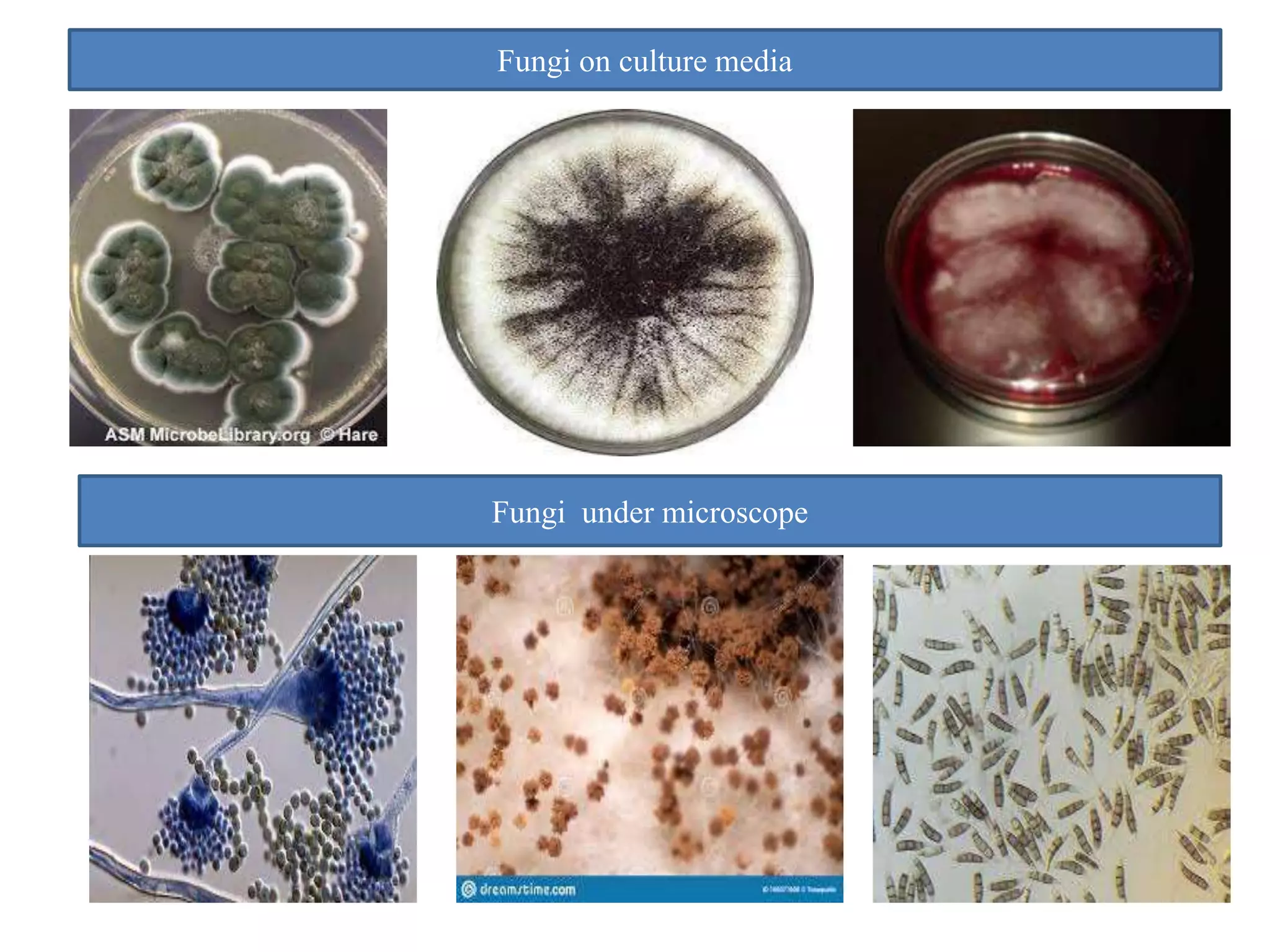
Fungi on culture media
Fungi under microscope
Introduction
• A fungus is any member of the group of eukaryotic
organisms that includes microorganisms such as yeasts and
molds, as well as the more familiar mushrooms. These
organisms are classified as a kingdom, which is separate
from the other eukaryotic life kingdoms of plants and
animals. 144,000 known species of organisms of the
kingdom Fungi.
• Some thalli of Armillaria species, which are pathogens of
forest trees, are among the largest and oldest organisms on
Earth.
• Habitat-Many fungi are free-living in soil or water; others
form parasitic or symbiotic relationships with plants or
animals. Some are saprophytes.
Habits-
According to their mode of nutrition they are classified into-
1.Saprophytes -Grow where dead organic matter abounds in
the substratum. Two types-a)Obligate Saprophytes – Grow
on only dead organic matter. b)Facultative Saprophytes –
Grow on living tissue but under emergent cirumstances they
are able to grow on dead matter.
2.Parasites – Live in or on the living bodies of other organisms
(plants & animals).eg- rust, smuts. Two types- a)Obligate
Parasites –Grow only on living tissue. b)Facultative
Parasites – Grow on dead organic matter but under suitable
condition they grow on living tissues.
3.Symbiosis- Association in which the fungus enters into a
partnership with another organism. Both the partners are
mutually benefited.eg-lichens (fungi & algae), mycorrhiza
(fungi & roots of higher plants).
• The medical relevance of fungi was discovered in
1928, when Scottish bacteriologist Alexander
Fleming noticed the green mold Penicillium notatum
growing in a culture dish of Staphylococcus bacteria.
• The Latin word for mushroom fungus (plural fungi), has
come to stand for the whole group. Similarly, the study
of fungi is known as Mycology—a broad application of
the Greek word for mushroom, mykēs. Humans have
been indirectly aware of fungi since the first loaf of
leavened bread was baked and the first tub of grape must
was turned into wine.
• Fungi are eukaryotic organisms; i.e., their cells contain
membrane-bound organelles and clearly defined nuclei.
• Fungi are aerobic organisms, meaning they require free
oxygen in order to live.
Morphology
1.A typical fungus consists of a mass of branched,
tubular filaments enclosed by a rigid cell wall. The
filaments, called hyphae (singular hypha), branch
repeatedly into a complicated, radially expanding
network called the mycelium, which makes up the
thallus, or undifferentiated body, of the typical fungus.
.
2.The mycelium grows by utilizing nutrients from the
environment and upon reaching a certain stage of
maturity, forms—either directly or in special fruiting
bodies—reproductive cells called spores.
3.The spores are released and dispersed by a wide
variety of passive or active mechanisms; upon reaching
a suitable substrate, the spores germinate and develop
hyphae that grow, branch repeatedly, and become the
mycelium of the new individual.
4. Some fungi, notably the yeasts, do not form a
mycelium but grow as individual cells that multiply
by budding or, in certain species, by fission.
Budding
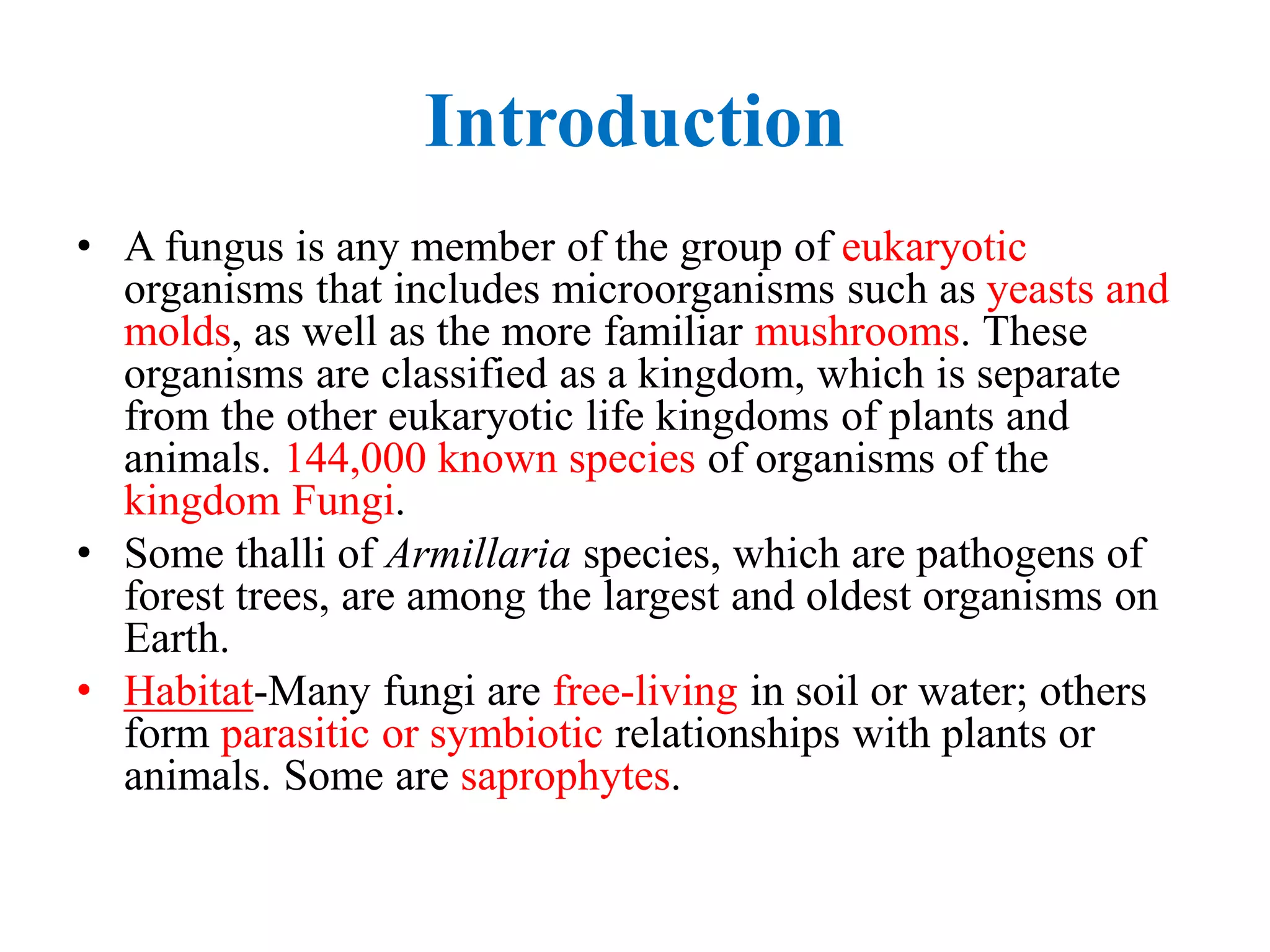
Structure of thallus-
A hypha is a multibranched tubular cell filled with cytoplasm. The
tube itself may be either continuous throughout or divided into
compartments, or cells, by cross walls called septa (singular
septum).
In nonseptate (i.e., coenocytic hyphae the nuclei are scattered
throughout the cytoplasm.
In septate hyphae each cell may contain one to many nuclei,
depending on the type of fungus or the stage of hyphal
development.
In addition to the nucleus, various organelles—such as the
endoplasmic reticulum, Golgi apparatus, ribosomes and liposomes
are scattered throughout the cytoplasm.
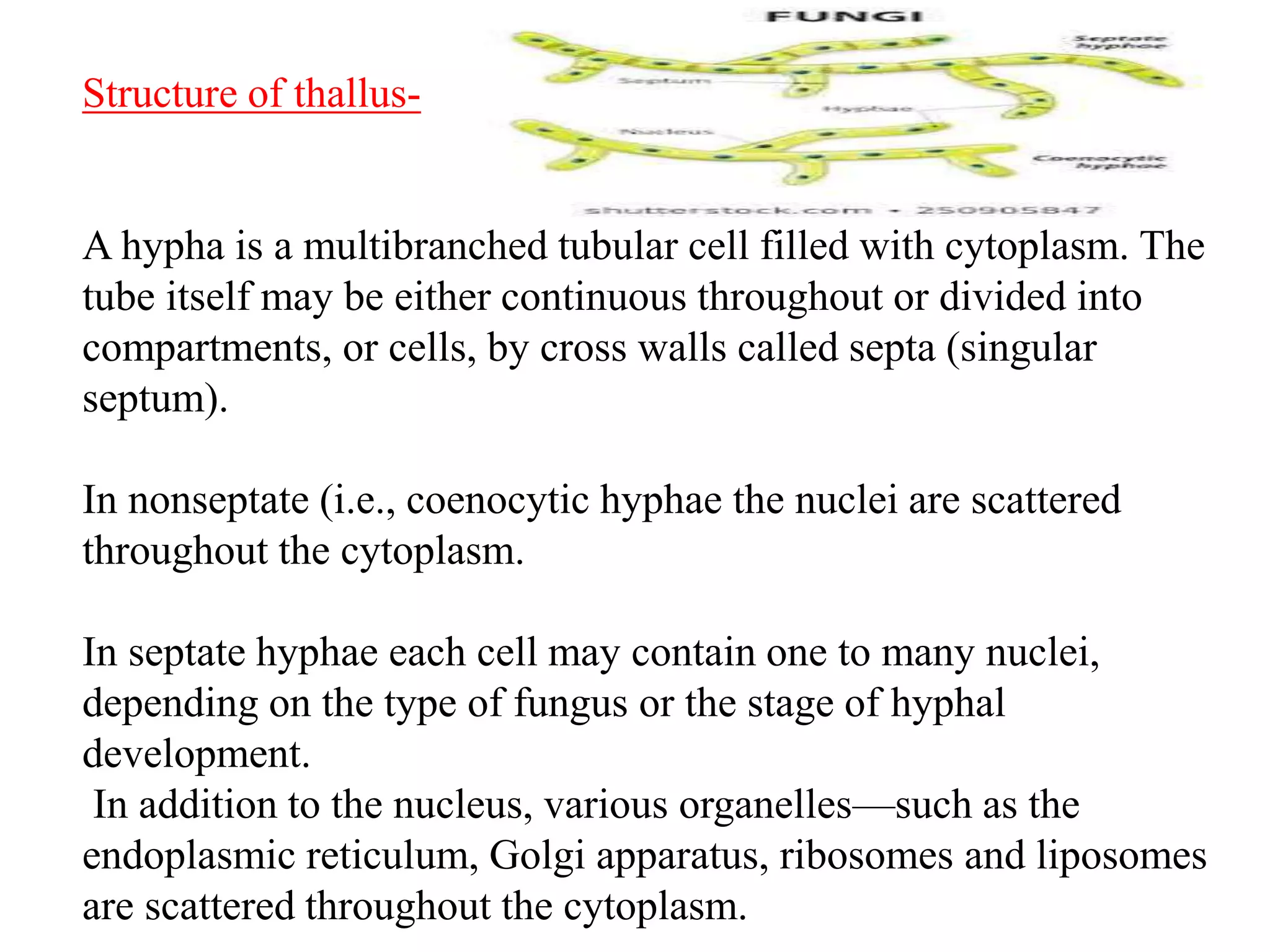
Mycelium appears as a mass of loose, cottony threads.
almost leathery colony.
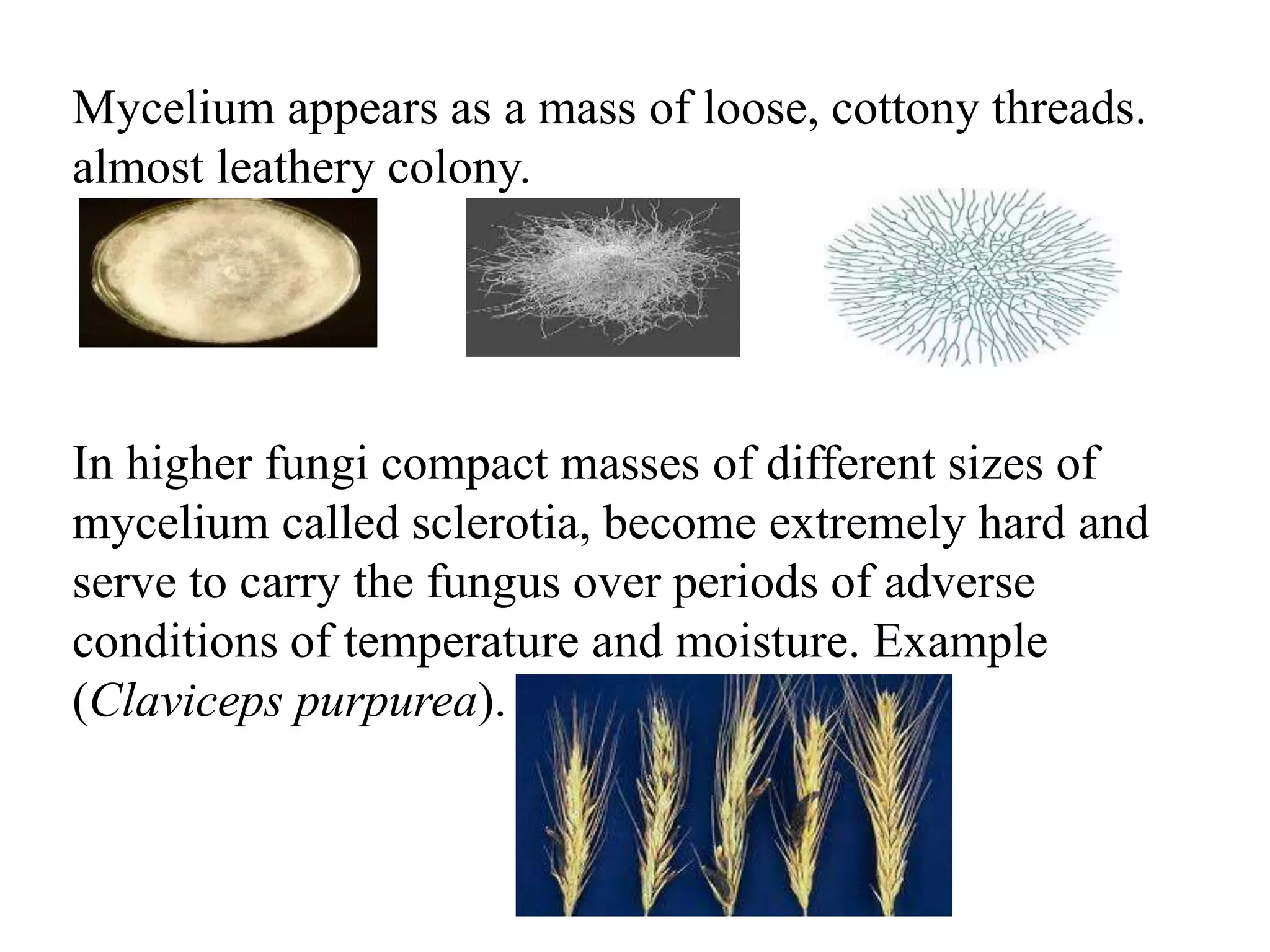
In higher fungi compact masses of different sizes of
mycelium called sclerotia, become extremely hard and
serve to carry the fungus over periods of adverse
conditions of temperature and moisture. Example
(Claviceps purpurea).
Various other tissues are also produced by the
interweaving of the assimilative hyphae of some fungi.
Stromata (singular stroma) are cushionlike tissues that
bear spores in various ways.
Rhizomorphs are long strands of parallel hyphae
cemented together, to conduct water and food materials
from one part of the thallus to another.
Sporophores and spores-
When the mycelium of a fungus reaches a certain stage of growth, it
begins to produce spores either directly on the somatic hyphae or, more
often, on special sporiferous (spore-producing) hyphae, which may be
loosely arranged or grouped into intricate structures called fruiting
bodies, or sporophores.
The more primitive fungi produce spores in sporangia, which are saclike
sporophores whose entire cytoplasmic contents cleave into spores, called
sporangiospores(endogenous).
Sporangiospores are either naked and flagellated (zoospores) or walled and
nonmotile (aplanospores). The zoospores lose their flagella, surround themselves
with walls, and encyst. Each cyst germinates by producing a germ tube. The germ
tube may develop a mycelium or a reproductive structure.
In more advanced fungi asexually produced spores (usually called conidia) are
produced exogenously and are typically formed terminally or laterally on special
spore-producing hyphae called conidiophores.
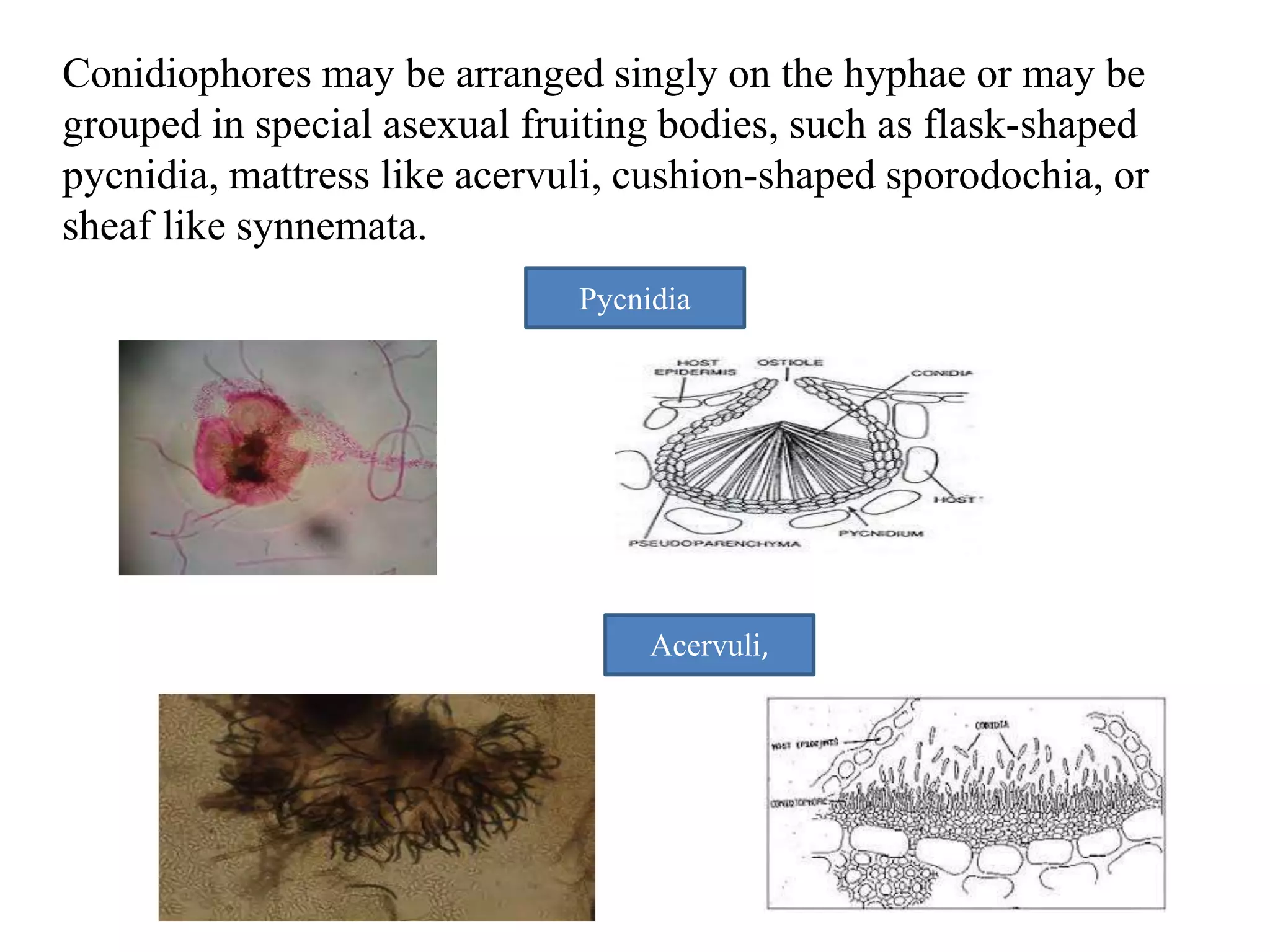
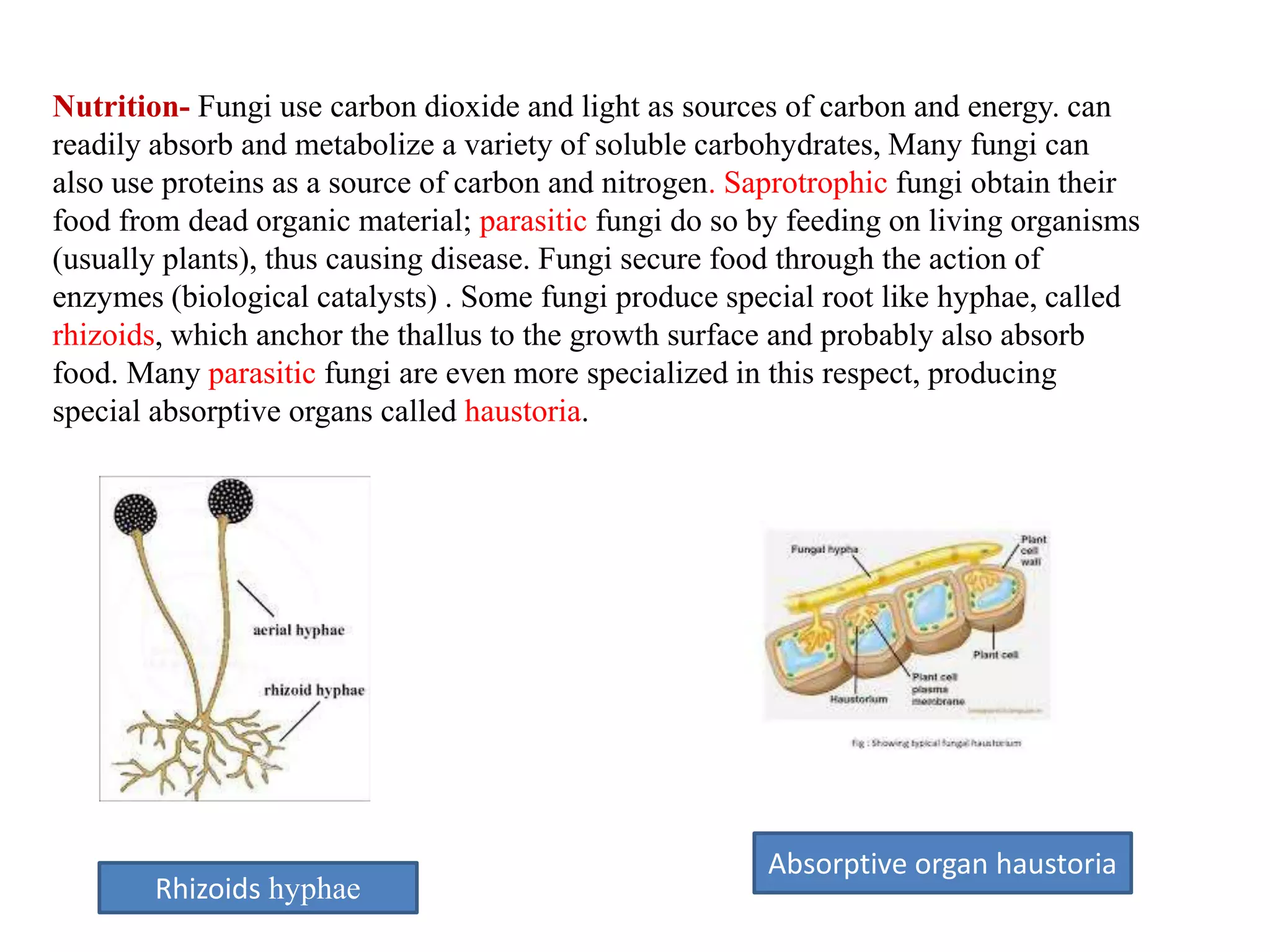
Conidiophores may be arranged singly on the hyphae or may be
grouped in special asexual fruiting bodies, such as flask-shaped
pycnidia, mattress like acervuli, cushion-shaped sporodochia, or
sheaf like synnemata.
Pycnidia
Acervuli,
Sporodochia
Ssynnemata.
Sexually produced spores of the higher fungi result from meiosis and are formed either
in saclike structures (asci) typical of the Ascomycota or on the surface of club-shaped
structures (basidia) typical of the Basidiomycota. Asci and basidia may be borne naked,
directly on the hyphae, or in various types of sporophores, called ascocarps (also known
as ascomata) or basidiocarps (also known as basidiomata), depending on whether they
bear asci or basidia, respectively. Well-known examples of ascocarps are the morels, the
cup fungi, and the truffles. Commonly encountered basidiocarps are mushrooms,
brackets, puffballs, stinkhorns, and bird’s-nest fungi.
Asci &Ascospore
Basidia & Besidiospore
Nutrition- Fungi use carbon dioxide and light as sources of carbon and energy. can
readily absorb and metabolize a variety of soluble carbohydrates, Many fungi can
also use proteins as a source of carbon and nitrogen. Saprotrophic fungi obtain their
food from dead organic material; parasitic fungi do so by feeding on living organisms
(usually plants), thus causing disease. Fungi secure food through the action of
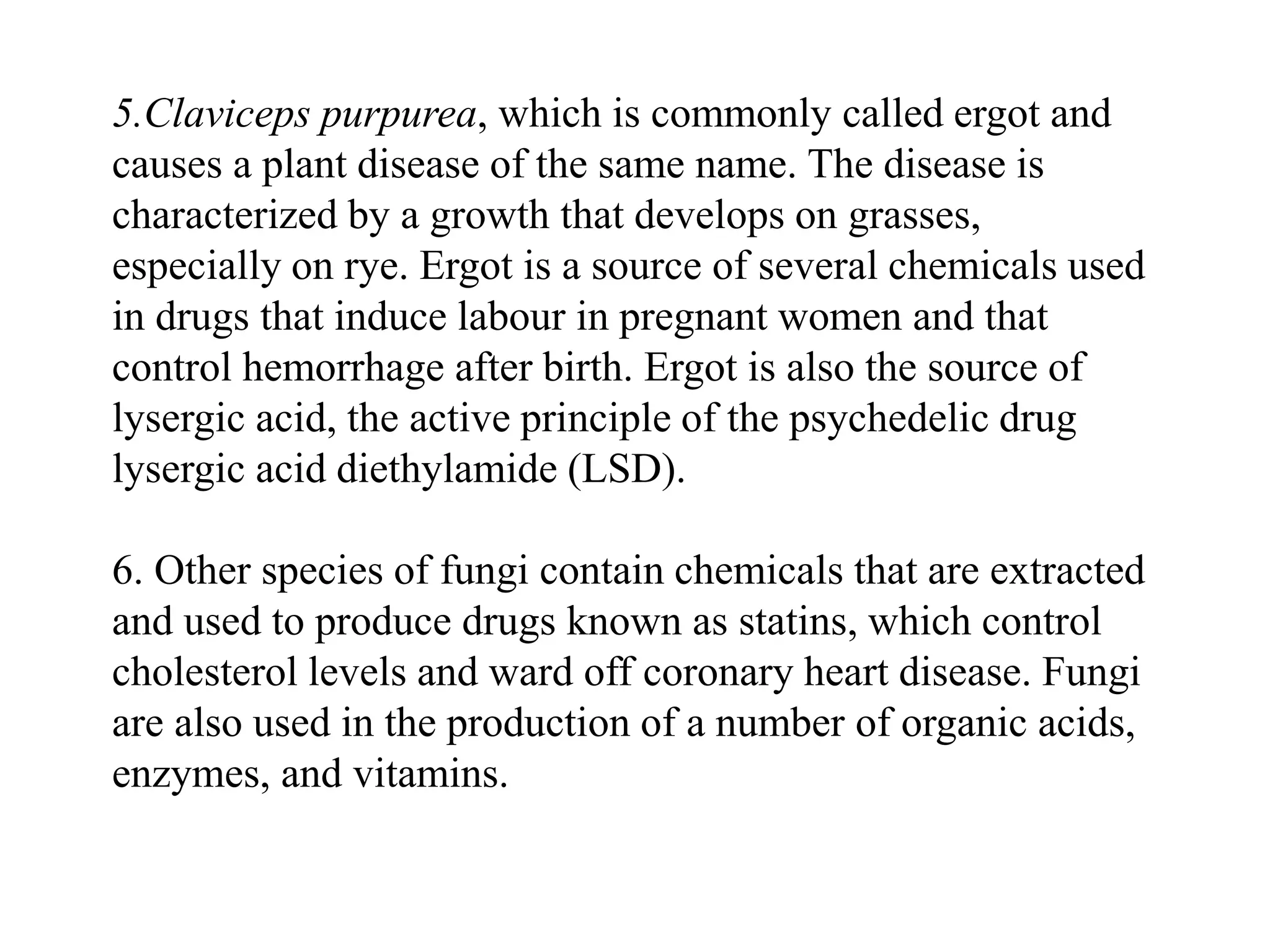
enzymes (biological catalysts) . Some fungi produce special root like hyphae, called
rhizoids, which anchor the thallus to the growth surface and probably also absorb
food. Many parasitic fungi are even more specialized in this respect, producing
special absorptive organs called haustoria.
Absorptive organ haustoria
Rhizoids hyphae
Reproduction-
Asexual reproduction- Asexual reproduction occurs via
vegetative spores (conidia)r through mycelial
fragmentation.
Sexual reproduction- Fungi employ two mating systems:
heterothallic species allow mating only between individuals
of opposite mating type, whereas homothallic species can
mate, and sexually reproduce, with any other individual or
itself. (two haploid nuclei derived from the same individual
fuse to form a zygote that can then undergo meiosis).
Certain fungi, may exchange genetic material via
parasexual processes, Most fungi have both a haploid and a
diploid stage in their life cycles.
Sexually produced spores of the higher fungi result from
meiosis and are formed either in saclike structures (asci)
typical of the Ascomycota or on the surface of club-shaped
structures (basidia) typical of the Basidiomycota. Asci and
basidia may be borne naked, directly on the hyphae, or in
various types of sporophores, called ascocarps (also
known as ascomata) or basidiocarps (also known as
basidiomata), depending on whether they bear asci or
basidia, respectively. Sexual reproduction in the fungi
consists of three sequential stages: plasmogamy,
karyogamy, and meiosis.
Charecters-
• Cell wall made up of Chitin, cellulose and glucan .
• Heterotrophs;
• They acquire their food by absorbing dissolved
molecules, typically by secreting digestive enzymes into
their environment.
• Do not photosynthesize
• Growth is their means of mobility, except for spores (a
few of which are flagellated), which may travel through
the air or water.
• Fungi are the principal decomposers in ecological
systems.
• They are rare and are more often found living in
symbiosis with algae in the form of lichens
Functions-
1.Together with bacteria, fungi are responsible for breaking down
organic matter and releasing carbon, oxygen, nitrogen, and
phosphorus into the soil and the atmosphere.
2.Fungi are essential to many household and industrial processes,
notably the making of bread, wine, beer, and certain cheeses.
3.Fungi are also used as food; for example, some mushrooms,
morels, and truffles are epicurean delicacies, and mycoproteins
(fungal proteins).
4. Fungi continue to be useful for studying cell and molecular
biology, genetic engineering, and other basic disciplines of
biology.
5.Claviceps purpurea, which is commonly called ergot and
causes a plant disease of the same name. The disease is
characterized by a growth that develops on grasses,
especially on rye. Ergot is a source of several chemicals used
in drugs that induce labour in pregnant women and that
control hemorrhage after birth. Ergot is also the source of
lysergic acid, the active principle of the psychedelic drug
lysergic acid diethylamide (LSD).
6. Other species of fungi contain chemicals that are extracted
and used to produce drugs known as statins, which control
cholesterol levels and ward off coronary heart disease. Fungi
are also used in the production of a number of organic acids,
enzymes, and vitamins.
7.Fungi that destroy timber and timber. Paper, textiles, and
leather are often attacked and destroyed by fungi.
8.Fungi have been used for the production of antibiotics,
and, more recently, various enzymes produced by fungi are
used industrially and in detergents.
9.Fungi are also used as biological pesticides to control
weeds, plant diseases and insect pests.
10.Many species produce bioactive compounds called
mycotoxins, such as alkaloids and polyketides, that are
toxic to animals including humans.
11.The fruiting structures of a few species contain
psychotropic compounds and are consumed
recreationally or in traditional spiritual ceremonies.
12. Fungi can break down manufactured materials
and buildings, and become significant pathogens of
humans and other animals.
13.Losses of crops due to fungal diseases (e.g., rice
blast disease) or food spoilage can have a large
impact on human food supplies and local economies.
Ppt of fungi

Ppt of fungi

  • 1.
    Fungi V.S.Patil Professor, Department ofBotany Shri Shivaji College of Arts, Commerce,& Science Akola
  • 2.
  • 5.
    Fungal diseases onroot, stems, leaves, flower, fruits & seeds.
  • 6.
    Fungal diseases onfish, amphibians, reptiles, bird, mammals &humans
  • 7.
    Fungi on culturemedia Fungi under microscope
  • 8.
    Introduction • A fungusis any member of the group of eukaryotic organisms that includes microorganisms such as yeasts and molds, as well as the more familiar mushrooms. These organisms are classified as a kingdom, which is separate from the other eukaryotic life kingdoms of plants and animals. 144,000 known species of organisms of the kingdom Fungi. • Some thalli of Armillaria species, which are pathogens of forest trees, are among the largest and oldest organisms on Earth. • Habitat-Many fungi are free-living in soil or water; others form parasitic or symbiotic relationships with plants or animals. Some are saprophytes.
  • 9.
    Habits- According to theirmode of nutrition they are classified into- 1.Saprophytes -Grow where dead organic matter abounds in the substratum. Two types-a)Obligate Saprophytes – Grow on only dead organic matter. b)Facultative Saprophytes – Grow on living tissue but under emergent cirumstances they are able to grow on dead matter. 2.Parasites – Live in or on the living bodies of other organisms (plants & animals).eg- rust, smuts. Two types- a)Obligate Parasites –Grow only on living tissue. b)Facultative Parasites – Grow on dead organic matter but under suitable condition they grow on living tissues. 3.Symbiosis- Association in which the fungus enters into a partnership with another organism. Both the partners are mutually benefited.eg-lichens (fungi & algae), mycorrhiza (fungi & roots of higher plants).
  • 10.
    • The medicalrelevance of fungi was discovered in 1928, when Scottish bacteriologist Alexander Fleming noticed the green mold Penicillium notatum growing in a culture dish of Staphylococcus bacteria.
  • 11.
    • The Latinword for mushroom fungus (plural fungi), has come to stand for the whole group. Similarly, the study of fungi is known as Mycology—a broad application of the Greek word for mushroom, mykēs. Humans have been indirectly aware of fungi since the first loaf of leavened bread was baked and the first tub of grape must was turned into wine. • Fungi are eukaryotic organisms; i.e., their cells contain membrane-bound organelles and clearly defined nuclei. • Fungi are aerobic organisms, meaning they require free oxygen in order to live.
  • 12.
    Morphology 1.A typical fungusconsists of a mass of branched, tubular filaments enclosed by a rigid cell wall. The filaments, called hyphae (singular hypha), branch repeatedly into a complicated, radially expanding network called the mycelium, which makes up the thallus, or undifferentiated body, of the typical fungus. .
  • 13.
    2.The mycelium growsby utilizing nutrients from the environment and upon reaching a certain stage of maturity, forms—either directly or in special fruiting bodies—reproductive cells called spores. 3.The spores are released and dispersed by a wide variety of passive or active mechanisms; upon reaching a suitable substrate, the spores germinate and develop hyphae that grow, branch repeatedly, and become the mycelium of the new individual.
  • 14.
    4. Some fungi,notably the yeasts, do not form a mycelium but grow as individual cells that multiply by budding or, in certain species, by fission. Budding
  • 15.
    Structure of thallus- Ahypha is a multibranched tubular cell filled with cytoplasm. The tube itself may be either continuous throughout or divided into compartments, or cells, by cross walls called septa (singular septum). In nonseptate (i.e., coenocytic hyphae the nuclei are scattered throughout the cytoplasm. In septate hyphae each cell may contain one to many nuclei, depending on the type of fungus or the stage of hyphal development. In addition to the nucleus, various organelles—such as the endoplasmic reticulum, Golgi apparatus, ribosomes and liposomes are scattered throughout the cytoplasm.
  • 16.
    Mycelium appears asa mass of loose, cottony threads. almost leathery colony. In higher fungi compact masses of different sizes of mycelium called sclerotia, become extremely hard and serve to carry the fungus over periods of adverse conditions of temperature and moisture. Example (Claviceps purpurea).
  • 17.
    Various other tissuesare also produced by the interweaving of the assimilative hyphae of some fungi. Stromata (singular stroma) are cushionlike tissues that bear spores in various ways. Rhizomorphs are long strands of parallel hyphae cemented together, to conduct water and food materials from one part of the thallus to another.
  • 18.
    Sporophores and spores- Whenthe mycelium of a fungus reaches a certain stage of growth, it begins to produce spores either directly on the somatic hyphae or, more often, on special sporiferous (spore-producing) hyphae, which may be loosely arranged or grouped into intricate structures called fruiting bodies, or sporophores. The more primitive fungi produce spores in sporangia, which are saclike sporophores whose entire cytoplasmic contents cleave into spores, called sporangiospores(endogenous).
  • 19.
    Sporangiospores are eithernaked and flagellated (zoospores) or walled and nonmotile (aplanospores). The zoospores lose their flagella, surround themselves with walls, and encyst. Each cyst germinates by producing a germ tube. The germ tube may develop a mycelium or a reproductive structure. In more advanced fungi asexually produced spores (usually called conidia) are produced exogenously and are typically formed terminally or laterally on special spore-producing hyphae called conidiophores.
  • 20.
    Conidiophores may bearranged singly on the hyphae or may be grouped in special asexual fruiting bodies, such as flask-shaped pycnidia, mattress like acervuli, cushion-shaped sporodochia, or sheaf like synnemata. Pycnidia Acervuli,
  • 21.
  • 22.
    Sexually produced sporesof the higher fungi result from meiosis and are formed either in saclike structures (asci) typical of the Ascomycota or on the surface of club-shaped structures (basidia) typical of the Basidiomycota. Asci and basidia may be borne naked, directly on the hyphae, or in various types of sporophores, called ascocarps (also known as ascomata) or basidiocarps (also known as basidiomata), depending on whether they bear asci or basidia, respectively. Well-known examples of ascocarps are the morels, the cup fungi, and the truffles. Commonly encountered basidiocarps are mushrooms, brackets, puffballs, stinkhorns, and bird’s-nest fungi. Asci &Ascospore Basidia & Besidiospore
  • 23.
    Nutrition- Fungi usecarbon dioxide and light as sources of carbon and energy. can readily absorb and metabolize a variety of soluble carbohydrates, Many fungi can also use proteins as a source of carbon and nitrogen. Saprotrophic fungi obtain their food from dead organic material; parasitic fungi do so by feeding on living organisms (usually plants), thus causing disease. Fungi secure food through the action of enzymes (biological catalysts) . Some fungi produce special root like hyphae, called rhizoids, which anchor the thallus to the growth surface and probably also absorb food. Many parasitic fungi are even more specialized in this respect, producing special absorptive organs called haustoria. Absorptive organ haustoria Rhizoids hyphae
  • 24.
    Reproduction- Asexual reproduction- Asexualreproduction occurs via vegetative spores (conidia)r through mycelial fragmentation. Sexual reproduction- Fungi employ two mating systems: heterothallic species allow mating only between individuals of opposite mating type, whereas homothallic species can mate, and sexually reproduce, with any other individual or itself. (two haploid nuclei derived from the same individual fuse to form a zygote that can then undergo meiosis). Certain fungi, may exchange genetic material via parasexual processes, Most fungi have both a haploid and a diploid stage in their life cycles.
  • 25.
    Sexually produced sporesof the higher fungi result from meiosis and are formed either in saclike structures (asci) typical of the Ascomycota or on the surface of club-shaped structures (basidia) typical of the Basidiomycota. Asci and basidia may be borne naked, directly on the hyphae, or in various types of sporophores, called ascocarps (also known as ascomata) or basidiocarps (also known as basidiomata), depending on whether they bear asci or basidia, respectively. Sexual reproduction in the fungi consists of three sequential stages: plasmogamy, karyogamy, and meiosis.
  • 27.
    Charecters- • Cell wallmade up of Chitin, cellulose and glucan . • Heterotrophs; • They acquire their food by absorbing dissolved molecules, typically by secreting digestive enzymes into their environment. • Do not photosynthesize • Growth is their means of mobility, except for spores (a few of which are flagellated), which may travel through the air or water. • Fungi are the principal decomposers in ecological systems. • They are rare and are more often found living in symbiosis with algae in the form of lichens
  • 28.
    Functions- 1.Together with bacteria,fungi are responsible for breaking down organic matter and releasing carbon, oxygen, nitrogen, and phosphorus into the soil and the atmosphere. 2.Fungi are essential to many household and industrial processes, notably the making of bread, wine, beer, and certain cheeses. 3.Fungi are also used as food; for example, some mushrooms, morels, and truffles are epicurean delicacies, and mycoproteins (fungal proteins). 4. Fungi continue to be useful for studying cell and molecular biology, genetic engineering, and other basic disciplines of biology.
  • 29.
    5.Claviceps purpurea, whichis commonly called ergot and causes a plant disease of the same name. The disease is characterized by a growth that develops on grasses, especially on rye. Ergot is a source of several chemicals used in drugs that induce labour in pregnant women and that control hemorrhage after birth. Ergot is also the source of lysergic acid, the active principle of the psychedelic drug lysergic acid diethylamide (LSD). 6. Other species of fungi contain chemicals that are extracted and used to produce drugs known as statins, which control cholesterol levels and ward off coronary heart disease. Fungi are also used in the production of a number of organic acids, enzymes, and vitamins.
  • 30.
    7.Fungi that destroytimber and timber. Paper, textiles, and leather are often attacked and destroyed by fungi. 8.Fungi have been used for the production of antibiotics, and, more recently, various enzymes produced by fungi are used industrially and in detergents. 9.Fungi are also used as biological pesticides to control weeds, plant diseases and insect pests. 10.Many species produce bioactive compounds called mycotoxins, such as alkaloids and polyketides, that are toxic to animals including humans.
  • 31.
    11.The fruiting structuresof a few species contain psychotropic compounds and are consumed recreationally or in traditional spiritual ceremonies. 12. Fungi can break down manufactured materials and buildings, and become significant pathogens of humans and other animals. 13.Losses of crops due to fungal diseases (e.g., rice blast disease) or food spoilage can have a large impact on human food supplies and local economies.