Classification of Fungi proposed by
Ainsworth (1971)
Vaishali S.Patil
Professor, Department of Botany
Shri Shivaji College of Arts, Commerce & Science
Akola
Ainsworth G. C. 1971, proposed a more
natural system of classification of fungi.
This classification is based on morphology,
especially of reproductive structure.
Ainsworth in his dictionary of fungi treated
the fungi as a separate and independent
kingdom.
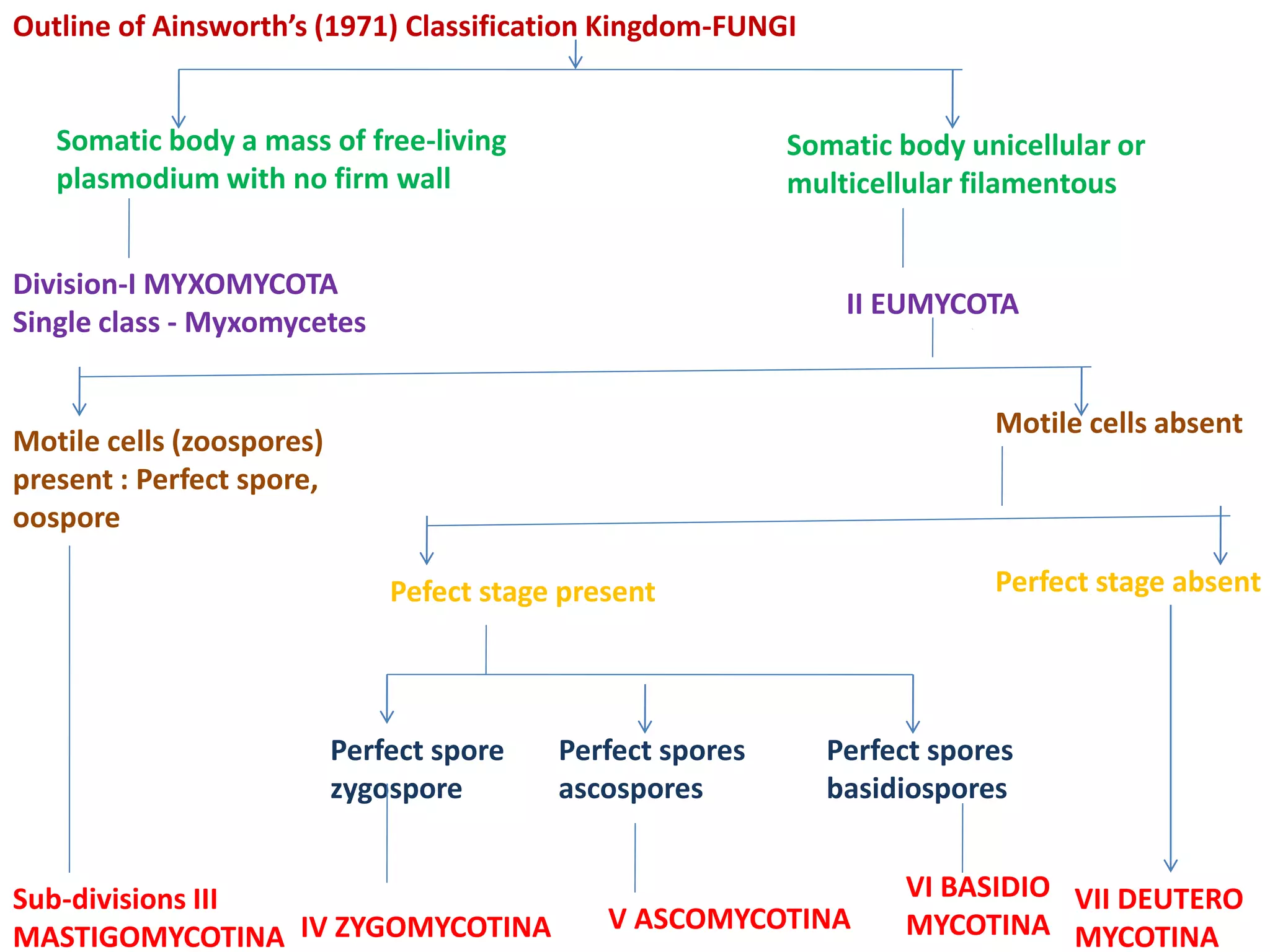
Outline of Ainsworth’s (1971) Classification Kingdom-FUNGI
Somatic body a mass of free-living
plasmodium with no firm wall
Somatic body unicellular or
multicellular filamentous
Division-I MYXOMYCOTA
Single class - Myxomycetes
II EUMYCOTA
Motile cells (zoospores)
present : Perfect spore,
oospore
Motile cells absent
Sub-divisions III
MASTIGOMYCOTINA
Pefect stage present Perfect stage absent
VII DEUTERO
MYCOTINA
Perfect spore
zygospore
Perfect spores
ascospores
Perfect spores
basidiospores
IV ZYGOMYCOTINA V ASCOMYCOTINA
VI BASIDIO
MYCOTINA
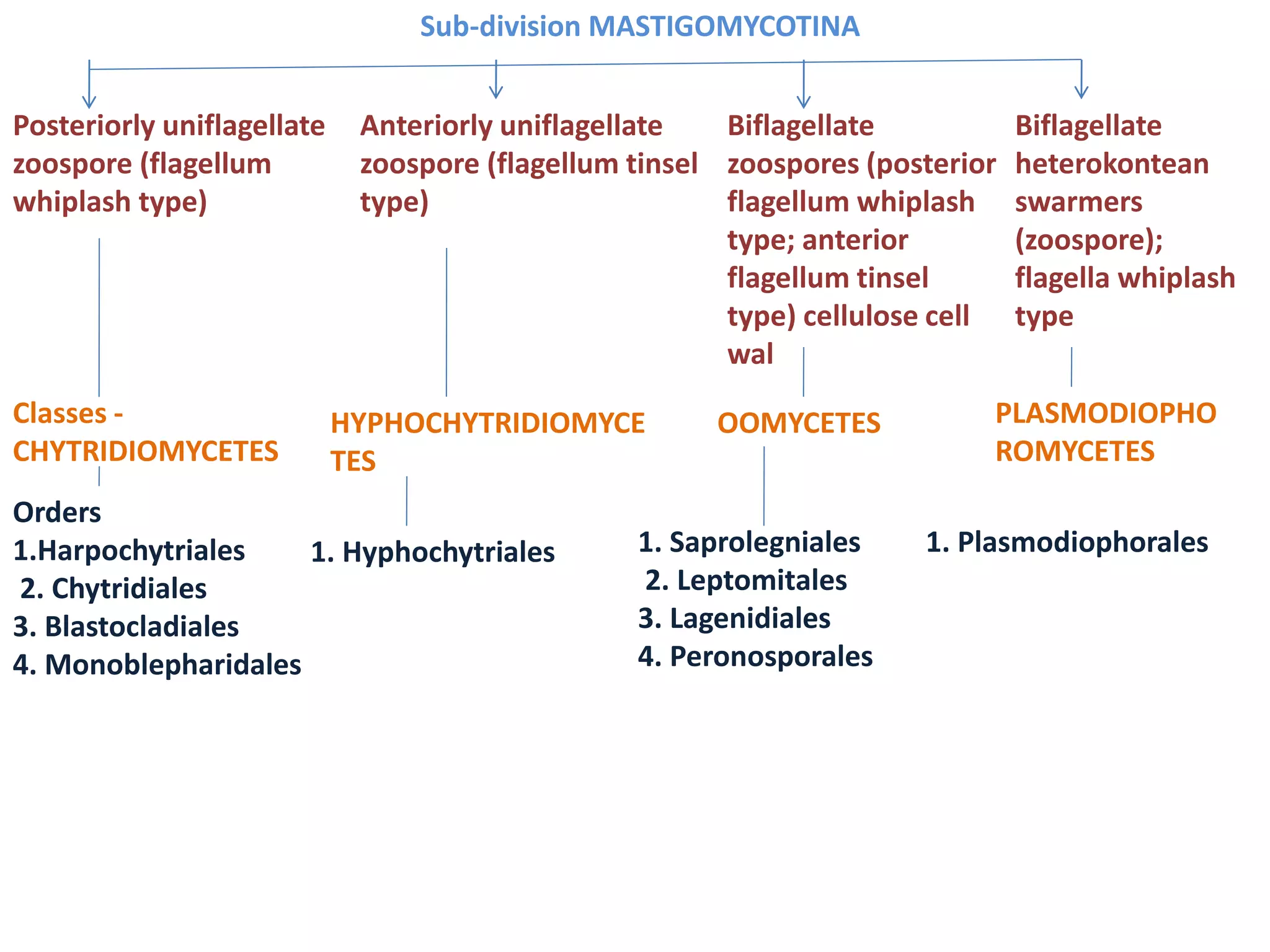
Sub-division MASTIGOMYCOTINA
Posteriorly uniflagellate
zoospore (flagellum
whiplash type)
Anteriorly uniflagellate
zoospore (flagellum tinsel
type)
Biflagellate
zoospores (posterior
flagellum whiplash
type; anterior
flagellum tinsel
type) cellulose cell
wal
Biflagellate
heterokontean
swarmers
(zoospore);
flagella whiplash
type
Classes -
CHYTRIDIOMYCETES
HYPHOCHYTRIDIOMYCE
TES
OOMYCETES PLASMODIOPHO
ROMYCETES
Orders
1.Harpochytriales
2. Chytridiales
3. Blastocladiales
4. Monoblepharidales
1. Hyphochytriales 1. Saprolegniales
2. Leptomitales
3. Lagenidiales
4. Peronosporales
1. Plasmodiophorales
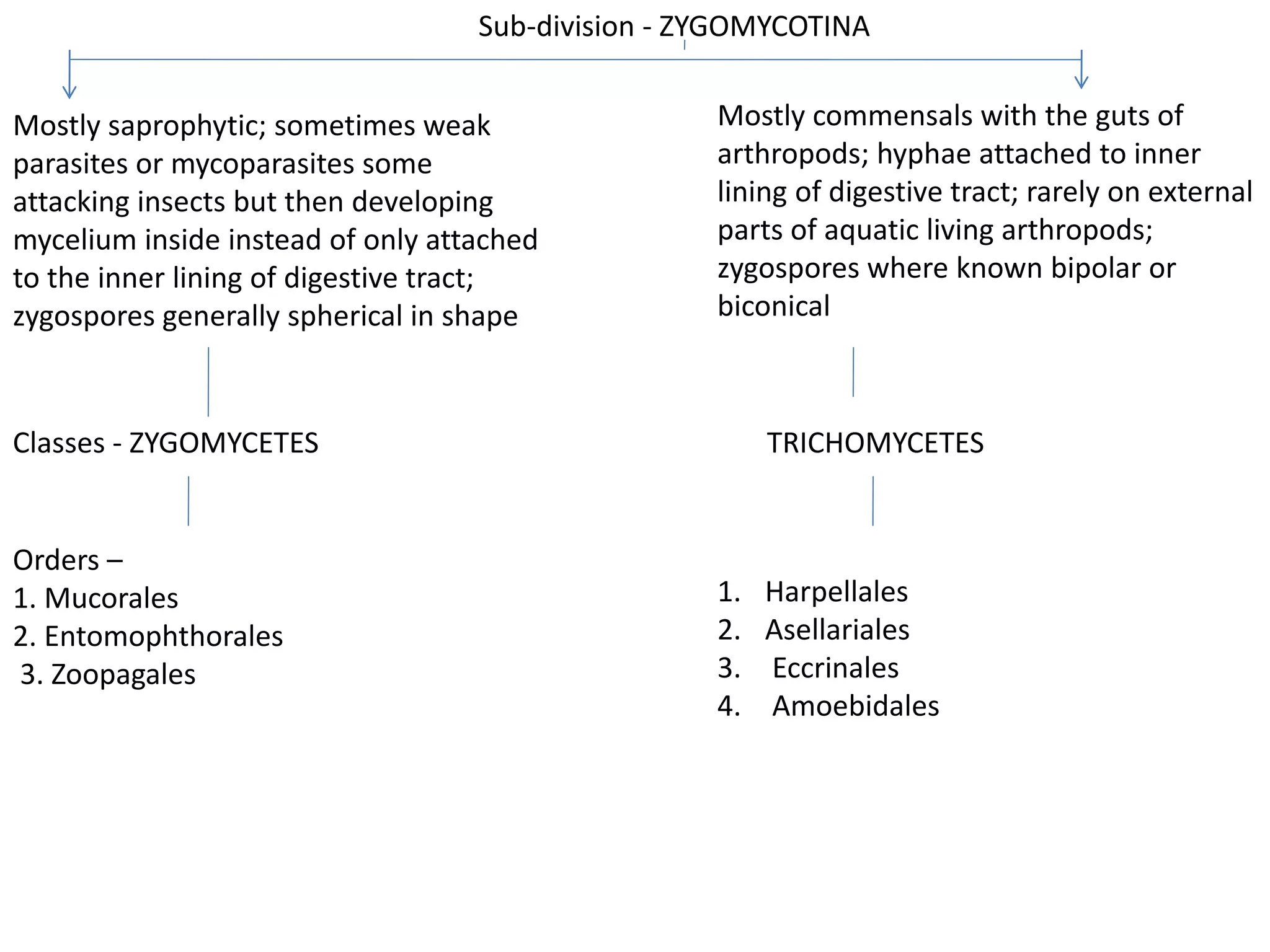
Sub-division - ZYGOMYCOTINA
Mostly saprophytic; sometimes weak
parasites or mycoparasites some
attacking insects but then developing
mycelium inside instead of only attached
to the inner lining of digestive tract;
zygospores generally spherical in shape
Mostly commensals with the guts of
arthropods; hyphae attached to inner
lining of digestive tract; rarely on external
parts of aquatic living arthropods;
zygospores where known bipolar or
biconical
Classes - ZYGOMYCETES TRICHOMYCETES
Orders –
1. Mucorales
2. Entomophthorales
3. Zoopagales
1. Harpellales
2. Asellariales
3. Eccrinales
4. Amoebidales
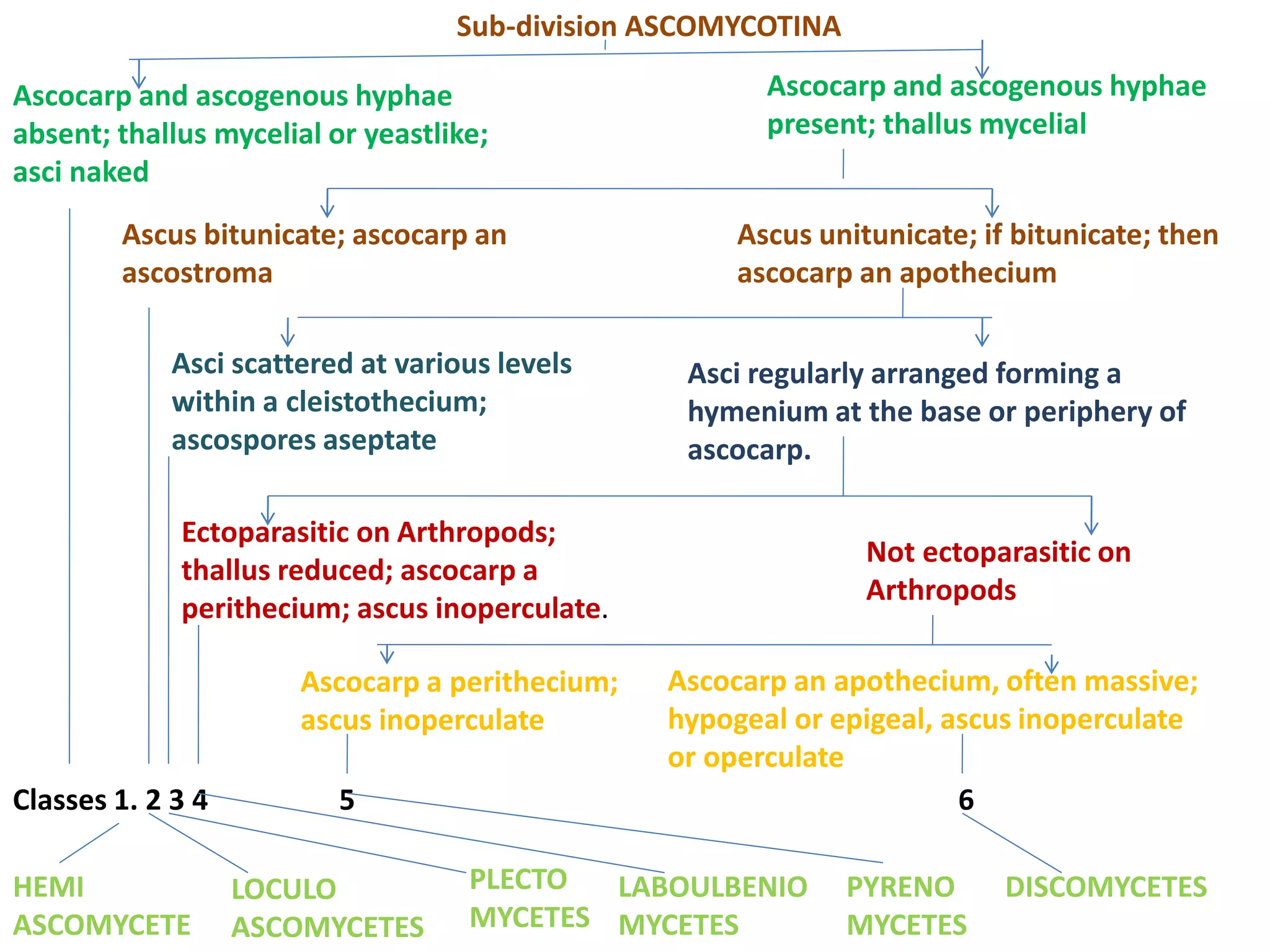
Sub-division ASCOMYCOTINA
Ascocarp and ascogenous hyphae
absent; thallus mycelial or yeastlike;
asci naked
Ascocarp and ascogenous hyphae
present; thallus mycelial
Ascus bitunicate; ascocarp an
ascostroma
Ascus unitunicate; if bitunicate; then
ascocarp an apothecium
Asci scattered at various levels
within a cleistothecium;
ascospores aseptate
Asci regularly arranged forming a
hymenium at the base or periphery of
ascocarp.
Ectoparasitic on Arthropods;
thallus reduced; ascocarp a
perithecium; ascus inoperculate.
Not ectoparasitic on
Arthropods
Ascocarp a perithecium;
ascus inoperculate
Ascocarp an apothecium, often massive;
hypogeal or epigeal, ascus inoperculate
or operculate
Classes 1. 2 3 4 5 6
HEMI
ASCOMYCETE
LOCULO
ASCOMYCETES
PLECTO
MYCETES
LABOULBENIO
MYCETES
PYRENO
MYCETES
DISCOMYCETES
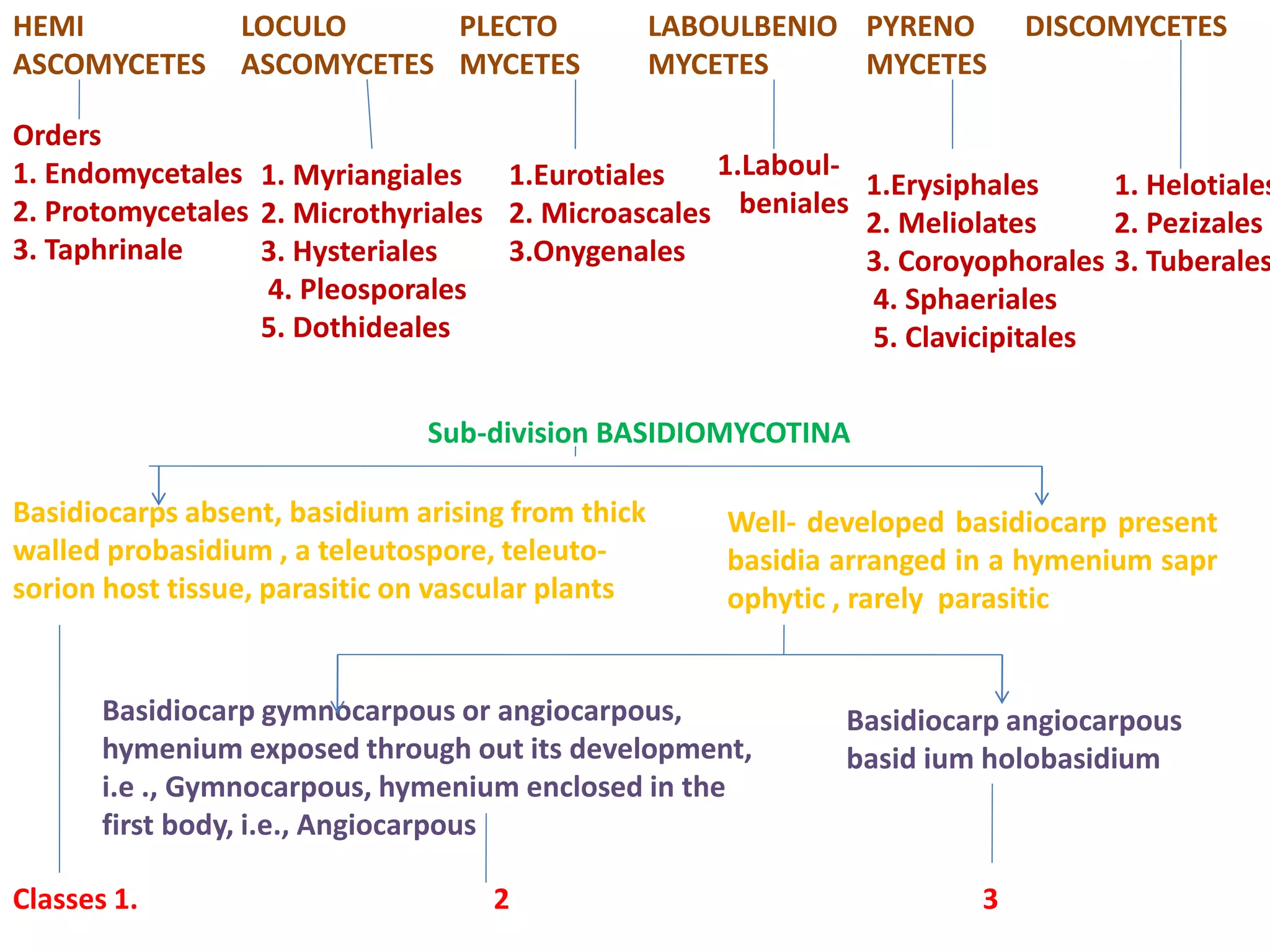
HEMI
ASCOMYCETES
LOCULO
ASCOMYCETES
PLECTO
MYCETES
LABOULBENIO
MYCETES
PYRENO
MYCETES
DISCOMYCETES
Orders
1. Endomycetales
2. Protomycetales
3. Taphrinale
1. Myriangiales
2. Microthyriales
3. Hysteriales
4. Pleosporales
5. Dothideales
1.Eurotiales
2. Microascales
3.Onygenales
1.Laboul-
beniales
1.Erysiphales
2. Meliolates
3. Coroyophorales
4. Sphaeriales
5. Clavicipitales
1. Helotiales
2. Pezizales
3. Tuberales
Basidiocarps absent, basidium arising from thick
walled probasidium , a teleutospore, teleuto-
sorion host tissue, parasitic on vascular plants
Sub-division BASIDIOMYCOTINA
Well- developed basidiocarp present
basidia arranged in a hymenium sapr
ophytic , rarely parasitic
Basidiocarp gymnocarpous or angiocarpous,
hymenium exposed through out its development,
i.e ., Gymnocarpous, hymenium enclosed in the
first body, i.e., Angiocarpous
Basidiocarp angiocarpous
basid ium holobasidium
Classes 1. 2 3
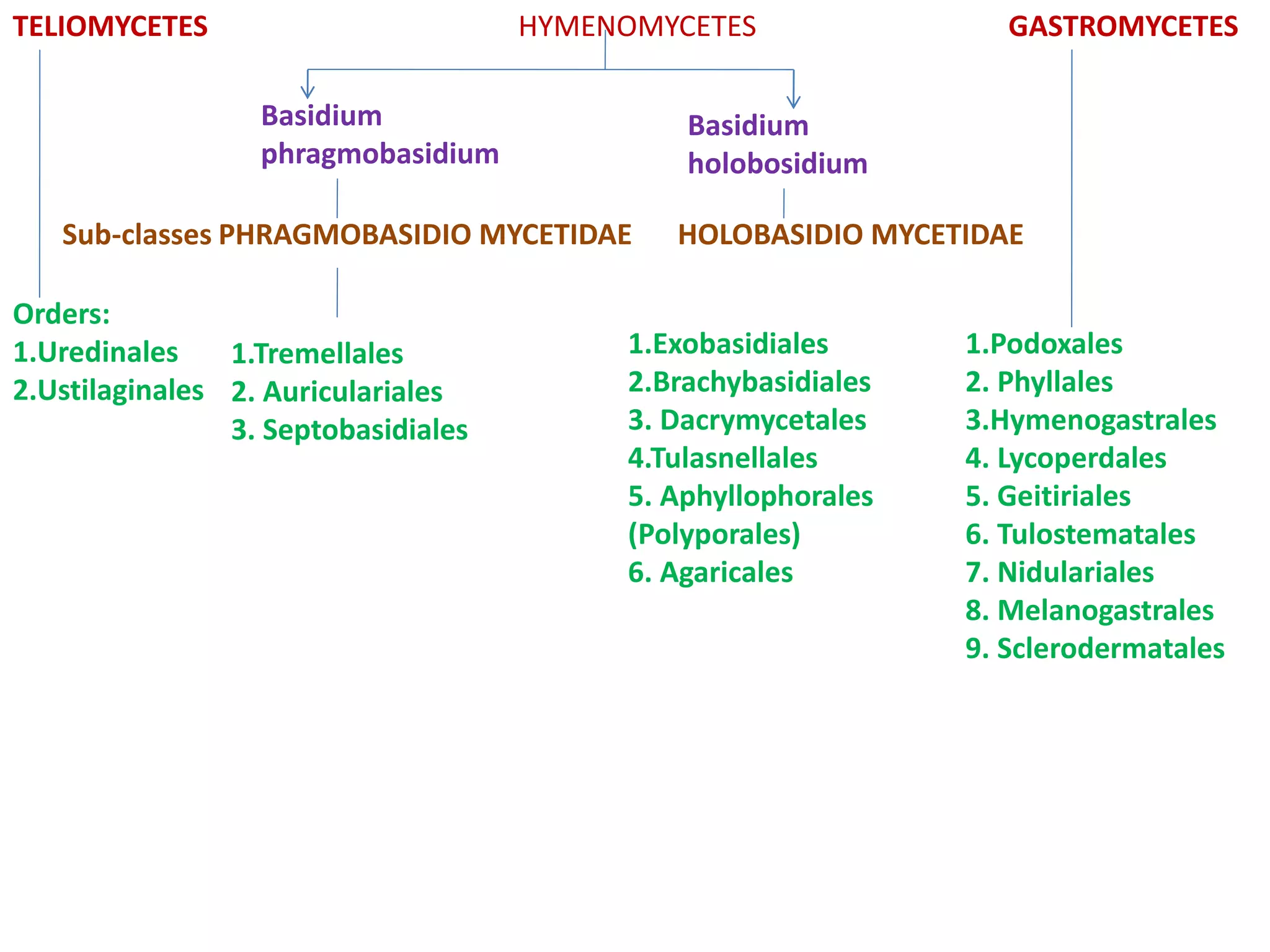
TELIOMYCETES HYMENOMYCETES GASTROMYCETES
Basidium
phragmobasidium
Basidium
holobosidium
Sub-classes PHRAGMOBASIDIO MYCETIDAE HOLOBASIDIO MYCETIDAE
Orders:
1.Uredinales
2.Ustilaginales
1.Tremellales
2. Auriculariales
3. Septobasidiales
1.Exobasidiales
2.Brachybasidiales
3. Dacrymycetales
4.Tulasnellales
5. Aphyllophorales
(Polyporales)
6. Agaricales
1.Podoxales
2. Phyllales
3.Hymenogastrales
4. Lycoperdales
5. Geitiriales
6. Tulostematales
7. Nidulariales
8. Melanogastrales
9. Sclerodermatales
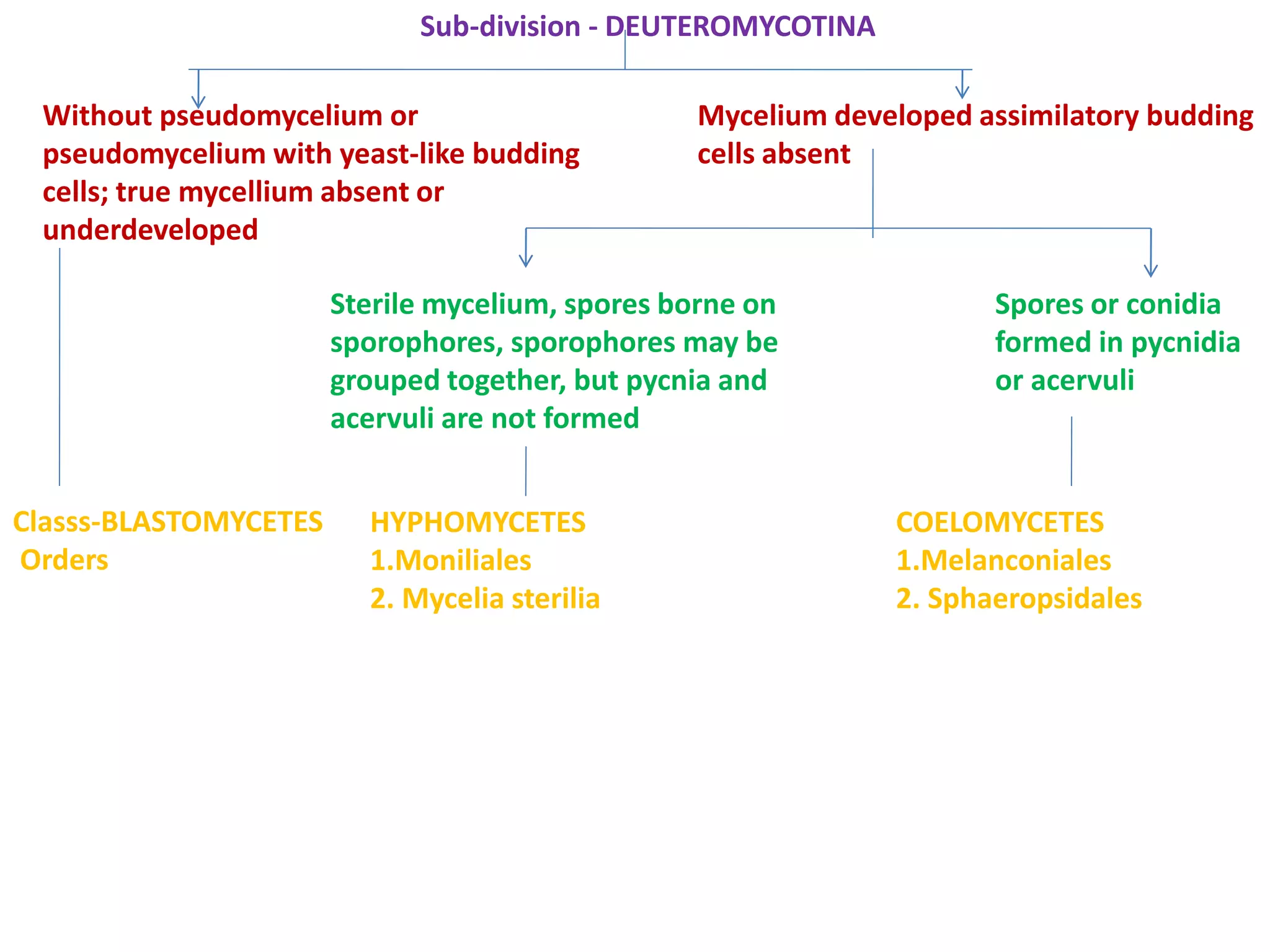
Sub-division - DEUTEROMYCOTINA
Without pseudomycelium or
pseudomycelium with yeast-like budding
cells; true mycellium absent or
underdeveloped
Mycelium developed assimilatory budding
cells absent
Sterile mycelium, spores borne on
sporophores, sporophores may be
grouped together, but pycnia and
acervuli are not formed
Spores or conidia
formed in pycnidia
or acervuli
Classs-BLASTOMYCETES
Orders
HYPHOMYCETES
1.Moniliales
2. Mycelia sterilia
COELOMYCETES
1.Melanconiales
2. Sphaeropsidales
Classification of fungi proposed by Ainsworth (1971)

Classification of fungi proposed by Ainsworth (1971)

  • 1.
    Classification of Fungiproposed by Ainsworth (1971) Vaishali S.Patil Professor, Department of Botany Shri Shivaji College of Arts, Commerce & Science Akola
  • 2.
    Ainsworth G. C.1971, proposed a more natural system of classification of fungi. This classification is based on morphology, especially of reproductive structure. Ainsworth in his dictionary of fungi treated the fungi as a separate and independent kingdom.
  • 3.
    Outline of Ainsworth’s(1971) Classification Kingdom-FUNGI Somatic body a mass of free-living plasmodium with no firm wall Somatic body unicellular or multicellular filamentous Division-I MYXOMYCOTA Single class - Myxomycetes II EUMYCOTA Motile cells (zoospores) present : Perfect spore, oospore Motile cells absent Sub-divisions III MASTIGOMYCOTINA Pefect stage present Perfect stage absent VII DEUTERO MYCOTINA Perfect spore zygospore Perfect spores ascospores Perfect spores basidiospores IV ZYGOMYCOTINA V ASCOMYCOTINA VI BASIDIO MYCOTINA
  • 4.
    Sub-division MASTIGOMYCOTINA Posteriorly uniflagellate zoospore(flagellum whiplash type) Anteriorly uniflagellate zoospore (flagellum tinsel type) Biflagellate zoospores (posterior flagellum whiplash type; anterior flagellum tinsel type) cellulose cell wal Biflagellate heterokontean swarmers (zoospore); flagella whiplash type Classes - CHYTRIDIOMYCETES HYPHOCHYTRIDIOMYCE TES OOMYCETES PLASMODIOPHO ROMYCETES Orders 1.Harpochytriales 2. Chytridiales 3. Blastocladiales 4. Monoblepharidales 1. Hyphochytriales 1. Saprolegniales 2. Leptomitales 3. Lagenidiales 4. Peronosporales 1. Plasmodiophorales
  • 5.
    Sub-division - ZYGOMYCOTINA Mostlysaprophytic; sometimes weak parasites or mycoparasites some attacking insects but then developing mycelium inside instead of only attached to the inner lining of digestive tract; zygospores generally spherical in shape Mostly commensals with the guts of arthropods; hyphae attached to inner lining of digestive tract; rarely on external parts of aquatic living arthropods; zygospores where known bipolar or biconical Classes - ZYGOMYCETES TRICHOMYCETES Orders – 1. Mucorales 2. Entomophthorales 3. Zoopagales 1. Harpellales 2. Asellariales 3. Eccrinales 4. Amoebidales
  • 6.
    Sub-division ASCOMYCOTINA Ascocarp andascogenous hyphae absent; thallus mycelial or yeastlike; asci naked Ascocarp and ascogenous hyphae present; thallus mycelial Ascus bitunicate; ascocarp an ascostroma Ascus unitunicate; if bitunicate; then ascocarp an apothecium Asci scattered at various levels within a cleistothecium; ascospores aseptate Asci regularly arranged forming a hymenium at the base or periphery of ascocarp. Ectoparasitic on Arthropods; thallus reduced; ascocarp a perithecium; ascus inoperculate. Not ectoparasitic on Arthropods Ascocarp a perithecium; ascus inoperculate Ascocarp an apothecium, often massive; hypogeal or epigeal, ascus inoperculate or operculate Classes 1. 2 3 4 5 6 HEMI ASCOMYCETE LOCULO ASCOMYCETES PLECTO MYCETES LABOULBENIO MYCETES PYRENO MYCETES DISCOMYCETES
  • 7.
    HEMI ASCOMYCETES LOCULO ASCOMYCETES PLECTO MYCETES LABOULBENIO MYCETES PYRENO MYCETES DISCOMYCETES Orders 1. Endomycetales 2. Protomycetales 3.Taphrinale 1. Myriangiales 2. Microthyriales 3. Hysteriales 4. Pleosporales 5. Dothideales 1.Eurotiales 2. Microascales 3.Onygenales 1.Laboul- beniales 1.Erysiphales 2. Meliolates 3. Coroyophorales 4. Sphaeriales 5. Clavicipitales 1. Helotiales 2. Pezizales 3. Tuberales Basidiocarps absent, basidium arising from thick walled probasidium , a teleutospore, teleuto- sorion host tissue, parasitic on vascular plants Sub-division BASIDIOMYCOTINA Well- developed basidiocarp present basidia arranged in a hymenium sapr ophytic , rarely parasitic Basidiocarp gymnocarpous or angiocarpous, hymenium exposed through out its development, i.e ., Gymnocarpous, hymenium enclosed in the first body, i.e., Angiocarpous Basidiocarp angiocarpous basid ium holobasidium Classes 1. 2 3
  • 8.
    TELIOMYCETES HYMENOMYCETES GASTROMYCETES Basidium phragmobasidium Basidium holobosidium Sub-classesPHRAGMOBASIDIO MYCETIDAE HOLOBASIDIO MYCETIDAE Orders: 1.Uredinales 2.Ustilaginales 1.Tremellales 2. Auriculariales 3. Septobasidiales 1.Exobasidiales 2.Brachybasidiales 3. Dacrymycetales 4.Tulasnellales 5. Aphyllophorales (Polyporales) 6. Agaricales 1.Podoxales 2. Phyllales 3.Hymenogastrales 4. Lycoperdales 5. Geitiriales 6. Tulostematales 7. Nidulariales 8. Melanogastrales 9. Sclerodermatales
  • 9.
    Sub-division - DEUTEROMYCOTINA Withoutpseudomycelium or pseudomycelium with yeast-like budding cells; true mycellium absent or underdeveloped Mycelium developed assimilatory budding cells absent Sterile mycelium, spores borne on sporophores, sporophores may be grouped together, but pycnia and acervuli are not formed Spores or conidia formed in pycnidia or acervuli Classs-BLASTOMYCETES Orders HYPHOMYCETES 1.Moniliales 2. Mycelia sterilia COELOMYCETES 1.Melanconiales 2. Sphaeropsidales