Staffing is the process of filling positions/posts
in the organization with adequate and qualified
personnel .
Staffing is the process of acquiring, deploying,
and retaining a workforce of sufficient quantity
and quality to create positive impacts on the
organization's effectiveness
 According to McFarland,
“Staffing is the function by which managers build an
organization through the recruitment, selection, and
development of individuals as capable employees.”
 According to Koontz, O’Donnell and Heinz
Weihrich,
“The management function of staffing is defined as filling
position in the organization structure through identifying
workforce requirements, inventorying the people available,
recruitment, selection, placement, promotion, appraisal,
compensation, and training of needed people.”
Definitions
 All pervasive function of management.
 Dynamic function.
 Vast scope.
 To understand all function of in an
organization.
 To understand manpower planning so that
people are available at right time and at a
right place.
 To understand issues related to job analysis
and to overcome the problem.
 Training and Development.
 Effective Co-ordination.
 Effective Recruitment & Placement.
 Building effective human resource.
 Optimum Use of Resource.
 Enhances Corporate Image.
 Job Satisfaction.
 Manpower planning
 Job analysis
 Recruitment and selection
 Training and Development
 Performance appraisal
 Hiring
 Motivation
 Employee maintenance
 Human relations
 India has ample supply of unskilled workers then
highly qualified people.
 Companies start to change their staffing policy and
prefer less talented people.
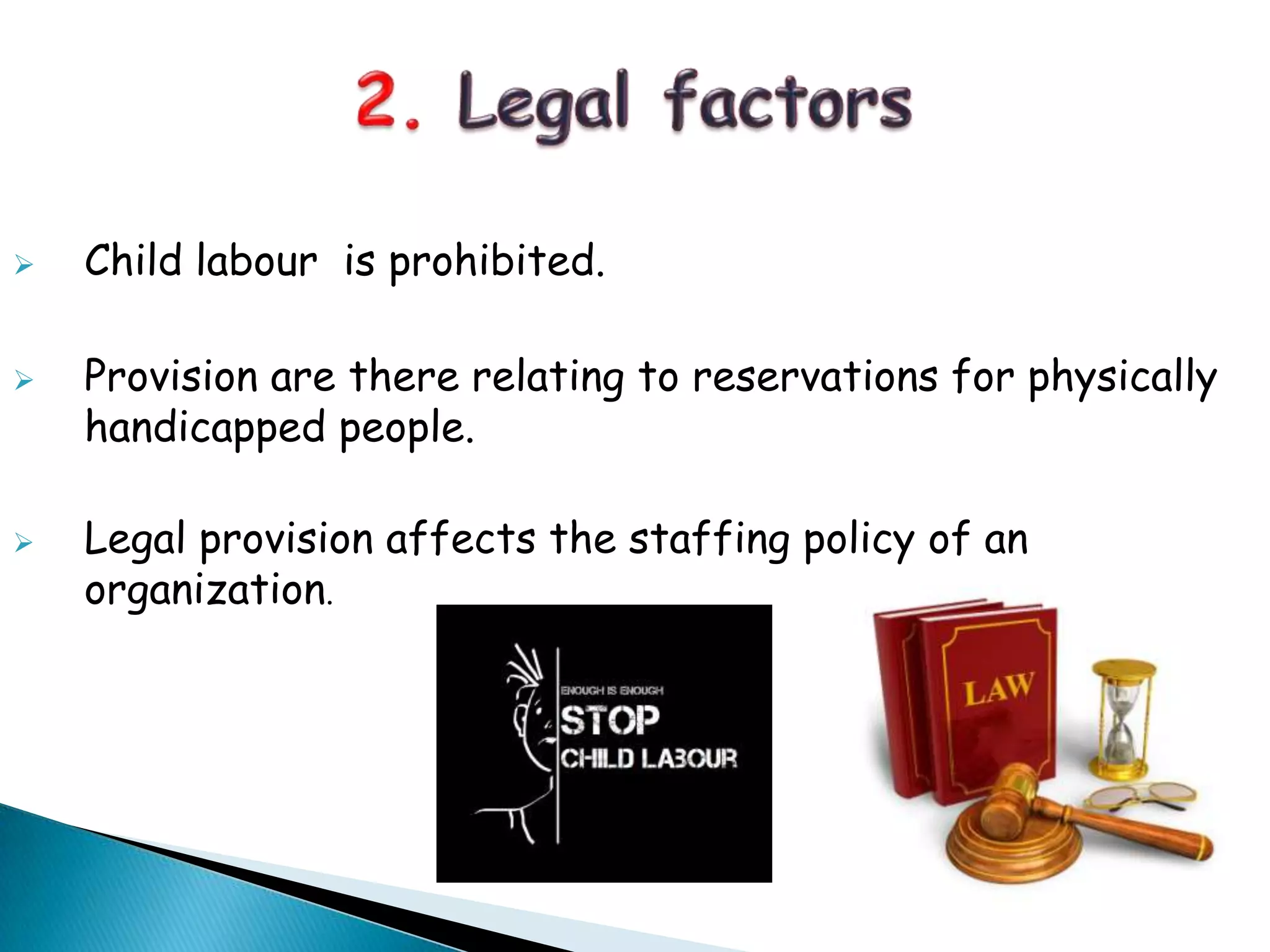
 Child labour is prohibited.
 Provision are there relating to reservations for physically
handicapped people.
 Legal provision affects the staffing policy of an
organization.
 Employment of women for job involving physical
exertion is usually avoided
 Women are not offered jobs involving continuous
travelling.
3. Socio-cultural factors
 Employers have to face pressures from political parties or
politicians as new recruitment.
 Concept of Employment to “Sons of the soil” is getting
popular in all countries.
 External Influences affect the staffing policy of business
unit.
 Organizational Image
 Past Practices
 Size of the Organization
 Organizational Business Plan
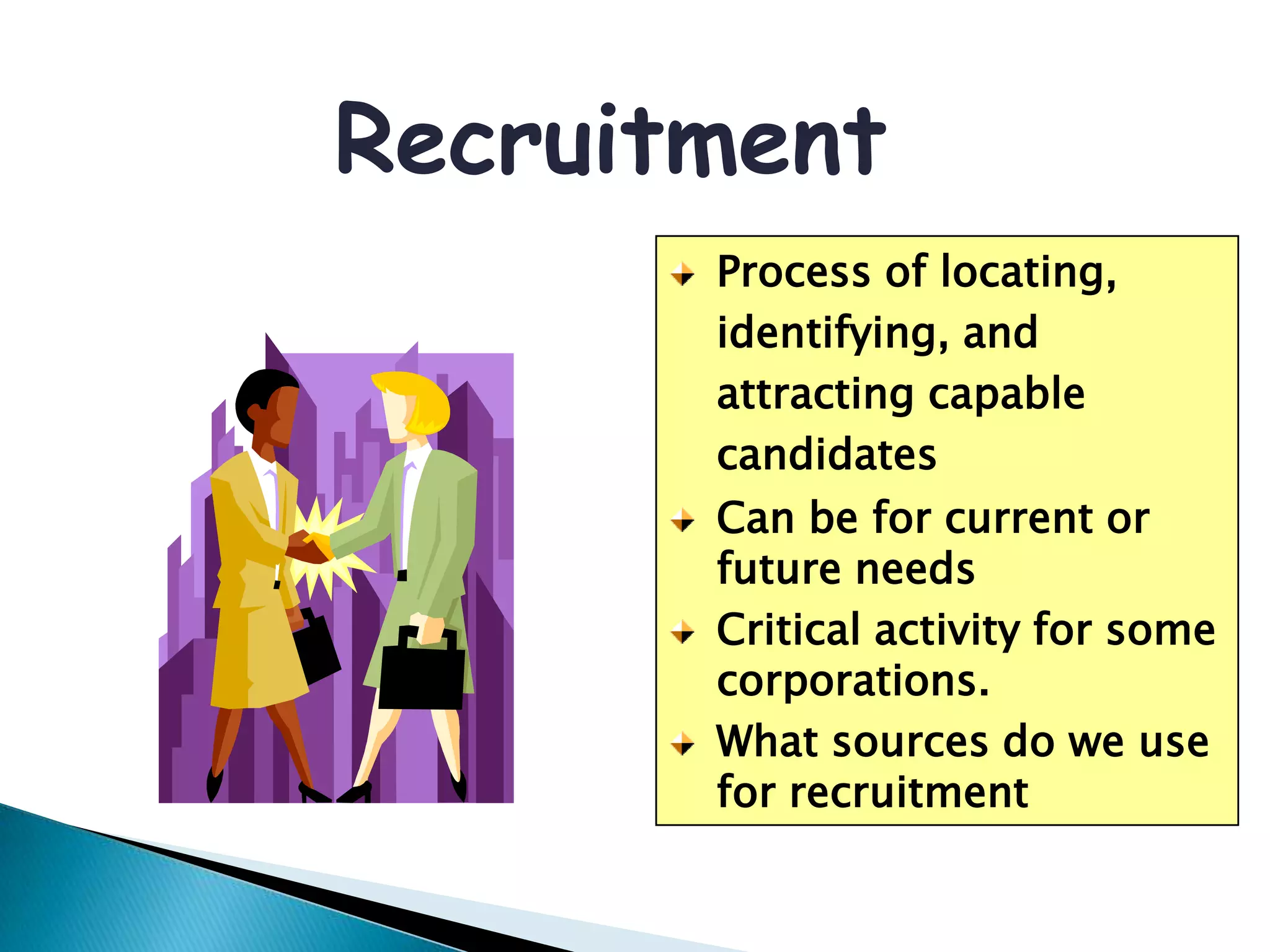
Recruitment
Process of locating,
identifying, and
attracting capable
candidates
Can be for current or
future needs
Critical activity for some
corporations.
What sources do we use
for recruitment
Meaning:-
 Recruitment means to estimate the available vacancies
in the organization and to make arrangements for their
selection and appointment.
 Recruitment is a positive function in which publicity is
given to the jobs available in the organization and
interested candidates are encouraged to submit
applications for the selection.
 In the recruitment, a pool of eligible and interested
candidates is created for the selection of most suitable
candidates.
Recruitment
Definitions
 According to Edwin Flippo,
“Recruitment is the process of searching for
prospective employees and stimulating them to
apply for jobs in the organization.”
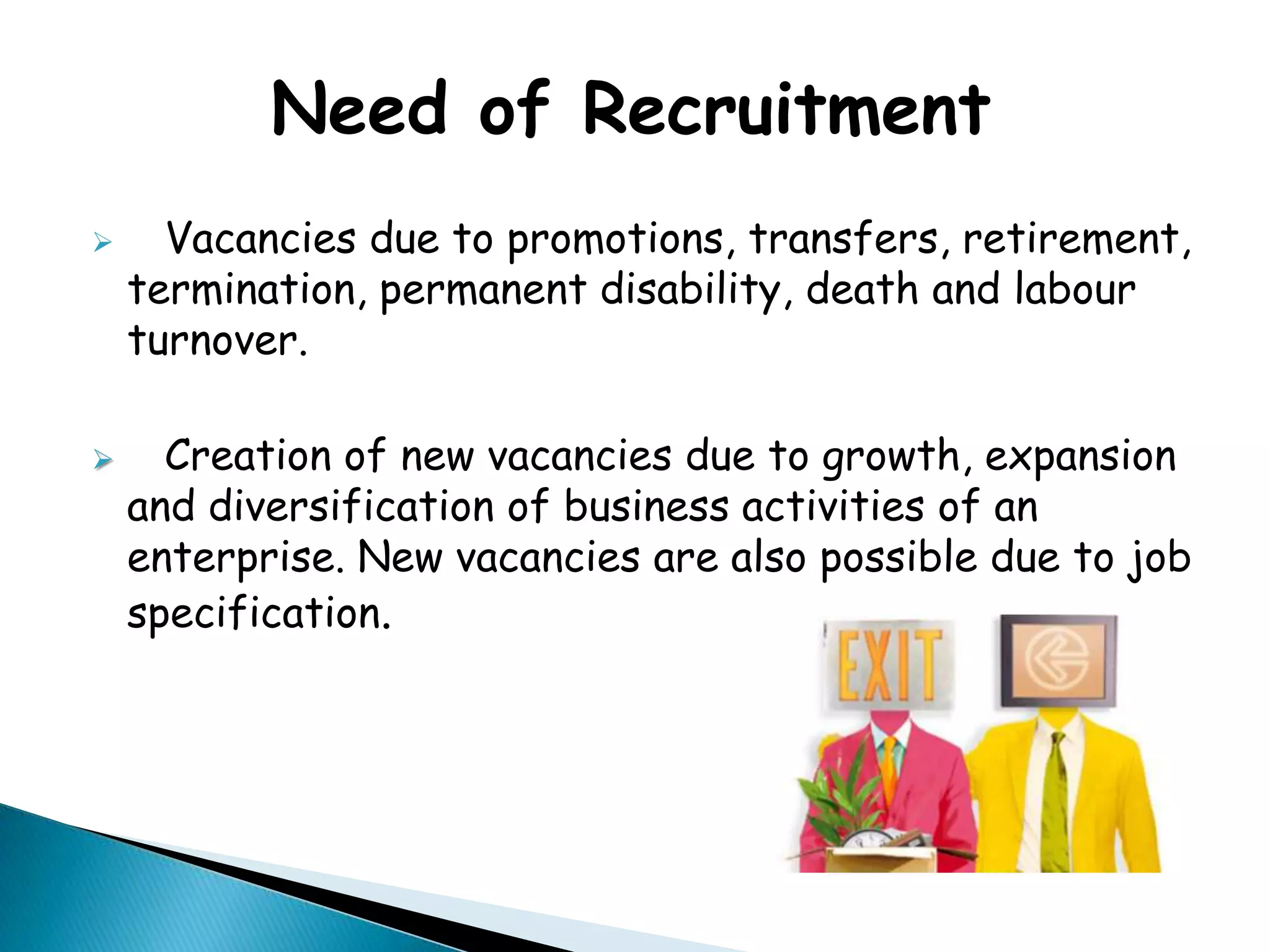
 Vacancies due to promotions, transfers, retirement,
termination, permanent disability, death and labour
turnover.
 Creation of new vacancies due to growth, expansion
and diversification of business activities of an
enterprise. New vacancies are also possible due to job
specification.
Need of Recruitment
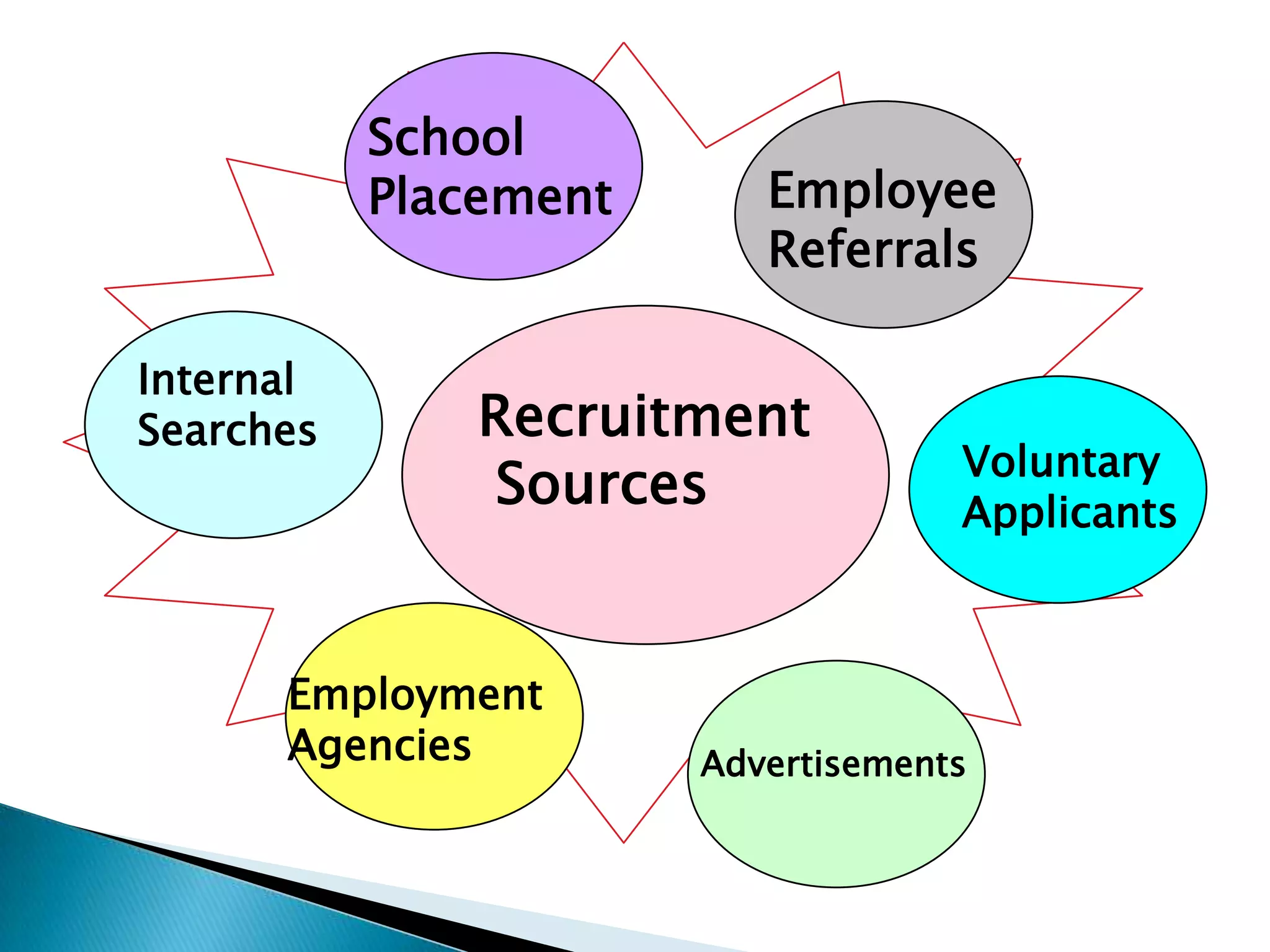
Recruitment
Sources
Internal
Searches
Employee
Referrals
Voluntary
Applicants
Employment
Agencies Advertisements
School
Placement
Internal Sources of Recruitment
 Promotions
 Transfers
 Internal Notifications(Advertisement)
 Former Employees
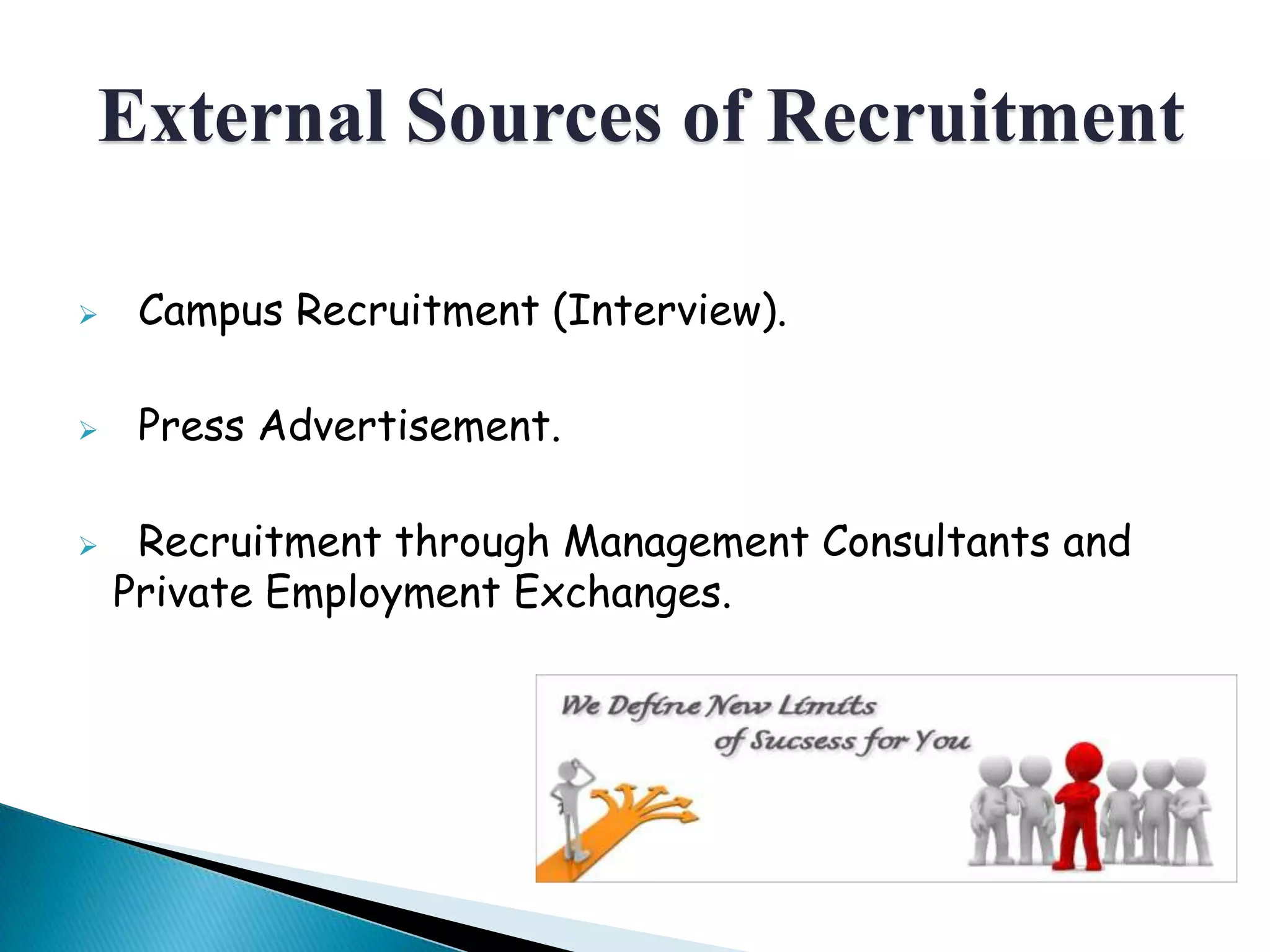
 Campus Recruitment (Interview).
 Press Advertisement.
 Recruitment through Management Consultants and
Private Employment Exchanges.
External Sources of Recruitment
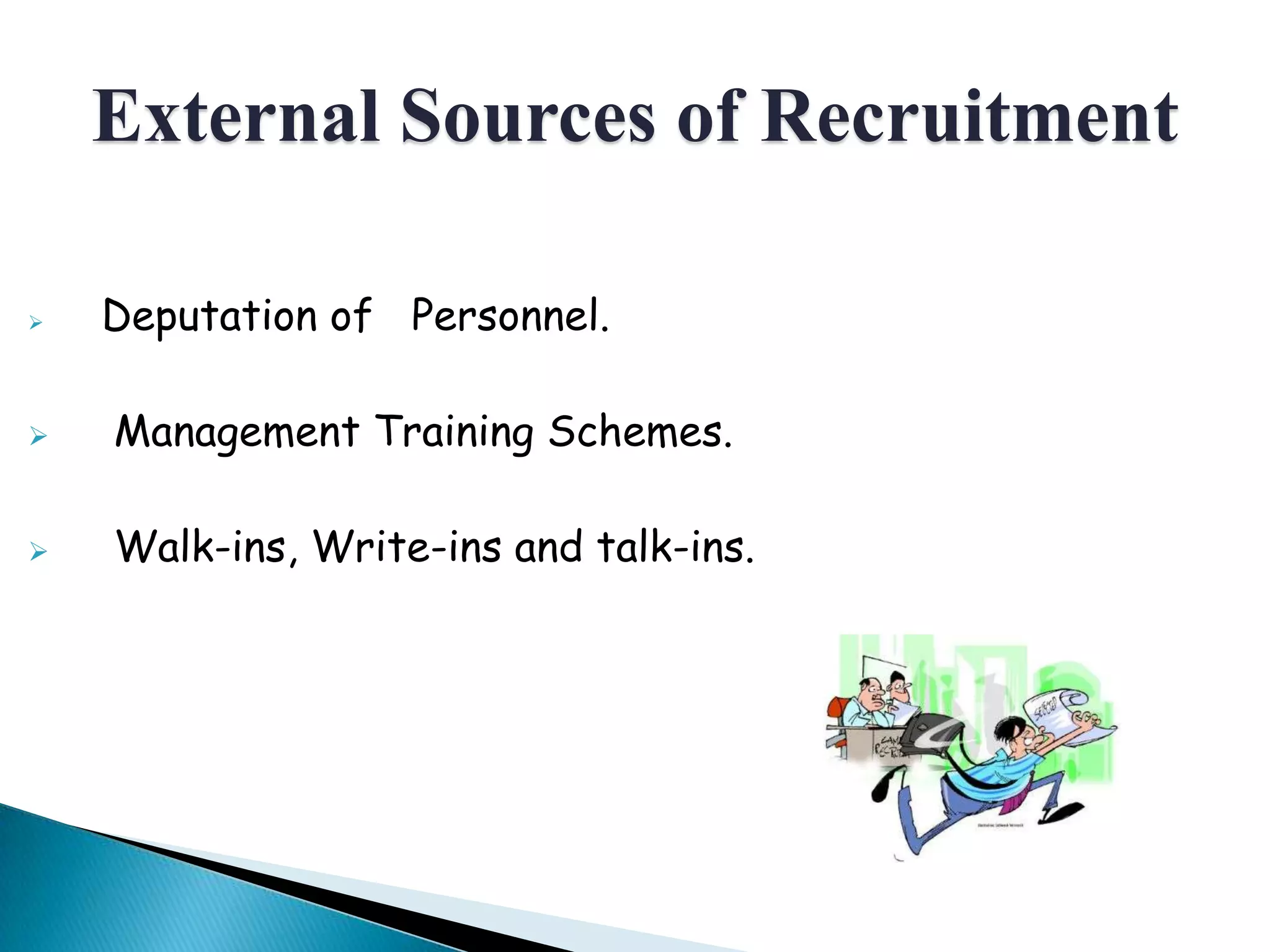
 Deputation of Personnel.
 Management Training Schemes.
 Walk-ins, Write-ins and talk-ins.
External Sources of Recruitment
SELECTION
A series of steps from initial applicant screening to
final hiring of the new employee.
Selection process.
Step 1: Completing application
materials.
Step 2: Conducting an interview.
Step 3: Completing any necessary
tests.
Step 4: Doing a background
investigation.
Step 5: Socialization
Step 6: Deciding to hire or not to
hire.
Recruitment is the process of finding and attracting
capable applicants for employment. The process
begins when new recruits are sought and ends when
their applications are submitted. The result is a pool
of applicants from which new employees are selected.
Selection is the process of differentiating between
applicants in order to identify and hire those with a
greater likelihood of success in a job.
Recruitment & selection
RECRUITMENT SELECTION
 To attract maximum number To choose best out of the
of candidates. available candidates.
 It creates application pool It is a rejection process
as large as possible. where few are selected.
 Techniques are not very Highly specialized techniques
intensive. are required.
 Outcome is application Outcome is the candidate
who
pool. is offered job.
Difference : Recruitment & selection
Process
RECRUITMENT SELECTION
 Advertisement Screening of applications
 Employment agencies Selection tests
 On campus recruitment Interview
 Deputation Checking of references
 Employee recommendations Physical examination
 Labor unions Approval by authority
 Gate hiring Placement
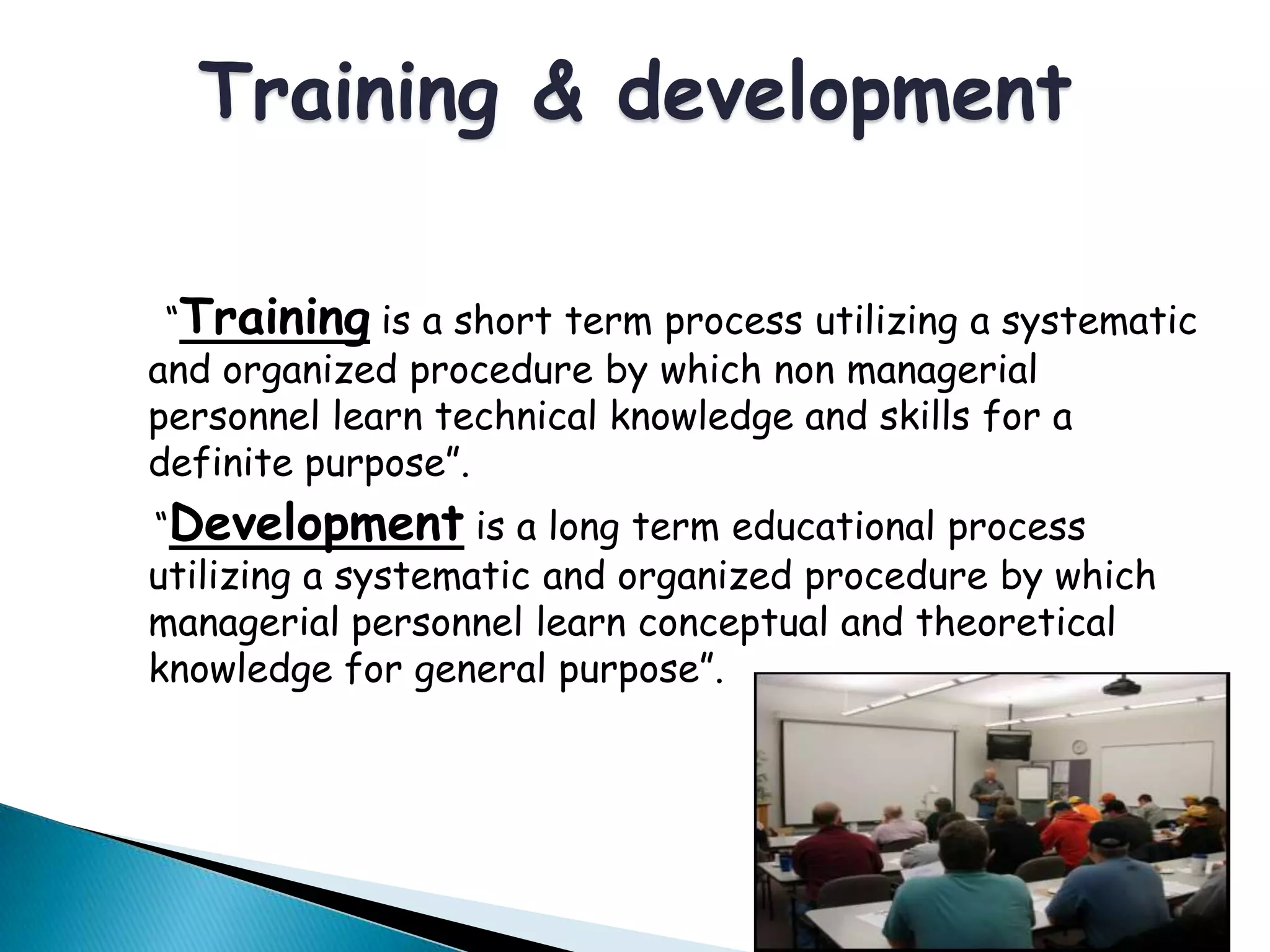
“Training is a short term process utilizing a systematic
and organized procedure by which non managerial
personnel learn technical knowledge and skills for a
definite purpose”.
“Development is a long term educational process
utilizing a systematic and organized procedure by which
managerial personnel learn conceptual and theoretical
knowledge for general purpose”.
Training & development
 Increase In Efficiency
 Increase In Morale Of Employees
 Better Human Relations
 Reduced Supervision
 Increased Organizational Viability & Flexibility
Importance of training & development
Staffing is the most vital asset with an organization,
without which it cannot move ahead in the
competitive world. It can be equated with HR
management as both have same sort of objectives.
Staffing is an open system approach. It is carried out
within the enterprise but is also linked to external
environment.
Conclusion
THANK YOU
Project By Group No.
122 - Jimit Doshi
149 – Nidhi Lania
119 – Maitri Dedhia
108 – Rishab Bohra
134 – Vibha Jain
138 – Mayur Kadam
144 – Sagar Khasia
133 – Monish Jain
120 – Rinkoo Dedhia
110 – Deepika Chauhan
143 – Mohit Khandolkar
113 – Hetal Choksi
Group no. 3 &4

Staffing - Management

  • 2.
    Staffing is theprocess of filling positions/posts in the organization with adequate and qualified personnel . Staffing is the process of acquiring, deploying, and retaining a workforce of sufficient quantity and quality to create positive impacts on the organization's effectiveness
  • 3.
     According toMcFarland, “Staffing is the function by which managers build an organization through the recruitment, selection, and development of individuals as capable employees.”  According to Koontz, O’Donnell and Heinz Weihrich, “The management function of staffing is defined as filling position in the organization structure through identifying workforce requirements, inventorying the people available, recruitment, selection, placement, promotion, appraisal, compensation, and training of needed people.” Definitions
  • 4.
     All pervasivefunction of management.  Dynamic function.  Vast scope.
  • 5.
     To understandall function of in an organization.  To understand manpower planning so that people are available at right time and at a right place.  To understand issues related to job analysis and to overcome the problem.
  • 7.
     Training andDevelopment.  Effective Co-ordination.  Effective Recruitment & Placement.  Building effective human resource.
  • 8.
     Optimum Useof Resource.  Enhances Corporate Image.  Job Satisfaction.
  • 9.
     Manpower planning Job analysis  Recruitment and selection  Training and Development  Performance appraisal
  • 10.
     Hiring  Motivation Employee maintenance  Human relations
  • 12.
     India hasample supply of unskilled workers then highly qualified people.  Companies start to change their staffing policy and prefer less talented people.
  • 13.
     Child labouris prohibited.  Provision are there relating to reservations for physically handicapped people.  Legal provision affects the staffing policy of an organization.
  • 14.
     Employment ofwomen for job involving physical exertion is usually avoided  Women are not offered jobs involving continuous travelling. 3. Socio-cultural factors
  • 15.
     Employers haveto face pressures from political parties or politicians as new recruitment.  Concept of Employment to “Sons of the soil” is getting popular in all countries.  External Influences affect the staffing policy of business unit.
  • 16.
     Organizational Image Past Practices  Size of the Organization  Organizational Business Plan
  • 19.
    Recruitment Process of locating, identifying,and attracting capable candidates Can be for current or future needs Critical activity for some corporations. What sources do we use for recruitment
  • 20.
    Meaning:-  Recruitment meansto estimate the available vacancies in the organization and to make arrangements for their selection and appointment.  Recruitment is a positive function in which publicity is given to the jobs available in the organization and interested candidates are encouraged to submit applications for the selection.  In the recruitment, a pool of eligible and interested candidates is created for the selection of most suitable candidates. Recruitment
  • 21.
    Definitions  According toEdwin Flippo, “Recruitment is the process of searching for prospective employees and stimulating them to apply for jobs in the organization.”
  • 22.
     Vacancies dueto promotions, transfers, retirement, termination, permanent disability, death and labour turnover.  Creation of new vacancies due to growth, expansion and diversification of business activities of an enterprise. New vacancies are also possible due to job specification. Need of Recruitment
  • 23.
  • 24.
    Internal Sources ofRecruitment  Promotions  Transfers  Internal Notifications(Advertisement)  Former Employees
  • 25.
     Campus Recruitment(Interview).  Press Advertisement.  Recruitment through Management Consultants and Private Employment Exchanges. External Sources of Recruitment
  • 26.
     Deputation ofPersonnel.  Management Training Schemes.  Walk-ins, Write-ins and talk-ins. External Sources of Recruitment
  • 27.
    SELECTION A series ofsteps from initial applicant screening to final hiring of the new employee. Selection process. Step 1: Completing application materials. Step 2: Conducting an interview.
  • 28.
    Step 3: Completingany necessary tests. Step 4: Doing a background investigation. Step 5: Socialization Step 6: Deciding to hire or not to hire.
  • 29.
    Recruitment is theprocess of finding and attracting capable applicants for employment. The process begins when new recruits are sought and ends when their applications are submitted. The result is a pool of applicants from which new employees are selected. Selection is the process of differentiating between applicants in order to identify and hire those with a greater likelihood of success in a job. Recruitment & selection
  • 30.
    RECRUITMENT SELECTION  Toattract maximum number To choose best out of the of candidates. available candidates.  It creates application pool It is a rejection process as large as possible. where few are selected.  Techniques are not very Highly specialized techniques intensive. are required.  Outcome is application Outcome is the candidate who pool. is offered job. Difference : Recruitment & selection
  • 31.
    Process RECRUITMENT SELECTION  AdvertisementScreening of applications  Employment agencies Selection tests  On campus recruitment Interview  Deputation Checking of references  Employee recommendations Physical examination  Labor unions Approval by authority  Gate hiring Placement
  • 32.
    “Training is ashort term process utilizing a systematic and organized procedure by which non managerial personnel learn technical knowledge and skills for a definite purpose”. “Development is a long term educational process utilizing a systematic and organized procedure by which managerial personnel learn conceptual and theoretical knowledge for general purpose”. Training & development
  • 33.
     Increase InEfficiency  Increase In Morale Of Employees  Better Human Relations  Reduced Supervision  Increased Organizational Viability & Flexibility Importance of training & development
  • 34.
    Staffing is themost vital asset with an organization, without which it cannot move ahead in the competitive world. It can be equated with HR management as both have same sort of objectives. Staffing is an open system approach. It is carried out within the enterprise but is also linked to external environment. Conclusion
  • 35.
  • 36.
    Project By GroupNo. 122 - Jimit Doshi 149 – Nidhi Lania 119 – Maitri Dedhia 108 – Rishab Bohra 134 – Vibha Jain 138 – Mayur Kadam 144 – Sagar Khasia 133 – Monish Jain 120 – Rinkoo Dedhia 110 – Deepika Chauhan 143 – Mohit Khandolkar 113 – Hetal Choksi Group no. 3 &4