Social Structure and 
Social Interaction
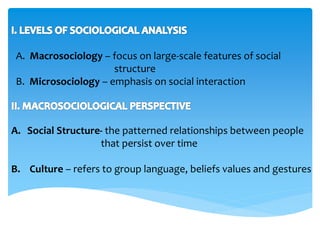
A. Macrosociology – focus on large-scale features of social 
structure 
B. Microsociology – emphasis on social interaction 
A. Social Structure- the patterned relationships between people 
that persist over time 
B. Culture – refers to group language, beliefs values and gestures
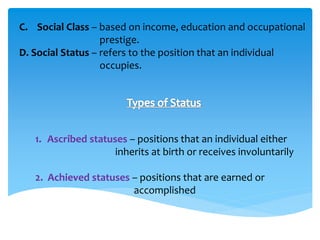
C. Social Class – based on income, education and occupational 
prestige. 
D. Social Status – refers to the position that an individual 
occupies. 
1. Ascribed statuses – positions that an individual either 
inherits at birth or receives involuntarily 
2. Achieved statuses – positions that are earned or 
accomplished
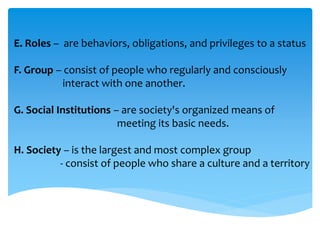
E. Roles – are behaviors, obligations, and privileges to a status 
F. Group – consist of people who regularly and consciously 
interact with one another. 
G. Social Institutions – are society's organized means of 
meeting its basic needs. 
H. Society – is the largest and most complex group 
- consist of people who share a culture and a territory
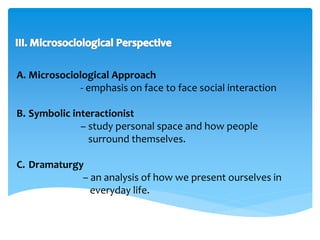
A. Microsociological Approach 
- emphasis on face to face social interaction 
B. Symbolic interactionist 
– study personal space and how people 
surround themselves. 
C. Dramaturgy 
– an analysis of how we present ourselves in 
everyday life.
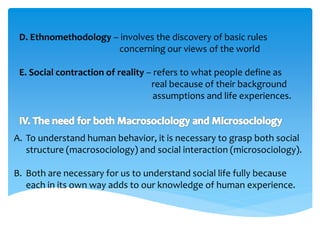
D. Ethnomethodology – involves the discovery of basic rules 
concerning our views of the world 
E. Social contraction of reality – refers to what people define as 
real because of their background 
assumptions and life experiences. 
A. To understand human behavior, it is necessary to grasp both social 
structure (macrosociology) and social interaction (microsociology). 
B. Both are necessary for us to understand social life fully because 
each in its own way adds to our knowledge of human experience.

Social Structure and Social Interaction

  • 1.
    Social Structure and Social Interaction
  • 2.
    A. Macrosociology –focus on large-scale features of social structure B. Microsociology – emphasis on social interaction A. Social Structure- the patterned relationships between people that persist over time B. Culture – refers to group language, beliefs values and gestures
  • 3.
    C. Social Class– based on income, education and occupational prestige. D. Social Status – refers to the position that an individual occupies. 1. Ascribed statuses – positions that an individual either inherits at birth or receives involuntarily 2. Achieved statuses – positions that are earned or accomplished
  • 4.
    E. Roles –are behaviors, obligations, and privileges to a status F. Group – consist of people who regularly and consciously interact with one another. G. Social Institutions – are society's organized means of meeting its basic needs. H. Society – is the largest and most complex group - consist of people who share a culture and a territory
  • 5.
    A. Microsociological Approach - emphasis on face to face social interaction B. Symbolic interactionist – study personal space and how people surround themselves. C. Dramaturgy – an analysis of how we present ourselves in everyday life.
  • 6.
    D. Ethnomethodology –involves the discovery of basic rules concerning our views of the world E. Social contraction of reality – refers to what people define as real because of their background assumptions and life experiences. A. To understand human behavior, it is necessary to grasp both social structure (macrosociology) and social interaction (microsociology). B. Both are necessary for us to understand social life fully because each in its own way adds to our knowledge of human experience.