GROUP1
ELEMENTS OF COMMUNITY
STRUCTURE
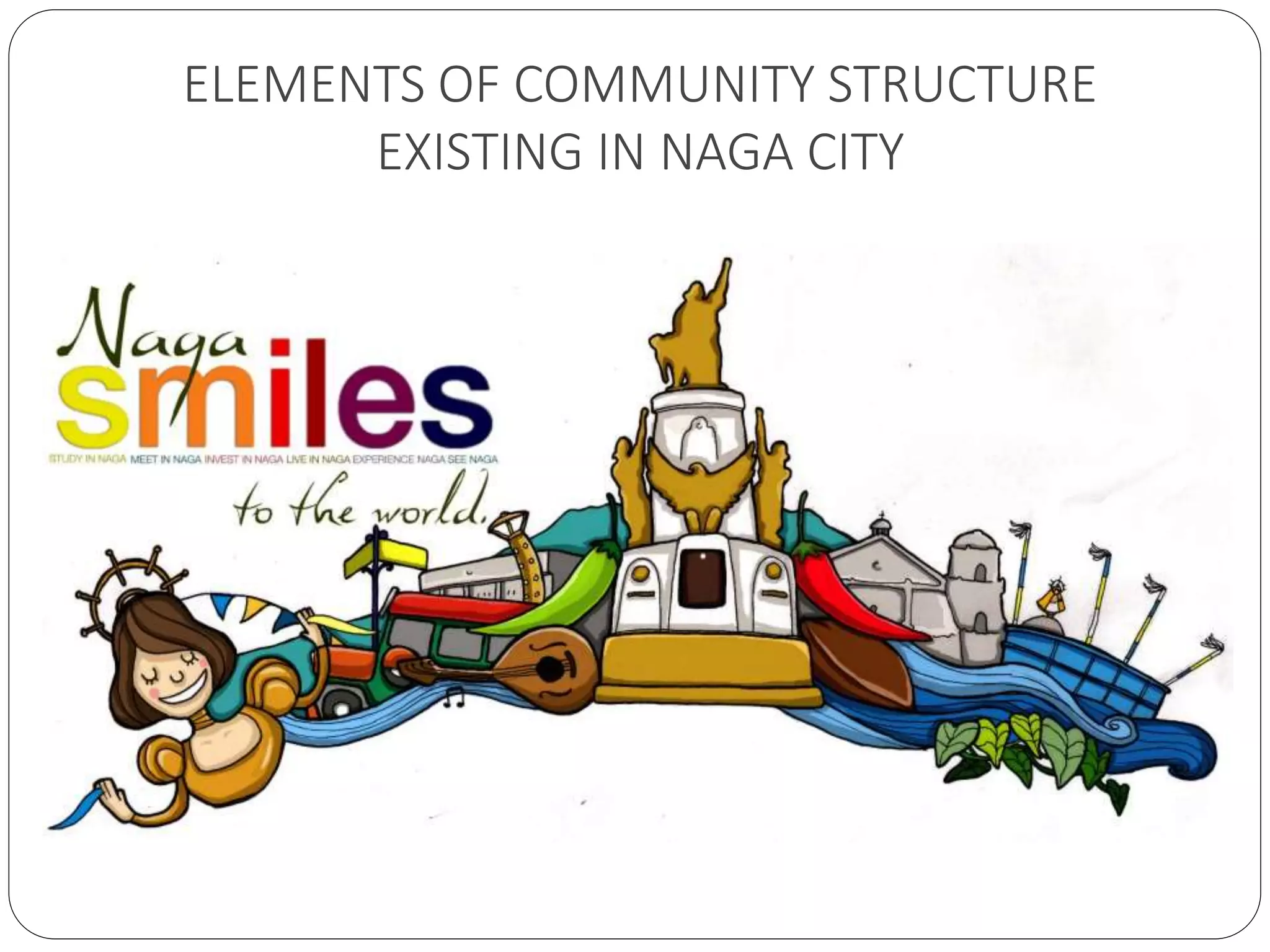
ELEMENTS OF COMMUNITY STRUCTURE
EXISTING IN NAGA CITY
5 ELEMENTS OF COMMUNITY STRUCTURE
PATH
EDGES
DISTRICT
NODES
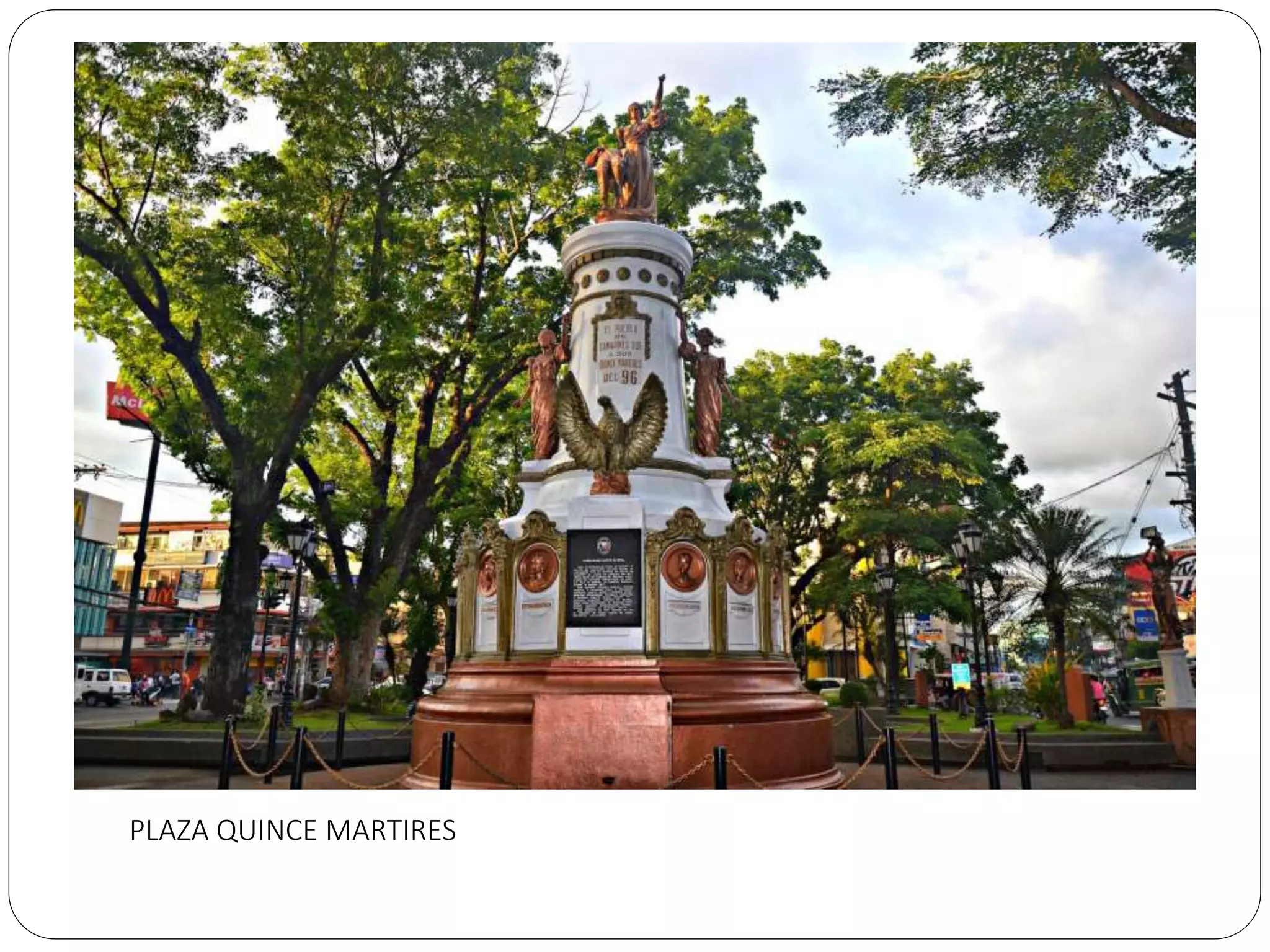
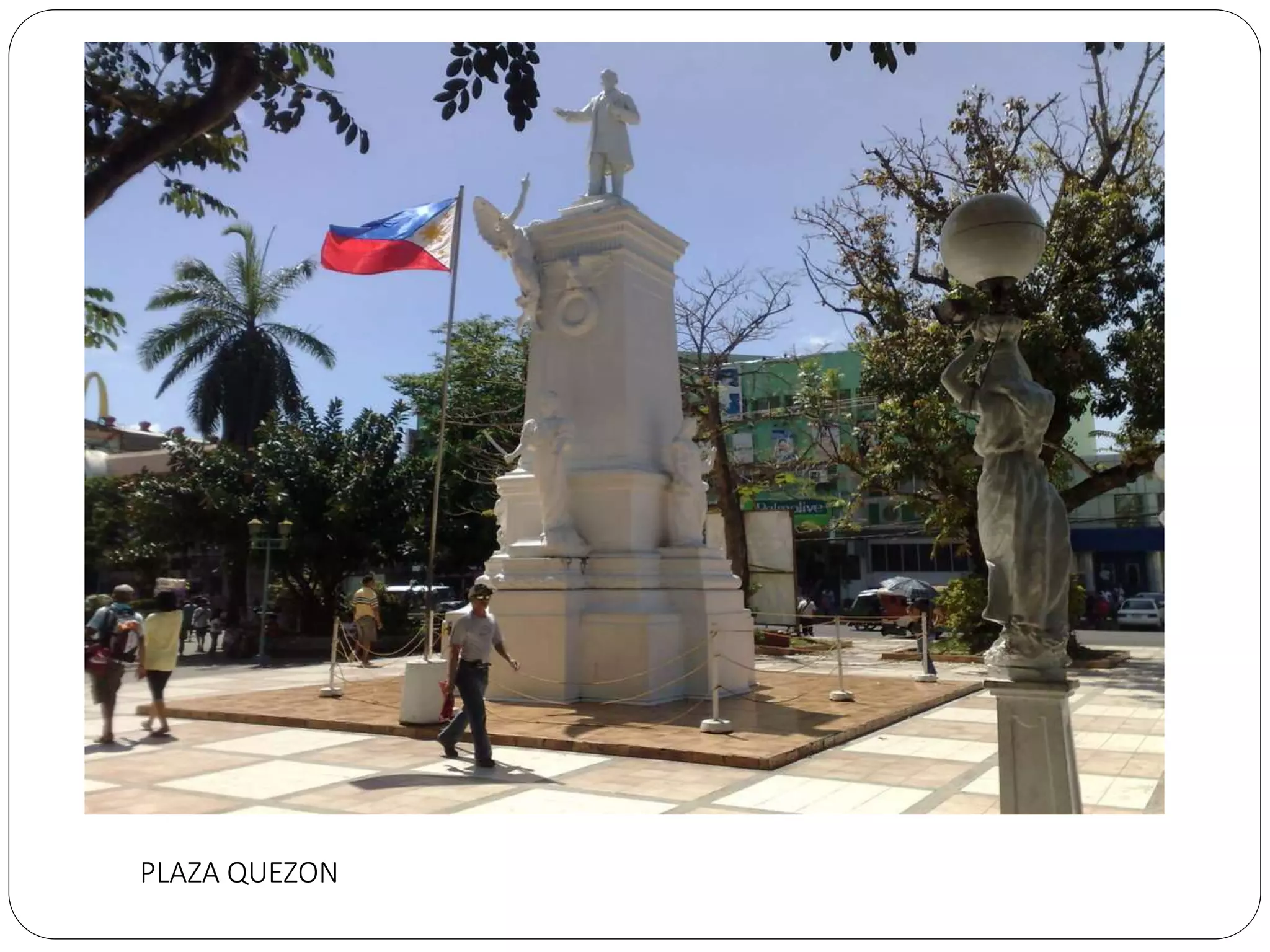
LANDMARKS
PATHS
Are the channels along which the observer customarily,
occasionally, or potentially moves.
 streets,
 walkways
 transit lines
 canals
 Railroads
For many people, these are the predominant elements in
their image. People observe the city while moving through
it and along these paths and other environmental elements
are arranged and related.
C
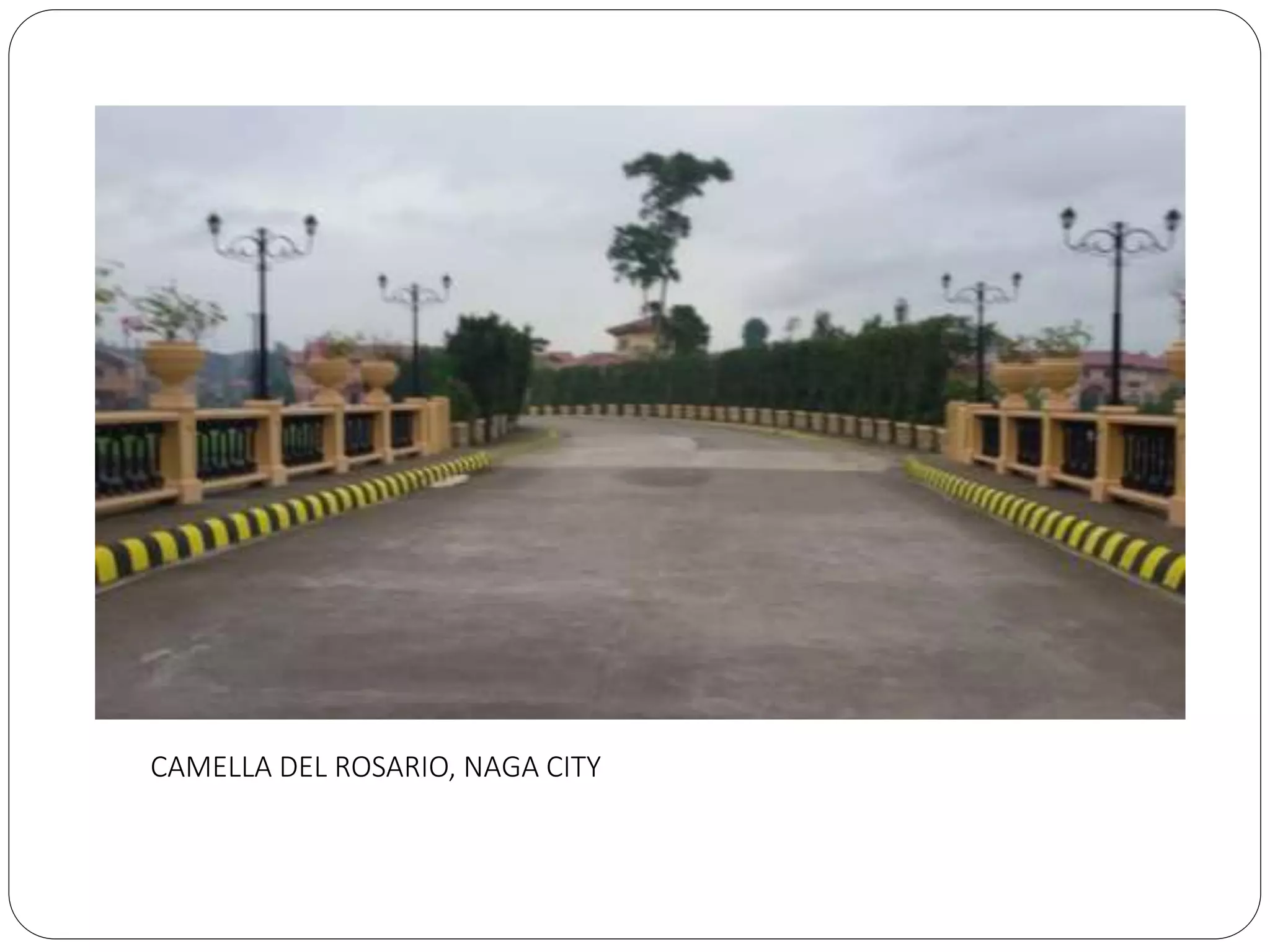
CAMELLA DEL ROSARIO, NAGA CITY
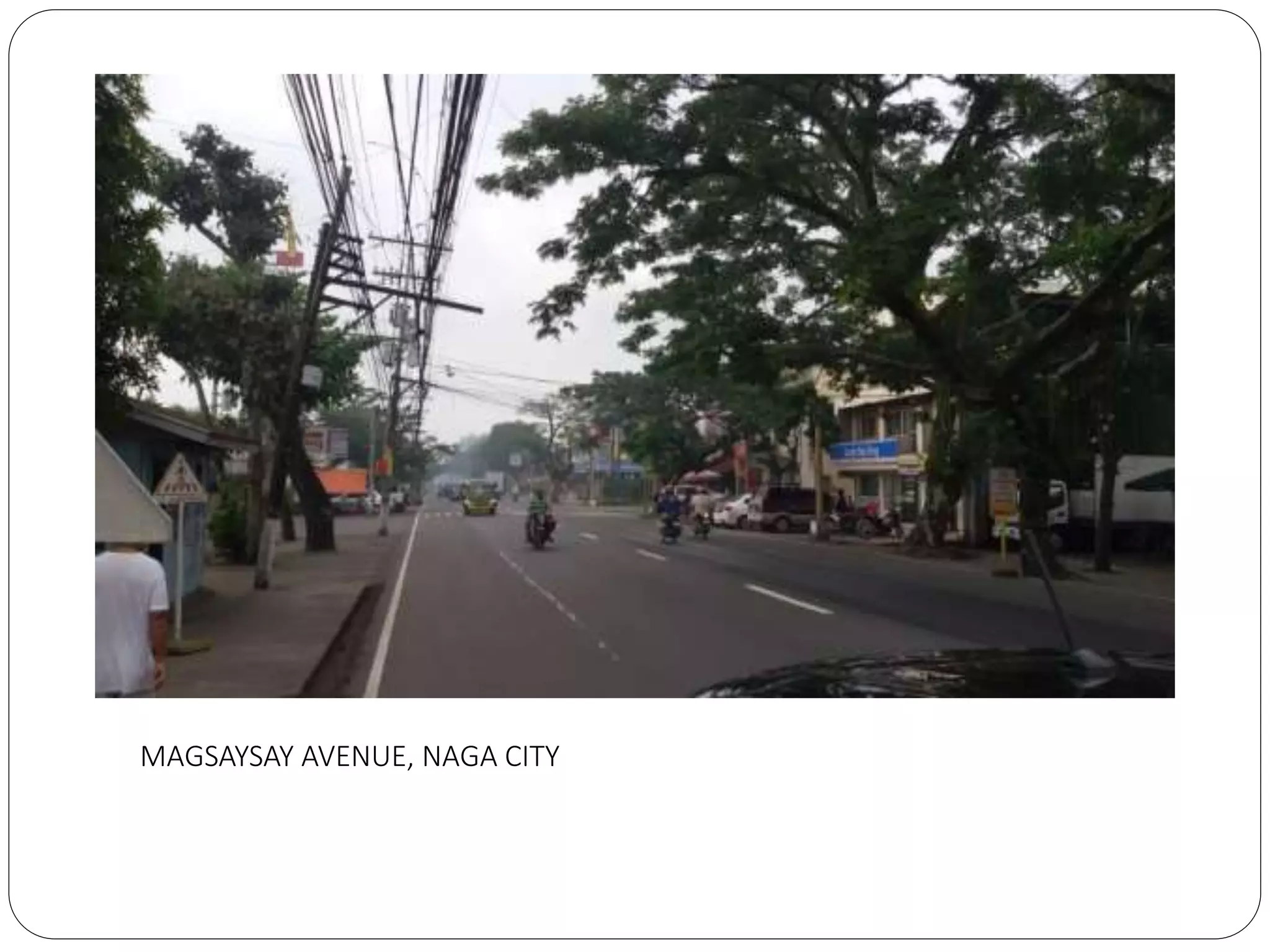
MAGSAYSAY AVENUE, NAGA CITY
EDGES
-are the linear elements not used or considered as
paths by the observer.
 boundaries between two faces
 linear breaks in continuity:
 shores
 railroad cuts
 edges of development
 walls
 They are lateral references rather than coordinate
axes. Such edges may be barriers, more or less
penetrable, which close one region from another; or
they may be seams, lines along which two regions are
related and joined together.
 These edge elements, although probably not as
dominant as paths, are for many people important
organizing features, particularly in the role of holding
together generalized areas, as in the outline of a city
by the water or wall
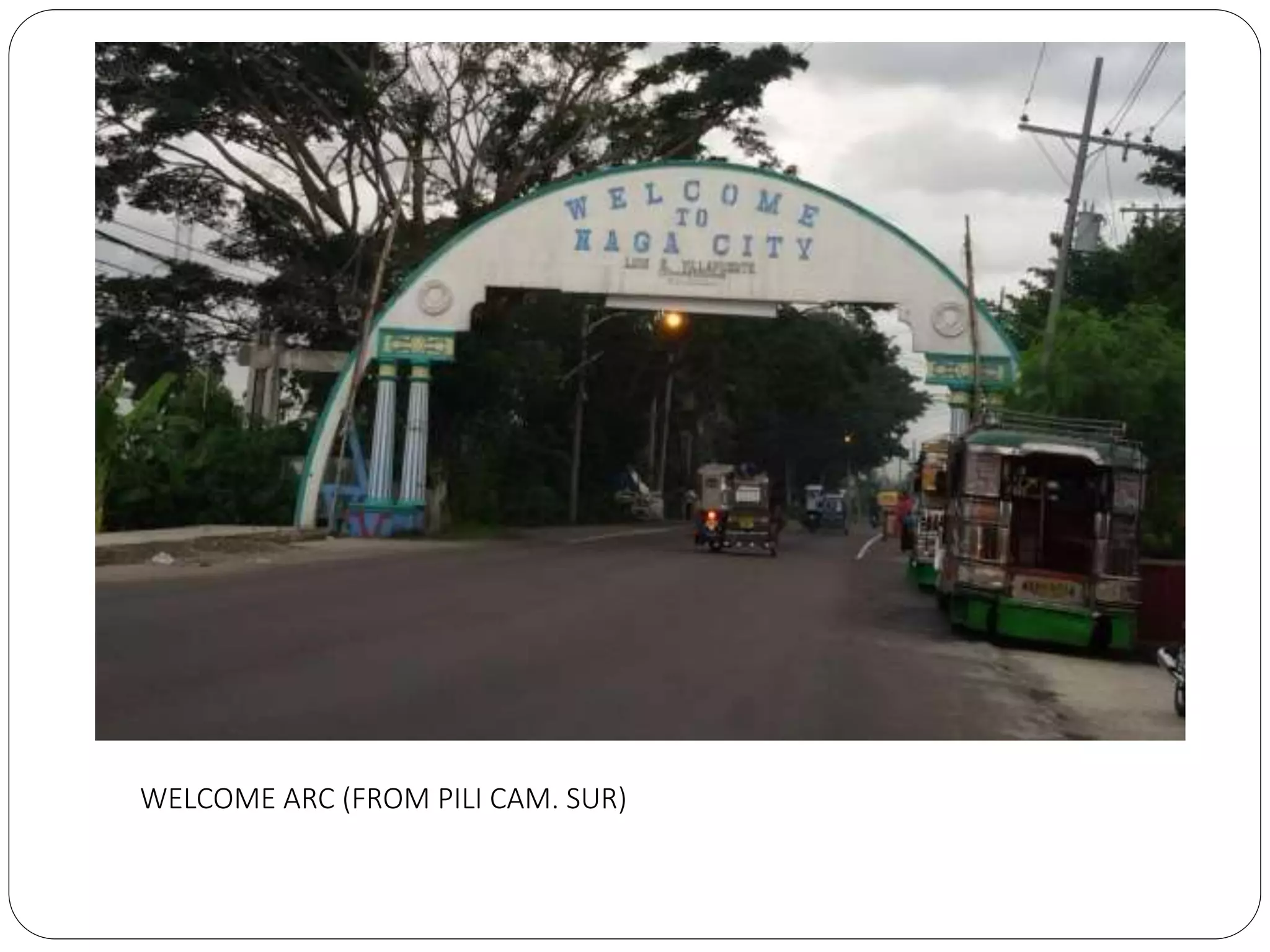
WELCOME ARC (FROM PILI CAM. SUR)
DISTRICTS
 are the medium-to-large sections of the city, conceived
of as having two dimensional extents, which the
observer mentally enters “inside of,” and which are
recognizable as having some common, identifiable
from the inside; they are also used for exterior
reference if visible from the outside.
 Most people structure their city to some extent in this
way, with individual differences as to whether paths or
districts are the dominant elements.
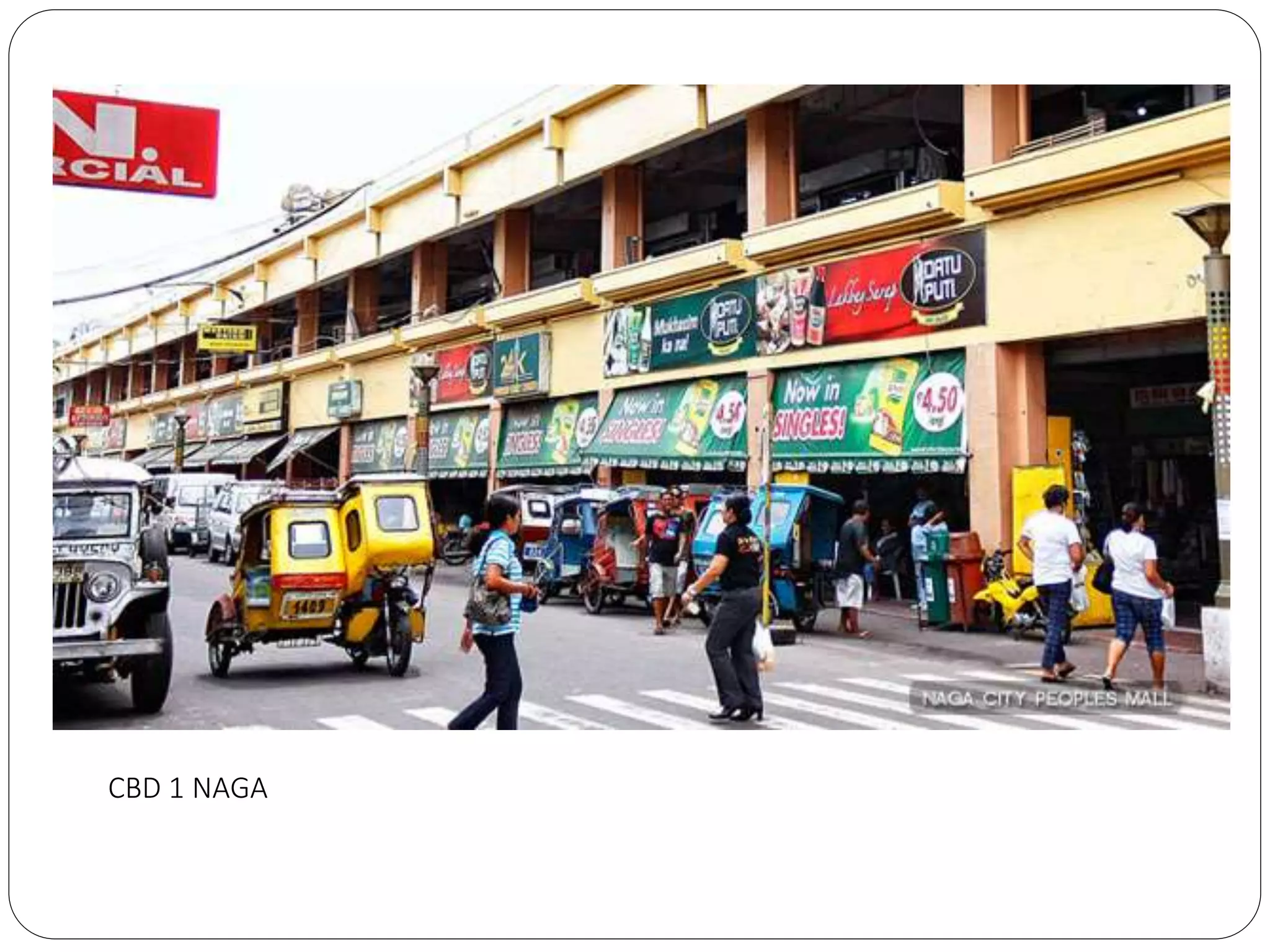
CBD 1 NAGA
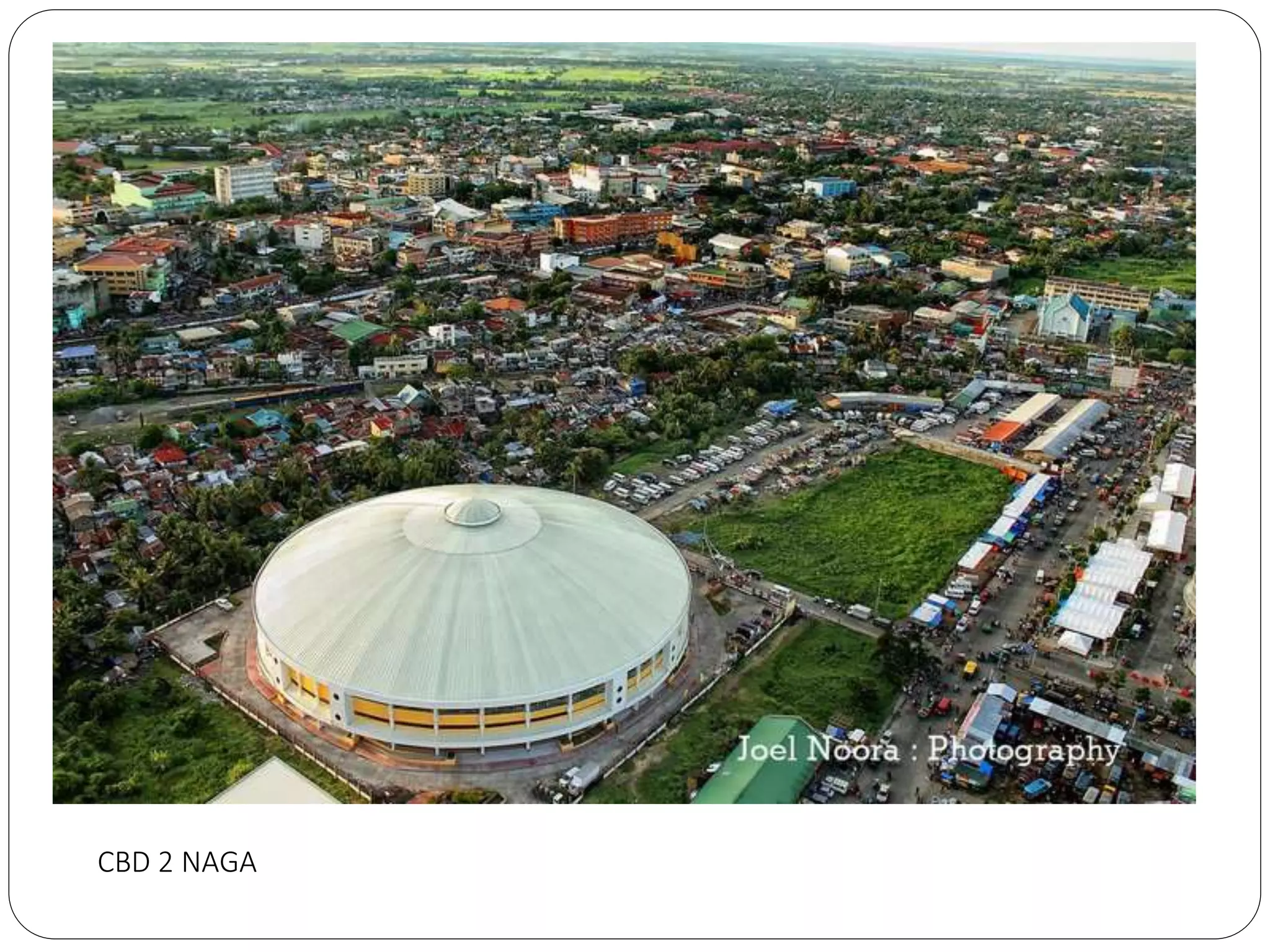
CBD 2 NAGA
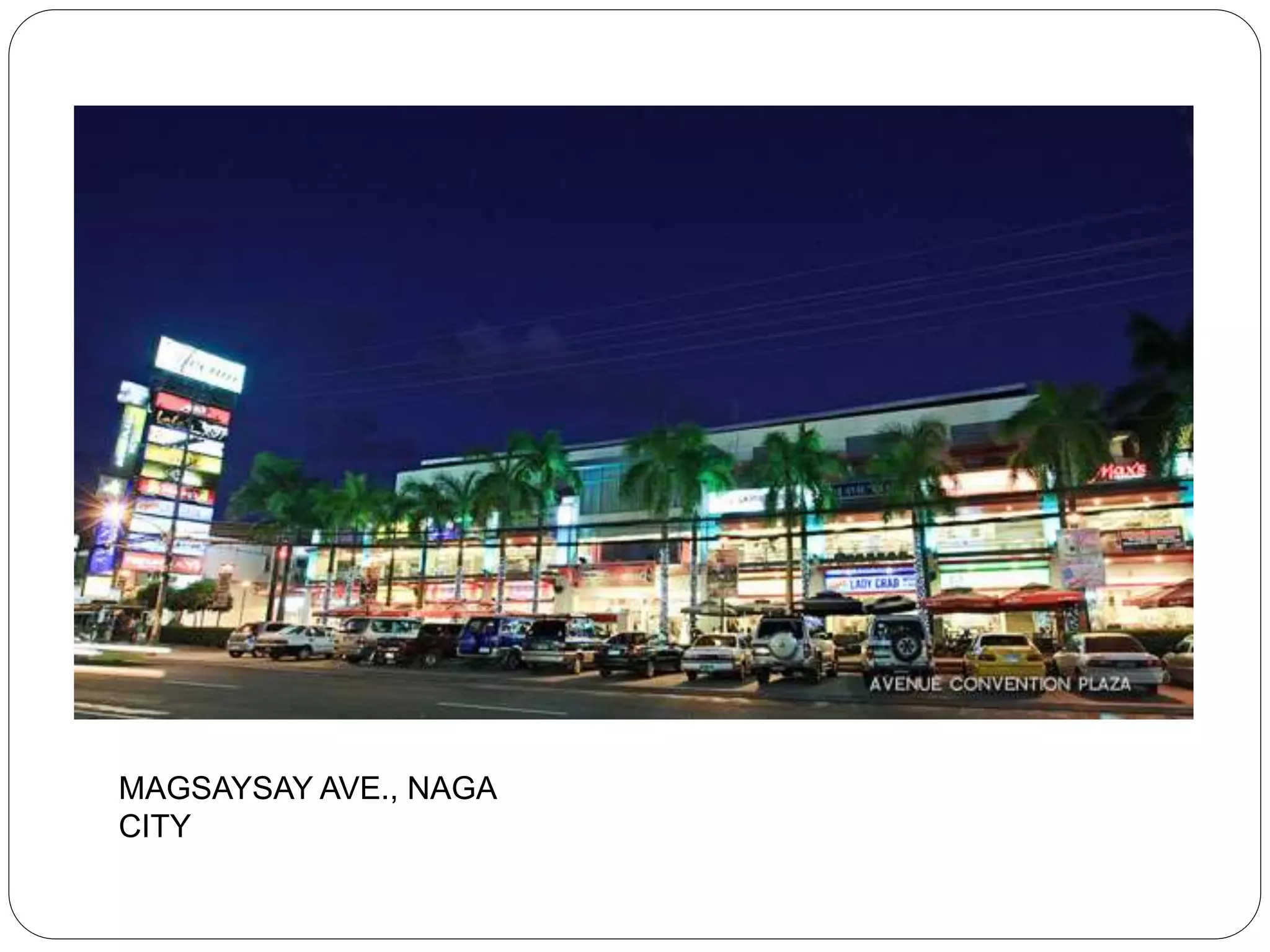
MAGSAYSAY AVE., NAGA
CITY
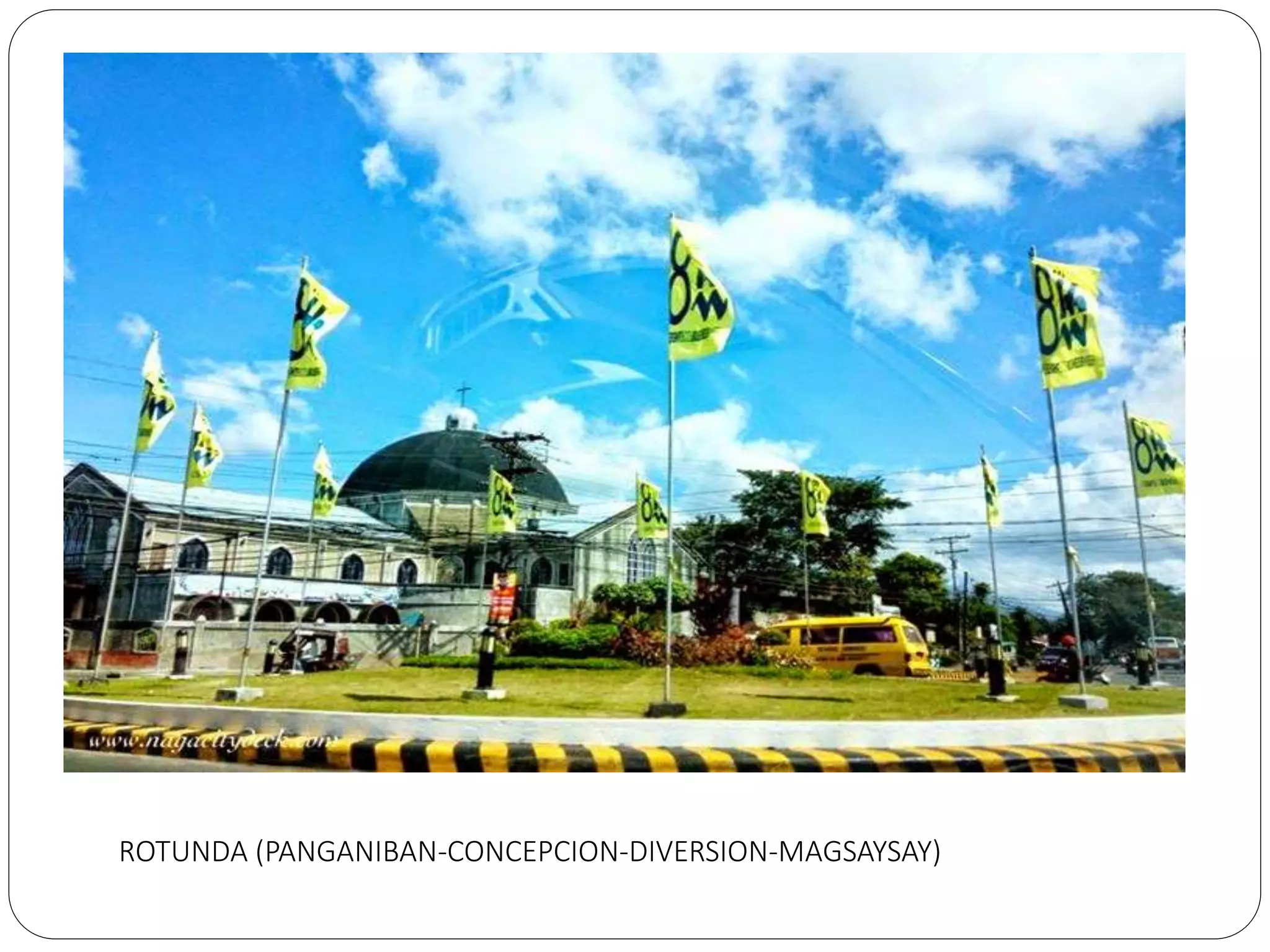
NODES
 are points, the strategic spots in a city into which an
observer can enter, and which are the intensive foci to and
from which he is travelling.
 They may be primarily junctions, places of a break in
transportation, a crossing or convergence of paths,
moments of shift from one structure to another.
 Or the nodes may be simply concentrations, which gain
their importance from being the condensation of some use
or physical character, as a street-corner hangout or an
enclosed square.
 Some of these concentration nodes are the focus and
epitome of a district, over which their influence radiates
and of which they stand as a symbol.
 They may be called cores. Many nodes, of course, partake
of the nature of both junctions and concentrations. The
concept of node is related to the concept of path, since
junctions are typically the convergence of paths, events on
the journey. It is similarly related to the concept of district,
since cores are typically the intensive foci of districts, there
polarizing center. In any event, some nodal points are to be
found in almost every image, and in certain cases they may
be the dominant feature.
ROTUNDA (PANGANIBAN-CONCEPCION-DIVERSION-MAGSAYSAY)
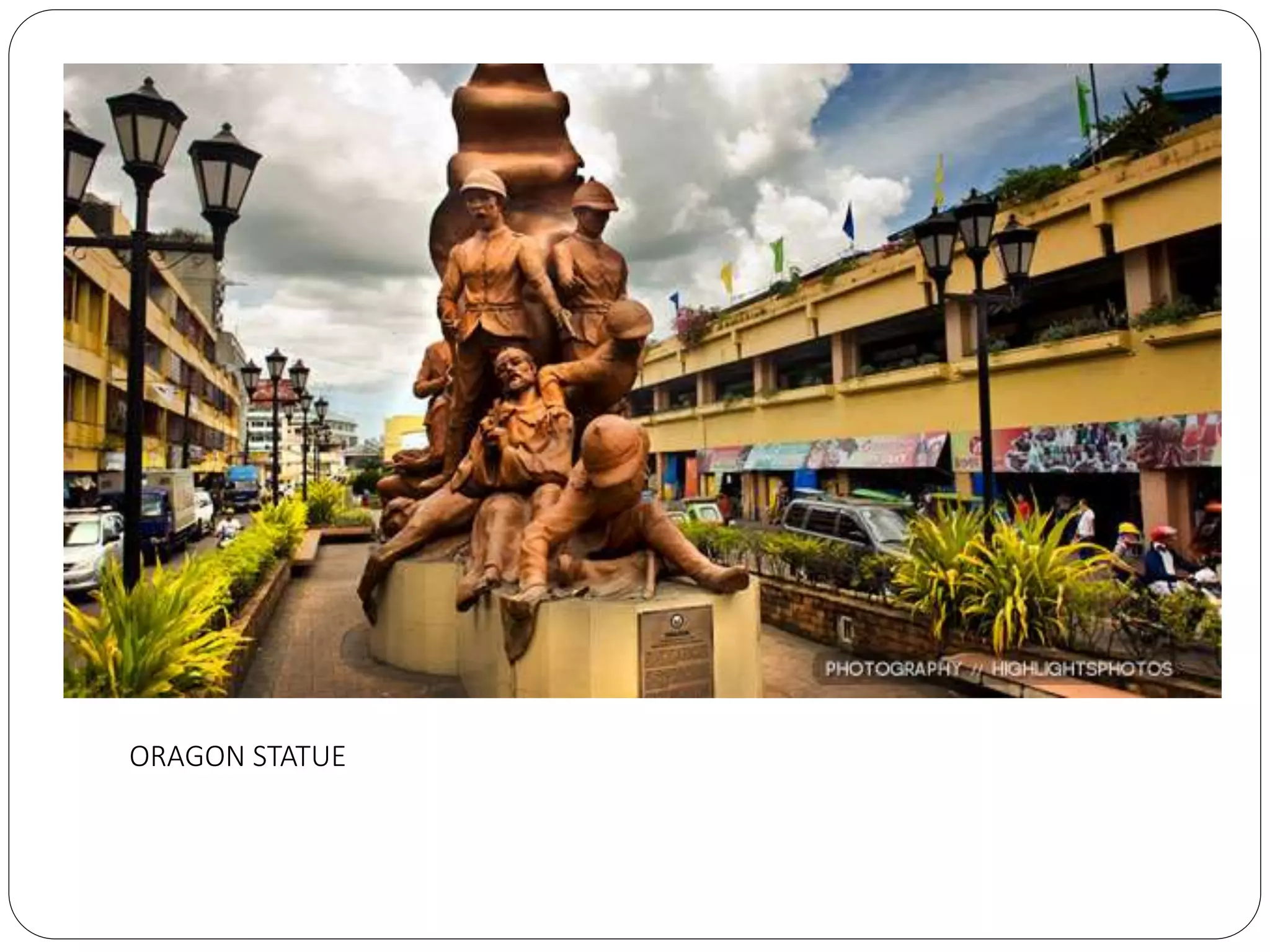
LANDMARKS
 are another type of point reference, but in these case the
observer does not enter within them, they are external.
They are usually a rather simply defined physical object:
building, sign, store, or mountain. Their use involves the
singling out of one element from a host of possibilities.
Some landmarks are distant ones, typically seen from many
angles of distances, over the tops of smaller elements, and
used as radial references. They may be within the city or as
such a distance that for all practical purposes they
symbolize a constant direction. Such are isolated towers,
golden domes, great hills. Even mobile point, like the sun,
whose motion is sufficiently slow and regular, my be
employed.
 Other landmarks are primarily local, being visible only
in restricted localities and from certain approaches.
These are the innumerable signs, store fronts, trees,
door knobs and other urban detail, which fill in the
image of most observers. They are frequently used
clues of identity and even of structure, and seem to be
increasingly relied upon a journey becomes more and
more familiar.
ORAGON STATUE
PLAZA QUINCE MARTIRES
PLAZA QUEZON
MEMBERS:
ALZATE, JESSA MARIE
BORJE, DENNICE
BRAZAL, SARAH MARIAN
BUELA, ROCHELLE PAULINE
CORDIAL, CHRISTINE MAYNE
ESCURO, HAZEL NEVA
REYES, LEA LYSA

Elements of community structure

  • 1.
  • 2.
    ELEMENTS OF COMMUNITYSTRUCTURE EXISTING IN NAGA CITY
  • 3.
    5 ELEMENTS OFCOMMUNITY STRUCTURE PATH EDGES DISTRICT NODES LANDMARKS
  • 4.
    PATHS Are the channelsalong which the observer customarily, occasionally, or potentially moves.  streets,  walkways  transit lines  canals  Railroads
  • 5.
    For many people,these are the predominant elements in their image. People observe the city while moving through it and along these paths and other environmental elements are arranged and related.
  • 6.
  • 7.
  • 8.
    EDGES -are the linearelements not used or considered as paths by the observer.  boundaries between two faces  linear breaks in continuity:  shores  railroad cuts  edges of development  walls
  • 9.
     They arelateral references rather than coordinate axes. Such edges may be barriers, more or less penetrable, which close one region from another; or they may be seams, lines along which two regions are related and joined together.  These edge elements, although probably not as dominant as paths, are for many people important organizing features, particularly in the role of holding together generalized areas, as in the outline of a city by the water or wall
  • 10.
    WELCOME ARC (FROMPILI CAM. SUR)
  • 11.
    DISTRICTS  are themedium-to-large sections of the city, conceived of as having two dimensional extents, which the observer mentally enters “inside of,” and which are recognizable as having some common, identifiable from the inside; they are also used for exterior reference if visible from the outside.  Most people structure their city to some extent in this way, with individual differences as to whether paths or districts are the dominant elements.
  • 12.
  • 13.
  • 14.
  • 15.
    NODES  are points,the strategic spots in a city into which an observer can enter, and which are the intensive foci to and from which he is travelling.  They may be primarily junctions, places of a break in transportation, a crossing or convergence of paths, moments of shift from one structure to another.  Or the nodes may be simply concentrations, which gain their importance from being the condensation of some use or physical character, as a street-corner hangout or an enclosed square.
  • 16.
     Some ofthese concentration nodes are the focus and epitome of a district, over which their influence radiates and of which they stand as a symbol.  They may be called cores. Many nodes, of course, partake of the nature of both junctions and concentrations. The concept of node is related to the concept of path, since junctions are typically the convergence of paths, events on the journey. It is similarly related to the concept of district, since cores are typically the intensive foci of districts, there polarizing center. In any event, some nodal points are to be found in almost every image, and in certain cases they may be the dominant feature.
  • 17.
  • 18.
    LANDMARKS  are anothertype of point reference, but in these case the observer does not enter within them, they are external. They are usually a rather simply defined physical object: building, sign, store, or mountain. Their use involves the singling out of one element from a host of possibilities. Some landmarks are distant ones, typically seen from many angles of distances, over the tops of smaller elements, and used as radial references. They may be within the city or as such a distance that for all practical purposes they symbolize a constant direction. Such are isolated towers, golden domes, great hills. Even mobile point, like the sun, whose motion is sufficiently slow and regular, my be employed.
  • 19.
     Other landmarksare primarily local, being visible only in restricted localities and from certain approaches. These are the innumerable signs, store fronts, trees, door knobs and other urban detail, which fill in the image of most observers. They are frequently used clues of identity and even of structure, and seem to be increasingly relied upon a journey becomes more and more familiar.
  • 20.
  • 21.
  • 22.
  • 23.
    MEMBERS: ALZATE, JESSA MARIE BORJE,DENNICE BRAZAL, SARAH MARIAN BUELA, ROCHELLE PAULINE CORDIAL, CHRISTINE MAYNE ESCURO, HAZEL NEVA REYES, LEA LYSA