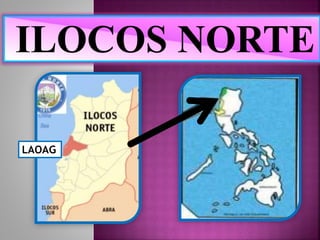







LAOAG
LOCATION: 
 Absolute Location: 
-Between 17˚ 48’ and 18˚ 29’ north latitudes 
-120˚ 5’ and 120˚ 58’ east longitudes 
Relative Location: 
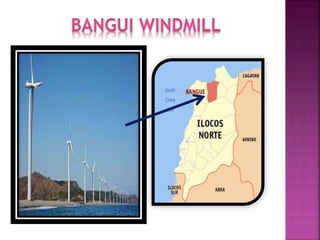
- Ilocos Norte located at the northwest corner of Luzon Island 
- 487 kilometers north-northwest of Manila. 
-By air: 48 minutes from Manila; 80 minutes from Taipei 
-By land: 9 hours from Manila; 5 hours from Baguio
W 
N 
E 
S 
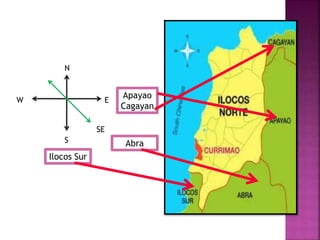
Apayao 
Cagayan 
Ilocos Sur 
Abra 
SE
W 
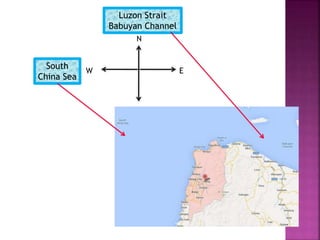
Luzon Strait 
Babuyan Channel 
N 
E 
S 
South 
China Sea
PLACE : 
 Laoag is the capital city 
 Population: 568,017 as of 2010 
PHYSICAL CHARACTERISTICS: 
 land area: 3,467.89 km2 
 Seasons: 
Dry - November to April 
Wet - May to October 
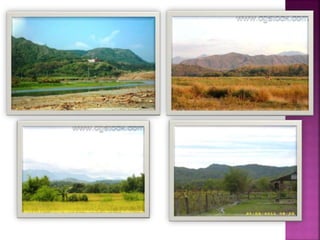
 physical features: hills, mountains, coastal and miscellaneous 
land types. Its terrain is generally mountainous and rocky. There are 
thirteen (13) mountains in the area
HUMAN CHARACTERISTICS: 
Based on (NSCB) and Human Development Network, Ilocos 
Norte had the highest Human Development Index (HDI) among 
the four provinces of Region I. 
Bain is the Ilocano trait for hiya or amor propio (sence of 
shame). 
It is essentially to show panagdayaw (respect for the 
sensitivities of others). 
They also celebrate fiestas like: 
•Pamulinawen Festival, Laoag City, February 10 
•Guling-Guling Festival, Paoay, Eve of Ash Wednesday 
•December Festival, Laoag City 
• Farmer’s Festival, Bacarra 
•Magdadaran: Talip Festival, Adams & Carassi
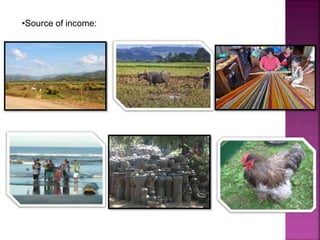
•Source of income:
HUMAN-ENVIRONMENT INTERACTION: 
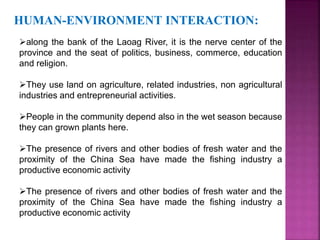
along the bank of the Laoag River, it is the nerve center of the 
province and the seat of politics, business, commerce, education 
and religion. 
They use land on agriculture, related industries, non agricultural 
industries and entrepreneurial activities. 
People in the community depend also in the wet season because 
they can grown plants here. 
The presence of rivers and other bodies of fresh water and the 
proximity of the China Sea have made the fishing industry a 
productive economic activity 
The presence of rivers and other bodies of fresh water and the 
proximity of the China Sea have made the fishing industry a 
productive economic activity
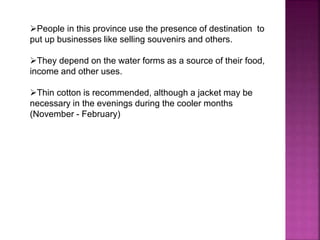
People in this province use the presence of destination to 
put up businesses like selling souvenirs and others. 
They depend on the water forms as a source of their food, 
income and other uses. 
Thin cotton is recommended, although a jacket may be 
necessary in the evenings during the cooler months 
(November - February)
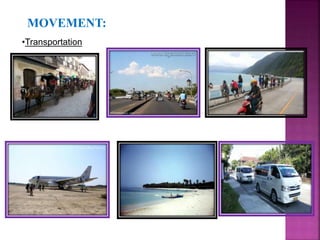
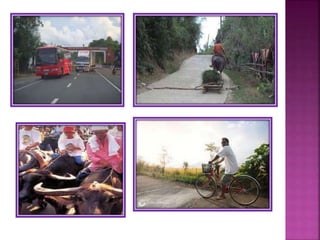
MOVEMENT: 
•Transportation
•Information /Idea Movement
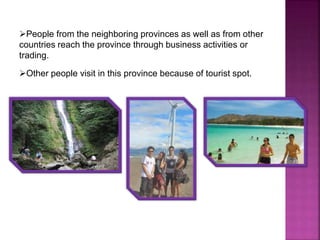
People from the neighboring provinces as well as from other 
countries reach the province through business activities or 
trading. 
Other people visit in this province because of tourist spot.
REGION: 
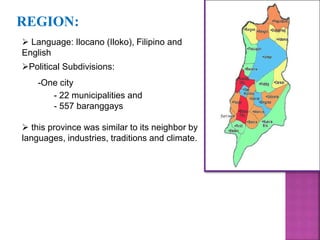
 Language: Ilocano (Iloko), Filipino and 
English 
Political Subdivisions: 
-One city 
- 22 municipalities and 
- 557 baranggays 
 this province was similar to its neighbor by 
languages, industries, traditions and climate.

Philippines : Ilocos norte

  • 1.
  • 2.
    LOCATION:  AbsoluteLocation: -Between 17˚ 48’ and 18˚ 29’ north latitudes -120˚ 5’ and 120˚ 58’ east longitudes Relative Location: - Ilocos Norte located at the northwest corner of Luzon Island - 487 kilometers north-northwest of Manila. -By air: 48 minutes from Manila; 80 minutes from Taipei -By land: 9 hours from Manila; 5 hours from Baguio
  • 3.
    W N E S Apayao Cagayan Ilocos Sur Abra SE
  • 4.
    W Luzon Strait Babuyan Channel N E S South China Sea
  • 5.
    PLACE : Laoag is the capital city  Population: 568,017 as of 2010 PHYSICAL CHARACTERISTICS:  land area: 3,467.89 km2  Seasons: Dry - November to April Wet - May to October  physical features: hills, mountains, coastal and miscellaneous land types. Its terrain is generally mountainous and rocky. There are thirteen (13) mountains in the area
  • 13.
    HUMAN CHARACTERISTICS: Basedon (NSCB) and Human Development Network, Ilocos Norte had the highest Human Development Index (HDI) among the four provinces of Region I. Bain is the Ilocano trait for hiya or amor propio (sence of shame). It is essentially to show panagdayaw (respect for the sensitivities of others). They also celebrate fiestas like: •Pamulinawen Festival, Laoag City, February 10 •Guling-Guling Festival, Paoay, Eve of Ash Wednesday •December Festival, Laoag City • Farmer’s Festival, Bacarra •Magdadaran: Talip Festival, Adams & Carassi
  • 14.
  • 15.
    HUMAN-ENVIRONMENT INTERACTION: alongthe bank of the Laoag River, it is the nerve center of the province and the seat of politics, business, commerce, education and religion. They use land on agriculture, related industries, non agricultural industries and entrepreneurial activities. People in the community depend also in the wet season because they can grown plants here. The presence of rivers and other bodies of fresh water and the proximity of the China Sea have made the fishing industry a productive economic activity The presence of rivers and other bodies of fresh water and the proximity of the China Sea have made the fishing industry a productive economic activity
  • 16.
    People in thisprovince use the presence of destination to put up businesses like selling souvenirs and others. They depend on the water forms as a source of their food, income and other uses. Thin cotton is recommended, although a jacket may be necessary in the evenings during the cooler months (November - February)
  • 18.
  • 20.
  • 22.
    People from theneighboring provinces as well as from other countries reach the province through business activities or trading. Other people visit in this province because of tourist spot.
  • 23.
    REGION:  Language:Ilocano (Iloko), Filipino and English Political Subdivisions: -One city - 22 municipalities and - 557 baranggays  this province was similar to its neighbor by languages, industries, traditions and climate.