Sociological Foundation
SOCIOLOGY………… 
- Latin “Socius” - “social or being with others” 
- and the Greek “logos” - “study” 
Therefore, the term “Sociology” basically means the 
“study of social beings”. 
 It studies: 
• human behavior in groups 
• social structure and social phenomena 
• different forms of human interrelations
The Sociological Foundation 
- Issues from society including groups and institutions in the culture and 
their contribution to education 
- refers to issues from society that have an influence on curriculum. 
There are many aspects of the society that need consideration in curriculum 
making. These include: 
•Changes occurring in societal structures; 
•Transmission of culture; 
•social problems as issues for Curriculum and 
•Economics issues.
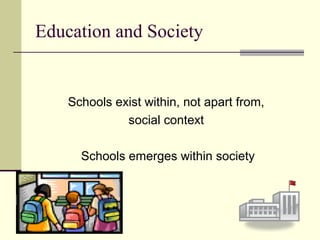
Education and Society 
Schools exist within, not apart from, 
social context 
Schools emerges within society
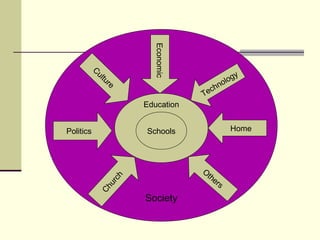
Education 
Society 
Culture 
Politics 
Church 
Economic 
Technology 
Home 
Others 
Schools
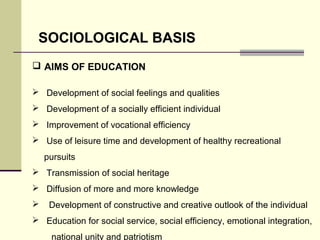
SOCIOLOGICAL BASIS 
 AIMS OF EDUCATION 
 Development of social feelings and qualities 
 Development of a socially efficient individual 
 Improvement of vocational efficiency 
 Use of leisure time and development of healthy recreational 
pursuits 
 Transmission of social heritage 
 Diffusion of more and more knowledge 
 Development of constructive and creative outlook of the individual 
 Education for social service, social efficiency, emotional integration, 
national unity and patriotism
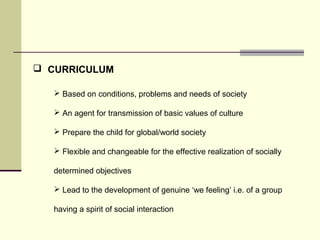
 CURRICULUM 
 Based on conditions, problems and needs of society 
 An agent for transmission of basic values of culture 
 Prepare the child for global/world society 
 Flexible and changeable for the effective realization of socially 
determined objectives 
 Lead to the development of genuine ‘we feeling’ i.e. of a group 
having a spirit of social interaction
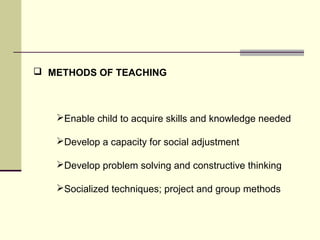
 METHODS OF TEACHING 
Enable child to acquire skills and knowledge needed 
Develop a capacity for social adjustment 
Develop problem solving and constructive thinking 
Socialized techniques; project and group methods
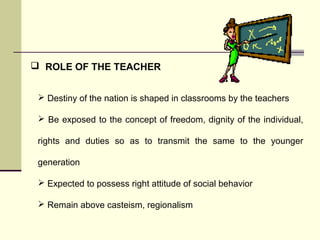
 ROLE OF THE TEACHER 
 Destiny of the nation is shaped in classrooms by the teachers 
 Be exposed to the concept of freedom, dignity of the individual, 
rights and duties so as to transmit the same to the younger 
generation 
 Expected to possess right attitude of social behavior 
 Remain above casteism, regionalism
 THE SCHOOL 
Reflect and epitomize the larger society outside its walls 
 Balance, purify and simplify the activities of the society in its 
environment 
 DISCIPLINE 
Should come through participation in group activities and 
social service activities
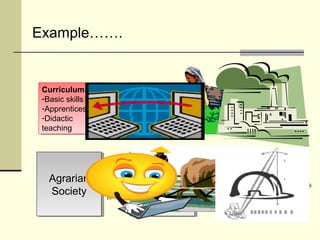
Curriculum: 
-Basic skills 
-Apprenticeship 
-Didactic 
teaching 
Curriculum: 
-Basic skills 
-Apprenticeship 
-Didactic 
teaching 
Curriculum: 
-Factory model 
-Compartments 
-Didactic 
teaching 
Curriculum: 
-Factory model 
-Compartments 
-Didactic 
teaching 
Agrarian 
Society 
Agrarian 
Society 
Information 
Society 
Information 
Society 
Industrial 
Society 
Industrial 
Society 
Example…….
CONCLUSION 
 Education takes place in society 
 Education is essentially a social process 
 Social environment educates the child 
 education has a social role to play 
 Education is a lifelong process 
 Education is not only schooling 
Education must be social in nature and develop democratic skills and 
values in students

Sociology : Sociological foundation

  • 1.
  • 2.
    SOCIOLOGY………… - Latin“Socius” - “social or being with others” - and the Greek “logos” - “study” Therefore, the term “Sociology” basically means the “study of social beings”.  It studies: • human behavior in groups • social structure and social phenomena • different forms of human interrelations
  • 3.
    The Sociological Foundation - Issues from society including groups and institutions in the culture and their contribution to education - refers to issues from society that have an influence on curriculum. There are many aspects of the society that need consideration in curriculum making. These include: •Changes occurring in societal structures; •Transmission of culture; •social problems as issues for Curriculum and •Economics issues.
  • 4.
    Education and Society Schools exist within, not apart from, social context Schools emerges within society
  • 5.
    Education Society Culture Politics Church Economic Technology Home Others Schools
  • 6.
    SOCIOLOGICAL BASIS AIMS OF EDUCATION  Development of social feelings and qualities  Development of a socially efficient individual  Improvement of vocational efficiency  Use of leisure time and development of healthy recreational pursuits  Transmission of social heritage  Diffusion of more and more knowledge  Development of constructive and creative outlook of the individual  Education for social service, social efficiency, emotional integration, national unity and patriotism
  • 7.
     CURRICULUM Based on conditions, problems and needs of society  An agent for transmission of basic values of culture  Prepare the child for global/world society  Flexible and changeable for the effective realization of socially determined objectives  Lead to the development of genuine ‘we feeling’ i.e. of a group having a spirit of social interaction
  • 8.
     METHODS OFTEACHING Enable child to acquire skills and knowledge needed Develop a capacity for social adjustment Develop problem solving and constructive thinking Socialized techniques; project and group methods
  • 9.
     ROLE OFTHE TEACHER  Destiny of the nation is shaped in classrooms by the teachers  Be exposed to the concept of freedom, dignity of the individual, rights and duties so as to transmit the same to the younger generation  Expected to possess right attitude of social behavior  Remain above casteism, regionalism
  • 10.
     THE SCHOOL Reflect and epitomize the larger society outside its walls  Balance, purify and simplify the activities of the society in its environment  DISCIPLINE Should come through participation in group activities and social service activities
  • 11.
    Curriculum: -Basic skills -Apprenticeship -Didactic teaching Curriculum: -Basic skills -Apprenticeship -Didactic teaching Curriculum: -Factory model -Compartments -Didactic teaching Curriculum: -Factory model -Compartments -Didactic teaching Agrarian Society Agrarian Society Information Society Information Society Industrial Society Industrial Society Example…….
  • 12.
    CONCLUSION  Educationtakes place in society  Education is essentially a social process  Social environment educates the child  education has a social role to play  Education is a lifelong process  Education is not only schooling Education must be social in nature and develop democratic skills and values in students