Post Resuscitation CareBy Kane Guthrie
ObjectivesCase studyUnderstand post-resuscitation careLook at therapeutic hypothermia
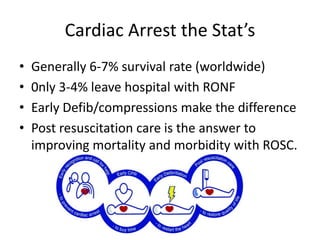
Cardiac Arrest the Stat’sGenerally 6-7% survival rate (worldwide)0nly 3-4% leave hospital with RONFEarly Defib/compressions make the differencePost resuscitation care is the answer to improving mortality and morbidity with ROSC.
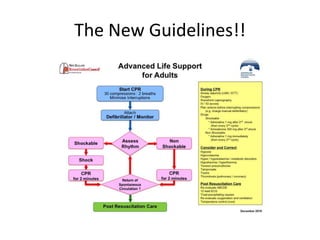
The New Guidelines!!
Case Study68 male walking home from pubCollapse > Cardiac Arrest >Bystander CPRSJA arrive 13mins post arrestIn VF, Successful ROSC post x3 defibsArrives in T2 20 mins later with no RONFWhat should we do now?
Post Resuscitation CareWhat is it?Where does it start?Why is it done poorly?What is Post Cardiac Arrest Syndrome?What is Therapeutic Hypothermia?
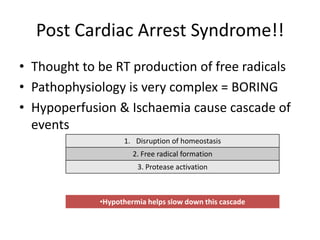
Post Cardiac Arrest Syndrome!!Thought to be RT production of free radicalsPathophysiology is very complex = BORINGHypoperfusion & Ischaemia cause cascade of events
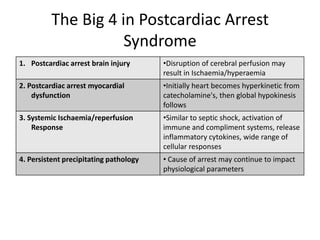
The Big 4 in Postcardiac Arrest Syndrome
Therapeutic Hypothermia‘Induced hypothermia” is were pt is deliberately cooled between 32-33.9°CIt aims to reduce hypoperfusion (& reperfusion) injury post arrest.Focuses mainly on brain (neuroprotection), but offers protection to heart, liver, kidneys.Current research shows benefit of inducing TH before or during event.
Therapeutic HypothermiaTherapeutic hypothermia is the first treatment that has proven effective for post-resuscitation reperfusion injury.NNT 1:6 vs 1:42 for aspirin in STEMI
Who’s up for it?Cardiac arrest with ROSC Persistent significant altered level of consciousness<12 hours from time of ROSCPatients >18 years
Who’s on the Fence?Relative:Persistent hypotension (MAP <60, SBP<90) despite use of inotropes and vasoconstrictors Note:Hypothermia will cause vasoconstrictionAnd help ∧BP
Who’s not?Advanced directive stipulating DNR (absolute)Traumatic arrestActive bleeding (including intracranial)Pregnancy, recent major surgery, severe sepsis
What are the 3 Phase’s of TH?InductionAim reduce core temp 32-34°C (within 6 hours, preferably 2 hours)MaintenanceMaintain core body temp for 12-24Rewarming Either controlled or passive rewarming to normothermia 37°C0.2-0.5°C per hour –over 8-12 hours
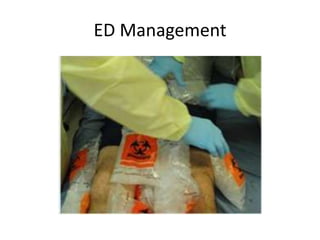
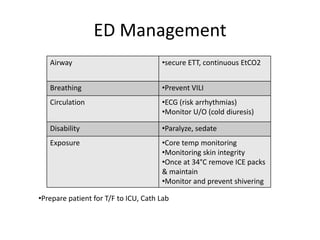
ED Management
Cooling MethodsCold saline (during arrest & post arrest)ICE Packs (axilla, groin)  Keep pt dry
Monitor skin integrityMachine (Vest, Artic Ice)
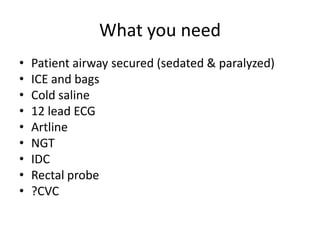
What you needPatient airway secured (sedated & paralyzed)ICE and bagsCold saline12 lead ECGArtlineNGTIDCRectal probe?CVC
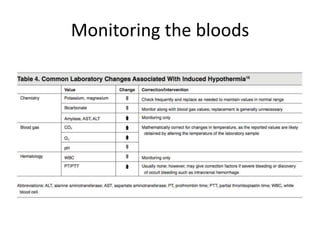
ED ManagementPrepare patient for T/F to ICU, Cath LabMonitoring the bloods
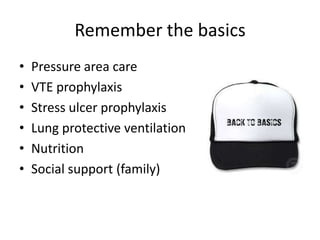
Remember the basicsPressure area careVTE prophylaxisStress ulcer prophylaxisLung protective ventilationNutritionSocial support (family)
ComplicationsTachycardia > bradycardiaHypertensionDiuresis (hypovolaemia)Shivering (increases temp)Arrhythmia'sIncrease bleedingSpiking temp’s look for signs of infection
Questions
Thank-You

Post resuscitation care

  • 1.
  • 2.
    ObjectivesCase studyUnderstand post-resuscitationcareLook at therapeutic hypothermia
  • 3.
    Cardiac Arrest theStat’sGenerally 6-7% survival rate (worldwide)0nly 3-4% leave hospital with RONFEarly Defib/compressions make the differencePost resuscitation care is the answer to improving mortality and morbidity with ROSC.
  • 4.
  • 5.
    Case Study68 malewalking home from pubCollapse > Cardiac Arrest >Bystander CPRSJA arrive 13mins post arrestIn VF, Successful ROSC post x3 defibsArrives in T2 20 mins later with no RONFWhat should we do now?
  • 6.
    Post Resuscitation CareWhatis it?Where does it start?Why is it done poorly?What is Post Cardiac Arrest Syndrome?What is Therapeutic Hypothermia?
  • 7.
    Post Cardiac ArrestSyndrome!!Thought to be RT production of free radicalsPathophysiology is very complex = BORINGHypoperfusion & Ischaemia cause cascade of events
  • 8.
    The Big 4in Postcardiac Arrest Syndrome
  • 9.
    Therapeutic Hypothermia‘Induced hypothermia”is were pt is deliberately cooled between 32-33.9°CIt aims to reduce hypoperfusion (& reperfusion) injury post arrest.Focuses mainly on brain (neuroprotection), but offers protection to heart, liver, kidneys.Current research shows benefit of inducing TH before or during event.
  • 10.
    Therapeutic HypothermiaTherapeutic hypothermiais the first treatment that has proven effective for post-resuscitation reperfusion injury.NNT 1:6 vs 1:42 for aspirin in STEMI
  • 11.
    Who’s up forit?Cardiac arrest with ROSC Persistent significant altered level of consciousness<12 hours from time of ROSCPatients >18 years
  • 12.
    Who’s on theFence?Relative:Persistent hypotension (MAP <60, SBP<90) despite use of inotropes and vasoconstrictors Note:Hypothermia will cause vasoconstrictionAnd help ∧BP
  • 13.
    Who’s not?Advanced directivestipulating DNR (absolute)Traumatic arrestActive bleeding (including intracranial)Pregnancy, recent major surgery, severe sepsis
  • 14.
    What are the3 Phase’s of TH?InductionAim reduce core temp 32-34°C (within 6 hours, preferably 2 hours)MaintenanceMaintain core body temp for 12-24Rewarming Either controlled or passive rewarming to normothermia 37°C0.2-0.5°C per hour –over 8-12 hours
  • 15.
  • 16.
    Cooling MethodsCold saline(during arrest & post arrest)ICE Packs (axilla, groin) Keep pt dry
  • 17.
  • 18.
    What you needPatientairway secured (sedated & paralyzed)ICE and bagsCold saline12 lead ECGArtlineNGTIDCRectal probe?CVC
  • 19.
    ED ManagementPrepare patientfor T/F to ICU, Cath LabMonitoring the bloods
  • 20.
    Remember the basicsPressurearea careVTE prophylaxisStress ulcer prophylaxisLung protective ventilationNutritionSocial support (family)
  • 21.
    ComplicationsTachycardia > bradycardiaHypertensionDiuresis(hypovolaemia)Shivering (increases temp)Arrhythmia'sIncrease bleedingSpiking temp’s look for signs of infection
  • 22.
  • 23.

Editor's Notes

  • #8 Protease enzym that conducts proteolysis. (Breaks down protein, starves the cells)Free radicals are molecules with unpaired electrons. In their quest to find another electron, they are very reactive and cause damage to surrounding molecules.