Triage Basics
By Kane Guthrie FCENA
Learning Points
• Triage- What is it
• The Australian Triage Scale
• Triage assessment
• Predictors of poor outcome
• Red flags at triage
• Assigning appropriate ATS
Triage
 Trier= to sort.
 Triage= establishing priorities of patient
care for urgent treatment while allocating
limited resources.
Triage
 Timely response to abnormal clinical
findings reduce morbidity & mortality.
 National Triage Scale (1993-1997)
 Australasian Triage Scale (1997-present)
The ATS
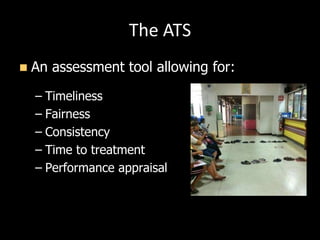
 An assessment tool allowing for:
– Timeliness
– Fairness
– Consistency
– Time to treatment
– Performance appraisal
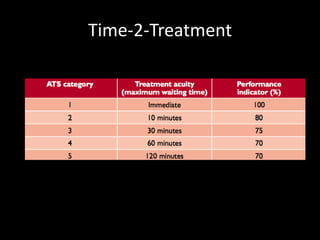
Time-2-Treatment
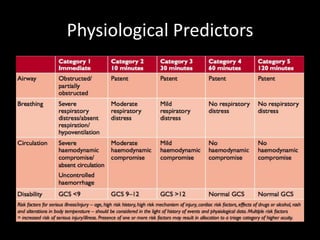
Physiological Predictors
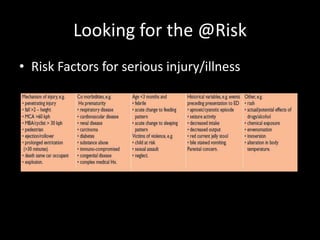
Looking for the @Risk
• Risk Factors for serious injury/illness
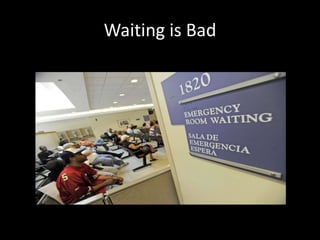
Waiting is Bad
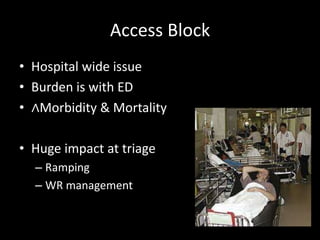
Access Block
• Hospital wide issue
• Burden is with ED
• ∧Morbidity & Mortality
• Huge impact at triage
– Ramping
– WR management
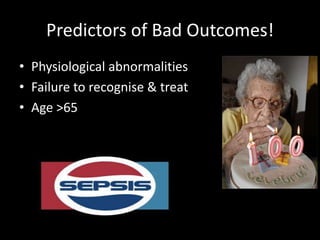
Predictors of Bad Outcomes!
• Physiological abnormalities
• Failure to recognise & treat
• Age >65
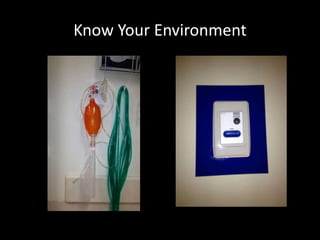
Know Your Environment
Making Decisions @ Triage
Interpret
∨
Discriminate
∨
Evaluate
Assessment @ Triage
Its all about:
• Airway
• Breathing
• Circulation
• Disability
• Exposure/Environment
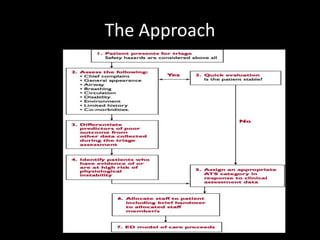
The Approach
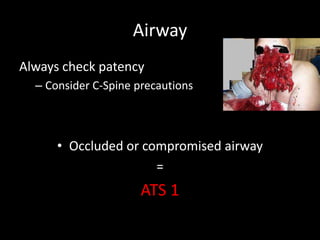
Airway
Always check patency
– Consider C-Spine precautions
• Occluded or compromised airway
=
ATS 1
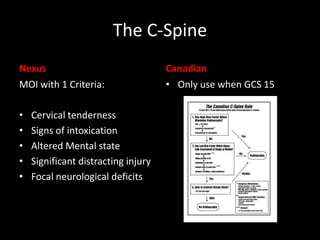
The C-Spine
Nexus
MOI with 1 Criteria:
• Cervical tenderness
• Signs of intoxication
• Altered Mental state
• Significant distracting injury
• Focal neurological deficits
Canadian
• Only use when GCS 15
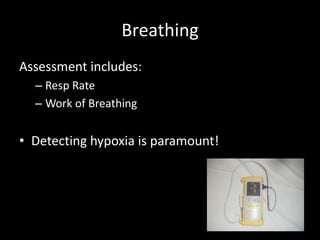
Breathing
Assessment includes:
– Resp Rate
– Work of Breathing
• Detecting hypoxia is paramount!
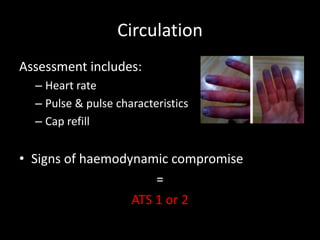
Circulation
Assessment includes:
– Heart rate
– Pulse & pulse characteristics
– Cap refill
• Signs of haemodynamic compromise
=
ATS 1 or 2
Disability
Assessment includes:
– Use AVPU or GCS
• Signs of altered level of consciousness
=
Important indicator of serious injury/illness
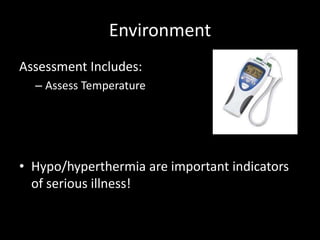
Environment
Assessment Includes:
– Assess Temperature
• Hypo/hyperthermia are important indicators
of serious illness!
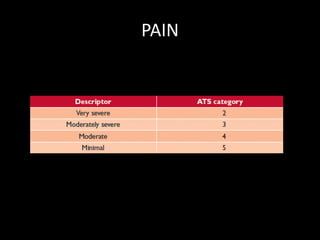
PAIN
“The eye’s don’t see
what the mind
doesn’t know!”
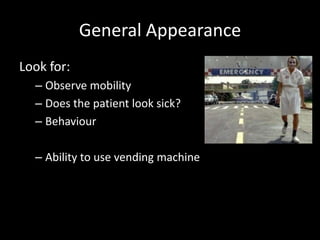
General Appearance
Look for:
– Observe mobility
– Does the patient look sick?
– Behaviour
– Ability to use vending machine
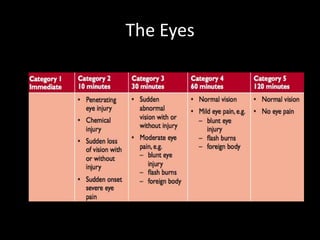
The Eyes
Some Pearls
&
Pitfalls
“Trust your instincts not
the paramedics!”
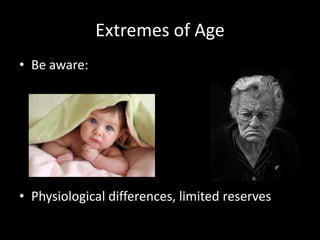
Extremes of Age
• Be aware:
• Physiological differences, limited reserves
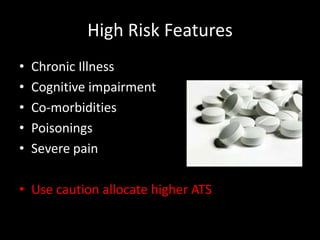
High Risk Features
• Chronic Illness
• Cognitive impairment
• Co-morbidities
• Poisonings
• Severe pain
• Use caution allocate higher ATS
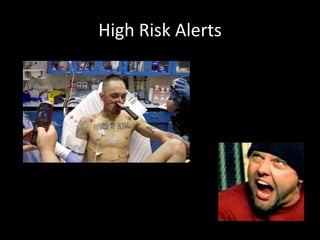
High Risk Alerts
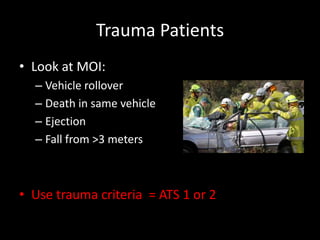
Trauma Patients
• Look at MOI:
– Vehicle rollover
– Death in same vehicle
– Ejection
– Fall from >3 meters
• Use trauma criteria = ATS 1 or 2
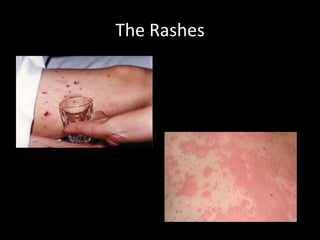
The Rashes
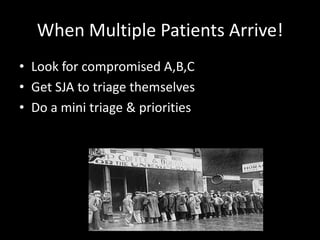
When Multiple Patients Arrive!
• Look for compromised A,B,C
• Get SJA to triage themselves
• Do a mini triage & priorities
Managing the WR
• Use clinical rounding
– Reassess and retriage if need
– Treat pain
– Manage the families
Patient 1
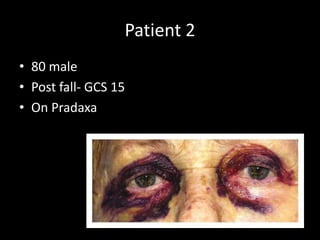
Patient 2
• 80 male
• Post fall- GCS 15
• On Pradaxa
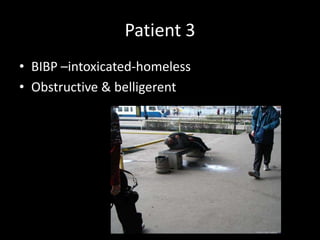
Patient 3
• BIBP –intoxicated-homeless
• Obstructive & belligerent
PEARL
• “Alcoholics were put
here to burn triage
nurses”
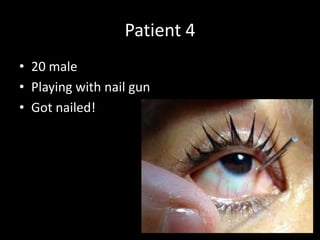
Patient 4
• 20 male
• Playing with nail gun
• Got nailed!
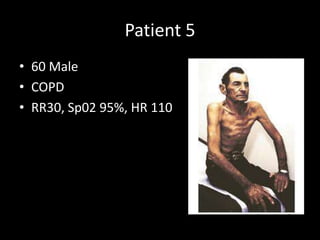
Patient 5
• 60 Male
• COPD
• RR30, Sp02 95%, HR 110
Questions
Take Home Points
• ID & Manage risk to self & patients
• 1st impressions count
• “Does the patient look sick?”
• ID time critical interventions required
• Use the Duty consultant & SCO
• The waiting room is your enemy!
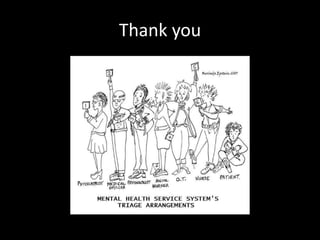
Thank you

Triage basics

Editor's Notes

  • #19 RR greater than 27 biggest indicator of in hospital cardiac arrest
  • #31 Gangs, violent individualsUse police and security