Polysaccharides
Structure, Properties and
Functions in Foods
Amandeep Singh
Assistant Professor
Department of Biotechnology
GSSDGS Khalsa College Patiala
Polysaccharides
• Most of the carbohydrates in nature is present as polysaccharides.
• These are high molecular weight substances containing large number of
monosaccharide units.
• Consist of primary chain, in some; branched chains may exist.
• Commonly found = starch, glycogen, cellulose, hemi-cellulose, pectic substances,
gums, chitin, dextrin, inulin, pectin.
• Generic name = Glycan (Homo-glycan= same type of monosaccharides)
(Hetero-glycan = different types of monosaccharides)
• Homo-glycan examples: Glucan, Fructan, Mannan
• Hetero-glycan examples: Galactomannan, Glucomannan
Starch
• Principal food reserve polysaccharide (storage polysaccharide)
of the plant kingdom.
• Occur in cereal grains, pulses, tubers, bulbs, fruits.
• Contain many glucose residues.
• Comprises of two parts:
1. Amylose
2. Amylopectin
Amylose Amylopectin
Straight chain of glucose
units
Branched chain of
glucose units
Glucose units are linked
together by α (14)
linkage
Glucose units are linked
together by α (14) and
α (16) linkage
Soluble in water Insoluble in water
Give blue colour with the
iodine solution
No reaction
Give rise to gel formation Give rise to thickened
preparation
Properties of Carbohydrates
• Some polysaccharides are soluble in water = Hydro-phillic
• Some polysaccharides are insoluble in water = Hydro-phobic
• Some form gel at low concentration (gelatinization)
• Some form gel at high concentration
• Some do not form gel at all
• Structure of polysaccharides influences their interaction with water.
Dextrinization (Starch + Dry Heat)
When starch is subjected to dry heat, dextrinization occur.
Starch Dextrin (provides flavor, colour, aroma)
Disaccharide/Sweet
For example: toasted bread, baked products.
Non-enzymatic browning reaction and chemical reaction.
Gelatinization (Starch + Moist Heat)
H2O+
Linear Polysaccharide Gel
H-bonds
Swelling Amylose leaching Granule
Starch
Gel
Gelatinization
• Crystallization to amorphous conversion
• Thickening of solution (swelling, amylose leaching, granule
fragments)
• More the amylose, more the energy required to break it to
gelatinize
• Amylose hydrolysis = digestibility increases
• Native unmodified starch gelatinization temperature is 55°C
Retrogradation (Gel during storage)
H-bonds
Syneresis /weeping (top layer)
Loss of water
Gel
Retrogradation is a reaction that takes place when the amylose and amylopectin chains in cooked,
gelatinized starch realign themselves as the cooked starch cools.
Retrogradation (Examples)
• Staling of bread
• Chapati kept for long are torn on folding
• Layer of water on top of pulses kept for long in refrigerator
• Amorphous to crystallization conversion
• Retrogradation resist amylose hydrolysis resulted in decreased digestibility.
Glycogen
• Storage polysaccharide in animals,
hence it is called animal starch.
• Mainly present in liver and skeletal
muscles.
• On hydrolysis it yield D-glucose units.
• Glycogen is a branched chain
polysaccharide resembling amylopectin
but is more branched than amylopectin.
Cellulose
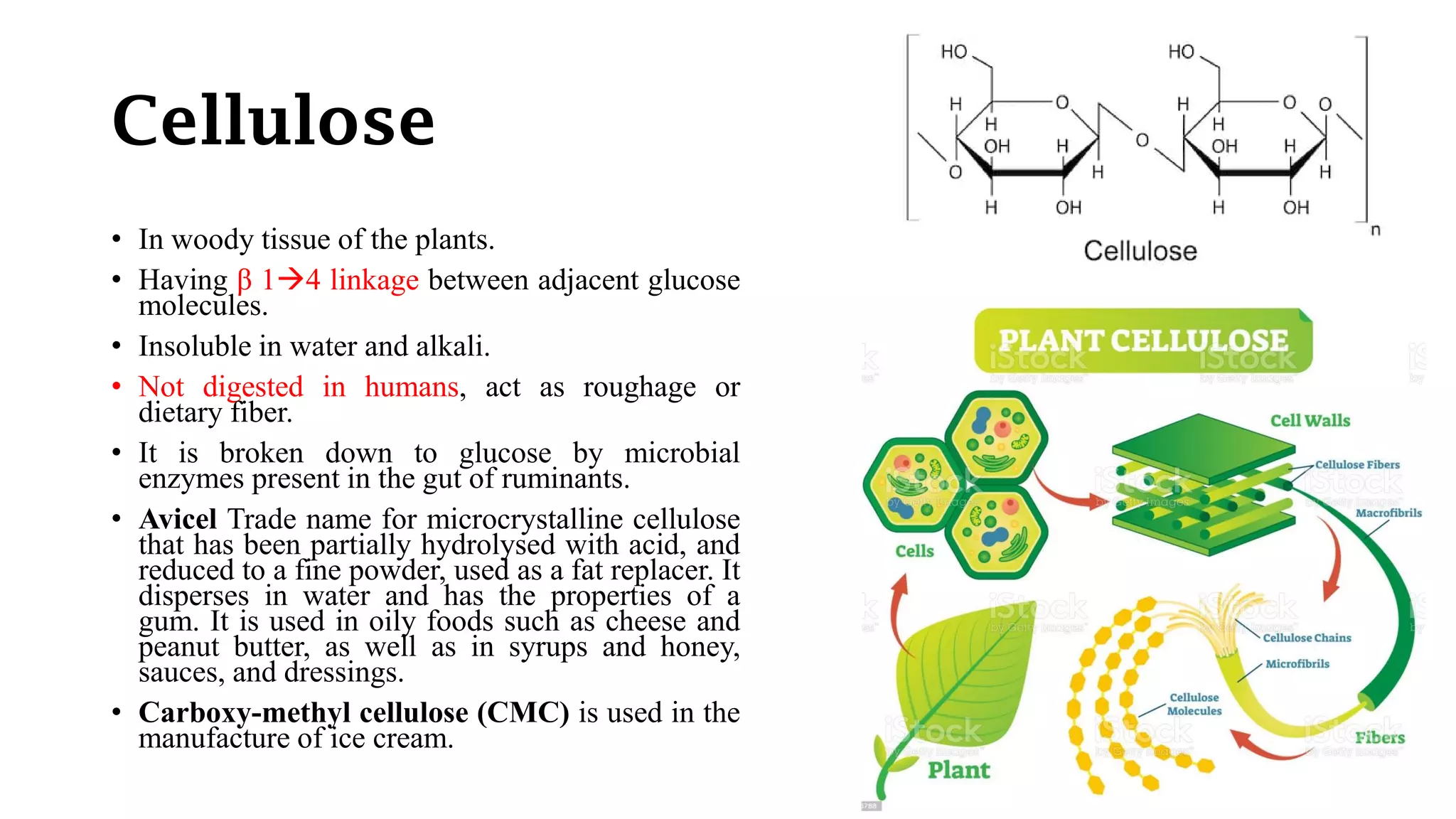
• In woody tissue of the plants.
• Having β 14 linkage between adjacent glucose
molecules.
• Insoluble in water and alkali.
• Not digested in humans, act as roughage or
dietary fiber.
• It is broken down to glucose by microbial
enzymes present in the gut of ruminants.
• Avicel Trade name for microcrystalline cellulose
that has been partially hydrolysed with acid, and
reduced to a fine powder, used as a fat replacer. It
disperses in water and has the properties of a
gum. It is used in oily foods such as cheese and
peanut butter, as well as in syrups and honey,
sauces, and dressings.
• Carboxy-methyl cellulose (CMC) is used in the
manufacture of ice cream.
Hemi-cellulose
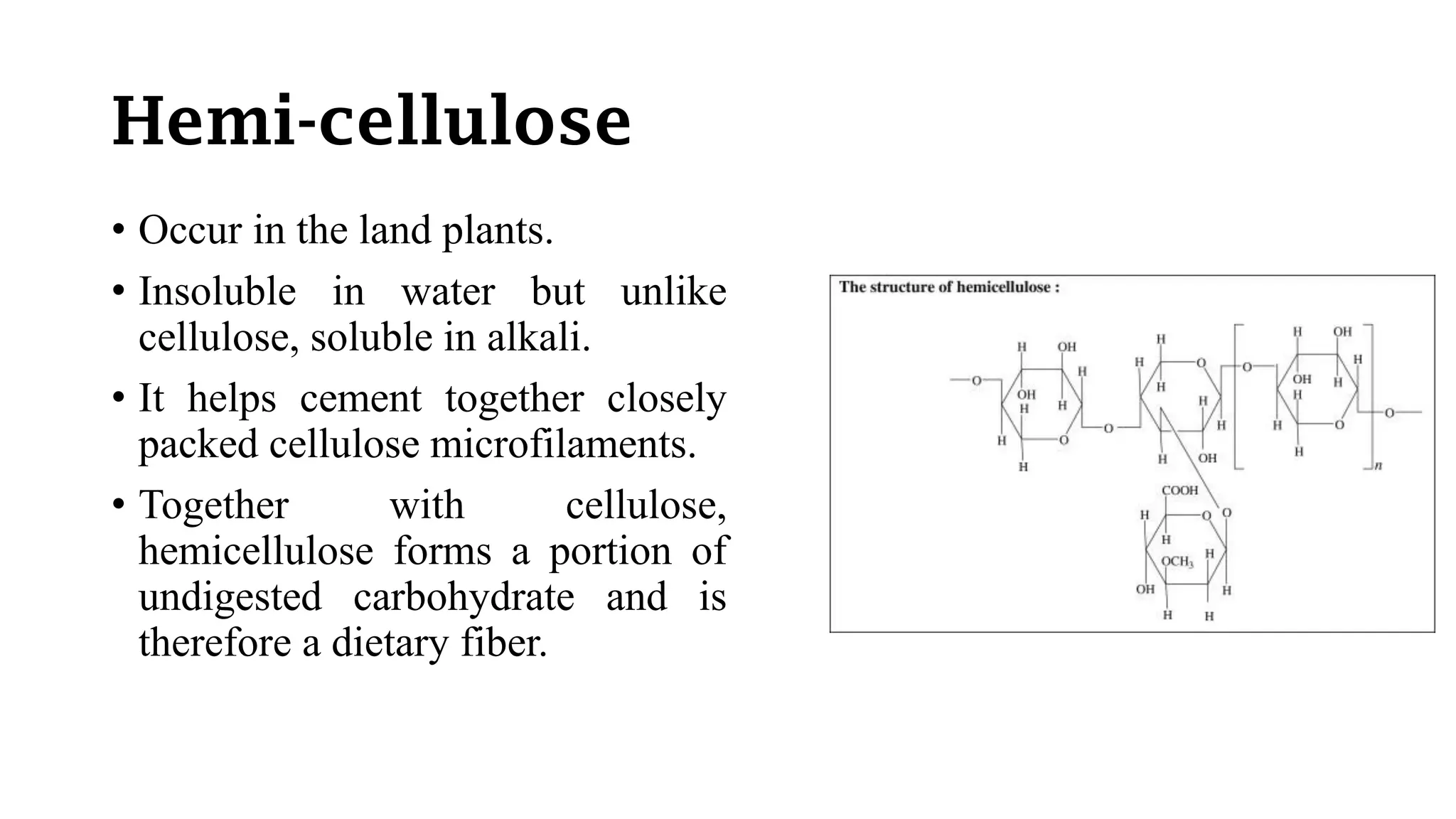
• Occur in the land plants.
• Insoluble in water but unlike
cellulose, soluble in alkali.
• It helps cement together closely
packed cellulose microfilaments.
• Together with cellulose,
hemicellulose forms a portion of
undigested carbohydrate and is
therefore a dietary fiber.
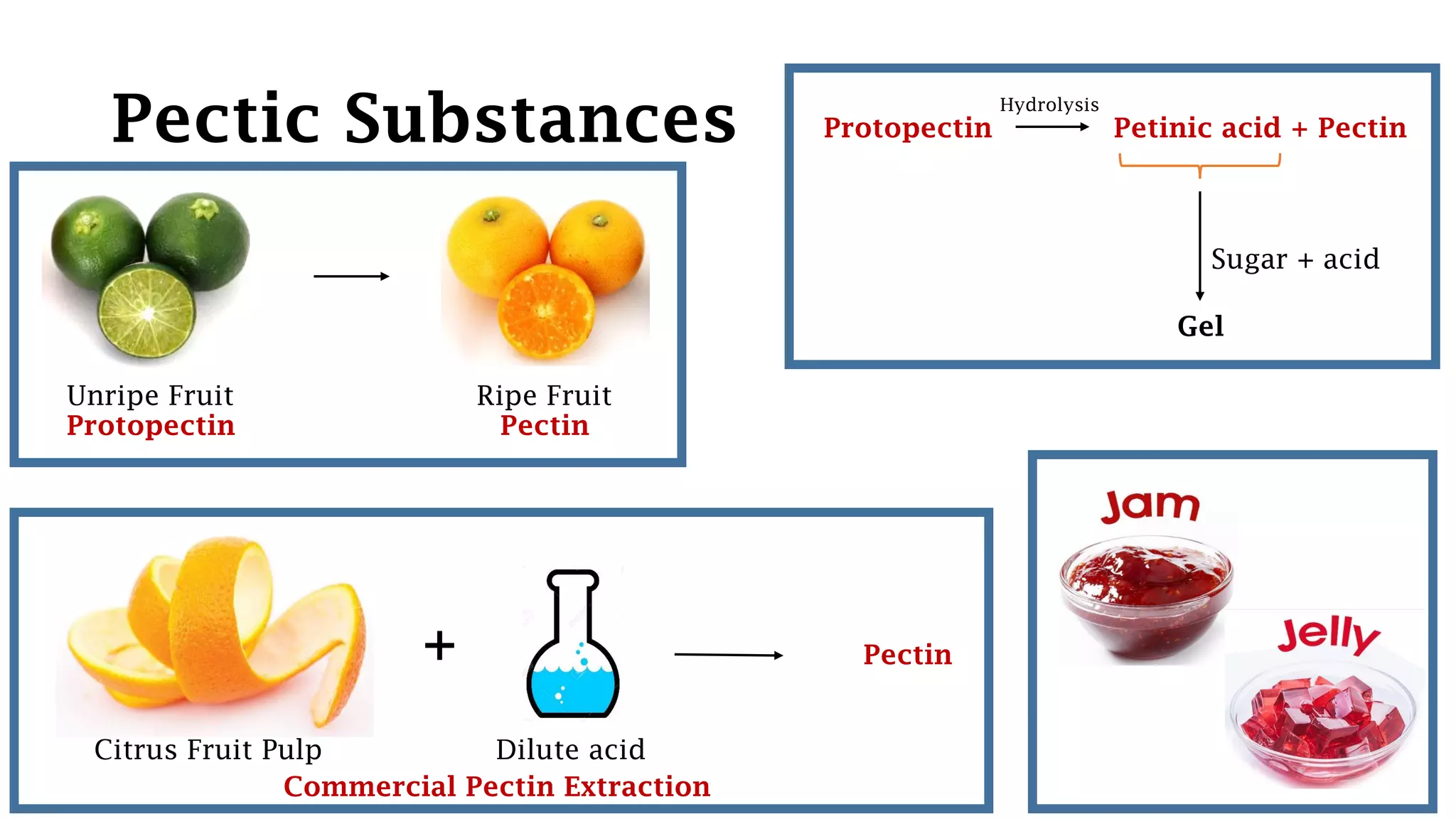
Pectic Substances
• Occur as constituents of plant cell walls and in the middle lamella.
• In middle lamella, they serve as cementing material to hold cells.
• They are mixture of polysaccharides formed from galactose, arabinose
and galacturonic acid.
Pectic Substances
Unripe Fruit
PectinProtopectin
Ripe Fruit
Citrus Fruit Pulp
Pectin
Dilute acid
+
Commercial Pectin Extraction
Protopectin Petinic acid + Pectin
Sugar + acid
Gel
Hydrolysis
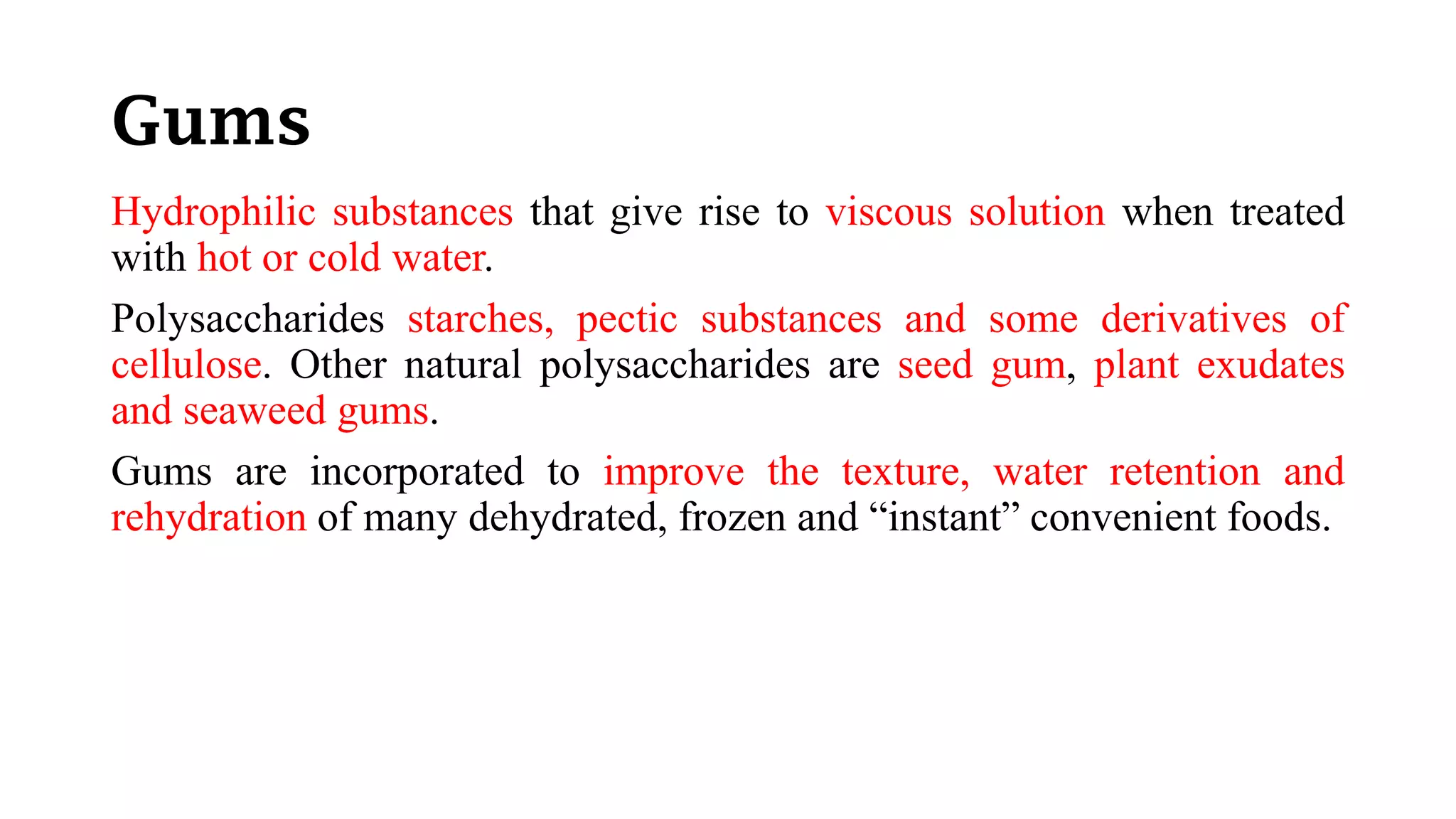
Gums
Hydrophilic substances that give rise to viscous solution when treated
with hot or cold water.
Polysaccharides starches, pectic substances and some derivatives of
cellulose. Other natural polysaccharides are seed gum, plant exudates
and seaweed gums.
Gums are incorporated to improve the texture, water retention and
rehydration of many dehydrated, frozen and ā€œinstantā€ convenient foods.
Use of Gums
Flavour fixing
agents
Thickener for gravies and
sauces
Moisture retention
agent in baked goods
Emulsion stabilizers
in salad dressings
Protective colloids in
chocolate milk and syrup
Foam stabilizers in
beer
Clarifying agents for
beer and wine
Lubricants

Polysaccharides in foods

  • 1.
    Polysaccharides Structure, Properties and Functionsin Foods Amandeep Singh Assistant Professor Department of Biotechnology GSSDGS Khalsa College Patiala
  • 2.
    Polysaccharides • Most ofthe carbohydrates in nature is present as polysaccharides. • These are high molecular weight substances containing large number of monosaccharide units. • Consist of primary chain, in some; branched chains may exist. • Commonly found = starch, glycogen, cellulose, hemi-cellulose, pectic substances, gums, chitin, dextrin, inulin, pectin. • Generic name = Glycan (Homo-glycan= same type of monosaccharides) (Hetero-glycan = different types of monosaccharides) • Homo-glycan examples: Glucan, Fructan, Mannan • Hetero-glycan examples: Galactomannan, Glucomannan
  • 3.
    Starch • Principal foodreserve polysaccharide (storage polysaccharide) of the plant kingdom. • Occur in cereal grains, pulses, tubers, bulbs, fruits. • Contain many glucose residues. • Comprises of two parts: 1. Amylose 2. Amylopectin
  • 4.
    Amylose Amylopectin Straight chainof glucose units Branched chain of glucose units Glucose units are linked together by α (14) linkage Glucose units are linked together by α (14) and α (16) linkage Soluble in water Insoluble in water Give blue colour with the iodine solution No reaction Give rise to gel formation Give rise to thickened preparation
  • 5.
    Properties of Carbohydrates •Some polysaccharides are soluble in water = Hydro-phillic • Some polysaccharides are insoluble in water = Hydro-phobic • Some form gel at low concentration (gelatinization) • Some form gel at high concentration • Some do not form gel at all • Structure of polysaccharides influences their interaction with water.
  • 6.
    Dextrinization (Starch +Dry Heat) When starch is subjected to dry heat, dextrinization occur. Starch Dextrin (provides flavor, colour, aroma) Disaccharide/Sweet For example: toasted bread, baked products. Non-enzymatic browning reaction and chemical reaction.
  • 7.
    Gelatinization (Starch +Moist Heat) H2O+ Linear Polysaccharide Gel H-bonds Swelling Amylose leaching Granule Starch Gel
  • 8.
    Gelatinization • Crystallization toamorphous conversion • Thickening of solution (swelling, amylose leaching, granule fragments) • More the amylose, more the energy required to break it to gelatinize • Amylose hydrolysis = digestibility increases • Native unmodified starch gelatinization temperature is 55°C
  • 9.
    Retrogradation (Gel duringstorage) H-bonds Syneresis /weeping (top layer) Loss of water Gel Retrogradation is a reaction that takes place when the amylose and amylopectin chains in cooked, gelatinized starch realign themselves as the cooked starch cools.
  • 10.
    Retrogradation (Examples) • Stalingof bread • Chapati kept for long are torn on folding • Layer of water on top of pulses kept for long in refrigerator • Amorphous to crystallization conversion • Retrogradation resist amylose hydrolysis resulted in decreased digestibility.
  • 11.
    Glycogen • Storage polysaccharidein animals, hence it is called animal starch. • Mainly present in liver and skeletal muscles. • On hydrolysis it yield D-glucose units. • Glycogen is a branched chain polysaccharide resembling amylopectin but is more branched than amylopectin.
  • 12.
    Cellulose • In woodytissue of the plants. • Having β 14 linkage between adjacent glucose molecules. • Insoluble in water and alkali. • Not digested in humans, act as roughage or dietary fiber. • It is broken down to glucose by microbial enzymes present in the gut of ruminants. • Avicel Trade name for microcrystalline cellulose that has been partially hydrolysed with acid, and reduced to a fine powder, used as a fat replacer. It disperses in water and has the properties of a gum. It is used in oily foods such as cheese and peanut butter, as well as in syrups and honey, sauces, and dressings. • Carboxy-methyl cellulose (CMC) is used in the manufacture of ice cream.
  • 13.
    Hemi-cellulose • Occur inthe land plants. • Insoluble in water but unlike cellulose, soluble in alkali. • It helps cement together closely packed cellulose microfilaments. • Together with cellulose, hemicellulose forms a portion of undigested carbohydrate and is therefore a dietary fiber.
  • 14.
    Pectic Substances • Occuras constituents of plant cell walls and in the middle lamella. • In middle lamella, they serve as cementing material to hold cells. • They are mixture of polysaccharides formed from galactose, arabinose and galacturonic acid.
  • 15.
    Pectic Substances Unripe Fruit PectinProtopectin RipeFruit Citrus Fruit Pulp Pectin Dilute acid + Commercial Pectin Extraction Protopectin Petinic acid + Pectin Sugar + acid Gel Hydrolysis
  • 16.
    Gums Hydrophilic substances thatgive rise to viscous solution when treated with hot or cold water. Polysaccharides starches, pectic substances and some derivatives of cellulose. Other natural polysaccharides are seed gum, plant exudates and seaweed gums. Gums are incorporated to improve the texture, water retention and rehydration of many dehydrated, frozen and ā€œinstantā€ convenient foods.
  • 17.
    Use of Gums Flavourfixing agents Thickener for gravies and sauces Moisture retention agent in baked goods Emulsion stabilizers in salad dressings Protective colloids in chocolate milk and syrup Foam stabilizers in beer Clarifying agents for beer and wine Lubricants