RHEOLOGY OF
DOUGH
BY: SWETA PANDEY
B.VOC. (FOOD PROCESSING
AND TECHNOLOGY)
SEM-5th
Introduction
• Importance of dough rheology is well recognized
in predicting and controlling the quality of baked
products. Variation in the elastic and viscous
behaviour of different wheat flour dough is
considered as key quality factors in bakery
applications. There are various equipment like
farinograph,extensograph and mixograph that
the mechanical properties of wheat flour dough
play important role in handling properties of
dough during processing and in the quality
attribute of finish products.
contents
• Rheology
• Rheological behaviour and development of dough and
gluten
• Rheological measurements of dough
• Farinograph
• Mixograph
• Alveograph
• Amylograph
• Brookefield viscometer
• Conclusion
Rheology
• Rheo-to flow
• Logos-science
• Ology-the study
• Is the study of the flow of materials that behave
in an interesting or unusual manner.
• A fluid is a substance that deforms continuously
under the action of a shearing force.
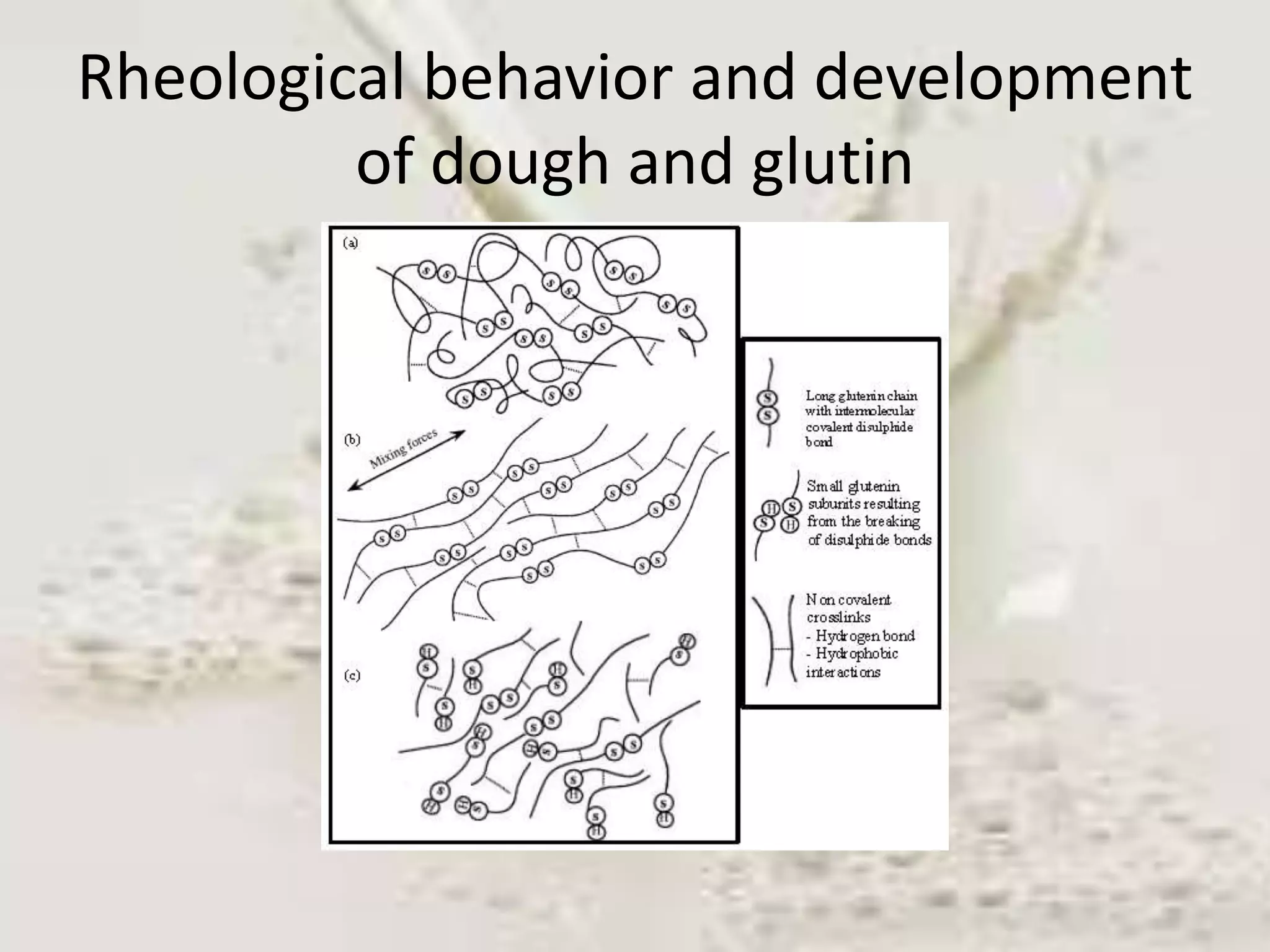
Rheological behavior and development
of dough and glutin
Rheological measurements of dough
• Rheometer: The rheometer is frequently used
in determining the viscoelastic properties 0f
dough.
Farinograph
• so that the resistance of the dough to aHow:
Utilizes a high speed mixer that is designed
constant mechanical shear is measured. This
measurement is transferred to an oscillating
dynamometer and recorded on paper in the
form of graph.
Principle
• Fill your flour/water suspension into the heated
measuring mixer where it is subjected to a
defined mechanical stress by the rotating mixer
blades which are driven by a motor, carried in a
pendulum bearing.
• The resistance of dough against the blades, which
depends on the viscosity of the dough causes an
opposite deflection of the motor housing. This
deflection is measured as torque and recorded
and plotted on-line as a function of time in a clear
color diagram.
Farinograph
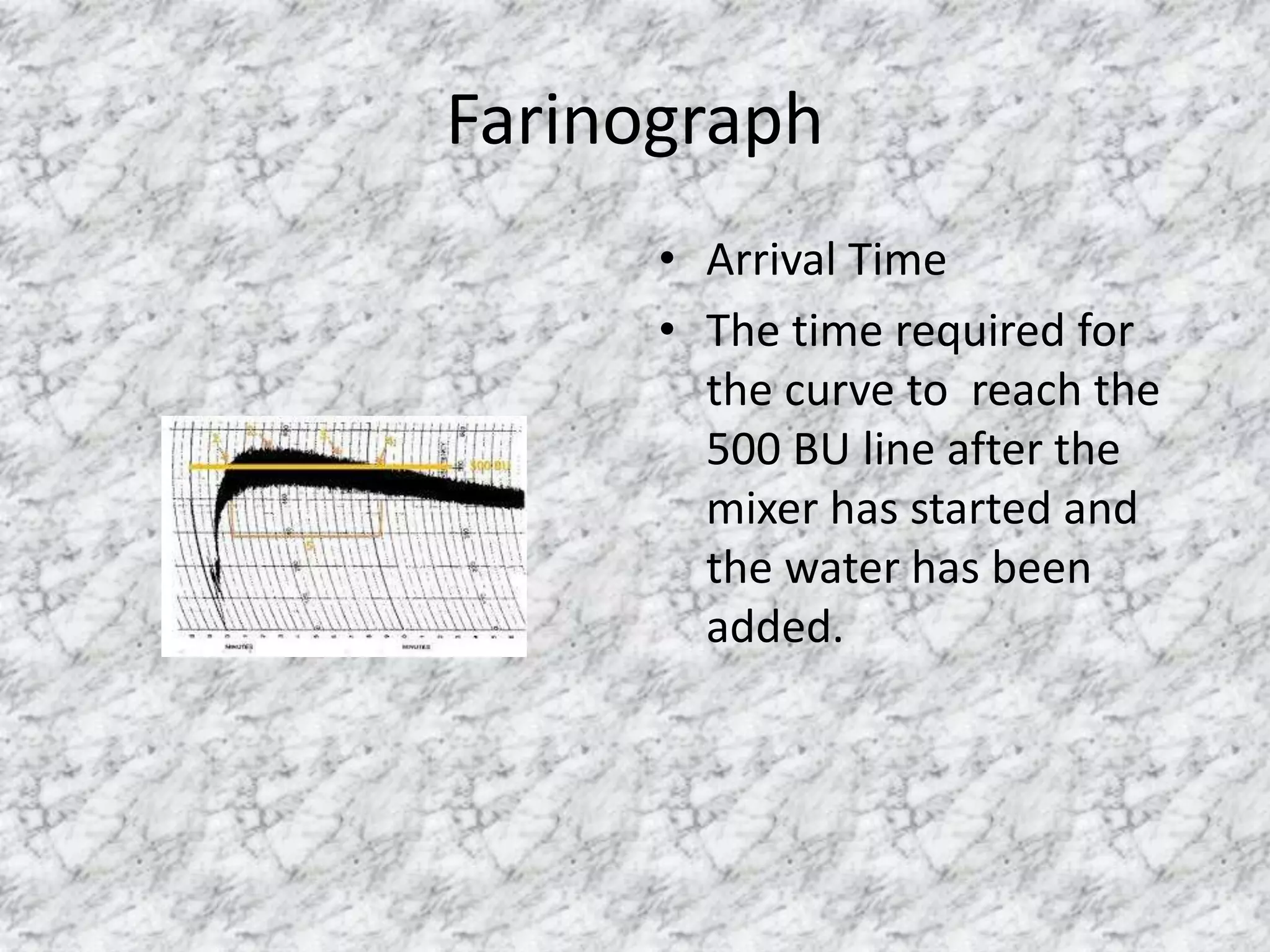
• Arrival Time
• The time required for
the curve to reach the
500 BU line after the
mixer has started and
the water has been
added.
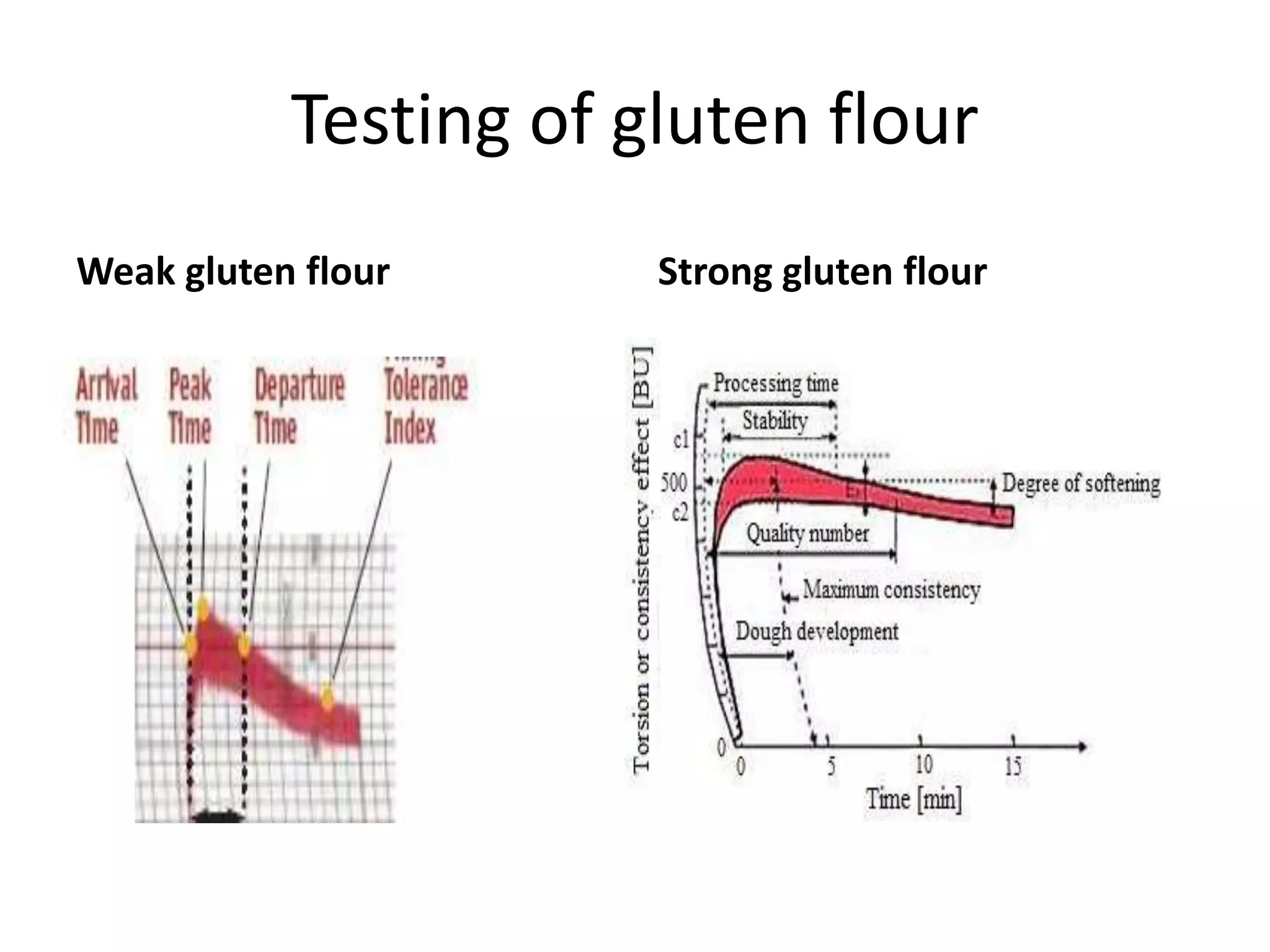
Testing of gluten flour
Weak gluten flour Strong gluten flour
Mixograph
• The mixograph test quickly analyzes small
quantities of flour for dough gluten strength
wheat breeders uses mixograph results to screen
early generation lines for dough gluten strength .
Flour water absorption measured by the
mixograph often serves as bake absorption in
bread baking tests.
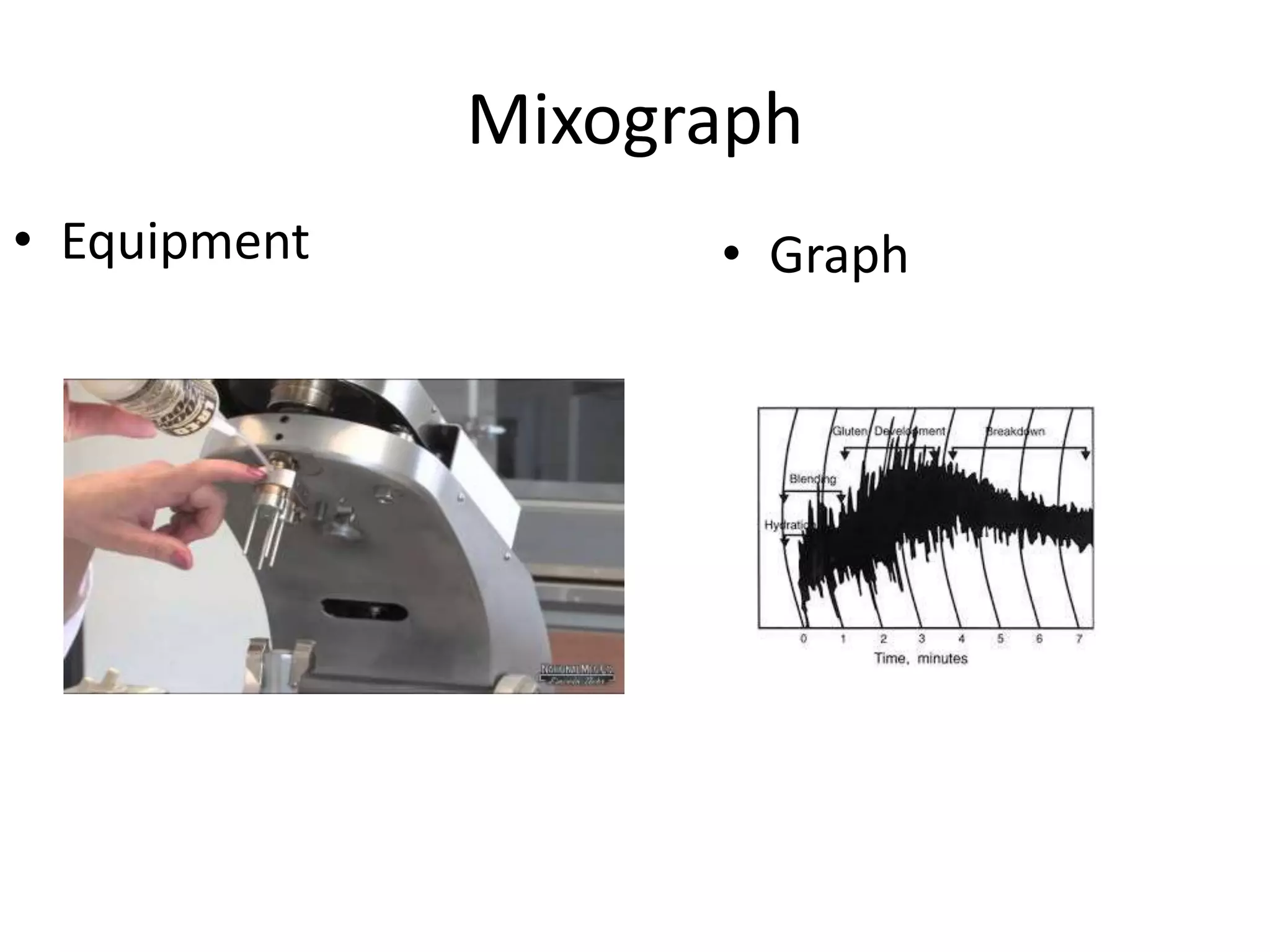
• The mixograph test measure and records the
resistence of it dough to mixing with pins.
Mixograph
• Graph
• Equipment
Alveograph
• the alveograph test provide
results that are common
specification used by flour millers
and processer to insure a more
consistent process and pdt.
• The alveograph is well suited for
measuring the dough
characterstics of weak gluten
flour with low P value (strength of
gluten) and long L value
(extensibility ) is preffered for
cake for other confectionary pdt.
W value is area under the curve
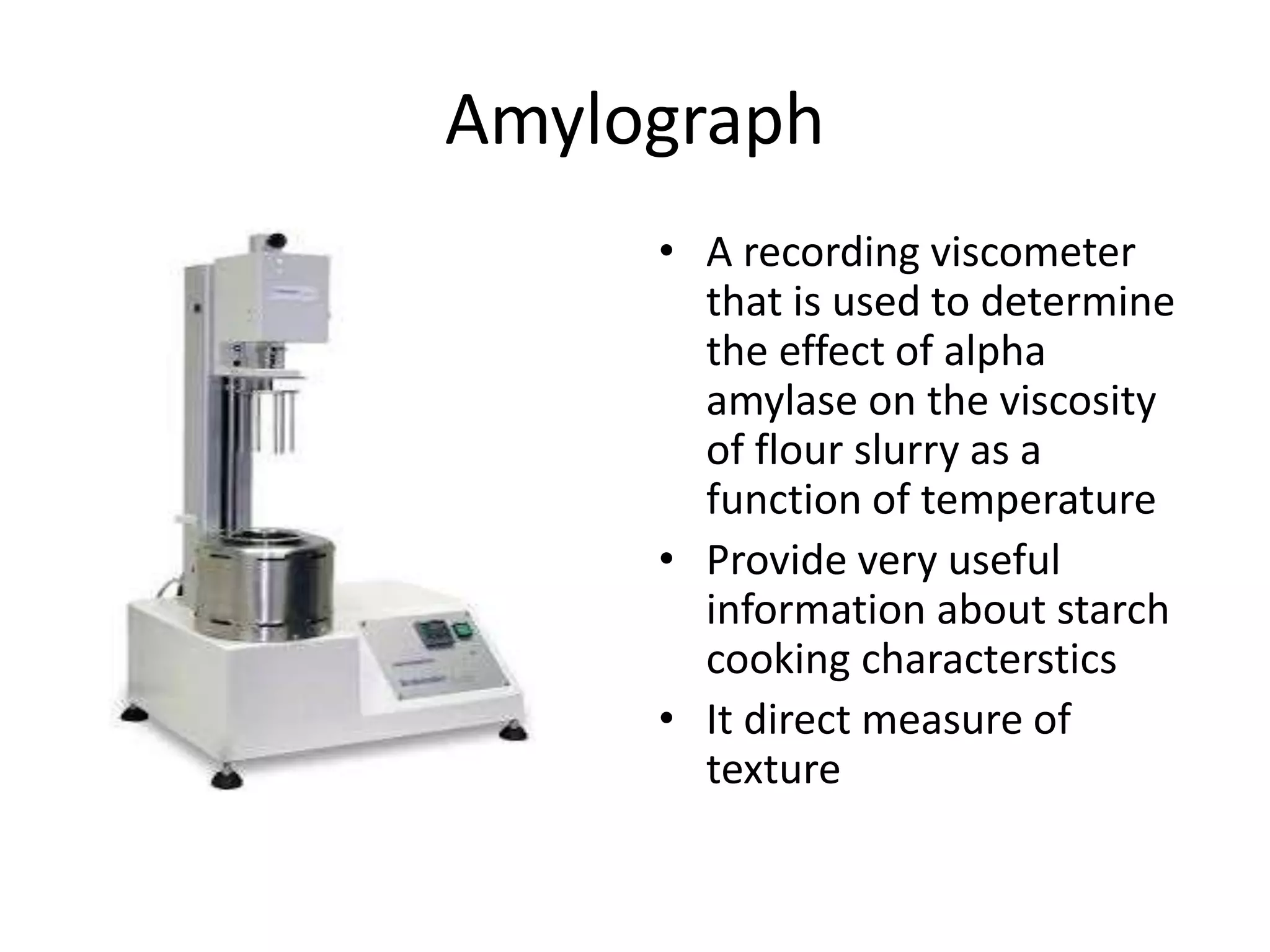
Amylograph
• A recording viscometer
that is used to determine
the effect of alpha
amylase on the viscosity
of flour slurry as a
function of temperature
• Provide very useful
information about starch
cooking characterstics
• It direct measure of
texture
Brookefield viscometer
 Measures the thickness or viscosities of
dispersion, such as flour slurries
 A measure of liquid texture.
Conclusion
Rheology is most unique form the point of
material science as they have complex
behaviour .Rheological studies are conduct to
determine this properties using various
suitable testing method and equipment .the
correlation studies on rheological properties
of dough and gluten with the baking
performance of the end product.
dough rheology ppt.pptx

dough rheology ppt.pptx

  • 1.
    RHEOLOGY OF DOUGH BY: SWETAPANDEY B.VOC. (FOOD PROCESSING AND TECHNOLOGY) SEM-5th
  • 2.
    Introduction • Importance ofdough rheology is well recognized in predicting and controlling the quality of baked products. Variation in the elastic and viscous behaviour of different wheat flour dough is considered as key quality factors in bakery applications. There are various equipment like farinograph,extensograph and mixograph that the mechanical properties of wheat flour dough play important role in handling properties of dough during processing and in the quality attribute of finish products.
  • 3.
    contents • Rheology • Rheologicalbehaviour and development of dough and gluten • Rheological measurements of dough • Farinograph • Mixograph • Alveograph • Amylograph • Brookefield viscometer • Conclusion
  • 4.
    Rheology • Rheo-to flow •Logos-science • Ology-the study • Is the study of the flow of materials that behave in an interesting or unusual manner. • A fluid is a substance that deforms continuously under the action of a shearing force.
  • 5.
    Rheological behavior anddevelopment of dough and glutin
  • 6.
    Rheological measurements ofdough • Rheometer: The rheometer is frequently used in determining the viscoelastic properties 0f dough.
  • 7.
    Farinograph • so thatthe resistance of the dough to aHow: Utilizes a high speed mixer that is designed constant mechanical shear is measured. This measurement is transferred to an oscillating dynamometer and recorded on paper in the form of graph.
  • 9.
    Principle • Fill yourflour/water suspension into the heated measuring mixer where it is subjected to a defined mechanical stress by the rotating mixer blades which are driven by a motor, carried in a pendulum bearing. • The resistance of dough against the blades, which depends on the viscosity of the dough causes an opposite deflection of the motor housing. This deflection is measured as torque and recorded and plotted on-line as a function of time in a clear color diagram.
  • 10.
    Farinograph • Arrival Time •The time required for the curve to reach the 500 BU line after the mixer has started and the water has been added.
  • 11.
    Testing of glutenflour Weak gluten flour Strong gluten flour
  • 12.
    Mixograph • The mixographtest quickly analyzes small quantities of flour for dough gluten strength wheat breeders uses mixograph results to screen early generation lines for dough gluten strength . Flour water absorption measured by the mixograph often serves as bake absorption in bread baking tests. • The mixograph test measure and records the resistence of it dough to mixing with pins.
  • 13.
  • 14.
    Alveograph • the alveographtest provide results that are common specification used by flour millers and processer to insure a more consistent process and pdt. • The alveograph is well suited for measuring the dough characterstics of weak gluten flour with low P value (strength of gluten) and long L value (extensibility ) is preffered for cake for other confectionary pdt. W value is area under the curve
  • 16.
    Amylograph • A recordingviscometer that is used to determine the effect of alpha amylase on the viscosity of flour slurry as a function of temperature • Provide very useful information about starch cooking characterstics • It direct measure of texture
  • 18.
    Brookefield viscometer  Measuresthe thickness or viscosities of dispersion, such as flour slurries  A measure of liquid texture.
  • 19.
    Conclusion Rheology is mostunique form the point of material science as they have complex behaviour .Rheological studies are conduct to determine this properties using various suitable testing method and equipment .the correlation studies on rheological properties of dough and gluten with the baking performance of the end product.