PLASMAARC
WELDING PROCESS
& APPLICATION
PRINCIPLE OF PLASMA ARC WELDING
The Plasma Arc welding process is an advanced mode of welding divided in 3 modes Micro Plasma, Medium
Plasma and Keyhole Plasma. The basic principle of plasma arc welding is an arc is maintained between the
electrode and the work piece in an inert atmosphere to fuse metal in the joint area and produce a molten weld
pool. The similarities between TIG and Plasma welding are readily apparent in that the arc is formed between a
tungsten electrode and the work piece but the uniqueness in plasma arc welding is the operating characteristic of
the plasma arc torch. The electrode is positioned within the body of the torch and the plasma forming gas is
separated from the shielding gas envelope. Thus the emanating plasma is constricted by a fine copper nozzle. The
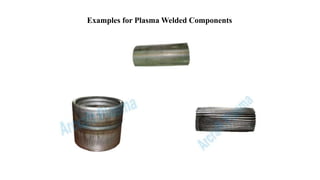
capacity of the arc is determined by the degree of constriction of the plasma. Some of the Examples for plasma
welded components and plasma weld are show below,
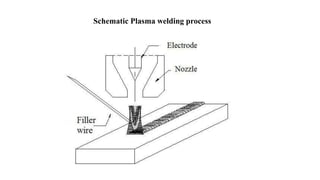
Schematic Plasma welding process
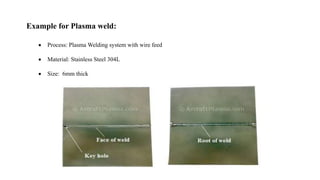
Example for Plasma weld:
 Process: Plasma Welding system with wire feed
 Material: Stainless Steel 304L
 Size: 6mm thick
Examples for Plasma Welded Components
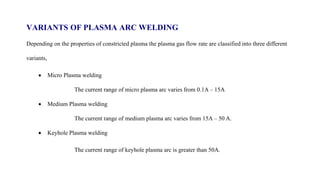
VARIANTS OF PLASMA ARC WELDING
Depending on the properties of constricted plasma the plasma gas flow rate are classified into three different
variants,
 Micro Plasma welding
The current range of micro plasma arc varies from 0.1A – 15A
 Medium Plasma welding
The current range of medium plasma arc varies from 15A – 50 A.
 Keyhole Plasma welding
The current range of keyhole plasma arc is greater than 50A.
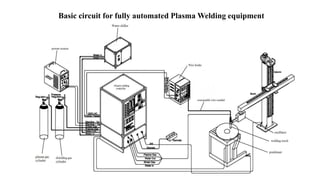
PLASMA WELDING EQUIPMENT
The plasma welding equipment consists of
1. Welding torch
2. Shielding gas cylinder
3. Plasma gas cylinder
4. Power source
5. Water chiller
6. Wire feeder
7. Welding torch
8. Job holder/positioner/automation
Basic circuit for fully automated Plasma Welding equipment
TORCHES
Micro plasma torches are available in both manual and machine mountable modes. Medium and Keyhole plasma
are mostly automated processes as it is very difficult for a welder to maintain the keyhole as well as move on the
weld seam.
The basic Plasma Welding torch consist of
1. Orifice
2. Electrode
3. Shielding gas inlet
4. Plasma gas inlet
5. Water cooling circuit ( medium plasma arc or keyhole plasma arc )
6. Powder/wire inlet
7. Electric supply cable
TYPES OF ORIFICE
The arc is transferred from the electrode to the work piece through the orifice which are of 2 types,
 Cylindrical Orifice
 Divergent Orifice
Cylindrical orifice:
The diameter of orifice is around 0.6 mm to 2.5mm. Minimum current in case of micro plasma as low as 0.1 A .The
upper limit of current is 180A.
Divergent orifice:
The diameter of orifice is around 3mm – 3.8mm depending on the thickness to be welded. The upper limit of
currents are
o For 3mm it is 280A.
o For 3.8mm it is 460A.
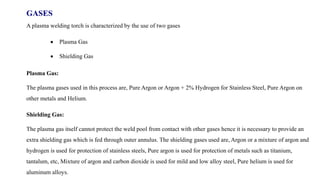
GASES
A plasma welding torch is characterized by the use of two gases
 Plasma Gas
 Shielding Gas
Plasma Gas:
The plasma gases used in this process are, Pure Argon or Argon + 2% Hydrogen for Stainless Steel, Pure Argon on
other metals and Helium.
Shielding Gas:
The plasma gas itself cannot protect the weld pool from contact with other gases hence it is necessary to provide an
extra shielding gas which is fed through outer annulus. The shielding gases used are, Argon or a mixture of argon and
hydrogen is used for protection of stainless steels, Pure argon is used for protection of metals such as titanium,
tantalum, etc, Mixture of argon and carbon dioxide is used for mild and low alloy steel, Pure helium is used for
aluminum alloys.
CHARACTERISTICS OF PLASMA ARC WELDING
 The temperature as high as 5,000 degree celsius and it is possible up to 28,000 degree celsius.
 The most significant effect of plasma constriction is that the arc becomes very directional and deep penetration
is possible.
 The electrode angle is not very important for effect on penetration but is usually maintained at 30 degree.
 The pilot arc system ensures reliable weld starting even under adverse conditions such as long welding cables,
well used electrodes, rust, oil and moisture on components (unclean components will result in a poor weld).
 An attractive controlled weld bead reducing cost / wastage of consumables with little or no ripple reducing
time and cost of post weld machining.
ADVANTAGES
 It is possible to weld up to 3mm in single pass sheared plates without edge preparation and filler wire.
 It is possible to weld up to 6mm in single pass sheared plates without edge preparation and minimum quantity of
filler wire is used as compared to TIG welding.
 Concentration and directionality of the arc is much more precise
 Complete penetration is possible through opening jet
 Quality of welding is much more high
 Less distortion because of a better use of the welding energy resulting in minimum heat affected zone (HAZ). This
results in minimum stresses in the component being welded.
 Reduction of number of passes which reduces the assembly cost by simplifying preparation and minimizing cleaning
needed during welding
APPLICATIONS
 It can be used to weld all Ferrous and non-ferrous alloys
 All kind of heat resisting steels.
 This welding process can be used to weld titanium, tantalum/niobium
 It can also weld nickel, silver, copper, gold alloys, etc.
 Aluminum is welded using AC current.
 In mass production of pipes the welding is completed by Tri plasma and TIG process.
Arcraft Plasma Equipments (I) Pvt Ltd.,
124, Diamond Industrial Estate,
Ketkipada, Dahisar (East),
Mumbai- 400068.
INDIA.
Ph : 00-91-22-28965890, 28965745, 28963247
Fax: 00-91-22-28966418

Plasma welding process & application ppt

  • 1.
  • 2.
    PRINCIPLE OF PLASMAARC WELDING The Plasma Arc welding process is an advanced mode of welding divided in 3 modes Micro Plasma, Medium Plasma and Keyhole Plasma. The basic principle of plasma arc welding is an arc is maintained between the electrode and the work piece in an inert atmosphere to fuse metal in the joint area and produce a molten weld pool. The similarities between TIG and Plasma welding are readily apparent in that the arc is formed between a tungsten electrode and the work piece but the uniqueness in plasma arc welding is the operating characteristic of the plasma arc torch. The electrode is positioned within the body of the torch and the plasma forming gas is separated from the shielding gas envelope. Thus the emanating plasma is constricted by a fine copper nozzle. The capacity of the arc is determined by the degree of constriction of the plasma. Some of the Examples for plasma welded components and plasma weld are show below,
  • 3.
  • 4.
    Example for Plasmaweld:  Process: Plasma Welding system with wire feed  Material: Stainless Steel 304L  Size: 6mm thick
  • 5.
    Examples for PlasmaWelded Components
  • 6.
    VARIANTS OF PLASMAARC WELDING Depending on the properties of constricted plasma the plasma gas flow rate are classified into three different variants,  Micro Plasma welding The current range of micro plasma arc varies from 0.1A – 15A  Medium Plasma welding The current range of medium plasma arc varies from 15A – 50 A.  Keyhole Plasma welding The current range of keyhole plasma arc is greater than 50A.
  • 7.
    PLASMA WELDING EQUIPMENT Theplasma welding equipment consists of 1. Welding torch 2. Shielding gas cylinder 3. Plasma gas cylinder 4. Power source 5. Water chiller 6. Wire feeder 7. Welding torch 8. Job holder/positioner/automation
  • 8.
    Basic circuit forfully automated Plasma Welding equipment
  • 9.
    TORCHES Micro plasma torchesare available in both manual and machine mountable modes. Medium and Keyhole plasma are mostly automated processes as it is very difficult for a welder to maintain the keyhole as well as move on the weld seam. The basic Plasma Welding torch consist of 1. Orifice 2. Electrode 3. Shielding gas inlet 4. Plasma gas inlet 5. Water cooling circuit ( medium plasma arc or keyhole plasma arc ) 6. Powder/wire inlet 7. Electric supply cable
  • 10.
    TYPES OF ORIFICE Thearc is transferred from the electrode to the work piece through the orifice which are of 2 types,  Cylindrical Orifice  Divergent Orifice Cylindrical orifice: The diameter of orifice is around 0.6 mm to 2.5mm. Minimum current in case of micro plasma as low as 0.1 A .The upper limit of current is 180A. Divergent orifice: The diameter of orifice is around 3mm – 3.8mm depending on the thickness to be welded. The upper limit of currents are o For 3mm it is 280A. o For 3.8mm it is 460A.
  • 11.
    GASES A plasma weldingtorch is characterized by the use of two gases  Plasma Gas  Shielding Gas Plasma Gas: The plasma gases used in this process are, Pure Argon or Argon + 2% Hydrogen for Stainless Steel, Pure Argon on other metals and Helium. Shielding Gas: The plasma gas itself cannot protect the weld pool from contact with other gases hence it is necessary to provide an extra shielding gas which is fed through outer annulus. The shielding gases used are, Argon or a mixture of argon and hydrogen is used for protection of stainless steels, Pure argon is used for protection of metals such as titanium, tantalum, etc, Mixture of argon and carbon dioxide is used for mild and low alloy steel, Pure helium is used for aluminum alloys.
  • 12.
    CHARACTERISTICS OF PLASMAARC WELDING  The temperature as high as 5,000 degree celsius and it is possible up to 28,000 degree celsius.  The most significant effect of plasma constriction is that the arc becomes very directional and deep penetration is possible.  The electrode angle is not very important for effect on penetration but is usually maintained at 30 degree.  The pilot arc system ensures reliable weld starting even under adverse conditions such as long welding cables, well used electrodes, rust, oil and moisture on components (unclean components will result in a poor weld).  An attractive controlled weld bead reducing cost / wastage of consumables with little or no ripple reducing time and cost of post weld machining.
  • 13.
    ADVANTAGES  It ispossible to weld up to 3mm in single pass sheared plates without edge preparation and filler wire.  It is possible to weld up to 6mm in single pass sheared plates without edge preparation and minimum quantity of filler wire is used as compared to TIG welding.  Concentration and directionality of the arc is much more precise  Complete penetration is possible through opening jet  Quality of welding is much more high  Less distortion because of a better use of the welding energy resulting in minimum heat affected zone (HAZ). This results in minimum stresses in the component being welded.  Reduction of number of passes which reduces the assembly cost by simplifying preparation and minimizing cleaning needed during welding
  • 14.
    APPLICATIONS  It canbe used to weld all Ferrous and non-ferrous alloys  All kind of heat resisting steels.  This welding process can be used to weld titanium, tantalum/niobium  It can also weld nickel, silver, copper, gold alloys, etc.  Aluminum is welded using AC current.  In mass production of pipes the welding is completed by Tri plasma and TIG process.
  • 15.
    Arcraft Plasma Equipments(I) Pvt Ltd., 124, Diamond Industrial Estate, Ketkipada, Dahisar (East), Mumbai- 400068. INDIA. Ph : 00-91-22-28965890, 28965745, 28963247 Fax: 00-91-22-28966418