


 Bs Library and information science
 Roll no. O6
 The Islamia University of Bahawalpur
 According to koontz and o Donnell, planning
is deciding in advance what to do how to do
it, when to do it and who is to do it.
 A library operates in a complex dynamic ever
changing and uncertain environment.A
library being a social organization has to take
care of increasing government regulations
union activities and increasing community
interest.A library is a growing organization
and with passage of time, some of the
libraries grow into large and complex
organizations.
 Planning is considered as the basic
managerial function. It is one of the most
important and crucial function of
management. It is an essential aspect of
management process at all executive levels.
Planning status how the goal and/or
objectives of an organization are to be
accomplished.Thus it gives direction and
meaning to its operations.
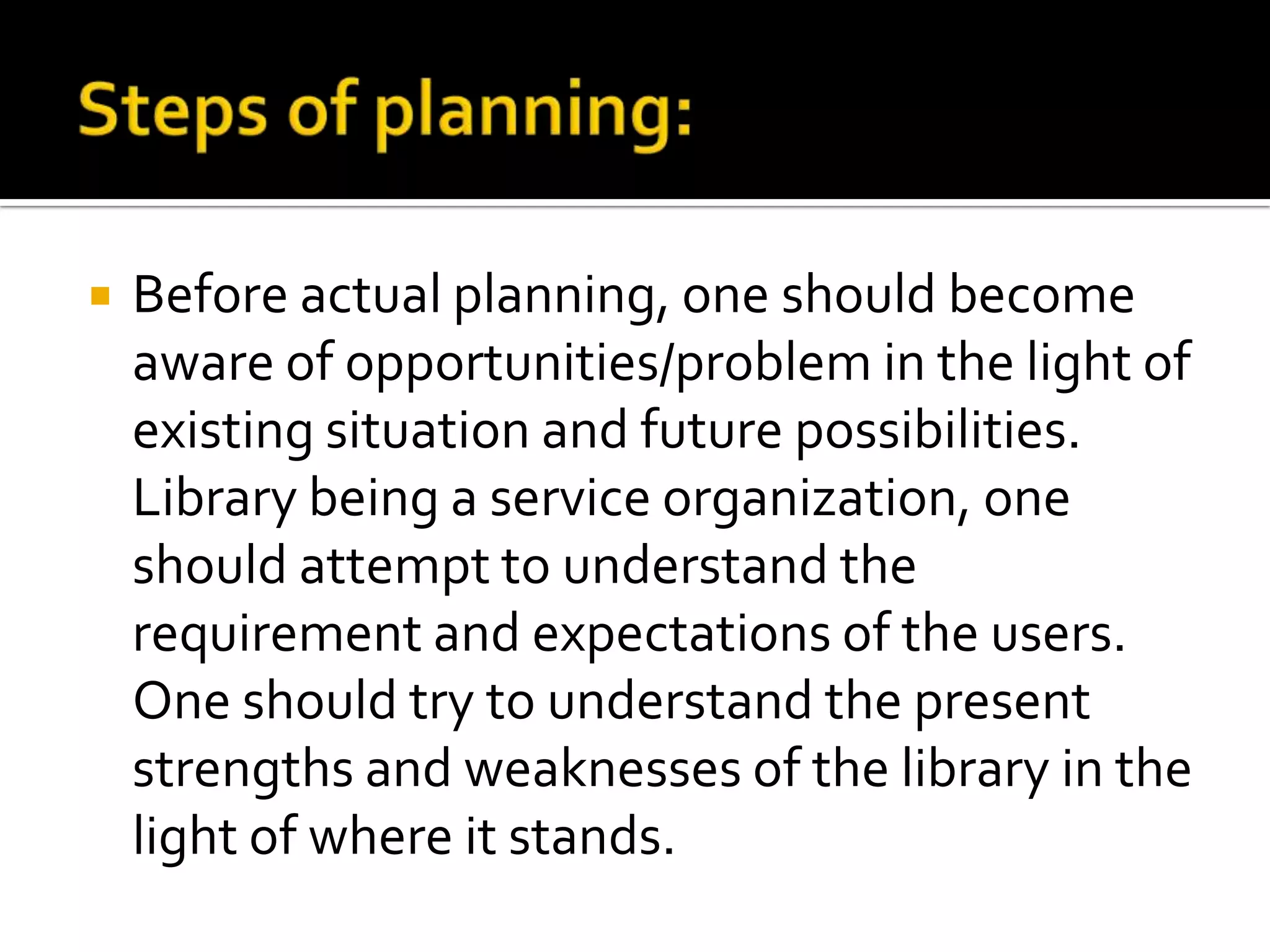
 Before actual planning, one should become
aware of opportunities/problem in the light of
existing situation and future possibilities.
Library being a service organization, one
should attempt to understand the
requirement and expectations of the users.
One should try to understand the present
strengths and weaknesses of the library in the
light of where it stands.
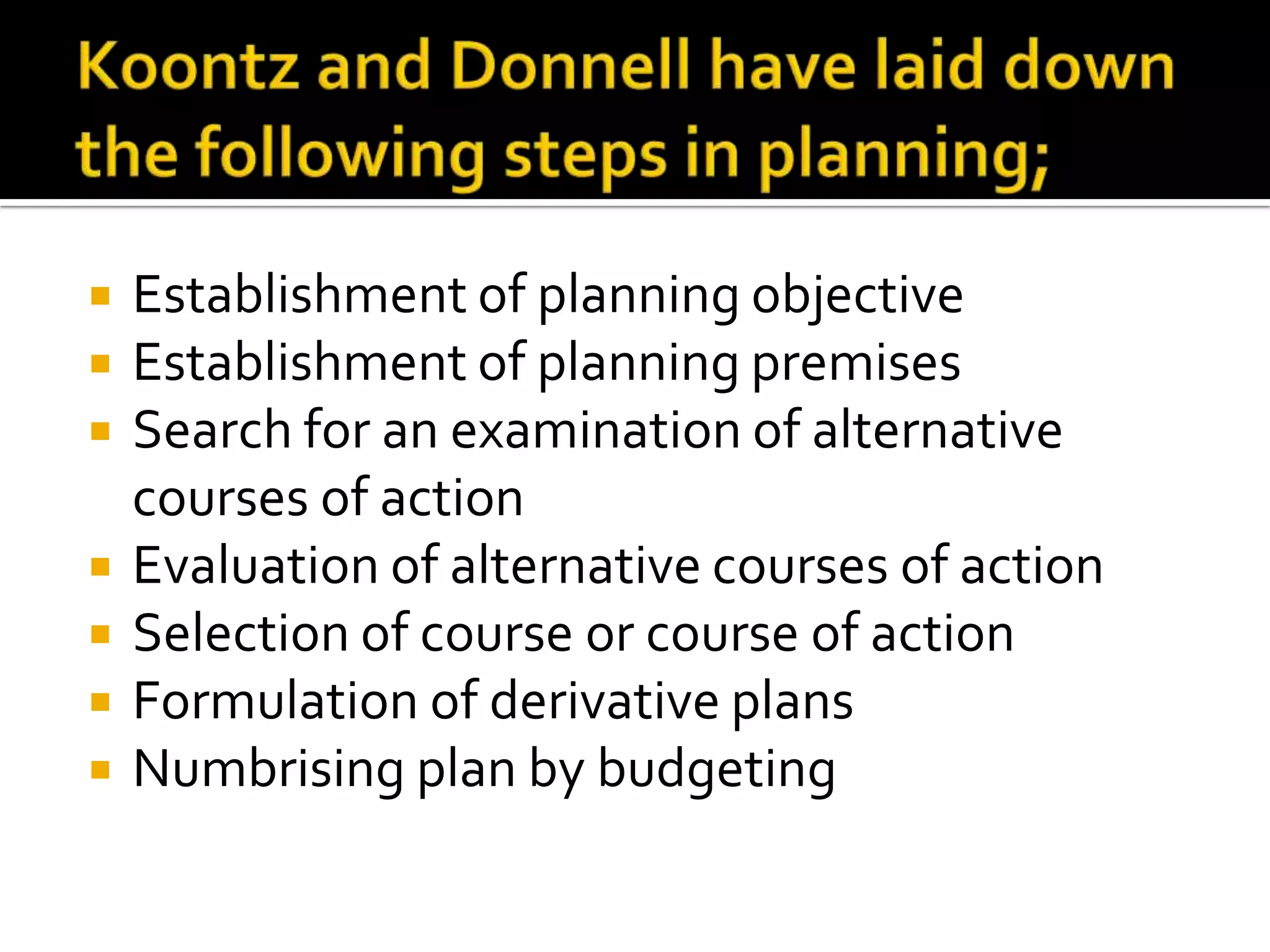
 Establishment of planning objective
 Establishment of planning premises
 Search for an examination of alternative
courses of action
 Evaluation of alternative courses of action
 Selection of course or course of action
 Formulation of derivative plans
 Numbrising plan by budgeting
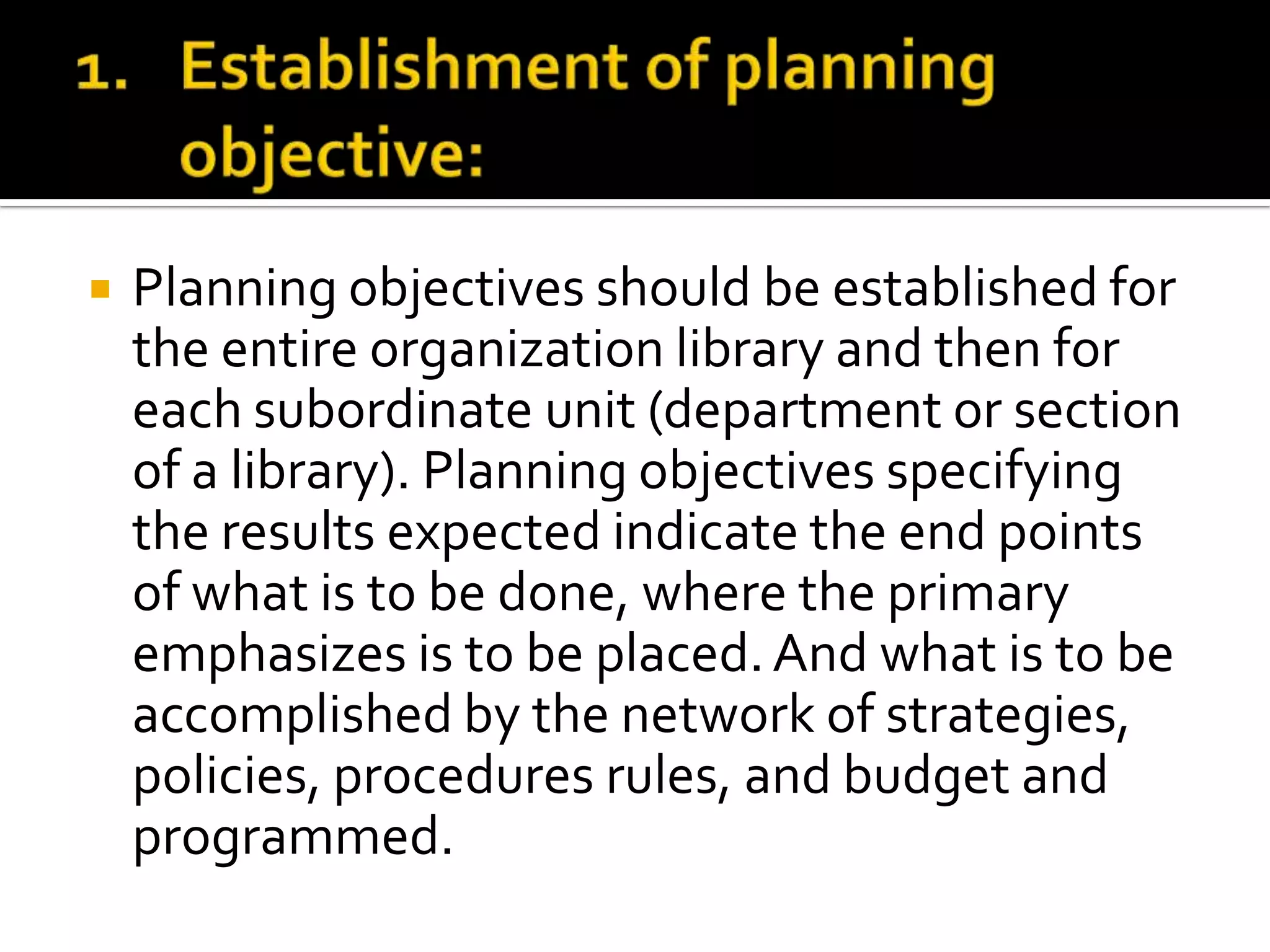
 Planning objectives should be established for
the entire organization library and then for
each subordinate unit (department or section
of a library). Planning objectives specifying
the results expected indicate the end points
of what is to be done, where the primary
emphasizes is to be placed.And what is to be
accomplished by the network of strategies,
policies, procedures rules, and budget and
programmed.
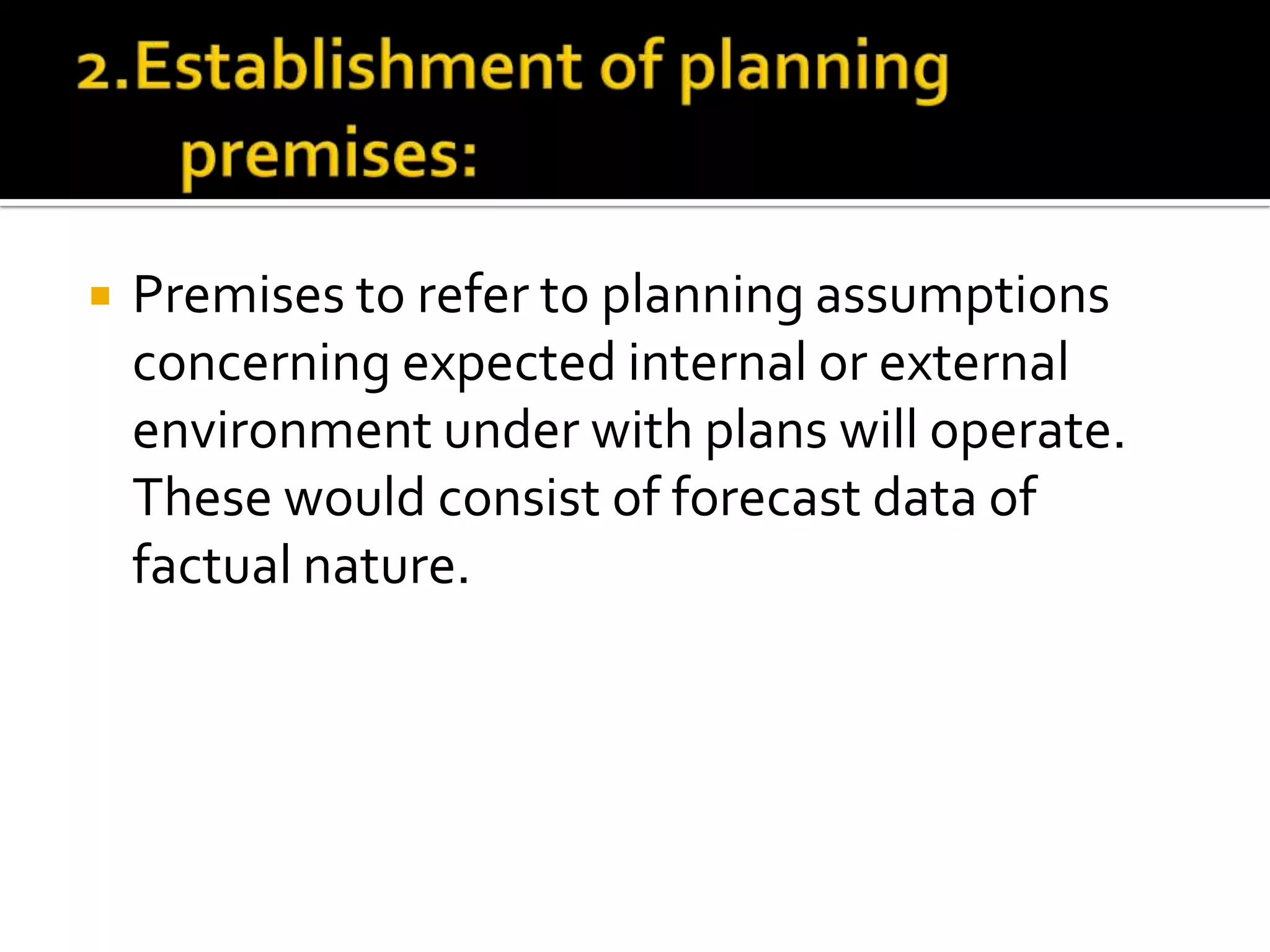
 Premises to refer to planning assumptions
concerning expected internal or external
environment under with plans will operate.
These would consist of forecast data of
factual nature.
 A number of alternative courses of action
may be available, out of these through
preliminary examination one should identify
those which seem to promise the most
fruitful possibilities.
 Out of the alternatives appearing to be
promising the most fruitful possibilities must
evaluated by weighing them in the light of
various factors involve(cost, time, material,
manpower, equipment, etc).
 At this planning the planes adopted. Incase
evaluation of alternative courses of action
reveals that there are two or more suitable
courses then the manager may take a
decision to select two or more courses rather
one best course.
 In the 5th step a plane was adopted in these
step derivative plans almost invariable, are
prepared to sport the basic plan.
 The final step consists of numberizing the
plans by converting them to budget. Each
section of a library can have its own budget,
which may form part of the total budget.
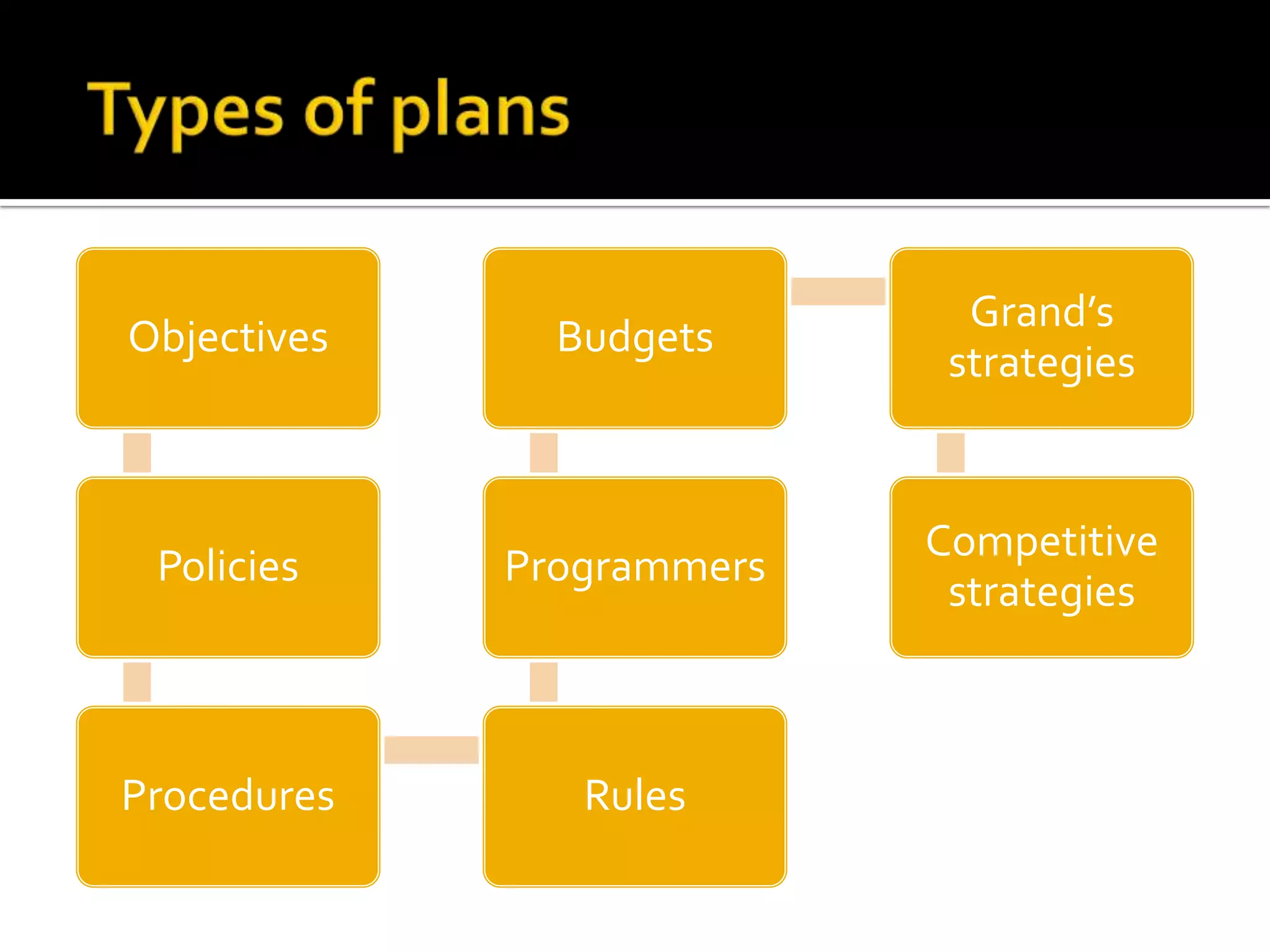
Objectives
Policies
Procedures Rules
Programmers
Budgets
Grand’s
strategies
Competitive
strategies
 Good planning is extremely important for any
enterprise.
 Without planning a library would be like a
rudderless ship.
 Unrealistic planning can lead to a disaster and
planning shortcoming can lead to failures. In
order to achieve planning, some of the
consideration needs to keep in view.These
are given below:
 There should be total commitment to
planning by managers as well as other from
top management to supervisory level.
 The purpose of every plan is to accomplish
objectives of the organization objective
should be clear verifiable and attainable.
 It is necessary to develop a sound strategy to
give direction to planning effort.
 It is essential that every manager should
attempt to establish a climate for effective
planning.
 Planning participation there should be wide
participation in planning.
 Flexibility should be in built into plans. But
cost of flexibility should be weighed against
its advantages.
 Plans should be reviewed from time to time
and modified if necessary in the light of
change in environment.
 Planning is considered a critical element toward
the success of any enterprise. Indian libraries are
at present faced with political, economic social
and ethical pressures. Prices and salary are
constantly risingly but funds being scarce,
planning becomes highly a significant. In such a
situation planning helps to combat the
uncertainties of the future and environmental
changes. It provides directions for caring out day
to day operations of a library.
Thanks you

Planning in library management

  • 1.
     Bs Libraryand information science  Roll no. O6  The Islamia University of Bahawalpur
  • 3.
     According tokoontz and o Donnell, planning is deciding in advance what to do how to do it, when to do it and who is to do it.
  • 4.
     A libraryoperates in a complex dynamic ever changing and uncertain environment.A library being a social organization has to take care of increasing government regulations union activities and increasing community interest.A library is a growing organization and with passage of time, some of the libraries grow into large and complex organizations.
  • 5.
     Planning isconsidered as the basic managerial function. It is one of the most important and crucial function of management. It is an essential aspect of management process at all executive levels. Planning status how the goal and/or objectives of an organization are to be accomplished.Thus it gives direction and meaning to its operations.
  • 6.
     Before actualplanning, one should become aware of opportunities/problem in the light of existing situation and future possibilities. Library being a service organization, one should attempt to understand the requirement and expectations of the users. One should try to understand the present strengths and weaknesses of the library in the light of where it stands.
  • 7.
     Establishment ofplanning objective  Establishment of planning premises  Search for an examination of alternative courses of action  Evaluation of alternative courses of action  Selection of course or course of action  Formulation of derivative plans  Numbrising plan by budgeting
  • 8.
     Planning objectivesshould be established for the entire organization library and then for each subordinate unit (department or section of a library). Planning objectives specifying the results expected indicate the end points of what is to be done, where the primary emphasizes is to be placed.And what is to be accomplished by the network of strategies, policies, procedures rules, and budget and programmed.
  • 9.
     Premises torefer to planning assumptions concerning expected internal or external environment under with plans will operate. These would consist of forecast data of factual nature.
  • 10.
     A numberof alternative courses of action may be available, out of these through preliminary examination one should identify those which seem to promise the most fruitful possibilities.
  • 11.
     Out ofthe alternatives appearing to be promising the most fruitful possibilities must evaluated by weighing them in the light of various factors involve(cost, time, material, manpower, equipment, etc).
  • 12.
     At thisplanning the planes adopted. Incase evaluation of alternative courses of action reveals that there are two or more suitable courses then the manager may take a decision to select two or more courses rather one best course.
  • 13.
     In the5th step a plane was adopted in these step derivative plans almost invariable, are prepared to sport the basic plan.
  • 14.
     The finalstep consists of numberizing the plans by converting them to budget. Each section of a library can have its own budget, which may form part of the total budget.
  • 15.
  • 16.
     Good planningis extremely important for any enterprise.  Without planning a library would be like a rudderless ship.  Unrealistic planning can lead to a disaster and planning shortcoming can lead to failures. In order to achieve planning, some of the consideration needs to keep in view.These are given below:
  • 17.
     There shouldbe total commitment to planning by managers as well as other from top management to supervisory level.
  • 18.
     The purposeof every plan is to accomplish objectives of the organization objective should be clear verifiable and attainable.
  • 19.
     It isnecessary to develop a sound strategy to give direction to planning effort.
  • 20.
     It isessential that every manager should attempt to establish a climate for effective planning.
  • 21.
     Planning participationthere should be wide participation in planning.
  • 22.
     Flexibility shouldbe in built into plans. But cost of flexibility should be weighed against its advantages.
  • 23.
     Plans shouldbe reviewed from time to time and modified if necessary in the light of change in environment.
  • 24.
     Planning isconsidered a critical element toward the success of any enterprise. Indian libraries are at present faced with political, economic social and ethical pressures. Prices and salary are constantly risingly but funds being scarce, planning becomes highly a significant. In such a situation planning helps to combat the uncertainties of the future and environmental changes. It provides directions for caring out day to day operations of a library.
  • 25.