Class 16: Worldwide Temperature Patterns
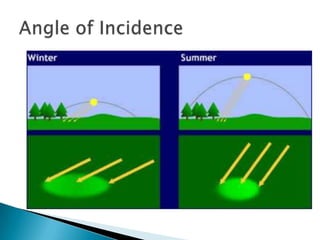
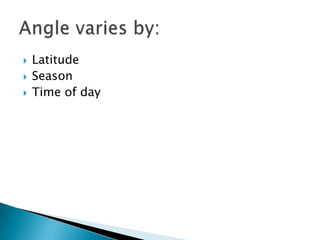
 Latitude
 Season
 Time of day
1 2 3 4
0% 0%0%0%
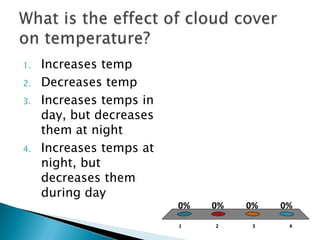
1. Increases temp
2. Decreases temp
3. Increases temps in
day, but decreases
them at night
4. Increases temps at
night, but
decreases them
during day
1 2
0%0%
1. Increases
temperature
2. Decreases
temperature
 Atmospheric Obstruction (effect of clouds,
gases, particulates)
 Daylength
 Latitudinal Radiation Balance
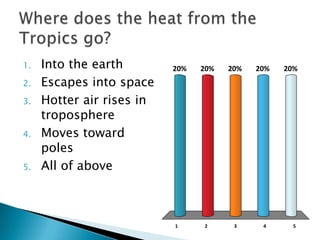
 Then where does the “extra” heat from the
tropics go?
1 2 3 4 5
20% 20% 20%20%20%1. Into the earth
2. Escapes into space
3. Hotter air rises in
troposphere
4. Moves toward
poles
5. All of above
1 2
0%0%
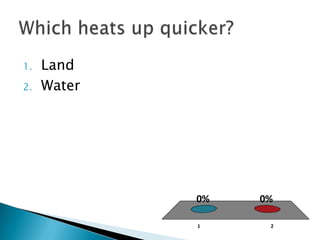
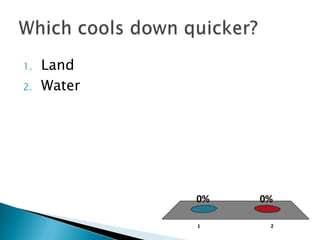
1. Land
2. Water
1 2
0%0%
1. Land
2. Water
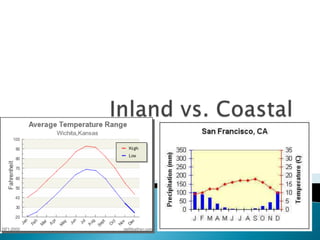
1 2
0%0%
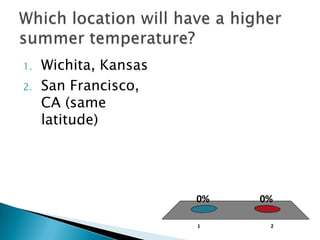
1. Wichita, Kansas
2. San Francisco,
CA (same
latitude)
1 2
0%0%
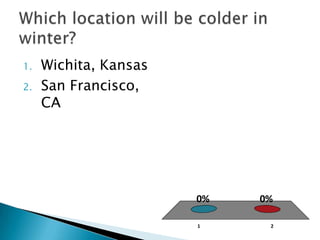
1. Wichita, Kansas
2. San Francisco,
CA
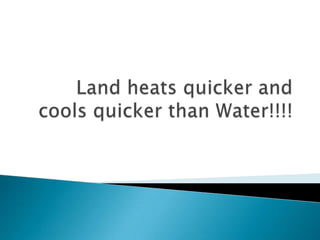
Water has a moderating effect on
temperature!
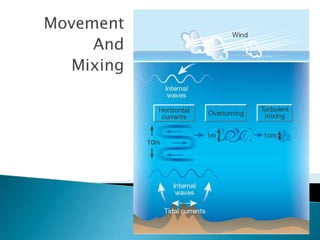
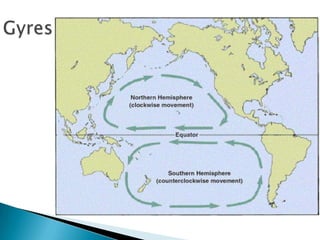
Movement
And
Mixing
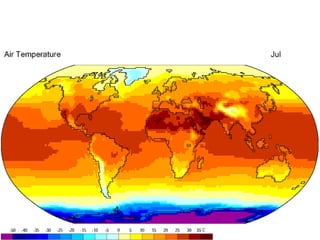
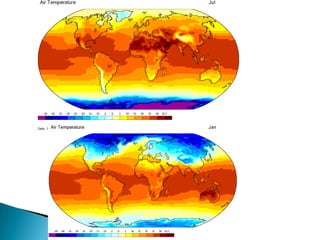
 In the next slides, look at the color-coded
isotherms (lines of equal temperature).
 What patterns do you notice in the isotherms?
 How do they change from January to July?
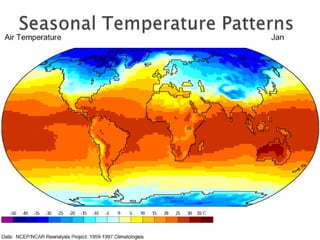
 Generally, Isotherms run east to west
 Pulled northward in July, southward in
January
 Generally, Isotherms run east to west
 Pulled northward in July, southward in January
 Areas covered by glaciers (Antarctica,
Greenland) are cold all year round
 Generally, Isotherms run east to west
 Pulled northward in July, southward in January
 Areas covered by glaciers (Antarctica, Greenland)
are cold all year round
 In southern hemisphere, land other
than Antarctica stays warmer in winter
than land in northern hemisphere.
Why?
 Generally, Isotherms run east to west
 Pulled northward in July, southward in January
 Areas covered by glaciers (Antarctica, Greenland) are cold all year
round
 In southern hemisphere, land other than Antarctica stays warmer in
winter than land in northern hemisphere. Why?
 Hottest areas in summer are interiors
of continents
 Coldest areas in winter are interiors of
continents
 Generally, Isotherms run east to west
 Pulled northward in July, southward in January
 Areas covered by glaciers (Antarctica, Greenland) are cold all year
round
 In southern hemisphere, land other than Antarctica stays warmer in
winter than land in northern hemisphere. Why?
 Hottest areas in summer are interiors of continents
 Coldest areas in winter are interiors of continents
 Locations near the water (especially on
windward side of continents) tend to
be warmer in winter and cooler in
summer

Pg tp-class16-worldwide temperature variations

  • 1.
    Class 16: WorldwideTemperature Patterns
  • 3.
  • 4.
    1 2 34 0% 0%0%0% 1. Increases temp 2. Decreases temp 3. Increases temps in day, but decreases them at night 4. Increases temps at night, but decreases them during day
  • 6.
  • 7.
     Atmospheric Obstruction(effect of clouds, gases, particulates)  Daylength  Latitudinal Radiation Balance
  • 8.
     Then wheredoes the “extra” heat from the tropics go?
  • 9.
    1 2 34 5 20% 20% 20%20%20%1. Into the earth 2. Escapes into space 3. Hotter air rises in troposphere 4. Moves toward poles 5. All of above
  • 11.
  • 12.
  • 15.
    1 2 0%0% 1. Wichita,Kansas 2. San Francisco, CA (same latitude)
  • 16.
    1 2 0%0% 1. Wichita,Kansas 2. San Francisco, CA
  • 17.
    Water has amoderating effect on temperature!
  • 22.
  • 29.
     In thenext slides, look at the color-coded isotherms (lines of equal temperature).  What patterns do you notice in the isotherms?  How do they change from January to July?
  • 33.
     Generally, Isothermsrun east to west  Pulled northward in July, southward in January
  • 34.
     Generally, Isothermsrun east to west  Pulled northward in July, southward in January  Areas covered by glaciers (Antarctica, Greenland) are cold all year round
  • 35.
     Generally, Isothermsrun east to west  Pulled northward in July, southward in January  Areas covered by glaciers (Antarctica, Greenland) are cold all year round  In southern hemisphere, land other than Antarctica stays warmer in winter than land in northern hemisphere. Why?
  • 36.
     Generally, Isothermsrun east to west  Pulled northward in July, southward in January  Areas covered by glaciers (Antarctica, Greenland) are cold all year round  In southern hemisphere, land other than Antarctica stays warmer in winter than land in northern hemisphere. Why?  Hottest areas in summer are interiors of continents  Coldest areas in winter are interiors of continents
  • 37.
     Generally, Isothermsrun east to west  Pulled northward in July, southward in January  Areas covered by glaciers (Antarctica, Greenland) are cold all year round  In southern hemisphere, land other than Antarctica stays warmer in winter than land in northern hemisphere. Why?  Hottest areas in summer are interiors of continents  Coldest areas in winter are interiors of continents  Locations near the water (especially on windward side of continents) tend to be warmer in winter and cooler in summer