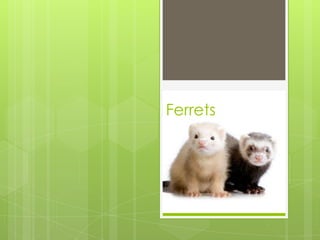
Ferrets
General Information
 Order Carnivora, Family Mustelidae
 Three species European polecat, Siberian
polecat and black footed ferret
 Related to
martens, fishers, otters, wolverines, weasels, mi
nk, badger and skunks
 Obligate carnivores designed to kill and eat
whole prey
 Tend to eat small meals throughout the day
and will hide “cache” excess food in their
dens or other hiding places
Digestive Anatomy and
Physiology
 Designed for hunting, killing and eating
prey
 Primary carnivore
 Digestive physiology matches their
required diet
Salivary Secretions
 Unlike herbivores and omnivores they do
not have enzymes in their saliva
 Ferret saliva is used primarily as a lubricant
Carbohydrates, Proteins and
Fats
 Ferrets have no dietary carbohydrate
requirement
 They have a very high need for dietary
protein and fat
 Taste buds on the ferrets tongue can
detect ( taste) amino acids in proteins
 They can also taste sweet, sour, salt and
bitter
Teeth and Jaws
 Teeth and jaws are not designed to chew
food
 They are designed to cut chunks and saliva is
used to lubricate for swallowing
 Jaw is a hinge that prevents side to side
chewing
 Bottom teeth fit inside upper teeth ( like a
scissor) so they cannot move side to side
 Commonly fed extruded diets predispose
ferrets to dental disease
Ingestion of Food
 Binocular vision
 Broad auditory range, extremely olfactory
specialization
 Excellent predators
 Very large bite force
 Dental formula I3/3 C1/1 PM3/3 M1/2
Stomach
 Very simple stomach
 Special muscles can close the entrance
and exit of the stomach
 Powerful acids are secreted by the
stomach to digest the proteins and fats of
their prey
Pancreas
 Large for their body size, makes enzymes
for digestion of animal tissue and buffers
to neutralize the stomach acids
 Insulinomas ( tumors) that secrete too
much insulin are thought to be a result of
the high carbohydrate kibble diet fed to
many pet ferrets
Liver
 Very large ( proportionally much larger
than our liver per our body size)
 Large surface area of the liver is used to
convert proteins to sugars
 Also produces a large amount of bile salts
to help digest fats
Intestine
 Short and simple
 No ceacum
 Animal tissue liquifies as it is digested so the
intestine is not highly developed in this strict
carnivore
 Surrounded by a highly developed lymphatic
system that protects from bacterial infection
from the diet and helps transport digested
fats
 Meals go through the GI tract in about 4 hours
Digestive System Notes
 Very short intestinal tract, lacks a cecum and
ileocolic valve
 Under vagal and sacral innervation
 Gut flora is simple, GI upset or diarrhea after
antibiotic use is rare
 Do have ability to vomit but don’t usually vomit
 Prolonged fasting greater than 3-6 hours is not
required or recommended
 Ferrets with insulinomas become hypoglycemic
much faster, even less than 3 hours, and require
special pre-operative care
Nutrition
 In the wild mostly small and medium sized
mammals, small amount of birds, reptile,
amphibians, insects worms and fish
 Due to their inefficient GI system, ferrets
require a very concentrated diet high in
protein and fat, low in fiber and
carbohydrates
 fat, when metabolized, releases twice as
much energy as proteins and therefore should
be the main source of calories in the ferrets
diet
Dry Kibble for Ferrets
 Not the correct diet for ferrets but easier
for owners
 Majority contain a higher level of grains
which are required for kibble shape and
stability
 Heating and processing can potentially
make them less digestible
The Perils of Dry Kibble
 Urolithiasis- due to diets high in plant
protein
 Insulinomas- related to carbohydrates in
dry kibble
 Excessive dental wear- dry kibble leads to
excessive dental wear and tartar
Feeding whole prey or raw
diet
 Potential risks of raw diets, such as
bacterial ( Salmonella)
 Parasitic contamination which can be
zoonotic
 Risk of breakdown of diet due to
mishandling of diet, ( not refrigerated etc)
Keys to a Proper Ferret Diet
 Kibble ( Dry or Semi Moist)
- Crude protein of >35% on a dry matter basis
- Crude fat> 20% on a dry matter basis
- Limited amounts of fiber and carbohydrates
- First 2-3 macro ingredient animal origin, ex
chicken, egg, fish meal
- Limited grains, (small amounts which may
represent carbohydrates found in gut
contents of prey species
Treats/Supplemental foods
 Good
- Treats with animal proteins as primary
ingredients
- Cooked or fresh raw organ and muscle
meat
- Raw or cooked chicken
- Crickets or mealworms from reliable
source
- Prey items such as mice and small frogs
Treats/Supplements
 BAD
Most commercial treats
- They contain plant based ingredients as
well as sweeteners
- Raisins or excessive fruit
Water
 Unlimited, clean, fresh
 Require about three times as much water
as dry matter intake
 Use a bowl and sipper bottle
 May play in bowl so use heavy crockery
 Do not put supplements or additives in
water as it can reduce consumption
Fiber
 Small amounts are essential to the health
of the ferrets GI tract
 Helps flush hair out of the system and
prevent hairballs
 Firms up stool and helps with elimination
Health Issues
 Relatively free of health problems in early
years of life
 Live 6-10 years on average
Aleutian Disease Virus
 Parvovirus
 Chronic, incurable
 Nervous system disorders, organ
failure, chronic wasting
 Infected ferrets must be quarantined
 May be misinterpreted as a dietary
problem
Dental Disease
 About 90% of pet ferrets, ranging from mild
gingivitis to extreme periodontal disease
 Can lead to organ disease and life
threatening infections
 Teeth are not penetrating tissue so they are
not being cleaned leading to tartar buildup
 Require tooth brushing and dental cleanings
Insulinoma
 Pancreatic tumor releasing too much
insulin
 Linked to consumption of carbohydrates
in extruded kibble diets
 Need to be surgically removed
 Symptoms result of hypoglycemia ( low
blood sugar)
THE END

Ferrets

  • 1.
  • 2.
    General Information  OrderCarnivora, Family Mustelidae  Three species European polecat, Siberian polecat and black footed ferret  Related to martens, fishers, otters, wolverines, weasels, mi nk, badger and skunks  Obligate carnivores designed to kill and eat whole prey  Tend to eat small meals throughout the day and will hide “cache” excess food in their dens or other hiding places
  • 3.
    Digestive Anatomy and Physiology Designed for hunting, killing and eating prey  Primary carnivore  Digestive physiology matches their required diet
  • 4.
    Salivary Secretions  Unlikeherbivores and omnivores they do not have enzymes in their saliva  Ferret saliva is used primarily as a lubricant
  • 5.
    Carbohydrates, Proteins and Fats Ferrets have no dietary carbohydrate requirement  They have a very high need for dietary protein and fat  Taste buds on the ferrets tongue can detect ( taste) amino acids in proteins  They can also taste sweet, sour, salt and bitter
  • 6.
    Teeth and Jaws Teeth and jaws are not designed to chew food  They are designed to cut chunks and saliva is used to lubricate for swallowing  Jaw is a hinge that prevents side to side chewing  Bottom teeth fit inside upper teeth ( like a scissor) so they cannot move side to side  Commonly fed extruded diets predispose ferrets to dental disease
  • 8.
    Ingestion of Food Binocular vision  Broad auditory range, extremely olfactory specialization  Excellent predators  Very large bite force  Dental formula I3/3 C1/1 PM3/3 M1/2
  • 9.
    Stomach  Very simplestomach  Special muscles can close the entrance and exit of the stomach  Powerful acids are secreted by the stomach to digest the proteins and fats of their prey
  • 10.
    Pancreas  Large fortheir body size, makes enzymes for digestion of animal tissue and buffers to neutralize the stomach acids  Insulinomas ( tumors) that secrete too much insulin are thought to be a result of the high carbohydrate kibble diet fed to many pet ferrets
  • 11.
    Liver  Very large( proportionally much larger than our liver per our body size)  Large surface area of the liver is used to convert proteins to sugars  Also produces a large amount of bile salts to help digest fats
  • 12.
    Intestine  Short andsimple  No ceacum  Animal tissue liquifies as it is digested so the intestine is not highly developed in this strict carnivore  Surrounded by a highly developed lymphatic system that protects from bacterial infection from the diet and helps transport digested fats  Meals go through the GI tract in about 4 hours
  • 13.
    Digestive System Notes Very short intestinal tract, lacks a cecum and ileocolic valve  Under vagal and sacral innervation  Gut flora is simple, GI upset or diarrhea after antibiotic use is rare  Do have ability to vomit but don’t usually vomit  Prolonged fasting greater than 3-6 hours is not required or recommended  Ferrets with insulinomas become hypoglycemic much faster, even less than 3 hours, and require special pre-operative care
  • 14.
    Nutrition  In thewild mostly small and medium sized mammals, small amount of birds, reptile, amphibians, insects worms and fish  Due to their inefficient GI system, ferrets require a very concentrated diet high in protein and fat, low in fiber and carbohydrates  fat, when metabolized, releases twice as much energy as proteins and therefore should be the main source of calories in the ferrets diet
  • 15.
    Dry Kibble forFerrets  Not the correct diet for ferrets but easier for owners  Majority contain a higher level of grains which are required for kibble shape and stability  Heating and processing can potentially make them less digestible
  • 16.
    The Perils ofDry Kibble  Urolithiasis- due to diets high in plant protein  Insulinomas- related to carbohydrates in dry kibble  Excessive dental wear- dry kibble leads to excessive dental wear and tartar
  • 17.
    Feeding whole preyor raw diet  Potential risks of raw diets, such as bacterial ( Salmonella)  Parasitic contamination which can be zoonotic  Risk of breakdown of diet due to mishandling of diet, ( not refrigerated etc)
  • 18.
    Keys to aProper Ferret Diet  Kibble ( Dry or Semi Moist) - Crude protein of >35% on a dry matter basis - Crude fat> 20% on a dry matter basis - Limited amounts of fiber and carbohydrates - First 2-3 macro ingredient animal origin, ex chicken, egg, fish meal - Limited grains, (small amounts which may represent carbohydrates found in gut contents of prey species
  • 19.
    Treats/Supplemental foods  Good -Treats with animal proteins as primary ingredients - Cooked or fresh raw organ and muscle meat - Raw or cooked chicken - Crickets or mealworms from reliable source - Prey items such as mice and small frogs
  • 21.
    Treats/Supplements  BAD Most commercialtreats - They contain plant based ingredients as well as sweeteners - Raisins or excessive fruit
  • 23.
    Water  Unlimited, clean,fresh  Require about three times as much water as dry matter intake  Use a bowl and sipper bottle  May play in bowl so use heavy crockery  Do not put supplements or additives in water as it can reduce consumption
  • 24.
    Fiber  Small amountsare essential to the health of the ferrets GI tract  Helps flush hair out of the system and prevent hairballs  Firms up stool and helps with elimination
  • 25.
    Health Issues  Relativelyfree of health problems in early years of life  Live 6-10 years on average
  • 26.
    Aleutian Disease Virus Parvovirus  Chronic, incurable  Nervous system disorders, organ failure, chronic wasting  Infected ferrets must be quarantined  May be misinterpreted as a dietary problem
  • 27.
    Dental Disease  About90% of pet ferrets, ranging from mild gingivitis to extreme periodontal disease  Can lead to organ disease and life threatening infections  Teeth are not penetrating tissue so they are not being cleaned leading to tartar buildup  Require tooth brushing and dental cleanings
  • 28.
    Insulinoma  Pancreatic tumorreleasing too much insulin  Linked to consumption of carbohydrates in extruded kibble diets  Need to be surgically removed  Symptoms result of hypoglycemia ( low blood sugar)
  • 29.