Therapeutic Nutrition III:
Lower Urinary Tract Disease
Gastrointestinal Disease
Liver Disease
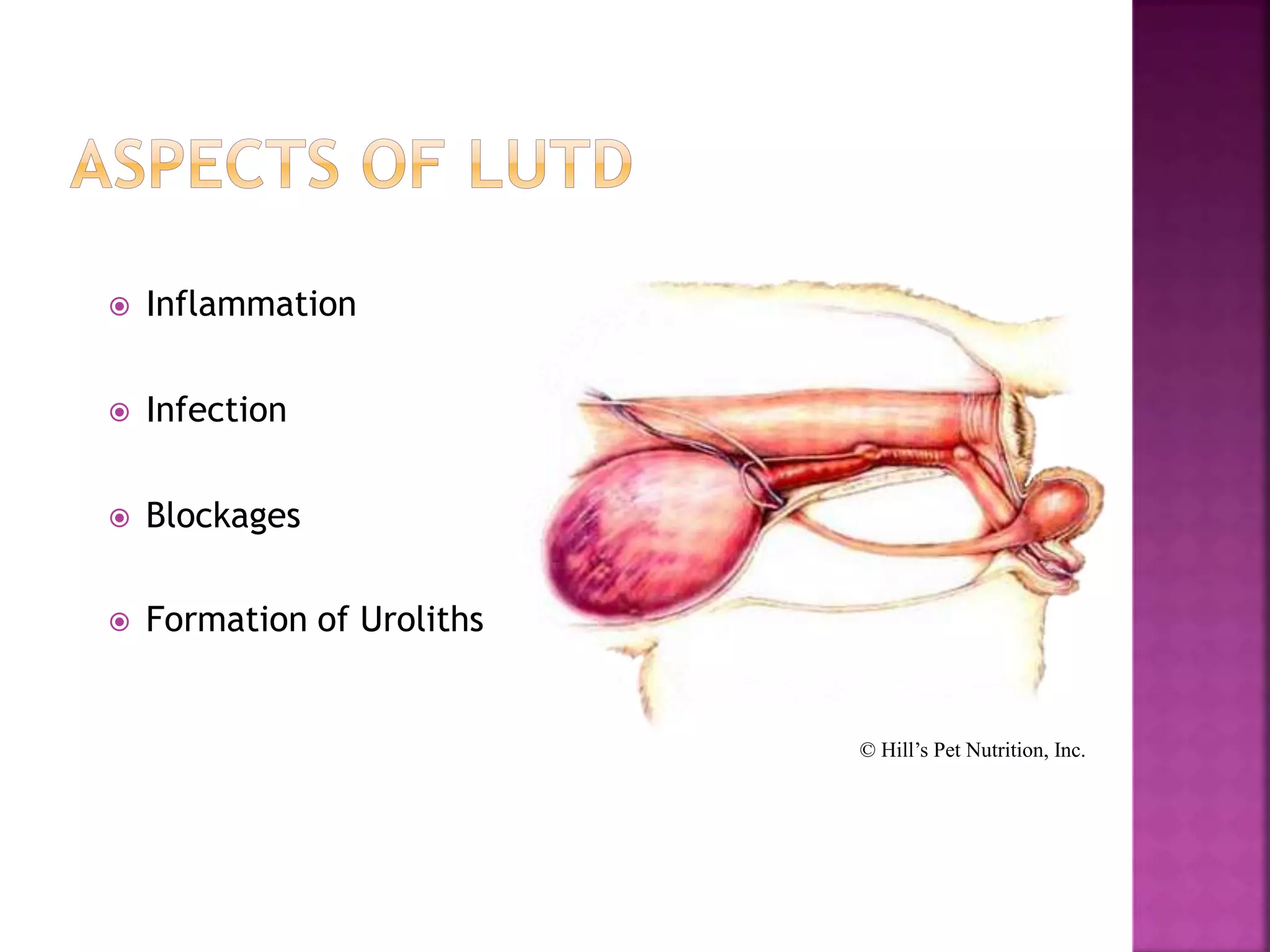
 Inflammation
 Infection
 Blockages
 Formation of Uroliths
© Hill’s Pet Nutrition, Inc.
 Decrease specific gravity of urine ( make
urine very dilute)
 Reduce stone precursors in the diet
 Increase stone inhibitors
 Maintain urine ph necessary to keep crystals
in solution so they pass in urine and don’t
form stones
1. Identify urolith type ( critical for correct
treatment )
2. Dissolve with diet (struvite only) or remove
stone
3. Treat infection if present
4. Target appropriate pH of urine to prevent
recurrence or dissolve current stone ( struvite)
5. Increase water intake in order to promote
diluted urine ( by diet or water fountains)
Water, water, water!
 Increases urine volume
 More dilute urine
 Decreased mineral concentration in urine
 Increased frequency of urinating
 Decreased urine retention
 Less time for crystals to form
DIETARY MANAGEMENT ( required for life)
 Marginal dehydration over a lifetime puts
tremendous strain on the kidneys causing
them to wear out, and kidney failure is the
most common cause of illness and death in
elderly cats
 Increase the amount of canned food ( water in
the food, does not increase drinking)
 Multiple bowls of fresh water around the house
and offering a pet fountain
 Research has shown that the most successful way
to get cats to consume more water is to feed
them in an automatic timed feeder. Set it so that
if gives very small amounts of food on a regular
timed interval. Cats learn to come to the feeder
when it is about to release food and wait.
Provide fresh water source near this feeder.
-Magnesium ammonium phosphate
-Form in alkaline urine
Struvite in Dogs
- Rare in absence of infection ( can culture stone)
- Pure stones can often be dissolved with diet
- Dietary prevention rarely needed
Struvite in Cats
- Majority are sterile not associated with infection
- Dietary prevention very important
- Pure stones can often be dissolved with diet
 Can take up to 20 weeks
 Reduce urine specific gravity 1.020 dogs and
1.025 cats plus ph <6.2
 Reduce protein and phosphorus
 Address bacterial infection in dogs
 Radiograph monthly
 If no change in 4-6 months may need surgery
to remove stones
 History of pancreatitis
 Hypertension or cardiac disease
 Urinary obstruction
 Renal failure
 Growing, pregnant or lactating animals
 Severe clinical signs
Dogs
- Royal Canin SO canned or dry
- Hills SD canned ( very low protein)
Cats
- Hills SD canned or dry
- Purina UR st/ox
- Royal canin SO canned and dry ( also has a
low calorie version)
- Use preventative diet in cats not dogs
 Calcium oxalate monohydrate or calcium
oxalate dehydrate
 Most soluble in alkaline ph
 Recurrence rate up to 50% in 3 years
 Precursors high oxalate foods like soy, beets,
chard, spinach, nuts, corn wheat plus
metabolism of tryptophan, ascorbic acid and
glycine
 Dogs
- obesity, hypercalcemia,
hyperadrenocorticism, steroid use, diuretic
use
Cats
- Acidifying diets, hyperthyroidism,
hyperparathyroidism, hypercalcemia
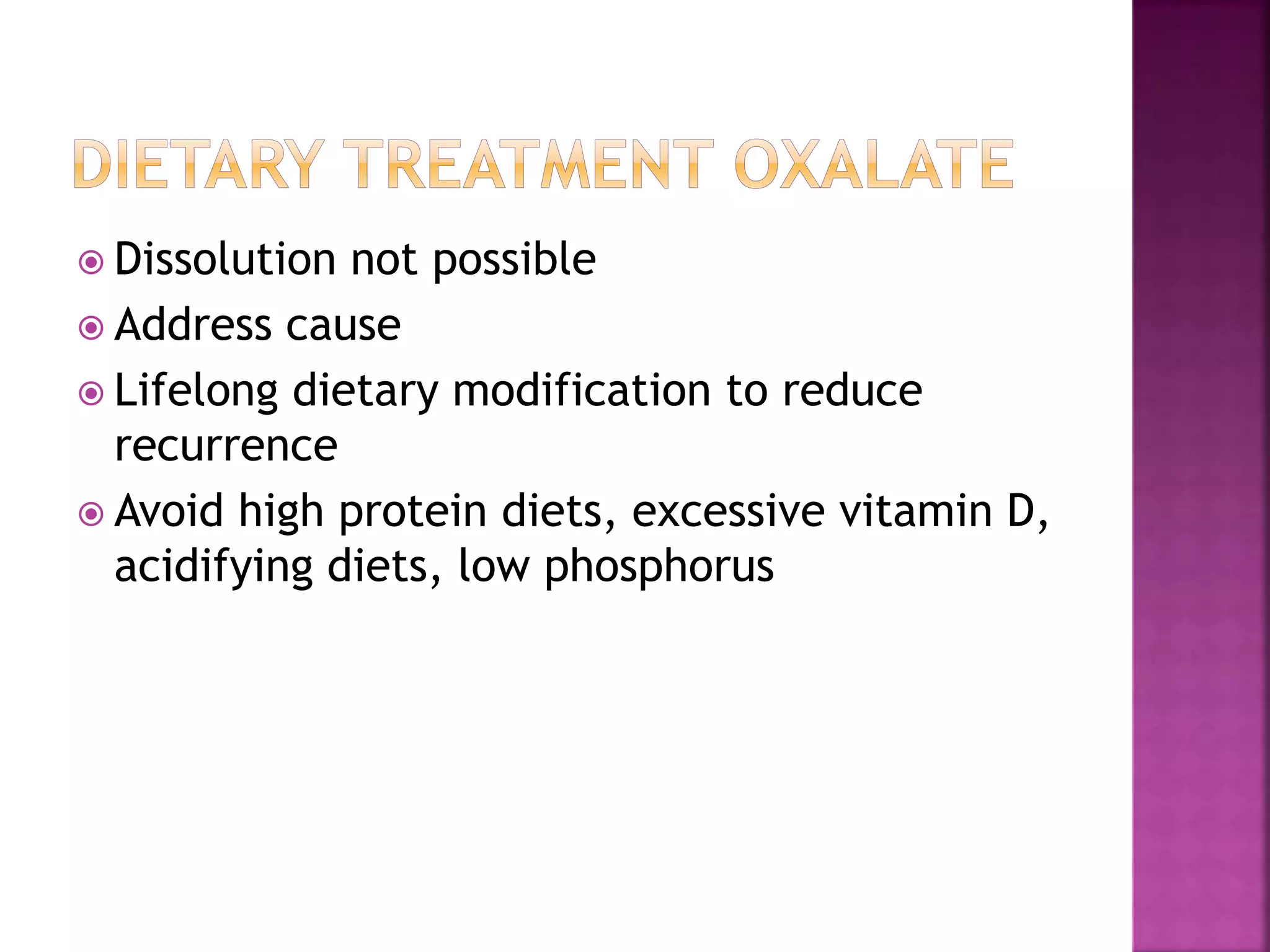
 Dissolution not possible
 Address cause
 Lifelong dietary modification to reduce
recurrence
 Avoid high protein diets, excessive vitamin D,
acidifying diets, low phosphorus
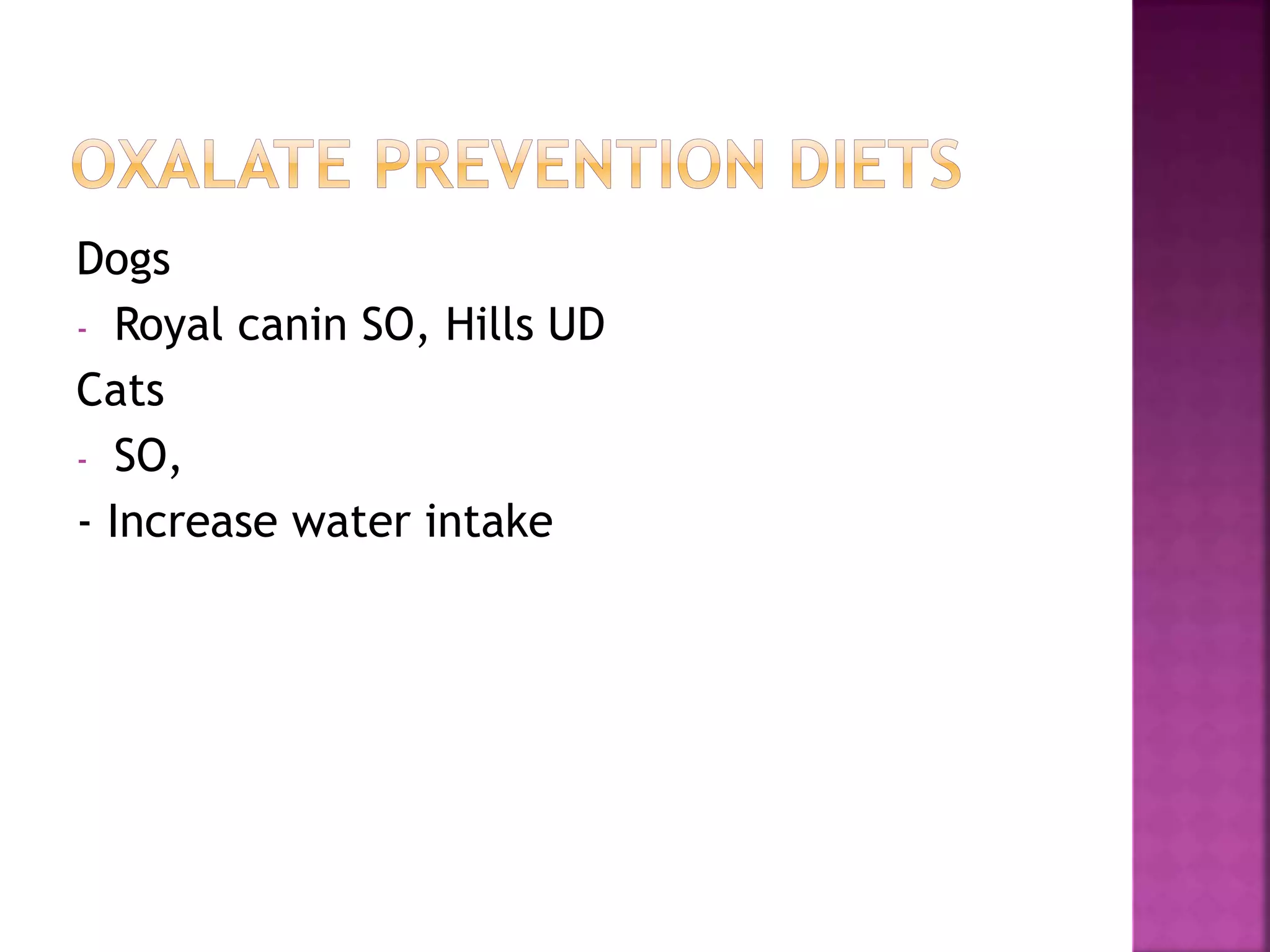
Dogs
- Royal canin SO, Hills UD
Cats
- SO,
- Increase water intake
Struvite Calcium Oxalate
Usually associated with
bacterial urinary tract
infection
High sodium, calcium and
oxalate correlation
Source: University of California – San Diego
Struvite Calcium Oxalate
Persistent alkaline urine pH Persistent acidic urine pH
Source: University of California – San Diego
Canine Profile
Average
Age
Gender Breeds
Calcium
Oxalate
8 years
Males >
Female
Min. Schnauzers,
Min. Poodles,
Yorkies, Bichons,
Shih Tzus
Struvite 6 years
Female>
Male
Min. Schnauzers,
Min. Poodles,
Cocker Spaniels,
Bichons
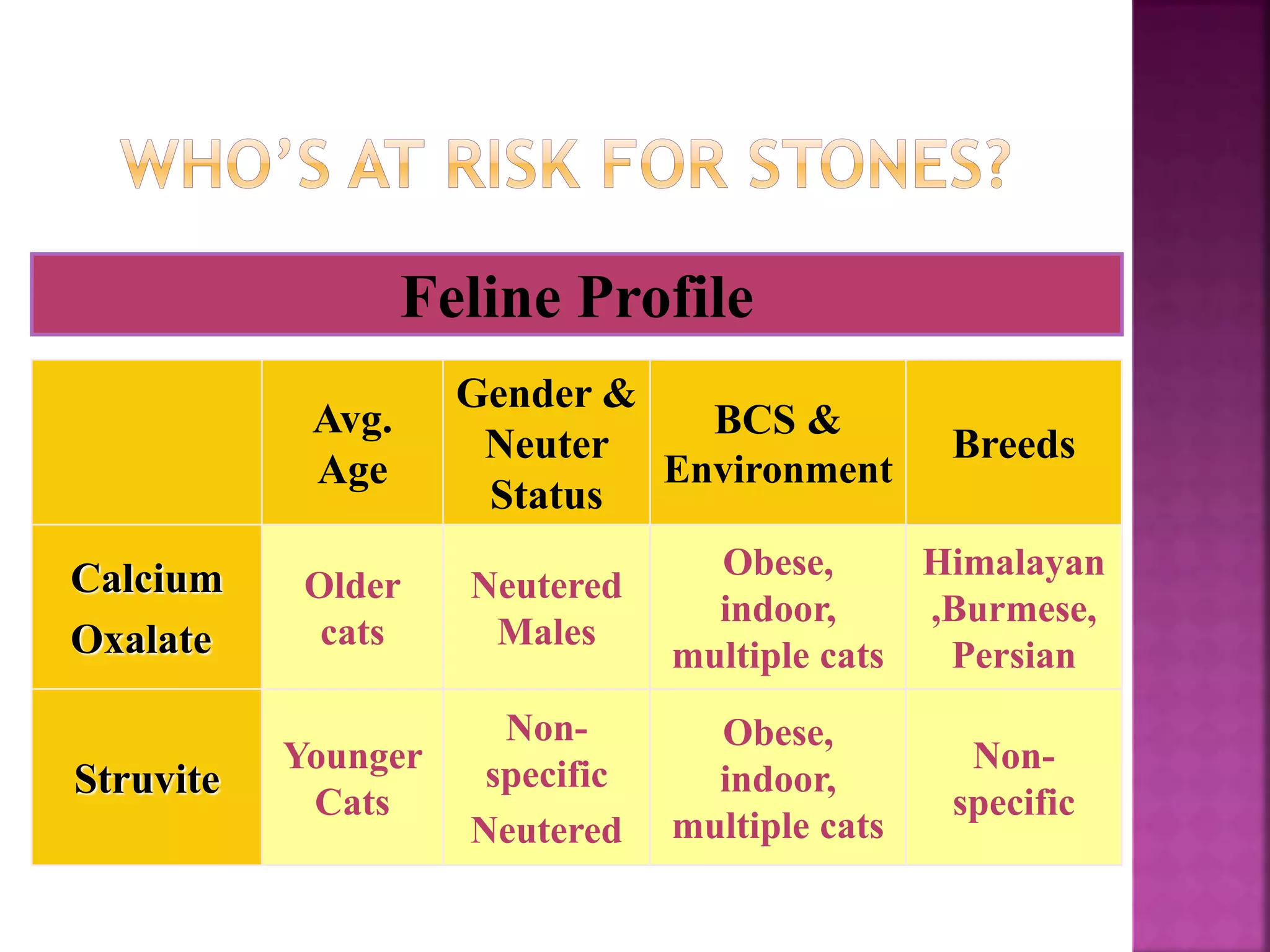
Feline Profile
Avg.
Age
Gender &
Neuter
Status
BCS &
Environment
Breeds
Calcium
Oxalate
Older
cats
Neutered
Males
Obese,
indoor,
multiple cats
Himalayan
,Burmese,
Persian
Struvite
Younger
Cats
Non-
specific
Neutered
Obese,
indoor,
multiple cats
Non-
specific
Two causes
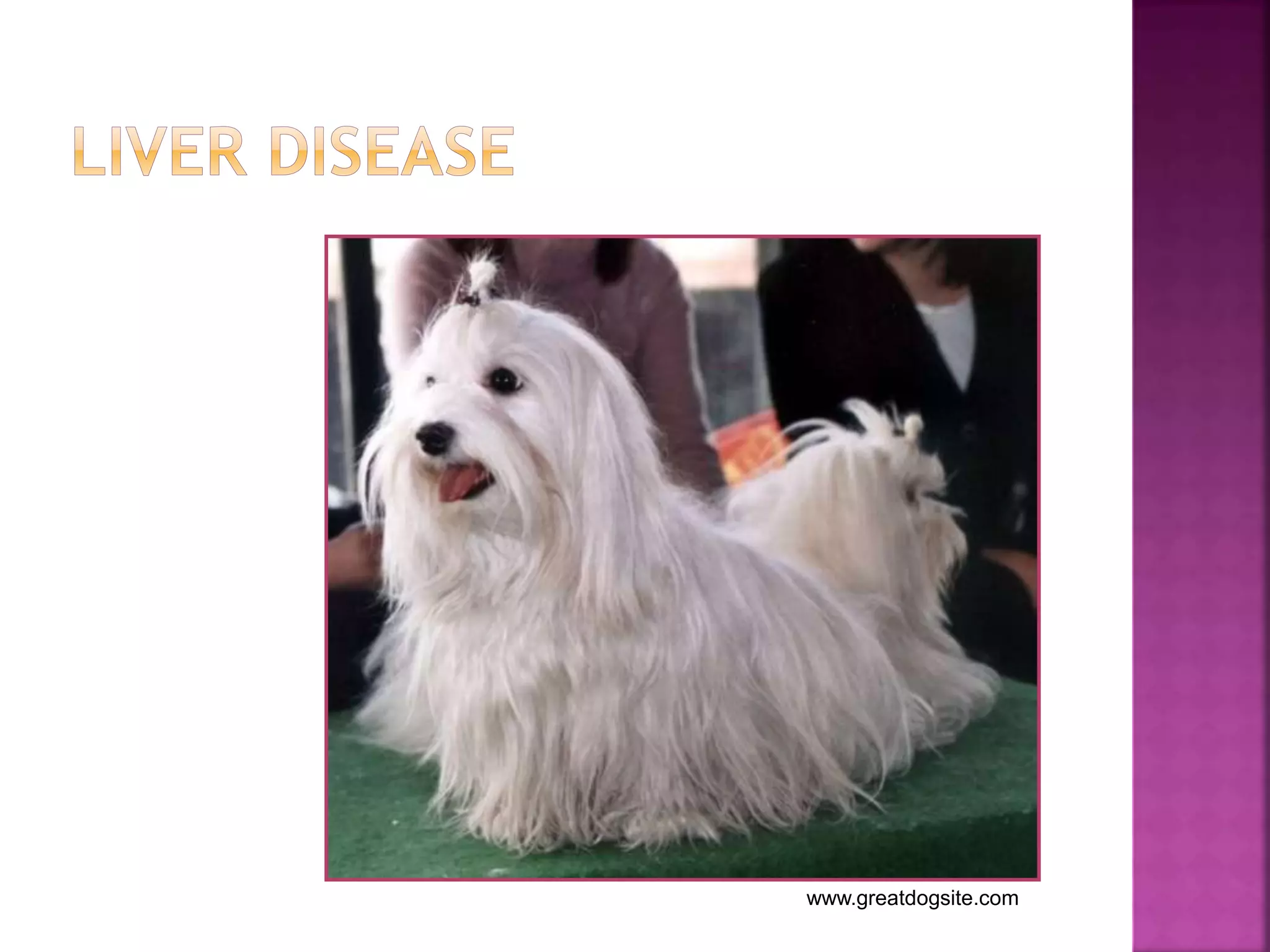
1. Genetic defect 2. liver disease
Breed predisposition
- Yorkie, Maltese due to portosystemic shunt
- Dalmation
- Bulldog
 Life long
 Reduce dietary purines, avoid organ meats,
fish, shellfish, yeast
 Plant proteins, eggs, dairy low in purine
 Reduce urine specific gravity
 Increase urine ph with plant protein
 Has occurred with allopurinol plus diet
 Can lead to xanthine stones, important to
use a low purine diet
 Royal canin UC or Vegetarina diet
 Hills d/d rice and egg
 Purina hypoallergenic
 Hills U/d
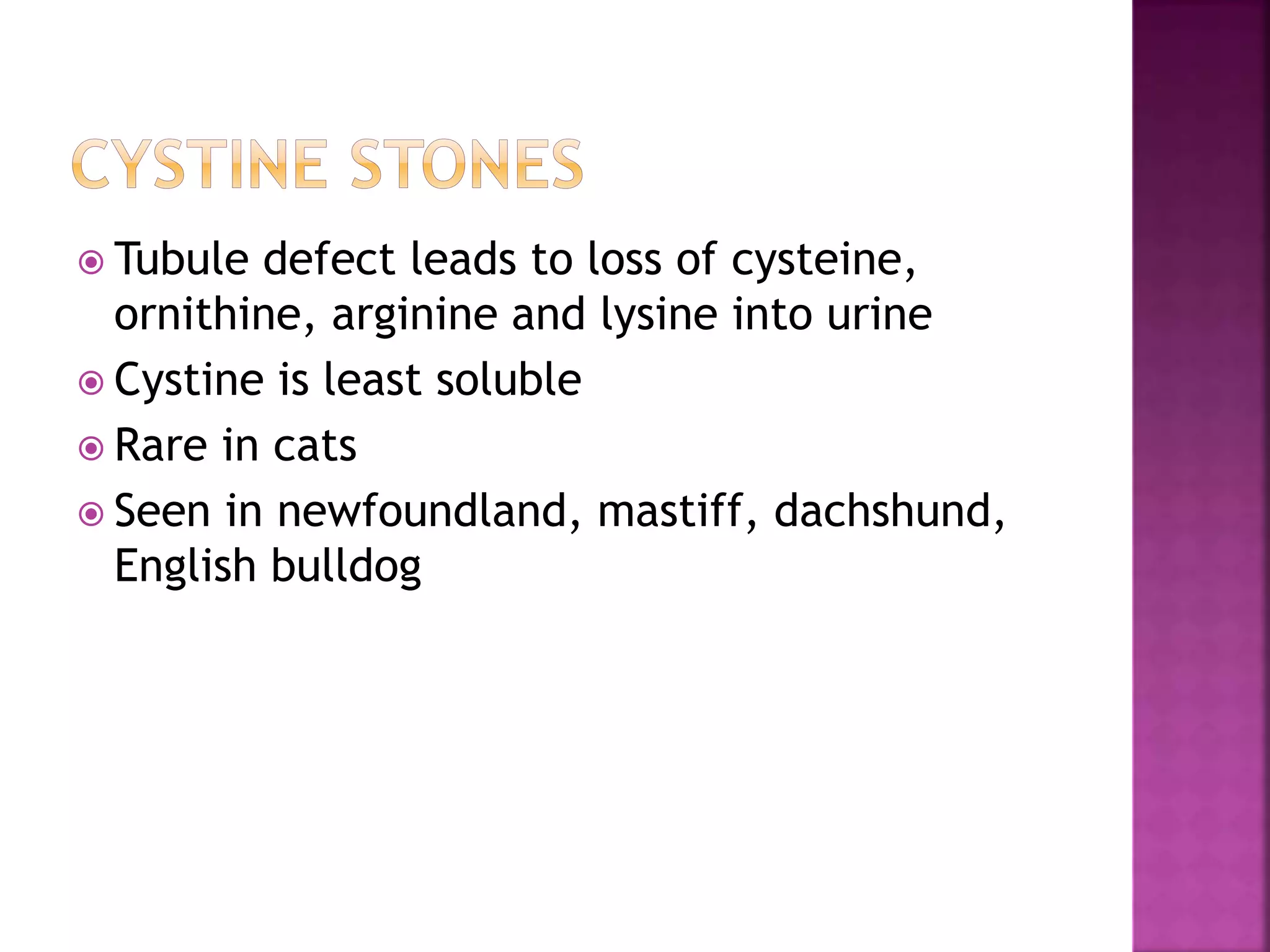
 Tubule defect leads to loss of cysteine,
ornithine, arginine and lysine into urine
 Cystine is least soluble
 Rare in cats
 Seen in newfoundland, mastiff, dachshund,
English bulldog
 Reduce dietary methionine and cysteine
essential amino acids, lower in plant proteins
 Consider vegetarian diet in dogs
 Soy based or reduce protein diets for cats
 Alkalinize urine
 Rare
 Silica and oxygen
 Low levels in animal tissue
 Higher levels in plants
 Increase moisture intake
 Canned meat based diet
 Avoid plant hulls, whole grains
 May be more soluble at alkaline ph
 Prevent dirt/sand eating
 Consider testing water
DEGREE OF SOLUBILITY
- Insoluble vs soluble
FERMENTATION BY GUT MICROBES
- High vs low
 Cellulose, lignin, hemi-cellulose
 Low fermentability
 Increases fecal bulk
 Speeds up transit time
 Dilutes calories
 Gums, pectins, dextrins, fructo-
oligosaccharides
 Dissolve in water to form gels
 Slow digestion
 Pulls water into gut
 Diarrhea
 Colitis
 Constipation
 Weight loss
 Modulate blood sugar
 hyperlipidemia
 Prebiotics- encourage growth of healthy gut
bacteria ( Inulin) commonly included in pet
foods
 Probiotics- live, non pathogenic bacteria
(usually fed as a supplement)
 Gut microbiome is ties to gut health and
altering it can have systemic effects
 Effects stop when supplementation stops
 Antibiotic associated diarrhea
 Other causes of diarrhea
 Immunoregulation ( GALT)
 Possible for allergies and urinary tract
infections
 Vomiting and or diarrhea
 Rule out parasites, toxins, foreign body or
organ disease
 Use a highly digestible diet, low in insoluble
fiber, high quality ingredients
 Use low fat for quicker gastric emptying,
safe for suspected pancreatitis
 Possibly bland diet
 No food for 6-12 hours after vomiting
 No fasting with diarrhea
 Small, frequent meals
 Transition back to regular food in 3-5 days
Dogs
- Hills I/d, Iam intestinal, Purina
gastroenteritis, royal canin gastrointestinal
Cats
- Hills I/d, Iams intestinal, Purina
gastroenteric, royal canin gastrointestinal
 Many potential causes: adverse food
reaction, Inflammatory bowel disease,
lymphangiectasia
 Nutrition: trial and error
 Diet may not be the whole answer
 Inflammatory inflammation of wall of GI
tract
 Likely many factors contribute
- May be food antigens
- May be bacterial
- May be multiple factors
 Highly digestible diet, novel or hydrolyzed
protein
 May be low fat and increased fiber
 Usually need medical management as well
 Treat the bowel that is affected
 Can lead to severe plasma losing enteropathy
 Can be primary or secondary to IBD
 Reducing dietary fat is the cornerstone for
treatment of this patient
 May need home cooked diet if they do not do
well on low fat or novel protein
commercially prepared diets
 Colitis
 constipation
 Secondary to stress, IBD, food allergy, other
 Treat IBD and food allergy
 Fiber may help ( soluble and insoluble)
 Probiotics may help
Two main forms
1. Small volume, rock hard may have blood
2. Large volume, distended colon
Treatment is not always the same for both of
these types of constipation
Small rock hard stools
- Increase hydration: canned diet, fountain,
subcutaneous fluids
- Insoluble fiber to bulk stool and hold water
in the colon
- Soluble fiber to pull into the colon and soften
the stool
 Distended colon +/- neurological dysfunction
Megacolon
 Prokinetics and lactulose are used as medial
therapy for this disease ( not a cure)
 Avoid large amounts of insoluble fiber
 Utilize a Highly digestible diet
 Soluble fiber, inulin can be helpful
 Weight loss may be required depending on
the patient
 Begin enteral feeding within 24 hours of
surgery
 Increases strength of anastomosis
 Promotes healing
 Improves motility
 Use NE or NG tube if needed
 Moderate to high protein
 Highly digestible, low to moderate fat
 Use 50% RER in first day
 If complicated GI surgery use parenteral
feeding
 Auto- digestion of pancreas
 Different clinical sighs in dogs and cats
 Nutritional management is different in dogs
and cats
 Control vomiting, parenteral vs enteral
feeding
 Start with low fat diet low fat, I/d
 Chicken breast or low fat cottage cheese and
white rice for severe or recurrent cases
 Long term low fat diet
 Can be recurrent or chronic and usually
presents with vomiting
 Often chronic, concurrent hepatitis, IBD and
diabetes common
 Reduced fat diet not always a benefit
 Make sure there are not other disease
processes occurring at the same time
 Use this chart to help clients identify the
appearance of their pets feces
 Some pets have abnormal feces and clients
are unaware that it is abnormal
Needs decreased
levels of fiber
Needs increased
levels of fiber
EN Gastroenteric®
DCO Dual Fiber Control®
FortiFlora® Canine Nutritional Supplement
Low-Residue Feline & Canine formulas
Prescription Diet® d/d
Prescription Diet® z/d
Prescription Diet® i/d Prescription Diet®
w/d
Hypoallergenic HP 19
Sensitivity RC, LR, RD 30, VR
Diabetic HF 18 
www.greatdogsite.com
 Drug and Toxin Metabolism
 Ammonia detoxification
 Protein catabolism
 Fat synthesis and fat-soluble vitamin
storage
 Glucose mobilization storage
 Cirrhosis
 Copper associated hepatopathy
 Portosystemic shunts
 Hepatic lipidosis
 Hepatic encephalopathy
 Vitamin E, slymarin and SAME are often
utilized for treatment of liver disease
 Increased liver values on bloodwork does not
mean you need to change the diet. Only
change the diet if the liver disease is diet
related.
 Neurologic signs shortly after eating
 Often seen in portosystemic shunts, hepatic
lipidosis in cats, cirrhosis and acute liver
failure
 Dietary protein and certain amino acids and
nucleotides, purines and other dietary
substances can cause these symptoms
 Avoid organ meats, avoid high purines, use
soy, egg or dairy protein
 Requires medical and nutritional
management
 Can be surgically repaired in come cases
 If it cannot be repaired, continue to feed
highest amount of protein that the animal
will tolerate
 Can slowly increase protein in the diet after
the surgery is completed
 Some dogs will eventually be able to eat
commercial diets after the shunt has been
repaired
 Nutritional support is the basis of treatment.
This cat has stopped eating which has led to
a fatty liver and liver failure. This cat
usually presents with jaundice.
 A feeding tube must be placed. This cat will
not recover if it is not eating.
 Nutritional support may be necessary for
weeks or months
 Correct any underlying disease associated
with this condition
 Copper builds up in liver cells and kills them
 Bedlingston terriers, labradors and
dalmations are at higher risk
 Treatment involves both medical and
nutritional intervention
a. Chelating drugs to trap the copper and get
rid of it
b. Low copper diets
c. Zinc – traps copper in the cell where it is
lost when the cell is lost
 Seafood, nuts, greens and organ meats (
common in pet foods)
 Most diets have 0.5 mg/100kcal of copper
and low copper diets have about 0.1 mg/100
kcal of copper
 Low copper diets are moderate to high fat
and low protein which might not be good for
the dog
 Reduced protein, high quality, low purine
sources
 Low sodium
 Moderate to high fat
 Reduced copper
 Increased zinc
 Increased antioxidants

Session 7 gi lutd liver spring

  • 1.
    Therapeutic Nutrition III: LowerUrinary Tract Disease Gastrointestinal Disease Liver Disease
  • 3.
     Inflammation  Infection Blockages  Formation of Uroliths © Hill’s Pet Nutrition, Inc.
  • 4.
     Decrease specificgravity of urine ( make urine very dilute)  Reduce stone precursors in the diet  Increase stone inhibitors  Maintain urine ph necessary to keep crystals in solution so they pass in urine and don’t form stones
  • 5.
    1. Identify urolithtype ( critical for correct treatment ) 2. Dissolve with diet (struvite only) or remove stone 3. Treat infection if present 4. Target appropriate pH of urine to prevent recurrence or dissolve current stone ( struvite) 5. Increase water intake in order to promote diluted urine ( by diet or water fountains)
  • 6.
    Water, water, water! Increases urine volume  More dilute urine  Decreased mineral concentration in urine  Increased frequency of urinating  Decreased urine retention  Less time for crystals to form DIETARY MANAGEMENT ( required for life)
  • 7.
     Marginal dehydrationover a lifetime puts tremendous strain on the kidneys causing them to wear out, and kidney failure is the most common cause of illness and death in elderly cats
  • 8.
     Increase theamount of canned food ( water in the food, does not increase drinking)  Multiple bowls of fresh water around the house and offering a pet fountain  Research has shown that the most successful way to get cats to consume more water is to feed them in an automatic timed feeder. Set it so that if gives very small amounts of food on a regular timed interval. Cats learn to come to the feeder when it is about to release food and wait. Provide fresh water source near this feeder.
  • 9.
    -Magnesium ammonium phosphate -Formin alkaline urine Struvite in Dogs - Rare in absence of infection ( can culture stone) - Pure stones can often be dissolved with diet - Dietary prevention rarely needed Struvite in Cats - Majority are sterile not associated with infection - Dietary prevention very important - Pure stones can often be dissolved with diet
  • 10.
     Can takeup to 20 weeks  Reduce urine specific gravity 1.020 dogs and 1.025 cats plus ph <6.2  Reduce protein and phosphorus  Address bacterial infection in dogs  Radiograph monthly  If no change in 4-6 months may need surgery to remove stones
  • 11.
     History ofpancreatitis  Hypertension or cardiac disease  Urinary obstruction  Renal failure  Growing, pregnant or lactating animals  Severe clinical signs
  • 12.
    Dogs - Royal CaninSO canned or dry - Hills SD canned ( very low protein) Cats - Hills SD canned or dry - Purina UR st/ox - Royal canin SO canned and dry ( also has a low calorie version) - Use preventative diet in cats not dogs
  • 13.
     Calcium oxalatemonohydrate or calcium oxalate dehydrate  Most soluble in alkaline ph  Recurrence rate up to 50% in 3 years  Precursors high oxalate foods like soy, beets, chard, spinach, nuts, corn wheat plus metabolism of tryptophan, ascorbic acid and glycine
  • 14.
     Dogs - obesity,hypercalcemia, hyperadrenocorticism, steroid use, diuretic use Cats - Acidifying diets, hyperthyroidism, hyperparathyroidism, hypercalcemia
  • 15.
     Dissolution notpossible  Address cause  Lifelong dietary modification to reduce recurrence  Avoid high protein diets, excessive vitamin D, acidifying diets, low phosphorus
  • 16.
    Dogs - Royal caninSO, Hills UD Cats - SO, - Increase water intake
  • 17.
    Struvite Calcium Oxalate Usuallyassociated with bacterial urinary tract infection High sodium, calcium and oxalate correlation Source: University of California – San Diego
  • 18.
    Struvite Calcium Oxalate Persistentalkaline urine pH Persistent acidic urine pH Source: University of California – San Diego
  • 19.
    Canine Profile Average Age Gender Breeds Calcium Oxalate 8years Males > Female Min. Schnauzers, Min. Poodles, Yorkies, Bichons, Shih Tzus Struvite 6 years Female> Male Min. Schnauzers, Min. Poodles, Cocker Spaniels, Bichons
  • 20.
    Feline Profile Avg. Age Gender & Neuter Status BCS& Environment Breeds Calcium Oxalate Older cats Neutered Males Obese, indoor, multiple cats Himalayan ,Burmese, Persian Struvite Younger Cats Non- specific Neutered Obese, indoor, multiple cats Non- specific
  • 21.
    Two causes 1. Geneticdefect 2. liver disease Breed predisposition - Yorkie, Maltese due to portosystemic shunt - Dalmation - Bulldog
  • 22.
     Life long Reduce dietary purines, avoid organ meats, fish, shellfish, yeast  Plant proteins, eggs, dairy low in purine  Reduce urine specific gravity  Increase urine ph with plant protein
  • 23.
     Has occurredwith allopurinol plus diet  Can lead to xanthine stones, important to use a low purine diet
  • 24.
     Royal caninUC or Vegetarina diet  Hills d/d rice and egg  Purina hypoallergenic  Hills U/d
  • 25.
     Tubule defectleads to loss of cysteine, ornithine, arginine and lysine into urine  Cystine is least soluble  Rare in cats  Seen in newfoundland, mastiff, dachshund, English bulldog
  • 26.
     Reduce dietarymethionine and cysteine essential amino acids, lower in plant proteins  Consider vegetarian diet in dogs  Soy based or reduce protein diets for cats  Alkalinize urine
  • 27.
     Rare  Silicaand oxygen  Low levels in animal tissue  Higher levels in plants
  • 28.
     Increase moistureintake  Canned meat based diet  Avoid plant hulls, whole grains  May be more soluble at alkaline ph  Prevent dirt/sand eating  Consider testing water
  • 30.
    DEGREE OF SOLUBILITY -Insoluble vs soluble FERMENTATION BY GUT MICROBES - High vs low
  • 31.
     Cellulose, lignin,hemi-cellulose  Low fermentability  Increases fecal bulk  Speeds up transit time  Dilutes calories
  • 32.
     Gums, pectins,dextrins, fructo- oligosaccharides  Dissolve in water to form gels  Slow digestion  Pulls water into gut
  • 33.
     Diarrhea  Colitis Constipation  Weight loss  Modulate blood sugar  hyperlipidemia
  • 34.
     Prebiotics- encouragegrowth of healthy gut bacteria ( Inulin) commonly included in pet foods  Probiotics- live, non pathogenic bacteria (usually fed as a supplement)  Gut microbiome is ties to gut health and altering it can have systemic effects  Effects stop when supplementation stops
  • 35.
     Antibiotic associateddiarrhea  Other causes of diarrhea  Immunoregulation ( GALT)  Possible for allergies and urinary tract infections
  • 36.
     Vomiting andor diarrhea  Rule out parasites, toxins, foreign body or organ disease  Use a highly digestible diet, low in insoluble fiber, high quality ingredients  Use low fat for quicker gastric emptying, safe for suspected pancreatitis  Possibly bland diet
  • 37.
     No foodfor 6-12 hours after vomiting  No fasting with diarrhea  Small, frequent meals  Transition back to regular food in 3-5 days
  • 38.
    Dogs - Hills I/d,Iam intestinal, Purina gastroenteritis, royal canin gastrointestinal Cats - Hills I/d, Iams intestinal, Purina gastroenteric, royal canin gastrointestinal
  • 39.
     Many potentialcauses: adverse food reaction, Inflammatory bowel disease, lymphangiectasia  Nutrition: trial and error  Diet may not be the whole answer
  • 40.
     Inflammatory inflammationof wall of GI tract  Likely many factors contribute - May be food antigens - May be bacterial - May be multiple factors
  • 41.
     Highly digestiblediet, novel or hydrolyzed protein  May be low fat and increased fiber  Usually need medical management as well  Treat the bowel that is affected
  • 42.
     Can leadto severe plasma losing enteropathy  Can be primary or secondary to IBD  Reducing dietary fat is the cornerstone for treatment of this patient  May need home cooked diet if they do not do well on low fat or novel protein commercially prepared diets
  • 43.
  • 44.
     Secondary tostress, IBD, food allergy, other  Treat IBD and food allergy  Fiber may help ( soluble and insoluble)  Probiotics may help
  • 45.
    Two main forms 1.Small volume, rock hard may have blood 2. Large volume, distended colon Treatment is not always the same for both of these types of constipation
  • 46.
    Small rock hardstools - Increase hydration: canned diet, fountain, subcutaneous fluids - Insoluble fiber to bulk stool and hold water in the colon - Soluble fiber to pull into the colon and soften the stool
  • 47.
     Distended colon+/- neurological dysfunction Megacolon  Prokinetics and lactulose are used as medial therapy for this disease ( not a cure)  Avoid large amounts of insoluble fiber  Utilize a Highly digestible diet  Soluble fiber, inulin can be helpful  Weight loss may be required depending on the patient
  • 48.
     Begin enteralfeeding within 24 hours of surgery  Increases strength of anastomosis  Promotes healing  Improves motility  Use NE or NG tube if needed  Moderate to high protein  Highly digestible, low to moderate fat  Use 50% RER in first day  If complicated GI surgery use parenteral feeding
  • 49.
     Auto- digestionof pancreas  Different clinical sighs in dogs and cats  Nutritional management is different in dogs and cats
  • 50.
     Control vomiting,parenteral vs enteral feeding  Start with low fat diet low fat, I/d  Chicken breast or low fat cottage cheese and white rice for severe or recurrent cases  Long term low fat diet  Can be recurrent or chronic and usually presents with vomiting
  • 51.
     Often chronic,concurrent hepatitis, IBD and diabetes common  Reduced fat diet not always a benefit  Make sure there are not other disease processes occurring at the same time
  • 53.
     Use thischart to help clients identify the appearance of their pets feces  Some pets have abnormal feces and clients are unaware that it is abnormal
  • 54.
    Needs decreased levels offiber Needs increased levels of fiber
  • 55.
    EN Gastroenteric® DCO DualFiber Control® FortiFlora® Canine Nutritional Supplement Low-Residue Feline & Canine formulas Prescription Diet® d/d Prescription Diet® z/d Prescription Diet® i/d Prescription Diet® w/d Hypoallergenic HP 19 Sensitivity RC, LR, RD 30, VR Diabetic HF 18 
  • 56.
  • 57.
     Drug andToxin Metabolism  Ammonia detoxification  Protein catabolism  Fat synthesis and fat-soluble vitamin storage  Glucose mobilization storage
  • 58.
     Cirrhosis  Copperassociated hepatopathy  Portosystemic shunts  Hepatic lipidosis  Hepatic encephalopathy
  • 59.
     Vitamin E,slymarin and SAME are often utilized for treatment of liver disease  Increased liver values on bloodwork does not mean you need to change the diet. Only change the diet if the liver disease is diet related.
  • 60.
     Neurologic signsshortly after eating  Often seen in portosystemic shunts, hepatic lipidosis in cats, cirrhosis and acute liver failure  Dietary protein and certain amino acids and nucleotides, purines and other dietary substances can cause these symptoms  Avoid organ meats, avoid high purines, use soy, egg or dairy protein  Requires medical and nutritional management
  • 61.
     Can besurgically repaired in come cases  If it cannot be repaired, continue to feed highest amount of protein that the animal will tolerate  Can slowly increase protein in the diet after the surgery is completed  Some dogs will eventually be able to eat commercial diets after the shunt has been repaired
  • 62.
     Nutritional supportis the basis of treatment. This cat has stopped eating which has led to a fatty liver and liver failure. This cat usually presents with jaundice.  A feeding tube must be placed. This cat will not recover if it is not eating.  Nutritional support may be necessary for weeks or months  Correct any underlying disease associated with this condition
  • 63.
     Copper buildsup in liver cells and kills them  Bedlingston terriers, labradors and dalmations are at higher risk  Treatment involves both medical and nutritional intervention a. Chelating drugs to trap the copper and get rid of it b. Low copper diets c. Zinc – traps copper in the cell where it is lost when the cell is lost
  • 64.
     Seafood, nuts,greens and organ meats ( common in pet foods)  Most diets have 0.5 mg/100kcal of copper and low copper diets have about 0.1 mg/100 kcal of copper  Low copper diets are moderate to high fat and low protein which might not be good for the dog
  • 65.
     Reduced protein,high quality, low purine sources  Low sodium  Moderate to high fat  Reduced copper  Increased zinc  Increased antioxidants