I.

Seasons

A. Earth’s Tilt
1.
2.

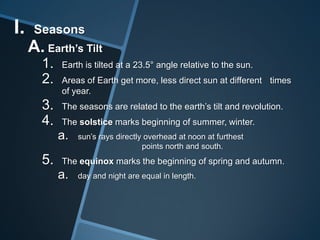
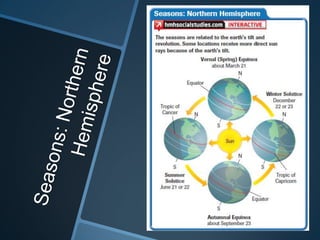
Earth is tilted at a 23.5° angle relative to the sun.

3.
4.

The seasons are related to the earth’s tilt and revolution.

Areas of Earth get more, less direct sun at different times
of year.

The solstice marks beginning of summer, winter.

a.

5.

sun’s rays directly overhead at noon at furthest
points north and south.

The equinox marks the beginning of spring and autumn.

a.

day and night are equal in length.
II. Weather
A. Weather and Climate
1.

Weather—atmospheric conditions at a particular location and
time.

2.

Climate—weather conditions at one location over a long
period.

a.

Example: Northern Russia has a cold climate

B. What Causes the Weather?
1.
2.
3.
4.

Sun: amount of solar energy received.
Water vapor: determines whether there will be precipitation.
Precipitation—water droplets falling as rain, snow, sleet, hail.

Cloud cover: clouds may hold water vapor.
C. What Causes the Weather?
1.

Landforms and bodies of water.

a.
b.

2.

Land heats rapidly, loses heat rapidly.

Elevation: as elevation increases, air becomes

a.

3.

Water heats slowly, loses heat slowly.

Thin air cannot hold moisture.

Air movement: distributes moisture and solar energy.

thinner.
D.Precipitation

1. Precipitation comes about when:

a. warm air rises, cools, loses ability to hold water

2.

vapor.
water vapor condenses into droplets.
water droplets form clouds.
heavy clouds release droplets as rain, snow.
Three types of precipitation

b.
c.
d.
a.
b.
c.

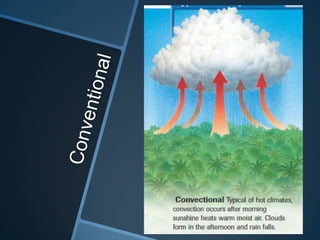
Convectional
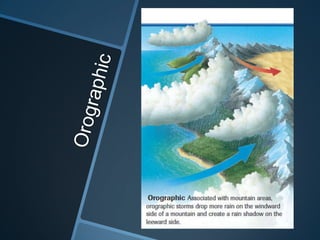
Orthographic
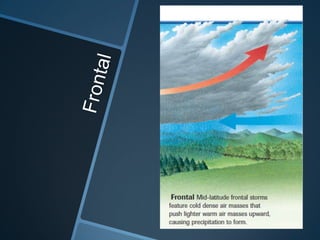
Frontal

3. Rain shadow—land on leeward side of hills,
mountains.
a. little precipitation in rain shadow.
E. Hurricanes
1.

Huge storms called hurricanes, or typhoons in Asia:

a.
b.

form over warm, tropical ocean waters.
hit land with heavy rain, high winds, storm surge.

F. Tornadoes
1.

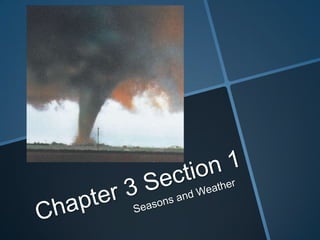
Tornado—a powerful, funnel-shaped column of spiraling air:

a.
b.

from strong thunderstorms.
capable of immense damage.
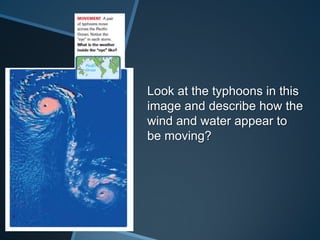
Look at the typhoons in this
image and describe how the
wind and water appear to
be moving?
III.Weather Extremes
A. Blizzards
1.

Blizzard—heavy snowstorm with strong winds, reduced
visibility.

B. Droughts
1.

Drought: long period of time with either no or minimal
rainfall.

C. Floods
1.

Water spreads out over normally dry land.
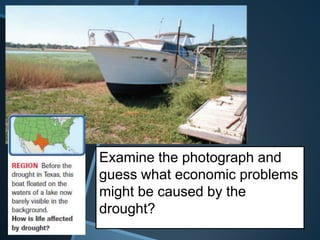
Examine the photograph and
guess what economic problems
might be caused by the
drought?

Chapter 3 section 1 powerpoint

  • 2.
    I. Seasons A. Earth’s Tilt 1. 2. Earthis tilted at a 23.5° angle relative to the sun. 3. 4. The seasons are related to the earth’s tilt and revolution. Areas of Earth get more, less direct sun at different times of year. The solstice marks beginning of summer, winter. a. 5. sun’s rays directly overhead at noon at furthest points north and south. The equinox marks the beginning of spring and autumn. a. day and night are equal in length.
  • 4.
    II. Weather A. Weatherand Climate 1. Weather—atmospheric conditions at a particular location and time. 2. Climate—weather conditions at one location over a long period. a. Example: Northern Russia has a cold climate B. What Causes the Weather? 1. 2. 3. 4. Sun: amount of solar energy received. Water vapor: determines whether there will be precipitation. Precipitation—water droplets falling as rain, snow, sleet, hail. Cloud cover: clouds may hold water vapor.
  • 5.
    C. What Causesthe Weather? 1. Landforms and bodies of water. a. b. 2. Land heats rapidly, loses heat rapidly. Elevation: as elevation increases, air becomes a. 3. Water heats slowly, loses heat slowly. Thin air cannot hold moisture. Air movement: distributes moisture and solar energy. thinner.
  • 6.
    D.Precipitation 1. Precipitation comesabout when: a. warm air rises, cools, loses ability to hold water 2. vapor. water vapor condenses into droplets. water droplets form clouds. heavy clouds release droplets as rain, snow. Three types of precipitation b. c. d. a. b. c. Convectional Orthographic Frontal 3. Rain shadow—land on leeward side of hills, mountains. a. little precipitation in rain shadow.
  • 10.
    E. Hurricanes 1. Huge stormscalled hurricanes, or typhoons in Asia: a. b. form over warm, tropical ocean waters. hit land with heavy rain, high winds, storm surge. F. Tornadoes 1. Tornado—a powerful, funnel-shaped column of spiraling air: a. b. from strong thunderstorms. capable of immense damage.
  • 11.
    Look at thetyphoons in this image and describe how the wind and water appear to be moving?
  • 14.
    III.Weather Extremes A. Blizzards 1. Blizzard—heavysnowstorm with strong winds, reduced visibility. B. Droughts 1. Drought: long period of time with either no or minimal rainfall. C. Floods 1. Water spreads out over normally dry land.
  • 15.
    Examine the photographand guess what economic problems might be caused by the drought?